This site is supported by our readers. We may earn a commission, at no cost to you, if you purchase through links.
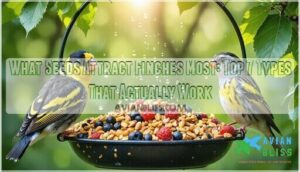 You’ll attract the most finches with black oil sunflower seeds and nyjer thistle seeds.
Black oil sunflower seeds pack 40% fat content, making them irresistible to goldfinches and other species. Nyjer seeds offer 35% fat and provide the high-energy boost finches need for their rapid metabolisms.
These seeds increase finch metabolic activity by 17% compared to lower-fat alternatives. For breeding season, add hulled sunflower meats with 42% fat content to support egg production and chick survival.
Canary seed mixed at 25% of your blend can increase clutch sizes by 30%. The key is offering fresh, high-fat options year-round, as finches burn energy quickly and gravitate toward seeds that fuel their active lifestyles most efficiently.
Table Of Contents
- Key Takeaways
- Finch Diet Preferences
- Seeds Attracting Finches Most
- Finch Feeding Strategies
- Creating Finch Friendly Environments
- Frequently Asked Questions (FAQs)
- How to attract Finch to your yard?
- What is the best bird seed mix for finches?
- What seeds attract finches?
- What is the best bird seed for goldfinches?
- What is the best bird food for finches?
- What is the best seed to attract finches?
- How to attract finches to your yard?
- How often should finch feeders be cleaned?
- What time of year do finches eat most?
- How long does nyjer seed stay fresh?
- Conclusion
Key Takeaways
- Black oil sunflower seeds and nyjer thistle are your top choices – These high-fat seeds (40% and 35% fat, respectively) attract goldfinches and other species most effectively, increasing finch metabolic activity by 17% compared to lower-fat alternatives.
- You’ll boost breeding success with specialized seed mixes – Add canary seed at 25% of your blend during breeding season to increase clutch sizes by 30%, and include hulled sunflower meats with 42% fat content for egg production support.
- Fresh seeds matter more than variety – Replace old seeds every two weeks to maintain their fat content, as nyjer should feel slightly oily rather than dry or stale for maximum finch attraction.
- You’ll create a finch paradise by combining proper feeders with natural habitat – Use tube feeders positioned 4-6 feet high near shrubs, plant native seed-producing flowers like coneflowers and sunflowers, and provide fresh water sources for year-round success.
Finch Diet Preferences
Understanding what finches prefer to eat makes all the difference in attracting these colorful songbirds to your yard.
Their natural diet centers around small, high-fat seeds that provide the energy they need for their active lifestyle and seasonal changes like molting and breeding.
High-Fat Seed Options
High-fat seed powerhouses fuel finches through harsh winters and demanding breeding seasons.
You’ll discover these oil-rich options boost survival rates by 21% while creating vibrant plumage that attracts mates.
Top high-fat finch favorites include:
- Black oil sunflower seeds – 40% fat content, goldfinch magnets
- Nyjer seeds – 35% fat, energy-packed thistle alternative
- Hulled sunflower meats – 42% fat, winter survival champions
These nutrient-dense seeds increase finch metabolic activity by 17% compared to low-fat alternatives. Using an organic birdseed blend can provide the necessary nutrients for finches to thrive.
Seed Mixes for Breeding
When breeding season arrives, your finches need more than just basic seeds.
Breeding mixes with 11% protein and 20% fat content boost egg quality and chick survival rates. Canary seed at 25% of your finch seed mix increases clutch sizes by 30%.
Millet-based blends help young finches accept food 40% better than single seeds. Hemp seed provides omega-3 fatty acids for chick development.
These protein sources and energy boost ingredients support parental health during demanding breeding periods. A diverse mix can also provide essential nutrients for well-being.
Dried Fruits and Treats
Beyond breeding nutrition, dried fruits and treats add valuable variety to your finch food types.
Dried papaya and apple pieces provide essential antioxidants when offered at 5% of their diet.
Raisins support digestion – 70% of finch flocks readily accept them.
Treat size matters; small pieces prevent choking.
Safe treat options include dried berries for vitamin C.
Avoid toxic fruits like avocado.
Treat frequency limits guarantee balanced finch diet without nutritional imbalance.
Balanced Diet Components
Perfect nutrition starts with variety—your feeder needs multiple seed types to mimic wild finch diets.
A balanced approach includes seeds (70%), greens (15%), fruits (10%), and treats (5%).
Freshness matters for proper finch nutrition, so buy organic options in small batches.
During breeding season, supplementing insects boosts protein while water availability guarantees proper digestion of finch attracting seeds.
Seeds Attracting Finches Most
The secret to successful finch attraction lies in understanding their nutritional needs and seed preferences.
Nyjer seed dominates the finch-attracting market, accounting for over 70% of birdseed sales because it’s packed with 35-40% fat content that finches crave. American Goldfinches consume up to 90% of their daily forage from nyjer seed feeders during summer months, making it your best bet for consistent visits.
Nyjer seed’s 35-40% fat content makes it the ultimate finch magnet for year-round attraction
Sunflower seeds, particularly hearts and chips, increase feeder visitation by 40% compared to whole seeds. Their 15-21% protein content supports breeding and feather development.
Millet varieties like white proso appeal to smaller species like House Finches and Lesser Goldfinches, providing balanced carbohydrates at 70% per seed. For ideal health, consider organic and non-GMO options.
Safflower use targets specific species like Cassin’s Finches while deterring larger birds. Canary seed enhances breeding activity by 22% in studies. Remember, seed freshness matters most – nyjer should feel slightly oily, not dry or stale, and providing a balanced diet is key to attracting a variety of finch species, including the American Goldfinches and Lesser Goldfinches, with nyjer seed being a crucial part of their diet.
Finch Feeding Strategies
You’ll attract more finches by choosing the right feeder type and placement strategy for each seed variety.
Smart feeding techniques can turn your backyard into a finch paradise while keeping competing birds away.
Tube Feeder Benefits
Tube feeders offer finches a smart feeding solution that works like a charm.
These cylindrical feeders keep seeds fresh and give your finches the perfect dining experience.
These cylindrical wonders keep your Nyjer seed fresh while giving finches the perfect perch to dine. You’ll love how they cut down on mess and waste.
Many options are available if you’re looking for specific tube feeders.
- Seed Capacity: Multiple feeding ports let several finches eat together without squabbling
- Weather Protection: Covered design shields thistle seed from rain and snow damage
- Bird Visibility: Clear tubes let you monitor seed levels and watch finch feeding behaviors
Easy cleaning keeps your finch feeders hygienic, while reduced waste saves money on premium seeds.
Ground Feeder Advantages
Why settle for tube feeders when ground feeders offer unique advantages?
Ground feeding mimics finches’ natural foraging behavior, attracting species that prefer lower-level feeding.
Smart placement at ground level mirrors their wild feeding habits perfectly
Platform feeders provide a stable surface for millet access while reducing seed waste.
They accommodate multiple finches simultaneously and decrease sparrow competition.
Ground feeders allow shy finches easier access to bird seed and seed mixes, creating inclusive bird feeding opportunities.
Consider feeder cleaning frequency to prevent disease.
Seasonal Adjustments
Your finch seed preferences shift dramatically with the seasons, much like your own appetite changes from hearty winter soups to light summer salads.
During Winter Feeding, offer high-fat Nyjer and sunflower seeds to fuel their energy needs.
Summer Diet should include softer seeds and fresh greens supporting Breeding Needs.
Increase Migration Support with frequent refills during spring and fall when hungry travelers pass through your yard.
Feeder Placement Tips
Proper placement transforms your yard into a finch paradise. Position feeders four to six feet high near shrubs for shelter while maintaining predator avoidance.
Weather protection and visibility matter for attracting goldfinches and house finches successfully.
- Accessibility Height: Mount finch feeder seeds at shoulder level for easy maintenance
- Competition Reduction: Space multiple feeders apart to minimize aggressive behavior
- Predator Avoidance: Keep feeders away from low branches where cats hide
- Weather Protection: Choose spots with morning sun but afternoon shade
Smart finch feeding tips include placing feeders near water sources for maximum attraction.
Creating Finch Friendly Environments
You’ll attract more finches by offering their favorite seeds in the right environment.
Creating a finch-friendly yard means combining diverse seed options with natural food sources and proper landscaping that mimics their preferred habitats, which will help attract more finches with their favorite seeds, and proper landscaping.
Diverse Seed Options
Five premium seed blends featuring nyjer seed finches love will transform your backyard into a goldfinch paradise.
The best finch seed combinations include hulled safflower and canary seed alongside thistle seed finches crave. Organic seeds and non-GMO seeds provide superior nutrition while finch feeder seeds stay fresher longer.
Sunflower seed finches prefer mixed with specialty varieties creates an irresistible buffet. Providing a clean water source is also essential for attracting these birds.
Finch Friendly Landscaping

Transforming your yard into a finch habitat requires strategic planning that goes beyond just hanging feeders.
Native plants like coneflower and asters produce seeds while creating visual appeal that draws finches naturally to your space. Consider exploring finch garden plants for specialized options.
- Native Plants: Choose seed-producing flowers like zinnias, cosmos, and black-eyed Susan for year-round foraging opportunities
- Water Sources: Install shallow bird baths at safe heights for drinking and bathing needs
- Shelter Options: Plant dense shrubs and evergreens like spruce or pine for nesting sites and predator protection
- Predator Deterrents: Position feeders 1.5 meters high and 3 meters from trees to create safe feeding zones
- Habitat Mimicry: Cluster plantings together so finches can forage efficiently without wasting energy moving between food sources
Natural Food Sources
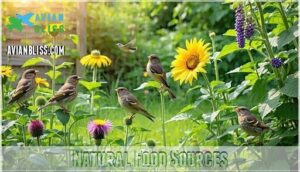
Beyond store-bought options, you’ll find finches naturally gravitate toward wild weeds like dandelions and thistles that produce niger seed throughout your yard.
Native plants such as coneflowers and sunflowers offer fresh thistle seeds while supporting local ecosystems. These finch attracting plants provide superior seed freshness compared to packaged alternatives.
During breeding season, small bird seeds from elderberry bushes supplement wild finch seeds with essential nutrients and occasional insect consumption opportunities.
For ideal finch health, consider organic and non-GMO options, which support local ecosystems and provide essential nutrients for ideal finch health.
Mimicking Natural Habitats
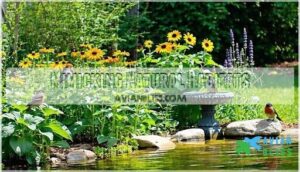
You’ll create the perfect finch-friendly environment by replicating their wild homes.
Native plants like coneflowers and sunflowers provide natural foraging opportunities while attracting finches year-round. Water sources become gathering spots where birds feel secure enough to linger.
Here’s how to build your finch-friendly habitat:
- Plant dense shelter options – Evergreens and hedgerows offer predator deterrents while mimicking natural nesting sites
- Establish multiple feeding zones – Scatter wild finch seeds in clusters to encourage natural foraging behaviors
- Maintain chemical-free spaces – Finch-friendly landscaping means avoiding pesticides that could harm visiting birds
Your finch-friendly plants should include seed-producing flowers that finches recognize from their natural environment.
Frequently Asked Questions (FAQs)
How to attract Finch to your yard?
Picture finches as tiny acrobats seeking their favorite buffet.
Plant sunflowers and thistle, install tube feeders with nyjer and black oil sunflower seeds.
Provide fresh water, and maintain clean feeding stations regularly, to ensure a welcoming environment for these tiny acrobats.
What is the best bird seed mix for finches?
You’ll want a blend featuring Nyjer seed and black-oil sunflower seeds as primary ingredients.
Add white millet for variety.
This combination attracts goldfinches, house finches, and siskins effectively while providing essential fats and proteins, making it a great choice for those looking to support local bird life with complete concepts.
What seeds attract finches?
Like a magnet draws metal, nyjer and sunflower seeds pull finches to your yard effortlessly.
You’ll attract goldfinches with fresh nyjer seed, while sunflower kernels bring house finches and purple finches running for their high-fat feast to enjoy nyjer seed.
What is the best bird seed for goldfinches?
Black oil sunflower seeds and Nyjer (thistle) seeds work best for goldfinches. You’ll find these tiny seeds irresistible to them, especially when fresh and slightly oily to the touch.
What is the best bird food for finches?
Nyjer seed tops the list for attracting finches, especially goldfinches. You’ll also see great results with black-oil sunflower seeds and millet. These high-fat options provide the energy finches need year-round.
What is the best seed to attract finches?
Nyjer seed tops the list for attracting finches, especially goldfinches. You’ll also have great success with black oil sunflower seeds and safflower seeds, which appeal to various finch species.
How to attract finches to your yard?
Birds of a feather flock together when you offer their favorite foods.
Fill tube feeders with Nyjer and sunflower seeds, keep them clean, and place near native plants for best results.
How often should finch feeders be cleaned?
Clean your finch feeders every two weeks to prevent mold, bacteria, and disease spread. Use warm, soapy water and rinse thoroughly before refilling with fresh seeds.
What time of year do finches eat most?
Winter through early spring sees peak finch feeding activity. You’ll notice increased visits during colder months when natural food sources become scarce, plus heightened consumption during breeding season preparation.
How long does nyjer seed stay fresh?
Fresh nyjer stays good, stays potent, stays appealing for six months when stored properly. You’ll know it’s fresh if it feels slightly oily, not dry or brittle to touch.
Conclusion
Remember that moment when you first spot a goldfinch at your feeder?
You’ll create that magic consistently by focusing on what seeds attract finches most. Black oil sunflower seeds and nyjer thistle remain your foundation, but don’t forget canary seed during breeding season.
Fresh seeds matter more than variety. Replace old seeds every two weeks to maintain their fat content.
Your finches will reward your efforts with vibrant colors and active feeding displays year-round.