This site is supported by our readers. We may earn a commission, at no cost to you, if you purchase through links.
Most backyard feeders sit half-empty because they’re loaded with the wrong seeds. A mixed bag of milo, wheat, and filler grains looks generous, but most birds toss it straight to the ground.
Black oil sunflower seed, by contrast, attracts over 40 North American species—cardinals, chickadees, finches, and nuthatches among them—because its thin hull and 50% fat content deliver serious energy with minimal effort.
Knowing what seeds birds prefer in feeders isn’t guesswork; it’s basic nutrition science applied to your backyard.
The right five seeds can transform a quiet feeder into a reliable hotspot, season after season.
Table Of Contents
- Key Takeaways
- Top 5 Bird Seeds Birds Love in Feeders
- Why Black Oil Sunflower Seed Attracts The Most Birds
- Nyjer, Safflower, and Millet: Seed-by-Species Guide
- Best Feeder Types for Each Seed Variety
- Seasonal Seed Strategies for Year-Round Feeding
- How to Store Bird Seed Safely and Freshly
- Squirrel-Proofing and Pest Management at Feeders
- Frequently Asked Questions (FAQs)
- Conclusion
Key Takeaways
- Black oil sunflower seed attracts over 40 North American species because its thin hull and ~50% fat content make it the single most efficient seed you can put in any feeder.
- Matching seed to feeder type matters as much as the seed itself — Nyjer needs mesh or tube feeders with small ports, while millet belongs on a platform feeder close to the ground where sparrows and juncos naturally forage.
- Safflower, Nyjer, and capsaicin-infused blends are your best natural defenses against squirrels, cutting losses by up to 80% without any extra hardware.
- Seed freshness directly affects how many birds show up — Nyjer loses potency within four weeks in the feeder, and peanuts can spike dangerous aflatoxin levels above 2,780 µg/kg if stored wet or warm.
Top 5 Bird Seeds Birds Love in Feeders
Not all bird seeds are created equal, and the wrong choice means empty feeders and frustrated birds. These five options consistently pull the most species with the least waste.
If you’re tired of hulls piling up under your feeder, these no-mess bird seed options that reduce waste and attract more species are worth a close look.
Here’s what’s worth putting in your feeder.
1. Wagner Black Oil Sunflower Bird Seed
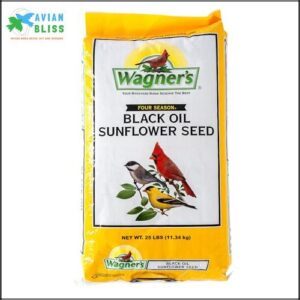
Black Oil Sunflower Seed ($40.84 for a 25 lb bag, model 76027) is a reliable starting point for any backyard feeding setup.
thin shells make it accessible to small-beaked birds like chickadees, finches, and nuthatches — no struggling required.
At roughly 38% fat and 15% protein, it delivers the energy birds need year-round.
It works in tube, hopper, or platform feeders, and it’s made in the USA with high-quality grains.
Just be ready to manage squirrels.
| Best For | Backyard bird enthusiasts who want to attract a wide variety of songbirds like cardinals, chickadees, and finches year-round. |
|---|---|
| Bird Target | Cardinals, Chickadees, Finches, Nuthatches, Woodpeckers |
| Year-Round Use | Yes |
| Food Form | Seed |
| Country of Origin | USA |
| Primary Ingredient | Black Oil Sunflower Seed |
| Pest Consideration | May attract squirrels |
| Additional Features |
|
- Thin shells make it easy for small-beaked birds to crack open and eat
- High fat and protein content gives birds the energy they need in any season
- Works in most feeder types — tube, hopper, or platform — so it’s flexible
- At $40.84 a bag, it’s on the pricier side and subject to price swings
- The 25 lb bag has no velcro closure, so spills are a real risk
- Squirrels love it too, which can drain your supply fast
2. C&S Orange Delight Suet Cake
 View On Amazon
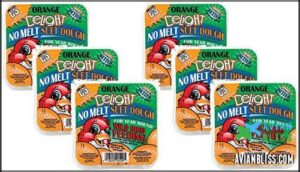
 If sunflower seed is your workhorse, the C&S Orange Delight Suet Cake is your specialist.
Each 11.75-ounce cake combines rendered beef suet, roasted peanuts, papaya, and oats into a no-melt dough that holds its shape even in warm weather.
That matters — traditional suet turns greasy and drips above 85°F.
This formulation stays firm year-round.
It draws woodpeckers, wrens, bluebirds, and orioles, birds wired for fat and fruit.
Six cakes per pack make it easy to keep feeders stocked consistently.
| Best For | Bird lovers who want to attract woodpeckers, wrens, orioles, and other fruit-and-insect-eating species year-round without constantly restocking feeders. |
|---|---|
| Bird Target | Woodpeckers, Wrens, Fruit-eating birds |
| Year-Round Use | Yes |
| Food Form | Cake |
| Country of Origin | Not specified |
| Primary Ingredient | Rendered Beef Suet |
| Pest Consideration | Weather-sensitive |
| Additional Features |
|
- Holds its shape in warm weather better than traditional suet, so it won’t turn into a greasy mess on hot days
- Packed with real ingredients — beef suet, roasted peanuts, papaya, and oats — that fruit and insect-eating birds genuinely go for
- Comes in a six-pack, so you’re not running out anytime soon
- Can get soft and pliable when temps climb past 100°F, so extreme heat is still a concern
- Not every bird will touch it — some species just aren’t into the orange-suet combo
- Cakes can break if they’re not stored or handled carefully before use
3. Wagner Nyjer Seed Bird Food
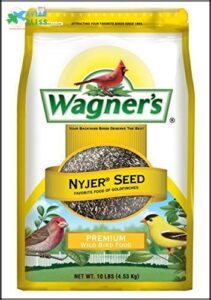
If suet targets specialists, Nyjer goes narrower — and that’s exactly the point.
Wagner’s 10-pound bag packs roughly 150,000 seeds per pound, each one loaded with up to 35% crude fat. That’s premium fuel for goldfinches, pine siskins, and house finches.
Larger birds and squirrels mostly ignore it, so what you put out actually reaches the birds you want. Use a tube or mesh finch feeder with small ports.
Replace uneaten seed every four weeks — freshness drops fast.
| Best For | Backyard birders who want to attract goldfinches, pine siskins, and house finches without feeding every squirrel in the neighborhood. |
|---|---|
| Bird Target | Finches, Goldfinches, House Finches |
| Year-Round Use | Yes |
| Food Form | Seed |
| Country of Origin | Not specified |
| Primary Ingredient | Nyjer (Thistle) Seed |
| Pest Consideration | Requires squirrel-proof feeder |
| Additional Features |
|
- Roughly 150,000 seeds per pound means a single 10-lb bag goes a long way
- Minimal husk waste keeps your yard and feeder tray cleaner than most seeds
- Larger birds and squirrels tend to ignore Nyjer, so your target birds actually get fed
- Fine seeds can spill easily if the bag develops a leak during handling
- Active feeders may need weekly refills, so stock up if you have a busy yard
- Requires a tube or mesh finch feeder with small ports — won’t work in standard feeders
4. Wingfield Farm Virginia In Shell Peanuts
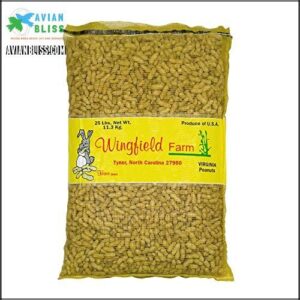
Peanuts cast a wider net than most seeds. Wingfield Farm’s Virginia In Shell Peanuts come raw, unsalted, and packed in 25-pound bags — serious volume for serious backyard feeders.
To keep bulk peanuts fresh and your birds safe, brush up on how to spot and prevent birdseed spoilage before stocking up.
Blue Jays grab whole peanuts by the bill and vanish. Woodpeckers work them methodically. Even deer wander in for a sniff.
fat and protein content helps birds through cold snaps and breeding season alike. peanuts mold fast in humidity and spoil within a day when wet.
| Best For | Backyard wildlife enthusiasts who want to attract squirrels, birds like Blue Jays and woodpeckers, and even deer with a high-protein, natural feed option. |
|---|---|
| Bird Target | Squirrels, Birds, Deer |
| Year-Round Use | Yes |
| Food Form | Raw Peanuts |
| Country of Origin | Not specified |
| Primary Ingredient | Raw Peanuts |
| Pest Consideration | Designed for squirrels too |
| Additional Features |
|
- Raw and unsalted — no additives, just pure peanuts that wildlife love
- 25-pound bag means fewer restocking trips and better value per pound
- Works year-round and draws a solid variety of wildlife to your yard
- Not cheap, so the cost can add up if you’re feeding heavily
- Peanuts mold quickly in humid or wet conditions, so storage needs attention
- The bulk size takes up real space and isn’t ideal for smaller setups
5. Kaytee Black Oil Sunflower Bird Seed

Kaytee’s Black Oil Sunflower Seed is about as close to a universal bird currency as you’ll find. The thin hulls make it accessible to smaller birds like chickadees and Cardinals — no wrestling required.
At roughly 30% crude fat and 15.5% protein, it delivers real energy, especially through winter.
Triple-cleaned and USA-made, it works in hopper, platform, or tube feeders without clogging.
Store it sealed and cool, and your feeders will stay busy all season.
| Best For | Backyard bird enthusiasts who want one feeder-friendly seed that draws in a wide mix of wild birds, especially smaller songbirds like cardinals and chickadees. |
|---|---|
| Bird Target | Cardinals, Chickadees, Robins, Sparrows |
| Year-Round Use | Yes |
| Food Form | Seed |
| Country of Origin | USA |
| Primary Ingredient | Black Oil Sunflower Seed |
| Pest Consideration | Not specified |
| Additional Features |
|
- Thin hulls make it easy for small birds to crack open without a fight
- High oil content keeps winter birds energized and coming back
- Triple-cleaned and USA-made, so it feeds cleanly without clogging your feeders
- It’s a single-seed bag, so it won’t attract every species on its own
- Some buyers found the 5-pound bag smaller than they expected
- Freshness can vary depending on how it’s been stored before it reaches you
Why Black Oil Sunflower Seed Attracts The Most Birds
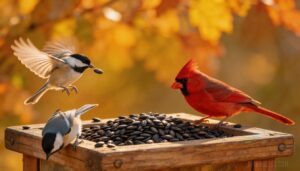
Black oil sunflower seed isn’t just popular — it’s the closest thing to a universal bird magnet you’ll find at any feeder. A few specific reasons explain why so many species keep coming back to it.
Here’s what makes it stand out.
Species That Prefer Black Oil Sunflower
More than 25 species visit feeders stocked with black oil sunflower seeds — and that number grows during seasonal migration timing peaks. The thin hull suits a wide range of bill size adaptations, from small chickadees to thick‑billed cardinals. Black oil sunflower seeds provide high-energy fuel for birds.
Top visitors you’ll spot regularly:
- Cardinals — year‑round residents drawn to the energy‑dense kernel
- Chickadees — quick foragers who cache seeds for winter energy demands
- Finches and sparrows — arrive in mixed flock compositions, especially during cold months
- Blue Jays — territorial aggression keeps smaller birds cycling through faster
Nutritional Profile: Fat and Protein Content
Black oil sunflower seeds pack roughly 50 percent fat and 20 percent protein by weight — that’s serious Fat Density for such a small package. Most of that fat is unsaturated, which promotes healthier energy storage in birds.
The Amino Acid Profile aids feather growth and muscle repair.
For nutrient dense bird food that delivers real Energy Yield, nothing beats this seed’s nutritional analysis of common bird seeds.
Why Thin Hulls Work in Any Feeder
Ever notice how thin hulls on black oil sunflower seeds make feeding easy?
Reduced Weight means less strain on feeders, Improved Flow keeps seed moving, and Energy Efficiency saves you time.
Material Flexibility lets these seeds fit tube, hopper, or platform designs.
Modular Compatibility means you can mix nyjer seed, millet scattered, white proso millet, or safflower seed without clogging.
Nyjer, Safflower, and Millet: Seed-by-Species Guide
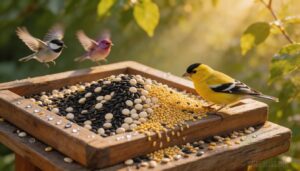
Not every bird at your feeder wants the same thing, and that’s actually good news. Matching the right seed to the right species makes a real difference in who shows up.
Here’s a closer look at four seeds that pull in some of the most sought-after backyard visitors.
Nyjer Seed for Goldfinches and Siskins
Nyjer seeds are the top pick for American Goldfinches and Pine Siskins — and finch bill morphology tells you exactly why. Their slender, pointed bills extract tiny seeds from tight feeder ports that larger birds can’t access.
Each seed packs energy-dense oil that helps winter heat retention during cold snaps.
Use thistle feeders, maintain a feeder hygiene routine, and rotate fresh stock every four weeks for reliable population monitoring results.
Safflower Seed for Cardinals and Doves
Safflower seeds are a quiet workhorse at any backyard feeder. Cardinals prefer safflower over most options — their thick bills crack the hard white shell easily, while squirrels and starlings largely give up and move on. Doves pick fallen seeds from platform trays without competition.
Safflower seed quietly rules the feeder: cardinals love it, squirrels don’t
This energy-dense seed delivers real nutritional value:
- Cardinal bill preference matches perfectly with whole safflower’s firm shell
- Vitamin E boost enhances immunity and plumage condition year-round
- Digestive fiber benefits help doves and small passerines process seeds efficiently
- Shell waste reduction keeps your feeder area noticeably cleaner
- High fat content (~38%) fuels birds through cold snaps and breeding season
Choosing the right bird seed for backyard feeders starts here — safflower attracts the species worth watching.
White-Proso Millet for Sparrows and Juncos
White proso millet works differently than safflower — scatter it low, not high. Ground feeding sparrows and dark-eyed juncos actively forage at or near soil level, so millet ground scattering mimics natural behavior better than elevated tube feeders.
It’s cold weather fuel packed with carbohydrates, easy for small bills to crack.
Millet freshness management simple: dry storage, clean trays, rotate every few weeks.
Peanuts for Woodpeckers and Blue Jays
Millet feeds the ground crowd. Peanuts pull in the acrobats.
Providing peanuts for woodpeckers delivers serious energy density — high fat, high protein, exactly what strong-billed birds need in cold snaps. Blue jays rely on peanut caching to build winter stores, tucking in shell peanuts into bark crevices for later.
Here’s what makes peanuts work:
- Shell cracking keeps woodpeckers engaged longer
- Blue jay perch design prevents smaller birds from crowding
- Unsalted nuts avoid harmful sodium buildup
- Rotate fresh stock every two weeks to prevent rancidity
Best Feeder Types for Each Seed Variety
Picking the right seed is only half the equation — the feeder you use matters just as much. Put Nyjer in the wrong feeder, and goldfinches won’t bother, or fill a mesh feeder with sunflower, and you’ve got a mess on your hands.
four feeder types that match best with the seeds that birds actually eat.
Tube Feeders for Nyjer and Small Seeds
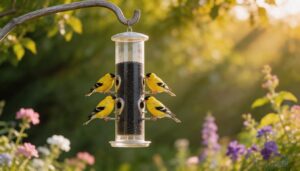
For finches, the right tube feeder makes all the difference.
UV Stabilized Polycarbonate tubes let you monitor Nyjer Seeds at a glance, while Drainage Base Design and Anti-Mold Seals keep moisture out.
Port Size Optimization with Adjustable Flow Ports controls seed flow precisely for small songbirds.
| Feature | Benefit |
|---|---|
| Micro-slit ports | Reduces waste |
| Slim perches | Suits finches attracted to nyjer |
Hopper Feeders for Sunflower and Mixed Blends
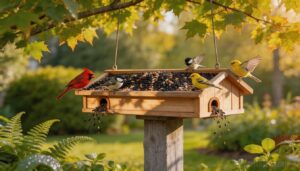
While tube feeders serve finches well, hopper feeders handle sunflower and mixed seed blends at a different scale entirely.
A solid hopper feeder gives you:
- Hopper Capacity Planning from 1.5–3.5 lbs, cutting daily refill trips
- Seed Flow Regulation and Drainage Control that keep Black Oil Sunflower Seeds dry and fresh
- UV-Resistant Materials with Easy-Clean Mechanisms to protect seed nutritional value year-round
Platform Feeders for Millet and Cracked Corn
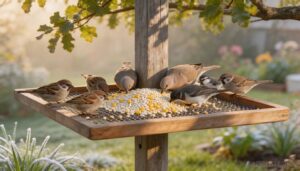
Platform feeders are the go-to choice for millet and cracked corn — two seeds that ground-feeding birds like sparrows, doves, and juncos genuinely prefer.
Look for weather-resistant materials, anti-clumping bases with perforated mesh, and detachable cleaning trays.
Tray dimensions between 12×8 and 18×12 inches increase surface area.
Elevated placement tips the odds further, keeping seeds dry and mammals at bay.
Mesh Feeders for Thistle and Finches
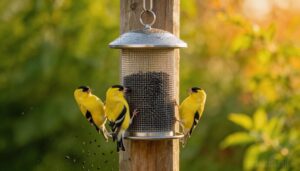
Nyjer seeds are tiny — and that’s exactly why mesh feeder design matters so much. A well-built mesh feeder keeps those seeds locked in while letting finches cling and feed comfortably.
Look for three key features:
- Port Size Optimization and Anti-Jump Design for secure gripping
- Rain Guard Integration to keep thistle seed dry
- Easy Cleaning Features with stainless steel Mesh Material Choice
Your finches will notice the difference.
Seasonal Seed Strategies for Year-Round Feeding
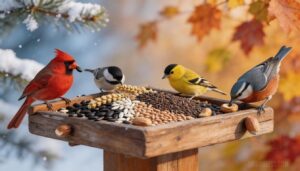
Birds don’t eat the same way in January as they do in July — and your feeder setup shouldn’t either. Matching seed choices to the season keeps birds healthier and your feeders busier all year long.
adjust what you offer as the calendar turns.
High-Fat Seeds and Suet for Winter Birds
Winter is brutal on small birds — their metabolic rate spikes overnight just to stay warm. That’s why high-fat seed benefits matter most right now. Black oil sunflower seeds and suet cakes are your best tools for meeting winter metabolic demands and supporting heat retention strategies.
| Seed/Food | Energy Density Benefits | Top Species Attracted |
|---|---|---|
| Black Oil Sunflower Seeds | ≈38% fat, high-energy | Cardinals, chickadees, nuthatches |
| Suet Cake | Rendered fat, dense calories | Woodpeckers, wrens, nuthatches |
| Peanut Kernels | High protein + fat combo | Blue Jays, woodpeckers |
Millet and Fruit Supplements in Spring and Summer
Spring and summer call for lighter fare. White-proso millet accommodates small beaks well and maintains electrolyte balance through its magnesium and potassium content — key for bird species’ seed preferences during nesting season.
Pair it with dried wild berries for seasonal flavor appeal and added vitamins.
Feeder timing strategies matter here: offer millet and fruit supplements in early morning to boost nutrient synergy before midday heat accelerates spoilage.
Mixed Sunflower and Safflower for Fall Migration
Fall migration is when your feeders can make a real difference. A high-fat blend of black oil sunflower seeds and safflower seeds gives migrating birds the migration stamina they need for long overnight flights.
- Sunflower delivers roughly 38% crude fat — fast fuel for finches, cardinals, and sparrows
- Safflower naturally deters squirrels, protecting your investment
- Mixed seed blends for diversity boost species diversity by up to 76%
- Feeder height and ground cleanliness reduce competition and spoilage
These fall feeding strategies work.
Protein-Rich Seeds for Spring Breeding Season
Breeding season is the most demanding stretch of the year for backyard birds. Egg production and nestling growth pull hard on protein reserves, so your seed mix ratios matter.
Shift toward black oil sunflower seeds, nyjer seeds, and in shell peanuts — each delivers 20–30% protein.
Add suet cake and dried mealworms to boost feeding frequency. That combination covers protein timing when birds need it most.
How to Store Bird Seed Safely and Freshly
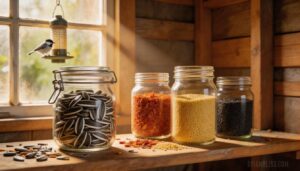
Good seed doesn’t stay good on its own — storage makes or breaks it. How you store your supply directly affects freshness, safety, and how many birds actually show up.
Here’s what you need to know to keep every seed type at its best.
Ideal Temperature and Container Guidelines
Store your seed between 50°F and 70°F — seed storage below 60°F is the sweet spot for slowing mold and preserving freshness.
Cool dry storage in airtight containers keeps humidity below 60%, protecting seed shelf life substantially.
Use BPA-free plastic or metal bins with tight-sealing lids, label each with a purchase date, and rotate containers regularly so older stock always gets used first.
Recognizing Mold, Clumping, and Spoilage Signs
Even with perfect containers, spoilage still happens — so check your seed regularly.
Toss any batch showing these warning signs:
- Fuzzy Mold Patches or discoloration spotting in green, gray, or black
- Slimy Surface Film caused by moisture clumping inside feeders
- Musty Odor Detection — that damp, basement smell means mold prevention failed
- Clumped seed that breaks unevenly, signaling moisture exposure and seed spoilage prevention failure
Nyjer Shelf Life and Rotation Tips
Nyjer seed has a short window — freshness drops sharply after four weeks in the feeder and roughly six months in storage. Keep seed shelf life below 60°F by using an airtight container with moisture absorbers inside.
Label bags with purchase date labels and follow first-in first-out rotation. For longer reserves, freezer shelf extension works well, preserving quality up to a year when sealed tightly.
Aflatoxin Risks in Corn and Peanuts
Corn and in-shell peanuts carry a real aflatoxin risk — mold can spike to 2,780 µg/kg under poor seed storage conditions. Aflatoxin contamination is invisible without testing, making temperature management and storage moisture control your best defenses.
Keep cracked corn and peanuts dry, sealed, and used within a day in humid weather. Regulatory limits exist, but prevention beats detection every time.
Squirrel-Proofing and Pest Management at Feeders
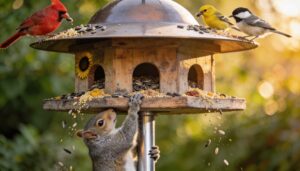
Squirrels are persistent, and no amount of goodwill toward wildlife makes them less frustrating at a feeder.
The good news is that a few smart choices — from seed selection to feeder hardware — can cut your losses by around 80%. Here’s what actually works.
Seeds That Naturally Deter Squirrels
Some seeds practically send squirrels packing on their own. Safflower seed has a thick shell and bitter taste that deters squirrels in roughly 70% of cases — and cardinals love it anyway.
Nyjer seed is too small for most squirrels to bother with.
Capsaicin infused seeds and chili pepper blend mixes exploit a simple fact: birds can’t feel heat, squirrels can.
Using Baffles and Weight-Activated Feeder Caps
Baffles and weight-activated caps are your most reliable mechanical line of defense. Dome Baffle Design creates a wide umbrella above the feeder, blocking drop-down access.
Cone Baffle Installation beneath the pole uses a slippery surface to stop climbers cold — aim for 17 inches diameter minimum and maintain proper Pole Clearance of at least six inches. Weight-Activated Cap Mechanics automatically close ports under a squirrel’s weight, protecting black oil sunflower seeds, nyjer seed, and safflower seed alike.
Wind Baffle adds stability in gusts, keeping squirrel baffles effective as a long-term squirrel deterrent.
Feeder Placement to Reduce Pest Access
Where you place your feeder matters just as much as what’s inside it.
Mount it 5 to 6 feet high — solid pole height — and stay at least 10 feet from trees for proper tree clearance. That gap is your best squirrel deterrent.
Add a buffer zone of bare ground underneath, use motion lighting to catch nighttime visitors, and your black oil sunflower seeds and nyjer stay right where birds want them.
Keeping Ground Clean to Discourage Rodents
Spilled seed is basically a welcome mat for rodents.
Sweep feeding areas daily, and swap loose storage for rodent-resistant bins.
Remove leaf piles within 5 feet of structures and mulch within 2 feet of your foundation — both are prime nesting spots.
Black oil sunflower seeds and white proso millet scatter most, so ground moisture control and foundation gap sealing keep cleanup manageable long-term.
Frequently Asked Questions (FAQs)
Why should you sprinkle coffee grounds around your bird feeder?
A light dusting of coffee grounds around your feeder acts as a pest deterrent barrier, provides odor neutralization, enhances moisture retention, mulch benefits, and delivers quiet soil enrichment — all while keeping non-target animal safety intact.
Do birds prefer shelled or unshelled seeds?
Most birds prefer shelled seeds — higher energy yield, less effort. Beak size impact matters: small finches struggle with hulls, while cardinals crack them easily.
Shelled options also cut ground debris substantially.
How often should bird feeders be cleaned?
Clean most feeders every two weeks. Bump that to weekly during peak migration or high traffic. Hot, humid weather? Every five to seven days keeps mold from taking hold.
Can mixed seed blends increase species diversity?
Yes, mixed seed blends boost species diversity by up to 76%. Blend composition effects and cross-feeder synergy attract finches, cardinals, sparrows, and woodpeckers simultaneously — far more than any single seed alone.
Do water sources affect feeder bird visits?
Yes — adding a water source boosts feeder visits by up to 46%. Water Proximity Effect is real: birds combine drinking stops with feeding, so place your bath within sight of feeders.
Which seeds attract the fewest nuisance birds?
Safflower, Nyjer, and low filler blends top the list.
Canola seed and flax seed also help.
size and bitterness naturally filter out starlings and grackles, and ground-feeder avoidance keeps nuisance ground-feeding sparrows at bay.
Conclusion
Just as a master gardener carefully selects seeds for a vibrant garden, you can curate a bird-friendly haven by choosing the right seeds. Black oil sunflower seed, Nyjer, and safflower are more than just food— they’re keys to a thriving ecosystem.
By understanding what seeds birds prefer in feeders, you’ll attract a diverse array of species and create a joyful, lively environment. Your backyard will become a haven, teeming with life and beauty, season after season.