This site is supported by our readers. We may earn a commission, at no cost to you, if you purchase through links.
A chickadee arrives at your carefully crafted birdhouse, peers at the entrance hole, and flies away. The culprit? An opening that’s just a quarter-inch too large. That tiny miscalculation transforms your welcoming nesting site into an invitation for starlings, sparrows, or worse—predators eyeing vulnerable eggs.
Each bird species has evolved to fit specific entrance dimensions, and these measurements aren’t suggestions. Bluebirds won’t squeeze through a 1.25-inch hole meant for wrens, and nuthatches can’t access a cavity designed for woodpeckers. Getting the size right means the difference between an occupied nest box humming with new life and an empty structure gathering cobwebs.
The good news? Matching entrance holes to your target species is straightforward once you know the exact measurements and the reasoning behind them.
Table Of Contents
- Key Takeaways
- What Size Entrance Hole Do Bird Houses Need?
- Recommended Entrance Hole Sizes by Bird Species
- How Entrance Hole Size Prevents Predators and Pests
- Birdhouse Design Factors Influencing Entrance Hole Size
- Placement and Maintenance Tips for Optimal Birdhouse Use
- Frequently Asked Questions (FAQs)
- Conclusion
Key Takeaways
- Entrance hole diameter is the single most critical birdhouse feature—even a quarter-inch error can attract invasive species like starlings instead of your target birds while compromising nest safety.
- Species-specific hole sizes range from 1.0-1.125 inches for wrens up to 3-6 inches for owls, with bluebirds requiring exactly 1.5 inches and chickadees needing 1.125-1.25 inches for optimal attraction and predator exclusion.
- Proper hole sizing combined with metal predator guards, strategic placement 20-30 meters from human activity, and interior depth of 4+ inches creates a fortress that blocks raccoons, squirrels, and invasive competitors while welcoming native cavity-nesters.
- Twice-yearly cleaning after nesting seasons and regular inspection for worn edges, wood expansion from humidity, and entrance diameter accuracy maintains long-term safety and occupancy success across multiple breeding cycles.
What Size Entrance Hole Do Bird Houses Need?
The entrance hole on your birdhouse isn’t just a doorway—it’s the single most important feature that determines which species will move in and which predators you’ll keep out. Get the size wrong by even a quarter inch, and you might attract invasive starlings instead of the native bluebirds you’re hoping for.
Your birdhouse entrance hole is the single most important feature—get it wrong by a quarter inch and you’ll attract invasive starlings instead of native bluebirds
Let’s look at why this measurement matters so much and how it directly impacts both the birds you attract and the safety of their nests.
Why Entrance Hole Size Matters
The entrance hole on your birdhouse isn’t just a doorway—it’s a gatekeeper. Hole precision determines which bird species can enter while blocking predators and invasive competitors. When you match birdhouse hole size to your target nesting birds, you create a safe haven that protects eggs and hatchlings. Pairing the right hole size with handmade bird houses designed for specific species ensures nesting parents can defend their young from intruders.
Proper entrance dynamics directly influence nest safety and nesting success, turning your backyard into a sanctuary rather than a predator’s buffet. To verify the accuracy of birdhouse designs, it’s vital to review scientific study methods that prioritize methodological rigor.
Impact on Species Attraction and Nest Safety
The right entrance hole transforms your birdhouse from a mere structure into species-specific real estate. When you nail those dimensions, you’ll attract your target nesting birds while keeping nest predators and invasive competitors locked out. Birdhouse security hinges on this precision:
- Smaller entrance holes block larger predatory species like raccoons and snakes from reaching vulnerable eggs
- Proper birdhouse hole size deters House Sparrows and European Starlings in regions where these invasives dominate
- Matching hole dimensions to interior cavity size prevents overcrowding and nest disturbance
- Correctly sized openings reduce predation risk when paired with predator guards and strategic placement
- Species attraction increases dramatically when entrance specifications align with native cavity-nesters’ preferences
Think of hole sizing as your first line of defense—it’s predator protection built right into the design. By pairing the right hole diameter with smart installation techniques, you’ll create a safer, more inviting space that keeps unwanted visitors out.
Recommended Entrance Hole Sizes by Bird Species
Getting the entrance hole right starts with knowing who you’re inviting in. Each bird species has evolved with specific body dimensions, and your birdhouse needs to match those measurements precisely. Once you’ve nailed the entrance dimensions, make sure the rest of your birdhouse is built with safe, non-toxic materials that won’t harm your feathered visitors.
Here’s a breakdown of the most common backyard birds and the exact hole sizes they need to thrive.
Bluebirds, Chickadees, and Wrens
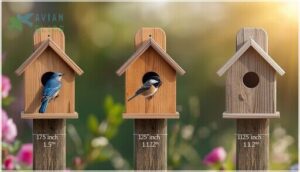
You’ll want to match your entrance hole to each bird’s body size and nesting habits. Bluebirds thrive with a precise 1.5-inch opening that balances species diversity with nesting safety. Chickadees and wrens prefer tighter quarters—1.125 to 1.25 inches works beautifully. Proper birdhouse hole size and strategic birdhouse placement keep your feathered neighbors safe while deterring unwanted guests.
| Species | Entrance Hole Size |
|---|---|
| Bluebirds | 1.5 inches |
| Chickadees | 1.125–1.25 inches |
| Wrens | 1.0–1.125 inches |
| Combined range | 1.0–1.5 inches |
Finches, Nuthatches, and House Sparrows
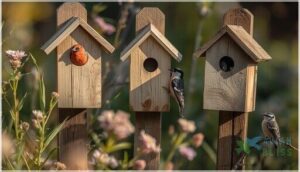
House finches need a 1.25 to 1.375-inch entrance hole—slightly larger than wrens but still compact. Nuthatches work best with a 1.25-inch opening that suits their nuthatch habitat preferences.
House sparrows compete for 1.375 to 1.5-inch holes, so you’ll want to choose your birdhouse hole size carefully to favor nesting birds you’re hoping to attract while balancing birdseed preferences and nesting materials availability.
Larger Birds: Flickers, Woodpeckers, and Owls
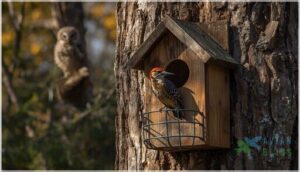
Flicker habitats and woodpecker behavior demand larger birdhouse hole sizes—usually 2.5 inches for these cavity excavators. Owl nesting requires even bigger owl boxes with 3 to 6-inch entrance holes, depending on bird species. For smaller backyard visitors like chickadees and wrens, kid-friendly birdhouse designs with 1¼-inch openings offer the perfect balance of accessibility and protection.
Mount large birdhouses at least 10 feet high for predator protection. You’ll also want sturdy predator guards, since these openings can become a predator’s buffet without proper safeguards.
Birds That Prefer Open Platforms
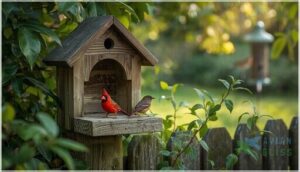
Cardinals, robins, and other ground birds skip traditional entrance holes altogether—they need platform nesting with open designs. These bird species prefer 8×8-inch floors exposed on at least two sides for easy access. You won’t worry about birdhouse hole size here.
Instead, place open platforms 5 to 8 feet high in urban habitats near bird feeding stations, sheltered by foliage for nesting birds’ safety.
How Entrance Hole Size Prevents Predators and Pests

The right entrance hole doesn’t just welcome the birds you want—it keeps out the ones you don’t. A hole that’s too large becomes a predator’s buffet, inviting starlings, raccoons, and other unwelcome guests to raid nests.
Here’s how precise sizing acts as your first line of defense.
Blocking Invasive Species With Proper Sizing
You can turn your nest box into a fortress against invasive species with one simple trick: precise entrance hole diameter. A 1.375-inch opening creates species selectivity that welcomes native songbirds while blocking larger invaders. Here’s how proper sizing delivers nest box security:
- Starlings and house sparrows can’t squeeze through openings under 1.5 inches
- Squirrels lose their access advantage when holes match your target bird species
- Predator exclusion improves dramatically with species-specific measurements
- Uniform hole size across your property prevents unintended pest invasions
Studies confirm measurable drops in nest competition when entrance holes align with native cavity nesters.
Reducing Predation Risks
Your entrance hole acts as the first line of defense against mammalian and avian predators. Strategic entrance design combines proper hole size with placement clearance to protect nesting birds from reaching paws and beaks. Here’s how birdhouse security reduces predation:
| Predator Type | Threat to Nest Safety | Entrance Design Solution |
|---|---|---|
| Raccoons | Extended reach through openings | 4+ inch depth from hole to floor |
| Squirrels | Gnawing enlarges entrance holes | Metal reinforcement rings |
| Cats | Scraping at entry points | Minimize perches near opening |
| Snakes | Slithering through gaps | Sealed joints, proper sizing |
| Larger birds | Outcompeting target bird species | Species-specific hole diameter |
Position your entrance away from climbing routes. Clearance around the hole prevents predators from gaining leverage for predator prevention.
The Role of Predator Guards
Metal guards project beyond your entrance hole to block climbing predators while keeping target bird species safe. You’ll want guards sized to preserve the original entrance opening—bluebirds and chickadees pass through freely while raccoons and squirrels can’t reach inside.
Choose weather-resistant guard materials with smooth edges, and check that fasteners stay tight through seasonal temperature swings for consistent predator protection.
Birdhouse Design Factors Influencing Entrance Hole Size
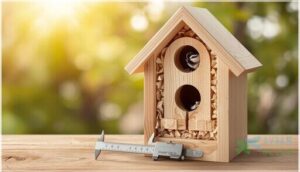
Your entrance hole doesn’t work alone—it’s part of a complete system. The box’s interior depth, the materials you choose, and even how cleanly you cut that hole all influence which birds will move in and raise their young successfully.
Let’s look at three design factors that directly affect your entrance hole’s performance.
Matching Hole Size to Interior Dimensions
Your birdhouse design won’t work if the entrance hole and interior don’t match. The entrance diameter should align with your floor area—usually the hole diameter equals the interior width plus a small clearance for airflow. Think of it as sizing a doorway for your home.
- Nesting chamber depth affects how comfortably adults pass through smaller entrance holes without crowding hatchlings
- Circular cuts with smooth edges prevent injury and guarantee the hole size calculations actually protect your target bird species
- Ventilation systems near the roof work best when entrance diameter doesn’t create pressure imbalances inside
Uniform birdhouse hole size standards mean safer, more inviting spaces.
Choosing The Right Materials for Durability
Cedar, cypress, and untreated pine resist rot for 5–10 years without toxic coatings. Your material selection directly affects how long entrance holes maintain their precise diameter—swelling wood warps openings and turns safe nest boxes into predator access points.
| Material Choice | Durability Benefit |
|---|---|
| Decay-resistant hardwoods | Minimize moisture swelling |
| Galvanized screws | Resist freeze–thaw loosening |
| UV-blocking stains | Reduce sun-related cracking |
| Breathable sealants | Prevent trapped moisture rot |
Weather-resistant fasteners and semi-transparent finishes preserve your bird-friendly design for multiple nesting seasons.
Importance of Clean, Circular Hole Cuts
Once you’ve chosen rot-resistant lumber, cutting technique becomes just as important. A clean, circular entrance hole with smooth edges prevents injury to nestlings and maintains predator protection over multiple seasons.
Ragged cuts create splinters that snag feathers and allow cracks to spread during freeze–thaw cycles. Use a sharp drill bit or hole saw—then file any rough spots—to preserve accurate entrance hole diameter and guarantee your birdhouse hole size stays safe year after year.
Placement and Maintenance Tips for Optimal Birdhouse Use
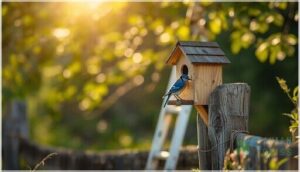
Getting the entrance hole size right is only half the battle. Where you place your birdhouse and how you care for it determine whether birds will actually move in and raise their young safely.
Let’s walk through the key placement decisions and maintenance habits that’ll turn your birdhouse into a thriving home.
Ideal Height and Location for Different Species
Height isn’t one-size-fits-all—it’s determined by species habitat preferences and regional variations. Chickadees favor nest box placement at 5 to 8 feet in woodlands, while bluebirds thrive at 4 to 6 feet in open yards. Wrens occupy boxes mounted 5 to 10 feet high near dense shrubbery. For urban birding or woodpeckers, position boxes 12 to 20 feet up.
Proper birdhouse orientation and entrance hole sizing guarantee nesting bird safety with predator protection built in.
Distance From Feeders and Human Activity
Once you’ve positioned your birdhouse at the right height, consider how nesting disturbance from nearby feeders affects bird behavior. Your backyard birding setup needs breathing room. Here’s what matters for habitat selection and reducing human impact:
- Place nest boxes 20–30 meters from high-traffic zones
- Keep birdhouse hole size appropriate, with predator guard installed
- Bluebirds and chickadees avoid boxes within 10 meters of foot traffic
- Feeders alter territory dynamics—distance matters for entrance hole diameter success
- Quiet zones boost occupancy for wrens, especially spring through early summer
Seasonal Cleaning and Inspection for Safety
Clean your birdhouse twice yearly—after spring and late summer nesting seasons—to maintain nesting bird safety and proper birdhouse maintenance. Safety checks should include inspection logs documenting predator guards, ventilation maintenance, and entrance hole integrity. Remove old material to prevent parasites, then disinfect with a gentle solution.
These cleaning schedules improve birdhouse design longevity while supporting effective predator prevention and birdhouse construction standards throughout each cycle.
Frequently Asked Questions (FAQs)
Can I adjust hole size for multiple species?
Multi-species housing works best with intermediate entrance hole diameters—25 to 5 inches attracts bluebirds and chickadees while excluding larger cavity-nesters.
Hole size calibration balances species compatibility with adjustable entrances for targeted nesting preferences.
How does climate affect entrance hole diameter recommendations?
Temperature fluctuations cause wood expansion and contraction, shifting entrance hole diameter by several millimeters.
Humidity effects and regional patterns also influence which bird species access your birdhouse, requiring weather-resistant materials and climate-adjusted sizing.
Should entrance holes face a particular direction?
Direction isn’t critical for most cavity nesters, but you’ll reduce afternoon heat gain in warm climates by choosing north or east-facing entrances, protecting your nest temperature while maintaining proper entrance hole diameter for species attraction.
Do metal entrance hole reinforcements deter birds?
Metal reinforcement doesn’t deter most bird species if you maintain the correct entrance hole diameter.
These predator guards actually improve nest box security by preventing predators from enlarging openings while supporting bird-friendly design.
When should I replace a worn entrance hole?
Don’t wait for total collapse. Replace your entrance hole when the diameter grows more than 1/8 inch, edges crack or splinter, or rot appears nearby—protecting nest safety and preserving predator guard effectiveness.
Conclusion
Your tape measure holds more power than you’d think—those precise entrance hole dimensions become the gatekeeper between thriving nests and empty boxes. What size entrance hole for bird houses you choose determines which species raise their young safely in your yard.
Drill confidently with the measurements you’ve learned, add predator guards where needed, and mount each box at the right height. You’re not just building shelter—you’re architecting survival, one carefully measured circle at a time.