This site is supported by our readers. We may earn a commission, at no cost to you, if you purchase through links.
Most beginners step outside expecting bright feathers to announce every bird’s arrival, but experienced watchers know better. Shape tells the story first—a stocky silhouette perched on a wire signals a different family than a slender form darting through branches.
Your eyes pick up these proportions before your brain registers color, which means learning what to look for when bird watching starts with training yourself to see structure, not just plumage. The curve of a bill, the length of a tail, the way wings fold against a body—these details separate similar species faster than waiting for perfect lighting on those field guide colors.
Once you know where to direct your attention, every outing becomes a puzzle your eyes are keen to solve.
Table Of Contents
- Key Takeaways
- Key Features to Observe When Bird Watching
- Essential Bird Watching Gear
- Bird Identification Tips for Beginners
- Best Times and Places for Bird Watching
- Bird Watching Etiquette and Safety
- Top Bird Watching Products to Consider
- Joining Bird Watching Communities
- Frequently Asked Questions (FAQs)
- What are some common birdwatching mistakes?
- What does every bird watcher need?
- How do I attract rare birds to my backyard?
- What weather conditions are best for bird watching?
- Can I go bird watching during winter months?
- How do I photograph birds in flight effectively?
- What should I do if I find an injured bird?
- Conclusion
Key Takeaways
- Shape and structure—like bill curve, tail length, and wing proportions—reveal a bird’s identity faster than waiting for perfect lighting on field guide colors.
- Learning bird calls and songs opens up identification opportunities that visual cues miss, since many species hide in thick foliage but announce themselves through distinctive sounds.
- Your backyard becomes a birding hotspot when you combine native plants, well-placed feeders near cover, and fresh water sources that attract diverse species year-round.
- Ethical birding means backing off the moment you see stress signals like alarm calls or frozen behavior, keeping at least 100 yards from nests, and sticking to marked trails to protect fragile habitats.
Key Features to Observe When Bird Watching
When you’re out in the field, knowing what to look for can turn a blur of feathers into a clear identification. The trick is breaking down each bird into observable pieces—size, color, shape, and behavior all tell part of the story.
Once you’ve got the basics down, learning to identify birds in my backyard becomes easier when you start noticing subtle field marks like wing bars and eye stripes.
Let’s walk through the key features that’ll help you identify almost any bird you encounter.
Bird Size and Shape
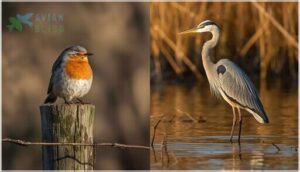
Body proportions reveal identity before you even register color. You’ll spot a robin’s compact frame in seconds, while a heron’s stretched silhouette gives it away from across the marsh. Learning these shapes transforms your field guide from a puzzle into a quick reference tool.
- Compare wing shapes in flight—falcons slice through air with pointed tips, while hawks glide on broader, rounded wings
- Notice tail length against overall body size; short-tailed birds look stubby and compact, long-tailed species appear graceful and flowing
- Check beak size relative to the head—tiny warbler bills versus the thick, cone-shaped beaks finches use for cracking seeds
- Study how legs relate to body structure; long-legged waders stand tall in water, while perching birds show shorter, gripping legs
- Observe head and neck proportions that separate bird species—owls sport oversized, rounded heads while many songbirds barely show a neck at all
Studying bird structure and silhouette is a foundational skill for quickly narrowing down possible species in the field.
Plumage Colors and Patterns
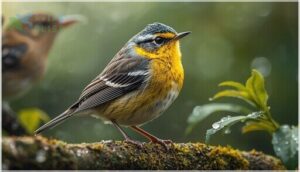
Once you’ve sized up a bird’s frame, colors and patterns seal the deal. Pattern recognition becomes your fastest bird identification tool. An eyering alone separates vireos from similar species, while wing bars flash on warblers even when they’re backlit.
| Pattern Type | What to Spot |
|---|---|
| Head markings | Eyebrow stripes, dark eyelines, throat patches |
| Wing features | Light wing bars, iridescent speculum on ducks |
| Breast patterns | Spots, streaks, or solid color blocks |
| Tail details | White outer feathers, contrasting bands |
Watch how molt cycles shift these patterns through seasons—breeding males show off bold colors while females stay camouflaged.
Observing a bird’s overall size and shape is also a fundamental step in accurate identification.
Bill and Leg Characteristics

After you’ve locked in colors and patterns, bills and legs reveal how birds make a living. Their hardware tells the story.
- Cone shaped bills on finches crack seeds, while hooked tips on hawks tear flesh
- Long slender bills let hummingbirds reach nectar deep inside flowers
- Leg length separates wading herons from ground-feeding sparrows
- Toe arrangement varies—woodpeckers grip with two forward, two back
- Feathered legs down to the toes mark owls and grouse in your field guide
Bird Behavior and Movement
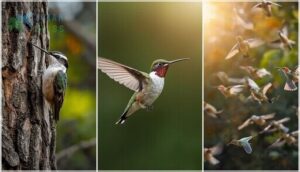
Bills and legs hint at what birds eat, but watching how they move unlocks their whole lifestyle. Movement turns static field marks into living patterns you’ll recognize anywhere.
| Movement Type | What You’ll See |
|---|---|
| Foraging Patterns | Songbirds hop along branches; nuthatches scurry headfirst down trunks; flycatchers dart from perches to snatch insects mid-air. |
| Flight Styles | Finches bound up and dip in roller-coaster arcs; herons beat slow, deliberate wings; hummingbirds blur into stationary hover. |
| Social Behaviors | Chickadees travel in chatty groups; sparrows dive together into cover when startled; some species forage alone or join mixed flocks. |
Posture reveals personality too—nervous finches scan constantly, while bold crows lean forward ready for action.
Habitat and Location

Where you watch matters as much as what you’re watching. Habitat diversity drives which species show up—forest edges pull in more birds than dense buildings, while water sources attract ducks and herons year-round.
Migration patterns shift hotspots by season, so check field guide maps for birding locations and habitats. Edge effects and landscape features concentrate activity, making habitat and ecosystem preservation vital for reliable bird identification.
Essential Bird Watching Gear
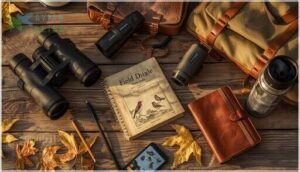
You don’t need to spend a fortune to get started with bird watching. A few basic items will help you see birds more clearly and keep track of what you find.
Here’s what you should consider bringing along on your birding adventures.
A reliable small brown bird identification guide can help you distinguish between similar species based on subtle plumage details and size differences.
Choosing The Right Binoculars
Your first big choice in bird watching equipment comes down to binocular magnification and optical quality. Most birders reach for 8×42 binoculars because they balance power with steady field views, letting you track fast-moving warblers without the wobble.
Eye relief matters if you wear glasses, and prism types affect weight—roof prisms keep your birding gear compact while porro designs deliver wider depth.
Using Field Guides and Bird Apps
Field guides and birding apps work best when you master both. Modern field guide navigation groups birds by family—warblers or hawks on facing pages—so you can compare look-alikes fast.
Digital tools like Merlin and the eBird app use GPS for species research, while the Audubon Bird Guide App offers strong visuals.
Pair a printed field guide with digital checklists for rock-solid bird identification anywhere.
Keeping a Birding Notebook
A weatherproof notebook like the Rite in the Rain Birders Journal transforms your outings into a permanent record. Solid journaling techniques mean jotting down the date, location, weather, and species counts while birds are still in view—details fade fast!
Field note tips include sketching key markings and noting behavior for tricky bird identification. Later, transfer your bird logging into eBird to contribute to citizen science and track your personal milestones.
Optional Camera Equipment
You don’t need expensive gear to enjoy bird identification, but a camera setup offers opportunities for wildlife photography that binoculars can’t match. Consider these birding essentials and equipment if you’re curious about capturing moments:
- Telephoto lenses (400–600 mm) frame small birds sharply without disturbing them; teleconverters extend reach affordably
- Tripods reduce shake during long waits and keep heavy setups steady
- Lens hoods and padded camera straps cut glare and boost comfort on outdoor activities and recreation trails
Bird Identification Tips for Beginners
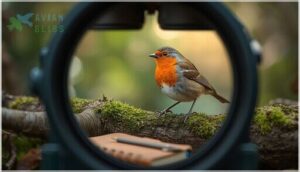
You’ve got your binoculars ready and you’re keen to start putting names to the birds you see. The trick is knowing what to focus on when a bird lands in view.
Here are some straightforward tips that’ll help you identify birds faster and build your skills with each outing.
Using Field Marks for Quick ID
When you spot a bird, look for quick clues like eyebrow stripes, wing bars, and tail shapes to pin down the species. These field marks help you sort through your field guide or app in seconds.
Notice whether the head shows an eye ring, count how many wing bars you see, and check if the tail is forked or rounded—combining several clues makes bird identification faster and more confident.
Listening for Bird Calls and Songs
Visual cues aren’t the only way birds reveal themselves—your ears can open whole new worlds of bird identification. Many species hide in thick foliage but announce their presence through distinctive calls and songs, so learning bird song patterns turns every walk into an audio treasure hunt.
Tuning into soundscapes analysis reveals which birds dominate each habitat, turning bird watching into a richer sensory experience beyond what any field guide shows you.
- Separate songs from calls: Songs are complex melodies males use to attract mates, while calls are short chips or chirps for staying in touch.
- Use mnemonics: Match sounds to phrases like “drink-your-tea” for Eastern Towhees to cement vocal learning in your memory.
- Record and compare: Audio recording on birding apps lets you capture mystery sounds and match them against field guide libraries for confident call identification.
Noting Seasonal Variations
Birds don’t wear the same outfit year-round, and understanding plumage variations across seasons sharpens your bird identification techniques like nothing else. Spring migration patterns bring songbirds in dazzling breeding colors, while fall reveals duller feathers that challenge even experienced watchers.
Seasonal feeding shifts also drive habitat changes—winter pushes insect-eating species south, concentrating waterfowl on ice-free lakes and transforming bird behaviors you’ll observe in your own backyard.
Recognizing Common Local Species
Start by learning the ten to twenty species you see most often in your yard or neighborhood park. These local regulars—chickadees, sparrows, cardinals—build your foundation for species recognition fast.
Once you know their feather patterns, beak shapes, and preferred bird habitats, you’ll spot them instantly and compare new visitors against these familiar benchmarks.
Best Times and Places for Bird Watching

You don’t need to travel far to find birds worth watching. The truth is, some of the best birding happens right in your own neighborhood if you know when and where to look.
Let’s explore the most rewarding spots and times to grab your binoculars and start spotting.
Early Morning Bird Activity
You’ll discover the richest bird watching between dawn and a few hours after sunrise, when songbirds create what’s called the dawn chorus. This burst of early feeding and bird vocalization happens as birds replace overnight energy loss and mark territories.
Grab your binoculars about 30 minutes before sunrise for the best birding, especially during spring when bird identification becomes easier through intense morning foraging activity and sunrise habits.
Backyard Bird Watching
Your own backyard can become a hotspot for seasonal birding when you combine smart yard layout tips with bird-friendly plants and well-placed bird feeders.
Position a bird feeder near shrubs for quick cover, keep your bird bath maintenance simple with fresh water every few days, and watch through binoculars as cardinals, wrens, and goldfinches turn your space into prime bird-watching territory.
Parks, Trails, and Nature Reserves
Nature reserves and well-maintained parks offer the real freedom to explore diverse habitats in one outing. Trail maintenance keeps paths clear so you can walk through forests, wetlands, and meadows without damaging nests or plants, while park rules protect habitat restoration zones.
Look for these birding hotspots:
- Viewing platforms that lift you above marsh plants for wider scans
- Loop trails linking lakes to woods for varied wildlife observation
- Marked overlooks where migrants gather during outdoor activities
Urban Birding Opportunities
Cities hold surprising birding secrets if you know where to look. Green roofs attract nearly three times more bird species than bare buildings during migration, while city waterfronts draw waterfowl and shorebirds year-round.
Even landfill birds and balcony feeders reveal unexpected diversity. Grab your binoculars and scan vegetated rooftops, harborfront parks, or set up a simple backyard bird bath to catch urban migration waves.
Bird Watching Etiquette and Safety

Getting close to birds is exciting, but it comes with real responsibility. You’re stepping into their world, and how you act can make the difference between a thriving habitat and a stressed one.
Here’s what you need to know to watch birds safely and ethically while protecting the places they call home.
Respecting Bird Habitats
Your presence in the field shapes how birds live, nest, and thrive. Habitat preservation starts with simple, mindful choices every time you watch.
- Stick to marked trails to avoid trampling nests hidden in vegetation or fragile ground cover
- Skip shortcuts through wetlands or dunes where your footsteps can damage years of ecosystem growth
- Support bird conservation by choosing eco-friendly practices and minimizing noise that disrupts territorial songs
Keeping a Safe Distance
Watch how your target reacts. If the bird stops feeding, freezes, or starts alarm calling, you’ve crossed into its comfort zone. Ethical birding means backing off the moment you see stress signals.
If a bird stops feeding, freezes, or alarm calls, you’ve crossed into its comfort zone—back off immediately
Use binoculars or a zoom lens to bring the view closer without shrinking the distance. For nesting birds, stay at least 100 yards out—sometimes farther for sensitive species like eagles or ground-nesters.
Following Area Rules and Regulations
Signs, permits, and posted rules aren’t red tape—they’re the framework that keeps wild spaces wild. Before you head out, check if your chosen spot requires day passes or advance permits. Many refuges enforce these to manage foot traffic and protect sensitive habitats during breeding season.
- Respect trail restrictions that mark off nesting zones or fragile wetlands where ground-nesting birds raise their young.
- Follow leash laws in parks and refuges to prevent dogs from flushing birds or trampling habitat.
- Obey drone bans enforced by the National Park Service and other agencies to avoid harassment of wildlife.
- Honor seasonal closures posted at trailheads to give birds safe space during critical nesting periods.
Violating federal protections like the Migratory Bird Treaty Act can bring fines up to $15,000 per offense. Wildlife management depends on your cooperation with these conservation efforts.
Minimizing Environmental Impact
Your birding choices ripple outward into the ecosystems you explore. Low carbon travel—swapping drives for local patch birding by bike or foot—cuts emissions threatening two-thirds of North American species.
Clean feeders prevent disease spread, while staying on trails protects ground-nesting habitat.
Sustainable birding means skipping flash photography at night, reducing playback stress, and supporting conservation through citizen science. Responsible birding preserves what you came to see.
Top Bird Watching Products to Consider
Having the right gear can make or break your birding experience, especially when you’re just starting out. You don’t need to spend a fortune, but investing in a few quality products will help you spot more birds and actually enjoy the process.
Here are some tried-and-true options that birders recommend time and time again.
1. Celestron Nature Binoculars
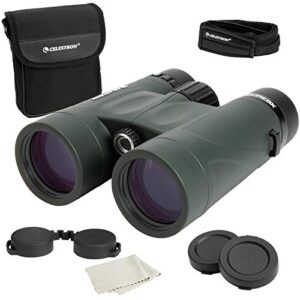
The Celestron Nature DX line delivers solid optical performance without emptying your wallet. Models like the 8×42 balance steady images with enough magnification to spot fine details on small birds.
BaK-4 prisms and fully multi-coated lenses keep views bright even in low light, while the rubber-armored, waterproof housing stands up to rain and rough handling.
With a close focus of 6.5 feet, you can watch songbirds at your feeder or shift to distant raptors without switching gear!
| Best For | Budget-conscious birdwatchers and hikers who want reliable optics for everyday nature observation without spending a fortune. |
|---|---|
| Magnification | 8x |
| Weight | 1.75 pounds |
| Primary Use | Birdwatching |
| Durability Features | Waterproof and fogproof |
| Portability | Compact and lightweight |
| Price Point | Mid-range |
| Additional Features |
|
- BaK-4 prisms and fully multi-coated lenses deliver bright, sharp images even in low light conditions
- Waterproof and fogproof rubber-armored housing handles rain and rough outdoor use
- 6.5-foot close focus lets you watch nearby songbirds and distant wildlife without switching gear
- Eye cup screws may fall out during regular use
- Included strap feels cheap and may need replacement
- Design can be uncomfortable during long viewing sessions
2. Bushnell R3 Binoculars
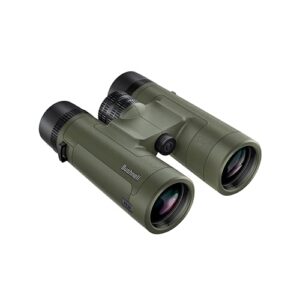
Bushnell’s R3 series offers birders HD optics and rugged protection at a mid-range price. The 8×42 model gives you a wide 325-foot field of view at 1,000 yards, making it easier to track warblers darting through branches or hawks circling overhead.
IPX7 waterproofing means you can keep watching even in heavy rain, and the EXO Barrier coating sheds water and smudges so you spend less time wiping lenses.
With 21 millimeters of eye relief, these binoculars work great if you wear glasses!
| Best For | Birders and outdoor enthusiasts who need reliable, waterproof binoculars with HD optics for wildlife watching in varying weather conditions. |
|---|---|
| Magnification | 8x |
| Weight | 21.3 ounces |
| Primary Use | Birdwatching |
| Durability Features | IPX7 waterproof |
| Portability | Includes chest harness |
| Price Point | Mid-range |
| Additional Features |
|
- HD optical system delivers sharp, bright images with excellent color accuracy for spotting fine details on birds
- IPX7 waterproof rating and EXO Barrier coating protect against rain and keep lenses clear without constant cleaning
- Long 21mm eye relief makes them comfortable for eyeglass wearers during extended viewing sessions
- Mid-range price point may be steep for casual users or beginners just getting into birding
- At 21.3 ounces, they’re somewhat heavy for all-day use without the included harness
- Included chest harness may feel unnecessary or cumbersome for users who prefer traditional neck straps
3. Sibley Guide To Birds Second Edition
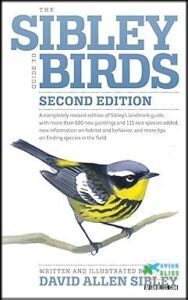
If you want one guide that covers nearly every bird you’ll see in North America, grab the Sibley Guide to Birds Second Edition. David Allen Sibley packed 923 species into this single volume, with nearly 7,000 illustrations that are about 15 to 20 percent larger than the first edition.
That means field marks pop off the page, so you can spot those subtle wing bars or tiny bill differences that separate similar species. The updated range maps show where each bird lives throughout the year!
| Best For | Serious birders and naturalists who want the most comprehensive single-volume reference for identifying North American birds, and don’t mind carrying a heavier book. |
|---|---|
| Magnification | N/A |
| Weight | 3 pounds |
| Primary Use | Bird identification |
| Durability Features | Hardcover binding |
| Portability | Heavy, not portable |
| Price Point | Premium reference |
| Additional Features |
|
- Covers 923 species with nearly 7,000 detailed illustrations that are 15-20% larger than the previous edition, making field marks easier to spot
- Updated range maps show seasonal distribution (winter, summer, year-round, migration, and rare ranges) for every species
- Includes expanded text with habitat details and voice descriptions, plus 600 new paintings covering 115 rare species
- Weighs 3 pounds and measures nearly 10 inches tall, making it impractical to carry in the field
- Small font size can be challenging for readers with vision difficulties
- Some users report the illustration colors appear too dark or inconsistent in reproduction
4. National Geographic Bird Field Guide

For western birders, the National Geographic Field Guide to the Birds of Western North America delivers nearly 1,000 species from California to Alaska, including Hawaii.
You get data-driven maps built from eBird crowd-sourced records, showing exactly where each bird appears through the year. Annotated illustrations sit on the right page, while text and maps line up on the left, so you can compare everything at a glance.
Thumb tabs let you flip straight to shorebirds or raptors without fumbling through chapters mid-hike.
| Best For | Western birders who want a comprehensive, data-backed guide covering everything from backyard species to rare finds across North America’s western regions and Hawaii. |
|---|---|
| Magnification | N/A |
| Weight | 1.43 pounds |
| Primary Use | Bird identification |
| Durability Features | Paperback binding |
| Portability | Pocket-sized |
| Price Point | Budget guide |
| Additional Features |
|
- Nearly 1,000 species with eBird-powered maps that show real-time distribution patterns throughout the year
- Smart layout puts illustrations and text side-by-side for quick field comparisons without flipping pages
- Thumb tabs and visual index make it easy to jump to specific bird families while you’re out in the field
- Small gray text can strain your eyes, especially if you’re reading in dim light or need reading glasses
- State boundaries on range maps are faint and hard to make out at a glance
- Hawaiian birds are mixed throughout instead of grouped separately, which can slow you down if you’re only birding the mainland
5. Henzavk Squirrel Proof Wild Bird Feeder
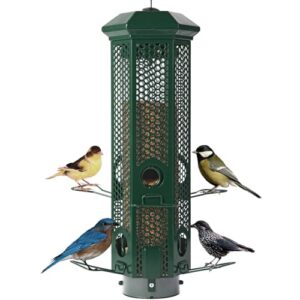
The Henzavk squirrel proof feeder uses a metal cage surrounding a thick plastic seed tube to keep raiding squirrels away from your birdseed. Six feeding ports with metal perches let multiple small birds feed at once, while the chew-resistant frame holds up through rain and snow.
You’ll refill the three-pound capacity less often than smaller feeders, and the removable base makes cleanup quick.
Keep in mind some users report fragile perches, so you might need to monitor wear over time.
| Best For | Backyard birders who want to protect their seed from squirrels while hosting multiple small birds at feeders that are easy to maintain. |
|---|---|
| Magnification | N/A |
| Weight | 2.68 pounds |
| Primary Use | Bird feeding |
| Durability Features | Metal outer frame |
| Portability | Outdoor hanging |
| Price Point | Mid-range |
| Additional Features |
|
- Weight-activated design keeps squirrels out while letting songbirds feed freely
- Six ports with perches accommodate several birds at the same time
- Removable base makes refilling and cleaning straightforward
- Perches can be fragile and may fall off with regular use
- Three-pound capacity means you’ll need to refill more often than larger feeders
- May not stop larger birds like blue jays from accessing the seed
Joining Bird Watching Communities

Bird watching doesn’t have to be a solo adventure. Connecting with other birders opens up new learning opportunities and makes the hobby more rewarding.
Here are three ways you can tap into the birding community and take your skills to the next level.
Benefits of Local Birding Clubs
Joining a birding community through a local club creates opportunities you won’t find on solo hikes. These groups run field trips to hidden hotspots, offer skill-building workshops, and connect you with experienced birders who share techniques freely.
Club membership benefits include access to loaner gear, conservation projects, and volunteer opportunities that turn your passion into real impact.
Plus, birding alongside others who love what you love? That’s pure joy.
Participating in Citizen Science Projects
Bird surveys through citizen projects turn your everyday observations into data that drives conservation efforts. The eBird database stores over one billion records from birders worldwide, helping scientists track migrations and population trends.
Join the Great Backyard Bird Count each February or the Christmas Bird Count between December and January—both welcome newcomers and make real environmental impact through community engagement.
Learning From Experienced Birders
Seasoned birders can accelerate your learning curve faster than any app or book. Guided tours with local experts show you how to scan efficiently, listen for subtle calls, and decode tricky field marks in real time.
Join workshops and mentorship programs through your local club to sharpen skills and build confidence:
- Experienced leaders point out productive hotspots where rare species appear reliably
- Mentors offer immediate feedback on confusing identification challenges during walks
- Seasonal outings during migration peaks expose you to higher bird diversity
- Community outreach events pair beginners with patient, knowledgeable trip leaders
- Regular practice with veteran birders teaches ethical field behavior and low-impact techniques
This hands-on skill building transforms guesswork into genuine birding essentials mastery.
Frequently Asked Questions (FAQs)
What are some common birdwatching mistakes?
New birders often struggle with poor observation skills, misidentification, and disturbing habitat. Gear errors like choosing the wrong binoculars, ignoring safety basics, and skipping etiquette also trip up beginners.
What does every bird watcher need?
You don’t need much to get started—just binoculars, a field guide or app, and comfortable clothes. These birding essentials help you spot, identify, and enjoy birds wherever you explore.
How do I attract rare birds to my backyard?
Plant native shrubs and grasses to boost insect life, and offer specialized bird feeders with suet or fruit.
Add a shallow water feature with moving water, and install nesting boxes for cavity-nesting bird species in your backyard.
What weather conditions are best for bird watching?
Calm, clear mornings with mild temperature ranges between 50 and 70 degrees bring peak activity. Light wind conditions and cloud cover improve visibility, while seasonal shifts after gentle rain patterns create excellent birding opportunities outdoors.
Can I go bird watching during winter months?
Yes, winter birding offers unique opportunities to spot raptors, owls, and resident species against snowy habitats. Cold weather gear and binoculars help you track winter migration patterns around frozen lakes and backyard feeders.
How do I photograph birds in flight effectively?
Capturing birds mid-flight feels impossible at first—yet freezing motion comes down to shutter speed above 1/1600 second, continuous autofocus tracking, and smooth panning that matches the bird’s path through your viewfinder.
What should I do if I find an injured bird?
If you spot a bird that appears injured, first watch from a distance to assess whether it’s truly hurt or just a young fledgling learning to fly.
Knowing the difference matters for bird rescue and wildlife observation and study.
Conclusion
Knowing what to look for when bird watching transforms a casual glance into a sharp-eyed skill, like learning to read a new language written across the sky. Every silhouette you study, every field mark you memorize, every dawn patrol you take builds your fluency in the wild’s quietest conversations.
You’re not just collecting sightings—you’re training your attention to catch what others miss. Step outside with fresh eyes tomorrow, and watch how quickly the world reveals what it’s been hiding in plain sight.
- https://www.sandmarc.com/blogs/articles/a-beginners-guide-to-birdwatching
- https://www.peleewings.ca/blog/beginner-birding-gear/
- https://www.bipocbirdingclub.org/birding-blog/how-to-identify-birds
- https://www.massaudubon.org/news/latest/birding-for-beginners
- https://www.foxnews.com/deals/items-help-you-get-into-bird-watching