This site is supported by our readers. We may earn a commission, at no cost to you, if you purchase through links.

Your neighborhood cardinals showed up promptly at 7:15 this morning, but the feeder sat empty. They circled twice, then left—probably headed to your neighbor’s well-stocked setup instead. Birds don’t wait around when food runs out, and once they establish new feeding routes, winning them back takes weeks of consistent effort.
The question isn’t whether to refill your feeders, but when and how often to keep them coming back. Refill timing shifts dramatically with seasons, weather patterns, and local bird populations, creating a rhythm that matches nature’s own cycles. Getting this schedule right means healthier birds, less wasted seed, and a backyard that becomes a reliable haven throughout the year.
Table Of Contents
Key Takeaways
- Refill frequency depends on season and bird activity, with winter requiring checks every 2-3 days due to higher energy demands, while summer extends to 3-5 days with spoilage concerns driving the timeline.
- Morning refills align with birds’ natural feeding patterns when they’re hungriest after burning overnight fat reserves, while evening refills risk attracting nocturnal pests like rats and mice.
- Consistent refill schedules build trust and increase bird visits by 20-40%, transforming your yard into a reliable food source that birds incorporate into their daily routines.
- Regular maintenance during refills prevents disease transmission—scrub feeders every two weeks, discard moldy or clumped seed immediately, and store bulk seed in airtight containers to maintain freshness for 6-12 months.
How Often Should You Refill Bird Feeders?
Your refill schedule depends on several moving parts, from the season to how many birds are stopping by. During peak winter months and migration periods, you’ll usually refill every 2 to 5 days, while summer might stretch that timeline a bit.
If you’re trying to attract specific species for bird feeders for wildlife photography, expect busier feeders and more frequent refills during those prime shooting hours.
Let’s break down the timing factors that’ll help you keep your feeders stocked without waste.
If you’re using window-mounted designs, check out window bird feeders with strong suction to minimize refill trips while keeping birds close.
Recommended Refill Frequency by Season
Generally, your refill frequency shifts with the calendar. Winter feeding demands checks every 2–3 days to combat moisture and keep energy-rich seeds available. Summer feeding adjustments shorten to every 3–5 days due to heat and spoilage risk.
If you’re concerned about nearby pets, consider choosing feeders designed to keep cats away from visiting birds while maintaining your regular refill schedule.
Spring and fall feeding patterns allow 4–7-day intervals, aligning with moderate climate effects and bird migration surges. Seasonal patterns dictate feeder maintenance, ensuring your refill schedules match nature’s rhythm.
Factors Affecting Refill Timing
While seasonal feeding adjustments guide your baseline refill schedules, several factors fine-tune your timing. Weather patterns accelerate seed spoilage during humid spells, requiring more frequent feeder refills.
Local bird migration surges can drain feeders rapidly, while feeder capacity and seed types influence consumption rates. You’ll also notice that bird population density in your area directly impacts refill frequency, making observation your most valuable tool.
Keeping feeders clean and stocked with quality seed varieties that match local species preferences helps maintain consistent bird activity throughout migration periods.
Signs Feeders Need Refilling
Your birds will tell you when they’re running low—you just need to know what to look for. Observing the bird feeder dynamics can provide valuable insights into their behavior.
When feeder levels drop below one-quarter full, bird activity generally increases as competition intensifies. Check feeder weight during your refill schedule, since lightweight hoppers indicate depleted seed types. Monitor for seed moisture and empty ports—both signal it’s time for feeder refills and maintenance.
Best Times of Day to Refill Feeders

The time of day you refill your feeders can make a real difference in how well birds respond and how much trouble you avoid. Morning refills align with natural feeding patterns and help you sidestep unwanted nighttime visitors, while evening timing carries its own set of trade-offs.
Let’s look at how different refill schedules affect both your feathered guests and your backyard ecosystem.
Morning Vs. Evening Refills
Most feeder-friendly birds wake hungry and scout for breakfast right after dawn. Refilling your feeders in the morning aligns with their natural bird routines, boosts seed freshness throughout the day, and helps you avoid attracting nocturnal pests that evening feeder refills might invite. Smart refill schedules make a real difference.
- Early morning feeder maintenance aligns perfectly with peak feeding activity in your backyard
- Dawn feeding reduces daytime heat exposure, which can spoil seeds faster
- Evening refills risk attracting unwanted visitors like raccoons or mice
- Consistent bird feeding strategies improve return visits from your favorite species
Aligning With Birds’ Natural Feeding Habits
Throughout the day, feeder visitors follow predictable daily rhythms driven by energy balance and natural cues. Most songbirds show a distinct “morning rush” shortly after sunrise and an “evening supper” peak about two hours before sunset, when they’re rebuilding overnight fat reserves and preparing for roosting.
During midday lulls, you can clean feeders or plan your backyard bird sanctuary layout to maximize these peak feeding windows.
Understanding the importance of daily feeding practices is essential for supporting wild bird nutrition and diet. Aligning feeder refills with these natural feeding patterns assists wild bird nutrition and diet while maximizing your impact on seasonal bird feeding success.
| Time of Day | Bird Behavior & Feeding Patterns |
|---|---|
| Dawn (Sunrise) | Peak activity begins; birds burned fat reserves overnight and need immediate refueling |
| Mid-Morning | Reduced visitation; birds forage elsewhere or rest between feeding bouts |
| Late Afternoon | Second major peak starts; birds accumulate energy reserves for the coming night |
| Dusk (Sunset) | Final feeding window closes as light fades; most species cease foraging |
| Nighttime | Roosting period; no feeder activity except rare nocturnal visitors |
Avoiding Attraction of Pests
Unfortunately, nocturnal rodents like rats and mice don’t respect your bird-feeding intentions—they’re drawn to seed left accessible overnight since diurnal birds stop feeding after dark.
Effective pest control methods include bringing feeders in at dusk, using catch trays to minimize ground spillage, and positioning feeders at least seven feet from climbable objects with proper baffles as rodent deterrents.
Seasonal Adjustments for Refilling Schedules
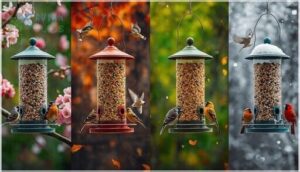
Birds don’t follow the same routines year-round, and your refilling schedule shouldn’t either. Their needs shift dramatically as temperatures drop, nesting season arrives, and migration waves sweep through your backyard.
Let’s walk through how to adjust your approach across the seasons to keep your feathered visitors well-fed and thriving.
Winter and Cold Weather Strategies
When temperatures plummet, your backyard birds depend on you more than ever. Small songbirds may need to consume up to 20 percent of their body weight daily during cold snaps, making Winter Feeding critical for their Winter Wellness.
When temperatures drop, small songbirds may need to eat 20 percent of their body weight daily to survive winter
Refill feeders every morning with high-fat options like black oil sunflower seeds and suet, supporting Bird Nutrition through Frosty Mornings and across Snowy Landscapes while following essential Cold Weather Tips for Wildlife Conservation.
Spring and Summer Feeding Patterns
As the weather warms, your feathered friends shift from heavy reliance on feeders to foraging naturally, though Spring Feeding remains important when seeds run scarce and during Bird Migration Patterns.
Summer Feeding Strategies change dramatically:
- Refill feeders every 2-4 days with smaller portions to prevent Seed Spoilage Prevention
- Focus Hummingbird Feeding Tips on fresh nectar changed every 3 days
- Reduce seed offerings as insects become abundant, supporting Seasonal Diet Adjustments
- Monitor for mold in humid conditions requiring more frequent Seasonal Changes to feeding routines
Migration and Peak Activity Periods
When spring and fall arrive, your backyard transforms into a bustling highway for birds traveling thousands of miles, making refill timing more critical than ever. During Peak Migration, you’ll notice Activity Peaks that demand every-other-day refills as exhausted travelers rely heavily on your offerings.
| Season | Refill Frequency | Feeder Capacity Needed |
|---|---|---|
| Spring Migration | Every 2 days | Double normal |
| Fall Migration | Every 2-3 days | 1.5x normal |
| Peak Activity | Daily checks | Maximum fill |
Seasonal Shifts in Bird Patterns reveal dramatic Seasonal Changes—weather effects can push hundreds of migrants to your feeders overnight, depleting supplies rapidly.
Feeder Maintenance During Refilling
Refilling your feeders isn’t just about topping off the seed—it’s your chance to check on feeder health and prevent problems before they start. Regular maintenance during refills keeps birds safe from disease and ensures they’re getting fresh, nutritious food.
Let’s look at three essential maintenance tasks you should build into your refilling routine.
Cleaning Frequency and Methods

You’ll want to scrub your seed feeders thoroughly every two weeks with warm soapy water, then disinfect using a solution of one part bleach to nine parts water. Let everything soak for at least ten minutes, rinse well, and air dry completely.
This feeder sanitizing routine is your best defense against salmonella and other diseases that can spread when birds gather closely at feeding stations.
Preventing Spoilage and Mold
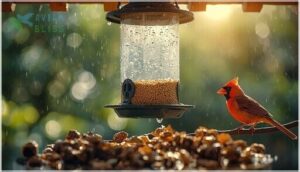
Even with regular cleaning, moisture and humidity can turn fresh seed into a moldy mess within just a few days, especially during warmer months when temperatures climb above 70°F. Your spoilage control strategy starts with these humidity management essentials:
- Fill feeders only halfway to encourage quicker turnover
- Position feeders under roof overhangs for rain protection
- Add drainage holes if your feeder lacks them
- Discard wet or clumped seeds immediately
These feeder maintenance tips protect bird health while reducing waste.
Monitoring Seed Quality and Freshness
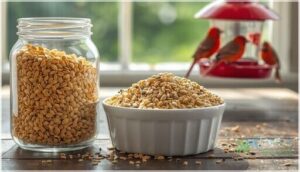
Beyond protecting feeders from the elements, you’ll need regular freshness checks to spot problems before birds do. Fresh seed has a mild, nutty aroma, while spoiled batches smell sour or musty. Watch for white or greenish mold patches, clumping, or visible insects—all signs to discard immediately and clean thoroughly with diluted bleach.
| Freshness Indicator | Fresh Seed Signs | Spoiled Seed Signs |
|---|---|---|
| Appearance | Dry, firm, uniform color | Clumpy, discolored, slimy texture |
| Smell | Mild, nutty aroma | Sour, musty, or rancid odor |
| Texture | Dry and firm to touch | Damp, soft, or compacted |
| Visible Growth | No mold or sprouting | White/green mold, sprouting seeds |
| Pests | No insects or webbing | Larvae, cocoons, or live insects |
Replace seed every five to seven days during typical weather, or more frequently when heat and humidity accelerate spoilage. During summer, limiting your supply to what birds consume in one or two days prevents waste and maintains quality.
Store bulk seed in airtight containers in cool, dry locations—proper seed storage tips extend freshness for six to twelve months. Rotate older portions to the top when you refill feeders, ensuring nothing sits compacted at the bottom where moisture and mold thrive. These seed rotation methods and moisture control strategies keep your feeding station safe and inviting year-round.
Tips to Maximize Bird Visits With Timely Refills
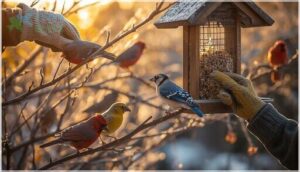
You’ve learned when and how to refill your feeders, but timing alone won’t bring the birds you’re hoping to see. Success depends on creating a predictable rhythm, offering the right foods, and paying attention to what’s actually happening in your yard.
These three strategies will help you turn occasional visitors into regular guests.
Establishing a Consistent Feeding Routine
Birds thrive on predictability, so establishing a steady feeding routine helps build trust and increases visits by 20–40%. Here’s how to create a rhythm your feathered friends will love:
- Set consistent refill triggers — top off when seed reaches one-quarter capacity to maintain continuous supply
- Choose the same daily time — morning refills align with natural feeding cycles and boost bird habituation
- Track consumption patterns — log refill events weekly to identify your ideal feeding schedules for birds
- Rotate seed varieties seasonally — adjust offerings as species needs shift, supporting diverse feeding strategies
Feeder synchronization with local bird activity transforms casual feeding into a reliable partnership.
Choosing Seeds for Local Bird Species
Matching seed selection to your area’s resident species transforms ordinary feeders into bird magnets. In Ashburn, Virginia, black-oil sunflower seeds attract chickadees, nuthatches, and goldfinches with their high energy content, while nyjer draws finches to specialized feeders. White proso millet appeals to ground-feeding sparrows and doves.
Customized seed mixtures reduce competition, boost visit rates, and support wild birds’ nutritional needs across feeder types.
Tracking Bird Activity to Optimize Refills
Simple observation logs sharpen your refill schedules remarkably. Count visiting birds during consistent hours across several days, noting species and peak times to establish baseline activity patterns.
Compare seed depletion rates with weather shifts—temperature, wind, and precipitation all influence bird behavior and feeder placement effectiveness.
Document changes weekly to detect seasonal transitions in bird feeding habits, adjusting refill frequency as migration and local seed preferences evolve naturally.
Frequently Asked Questions (FAQs)
What feeder types require the most frequent refilling?
Platform feeders with large surface areas and tube feeders usually need the most frequent refills, often every 2–7 days during peak seasons, because their accessible seed capacity attracts higher bird activity and emptying rates.
How does weather affect seed storage and quality?
Weather impacts seed quality through moisture, temperature, and humidity. High humidity above 70% triggers mold within days, while heat accelerates rancidity in oil-rich seeds, compromising bird nutrition and requiring careful storage solutions.
Should feeders be removed during certain times of year?
You can temporarily remove feeders during late spring and summer when natural food is plentiful, encouraging natural foraging behavior. This seasonal removal also encourages feeder hygiene and pest control.
Can overfeeding harm local bird populations or ecosystems?
Yes, overfeeding can disrupt ecosystem dynamics by causing dietary imbalance, increasing bird dependence on feeders, and favoring invasive species.
Excess seed spillage contributes to nutrient pollution, while dense congregations increase disease transmission risks, ultimately affecting wild bird health.
How do multiple feeders impact refilling schedules and workload?
Adding more bird feeders spreads visits across stations but increases total seed loss proportionally.
Strategic feeder placement and refill coordination can streamline workload by batching maintenance trips and reducing ad hoc checks.
Conclusion
Like clockwork guiding daily routines, your refill schedule shapes the reliability birds expect from your yard. When you match their natural rhythms—morning visits, seasonal shifts, migration peaks—you create a dependable food source that keeps them returning.
Knowing when to refill bird feeders transforms sporadic visits into consistent activity, building trust with each cardinal, chickadee, and finch that discovers your feeder never runs dry. Your timing matters more than the seed itself.
- https://github.com/vinhphunguyen/how-to-write-a-paper/blob/master/how-to-write-paper.brf
- https://my.clevelandclinic.org/health/articles/24495-germs
- https://myhappywings.com/best-refillable-bird-feeder-for-nyjer-seed/
- https://www.natureshangout.com/blogs/window-bird-feeder-tips/why-birds-suddenly-stop-visiting-feeders-and-how-to-bring-them-back
- https://www.birdwatchingdaily.com/beginners/birding-faq/25-reasons-why-birds-are-not-coming-to-your-feeder/