This site is supported by our readers. We may earn a commission, at no cost to you, if you purchase through links.
You’d be surprised how many backyard birders lose their best footage to one simple mistake: cameras aimed at empty branches while cardinals feast three feet to the left. Bird behavior isn’t random—species follow predictable patterns tied to safety, shelter, and food access, which means your camera placement should be just as strategic.
A feeder positioned 10 feet from dense shrubs might attract finches but leave warblers nervous, while a camera mounted too high will catch nothing but tail feathers. Getting the right spot means understanding where birds naturally feel secure, where predators can’t ambush them, and how light, wind, and human activity shape their movements throughout the day.
Once you match your setup to these instincts, you’ll capture not just more footage, but the honest, unguarded moments that make bird watching worth the effort.
Table Of Contents
Key Takeaways
- Position cameras 8-12 feet from dense shrubs and within 2-5 meters of shelter to balance predator protection with natural bird behavior, ensuring subjects feel secure enough to linger while staying in frame.
- Mount cameras at species-specific heights—5-10 feet for songbirds, 3-5 feet for ground feeders, 7-10 feet for woodpeckers—and angle lenses 15-30 degrees downward to capture feeding mechanics and perching behavior without distortion.
- Place cameras either within 3 feet of windows or beyond 10 feet to prevent fatal collisions, avoiding the dangerous 5-8 foot zone where birds build enough speed for impact against reflective glass.
- Keep cameras north-facing when possible and under natural cover to reduce sun glare and harsh shadows, while using weatherproof ratings of at least IP66 to protect equipment from wind and rain damage.
Key Factors for Placing Bird Cameras
Getting sharp, beautiful bird footage isn’t just about the camera itself—it’s about where you place it.
Mounting height, angle, and proximity to feeders all play a role—and modern bird cameras designed for birding let you fine-tune these factors while capturing stunning, high-resolution footage.
Birds won’t linger in spots that feel exposed, chaotic, or unsafe, no matter how great your equipment is.
If you’re in Illinois, start by learning to recognize common birds in Illinois so you know exactly what to watch for in your own yard.
Let’s walk through the three core factors that’ll help you choose locations where birds actually want to spend time.
If your bird is struggling with feather plucking, proper nutrition and vitamins for feather health can make a real difference in their comfort and behavior.
Safety From Predators
Your camera placement becomes a guard against predators when you prioritize bird safety first. Birds won’t visit feeders where danger lurks, so you’ll need to create a safe haven with threat detection methods built into your bird watching camera setup tips.
Understanding how bird cameras work helps you choose features like motion sensors and wide-angle lenses that capture predators before they strike.
- Position cameras where birds can spot approaching predators from multiple angles, using their natural alarm systems
- Keep feeders 8-12 feet from dense shrubs where cats or hawks might hide and ambush
- Install cameras near thorny vegetation or defensive structures that deter larger predators
- Maintain clear ground beneath feeders to eliminate ambush cover while supporting bird conservation through thoughtful wildlife photography
Minimizing Human and Pet Disturbance
You’ll protect bird behavior by creating pet-free zones at least 15 feet from your camera, using barriers or training to keep dogs and cats away. Noise reduction matters too—choose motion-activated cameras with silent operation, and schedule maintenance during low-activity hours.
Camera concealment behind shrubs masks your presence, supporting disturbance minimization. These wildlife protection strategies help any backyard birder capture authentic moments through thoughtful bird feeder placement and bird watching camera setup tips that respect wildlife photography ethics.
Proximity to Shelter and Perches
Beyond managing disturbances, you’ll want to position your camera within 2 to 5 meters of dense shrubs or natural bird hideaways. This shelter placement lets backyard birds retreat quickly from predators while staying in frame.
Perch proximity matters for capturing authentic bird behavior at your feeder placement:
- Mount cameras near natural perches at varying heights to film different species entering and exiting
- Keep lenses clear of low branches that block birdwatching shots during flight
- Frame nesting sites and roosting spots to document feeding, preening, and social interactions throughout the day
Research shows that birds are more likely to visit feeders positioned close to protective cover and feeder height, which can help you capture more frequent and natural footage.
Best Locations in Your Yard for Bird Cameras
You’ve thought through the safety factors and disturbances that matter to birds, so now it’s time to scout actual spots in your yard.
The best locations aren’t random—they’re places where birds already feel comfortable, where food and water draw them in, and where your camera can capture their natural behavior without spooking them.
Let’s look at three proven locations that consistently deliver great footage and frequent visits.
Near Feeders and Water Sources
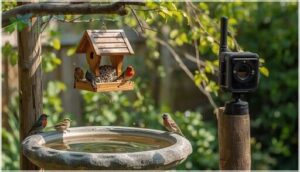
You’ll capture the best bird watching camera setup tips by positioning your outdoor cameras within 6 to 12 inches of feeders, angling down slightly to avoid glare from plastic reservoirs. For water sources, mount cameras 2 to 4 feet above ground to record drinking behavior without startling visitors.
Once your cameras are dialed in, identifying the backyard birds of Rhode Island that visit your setup becomes much easier with clear, well-angled footage.
| Location Type | Camera Placement Guidelines |
|---|---|
| Bird Feeder | 6–12 inches away, slight downward angle |
| Water Source | 2–4 feet above ground, opposite feeder side |
| Bird Perches | Include multiple perches in field of view |
Different food varieties attract diverse species, so position cameras to capture seed handling at tubular feeders and larger birds at feeding tables. Stable mounts prevent motion blur when birds hop between perches, ensuring crisp images of beak interactions and feeder placement dynamics.
Adjacent to Blooming Shrubs and Trees
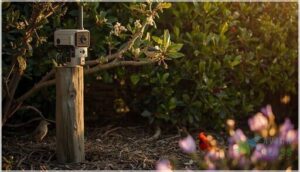
Native blooms transform quiet corners into wildlife hubs. Position your camera 5 to 10 feet from dense vegetation like holly or viburnum, angling the lens toward branch forks where songbirds pause before darting to feeders. This shrub placement captures natural staging behavior and insect foraging that seed-only setups miss.
- Mount at eye level, 4 to 6 feet up, to frame mid-level perches without steep distortion
- Aim for the shaded side of blooming trees to soften backlighting on feather detail
- Include evergreens near flowering shrubs for year-round shelter and seasonal variety
- Tilt downward 15 to 30 degrees to keep both ground and perching birds in view
Floral diversity attracts different species across seasons—spring redbud draws warblers, while fall winterberry pulls in fruit eaters. For additional strategies on creating appealing backyard setups, explore these bird feeder placement recommendations. Rotating camera angles among these tree species keeps your backyard bird conservation footage fresh and reveals how bird habitat shifts with blooms.
Avoiding High-Traffic Areas
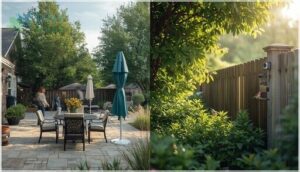
Foot traffic scares birds before they even spot your lens. Install cameras in quiet zones at least 15 feet from driveways, patios, or pet runs—low disturbance transforms ordinary corners into bird sanctuaries. These safe havens deliver sharper wildlife photography when birds relax instead of fleeing.
| High-Traffic Zone | Camera-Friendly Alternative |
|---|---|
| Front walkway | Side yard near fence line |
| Dog run perimeter | Garden bed opposite play area |
| Patio seating area | Shaded corner 20+ feet away |
| Driveway edge | Backyard tree cluster |
| Children’s play zone | Secluded shrub border |
Strategic bird feeder placement in these spots boosts your birdwatching tips success and enhances long-term bird conservation tips by respecting natural behavior—critical for effective camera setup for birding.
Optimizing Camera Angle and Height
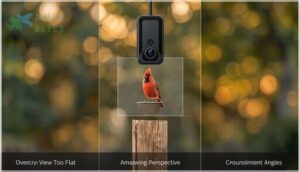
Getting the height and angle right can mean the difference between blurry tail shots and frame-perfect portraits of your feathered visitors.
You’ll want to think about what species you’re targeting, how much of the scene you want in frame, and which behaviors you’re hoping to capture. Let’s break down the technical details that’ll help you nail the shot every time.
Ideal Mounting Heights for Different Bird Species
Getting your camera height right transforms ordinary footage into clear bird identification shots, because different bird species simply live at different levels. When you’re setting up your outdoor camera installation for birding, think about who you’re trying to film and match your mounting tips to their natural behavior.
- Small songbirds like chickadees and nuthatches thrive around feeders placed 5 to 10 feet high, so mount your bird watching camera at that same range to capture eye-level feeding action.
- Ground feeders such as sparrows and towhees prefer cameras positioned 3 to 5 feet up, giving you natural side angles without looming over shy species.
- Hummingbirds hovering at nectar ports look best when your camera sits 5 to 7 feet high, level with the feeder placement where they pause to drink.
- Woodpeckers clinging to suet cages need cameras mounted 7 to 10 feet up in trees, matching the species heights where these climbers feel secure.
Adjusting camera angles and mounting tips based on each bird’s comfort zone means you’ll catch more visits and better behavior.
Adjusting for Field of View and Perch Coverage
Your bird camera’s field of view determines how much area you’ll capture, so balancing width with detail matters when setting up a birdcam. A wider horizontal view covers more ground but sacrifices sharpness at distance, while narrower focal lengths zoom in on specific perch placement for crisp close-ups.
| Camera Angles | Field Depth Coverage | Recommended Focal Lengths |
|---|---|---|
| 15–20° downward tilt | Captures 2–3 perches in frame | Mid-range lens (35–50mm equiv.) |
| 25–30° downward tilt | Balances ground and overhead branches | Wide angle lens (24–35mm equiv.) |
| Gentle horizontal pan | Tracks movement between feeders | Standard or panorama setting |
| Level or slight tilt | Focuses on single perch detail | Telephoto lens (70mm+ equiv.) |
| Adjustable multi-angle | Covers near and distant birds | Combination of focal lengths. |
When you’re positioning your outdoor camera installation for birdwatching, aim to include at least two common perches within the main focus zone during busy feeding times. Lens calibration helps prevent distortion, keeping branches in correct spatial relation as birds hop between them. Wide angle setups work well for capturing several adjacent perches in one frame, while tighter focal lengths deliver facial detail on individual visitors. Regular checks let you adjust field depth as foliage changes with seasons, ensuring your birdcam continues delivering sharp footage year-round.
Positioning to Capture Feeding and Perching Behavior
Watching a bird reach for seed reveals more than color—you’ll see beak mechanics, foot grip, and territorial displays when your bird watching camera aligns with the action.
Mount your birdcam at a slight downward tilt, 15 to 25 degrees off horizontal, to capture both feeding motions and nearby bird perches. This outdoor camera installation angle keeps beak and feet visible while tracking flight paths between feeder placement and nesting sites, documenting natural bird behavior sequences.
Lighting and Weather Considerations
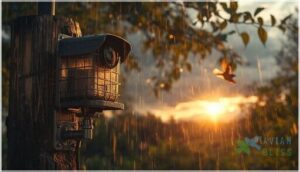
Your camera setup won’t matter much if lighting conditions wash out every shot or weather damages your equipment before you capture anything worthwhile. The right conditions separate crisp, detailed bird photos from blurry disappointments, and a little planning goes a long way.
Here’s what you need to take into account to protect your gear and improve your image quality.
Reducing Sun Glare and Harsh Shadows
Pointing your bird watching camera north keeps intense glare out of the frame for most of the day, and you’ll notice that east or west views suffer from washed out footage when low sun hits the lens directly. To nail camera placement tips that minimize harsh shadows, try these light filtering techniques:
- Mount cameras under eaves or tree canopies for softer dappled light
- Angle lenses slightly downward to keep horizon level bright spots out
- Enable wide range modes on outdoor cameras to preserve feather detail in mixed lighting
Protecting Cameras From Wind and Rain
Once you’ve managed light, weatherproof ratings become your next line of defense against the elements. Look for outdoor cameras with at least an IP66 rating so powerful water jets and dust won’t penetrate seals during storms.
Rain hood designs that extend beyond the lens keep droplets from streaking your wildlife photography equipment, while cable sealing with silicone or rubber grommets blocks moisture from creeping into junction points. For wind protection, mount your bird feeder camera under eaves or use the leeward side of structures to shield housing and maintain clear nature photography year round.
Preventing Window Collisions and Hazards
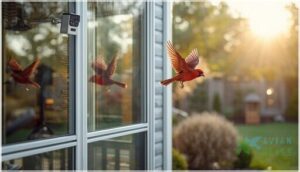
Windows pose one of the deadliest threats to backyard birds, claiming hundreds of millions of lives each year through collisions that could be prevented with thoughtful camera placement.
Thoughtful camera placement can prevent the hundreds of millions of bird deaths caused by window collisions each year
When you’re setting up your bird cameras, you’ll need to balance getting great shots with keeping your feathered subjects safe from reflective glass surfaces.
Here’s how to position your cameras in ways that protect birds while still capturing the close-up footage you’re after.
Safe Distances From Glass Surfaces
When setting up your bird watching camera near windows, you need to know that placement either within 3 feet of glass or beyond 10 feet dramatically reduces collision risks.
The danger zone sits between those distances, where birds build enough speed to suffer fatal impacts against glass surfaces. If your bird feeder camera or window bird feeder sits 5 to 8 feet from untreated glass, you’re creating a serious hazard for bird safety.
Using Decals or Barriers to Deter Collisions
You can protect birds from window collisions by applying decals in a grid pattern, spacing them no more than 2 inches apart both horizontally and vertically across the entire pane.
Window films with UV reflective properties work well for bird safety while maintaining your view, and exterior screens or barriers create physical deterrents that break up dangerous reflections near your bird feeder.
Selecting Bird-Friendly Camera Placement Strategies
Beyond blocking reflections, your camera placement itself plays a huge role in wildlife safety and successful bird watching. Strategic camera concealment within habitat diversity helps you observe natural bird behavior without stress, and here’s how to do it right:
- Mount your bird feeder camera or birdcam behind natural cover like dense shrubs to minimize direct encounters with predators
- Position camera angles at least 6 feet off the ground using tamper-resistant mounts for wildlife safety
- Keep lenses away from active nesting sites to reduce disturbance during breeding season
These wildlife watching tips guarantee birds feel secure while you capture their authentic moments.
Maintenance and Flexibility in Camera Placement
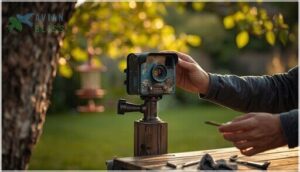
You can’t just set up a bird camera and forget about it. The best spots today mightn’t work tomorrow, especially as seasons shift and different species move through your yard.
Let’s look at how to keep your camera accessible, adaptable, and rock-solid in place.
Easy Access for Cleaning and Adjustments
You’ll want a bird feeder camera that doesn’t make maintenance a hassle, especially when lenses need easy cleaning or filters require quick replacement. Look for models with tool-free access through quick-release latches and hinged panels, enabling fast adjustments without dismantling the entire unit.
Service ports are particularly useful for birdcam upkeep, letting you use compressed air or cleaning wands on your wildlife camera without full disassembly—essential for bird watching tips that keep your setup running smoothly.
Moving Cameras Based on Bird Activity
Track bird traffic patterns throughout the day, then relocate your bird watching camera closer to active feeding stations during peak hours to capture detailed feeding behavior.
As activity shifts to quieter zones, move your wildlife camera away from noise sources—wind, pets—for clearer recordings.
When storms roll in, temporarily shift your birdcam to sheltered spots, protecting gear while maintaining coverage of bird movements and seasonal adjustments.
Ensuring Stable and Secure Mounting
A rigid metal mount or adjustable ball joint keeps your bird feeder camera locked in position, resisting bumps from squirrels and gusts that shake flimsy straps. For true camera stability and wind resistance, you’ll want these vibration control strategies:
- Lag screws driven into solid posts or wall studs anchor your birdcam more firmly than thin wood screws
- Security cases shield buttons and ports from curious raccoons trying to shift your camera trap
- Python style locking cables loop through mounts, preventing animals from dragging gear away
- Tightening all wing nuts and clamp points stops slow loosening that compromises secure fastening over time
Frequently Asked Questions (FAQs)
What camera settings work best for bird photography?
Think of your camera as a hunter’s eye—sharp reflexes make the difference.
Use fast shutter speeds around 1/2000 second, continuous auto focus, and burst mode to freeze those fleeting wing beats perfectly.
How do different bird species react to cameras?
Bird habituation varies widely across species—chickadees ignore stationary cameras quickly, while territorial birds may strike reflective lenses.
Camera noise and reflection effects trigger stronger reactions in hawks than backyard finches during wildlife monitoring.
Can infrared cameras disturb nocturnal bird activity?
Most modern infrared cameras for wildlife monitoring won’t disturb nocturnal birds substantially.
Wavelengths between 850 and 940 nanometers cause minimal detection, though owls and nightjars may briefly notice thermal imaging signatures before acclimating naturally.
What storage capacity is needed for continuous recording?
Continuous recording demands immense capacity yet uses minimal active time.
Your bird watching camera storing 1080p footage needs 24–48 GB daily, while 4K wildfine bird camera setups require 120–480 GB depending on bitrate settings and retention goals.
Do bird cameras require special weatherproofing or housing?
Most outdoor birdcams feature weatherproof housings with IP65 ratings or higher, protecting against rain and dust.
Look for corrosion-resistant materials, sealed cable entries, and gaskets that prevent moisture intrusion in your wildlife photography equipment.
Conclusion
What’s the difference between a camera that collects dust and one that fills your SD card? Placement that respects how birds actually move through space.
When you understand where to place bird cameras in your yard—matching height to species, avoiding predator sight lines, accounting for light and weather—you’re not guessing anymore. You’re working with instinct, not against it.
The footage that follows won’t just document visitors; it’ll reveal the unscripted life happening right outside your window.
- https://journals.plos.org/plosone/article?id=10.1371/journal.pone.0306362
- https://youtu.be/eAfhMDJ1t7E
- https://lumarysmart.com/blogs/news-and-blogs/the-best-bird-feeder-camera-in-2024
- https://www.kevinpepperphotography.com/blog/backyard-bird-photography-tips
- https://www.naturettl.com/how-to-attract-birds-garden-photography/