This site is supported by our readers. We may earn a commission, at no cost to you, if you purchase through links.
Your bird’s feet grip a perch for up to 12 hours each day, making this simple accessory one of the most critical factors in their long-term health. Without proper perch selection, birds develop painful foot sores, joint stiffness, and muscle atrophy that can permanently affect their mobility.
The right perches do far more than provide a place to rest—they exercise foot muscles, stimulate circulation, and recreate the varied surfaces birds encounter in their natural habitats. Understanding why bird perches are important for health means recognizing that these structures directly influence your bird’s physical comfort, mental stimulation, and ability to engage in species-appropriate behaviors that keep them thriving.
Table Of Contents
Key Takeaways
- Your bird’s feet grip perches for up to 12 hours daily, making proper perch selection critical for preventing painful foot sores, joint stiffness, and permanent mobility problems that develop from inadequate support.
- Varied perch diameters and textures exercise foot muscles, improve circulation, and distribute weight across different contact points, reducing the risk of bumblefoot infections, pressure ulcers, and tissue deformities.
- Natural wood perches with irregular surfaces promote healthy foot development better than uniform alternatives, while placement at varied heights encourages climbing and movement that strengthens muscles and provides mental stimulation.
- Weekly cleaning with bird-safe disinfectant and regular inspection for wear prevents bacterial contamination and ensures perches remain structurally sound, protecting your bird from infections and injuries throughout their lifespan.
Why Bird Perches Are Essential for Health
Perches aren’t just convenient spots for your bird to rest—they’re fundamental to maintaining healthy feet, strong joints, and balanced mental well-being.
If you’re setting up a new cage or reconsidering your current setup, learn how to arrange perches and other essentials for optimal health.
Perches are fundamental to your bird’s health, supporting strong feet, flexible joints, and balanced mental well-being
When you understand how perches support your bird’s physical structure and behavioral needs, you can create an environment that prevents common health problems before they start. Let’s examine the essential roles that proper perches play in keeping your feathered companion thriving.
Role of Perches in Avian Well-being
Perch variety forms the foundation of avian wellbeing by supporting natural behavior, bird exercise, and environmental enrichment.
You’ll find that proper perch design allows your bird to climb, balance, and explore throughout its habitat, which directly promotes foot health and reduces stress. These structures also promote avian social interaction and observation, allowing your bird to feel secure while monitoring its surroundings and engaging in nesting behavior.
Birds also benefit greatly from different perch materials and sizes, which help prevent foot problems and keep them stimulated.
Impact on Physical and Mental Health
Your bird’s physical wellness depends on proper foot health, which perches maintain by exercising muscles and improving circulation throughout daily activity.
Beyond the physical benefits, adequate perch variety reduces avian stress by encouraging mental stimulation and natural behavior, supporting overall avian wellbeing.
When your bird engages in regular bird exercise through climbing and balancing, you’re providing health benefits that extend to both body and mind, making bird care more effective.
Promoting Natural Behaviors and Activity
Natural exploration thrives when your bird’s environment includes well-placed perches that encourage avian exercise and activity stimulation throughout the cage. Appropriate perch variety promotes environmental enrichment by supporting bird socialization and species-specific behaviors.
To enhance avian health and mobility, consider these activity-promoting strategies:
- Position perches at varied heights to encourage climbing and short flights between levels.
- Include branches with natural irregularities that invite stretching and foot muscle activation.
- Space perches strategically to create natural movement rhythms during daily routines.
- Rotate enrichment items periodically to maintain curiosity and sustained engagement. Considering natural behaviour as animal welfare can guide perch placement and enrichment strategies that honor your bird’s inherent needs.
How Perches Prevent Foot and Joint Problems
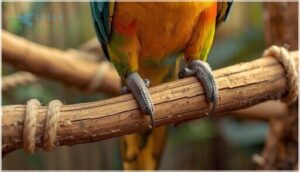
Your bird’s feet and joints bear the full weight of their body throughout the day, making proper perch selection one of the most critical aspects of preventive care.
Understanding what makes a good bird perch helps you prevent common foot problems like bumblefoot and arthritis before they develop.
Without the right diameter, texture, and variety, birds can develop painful conditions that substantially impact their quality of life.
Let’s examine the three key ways perches protect your bird from foot and joint problems.
Importance of Perch Diameter and Texture
Your bird’s feet rely on perch diameter that covers roughly two-thirds of the toe span, ensuring proper foot support without joint strain. Varied diameters trigger natural grasping reflexes and shift pressure points throughout the day.
Texture variety matters equally—rough surfaces improve perch grip in damp conditions while smooth ones can increase fatigue, so mixing materials promotes balanced foot health and bird comfort.
Exercising Foot Muscles and Improving Circulation
Climbing and gripping motions activate your bird’s intrinsic foot muscles, strengthening tendons and improving healthy circulation through sustained muscle engagement. Varied perch textures prompt natural grasping reflexes that shift weight distribution, preventing stagnation and boosting blood flow to the toes.
Regular exercise and activity on well-designed bird perches maintain foot health by encouraging continuous movement, ensuring your bird’s feet remain warm, responsive, and free from circulatory compromise.
Reducing Risk of Sores, Deformities, and Injuries
Sustained pressure from a single diameter causes tissue breakdown, leading to ulcerations and bumblefoot infections, yet varied perch thickness distributes your bird’s weight across different contact points, safeguarding foot health.
Perch safety tips emphasize rotating textures and diameters to prevent deformities while supporting avian wellness through injury prevention.
Proper foot care basics and healthy perching habits maintain bird foot health and comfort, preventing foot problems before they develop.
Choosing The Best Perch Materials
The material you choose for your bird’s perch materials directly impacts their foot health, comfort, and overall well-being.
Each perch type offers distinct advantages and potential drawbacks that you should weigh carefully against your bird’s specific needs. Let’s examine the most common perch materials and what they bring to your bird’s environment.
Benefits of Natural Wood and Branch Perches
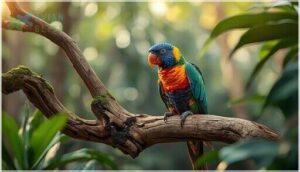
You’ll find that natural wood perches deliver authentic textures and varied branch thickness that support avian foot care far better than uniform alternatives. These wood texture variations exercise your bird’s feet naturally, reducing pressure points while promoting healthy circulation.
Natural grip surfaces mimic wild conditions, offering avian enrichment through exploration and foraging behaviors. Beyond perch design benefits, perch sustainability and bird health improve when you select untreated branches from safe tree species.
Pros and Cons of Rope, Plastic, and Concrete

When comparing rope perches, plastic perches, and concrete perches, you need to weigh distinct perch material comparison factors that directly affect bird health and bird grip analysis.
- Rope texture benefits include natural grip and toe flexibility, but frayed fibers can harbor bacteria
- Plastic perch durability offers easy cleaning and antimicrobial surfaces, yet fixed diameters limit natural grasping
- Concrete safety concerns involve foot abrasions and heavy weight despite excellent nail trimming
- Rope can become moldy in humid conditions
- Smooth plastic may cause slipping during perching
Material Safety and Hygiene Considerations

Your bird’s perch materials must meet strict bird safety standards to prevent toxic material risks. Nontoxic materials like untreated wood or bird-safe coatings guarantee long-term health, while material durability affects cleaning protocols and perch sanitizing frequency.
| Material Type | Hygiene & Safety |
|---|---|
| Natural wood | Requires weekly perch sanitizing; choose untreated or avian-safe finishes |
| Plastic/acrylic | Easy cleaning techniques; avoid porous surfaces that trap bacteria |
| Rope | Daily inspection for fraying; replace when contaminated |
| Concrete | Non-porous for cage cleaning and hygiene; monitor for abrasion |
| Avoid rubber | Cracks harbor pathogens; discontinue immediately |
Follow proper cleaning protocols using bird-safe soap, thorough rinsing, and complete drying to prevent mold growth and bacterial contamination.
Optimizing Perch Placement in Bird Cages
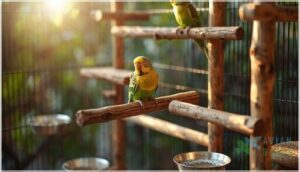
Placing perches in the right spots within your bird’s cage can make the difference between a healthy bird and one that develops preventable health problems.
Your choices about perch height, spacing, and proximity to food and water directly affect your bird’s physical comfort, cleanliness, and natural movement patterns. Let’s examine three essential placement strategies that protect your bird’s well-being while encouraging the behaviors they need to thrive.
Encouraging Movement With Varied Heights
Varied perch heights transform your cage into a three-dimensional gym for your bird. When you arrange perches at different elevations—usually spaced 8 to 12 inches apart—you’ll notice birds climb between levels more frequently, boosting daily activity by at least 15 percent. This vertical exploration strengthens foot muscles, sharpens spatial awareness, and encourages natural climbing techniques that keep your feathered companion physically engaged and mentally stimulated.
- A high lookout perch where your bird surveys the room with confidence
- Mid-level resting spots that invite hopping and wing-stretching between destinations
- Lower connection perches creating safe pathways for coordinated movement throughout the day
Avoiding Contamination Near Food and Water
Strategic placement of perches away from bowls protects your bird’s Clean Food Zones and promotes bird safety. Position perches at least six inches above dishes to prevent droppings from contaminating meals and water—a cornerstone of Sanitation Practices and Hygiene Maintenance. This cage setup minimizes bacterial exposure, aids Water Purification efforts, and reinforces Pest Prevention by keeping feeding areas dry and clean, ensuring lasting bird hygiene.
| Perch Location | Contamination Risk | Health Impact |
|---|---|---|
| Above food dish | High fecal exposure | Bacterial infections, digestive upset |
| Above water cup | Droppings in drinking supply | Respiratory illness, parasite transmission |
| Beside feeding station | Moderate splash contact | Food spoilage, mold growth |
| 6+ inches from bowls | Minimal cross-contact | Reduced infection rates, cleaner nutrition |
| Far corner placement | Low to negligible | Ideal hygiene, safe feeding habits |
Ensuring Comfort and Security in Perch Position
Beyond keeping meals fresh, perch placement shapes your bird’s sense of security through careful Comfort Zone Creation and Perch Angle Adjustment. Position perches at varied heights to encourage Bird Posture Support and natural climbing—a bird comfort strategy that builds confidence.
Firm mounting prevents wobbles during landing, while Secure Landing Techniques reduce anxiety. This thoughtful perch design creates Stress Free Environments where foot health and mental well-being flourish together.
Maintaining Perches for Lasting Bird Health
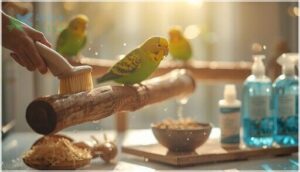
Even the best perch won’t serve your bird well if it’s covered in bacteria or starting to fall apart.
Regular maintenance keeps perches safe, hygienic, and functional for your bird’s health.
Let’s look at three essential practices that will help your perches last longer and support your bird’s well-being.
Cleaning Routines to Prevent Bacteria
Regularly sanitizing perches is essential for bacterial control and overall bird hygiene. Consistent cage cleaning prevents harmful microorganisms that threaten your bird’s health, making these disinfection methods essential bird care practices.
- Wash hands before and after handling cage accessories to prevent germ transfer
- Use soap and warm water weekly to scrub perches, removing droppings and biofilm
- Apply bird-safe disinfectant following manufacturer’s contact time guidelines
- Rinse thoroughly to eliminate residue that could irritate feet
- Air dry completely before reinstalling to prevent moisture-related bacterial growth
Rotating and Inspecting Perches Regularly
After perch sanitizing, you’ll want to rotate perches weekly to shift grip surfaces and prevent repetitive stress on the same foot areas. Inspect each perch for cracks, splinters, or loose fittings before reinstalling.
Track your bird’s preference for certain perch placement and textures, then adjust accordingly. This rotation frequency promotes foot health while encouraging natural avian health and mobility patterns throughout the cage.
Monitoring for Wear and Bird Health Changes
Daily perch inspection reveals wear patterns that directly affect avian foot health and mobility. Watch for color fading, cracks, rough edges, or fraying that compromise bird perch safety and require immediate replacement.
Meanwhile, observe your bird’s behavior for health indicators like altered grip, reluctance to land, or footpad redness—early signs that prompt perch redesign and targeted injury prevention measures to maintain ideal avian health.
Frequently Asked Questions (FAQs)
What perch materials should parrots avoid completely?
You should completely avoid toxic wood species, painted metal, plastics with additives, PVC materials, and treated plywood.
These perch materials can release harmful chemicals, cause injuries, or lead to serious digestive problems and respiratory problems.
How many perches does one bird need?
Most healthy adult birds thrive with three to five perches at varied heights, though species needs differ—budgies manage well with two thin perches plus one resting perch, while larger parrots benefit from four to six options for ideal foot health.
Can perches help with behavioral problems or aggression?
Yes, thoughtfully arranged perches reduce avian anxiety and aggression reduction through behavioral enrichment.
Varied heights encourage social dynamics, fear management, and stress mitigation, redirecting feather picking into exploration while supporting healthier social interaction among birds.
When should you replace a birds perch?
Inspect your bird perch weekly for wear signs like splintering, cracks, or persistent odor despite cleaning.
Replacement timing depends on material durability and chewing damage, but prioritizing bird safety and perch hygiene ensures ideal health and prevents foot injuries.
Conclusion
Proper perches protect your bird’s physical foundation, preventing the painful progression of preventable foot conditions that compromise their quality of life. By selecting varied materials, optimizing placement, and maintaining hygiene standards, you create an environment where natural behaviors flourish and musculoskeletal health remains strong.
Understanding why bird perches are important for health enables you to make informed decisions that support your companion’s comfort, mobility, and long-term vitality throughout their lifespan.