This site is supported by our readers. We may earn a commission, at no cost to you, if you purchase through links.

A robin lands at your birdbath’s edge, dips its chest into an inch of water, and erupts into a frenzy of flapping—wings beating against the surface, droplets flying everywhere. You might think it’s just playing, but that calculated chaos fulfills a critical purpose.
Birds don’t splash in shallow water for fun—they’re performing maintenance that literally keeps them alive. Every flick of those wings loosens dirt trapped between feathers, every bounce dislodges parasites, and every shake readies their feathers for the oil treatment that’ll keep them waterproof and flight-ready.
Understanding why birds splash in shallow water reveals the intricate survival strategies hidden in what looks like simple puddle play, and it’ll change how you think about every birdbath, puddle, and creek edge in your yard.
Table Of Contents
Key Takeaways
- Birds splash in shallow water (1-4 inches) to perform essential feather maintenance—loosening dirt, dislodging parasites, and preparing their plumage for waterproofing oils that keep them flight-ready and alive.
- The splashing itself isn’t play but a calculated survival strategy: water turbulence physically removes ectoparasites like mites and lice while disrupting bacterial buildup before birds distribute protective preen oils across every feather.
- Shallow depths give birds control and safety—they keep their feet planted, spot predators quickly, and avoid drowning risks while still getting the vigorous cleaning action that deeper water can’t provide.
- Regular bathing directly impacts survival by enhancing flight aerodynamics through cleaner feathers, providing evaporative cooling during heat stress, and maintaining the waterproofing that preserves insulation and reduces energy costs during takeoff.
Why Do Birds Splash in Shallow Water?
Why do birds pick shallow spots instead of diving deep? Shallow water gives them control. Birds can keep their feet planted while they splash, shake off dirt, and spot danger quickly. It’s all about bird bathing efficiency and bird health.
Deeper water creates buoyancy challenges and drowning risks, so they stick to puddles under three inches. This smart choice fosters feather maintenance, avian hygiene, and even bird socialization when flocks gather safely.
The use of scientific study methods can help us better understand animal behaviors like this.
Feather Maintenance and Hygiene Benefits
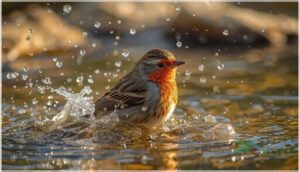
When you watch a bird splashing around in shallow water, it’s not just having fun—it’s performing essential maintenance work on its feathers. Those quick, energetic splashes serve three critical hygiene purposes that keep birds healthy and flight-ready. This bathing routine works together with preening behaviors that maintain feather structure, creating a complete system that protects birds from the elements.
Let’s break down exactly what’s happening during those seemingly chaotic bath sessions.
Removing Dirt and Debris
Splashing birds aren’t just having fun—they’re tackling serious feather cleaning! When you watch a robin dunk and shake in your birdbath, it’s loosening dirt, dust, and mud stuck to its plumage. A safe bird bath dripper design creates gentle water movement that attracts more birds while giving them the perfect splash zone for their cleaning routine.
Water quality matters here: cleaner water lifts debris more effectively. Shallow depths around 1–4 inches let birds target wing and tail feathers precisely. Frequent summer bathing helps birds maintain feather health during heat stress, making shallow basins especially valuable during peak temperatures.
These bathing techniques improve hygiene and support overall plumage maintenance, keeping feathers flight-ready.
Dislodging Parasites and Bacteria
Beyond lifting dirt, those vigorous splashes serve as powerful parasite removal agents. Water agitation literally shakes off ectoparasites—like mites and lice—clinging to feather barbs. Regular bathing also maintains the natural oils that keep feathers waterproof and flexible, which is why following proper bird hygiene practices helps your pet stay healthy year-round.
Studies show measurable drops in bacterial control challenges right after bird bathing sessions. The turbulence disrupts microbe management on quill surfaces, improving hygiene before preening redistributes protective oils.
Think of it as nature’s reset button for feather maintenance!
Bird bathing acts as nature’s reset button, clearing feathers of parasites and debris before oil distribution begins
Distributing Natural Preen Oils
Once the water shakes off parasites, those splashing movements set the stage for oil distribution.
Bathing softens feather surfaces, making it easier to spread preen gland lipid secretion during grooming. The waxy lipids coat each shaft and barbule, creating a uniform layer that maintains flexibility and waterproofing.
This feather conditioning process is central to plumage health—proper oil distribution through preening keeps feathers from becoming brittle!
How Splashing Supports Bird Health
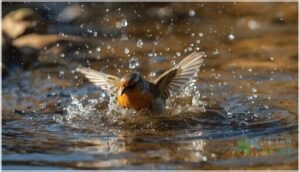
Now that we understand how splashing helps birds keep their feathers clean and parasite-free, let’s talk about the bigger health picture. All that vigorous water activity isn’t just about looking good—it directly impacts a bird’s ability to survive in the wild.
Here are three critical ways splashing aids overall bird health.
Temperature Regulation and Cooling
You’ve probably noticed birds splashing on the hottest days—that’s no coincidence! When heat stress kicks in, birds rely on evaporative cooling and thermoregulation to survive.
Water temperature doesn’t need to be ice-cold; splashing creates moisture on exposed skin that evaporates fast, dropping their body temperature quickly. It’s a cooling mechanism that works alongside their feather insulation, giving them relief when panting alone won’t cut it.
Waterproofing and Insulation
Here’s the thing—when birds splash and then preen, they’re activating a clever waterproofing system. Preen oil spreads across feather coating, creating water repellency that keeps plumage dry and loft intact. This matters because:
- Protective lipids seal feather barbules against moisture
- Insulation layers trap air for thermal regulation
- Oil distribution prevents water from wicking along shafts
- Maintained feather maintenance sustains buoyancy
- Regular preening reinforces both waterproofing and insulation
Pretty clever, right?
Enhancing Flight and Survival
Flight mechanics get a real boost when feathers stay clean—and that’s where bird bathing pays off big time. Clean plumage cuts drag and turbulence, sharpening aerodynamic efficiency for migration and escape routes.
Birds using shallow-water takeoffs actually exploit buoyant forces to stabilize ascent, trimming energy costs during those critical moments.
It’s a survival strategy wrapped in feather care: less resistance means quicker climbs away from predators and smarter wildlife health overall.
Common Bird Bathing Behaviors
Now that we understand why bathing matters so much for birds’ health and survival, let’s look at how they actually go about it! You’ll notice that different species have developed their own techniques—some prefer a quick dip and shake, while others take their sweet time.
We’re going to explore the typical splashing methods you’ll see at your bird bath and how bathing habits can vary wildly from one bird to the next.
Typical Splashing Techniques
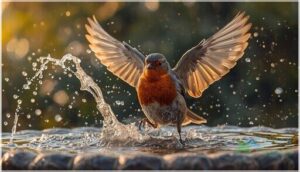
You’ve probably watched a robin go wild in a puddle and wondered what’s going on. Here’s the deal—birds use specific splashing motions to get their feathers spotless. When you observe bird bathing behaviors, you’ll notice these feather maintenance tactics:
- Rapid, shallow water slaps with wings and feet shake loose debris and parasites
- Bounces and splashes create turbulence that reaches beneath wing feathers
- Repeated short dips allow targeted feather cleaning without full immersion
- Tail- and wing-stirring motions spread water across back and chest areas
- Leg-and-foot flicks assist in cleaning hard-to-reach contour feathers
This wing dipping routine is preening prep—getting every feather ready for the real maintenance work ahead!
Species Variations in Bathing Habits
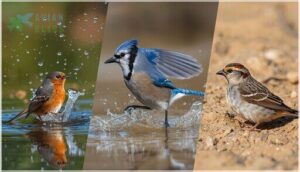
Not all birds play by the same rules during bath time! Bath frequency really depends on their environment and feather care needs. You’ll notice some species are daily bathers, while others show up weekly.
Water depth preferences vary too: robins love a good one-inch puddle, but larger birds need closer to three inches.
Habitat influence plays a huge role in these species’ habits—desert birds might dust-bathe instead of seeking water, while water-foraging species have distinct splash techniques.
These bathing behaviors aren’t random—they’re finely tuned strategies for bird health and hygiene that keep feather maintenance on point!
Creating Bird-Friendly Water Sources

Now that we grasp why birds splash and how they bathe, let’s talk about creating the perfect setup in your own backyard. You don’t need anything fancy—just a few smart choices can turn your space into a bird magnet.
Here’s what actually works in terms of depth, cleanliness, and natural features that’ll keep your feathered visitors coming back.
Ideal Water Depth and Safety
You’ll want to keep your bird bath water depth between 2 and 6 inches—shallow enough that birds can stand and splash safely without drowning risk. A gradual slope with textured surfaces like gravel gives them secure footing and easy exits. Think of it as a gently sloping beach rather than a cliff drop!
Larger waterfowl need slightly deeper basins, so offering multiple depth options accommodates everyone from tiny warblers to sturdy ducks.
Cleanliness and Regular Maintenance
Once you’ve got the depth right, keeping your bath clean becomes your next mission. Swap out water every 1-3 days to prevent stagnation—nobody likes a mosquito motel! Scrub away algae and biofilm with a mild, bird-safe detergent, then rinse thoroughly.
A 1:1 vinegar solution works wonders for seasonal deep cleans. Regular maintenance scheduling protects feather care and ensures your habitat hygiene stays excellent for visiting bathers.
Attracting Birds With Natural Features
Beyond routine scrubbing, you can transform your garden design into a bird habitat that practically invites flocks to linger. Native plantings boost local bird presence by 40% while creating natural cover around water features. Dense shrubs offer that “safe zone” vibe bathers crave. Here’s your eco-friendly wildlife conservation checklist:
- Plant native species for year-round shelter and food
- Add irregular-depth water features for varied bathing styles
- Use mulch to reduce glare and improve safety perception
- Include overhead perches near bathing zones
- Maintain seasonal water access for consistent backyard birds visitation
This wildlife habitat creation approach fosters authentic bird care while expanding species richness naturally!
Frequently Asked Questions (FAQs)
How often should birds bathe each week?
Most wild birds bathe opportunistically—a few times weekly when water’s around.
If you’re keeping birds, offering fresh water daily or every other day maintains their feather condition and overall health beautifully.
Do birds bathe during winter or cold weather?
Yes, many birds bathe even in winter when water isn’t frozen. They rely on unfrozen pools and milder days to maintain feather insulation, remove snow, and distribute oils for temperature regulation and flight readiness.
What time of day do birds prefer bathing?
Most birds prefer morning bathing shortly after sunrise, aligning with their natural circadian rhythms and daily routines. Water availability and weather conditions influence bathing frequency, though some species also bathe midday during warmer months.
Can birds drown in deep bird baths?
Absolutely—drowning risks are real when water depth exceeds safe limits. Small songbirds face serious species vulnerability in baths deeper than three inches, where poor footing and rapid fatigue compromise bird safety despite their natural bathing behaviors.
Do baby birds bathe differently than adults?
Little learners lack the lightning-quick movements you’ll notice in mature birds. Baby birds bathe with gentler, briefer splashing as their feathers develop, often under parental guidance.
They build waterproofing and hygiene skills gradually through developmental stages.
Conclusion
What looks like reckless abandon is actually careful self-care—that’s the beautiful contradiction behind why birds splash in shallow water. You’ve now seen past the chaos to understand the survival strategies coded into every wing beat and droplet.
Set out a clean birdbath tomorrow, keep it filled with an inch or two of fresh water, and watch those visitors maintain the feathers that’ll carry them through their next flight. They’re counting on your help.
- https://academichelpexpress.blog/2024/08/please-use-the-bulleted-points-and-the-rubric-below-to-guide-your-work-your-pa/
- https://www.sciencedirect.com/science/article/pii/S0749208123000268
- https://pmc.ncbi.nlm.nih.gov/articles/instance/9553038/bin/pone.0275964.s005.docx
- https://www.scribd.com/document/356795007/Research-Methods-Knowledge-Base
- https://arxiv.org/html/2507.17948v2