This site is supported by our readers. We may earn a commission, at no cost to you, if you purchase through links.
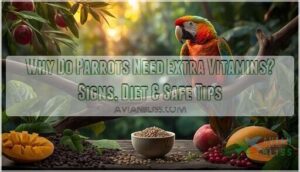
Most parrot owners assume a bowl of seeds covers the basics. It doesn’t.
In the wild, parrots forage across dozens of plant species, rotating through seasonal fruits, leafy greens, bark, and even insects—building a nutritional profile that a scoop of sunflower seeds simply can’t replicate.
Captivity changes everything about how a parrot eats, and that gap between wild foraging and a cage diet is where deficiencies quietly take hold.
Vitamin A loss dulls feathers and weakens immunity. Low calcium triggers seizures in laying hens.
Understanding why parrots need extra vitamins starts with understanding just how much their bodies demand.
Table Of Contents
Key Takeaways
- Seeds alone can’t sustain your parrot — wild parrots forage across dozens of plant species daily, and captive birds quietly develop deficiencies in vitamin A, calcium, and omega-3s when fed seed‑only diets.
- Vitamin A and calcium are the two biggest gaps to watch: low vitamin A dulls feathers and tanks immunity, while low calcium can trigger seizures and reproductive failure, especially in laying hens.
- Pellets outperform seeds across every nutritional measure, and transitioning your bird by mixing 25% pellets into seeds is the most practical way to start closing those gaps.
- Supplementing without veterinary guidance can do real harm — fat‑soluble vitamins like A and D build up over time, so dosing by your bird’s weight and getting a professional opinion before starting any supplement routine matters.
Why Do Parrots Need Extra Vitamins?
Parrots aren’t just colorful houseguests — they’re complex animals with nutritional needs that a bowl of seeds simply can’t meet.
Seeds alone can leave parrots deficient in vitamins, minerals, and protein — this complete parrot food and nutrition guide breaks down exactly what a balanced diet should look like.
In the wild, they forage across diverse landscapes, picking up vitamins and minerals from dozens of different plants.
Here’s what you need to understand about why captive parrots often need a little extra help.
Unique Nutritional Needs of Parrots
Parrots aren’t just colorful companions — they’re nutritionally complex creatures. Their needs shift with age, reproductive cycles, and even the seasons, making seasonal diet adjustments and age-specific requirements genuinely important.
Essential vitamins and minerals for parrots support everything from gut microbiome health to water mineral balance and egg production nutrition. Getting this right is the foundation of true Parrot Nutrition and Wellness. Vitamin A is essential for immune response and respiratory health in parrots, as detailed in the Vitamin A importance guide.
Risks of Vitamin Deficiencies
When those nutritional gaps go unaddressed, the consequences show up fast.
Vitamin A deficiency alone can trigger immune suppression, feather degradation, and respiratory infections.
Low calcium leads to seizures and reproductive failure, especially in laying hens. B vitamin shortages cause neurological issues, while fat‑soluble deficiencies risk organ damage over time.
Recognizing signs and symptoms of nutrient deficiencies in parrots early is what protects their long‑term avian health.
Vitamin A deficiency can also lead to xerophthalmia in birds.
Differences Between Wild and Captive Diets
Wild parrots spend up to 75% of their day foraging — chewing bark, tasting unripe seeds, hunting insects for protein diversity. That kind of Wild Bird Diet and Nutrition simply can’t be replicated in a bowl.
Wild parrots forage up to 75% of their day — a nutrient-rich lifestyle no bowl can replicate
Captive life changes everything:
- Seed-based diets deliver fat, not the nutrient density wild foods offer
- Food Texture Differences mean less jaw work, less stimulation
- Seasonal Food Shifts and plant variety disappear entirely
Common Vitamin Deficiencies in Parrots
Most parrots in captivity are missing at least one key nutrient, and the effects show up faster than you’d expect. The three deficiencies that cause the most trouble are also the easiest to overlook until real damage is done.
Vitamin A, calcium, and omega-3s top the list — and the right avian health supplements for parrots can fill the gaps that even quality pellets leave behind.
Here’s what you need to know about each one.
Vitamin a and Feather Health
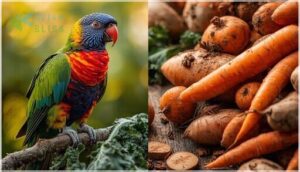
Vitamin A is the unsung hero of feather health. Without enough of it, feather pigmentation fades, feather strength declines, and feather regeneration slows noticeably during molt.
You might notice dull coloration or ragged feathers that just won’t bounce back. Vitamin A deficiency also disrupts feather molt timing and leaves your bird vulnerable to feather disease.
Dark leafy greens and orange vegetables are your best dietary sources of vitamin A.
Calcium and Bone Development
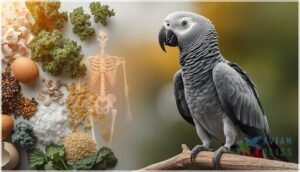
Calcium is the backbone of your parrot’s skeletal health — literally. Without enough of it, bone density drops, growth plates weaken, and fractures become a real risk. African Greys are especially vulnerable.
Watch for these warning signs:
- Trembling or falling off perches
- Seizures or muscle twitching
- Soft, fragile bones visible on X-rays
- Poor egg absorption in breeding hens
Pellet calcium and dark greens support healthy bone formation and calcium absorption daily.
Vitamin D and Immune Support

Vitamin D is the key that unlocks calcium’s potential. Without it, your parrot can’t absorb calcium properly — no matter how good the diet looks on paper. Indoor birds face serious Seasonal Deficiency Risks since Sunlight Synthesis simply doesn’t happen behind glass. UVB Lighting Benefits go beyond bones; Vitamin D3 directly enhances Immune Cell Function, keeping your bird’s immune system health strong year‑round.
| Factor | Risk Without Vitamin D | Solution |
|---|---|---|
| Bone Health Link | Soft bones, fractures | UVB light + pellets |
| Immune System | Frequent infections | Vitamin D3 supplementation |
| Calcium and Vitamin D Interaction for Bone Health | Poor calcium absorption | Balanced formulated diet |
The Limitations of Seed-Based Diets
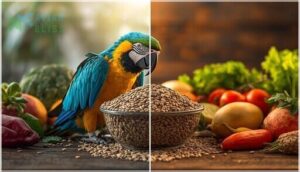
Seeds might seem like the obvious choice for parrots, but they fall short in some pretty significant ways. Feeding your bird seeds alone is one of the most common mistakes parrot owners make, and it comes with real health consequences. Here’s what you need to know about why seed-only diets don’t cut it.
High Fat, Low Nutrient Concerns
Seeds might look like a complete meal, but they’re mostly fat dressed up as food. The Seed Fat Content alone — over 50% in sunflower and safflower — packs serious Calorie Density with little payoff:
- Amino Acid Gaps: Missing lysine, methionine, and tryptophan
- Micronutrient Scarcity: Barely any vitamin A, D, or B12
- Ca:P Imbalance: A dangerously lopsided 1:7 ratio
High fat seed diets simply can’t deliver the nutrient density your parrot needs.
Health Risks From Seed-Only Feeding
seed-only diet doesn’t just underperform — it quietly causes real harm.
Vitamin A deficiency alone triggers Respiratory Issues, crusty nares, and chronic infections.
You’ll often notice Feather Plucking, dull plumage, and skin damage.
Female parrots face Egg Binding from calcium shortages.
Add Immune Suppression, Organ Damage, and obesity in birds, and these seed diet pitfalls become a serious health crisis fast.
Comparison to Pellet-Based Diets
Pellets simply outperform seed-based diets across the board. A quality commercial pellet maintains proper Vitamin A levels, a healthy Calcium‑phosphorus ratio, controlled Fat content, and a complete Amino acid profile — everything seeds consistently miss.
Parrots on pellets show fewer nutritional deficiencies and better overall health.
A smart shift strategy, starting with 25% pellets mixed into seeds, builds toward the balanced diet your parrot genuinely needs.
How to Provide Essential Vitamins Safely
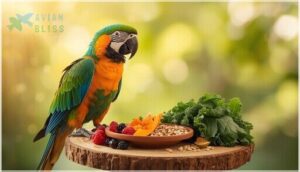
Getting vitamins into your parrot’s diet doesn’t have to be complicated, but it does need to be done right.
Too little and your bird misses out; too much can actually cause harm.
Here’s what you need to know to get it right.
Choosing Quality Supplements
Not all parrot vitamins are created equal. When choosing supplements, look for the NASC Seal on packaging — it signals third‑party audits and verified label accuracy.
Brands like Nekton‑S, Hari Prime, and Vetafarm Multivet have earned strong reputations for consistent formulation and quality natural ingredients. Available in powders, liquids, or sprinkles, these formulation types make supporting your bird’s nutrition genuinely straightforward.
Safe Dosage and Avoiding Over-supplementation
Once you’ve found a quality supplement, dosing it right matters just as much.
Weight-Based Calculations are your starting point — most products dose per 100 g of body weight, so grab a kitchen scale. Fat-soluble vitamins like A and D raise vitamin toxicity risk because they accumulate over time, not just today.
- Increased thirst or changes in droppings
- Dull, brittle feathers despite heavy supplementation
- Lethargy or gradual weight loss
Incorporating Fresh Foods and Pellets
Supplements help fill gaps, but real nutrition starts with what’s in the bowl.
Build your parrot’s meals around a Pellet Rotation Schedule — pellets as the daily foundation, with a Colorful Veggie Mix like kale, bell peppers, and tropical fruits rotating in fresh each morning. Smart Fresh Food Presentation and Moisture Management keep things crisp, while a Gradual Seed Shift helps with lasting parrot nutrition and diet.
Signs Your Parrot May Need Extra Vitamins
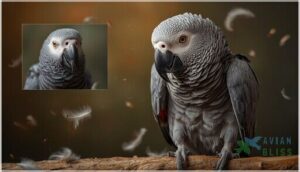
can’t tell you when something feels off
Vitamin deficiencies often show up in ways that are easy to miss if you’re not sure what to look for. watch for across three key areas.
Physical Symptoms of Deficiency
Your bird’s body doesn’t lie. When nutrition falls short, physical symptoms of nutrient deficiencies in parrots show up fast — and they’re hard to miss once you know what to look for:
- Feather dullness and poor feather coloration, or feather plucking from weakened skin and feather health
- Beak overgrowth and skin scaling on feet and legs
- Eye discharge and swollen, crusty nostrils
- Muscle weakness and compromised bone health, especially in African greys
Behavioral Changes Linked to Poor Nutrition
What shows up in behavior can be just as telling as what you see on the outside. When nutrition falls short, your parrot’s personality shifts — and not subtly.
These behavioral issues linked to nutritional deficiencies are real warning signs — not attitude problems. Nutritional supplementation and diet correction often calm things down within weeks.
| Behavioral Sign | What It Looks Like |
|---|---|
| Aggression spikes | Sudden lunges, biting, food bowl guarding |
| Lethargy increase | Puffed up, sleeping through the day |
| Feather plucking | Repetitive picking at chest or wings |
| Vocal screaming | Prolonged screeching over minor triggers |
| Anxiety pacing | Restless bar-pacing, clingy separation distress |
When to Consult an Avian Veterinarian
Don’t wait until things look serious.
If your parrot shows fluffed feathers, poor feather quality, crusty nostrils, or sudden lethargy, book a visit with an avian veterinarian promptly.
Routine wellness exams, age-related checkups, and zoonotic disease screening all help catch nutrient deficiency early.
Never start vitamin supplementation without professional guidance — too much can be just as harmful as too little.
Frequently Asked Questions (FAQs)
Can parrots eat human multivitamins safely?
No, human multivitamins aren’t safe for parrots. Toxicity risks, dosage errors, and absorption differences make them dangerous. Veterinarian guidance and parrot-specific vitamin supplementation are always the smarter, safer choice.
How does age affect a parrots vitamin needs?
Just like people, parrots need different nutrients at every life stage.
From Chick Vitamin A for tissue growth to Senior Immune Support in aging birds, age-based supplement guidelines shift with each phase.
Do different parrot species need different vitamins?
Yes, absolutely.
Species-specific needs vary widely — African Grey calcium demands differ from a Lorikeet nectar diet or Budgerigar A deficiency risks.
Macaw vitamin D3 needs are far greater than a budgie’s.
How does stress impact nutrient absorption in parrots?
Stress triggers a surge of corticosterone that slows gut motility, disrupts your parrot’s microbiome, and damages the intestinal lining — making it harder to absorb the vitamins your bird actually needs.
Are organic foods better for parrot vitamin intake?
Organic bird food isn’t a magic fix. Freshness vitamin retention and pesticide residue impact matter more than the label.
A fresh conventional carrot beats an old organic one every time for parrot nutrition.
Conclusion
The simplest cage setup—a bowl, some seeds, a happy bird—turns out to be the quiet setup for a slow decline. That’s the irony nobody warns you about.
Understanding why parrots need extra vitamins isn’t about overcomplicating care; it’s about closing the gap between what captivity offers and what their bodies actually demand.
Fresh foods, quality pellets, and smart supplementation aren’t extras. For a parrot, they’re the difference between surviving and genuinely thriving.
- https://www.merckvetmanual.com/exotic-and-laboratory-animals/pet-birds/nutritional-diseases-of-pet-birds
- https://theaviaryparrotfood.com/blogs/parrot-diet-and-nutrition/symptoms-of-vitamin-a-deficiency-in-parrots
- https://birdsupplies.com/blogs/news/140891655-three-problems-with-an-all-seed-bird-diet
- https://www.msdvetmanual.com/bird-owners/disorders-and-diseases-of-birds/nutritional-disorders-of-pet-birds
- https://nilesanimalhospital.com/files/2012/05/Vitamin-A-Deficiency-in-Pet-Birds.pdf