This site is supported by our readers. We may earn a commission, at no cost to you, if you purchase through links.
 Wild bird food nutrition centers on balanced protein, fats, and essential minerals that fuel birds’ high-energy lifestyles.
You’ll want to provide 15-20% protein through seeds like sunflower and nyjer, plus healthy fats from suet for winter warmth.
Calcium supports strong eggshells and bones, while vitamin-rich fruits add variety.
Different species have unique needs – finches crave small seeds, while woodpeckers prefer suet and nuts.
Seasonal changes matter too: breeding birds need extra protein, while winter feeding requires high-fat options.
Quality matters more than quantity, so skip processed foods with fillers.
The secret to attracting diverse species lies in understanding these nutritional building blocks, and providing the right food according to the species’ needs, with a focus on quality.
Table Of Contents
- Key Takeaways
- Wild Bird Nutrition Needs
- Best Wild Bird Food Options
- Seasonal Feeding Considerations
- Nutritional Value of Bird Foods
- Responsible Feeding Practices
- Frequently Asked Questions (FAQs)
- What to feed wild birds?
- What do birds eat?
- Do wild birds need protein?
- What nutrients do birds need to stay healthy?
- Do wild birds need vitamins and minerals?
- Do wild birds eat seeds?
- What is the most nutritious wild bird food?
- What is the nutritional value of bird seed?
- What nutrients do wild birds need?
- Is feeding wild birds a good thing?
- Conclusion
Key Takeaways
- You’ll need to provide 15-20% protein through quality seeds like sunflower and nyjer, plus live mealworms during breeding season – this supports feather development, muscle growth, and successful reproduction when birds need it most.
- Fat content matters more than you think – aim for 7-15% of their diet through suet and oil-rich seeds – these energy-dense foods help birds maintain body temperature and fuel their high-metabolism lifestyles, especially during winter.
- Don’t forget calcium and minerals that most seeds lack – you’ll need to supplement with sources beyond basic birdseed since calcium supports strong bones and successful eggshell formation.
- Match your feeding strategy to seasons and species – breeding birds need extra protein in spring, while winter requires high-fat options, and different species like finches versus woodpeckers have distinct nutritional preferences.
Wild Bird Nutrition Needs
Understanding your backyard birds’ nutritional needs helps you provide foods that support their health, energy, and survival throughout the year.
Wild birds require specific ratios of protein, fats, carbohydrates, vitamins, and minerals that vary by species, season, and life stage, which is crucial for their overall health.
Protein Requirements
Most wild birds require 14-18% protein in their diets, with insectivorous species needing up to 30% during breeding season.
**Breeding birds need triple the protein to fuel their most demanding season.
Protein Sources like insects provide essential Amino Acids for ideal bird nutrition.
Key protein functions include:
- Feather Growth – Over 90% of feathers consist of protein
- Muscle Development – Supporting flight and daily activities
- Egg Production – Critical for reproductive success
Wild bird food nutrition must balance protein-rich insects with seeds to meet these nutritional needs effectively.
Understanding wild bird nutrition is vital for providing the right diet.
Fat and Carbohydrate Needs
Birds require specific fat and carbohydrate ratios for ideal health and survival.
Fat provides concentrated energy for metabolism, insulation, and migration—comprising 7-15% of their diet.
Carbohydrates from fruits, nectar, and grains deliver quick energy for daily activities.
You’ll need to balance these energy sources carefully.
| Nutrient Type | Primary Function |
|---|---|
| Dietary Fat | Long-term energy storage, insulation |
| Simple Carbs | Immediate energy for flight, foraging |
| Complex Carbs | Sustained energy release, digestive fiber |
| Energy Balance | Maintains body temperature, supports activity |
Energy-dense foods like sunflower seeds provide both fat metabolism support and carbohydrate intake.
Understanding nutrient balance helps you select appropriate wild bird food nutrition that matches seasonal demands and species-specific needs.
Calcium and Mineral Essentials
Your feathered visitors need calcium and other minerals to thrive, but most seeds fall short of these requirements.
Calcium dominates mineral needs for strong bones and successful eggshell formation, while trace minerals like zinc and iron support feather development.
Mineral deficiencies can devastate bird health, making supplemental calcium sources and balanced nutrition critical for backyard birds, especially for strong bones.
Vitamin and Mineral Supplements
Even with quality seeds and balanced diets, nutritional supplements can bridge gaps in your backyard birds’ nutrition.
Commercial vitamin supplements containing A, D3, E, and B-complex vitamins support overall health, while mineral deficiencies like calcium needs and iron requirements get addressed through chelated sources.
Amino acids from specialized products enhance protein quality, making nutritional supplements valuable during breeding seasons. However, to fully appreciate the benefits, understanding the role of natural bird diets in providing necessary nutrients is necessary, and recognizing the importance of balanced diets is crucial.
Best Wild Bird Food Options
You’ll find the most effective wild bird foods combine high nutritional density with species-specific appeal to support healthy populations year-round.
The best options include protein-rich seeds, live mealworms, energy-dense suet, and specialized nectar that match birds’ natural dietary requirements.
Seeds and Grains
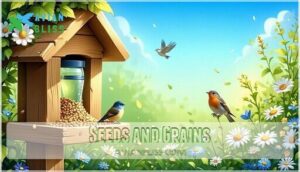
Seeds and grains form the backbone of most backyard bird feeding programs.
You’ll find that different seed types offer varying nutritional profiles that attract specific bird species to your feeders.
Understanding seed types nutrition helps you make informed choices:
- Sunflower seeds – 21% protein content with high fat levels for energy
- Millet nutrition – 11% protein plus essential carbohydrates for smaller songbirds
- Nyjer value – 20% protein and excellent fat content for finches
- Seed blends – Combine multiple grains for thorough bird seed nutrition
Most seeds lack calcium and vitamin A, requiring supplementation through other foods.
Cracked corn provides primarily carbohydrates at 9% protein, while grain benefits include fiber for digestive health and sustained energy release.
The nutritional value of sunflower bird seeds is particularly important for maintaining a balanced diet for the birds.
Mealworms

While seeds provide essential carbohydrates and some protein, mealworm protein delivers concentrated nutrition that transforms your backyard into a feeding station worthy of nature’s approval.
Live mealworms contain 20% protein compared to dried versions with 53%, though live insects offer superior mealworm digestion for young birds.
Proper sourcing mealworms from reputable suppliers and correct mealworm storage guarantees maximal bird seed nutrition.
Understanding the benefits of mealworm eating patterns is vital for creating an effective wild bird food strategy.
| Mealworm Type | Protein Content | Best Usage |
|---|---|---|
| Live mealworms | 20% crude protein | Breeding season feeding |
| Dried mealworms | 53% crude protein | Year-round supplementation |
| Rehydrated dried | 35-40% protein | Winter energy boost |
| Fresh pupae | 25% crude protein | Nestling development |
Suet
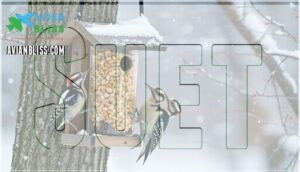
While mealworms provide live protein, suet delivers the high energy wild birds need for survival.
You’ll find suet cakes packed with 60-70% fat content, making them perfect energy-dense foods for harsh weather. These high fat levels support winter nutrition when birds burn calories faster.
Suet feeders offer suet feeder options that cater to different bird species.
Top suet feeding benefits:
- Woodpeckers cling to suet feeders like they’ve found treasure – watching them work those specialized beaks never gets old
- Your backyard becomes a winter refuge – knowing you’re helping birds survive brutal cold snaps feels incredible
- Suet types attract different species – from nuthatches to chickadees, you’ll host an amazing variety
Fruit and Nectar
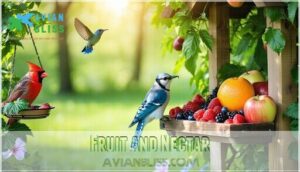
Fruit and nectar serve as powerhouse energy sources that fuel your feathered visitors through demanding seasons.
Fresh berries deliver essential vitamins while their natural sugar content provides immediate energy for active birds.
You’ll find that offering varied fruit types—from dried cranberries to fresh apples—attracts diverse species seeking these nutritional treasures.
Nectar sources complement fruit offerings perfectly for specialized feeders, providing a complete nutritional package that supports the well-being of your bird visitors, making them a great energy source.
Seasonal Feeding Considerations
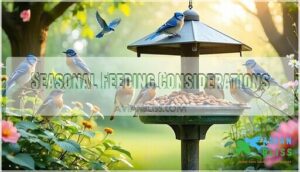
Your bird feeding strategy needs to change with the seasons just like birds’ natural diets shift throughout the year.
Understanding these seasonal patterns helps you provide the right nutrition when birds need it most, from protein-rich foods during breeding season to high-fat options for winter survival.
Spring and Summer Diets
During spring and summer, birds shift to insectivore diets, demanding protein-rich insects for breeding nutrition and the molting process.
Spring brings hunger for protein—birds need insects, not just seeds, to fuel breeding season.
You’ll notice increased summer foraging as parents hunt caterpillars and beetles for nestling care.
Seasonal diets change dramatically – protein needs jump from 14% to 25% during reproduction. Supplement energy-rich seeds with live mealworms to support these heightened nutritional needs effectively.
Fall and Winter Feeding
During colder months, your feathered visitors face survival challenges that demand energy-rich nutrition and strategic feeding approaches to combat harsh conditions.
Fall and Winter Feeding Essentials:
- Winter Seed Mix – Combine sunflower seeds, peanuts, and nyjer for maximum Cold Weather Nutrition that sustains birds through freezing temperatures
- High-fat content foods – Offer suet cakes and energyrich seeds to help birds maintain body heat during extended cold snaps
- Snow Cover Impact preparation – Position feeders in sheltered locations where birds can access food even when natural sources become buried
- Frost Tolerance support – Provide consistent food sources as insects disappear and wild plant seeds become scarce or inaccessible
- Bird Migration Patterns awareness – Adjust feeding schedules to support both year-round residents and migrating species passing through your area
Migration and Breeding Season
During migration and breeding seasons, birds require extraordinary energy reserves to fuel their journeys and support reproduction.
You’ll want to offer energy-rich seeds like sunflower and nyjer, plus protein-packed mealworms for ideal breeding nutrition and feather growth.
These seasonal diets directly impact migration patterns, nesting success, and breeding habits, making your feeding station a essential nutritional lifeline.
Nutritional Value of Bird Foods
You’ll find significant nutritional differences between bird food types, making your selection vital for attracting healthy wildlife.
Understanding protein levels, fat content, and essential nutrients helps you choose foods that meet specific species’ dietary requirements year-round, which is crucial for maintaining healthy wildlife.
Sunflower Seeds
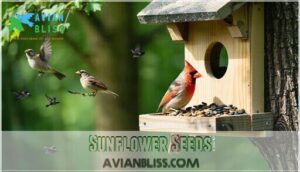
Sunflower seeds rank as the gold standard among wild bird food options, delivering exceptional seed benefits through their impressive nutritional profile.
These powerhouse seeds contain 28-35% fat content and 15% protein levels, making them ideal for supporting bird health year-round.
- Bird preferences: Cardinals, finches, and chickadees consistently choose sunflower seeds over other options
- Feeder placement: Position feeders 3-10 feet from cover for ideal bird comfort and safety
- Bird seed ingredients: Black oil varieties offer thinner shells for easier access to nutrients
Their balanced nutrition for birds makes sunflower seeds essential wild bird food for any feeding program. Understanding the seed nutritional benefits is vital for creating a well-rounded feeding strategy.
Nyjer Seeds
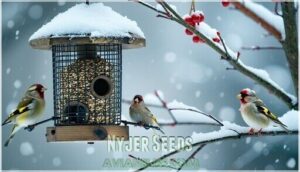
Nyjer seeds pack exceptional nutritional density for seed-eating birds.
These tiny black seeds contain 20% protein and high fat content, making them perfect winter nutrition when birds need extra calories.
You’ll find goldfinches, siskins, and redpolls can’t resist nyjer’s energy-rich profile.
Store nyjer in cool, dry conditions since its high oil content makes it spoil quickly.
Bird preferences vary, but nutritionally dense foods like nyjer consistently attract finches seeking quality fuel.
Understanding seed nutrition facts is vital for providing the best diet for birds, which is a key factor in their overall well-being.
Suet and Mealworm Cakes
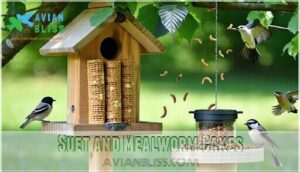
These protein-packed powerhouses deliver balanced nutrition that’ll fuel your feathered friends through tough times.
Suet cakes provide 60-70% fat content while mealworm varieties offer 8-12% protein, creating the perfect high-energy combination.
This dynamic duo supports wild bird energy needs during molting seasons and harsh weather, making suet cake nutrition essential for backyard feeding success.
Seed Blends With Fruit and Nuts
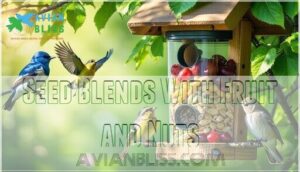
Quality seed blends with fruit and nuts create nutrient balance that single-ingredient foods can’t match.
These seed mixtures combine birdseed ingredients like sunflower seeds with dried cranberries, raisins, and chopped peanuts, delivering wild bird diet essentials.
Bird preferences vary, but most seed-eating birds appreciate the nutritional content diversity, and fruit varieties provide antioxidants while nuts add healthy fats, creating natural nutrient supplements for ideal bird food nutrition.
Responsible Feeding Practices

You’ll support your backyard birds best when you follow proven feeding practices that prioritize their health over convenience.
Proper bird feeding requires attention to food quality, feeder maintenance, and creating environments that complement rather than replace natural food sources, which is essential for their overall health.
Avoiding Processed Foods
Never feed wild birds processed human foods like bread, crackers, or chips. These foods lack essential nutrients and can cause malnutrition and health problems.
Instead, choose Raw Food Benefits through natural food sources that match their nutritional needs. Fresh Ingredients like unsalted seeds, dried fruits without additives, and plain mealworms provide superior bird food nutrition compared to processed alternatives.
It’s vital to understand the importance of avoiding toxic food sources to guarantee the well-being of wild birds, by selecting natural food sources and being aware of essential nutrients.
Providing Fresh Water
Water represents the foundation of bird health, complementing nutritious foods with proper hydration support.
Birds require consistent access to clean, fresh water for drinking and bathing throughout all seasons.
Water Quality essentials for ideal bird health:
- Temperature control – Maintain water at room temperature, avoiding frozen or scalding conditions that discourage use
- Daily replacement – Change water every 24-48 hours to prevent bacterial growth and maintain freshness
- Depth management – Provide shallow water (1-2 inches) for safe drinking while accommodating different bird sizes
Fresh Water Sources should mirror natural water sources birds encounter in wild habitats, supporting their Hydration Needs effectively.
Cleaning and Maintaining Feeders
Regular feeder cleaning prevents disease outbreaks that can devastate local bird populations.
Clean feeders monthly with a 10% bleach solution, ensuring proper seed storage in airtight containers.
Strategic feeder placement away from windows reduces collision risks while maintaining bird feeding safety.
| Cleaning Schedule | Method |
|---|---|
| Weekly | Remove old seeds, rinse with hot water |
| Monthly | Deep clean with 10% bleach solution |
| Seasonally | Inspect for damage, replace worn parts |
Creating Bird-Friendly Habitats
Creating bird-friendly habitat design transforms your yard into a nutritional powerhouse that supports diverse species naturally.
Native plants provide essential food sources while reducing dependency on artificial feeders, promoting bird conservation through sustainable garden design.
- Plant native fruit-bearing trees and shrubs – These provide natural food sources that align with local birds’ nutritional needs while attracting insects for protein-rich foraging opportunities.
- Install multiple bird baths at varying heights – Strategic feeder placement near water sources creates feeding stations that accommodate different species’ preferences and behaviors.
- Design layered vegetation zones – Habitat diversity through ground cover, understory, and canopy plants offers nesting sites, shelter, and year-round foraging opportunities for maximum ecological benefit.
Frequently Asked Questions (FAQs)
What to feed wild birds?
Like building a nutritional buffet for your feathered neighbors, you’ll want to offer sunflower seeds, nyjer, millet, and suet.
These provide essential proteins, fats, and carbohydrates that birds need for energy, feather development, and survival through seasonal changes.
What do birds eat?
Birds eat diverse diets based on their species: seed-eaters like finches prefer sunflower seeds and nyjer, insectivores catch bugs and larvae, while omnivores enjoy seeds, fruits, and insects seasonally.
Do wild birds need protein?
Yes, wild birds absolutely need protein for survival. You’ll find they require 14-18% protein for muscle development, feather production, and successful breeding. Protein makes up over 90% of their feathers alone.
What nutrients do birds need to stay healthy?
You’ll need protein (14-18%) for muscle and feather development, fats (7-15%) for energy and insulation.
Carbohydrates are needed for quick fuel, calcium for strong bones and eggshells.
Plus, vitamins A and B are essential for reproduction and metabolism.
Do wild birds need vitamins and minerals?
An ounce of prevention’s worth a pound of cure" – you’ll find wild birds absolutely require essential vitamins and minerals for survival, reproduction, and peak health throughout their lives.
Do wild birds eat seeds?
You’ll find seeds make up a huge portion of most wild birds’ diets.
Finches, cardinals, and chickadees particularly love sunflower seeds, while smaller species prefer millet and nyjer for their nutritional value.
What is the most nutritious wild bird food?
Sunflower seeds offer you the best overall nutrition for wild birds, containing 21% protein and high fat content that attracts the widest variety of species to your feeders.
What is the nutritional value of bird seed?
Bird seed’s nutritional value varies by type.
You’ll get 21% protein from sunflower seeds, 20% from nyjer, and 11% from millet.
Most seeds provide good fats and carbohydrates but lack calcium and vitamin A.
What nutrients do wild birds need?
Wild birds require protein (14-18%) for muscle and feather development.
Fats (7-15%) are needed for energy and warmth, carbohydrates for quick fuel.
Plus essential calcium, vitamins A and B, and trace minerals are required for peak health.
Is feeding wild birds a good thing?
Responsible feeding creates a safety net during harsh weather, though it shouldn’t replace natural habitat conservation. You’ll help birds survive winter challenges while potentially disrupting natural foraging patterns if overdone.
Conclusion
While processed foods drain your wallet and offer little value, understanding wild bird food nutrition transforms your backyard into a thriving ecosystem.
You’ve learned that protein, healthy fats, and essential minerals create the foundation for successful feeding programs.
Whether you’re supporting breeding pairs in spring or helping birds survive harsh winters, matching food quality to seasonal needs guarantees the best health outcomes.
Remember, consistent application of these nutritional principles attracts diverse species while promoting long-term avian wellness in your local habitat.
- https://richland.wbu.com/fun-facts-about-young-birds-nutritional-needs
- https://www.petmd.com/bird/feeding-birds-in-your-backyard
- https://pmc.ncbi.nlm.nih.gov/articles/PMC7984256/
- https://cals.cornell.edu/news/2016/09/quality-not-quantity-of-diet-key-health-of-baby-birds
- https://birdreel.com/blogs/news/diet-and-nutrition-in-wild-birds-a-scientific-perspective