This site is supported by our readers. We may earn a commission, at no cost to you, if you purchase through links.
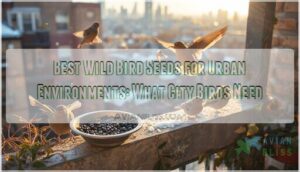
City birds don’t have the luxury of sprawling fields or quiet forests. Instead, they make do with scraps, sidewalk weeds, and whatever seeds you offer.
The right wild bird seeds for urban environments can turn a concrete balcony into a lifeline—especially when winter hits and natural food vanishes. Black oil sunflower seeds, nyjer, and safflower aren’t just snacks; they’re survival tools for sparrows, finches, and doves dodging traffic and predators. If you’re looking to support these resilient neighbors, understanding which seeds work best—and why—makes all the difference.
Table Of Contents
Key Takeaways
- Black oil sunflower, nyjer, and safflower seeds offer the best nutrition and broadest appeal for urban birds while also deterring common pests like squirrels.
- Seasonal adjustments to seed blends—adding protein and calcium in spring and summer, and focusing on high-fat, calorie-dense mixes in fall and winter—help city birds survive and thrive year-round.
- Eco-friendly bird feeding means choosing organic or non-GMO seeds, supporting local producers, and using compostable or recyclable packaging to reduce your environmental footprint.
- Smart feeder placement, regular cleaning, and no-mess seed options are essential for keeping city birds safe, minimizing pests, and maintaining a healthy urban bird feeding station.
Best Wild Bird Seeds for Urban Settings
Not every seed works the same in a city setting — birds here deal with different pressures than their rural counterparts, and their diet should reflect that.
For tips on picking the best blends for urban birds, check out this guide on choosing the right birdseed for backyard feeders.
Picking the right seed comes down to knowing what species show up in your yard and what they actually need.
Here’s what often works best for urban feeders.
Top Seed Types for City Birds
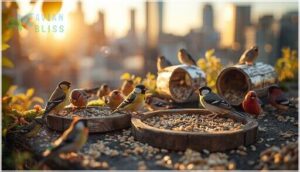
Not all seeds pull equal weight regarding urban bird nutrition.
Black oil sunflower seeds top most seed preference rankings — thin shells, high fat content, and broad feeder compatibility make them the backbone of any solid wild bird food strategy.
For finches, heat-treated nyjer delivers concentrated energy, while safflower doubles as a natural squirrel deterrent, quietly solving two problems at once.
tube feeders for small birds are especially effective for finches and chickadees.
Blends Designed for Urban Environments

If you’re after wild bird seed blends that actually fit urban residential areas, look for formulas built on urban migration alignment and seasonal bird feed adjustments. Shell‑free formulation means less mess and fewer pests. You’ll spot seasonal grit inclusion and pest deterrent ingredients woven in for practical urban bird nutrition. Low‑waste packaging keeps your conscience clear.
- Pest Deterrent Ingredients
- Shell‑Free Formulation
- Urban Migration Alignment
- Low‑Waste Packaging
- Seasonal Grit Inclusion
Consider using anti‑squirrel seed blends to deter critters.
Seeds That Attract a Variety of Urban Species
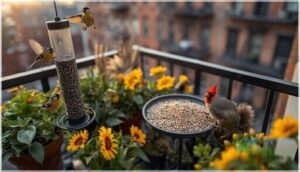
Matching your seed selection to species preferences pays off fast. Black oil sunflower draws cardinals, chickadees, and nuthatches, while nyjer pulls goldfinches during migration timing windows. Safflower works double duty — cardinals love it, and squirrel deterrents don’t get easier than its bitter taste.
Smart feeder placement and the right bird seed blends turn your yard into genuine urban wildlife territory.
Mess-free and Low-waste Seed Options

Once you’ve attracted city birds, the next hurdle is cleanup. Hull-Free Formulations like Lyric Fine Tunes and Kaytee No Mess make urban birding supplies practical—birds eat every kernel, so there’s no shell debris.
These messfree bird feeding solutions, paired with Zero Waste Packaging and pest deterrent design, keep feeder compatibility high and extend shelf life in premium bird feed products.
Seasonal Seed Blends for Urban Birds
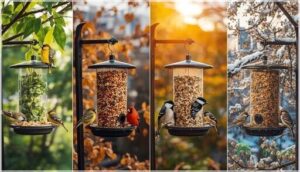
Feeding city birds isn’t a one-size-fits-all job; their needs shift with the seasons. If you want to help them thrive year‑round, you’ll need to match your seed blend to the time of year.
Here’s what to look for as the seasons change.
Spring and Summer Nutritional Needs
Ever notice how city birds shift gears as spring arrives? Urban wildlife depends on higher protein for muscle growth, especially young birds, and Egg‑laying calcium becomes essential for nesting.
If you’re curious about eco-friendly ways to nourish urban birds, non-GMO bird food options support both their health and the environment.
To support avian nutrition and Summer hydration, try these:
- Sunflower hearts (Young bird protein)
- Mealworms (Insect protein)
- Crushed eggshells (Egg‑laying calcium)
- Chopped apples (Summer hydration)
- Niger seeds (Heat‑resistant fats)
Fall and Winter Energy Requirements
When temperatures drop, urban wildlife depends on calorie-dense mixes—think Oil-Rich Sunflowers and Nyjer Energy Boost—packed with higher carbohydrates and fats.
High-Fat Seeds like black oil sunflowers deliver warmth, while Suet Winter Fuel offers sustained energy.
Seasonal variations matter: higher protein isn’t the priority now; instead, focus on blends that support bird nutrition for overnight survival and city winters.
Adjusting Seed Mix for Migratory Patterns
If you’re aiming to weave migration timing into your urban bird feeding, seasonal variations matter. Migrants respond quickly to fresh options—especially fruit supplements or insectivore boosts. Adjust feeder height and cluster feeders near cover vegetation to match bird migration patterns and nutritional requirements. Try these strategies:
- Rotate seed types by season
- Add fruit bits
- Offer mealworms
- Cluster feeders
Importance of Calcium and Grit by Season
Did you know urban birds boost nesting success by 20 percent when you weave calcium and grit into your seasonal blends?
Spring Calcium Surge means oyster shell grit and crushed eggshells. Summer Grit Needs call for limestone dust. Fall Bone Preparation relies on calciworms. Winter Grit Scarcity demands weekly grit.
Here’s a quick seasonal breakdown:
| Season | Calcium Source |
|---|---|
| Spring | Oyster shell, eggshells |
| Summer | Limestone dust |
| Fall | Calciworms, greens |
| Winter | Gravel, plowed grit |
Nutritional Needs of Urban Wild Birds
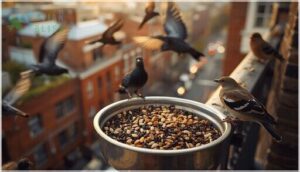
Feeding city birds isn’t just about filling a feeder—it’s about matching what they truly need to stay healthy. Urban birds face different challenges than their rural cousins, so the right nutrients make all the difference.
Feeding city birds means giving them the nutrients they need to thrive, not just filling a feeder
Here’s what you’ll want to look for in a quality seed blend.
Protein for Growth and Muscle Development
Why do city finches bulk up so fast? It’s the amino acid balance and high protein digestibility in seeds such as sunflower, nyjer, peanut, and safflower.
Your feeder’s nutritionally perfect formula—over 30 different ingredients—lets juvenile muscle gains match species‑specific protein needs.
Try optimizing feeding frequency with these five:
- Sunflower hearts
- Nyjer
- Peanut granules
- Safflower
- Mixed urban blends
Carbohydrates for Energy and Warmth
Ever noticed how black-capped chickadees keep their bodies near 100°F even when the mercury plunges?
That’s Urban Bird Thermoregulation in action, fueled by Metabolic Heat Production from carbohydrate-rich seeds.
Your nutritionally perfect formula provides Glycogen Storage Strategies and Winter Flight Energy, while Fruit Carbohydrate Benefits help migrating species replenish reserves—essential for seasonal bird care and overall bird nutrition and health.
Essential Vitamins and Minerals
You can’t overlook the role of Vitamin E Antioxidant and B Vitamin Energy in bird nutrition and health.
As any ornithological nutritionist will tell you, Calcium Eggshell Support, Zinc Immune Boost, and Iron Blood Formation are woven into bird feed formulation for essential nutrition.
That’s why seasonal bird care means adjusting blends to match what urban species actually need—never just guessing.
Supporting Reproductive Health With Proper Seeds
When you’re weighing seed mix composition, don’t miss Omega‑3 Enrichment and Vitamin E Boost—each promotes hormonal balance and eggshell strength during egg production seasons.
Urban birds benefit from nutrient timing, especially as bird nutrition studies confirm hemp’s role in egg quality and sunflower’s immune support. As any ornithological nutritionist knows, the right blend directly shapes reproductive outcomes in city environments.
Eco-Friendly and Sustainable Bird Seed Choices
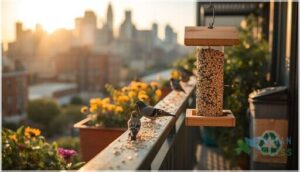
If you’re thinking about bird seed choices, it’s worth considering their impact on the environment. Sustainable options aren’t just good for birds—they help keep your neighborhood healthy too.
Here’s what to look for when you want to feed city birds responsibly.
Organic and Non-GMO Bird Seed Options
Although many bird seed brands tout sustainability, only those meeting Certification Standards—like USDA Organic and Non‑GMO Project—guarantee pesticide‑free production and rigorous GMO testing methods.
Choosing seeds from Local Farm Sourcing helps urban birds and Sustainable Living. Organic and Non‑GMO blends, such as Prairie Melody and Gilligallou, deliver pure nutrition without compromise.
- No synthetic pesticides
- Annual GMO testing
- Local farm partnerships
- Nutrient-rich organic mixes
- Pesticide-free production
Environmentally Responsible Packaging
Sourcing organic seed matters, but your impact grows when you choose ecofriendly packaging.
Compostable Seed Bags break down in home compost, while Recyclable Paper Sacks and Recycled Plastic Containers cut landfill waste.
Reusable Polypropylene Pouches handle bulk refills, and FSC Cardboard Shipping ensures every box backs sustainable wildlife practices—proof that sustainable bird feeding starts with ecofriendly bird products and recycled packaging.
Supporting Local and Sustainable Seed Producers
Backing community farmer partnerships and regional seed diversity means your urban bird feeding promotes economic multiplier effects, not just wildlife.
Farm-to-Feeder Logistics, like Mill Creek Seed Co’s carbon‑neutral distribution, keeps seeds fresher while boosting local jobs.
In Canadian urban areas, eco‑friendly bird products from sustainable wildlife practices guarantee every dollar spent helps protect farmland and city birds alike.
Reducing Environmental Impact in Urban Feeding
When you choose waste-free packaging and practice feeder material recycling, your urban bird station stays eco‑friendly and practical.
Rodent deterrent strategies—like safflower seeds and daily ground checks—help keep city wildlife safe.
Low‑impact maintenance, including hot soapy scrubs and carbon footprint tracking, pairs well with sustainable foods: organic, non‑GMO, and pesticide‑free blends that support birds and minimize environmental stress.
Tips for Successful Urban Bird Feeding
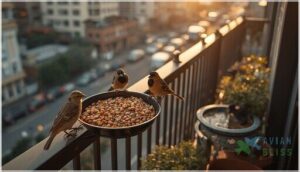
Urban bird feeding comes with its own set of challenges, but a few smart choices can make all the difference.
You’ll want to think about how feeders fit into city spaces and what keeps birds safe and healthy.
Here’s what matters most when setting up your feeding station.
Choosing The Right Feeders for City Environments
Ever noticed how city birds adapt to balcony life? Your feeder choice shapes their visits. For urban birding, weigh these essentials:
- Window Feeder Design for close viewing and safer placements
- Squirrel‑Proof Mechanisms to protect seed blends
- Weather Guard Features for year-round feeding
- Tube vs Hopper Comparison for species diversity and seed volume
Placement & Visibility matter—urban feeders thrive when thoughtfully positioned.
Preventing Pests and Mess
You want less mess and fewer pests? Urban bird feeding hinges on details—Rodent‑proof storage keeps seed blends safe, Waste catcher trays cut debris, and Pepper‑treated seed deters rodents without harming birds.
No‑mess formulas and a Cleaning schedule matter as much as bird feeder types. Organic food shopping and pesticide‑free choices help too.
| Method | Benefit |
|---|---|
| Rodent‑proof storage | Stops seed theft |
| Waste catcher trays | Reduces ground mess |
| Pepper‑treated seed | Repels rodents safely |
| No‑mess formulas | Limits leftover debris |
Safe Placement of Feeders in Urban Areas
How do you keep bird feeder visits safe in Ontario urban areas?
You’ll need more than luck—safe placement of feeders means balancing height, shelter, and predator distance.
For urban birds, consider these essentials:
- Feeder Height: 5–6 feet deters cats
- Window Proximity: within 3 feet prevents collisions
- Predator Distance: 10 feet from climbable cover
- Wind Shelter: semi-shaded, shielded spots
- Shelter Proximity: 10 feet from shrubs for escape
Maintaining Clean Feeding Stations
A dirty feeder is a health hazard, plain and simple.
Stick to a cleaning schedule of every two weeks, using proven disinfection methods — one part bleach to nine parts water, soaked for ten minutes, then fully dried.
Smart feeder design with smooth surfaces speeds this up considerably.
Pair that with consistent waste management beneath the feeder, and pest prevention practically takes care of itself.
Frequently Asked Questions (FAQs)
What bird seeds should I use in my area?
They say “early bird catches the worm,” but in cities, it’s the right seed that matters.
For urban bird species diversity, use budget-friendly blends—black oil sunflower, millet, and nyjer—considering seasonal protein spikes and local species preferences.
Can birds eat cooked pasta?
Birds can eat plain cooked pasta, but its Nutritional Benefits are limited.
Safety Precautions matter—no salt or sauce, small pieces only.
Species Preferences vary; pigeons accept it, finches ignore it.
Serving Guidelines and Health Risks demand moderation and hygiene.
How can I identify birds visiting my feeder?
It’s almost comical how goldfinch’s bold wing bars or a house sparrow’s squat posture can outshine fancy bird feeding accessories.
Field marks, size-shape cues, feeding behavior, and identification apps all help unravel your feeder’s seasonal bird species.
Are wild bird seeds safe for pets nearby?
Fresh, plain wild bird seed blends pose low Pet Toxicity Risks, but Mold & Mycotoxin Hazards, Choking & Blockage Potential, and poor Feeder Placement Strategies can threaten Pet Care—especially without strict Hygiene Monitoring Practices for bird health and wildlife conservation.
Can bird feeding affect local bird populations?
You’ll notice bird feeding habits in urban areas drive population density changes, boost winter survival, and shift species composition.
Yet, feeders can heighten disease transmission risk and alter predator-prey dynamics, shaping local bird population trends in surprising ways.
What are common urban bird feeding myths?
Picture a park bench, breadcrumbs scattered like confetti—many still believe bread is nutritious or that rice expands stomachs.
Myths like “feeders cause dependence” or “seasonal feeding stops migration” persist, muddying urban bird conservation and bird feeding habits.
How do weather extremes impact urban bird feeding?
Weather extremes reshape urban bird feeding: heatwave feeding patterns shift to dawn and dusk, cold snap energy demands spike, rain-induced spoilage threatens hygiene, drought water needs intensify, and air pollution stress makes seasonally adjusted blends essential for Canadian climate resilience.
Conclusion
Feeding city birds isn’t just for the birds—it’s a small act with outsized impact. By choosing wild bird seeds for urban environments, you transform your balcony or backyard into an essential stopover for species traversing concrete jungles.
Every seed you scatter becomes a thread in the urban ecosystem’s fabric, sustaining life where it’s often overlooked. With the right seed mix and mindful habits, you’re not just supporting wildlife—you’re helping cities stay wild, resilient, and connected.