This site is supported by our readers. We may earn a commission, at no cost to you, if you purchase through links.
 You might be surprised to learn that every hour, the world loses about 240 acres of wild habitat—forests, wetlands, grasslands, all quietly reshaped by the tide of human progress. Behind that number, rivers change course, songs vanish, and creatures lose the only home they’ve ever known.
Wildlife preservation isn’t just about saving picturesque animals or fighting extinction in faraway places. It’s the practical work of keeping ecosystems breathing and resilient—your air, your water, your future all riding on the outcome.
By understanding how wildlife preservation techniques work in the real world, you become part of a much bigger story.
Table Of Contents
Key Takeaways
- Wildlife preservation relies on practical techniques like habitat protection, species reintroduction, and invasive species management to keep ecosystems healthy and resilient.
- Community involvement, including volunteering and citizen science, plays a vital role in supporting local wildlife and fostering a conservation ethic.
- Effective funding, smart policy, and strong partnerships between governments and nonprofits are essential for lasting conservation impact.
- Climate change, habitat loss, and balancing human needs with wildlife protection drive the need for innovative solutions and adaptive management in conservation efforts.
What is Wildlife Preservation?
Wildlife preservation isn’t just about protecting animals; it’s about supporting the places they call home. This work has deep roots and a range of goals, from species survival to healthy habitats.
To make things clear, let’s walk through the main approaches that make long-term conservation possible.
Definition and Importance
Wildlife preservation is all about finding a balance—making sure our world remains full of wild creatures and natural places for generations to come. Defining preservation means recognizing the intrinsic worth of species, valuing ecosystems not just for what they provide humanity, but for their own sake.
Wildlife preservation means honoring the value of all species and places so the wild world endures for future generations
Your conservation efforts—every action—help counter human impact and protect habitat for future generations.
Key Goals and Objectives
Once you understand why preservation matters, it’s easy to see how a few clear goals can help guide every step we take in protecting our wild neighbors and their homes. Setting priorities, measuring outcomes, and upholding preservation ethics help shape every plan.
Adaptive strategies, a long-term vision, and focusing on endangered species and habitat protection keep your conservation efforts targeted and effective.
History of Wildlife Conservation in The U.S
That early conservationists set the stage for America’s conservation heritage is no accident. In the late 1800s, habitat loss and overhunting demanded significant legislation—think game laws, national parks, and wildlife refuges.
These moves introduced hunting regulations, protected public lands, and sparked public awareness, setting a trend in wildlife management and habitat preservation that would shape future approaches to wildlife conservation. These efforts align with the principles of wildlife conservation as they exist today.
Major Wildlife Preservation Techniques
Regarding protecting wildlife, there are a few practical techniques that really make a difference. Each approach focuses on different ways to support animals and their habitats for the long haul. Here’s what you’ll find up ahead.
Habitat Protection and Restoration
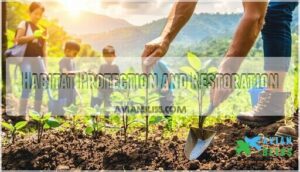
Ever wonder what happens when you give nature a second chance to heal? Habitat protection safeguards wildlife habitat from further loss, while habitat restoration—including reforestation efforts and wetland restoration—restores ecological balance and boosts ecosystem services.
Sustainable landscaping creates habitat connectivity, letting wildlife move freely and thrive.
Together, these practical actions turn degraded landscapes into lasting strongholds for nature.
Captive Breeding and Species Reintroduction
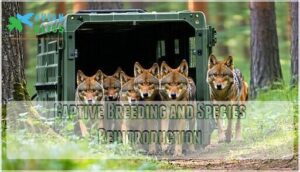
Step into the sphere of captive breeding and species reintroduction, where hope meets science. These wildlife conservation efforts rely on genetic diversity, adaptive management, and solid reintroduction strategies to rebuild endangered species populations. Real-world case studies highlight the role of financial costs, careful planning, and habitat protection and restoration in successful endangered species recovery and lasting wildlife preservation strategies. Unfortunately, captive-born animals often struggle to survive reintroduction.
- Maintain genetic diversity
- Tailor reintroduction strategies
- Apply adaptive management
- Track financial costs and outcomes
Invasive Species Management

Through targeted prevention strategies, habitat loss and biodiversity declines can be slowed by controlling invasive species. Ecological balance restoration hinges on swift policy enforcement, wise eradication methods, and community buy-in. The economic costs of inaction—ranging from environmental degradation to species extinction—highlight the value of effective management programs.
| Eradication Methods | Ecological Impacts | Economic Costs |
|---|---|---|
| Manual removal | Biodiversity gain | Upfront labor costs |
| Chemical control | Water quality risk | Maintenance outlays |
| Biological agents | Balance restored | Monitoring expenses |
Endangered Species Recovery Programs
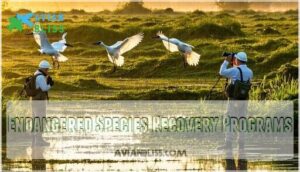
Sometimes, the fate of an endangered species rests on recovery programs blending practical tools—like captive breeding, habitat loss mitigation, and targeted reintroduction. With strategic funding allocation and substantial federal investments, you can expect greater program effectiveness and reintroduction success.
These efforts don’t just fight species extinction; they restore ecological balance and fuel long-term wildlife conservation that benefits everyone.
Community Engagement in Conservation

Regarding conservation, your voice and actions matter more than you might think. Getting involved helps build a real connection to the land and the wildlife around you.
Here are a couple of ways you can make a difference.
Public Participation and Volunteering
Rolling up your sleeves and getting involved is one of the most meaningful ways you can support wildlife in your own backyard. You might consider:
- Joining a local habitat restoration project;
- Exploring volunteer training programs for environmental stewardship;
- Mentoring youth through Citizen Science activities;
- Leading community outreach to boost public awareness about wildlife conservation.
Opportunities for public involvement are everywhere.
Outdoor Recreation and Citizen Science
Have you ever noticed how a simple walk in the woods can turn into an opportunity to help protect the very wildlife you came to enjoy? Through ethical recreation and volunteer programs in Virginia, you contribute valuable citizen data.
Ecotourism benefits local economies, too. Outdoor recreation fosters a conservation ethic, deepening your environmental stewardship, and opens countless opportunities for public involvement.
Funding and Policy for Wildlife Conservation
Money and good policy shape what’s possible in wildlife conservation. The right support can make all the difference, from local projects to global initiatives.
Here’s a closer look at what helps keep these efforts on track.
Global and National Conservation Funding
Think global fund gaps are a drop in the bucket? The reality stings—annual needs for wildlife conservation soar past $700 billion, yet most budgets fall short. Notice the disparities:
- Government contributions lead but can’t do it all.
- Private investment remains small.
- Emerging initiatives spark hope.
- Funding for wildlife conservation still hinges on region, like Virginia.
Government and NGO Roles
Even with all the wishful thinking around conservation budgets, it’s the steady teamwork between government agencies and nonprofit groups that keeps real progress humming along. Whether through Policy Implementation, forging Public-Private Partnerships, or maintaining Regulatory Frameworks, these collaborations are the backbone of conservation projects, public lands, and resources protected under international treaties.
From the National Wildlife Federation’s advocacy to local funding for wildlife conservation in Virginia, these partnerships ensure that conservation efforts remain effective and sustainable.
Statistical Tools and Data-Driven Management
Working closely with government and NGOs, you’ll notice how powerful statistical tools shape wildlife and fish management. Complex models and data-driven decisions build adaptive management plans that actually work. Picture predictive modeling, field-tested conservation metrics, and hands-on statistical rigor—these aren’t buzzwords but real tools for ecological preservation:
- Machine-learning insights
- Population viability analysis
- Migration tracking tech
- Environmental stewardship dashboards
- Impact evaluation systems
Challenges and Opportunities in Wildlife Preservation
Every approach to preserving wildlife runs into its own set of challenges, but these also spark new ideas and opportunities. The issues can seem complex, yet clear options are available.
Let’s take a look at where the biggest hurdles and brightest possibilities show up.
Climate Change and Habitat Loss
Across the globe, climate change impacts and habitat loss are reshaping the very ground beneath wildlife’s feet. These shifts carry steep economic consequences and reveal conservation limits, reminding us that environmental degradation isn’t just a distant worry; it’s already at our doorstep, demanding climate action.
You’re seeing extinction risk climb as habitat degradation and extreme events—like wildfires and droughts—undermine ecological preservation.
Balancing Human and Wildlife Needs
As climate challenges press in on nature and neighborhoods alike, it’s clear that finding common ground between people and wildlife is part of the everyday puzzle. Sharing space brings tough choices and opportunities—urban wildlife in gardens, rural conflicts over resources, or the promise and pitfalls of ecotourism.
Solutions must balance:
- community coexistence strategies
- sustainable development goals
- responsible wildlife interaction practices
Innovative Solutions and Future Directions
When new problems keep popping up, innovative tools keep wildlife conservation moving. Conservation drones track fragile habitats; AI applications spot threats; genetic rescue boosts species’ odds. Sustainable coexistence requires global conservation initiatives, environmental awareness campaigns, and science-based, tech-driven conservation. Every advance helps nurture ecosystem resilience for tomorrow.
| Innovation | Benefit | Emotional Impact |
|---|---|---|
| Conservation drones | Habitat protection | Hope |
| Genetic rescue | Species revival | Relief |
| AI monitoring | Threat detection | Empowerment |
Frequently Asked Questions (FAQs)
How do wildlife corridors help preserve species?
Wildlife corridors act as nature’s highways, boosting habitat connectivity for animals on the move. By supporting migration patterns, genetic diversity, and climate resilience, these pathways strengthen corridor effectiveness.
This, in turn, helps conservation and wildlife management keep populations stable through ecological preservation.
What role do zoos play in modern conservation?
Zoos champion conservation by cultivating captive breeding success, supporting endangered species protection, and weaving education and awareness into daily visitor experiences.
Through funding zoo efforts and prioritizing animal welfare, these institutions now drive ethical, evidence-based nature conservation efforts.
How is technology used in wildlife monitoring?
GPS Tracking, Camera Traps, and Drone Surveillance let you see Virginia Wildlife in real time—think “Elk Cam” for wildlife viewing.
Add Acoustic Monitoring and Data Analysis, and suddenly, wildlife watchers spot patterns no old-school fieldwork ever caught.
What are the impacts of poaching on ecosystems?
You mightn’t notice ecosystem imbalance at first, but poaching quietly unravels the Food Web.
Species extinction and Habitat Degradation quicken, shrinking Genetic Diversity, making Ecological balance restoration difficult, and amplifying Conservation challenges for all wildlife and conservation projects.
How can local communities benefit economically from conservation?
When communities take ownership of local conservation, they tap into ecotourism benefits, conservation jobs, sustainable livelihoods, and outdoor recreation opportunities.
Wise resource management and public lands access empower residents while supporting wildlife conservation efforts and restoring ecological balance.
Conclusion
Consider a silent forest compared to one alive with birdsong—both reflect the weight of choices made today. Wildlife preservation techniques aren’t distant concepts; they echo in the streams we drink from and the soil beneath our feet.
Each native species saved, every habitat restored, is a promise that resilience can outlast loss.
As you act in your corner of the world, you help rewrite the story—one where nature and people endure, side by side, for generations.
- https://www.ox.ac.uk/news/2024-04-26-landmark-study-definitively-shows-conservation-actions-are-effective-halting-and
- https://www.fws.gov/program/state-wildlife-grants
- https://www.instrumentl.com/browse-grants/wildlife-grants
- https://phys.org/news/2024-05-statistical-methods-wildlife-populations.html
- https://conbio.onlinelibrary.wiley.com/doi/full/10.1111/csp2.13205