This site is supported by our readers. We may earn a commission, at no cost to you, if you purchase through links.
A bird lands on the window. The whole class stops. That one moment—quiet, unplanned, and completely alive—teaches more than most worksheets ever will.
Window bird feeders for classrooms turn ordinary windows into front-row seats to the natural world, and the birds keep showing up whether you’ve planned a lesson or not. The right feeder stays secure through windy days, cleans up without a hassle, and attracts enough variety to keep students genuinely curious.
These eight options are worth a close look.
Table Of Contents
Key Takeaways
- Strong suction cups, clear acrylic panels, and slide-out trays are the features that make a window feeder actually work in a classroom.
- Black oil sunflower seeds attract the most bird species, but skip peanuts and sticky foods to keep your classroom safe and clean.
- Mount your feeder within 3 feet of the glass on an east-facing window, and clean it every one to two weeks to protect visiting birds.
- Your feeder doubles as a teaching tool—use it for science logs, bird sketches, and writing prompts that kids won’t forget.
Best Window Bird Feeders for Classrooms
Finding the right window bird feeder can turn your classroom window into a daily wildlife show. Some feeders hold up better in school settings than others — sturdier suction cups, easier cleaning, clearer views. Here are eight options worth a closer look.
For a deeper look at what separates a good feeder from a great one, window bird feeders with strong suction cups breaks down the features that actually matter in real-world use.
1. Nature’s Hangout Window Bird Feeder
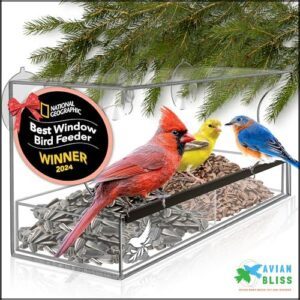
Nature’s Hangout Window Bird Feeder is a solid pick for any classroom. It’s built from ¼-inch cast acrylic, so it’s sturdy and gives students a crystal-clear view of visiting birds. Three strong suction cups hold it firmly to the glass, and three extras come in the box.
The slide-out tray holds over 4 cups of seed and pulls free for quick cleaning. Best of all, it comes with a lifetime guarantee, so you can count on it lasting.
| Best For | Bird lovers, families with curious kids or cats, and anyone who wants a close-up view of backyard birds right from their window. |
|---|---|
| Material | Acrylic |
| Attachment Method | Suction cups |
| Seed Capacity | 4+ cups |
| Easy Cleaning | Slide-out tray |
| Bird Visibility | Clear acrylic |
| Weather Resistance | Durable acrylic |
| Additional Features |
|
- Built from thick ¼-inch cast acrylic, so it feels solid and gives you a perfectly clear view
- Slide-out tray makes cleanup fast — no fumbling around
- Comes with a lifetime guarantee and six suction cups total, so you’re covered
- Suction cups can lose their grip on dirty windows or in extreme temperatures
- Squirrels may overpower it if they decide to hang around
- The birds you attract depend on your seed choice, so variety isn’t guaranteed
2. Nature Anywhere Window Bird Feeder
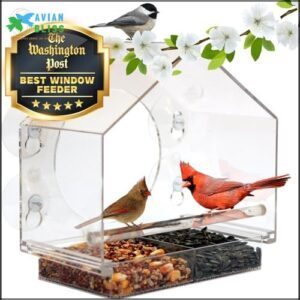
Another great option is the Nature Anywhere Window Bird Feeder. It’s made from weatherproof polycarbonate, so it holds up through cold mornings and rainy days without cracking. Four heavy-duty suction cups keep it firmly in place on classroom glass.
The removable tray slides out easily for quick cleaning between lessons. A built-in air circulation system helps keep seeds dry, which means less mold and less waste.
It even comes with a lifetime guarantee and VIP support if anything goes wrong.
| Best For | Teachers, families, and anyone who wants a close-up view of birds without stepping outside. |
|---|---|
| Material | Polycarbonate |
| Attachment Method | Suction cups |
| Seed Capacity | Not specified |
| Easy Cleaning | Removable tray |
| Bird Visibility | Transparent acrylic |
| Weather Resistance | Weatherproof polycarbonate |
| Additional Features |
|
- Weatherproof polycarbonate holds up in rain, cold, and heat without cracking
- Removable tray makes cleanup quick and easy
- Lifetime guarantee gives you peace of mind if something breaks
- Suction cups may need replacing after a year or in extreme temps
- Surface can scratch over time, which affects the clear view
- Not ideal for high-traffic spots or larger bird species
3. Nature Gear Window Bird Feeder
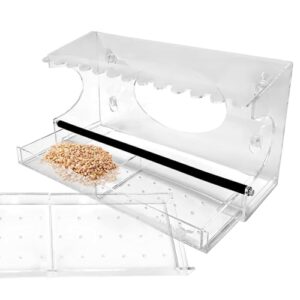
If you want your students to see every feather up close, the Nature Gear Window Bird Feeder delivers. Its clear acrylic body gives an unobstructed view — no bars, no blind spots. Strong suction cups hold it flat against the glass at eye level, so even kids in the back row can watch.
The removable sliding tray refills from inside the classroom, keeping disruptions minimal. Drainage holes and an overhanging roof help protect seed from rain, meaning less cleanup for you.
| Best For | Teachers and families who want kids to get an up-close, unobstructed look at backyard birds without stepping outside. |
|---|---|
| Material | Acrylic |
| Attachment Method | Suction cups |
| Seed Capacity | Not specified |
| Easy Cleaning | Removable sliding tray |
| Bird Visibility | Clear acrylic window |
| Weather Resistance | Weather-resistant design |
| Additional Features |
|
- Crystal-clear acrylic body means nothing gets between you and the birds — every feather, every move
- Sliding seed tray refills easily from inside, so there’s no need to go outside or disturb the birds
- Suction cups hold it right at eye level, making it great for kids and classrooms
- Not built for bigger birds — larger species may struggle or skip it entirely
- Squirrels can get into it and potentially cause damage over time
- The glue holding parts together can dry out eventually, so it may need some upkeep to stay in one piece
4. Aspects Jewel Box Window Hummingbird Feeder
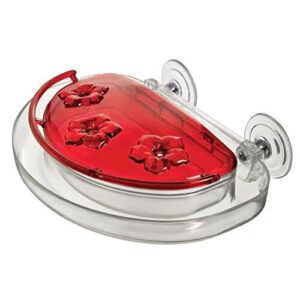
If your class is lucky enough to spot hummingbirds nearby, the Aspects Jewel Box Window Hummingbird Feeder is worth a look. Its bright red cover draws hummingbirds right to the glass.
The suction-cup bracket holds up to 8 oz. of nectar securely at eye level. Students can watch birds perch and feed from just inches away.
For more details on feeders with similar features, top-rated hummingbird feeders with perches and clear bottles make it easy to compare options that keep birds comfortable and nectar visible.
The two-piece design makes cleaning simple — lift the reservoir out, rinse at the sink, and you’re done.
| Best For | Teachers and families who want a close-up, window-mounted hummingbird feeder that makes bird-watching easy and engaging for kids. |
|---|---|
| Material | Acrylic |
| Attachment Method | Suction cups |
| Seed Capacity | Not specified |
| Easy Cleaning | Removable sliding tray |
| Bird Visibility | Clear acrylic window |
| Weather Resistance | Weather-resistant construction |
| Additional Features |
|
- Bright red cover does a great job pulling hummingbirds right to your window
- The HighView perch gives birds a place to rest, so you get longer, better views
- Easy to pop apart and clean — no fussing around
- 8 oz. capacity means you’ll be refilling it pretty often
- Costs more than a lot of other feeders out there
- Some users have noticed nectar can squirt out of the feeding ports
5. Perky Pet Hummingbird Window Feeder
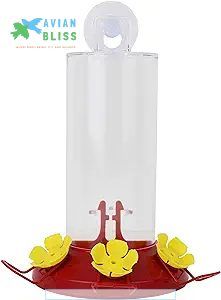
The Perky Pet Hummingbird Window Feeder mounts flush against the glass using built-in suction cups, so hummingbirds hover right at the windowpane. Students can watch tongue movements and wing beats up close — no binoculars needed.
It holds 8 oz. of nectar and features bright red flower-shaped ports that attract hummingbirds naturally. The clear reservoir lets students track how much nectar disappears between visits.
The two-piece construction separates easily, so you can rinse it at the sink in minutes.
| Best For | Educators, families, and backyard birding fans who want a front-row seat to hummingbird activity right through their window. |
|---|---|
| Material | Polycarbonate |
| Attachment Method | Suction cup bracket |
| Seed Capacity | 8 oz nectar |
| Easy Cleaning | Easy fill & clean |
| Bird Visibility | Up-close viewing |
| Weather Resistance | Sturdy polycarbonate |
| Additional Features |
|
- Suction-cup mount puts hummingbirds inches from your face — no binoculars, no waiting outside
- Bee-resistant ports and a clear reservoir make feeding easy to monitor and maintain
- Pulls apart quickly for a fast rinse at the sink
- The plastic clips holding the two pieces together can snap if you’re not careful during cleaning
- Suction cup needs a spotless, dry window to hold — skip this one if your glass stays wet or dirty
- The red base has tight spaces that make deep cleaning a bit of a hassle
6. Clear Window Bird Feeder
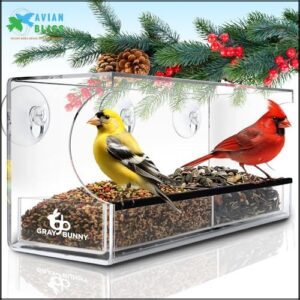
The Gray Bunny Clear Window Bird Feeder turns your classroom window into a front-row seat. Its extra-thick acrylic body gives students a clear, unobstructed view of birds feeding just inches away.
The removable tray holds up to 3 cups of seed and splits into sections, so you can offer different foods at once. Drainage holes keep seeds dry, and the whole tray slides out for quick sink cleaning.
Strong suction cups hold everything firmly against the glass.
| Best For | Teachers, parents, and nature lovers who want to bring birds up close for an easy, engaging viewing experience. |
|---|---|
| Material | Plastic |
| Attachment Method | Suction cup |
| Seed Capacity | 8 oz nectar |
| Easy Cleaning | Easy to clean |
| Bird Visibility | Up-close observation |
| Weather Resistance | Shatter-resistant plastic |
| Additional Features |
|
- Crystal-clear acrylic gives you an unbeatable up-close view of birds feeding right at your window
- Removable tray with a divider lets you offer multiple seed types and cleans up in seconds
- Sloped roof with drainage holes keeps seeds dry, so birds actually show up
- Squirrels can raid the tray, and strong winds may knock it loose
- The feeding opening might be too small for larger bird species
- Suction cups may struggle on high-rise or older windows
7. Wild Birds Window Bird Feeder
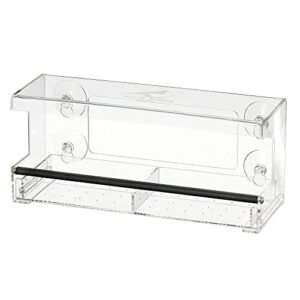
The Wild Birds Window Bird Feeder keeps things simple — and that’s exactly what busy classrooms need. Its clear acrylic body holds up to 3 cups of seed, so you won’t be refilling it every hour. Four strong suction cups hold it firmly against the glass, and the sliding seed tray lifts out for quick cleaning. At just 3.52 ounces, it won’t stress your window.
Students can watch finches, cardinals, and blue jays up close, right from their seats.
| Best For | Nature lovers, bird enthusiasts, and teachers or families looking for an easy, up-close way to watch backyard birds without leaving the house. |
|---|---|
| Material | Acrylic |
| Attachment Method | Suction cups |
| Seed Capacity | 3 cups |
| Easy Cleaning | Removable tray |
| Bird Visibility | Extra-thick acrylic |
| Weather Resistance | Sloping roof with drainage |
| Additional Features |
|
- Crystal-clear acrylic lets you watch finches, cardinals, and blue jays right up close — no binoculars needed.
- The sliding seed tray makes refilling and cleaning a breeze, no mess, no fuss.
- Four strong suction cups keep it locked to the window, and at under 4 ounces, it’s not going anywhere.
- Birds might take a little while to find it — don’t expect a crowd on day one.
- Wind or a curious cat can knock the tray loose, so placement matters.
- Seed husks and droppings will collect on your window, so plan on wiping it down regularly.
8. Perky Pet Window Bird Feeder
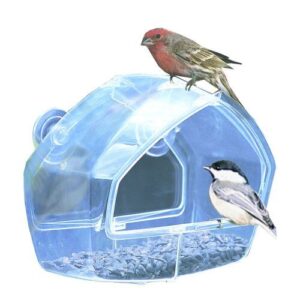
Sometimes the smallest tools make the biggest difference. The Perky-Pet Window Bird Feeder attaches directly to classroom glass with suction cups — no drilling, no hardware.
Its crystal-clear plastic body lets students watch finches and sparrows land, perch, and feed up close.
The removable tray slides out easily for cleaning, and the 1-cup seed capacity keeps refills manageable.
At just under 8 inches wide, it fits a standard pane without blocking light or disrupting your view.
| Best For | Teachers, parents, and families with young kids who want an easy, up-close way to watch backyard birds without any setup hassle. |
|---|---|
| Material | Acrylic |
| Attachment Method | Suction cups |
| Seed Capacity | 3 cups |
| Easy Cleaning | Sliding seed tray |
| Bird Visibility | Clear acrylic |
| Weather Resistance | Durable acrylic |
| Additional Features |
|
- Suction-cup mount means zero drilling — just press it to the window and you’re good to go
- Crystal-clear plastic gives you an unbeatable close-up view of finches, sparrows, and other small birds
- The removable tray makes cleaning and refilling quick and painless
- Only holds one bird at a time, so don’t expect a crowd
- Suction cups can lose their grip in cold weather or on textured glass
- It’s lightweight plastic, so dropping it once could mean cracking or breaking it
Key Features for Classroom Window Feeders
Not all window feeders work well in a classroom setting. Some are tricky to clean, others don’t stay put on the glass, and a few use materials that just aren’t safe around kids.
Here are the key features worth checking before you buy.
Suction Cup Strength and Safety
Strong suction cups are the backbone of safe window-mounted bird feeders. Look for window mounts rated between 3 and 5 kilograms each — two cups together handle a filled feeder easily.
Adhesion factors like clean, smooth glass matter a lot. Always do a firm tug test after window bird feeder installation.
Cold weather stiffens suction cup materials, so check them weekly.
Clear Viewing Panels for Observation
Panel clarity makes or breaks wildlife viewing in your classroom. Clear feeders built with acrylic panels transmit up to 92% of visible light — so bird colors pop without distortion.
Window mounted bird feeders work best when students see every detail clearly:
- Shatter-resistant panels keep bird visibility sharp and kids safe
- Wide front panels (10–12 inches) frame multiple birds at once
- Angled panels cut glare from classroom lights naturally
- Polished edges prevent scratches that cloud observation skills over time
For optimal viewing, consider a feeder with a strong suction cup design to guarantee stability.
Removable Trays for Easy Cleaning
A good tray design makes feeder maintenance simple. Look for window bird feeders with slide-out trays — they pull forward so you don’t remove the whole feeder. This keeps classroom window bird feeders in place while you clean.
For sanitation practices, soak the tray in warm soapy water every week or two. Better bird health starts with a clean feeding spot.
Weather-Resistant and Durable Materials
Clean trays help — but durable materials keep your feeder standing through every season.
Look for window bird feeders built with UV protection, impact resistance, and rust prevention in mind:
- UV stabilized acrylic stays clear for years of outdoor observation
- Impact-resistant panels won’t crack when branches brush the window
- Rust-proof stainless hardware keeps window mounts tight through wet winters
- Weather sealing protects joints so material durability lasts long-term
Bird-Safe Paints and Finishes
Durable materials keep your feeder standing — but the finish matters just as much. For classroom window bird feeders, choose non toxic coatings labeled "AP Non Toxic" or EN 71-3 toy safe. Low VOC paints keep indoor air clean for kids and birds alike.
Bird friendly colors in matte, earthy tones reduce glare, making bird watching for kids safer and more rewarding.
Choosing The Right Bird Food for Classrooms
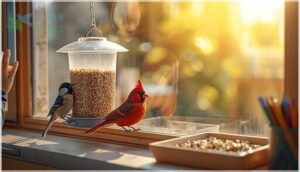
What you put in the feeder matters just as much as the feeder itself. The right seed attracts the birds your students will love watching — and the wrong mix can create more mess and headaches than it’s worth.
Here’s what works best in a classroom setting.
Popular Bird Seeds for Student Observation
Seed selection shapes everything your students will actually see. Black oil sunflower seeds attract over 20 species, so bird watching for kids becomes lively fast. Their thin shells reveal clear feeding habits right at the glass.
Nyjer seeds bring finches for focused observation techniques, while safflower seeds draw cardinals close. Matching seed preferences to bird attraction makes every viewing moment count.
No-Mess Seed Mixes to Reduce Cleanup
No-mess blends make feeder maintenance noticeably easier. Their seed composition skips the shells entirely — sunflower hearts, peanut pieces, and chips that birds eat completely.
That means less debris under your window bird feeders and fewer pests near the building. For classroom safety, less waste also means less mold risk.
These bird seeds still deliver strong bird attraction, especially for chickadees and finches.
Foods to Avoid in School Settings
Safety matters as much as seed selection regarding classroom window bird feeders. Some foods create real risks for students and birds alike.
Avoid these in your bird feeding setup:
- Peanuts and mixed nuts — allergen awareness is critical in most schools
- Sticky foods like honey or jelly — they invite ants and mold
- Raw meat or kitchen grease — bacteria grows fast near warm windows
Stick to simple, nut free bird seeds for classroom hygiene and food safety.
Seasonal Adjustments for Bird Diets
Birds don’t eat the same way all year — and neither should your window bird feeders. In winter, stock High Energy Foods like black oil sunflower seeds, which are about 40% fat.
During Autumn Feeding season, add peanut pieces to support Bird Migration. Spring calls for mealworms.
Rotating your Seasonal Seeds by Bird Species keeps your Bird Watching station active all year.
Installing and Maintaining Window Feeders Safely
Getting your feeder up is the easy part — keeping it safe and working well takes just a little routine care. A good setup protects both your students and the birds visiting your window.
Here’s what you need to know to do it right.
Selecting The Best Window Location
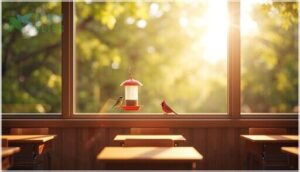
Window orientation matters more than you’d think. An east-facing window gives morning light without overheating your feeder, making bird visibility easier for students. Natural lighting helps birds find the feeder and keeps your bird-watching views bright and clear.
For classroom layout, place your window bird feeder where seated kids can watch comfortably — about 3 to 4 feet from the floor.
Steps for Secure Installation
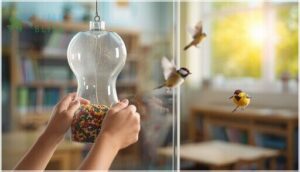
Start with glass preparation — clean the pane with rubbing alcohol and a lint-free cloth, then let it dry fully.
For suction cup tips, wash cups in warm soapy water, flex them gently, and press firmly for 10–20 seconds. Don’t skip load testing: tug the feeder before adding seed.
Daily safety checks keep your window-mounted bird feeders secure all year. To guarantee a successful installation, consider using suction cup methods for your window bird feeder.
Cleaning and Maintenance Routines
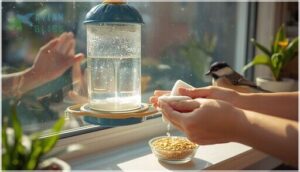
Clean feeders keep birds healthy and classrooms safe. For feeder maintenance, wipe down your window-mounted bird feeders every one to two weeks with warm soapy water. During wet weather, check every three to five days — damp seed grows mold fast.
Daily cleaning tips start with a quick visual scan for clumps or cloudiness. Regular inspection and mold prevention protect every visiting bird.
Preventing Bird Window Collisions
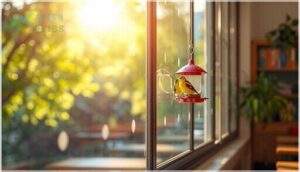
Keeping your feeder clean is half the job — the other half is keeping birds safe from the glass itself. Bird collision prevention starts with smart feeder placement strategies. Mount your window bird feeder directly on the glass within 3 feet, so birds can’t build speed.
Add dot or stripe markings every 2 inches outside to support window safety features and reduce bird collisions.
Integrating Feeders Into Classroom Learning

A window bird feeder does more than just bring birds close — it hands you a ready-made teaching tool right in your classroom. From science observations to creative writing, there are so many ways to weave it into your daily lessons.
A window bird feeder transforms your classroom into a living, ready-made teaching tool
Here are some practical ideas to get you started.
Science and Observation Activities
Your window bird feeder opens the door to hands-on science lessons every single day. Try these classroom nature activities to sharpen observation skills and spark curiosity about wildlife habitats:
- Log bird behavior — time how long each visit lasts.
- Build a species identification checklist with dates.
- Run feeder experiments by swapping seed types.
- Track bird watching patterns by weather or season.
- Graph weekly visit counts for real data practice.
Nature-Inspired Art and Writing Projects
Beyond science logs, your feeder sparks rich creative work too. Try these nature-based learning activities with kids:
- Sketch visiting birds using Bird Drawing Tips like noting beak shape and wing markings.
- Build Student Field Guides from drawings and observations.
- Use Creative Writing Prompts like "From a chickadee’s view…"
- Write Nature Poetry with action words students collect while watching.
- Create Mixed Media Art with paper, yarn, and pressed leaves.
Encouraging Environmental Stewardship
Your feeder does more than attract birds — it quietly builds Environmental Awareness one routine at a time. Classroom Window Bird Feeders naturally open the door to Sustainable Living and Wildlife Conservation conversations kids actually care about.
- Assign weekly feeder teams to share responsibility
- Compost spilled shells to model Eco Friendly Practices
- Connect Nature Lessons to schoolyard habitat improvements
That shared care becomes real Community Engagement.
Frequently Asked Questions (FAQs)
Why put a potato in the bird feeder?
Plain cooked potato gives birds like starlings a soft, starchy energy boost. It’s cheap, easy to find, and turns your window bird feeder into a simple classroom project on bird nutrition and food preferences.
What age groups benefit most from window feeders?
Every age group benefits. From preschool learning to teen engagement, classroom window bird feeders support child development at every stage — making nature-based learning and environmental education for children relevant across all grade levels.
How do you handle student allergies to bird seed?
Start by asking families about seed allergies before the unit begins.
Watch for hives, sneezing, or wheezing as seed allergy symptoms.
Use classroom modifications like sugar-water hummingbird feeders to reduce allergen exposure and protect student safety.
Can window feeders work in apartments or urban schools?
Yes — like a welcome mat hung at just the right height, window bird feeders fit urban life well. Suction cup models work in apartments and urban schools without drilling, attracting city birds like house sparrows and finches.
How do you manage student behavior during bird observation?
Set clear classroom rules before birds arrive. Assign student roles like spotter and recorder. Use quiet signals to manage movement. This keeps outdoor learning experiences calm and focused for everyone.
Conclusion
A worksheet gets filed away. A chickadee landing six inches from your students’ faces gets remembered for years. That’s the quiet power of window bird feeders for classrooms—they turn an ordinary window into something genuinely alive.
Pick a feeder that holds firm, cleans easily, and fits your window. Keep it filled. Let the birds do the rest. Your students won’t need to be told to pay attention. They already will be.