
This site is supported by our readers. We may earn a commission, at no cost to you, if you purchase through links.
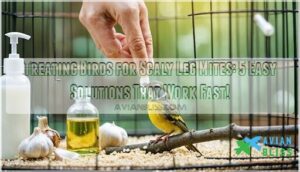 Treating birds for scaly leg mites starts with cleaning their legs gently to remove debris and soothe irritation.
Applying a thick layer of petroleum jelly works wonders—it suffocates the mites and softens scabs.
For tougher cases, use vet-recommended topical acaricides or medications designed for birds.
Don’t forget to clean your bird’s living area thoroughly, as mites are notorious hitchhikers.
If natural remedies are more your thing, neem oil or a mix of garlic and vegetable oil can help.
Keep an eye on progress because untreated mites can cause permanent damage.
A little effort now guarantees your feathered friend stays happy and itch-free!
Table Of Contents
- Key Takeaways
- Identifying Scaly Leg Mites
- Treatment Options Available
- Natural Remedies and Alternatives
- Preventing Re-Infestation and Complications
- Seeking Veterinary Care and Support
- Frequently Asked Questions (FAQs)
- What is the fastest way to treat scaly leg mites?
- How often should I apply Vaseline for scaly leg mites?
- Why do we use WD-40 on scaly leg mites?
- How to soothe bird discomfort during mite treatment?
- Do scaly leg mites affect bird reproduction?
- Can mites spread to humans or other pets?
- How to monitor for recurrence after treatment?
- Are there long-term impacts on bird behavior?
- Conclusion
Key Takeaways
- Clean your bird’s legs gently to remove debris and apply petroleum jelly daily to suffocate mites and soften crusts.
- Use vet-recommended medications like ivermectin for severe cases and disinfect the cage thoroughly to stop reinfestation.
- Natural remedies like neem oil or a garlic-vegetable oil mix can help if you prefer chemical-free options.
- Quarantine new birds, maintain cage hygiene, and inspect regularly to prevent mites from spreading.
Identifying Scaly Leg Mites
You’ll notice your bird has scaly leg mites when their legs develop rough, crusty patches that lift the scales and cause discomfort, basically creating a telltale "tassel foot" appearance.
Rough, crusty patches on your bird’s legs signal scaly leg mites, creating the unmistakable tassel foot appearance that demands swift attention.
These microscopic parasites burrow under the scales, causing progressive damage that can lead to deformities if you don’t treat them promptly, so early identification is vital for your feathered friend’s comfort and health.
Causes and Transmission
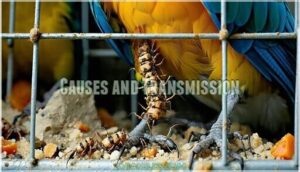
Your bird’s scaly leg troubles likely stem from tiny Knemidocoptes mites, primarily Knemidocoptes mutans, which thrive in captive environments.
These microscopic parasites spread easily through:
- Direct contact between infected and healthy birds
- Contaminated perches, toys, and cage materials
- Poor cage hygiene and infrequent cleaning
- Overcrowded living conditions that increase transmission risks
- Warm, dry climates that create ideal breeding conditions.
These external parasites complete their entire three-week lifecycle on bird hosts, making transmission particularly efficient in captive environments with poor cage hygiene.
Symptoms and Diagnosis
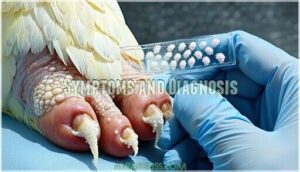
You’ll quickly spot scaly leg mites by the crusty lesions appearing on your bird’s legs and feet.
Early signs include white crusts around the legs, feather loss in affected areas, and visible discomfort.
As the mite infection progresses, birds may develop beak deformities. For definitive diagnosis, your vet can perform a microscopic ID from skin scrapings to confirm these tiny parasites, which can be identified by microscopic ID.
Distinguishing From Other Conditions
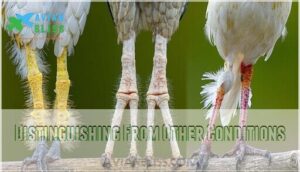
You’ll need to distinguish scaly leg mites from several look-alike conditions before treatment.
When examining your bird’s legs, consider these key differences:
- Bumblefoot shows localized swelling and abscesses, unlike the uniform scaling of mite infestations
- Feather mites target feathered areas, not causing the crusty leg deformities characteristic of tassel foot disease
- Bacterial infections typically produce moist, inflamed areas rather than dry, lifted scales seen with scaly face mites
Treatment Options Available
You’ll find several effective treatments for your bird’s scaly leg mites, ranging from veterinary prescriptions like ivermectin to household remedies that suffocate these persistent parasites.
Whether you choose medical options or natural alternatives, consistent application is the key to freeing your feathered friend from these uncomfortable invaders and restoring their happy, healthy strut.
Topical Acaricides and Medications
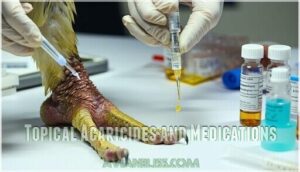
Now that you’ve identified those pesky scaly leg mites, it’s time to take action with effective medication.
Ivermectin stands as the gold standard treatment at 0.2 mg/kg applied topically or orally every two weeks.
You’ll notice scales sloughing off after the first treatment, with fresh scales appearing by the third.
Moxidectin offers a solid alternative in both pour-on and injectable forms when ivermectin isn’t available.
Consider Ivermectin product availability for treatment options.
Barrier Creams and Essential Oils

Sometimes, the simplest solutions work wonders.
Barrier creams and essential oils offer natural mite treatment for birds, softening crusts and suffocating scaly leg mites.
Try these:
- Tea tree oil: Diluted for safe use, it’s a powerful remedy.
- Petroleum jelly uses: Smothers mites effectively.
- Neem oil: Insecticidal and soothing.
- Cream application frequency: Every 3-4 days guarantees efficacy.
Many users purchase tea tree oil products for their birds.
Veterinary Consultation and Guidance
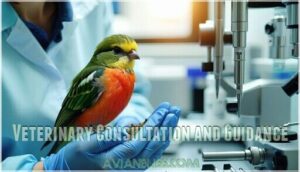
While barrier creams can help, nothing beats an avian vet’s professional expertise.
Accurate diagnosis guarantees you’re not mistaking mites for something else, and proper dosage guidance prevents harm.
Experienced avian vets provide treatment monitoring and preventative advice, tailoring care to your bird’s needs.
They may also recommend avian anesthesia options if surgery is required.
Trust veterinary care for peace of mind—your feathered friend deserves the best, not guesswork!
Natural Remedies and Alternatives

You’ve got plenty of natural options to tackle scaly leg mites without harsh chemicals, and many are surprisingly simple.
From vegetable oil soaks to neem oil applications, these remedies work to suffocate the mites while soothing your bird’s irritated skin.
Vegetable Oil and Garlic Mix
Garlic’s antifungal properties combined with the oil suffocation method make this scaly leg home remedy effective.
Crush garlic cloves into warm vegetable oil, creating a soothing mix. Gently apply it to affected areas every 2-3 days.
This mite treatment for birds works by suffocating scaly leg mites while fighting infections. Explore options for purchasing vegetable oil garlic for convenience.
Always verify fresh preparation and avoid sensitive spots like eyes, ensuring the scaly leg mites are treated effectively without causing harm.
Neem Oil and Essential Oil Solutions
Neem oil and essential oils offer natural solutions for scaly leg mites.
Use neem oil diluted to 5% for safe application, ensuring proper coverage.
Essential oils like tea tree or eucalyptus repel mites but require careful dilution to avoid irritation.
Balanced diets are important for overall avian health and can help manage inflammation.
- Mix neem oil with water and detergent for a soothing soak.
- Apply diluted essential oils to infected areas.
- Repeat treatments weekly.
Petroleum Jelly and Shea Butter Applications
For effective bird mites treatment, apply petroleum jelly daily for 5-6 days.
Its smothering efficacy suffocates mites, while crust softening aids healing.
Shea butter, with its natural healing properties, soothes scaly leg disease and supports skin repair.
Regular application frequency guarantees success, and use these as preventative treatments too, keeping mite treatment birds simple and your feathered friends healthier and happier!
Preventing Re-Infestation and Complications
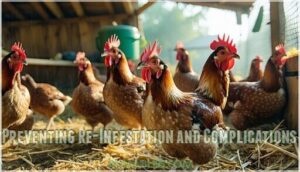
Keeping scaly leg mites at bay requires more than just treating the infestation—you’ve got to outsmart these tiny pests.
By focusing on hygiene, quarantine, and a balanced diet, you’ll guarantee your birds stay healthy and mite-free.
Regular Health Checks and Hygiene
Keeping your bird’s environment spotless isn’t just a chore—it’s the frontline in mite prevention.
A clean cage means a happy, healthy bird—stop mites before they start with spotless hygiene habits.
Regular cage cleaning, perch sanitation, and ensuring water hygiene stop bird mites from thriving. Early detection through weekly health checks can save you headaches later.
- **Clean cages weekly to remove debris.
- **Sanitize perches with bird-safe disinfectants.
- **Replace water daily for freshness.
- **Inspect birds for scale or crusts.
To further reduce illness risks, consider daily cleaning routines.
Quarantine and Health Screening for New Birds
When introducing new birds, quarantine for at least 30 days to monitor bird health issues and prevent mite transmission.
Set up an isolation area away from your flock, and follow screening protocols like veterinary care to catch problems early.
Stress reduction during quarantine, paired with preventative treatments, keeps everyone safe, think of it as a bird’s “spa retreat” for healthy integration and to ensure preventative treatments are effective.
Minimizing Direct Contact and Balanced Diet
Avoiding mite transmission starts with smart flock management. Limit direct contact transmission by spacing perches and using individual feeders.
Stick to hygiene protocols, cleaning cages regularly. A balanced diet prevents nutritional deficiencies and boosts immunity, keeping mites at bay.
Think of it as stress reduction for your birds—healthy, happy birds are less likely to face infestations.
Seeking Veterinary Care and Support
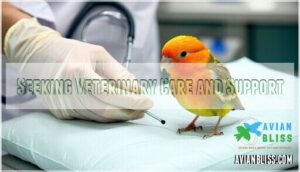
When your bird’s condition seems severe or isn’t improving, it’s time to call in the experts.
An experienced avian vet can provide accurate treatment, ensuring your feathered friend gets back to perching happily in no time.
Severe Cases and Anxious Birds
How do you handle severe cases with anxious birds? Start by evaluating bird behavior to spot chronic pain or deformity management needs.
Severe cases may require veterinary care, especially if owner anxiety rises. Discuss euthanasia options compassionately for extreme cases.
Delayed treatment increases bird mortality risk, so act fast. Early intervention minimizes behavioral changes and guarantees your bird’s comfort and safety, ensuring a better quality of life through compassionate care.
Delayed Treatment and Increased Risk
Ignoring scaly leg symptoms worsens mite infestations, increasing bird discomfort and contagion risk.
Delayed treatment often leads to secondary infections, permanent damage, or reduced treatment efficacy.
The severity increase can even raise bird mortality risk.
Catching symptoms early, like crusty scales or odd behavior, prevents complications.
Specialized care from board certified avian vets is essential for effective treatment.
Don’t wait—your feathered friend deserves quick care to avoid unnecessary suffering, as early detection and proper treatment are crucial for preventing long-term damage.
Importance of Experienced Avian Vets
When scaly leg mites persist, an avian vet becomes your bird’s best ally.
Their expert diagnosis guarantees treatment efficacy, with precise dosage accuracy for medications like ivermectin.
Beyond prescribing, they guide holistic birdcare, from cage disinfection to preventing complications.
Avian medicine isn’t guesswork—veterinary care targets avian diseases head-on, saving your feathered friend from discomfort and long-term damage, so trust the pros and ensure your bird receives the best care possible with expert diagnosis.
Frequently Asked Questions (FAQs)
What is the fastest way to treat scaly leg mites?
Think of mites as squatters—you need to evict them fast.
Apply ivermectin topically or orally after consulting a vet.
Combine this with petroleum jelly to smother mites, and disinfect cages thoroughly to prevent reinfestation.
How often should I apply Vaseline for scaly leg mites?
Apply Vaseline daily for 5-6 days, ensuring you coat the affected legs thoroughly.
This suffocates the mites and softens crusty scales.
Stick with it—consistency is key to giving those mites the boot!
Why do we use WD-40 on scaly leg mites?
WD-40 works wonders by softening crusty scales, making it easier to remove mites.
Its slick surface suffocates the pests, but use it sparingly—birds aren’t machines, and overuse could irritate delicate skin.
How to soothe bird discomfort during mite treatment?
Keep your bird comfortable by applying soothing oils, like chamomile or coconut, to affected areas.
Make certain a calm environment, offer favorite treats, and gently handle them to reduce stress during treatment—every little bit helps, with soothing oils and a calm approach being key to success, particularly in reducing stress.
Do scaly leg mites affect bird reproduction?
Yes, these mites can impact reproduction by causing stress, weight loss, and reduced egg production.
A bird battling discomfort and irritation isn’t exactly in the mood for nesting, so prompt treatment helps restore normal behavior, and this is crucial for the bird’s well-being, especially to alleviate stress.
Can mites spread to humans or other pets?
An ounce of prevention is worth a pound of cure.
Scaly leg mites don’t spread to humans, but they can infest other birds or pets if hygiene slips.
Keep habitats clean to block their sneaky advances, it is a complete concept to remember for prevention.
How to monitor for recurrence after treatment?
Watch for rough, scaly patches reappearing on legs or face, along with changes in grooming or behavior.
Regularly inspect your bird’s skin and scales, clean their environment, and consult a vet at the first sign.
Are there long-term impacts on bird behavior?
Funny how something so small can leave a lasting mark—birds may show lingering anxiety, reduced trust, or altered grooming habits after mite infestations.
With patience and care, though, they often regain their confidence and routine.
Conclusion
Battling scaly leg mites might feel like waging war on tiny invaders, but with the right steps, victory is within reach.
Treating birds for scaly leg mites starts with consistent care—cleaning their legs, applying effective treatments like petroleum jelly or neem oil, and keeping their environment spotless.
Monitor their progress closely, and don’t hesitate to consult a vet for stubborn cases.
Your feathered friend will thank you with healthier legs and a happier, itch-free life!