
This site is supported by our readers. We may earn a commission, at no cost to you, if you purchase through links.
Birds are masters of deception—not out of cunning, but survival. In the wild, showing weakness means becoming prey, so your parrot, cockatiel, or finch will mask illness until the moment their body can’t compensate anymore. That window between "something seems off" and a full-blown crisis can close in hours.
Knowing where to find avian vet emergency services before you need them isn’t overcautious—it’s the difference between a bird that recovers and one that doesn’t. What follows covers every step, from recognizing the warning signs your bird can’t hide to managing costs, transport, and treatment.
Table Of Contents
- Key Takeaways
- Signs Your Bird Needs Emergency Care
- How to Find an Avian Emergency Vet
- What Happens During Emergency Triage
- Safe Transport for a Sick Bird
- Emergency Costs, Treatment, and Follow-Up
- Frequently Asked Questions (FAQs)
- Where can I find bird vet services?
- Which veterinary services are offered by petvets USA?
- What services does petvets USA offer for companion birds?
- Why do I need a vet for my recently purchased Bird?
- How much do avian vet visits cost?
- How much will an emergency vet cost me?
- What do I do if I can’t afford emergency vet care?
- Do Avian Veterinarians treat bird emergencies?
- Does avian & exotics offer medical & surgical care?
- Who is specialized care for Avian & Exotic Pets?
- Conclusion
Key Takeaways
- Birds instinctively hide illness until their bodies can’t compensate anymore, so by the time something looks obviously wrong, you’re likely already in a crisis—act on subtle signs, not obvious ones.
- Not every emergency vet is equipped for birds, so find a certified avian clinic with oxygen support, in-house labs, and 24/7 availability before you ever need it.
- How you transport a sick bird matters almost as much as how fast you go—keep them warm, dim, quiet, and never compress their chest during restraint.
- Emergency avian care bills stack up fast with separate charges for triage, imaging, and lab work, so know your payment options like CareCredit or Scratchpay ahead of time.
Signs Your Bird Needs Emergency Care
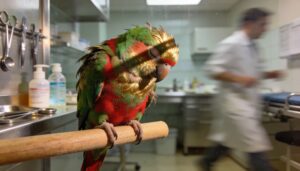
Birds are masters at masking how sick they really are, which means by the time something looks wrong, it’s often already serious. Knowing which signs demand immediate attention can genuinely save your bird’s life.
Brushing up on sick bird symptoms and emergency warning signs helps you act fast before a small problem quietly becomes a crisis.
Birds mask illness so well that by the time something looks wrong, it’s often already serious
Here’s what to watch for.
Respiratory Distress and Open-mouth Breathing
When your bird breathes with its mouth open at rest, that’s not quirky behavior — it’s a distress signal. Airway obstruction, environmental irritants, or infection can all trigger labored chest movement patterns and cyanosis indicators like bluish tissue coloring.
Watch for:
- Persistent open-mouth breathing
- Exaggerated chest and abdominal movement
- Stretched or widened neck posture
- Worsening effort without activity
Emergency avian veterinary care and oxygen therapy can’t wait. Monitoring the increased breathing rate helps detect early respiratory compromise.
Trauma, Bleeding, or Suspected Fractures
Breathing problems aren’t the only emergency that demands immediate action. Visible blood, a crooked limb, or a rapidly growing lump after impact all signals that your bird needs exotic bird emergency care right away.
Birds go into shock faster than most owners expect, making blood loss management and shock prevention time-sensitive.
Wound stabilization, hematoma monitoring, and limb alignment are best handled through avian emergency care — not a wait-and-see approach.
Vomiting, Collapse, or Severe Weakness
Vomiting isn’t just a stomach issue — it triggers rapid Dehydration Risk, Electrolyte Imbalance, and Hypoglycemia Danger that can spiral fast. If your bird collapses or can’t hold its perch, Shock Management becomes urgent. Appetite Loss, paired with weakness, signals systemic failure, not simple nausea.
Emergency bird veterinary services and Avian emergency response with Avian diagnostics and blood testing are your bird’s best chance.
Toxin Ingestion and Sudden Neurologic Signs
Weakness can shift from gut to nervous system fast. Toxin ingestion triggers Sudden Seizures, Flaccid Paralysis, and Cardiovascular Instability — sometimes within minutes. Delayed Neurologic Decline means a bird that looked stable can crash hours later. Don’t wait.
Watch for:
- Uncontrolled tremors or twitching
- Sudden collapse or limpness
- Labored breathing after ingestion
- Erratic heart rate changes
- Loss of consciousness
Toxin Identification guides Emergency bird veterinary services toward targeted Avian emergency care. Avian diagnostics and blood testing, combined with rapid Avian emergency response, give Bird disease detection and treatment its best shot.
Rapid Weight Loss and Inability to Perch
When your bird drops weight fast and can’t hold its footing on the perch, that’s a rapid decline warning you can’t ignore. Muscle wasting, nutritional deficiency, and dehydration impact organ strain quickly — and birds deteriorate faster than most owners expect.
Search "Emergency Exotic Avian Vet Near Me" immediately.
Avian emergency response with blood testing helps bird disease detection and treatment, while bird weight, general appearance, and mobility guide urgent care decisions.
Why Birds Hide Illness Until Advanced Stages
Because birds are hardwired for predator avoidance, they’ll mask symptoms until their metabolic compensation finally breaks down.
That’s why routine avian blood work and complete blood count testing can catch what your bird’s instincts are working hard to hide.
Flock social dynamics push them to appear healthy even when they’re not — and feather camouflage makes that deception convincing.
- Your bird may seem alert while quietly declining inside.
- Energy conservation masks early warning signs completely.
- Visible collapse often means the illness is already critical.
That’s why bird disease detection and treatment, preventive care for pet birds, and consistent bird health monitoring technologies matter so much.
Don’t wait for obvious signs — avian emergency care, bird behavior and stress evaluation, and routine wellness visits are your best defense.
How to Find an Avian Emergency Vet
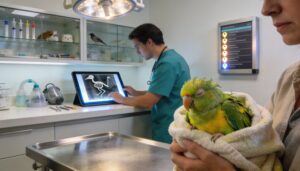
When your bird is in crisis, finding the right vet fast can feel overwhelming — especially if you’ve never needed emergency care before. Not every clinic is equipped to handle birds, so knowing where to look makes all the difference.
Here’s what to check when searching for avian emergency care near you.
Searching for Avian-only or Exotic Emergency Clinics
Not every emergency clinic is built for your bird. When searching for avian emergency care, look specifically for an Avian Veterinary Clinic or exotic pet emergency practice that lists birds on their exotic species list.
Confirm clinic licensing, staff expertise, and facility capacity before a crisis hits.
Clinics offering emergency bird care and avian emergency response are your safest option for genuine avian emergency care.
Checking 24/7, Weekend, and Holiday Availability
A clinic that’s closed when your bird crashes at 2 a.m. on a holiday weekend isn’t truly an emergency resource. Confirm after-hours routing, weekend on-call staffing, and holiday coverage before you ever need them.
- Call and verify 24/7 avian emergency care availability directly.
- Ask about weekend on-call response times.
- Confirm holiday coverage isn’t voicemail-only.
- Request service confirmation for your species.
- Check online availability listings against actual phone access.
Verifying Avian Experience, Certification, and Equipment
Not every vet who sees birds is truly equipped for avian emergencies.
Ask about Certified Avian Vets, specialty board status, and Fear-Free Certification — credential transparency matters here. Confirm veterinary staff training in avian care, in-house imaging, avian diagnostic imaging and labs, and oxygen support availability.
Check the avian veterinary professional directory to cross-reference qualifications before a crisis forces your hand.
When to Use Mobile Avian Emergency Services
Mobile Bird Vet Services exist precisely for moments when distance or rapid health decline makes waiting dangerous.
Remote area emergencies, nearby clinic shortage, and transport stress avoidance are all valid reasons to call mobile bird veterinary services first.
Early intervention advantage is real — on-site stabilization, including oxygen and warmth, can begin immediately, giving your bird’s health monitoring a critical head start before any transfer happens.
Choosing The Nearest Clinic Equipped for Birds
Distance matters, but so does what’s waiting for you when you arrive.
The nearest bird veterinary clinic isn’t always the right one — a specialized avian veterinary clinic with oxygen cages, imaging, and in-house labs beats a closer general practice every time.
Use a bird vet directory or regional avian network, cross-reference a clinic rating system, and factor in travel time estimation alongside an equipment availability audit before you go.
What Happens During Emergency Triage
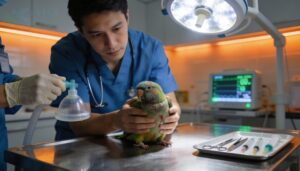
When your bird arrives at an emergency clinic, things move fast — and knowing what to expect can help you stay calm. The triage process follows a clear sequence of steps, each one building toward getting your bird stable and properly diagnosed.
Here’s how it usually unfolds.
Phone Assessment Before Arrival
Before your bird even arrives, the call you make sets everything in motion. Our Symptom Triage Protocol guides staff through a structured Owner Question Flow — gathering urgent details fast:
- Breathing effort and abnormal sounds
- Bleeding, weakness, or cold feet
- Neurologic signs and exact onset time
- Toxin exposure, brand, and any home treatment given
This Urgency Rating System ensures vet emergency services are ready the moment you walk through the door.
Species Identification and Urgent Intake Steps
Once your call ends, the team gets to work immediately.
Technicians use Beak Shape Identification and Plumage Pattern Analysis as part of a Species Matching Protocol — confirming whether your bird is a budgie, cockatiel, or parrot. Age Class Estimation and Keel Bone Scoring follow, alongside dehydration checks. This bird health monitoring intake gives our vet emergency services a precise starting point for exotic animal emergency care.
Immediate Stabilization With Oxygen and Heat Support
Once species ID is confirmed, stabilization begins quickly.
Your bird may receive humidified oxygen through mask delivery to ease breathing without drying the airway.
Controlled warming targets any dangerous temperature drop, while temperature monitoring and flow rate management keep both systems safe.
This is avian veterinary care and bird health monitoring working together — exotic animal emergency response that treats your bird, not just the symptoms.
In-house Blood Work, CBC, and Biochemistry
While your bird is being stabilized, avian blood testing begins immediately. Rapid lab turnaround — often within 15 minutes — means point-of-care decisions happen during your visit, not days later.
Your bird’s complete blood count CBC and serum biochemical profile reveal:
- Anemia or infection patterns via CBC interpretation
- Organ dysfunction through biochemistry panels
- Electrolyte and hydration status for fluid therapy
- Sample stability flags that prompt smear review before treatment changes
Digital Radiology, Ultrasound, and Diagnostic Imaging
Once blood work is underway, diagnostic imaging for exotic species begins just as quickly. Digital radiography workflow captures skeletal and soft tissue detail in seconds, with DICOM image management storing every file electronically for instant review.
Portable ultrasound delivers real-time soft tissue visualization — fluid, organ size, masses — without moving your bird far.
Avian and reptile medical procedures rely on ultrasonography and image archiving solutions to guide urgent, accurate decisions.
Creating a Targeted Treatment and Referral Plan
Once imaging confirms what the diagnostics suggest, your avian emergency care team builds a targeted plan around four stabilization priorities:
- Stabilization Priorities — oxygen, heat, fluids, hemorrhage control
- Diagnostic Decision Tree — matching test results to treatment protocols
- Medication Protocols — weight-based dosing for safe recovery
- Transfer Criteria — referral when specialized avian veterinary care is needed
Owner education ensures you know exactly when to return.
Safe Transport for a Sick Bird
How you move a sick bird can matter just as much as how fast you get there.
A wrong move during transport can spike stress levels and make an already fragile bird worse.
Here’s what to use to keep your bird contained and calm on the way to the clinic.
How to Contain a Bird With Minimal Stress

Containing a sick bird doesn’t have to feel like a wrestling match. Start by dimming the lights — lower Pre-Handling Energy means less frantic flapping before you even touch your bird.
Apply the Towel Restraint Technique with a Calm Handling Pace: wrap gently, keep the Head Exposure Strategy in mind, and never compress the chest. Brief Restraint Duration reduces bird stress, supporting better companion bird health management.
Using a Towel, Carrier, or Secure Box
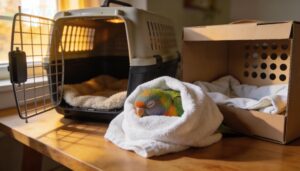
Each option — towel, carrier, or box — provides a specific purpose.
The Towel Wrap Technique limits flapping without compressing the chest, while Secure Box Padding absorbs road jolts. Follow Carrier Placement Tips by securing it near the seatbelt area.
Always perform Ventilation Safety Checks to confirm airflow.
This Stress Reduced Restraint approach promotes Avian wellness and complements the Avian veterinary care your bird receives through Emergency services.
Keeping The Bird Warm, Quiet, and Dark

Think of your sick bird’s carrier as a small recovery room.
Cover it for Dim Lighting and Noise Reduction, and choose a Draft-Free Placement away from vents.
A Mild Heat Source outside an Insulated Carrier helps Bird stress reduction without overheating.
Watch for panting — that’s your cue to dial back the warmth.
These small steps genuinely support Bird rehabilitation, Avian wellness, and better outcomes from emergency services.
What to Bring to The Emergency Clinic

Once your bird is settled and warm, shift your focus to what you’re bringing with you.
Pack your Medication List, Allergy History, and Recent Lab Reports alongside Owner Identification and your Primary Vet Contact.
Any prior Bird blood testing results, Bird physical examination records, or Bird vaccine and immunization protocols help Avian Veterinary Services act faster — your Bird health information portal or vet app works perfectly here.
Mistakes to Avoid During Transport
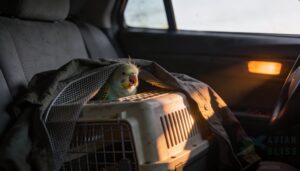
Now that your bag is packed, don’t let transport mistakes undo your preparation.
- Block carrier ventilation and airflow blockage become a silent threat — companion birds suffocate faster than you’d expect
- Heat stress from direct sun or heaters worsens bird respiratory issues rapidly
- Forcing water risks aspiration in a weak bird
- Extended travel time increases oxygen demand and stress
Keep it dark, level, and direct.
When On-site Care is Safer Than Travel
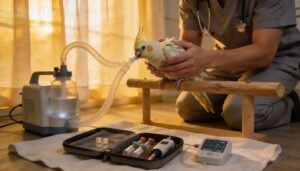
Sometimes, travel itself is the danger. If your bird is in severe respiratory distress, a mobile team offering avian veterinary care in Ashburn can deliver oxygen, microclimate management, and point-of-care testing on-site — skipping the stress reduction gamble of transport entirely.
Veterinary team expertise, infection control protocols, and immediate bird blood testing mean stabilization starts now, not after a 30-minute drive.
Emergency Costs, Treatment, and Follow-Up
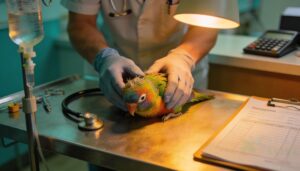
Getting your bird stable is the first victory — but then comes the part most owners aren’t prepared for: the bill. Emergency avian care involves several moving pieces, from triage fees to follow-up coordination, and knowing what to expect makes the whole process less overwhelming.
Here’s a breakdown of what you’ll likely encounter once your bird is in good hands.
Typical Fees for Triage, Diagnostics, and Stabilization
Emergency costs tend to stack up fast. The triage fee structure generally starts with intake and stabilization cost breakdown — covering oxygen and heat support — before anything else is billed.
From there, lab panel pricing adds CBC and biochemistry, while imaging service charges cover radiology or ultrasound. Critical care fees apply if monitoring continues.
Expect each service within extensive avian veterinary services to appear as a separate line item.
Factors That Increase Emergency Bird Vet Costs
Several factors quietly push your final bill higher than expected. After-hours surcharges apply the moment you arrive outside normal hours.
Oxygen therapy costs, specialized imaging fees, and blood work and CBC analysis for birds each add separate charges.
Specialist anesthesia expenses, exotic drug costs, and avian surgical and anesthesia techniques increase totals further when trauma is involved. Extensive avian veterinary services rarely come as a flat rate.
Paying for Urgent Avian Care and Care Options
Paying upfront is standard at most bird vet services, so knowing your options before a crisis matters. Request a cost estimate before diagnostics begin.
CareCredit, Scratchpay, and Cherry offer third‑party financing that starts treatment immediately. Insurance reimbursement through plans like Nationwide helps afterward.
Smart cash reserve strategies cover remaining balances. Payment policy timing can delay care, so confirm accepted methods the moment you call.
Hospitalization, Monitoring, and Critical Care Limits
Once your bird is admitted, the care team tracks weight monitoring, oxygen saturation, and temperature control around the clock. Fluid therapy limits depend on your bird’s size and organ function — too much can harm a fragile patient.
Here’s what inpatient avian health care usually involves:
- Avian diagnostics repeated at intervals
- Avian anesthesia for invasive procedures
- Care escalation criteria guiding treatment decisions
- Avian surgery when stabilization alone isn’t enough
Coordinating Follow-up With Your Primary Avian Vet
Once your bird is discharged, the handoff to your primary vet is where recovery either holds or slips.
A solid Record Transfer Protocol ensures your primary vet receives exam findings, diagnostics, and your Medication Handoff Details — doses, timing, tolerance.
Follow your Recheck Scheduling Guidelines, track your Home Monitoring Checklist daily, and maintain a clear Owner Communication Plan so nothing falls through the cracks between clinics.
Preventing Future Emergencies With Wellness Exams
The best emergency is the one that never happens.
Annual avian wellness exams catch problems early — Airway Screening detects quiet breathing changes, Weight Monitoring flags gradual wasting, Parasite Prevention stops infestations before collapse, Skeletal Checks identify grip issues before falls, and Hazard Review removes toxin risks at home.
Routine bird health examinations and preventive avian care keep your bird out of the emergency room entirely.
Frequently Asked Questions (FAQs)
Where can I find bird vet services?
You can start with FindAVet Search, Local Avian Registries, or University Bird Clinics nearby.
Specialist Vet Maps, Bird Vets by State, and Insurance Provider Lists also connect you to qualified care fast.
Which veterinary services are offered by petvets USA?
PetVets USA offers preventive wellness exams, vaccination programs, microchipping services, and diagnostic lab testing.
Their specialty referral network ensures your bird receives thorough avian veterinary services, from routine bird health checks to in-depth physical examination and urgent care.
What services does petvets USA offer for companion birds?
For companion birds, Petvets USA offers Routine Exams, Blood Testing, Anesthesia-Free Exams, Preventive Care, and Onsite Emergency services — covering every stage of Avian Wellness, from a routine Bird Physical Examination to urgent crisis care.
Why do I need a vet for my recently purchased Bird?
A newly purchased bird can carry hidden infections with no visible signs.
A Baseline Health Exam, Quarantine Screening, and Disease Transmission Risk assessment protects your household — making early Bird health care essential from day one.
How much do avian vet visits cost?
Avian veterinary checkup costs vary widely. A wellness exam runs around $115, while a medical visit can reach $135 or more.
Emergency bird vet services often cost $150–$400, depending on diagnostics and regional pricing.
How much will an emergency vet cost me?
Emergency care costs can hit like a sudden storm — fast and hard to predict.
Expect roughly €80–€430+, shaped by fee multipliers, regional price variance, hidden service charges, insurance coverage, and payment plans.
What do I do if I can’t afford emergency vet care?
If cost is the barrier, explore Financial Assistance Programs, Low-Cost Clinics, or Veterinary Credit Options like CareCredit and ScratchPay.
Crowdfunding Support and Telemedicine Triage can also help manage bird health care expenses quickly.
Do Avian Veterinarians treat bird emergencies?
Yes, avian vets treat bird emergencies.
Their specialized training and scope of practice make them the most qualified option, though not every clinic offers 24/7 avian emergency services, so always verify availability beforehand.
Does avian & exotics offer medical & surgical care?
Avian & Exotic Philly Vet Medical Surgical Clinic offers full avian medicine and exotic pet surgery, combining in-house laboratory diagnostics, species-specific surgery, anesthesia protocols, dental endoscopy, post-operative monitoring, and thorough exotic pet health management under one roof.
Who is specialized care for Avian & Exotic Pets?
Certified Avian Vets, Exotic Species Specialists, and Zoological Medicine Experts provide specialized avian veterinary services for birds and exotic pets, offering avian specialty clinics, exotic pet health management, and specialized avian nutrition through veterinary bird clinics.
Conclusion
The moment your bird sits fluffed at the bottom of the cage, that moment you’ve been quietly dreading, will test everything you’ve prepared.
Having avian vet emergency services already identified means you act instead of scrambling. You’ll know where to go, what to bring, and what to expect when minutes matter most.
Wellness exams today, a trusted emergency plan tomorrow—that’s not overcautious. That’s the quiet confidence every bird owner deserves to carry.