This site is supported by our readers. We may earn a commission, at no cost to you, if you purchase through links.
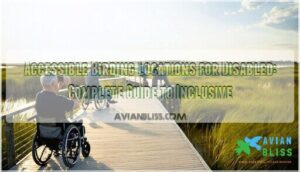 You’ll find accessible birding locations for disabled birdwatchers through the Birdability Map, which pinpoints trails, observation platforms, and bird blinds designed for everyone.
This interactive tool shows paved paths, wheelchair-accessible parking, and barrier-free viewing areas across the country.
Many locations feature boardwalks, handrails, and rest benches that make birding comfortable for people with mobility challenges, visual impairments, or chronic conditions.
National parks, nature centers, and local preserves increasingly offer inclusive spaces where you can enjoy birds without obstacles standing in your way.
The key lies in knowing which specific features transform ordinary trails into welcoming birding sanctuaries.
Table Of Contents
- Key Takeaways
- Finding Accessible Trails
- Designing Inclusive Spaces
- Birding for People With Disabilities
- Creating Accessible Birding Locations
- Promoting Accessible Birding Initiatives
- Frequently Asked Questions (FAQs)
- What is the birding record controversy?
- What colors not to wear when birding?
- What’s the difference between bird watching and birding?
- How do weather conditions affect accessible birding?
- What birding equipment accommodates different disability types?
- Are service animals allowed at birding locations?
- Which bird species are easiest to observe?
- How much do accessible birding trips cost?
- Conclusion
Key Takeaways
- You can find accessible birding locations using the Birdability Map, which provides crowdsourced data about trail surfaces, widths, slopes, and accessibility features at locations nationwide.
- You’ll want to look for trails with concrete or asphalt surfaces, minimum 36-inch widths, gentle slopes under 5%, accessible parking, and features like benches, handrails, and observation platforms designed for wheelchairs and mobility devices.
- You can enjoy birding regardless of your disability type—whether you have mobility challenges, visual or hearing impairments, chronic illness, or mental health conditions—through adaptive techniques, assistive devices, and inclusive birding communities.
- You can advocate for more accessible birding by supporting education programs, partnering with disability organizations, contributing to community initiatives, and using resources like car birding when traditional trails aren’t suitable.
Finding Accessible Trails
You can find accessible birding trails by using the Birdability Map, which provides crowd-sourced information about trail surfaces, widths, and accessibility features at locations nationwide.
Discover bird-watching adventures for everyone with crowdsourced accessibility data at your fingertips.
Check for concrete or asphalt surfaces, trail widths of at least 36 inches, accessible parking spaces, and gentle slopes when selecting your birding destination.
Birdability Map Features
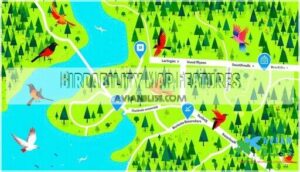
The Birdability Map serves as your gateway to discovering accessible birding locations through crowdsourced accessibility data.
You’ll find detailed trail surface information, slope measurements, and bench locations with precise distances.
User Reviews enhance Map Accuracy by providing real-world insights about disability-friendly locations.
Feature Updates guarantee Data Completeness, helping you locate truly accessible trails that match your specific needs, with the goal of achieving accessible birding.
Accessibility Criteria
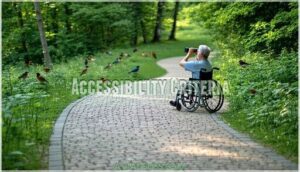
The map’s accessibility ratings come from detailed checklists that evaluate real-world challenges you’ll face on trails.
These criteria help you choose locations that match your specific needs and abilities.
Here’s what gets evaluated for wheelchair accessibility and accessible nature trails:
- Trail surfaces – Concrete, asphalt, or packed stone instead of loose gravel or dirt
- Trail width – Minimum 36 inches wide, with 60 inches being ideal for comfort
- Trail slope – Maximum 5% grade following ADA compliance standards for safe navigation
- Gate widths – At least 36-inch openings to prevent obstacle avoidance issues
Trail Types and Configurations
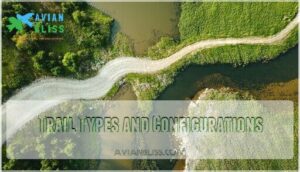
Three main trail configurations serve different accessibility needs.
Loop Trail Advantages include returning to your starting point without retracing steps, while Out-and-Back Challenges require managing the same terrain twice.
Lollipop Trail Design combines both styles with a loop at the trail’s end.
Configuration Impact affects Distance Considerations—shorter loops reduce fatigue better than longer out-and-back routes for many birders.
Rivers can substantially shape the landscape, and trails near them may experience erosion and sediment changes, which impact the Configuration Impact and require consideration of Loop Trail Advantages and Lollipop Trail Design to minimize Out-and-Back Challenges.
Parking and Entrance Fees
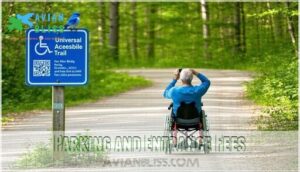
Many accessible birding locations offer fee waivers and discount eligibility for disabled birdwatchers under Americans with Disabilities Act ADA provisions.
You’ll find payment options vary substantially, with some sites providing free disabled access while others charge standard rates.
Parking availability differs across locations, creating location disparities that affect your birding experience. Always check specific site policies before visiting to avoid unexpected costs, considering the Americans with Disabilities Act ADA provisions.
Designing Inclusive Spaces
You’ll create truly welcoming birding spaces when you focus on essential design elements that work for everyone.
These physical features, from properly sloped ramps to accessible restrooms, transform ordinary locations into places where all birders can comfortably observe and enjoy wildlife.
Ramps and Handrails
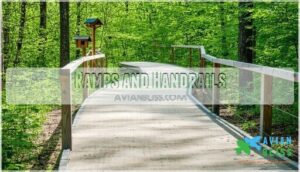
Proper ramps and handrails transform steep terrain into welcoming paths for disabled birdwatchers.
You’ll want ramp slope at 1:12 or gentler, paired with handrail height between 34-38 inches.
Surface changes should be smooth, avoiding bumps that catch wheels.
Landing dimensions need 60"x60" at direction changes.
Consider purchasing pre-built accessibility options for easier installation.
Choose grip material that won’t slip when wet, creating accessible birding locations everyone can enjoy with smooth surface changes.
Bathroom Accessibility
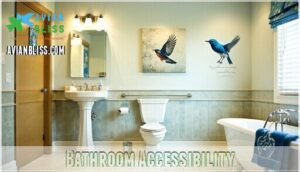
Accessible bathrooms are game-changers for disabled birders who need frequent restroom breaks.
You’ll want accessible stalls with proper turning radius, manageable doors that don’t require excessive force, and sinks at appropriate heights.
All-gender options provide flexibility for caregivers, and ADA compliance guarantees basic accessibility.
Truly inclusive birding locations go beyond minimum requirements for comfort, ensuring a more enjoyable experience for all, with accessible bathrooms and frequent restroom breaks.
Signage and Maps
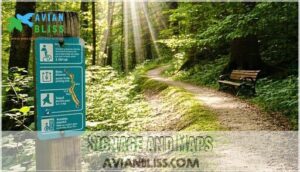
Clear signage transforms your birding experience from guesswork into confident exploration.
You’ll find trail information displaying distance markings, surface type, and slope indication for informed decisions.
Effective maps use symbols ensuring colorblind accessibility while marking bench locations along routes.
The Birdability Map serves as your crowdsourced resource, helping you locate trail distance details before visiting any birding destination, making it a valuable tool for informed decisions.
Benches and Rest Areas
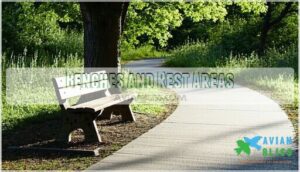
Planning rest stops is like creating little islands of relief on a journey.
Benches should be placed frequently along trails, especially near steep spots or scenic views.
- Include armrests for easy sitting and standing.
- Connect benches to solid trail surfaces for wheelchair access.
- Offer shade or shelter to beat the heat.
- Position them considering trail distance and user energy needs to create a more accessible experience.
Birding for People With Disabilities
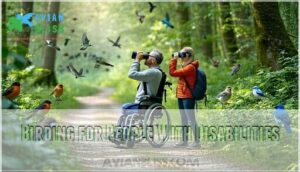
You can enjoy birding regardless of mobility challenges, visual or hearing impairments, chronic illness, or mental health conditions.
Organizations like Birdability work to create welcoming communities where every person has access to trails, observation platforms, and inclusive birding experiences that meet their specific needs, fostering inclusive birding experiences.
Mobility Challenges
You’ll face various mobility challenges when exploring accessible birding locations.
Spinal cord injuries, amputations, and multiple sclerosis require different accommodations.
Trail obstacles like rocks can block wheelchair accessible birding paths.
Assistive devices help navigate terrain, while accessible parking guarantees easy arrival.
Slope management and rest frequency matter for birding mobility impaired individuals.
Accessible trails accommodate wheelchairs and scooters effectively.
Finding suitable options often involves researching products for trail access.
Visual and Hearing Impairments
Beyond sight and sound, birding opens doors through tactile maps and Braille trails that guide your fingertips.
Audio guides transform bird soundscapes into rich experiences, while sensory gardens offer textured discoveries.
For visually impaired birders, Braille identification guides can greatly enhance the experience, making every outing memorable and accessible through sensory birding approaches that cater to visually impaired enthusiasts.
Whether you’re coping with blindness, low vision, or hearing challenges, birding for visually impaired enthusiasts thrives.
Chronic Illness and Mental Health
Birding offers powerful Nature Therapy benefits for those managing chronic illness and mental health challenges.
You’ll discover Stress Reduction through peaceful observation while gaining Cognitive Benefits from species identification.
Accessible birding locations provide gentle exercise options that respect your energy levels.
The Social Connection formed with fellow birders builds Self-Esteem, creating meaningful relationships that support your wellness journey naturally.
Observing changes such as decreased activity and lethargy can be essential for a bird’s well-being.
Inclusive Birding Communities
You’ll find your tribe in inclusive birding communities that celebrate diverse perspectives and remove barriers for everyone.
These welcoming birders create spaces where disability birding groups thrive alongside traditional clubs.
Community support groups connect you with others who understand your challenges, and the disability community and birding community intersect beautifully when organizations embrace inclusive behaviors that make every outing accessible.
Creating Accessible Birding Locations
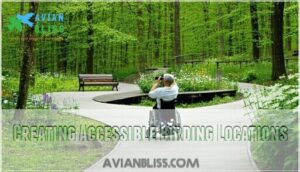
You can transform ordinary birding spots into truly accessible spaces by focusing on key design elements that remove barriers for all visitors.
When you address trail width, surface materials, gate openings, and observation structures, you’ll create locations where everyone can enjoy birding regardless of their physical abilities, making them truly accessible.
Trail Width and Surface Requirements
You’ll want trails that welcome everyone, starting with proper width and surface choices.
The US Forest Service recommends 36-inch minimum widths, though noting actual measurements helps since some wheelchairs are narrower. Smart Surface Material Selection and Obstacle Minimization create accessible trails for mobility challenges.
Essential trail accessibility guidelines include:
- Firm surfaces – concrete, asphalt, or well-packed crushed stone work best
- Adequate Width Standardization – 36 inches minimum, 60 inches ideal for passing
- Strategic Pullout Placement – every 300 feet for wheelchair users and rest breaks
Gate and Bollard Accessibility
Gates and bollards at birding locations create significant barriers when poorly designed.
You’ll need a minimum opening width of 36 inches for wheelchair access, though wider proves better.
Avoid chicane-style barriers that block mobility devices entirely.
Check for ADA compliance before visiting, and report inaccessible obstacle designs to site managers.
Proper gate design welcomes everyone into accessible birding experiences.
Observation Platforms and Blinds
When planning accessible bird blinds, you’ll want structures that welcome everyone into nature’s theater.
Proper platform height and viewing angles transform ordinary spaces into inclusive birding havens where wheelchairs roll seamlessly alongside walking visitors.
- Platform Height: Build decks 30-36 inches high for wheelchair accessibility and comfortable viewing
- Blind Materials: Use weather-resistant wood or composite materials that won’t deteriorate quickly
- Weather Protection: Install roofing and windscreens to shield visitors from rain and harsh conditions
- Viewing Angles: Design multiple window heights accommodating seated and standing observers
- Camouflage Design: Blend structures naturally into surroundings without compromising accessibility features
Car Birding and Road Accessibility
Car birding opens doors when trails aren’t an option. You’ll discover roadside birding along scenic drives offers incredible wildlife viewing from your vehicle.
Look for accessible parking areas with paved surfaces and clear sightlines to habitats. Cities can support birdlife through thoughtful green space implementation.
| Location Type | Vehicle Safety Features | Best for Limited Mobility |
|---|---|---|
| Wildlife Refuges | Pull-off areas, wide shoulders | Yes – drive-through routes |
| Scenic Byways | Designated viewing stops | Yes – minimal walking required |
| Wetland Parks | Paved parking loops | Yes – car window birding |
This approach to birding is particularly useful for those with limited mobility, as it allows for a fulfilling experience without the need for extensive walking or hiking.
Promoting Accessible Birding Initiatives
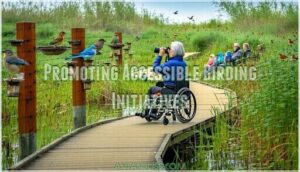
You can make birding more accessible for everyone by supporting education programs, partnering with disability organizations, and contributing to community initiatives.
These efforts help create inclusive outdoor spaces where all birders can participate and enjoy nature together.
Education and Outreach Programs
Building accessible locations is just the start—you need education and outreach programs to spread the word.
Inclusive Birding Workshops teach adaptive birding techniques while Community Birding Events welcome everyone.
Accessible Birding Resources help leaders plan universal birding experiences.
Birding Mentorship Programs pair experienced birders with newcomers, creating lasting connections through dedicated accessible outdoor education initiatives and making birding for all a reality.
Collaboration With Disability Organizations
Partnership with disability organizations creates mutual benefits through shared resources and community building.
You’ll find these groups enthusiastic to promote accessible birding events to their members.
Reach out to Independent Living Centers, rehabilitation hospitals, and spinal cord injury support groups for inclusive planning opportunities.
Their expertise in disability community outreach helps expand your reach while strengthening disability services connections.
Donations and Community Support
Your donations help sponsor Birdability’s mission while volunteer opportunities strengthen inclusive birding efforts nationwide.
Community engagement thrives when local organizations partner with disability services to create lasting change.
Sustaining accessibility requires ongoing community support and collaboration between birding groups and community organizations.
Every contribution, whether financial or volunteer-based, builds stronger birding accessibility for everyone who needs it, and this is crucial for the mission’s overall success.
Frequently Asked Questions (FAQs)
What is the birding record controversy?
Strangely enough, you’re asking about birding record controversies while I lack current information on specific disputes.
You’ll need to check recent birding publications, forums, or eBird discussions for the latest record verification debates.
What colors not to wear when birding?
Avoid bright white, neon colors, and flashy patterns that’ll spook birds.
Skip red during hummingbird season—they might mistake you for competition.
Stick to earth tones like browns, greens, and grays to blend naturally.
What’s the difference between bird watching and birding?
Ever wonder what separates casual observers from dedicated enthusiasts?
Bird watching is relaxed observation of birds you encounter, while birding involves actively seeking specific species with field guides, binoculars, and life lists tracking your discoveries.
How do weather conditions affect accessible birding?
Weather dramatically impacts your birding accessibility.
Rain creates slippery surfaces and muddy trails, while snow blocks paths and reduces visibility.
Wind affects balance for mobility device users, and heat exhaustion risks increase.
Plan accordingly and check conditions beforehand to ensure a safe and enjoyable experience, considering the potential for slippery surfaces.
What birding equipment accommodates different disability types?
You’ll find binoculars with larger eyepieces help with visual impairments, while lightweight models reduce strain.
Consider smartphone apps with audio bird identification, ergonomic grips for limited mobility, and voice-activated recording devices for hands-free documentation.
Are service animals allowed at birding locations?
Yes, service animals are welcome at most birding locations, including national parks, state parks, and wildlife refuges.
You’ll need to follow leash requirements and clean-up policies while your service animal assists you.
Which bird species are easiest to observe?
Approximately 75% of beginner birders spot common species first.
You’ll easily observe robins, cardinals, and blue jays at feeders.
Pigeons, crows, and sparrows thrive in urban areas, making them perfect starter birds for building identification skills.
How much do accessible birding trips cost?
Costs vary widely depending on location and trip type.
You’ll find free self-guided options at many parks, while guided tours range from $15-50 per person.
Entry fees and parking add extra expenses, which can be considered as extra expenses.
Conclusion
Think of accessible birding locations for disabled individuals as bridges connecting passionate observers to nature’s wonders.
You’ve discovered how the Birdability Map, proper trail design, and inclusive features create welcoming spaces for everyone.
Whether you’re managing mobility challenges, visual impairments, or chronic conditions, these resources guarantee birding remains within reach.
Your advocacy and support help expand these opportunities, making birdwatching a truly inclusive hobby that welcomes all enthusiasts regardless of their physical abilities or limitations.