This site is supported by our readers. We may earn a commission, at no cost to you, if you purchase through links.
 When you discover your feathered friend injured, don’t panic—smart bird injury home treatment can make all the difference.
First, assess the situation carefully. Control bleeding with gentle pressure using clean gauze. For open wounds, use diluted chlorhexidine or betadine as topical disinfectants, but keep them away from eyes, ears, and mouth.
Never apply petroleum jelly or thick ointments without vet approval. Create a quiet, warm environment to minimize stress.
While basic first aid helps, remember that birds hide pain well—what looks minor might be serious. You’ll want to know the red flags that signal when home care isn’t enough, and understand that basic first aid has its limitations.
Table Of Contents
- Key Takeaways
- Bird Injury Assessment
- Home Treatment Options
- Wound Care and Management
- Creating Safe Environment
- Emergency Care Procedures
- Frequently Asked Questions (FAQs)
- How do you treat a bird wound at home?
- How do you help an injured bird?
- How to provide first aid for minor bird injuries?
- What is a natural bird wound treatment?
- Can a warm compress help a bird wound?
- How do you treat a broken bird wing?
- How to treat a bird wound at home naturally?
- How to help an injured bird at home?
- Can a bird’s wound heal on its own?
- What is a natural pain reliever for birds?
- Conclusion
Key Takeaways
- Assess the injury quickly by checking for bleeding, wound depth, and your bird’s behavior to decide if home care or a vet is needed.
- Clean wounds gently with saline or diluted Betadine, and apply bird-safe antibiotic ointment sparingly to prevent infection.
- Create a quiet environment to help your bird recover while monitoring for signs of infection or worsening conditions.
- For serious injuries like deep cuts, fractures, or persistent bleeding, contact an avian vet immediately—don’t rely solely on home care.
Bird Injury Assessment
When your bird gets injured, you’ll need to quickly assess the situation before taking any action.
Check for active bleeding, examine the wound’s depth and location, and observe your bird’s behavior to determine whether you can safely treat the injury at home or need immediate veterinary care.
This assessment will help you decide the best course of action for your bird’s specific injury.
Checking for Bleeding
First, examine your bird’s feathers and skin systematically for blood spots or wet areas.
Active bleeding requires immediate attention – you’ll see fresh red droplets or pooling blood.
Check wings, feet, and around the beak carefully.
Gentle pressure with a clean cloth helps with bleeding control while you assess the situation.
Don’t panic; most minor wounds stop bleeding naturally within minutes.
It’s vital to understand the importance of applying stop bleeding techniques to prevent further injury and ensure the bird’s safety with proper wound care.
Examining Wound Severity
Once bleeding stops, your bird wound assessment begins with careful wound depth evaluation.
Look for exposed bone, muscle, or deep tissue damage – these require immediate veterinary care.
Minor surface scratches appear shallow with minimal tissue damage, while serious lacerations penetrate multiple skin layers.
Proper injury classification determines whether you can manage treatment at home or need professional intervention for your bird’s recovery.
Observing Bird Behavior
Watch your bird’s posture analysis carefully – injured birds often sit fluffed up or hunched over.
An injured bird’s body language speaks volumes – watch for fluffed feathers and hunched postures that signal distress.
Bird body language tells the whole story: drooping wings, closed eyes, or staying at the cage bottom signal distress.
Behavioral changes like refusing food or avoiding perches indicate pain.
Check feather condition and beak alignment too.
These bird injury symptoms help you recognize signs of illness before it’s too late.
Home Treatment Options
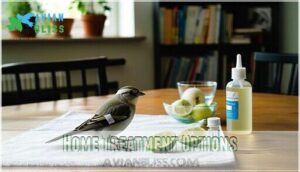
You can treat minor bird injuries at home using specific antiseptic solutions and bird-safe products, but you must recognize when professional veterinary care is essential.
Home treatment works best for superficial wounds, while serious injuries like deep cuts, fractures, or signs of infection require immediate veterinary attention.
Cleaning and Disinfecting Wounds
Once you’ve assessed your bird’s injury, proper wound cleaning becomes your next priority.
Clean hands and gentle movements prevent additional trauma during treatment.
Essential Wound Cleaning Steps:
- Saline Rinse – Mix 1 teaspoon salt with 1 cup warm water
- Antiseptic Solutions – Use diluted Betadine or chlorhexidine for disinfection
- Gentle Flushing – Apply with 3ml syringe (no needle) for precise control
- Styptic Powder – Control minor bleeding immediately
- Aloe Vera Gel – Natural antimicrobial properties aid healing
Avoid hydrogen peroxide – it damages delicate bird tissues.
For effective wound care, understanding saline solution properties is vital.
Applying Antibiotic Ointment
Apply bird-safe antibiotic ointment sparingly to clean wounds, avoiding human products containing painkillers.
Neosporin works well for birds when used correctly. Dab a thin layer over the injury using a cotton swab, ensuring complete wound coverage.
This topical treatment prevents bacterial infections while promoting faster healing. Monitor closely for adverse reactions during your avian wound care routine.
Proper wound care techniques are essential for effective bird injury home treatment, and following these guidelines will help ensure a successful recovery with proper care.
Using Natural Remedies
Nature’s pharmacy offers gentle alternatives when your feathered friend needs healing support.
These natural antiseptics can complement veterinary care, though they’re never replacements for professional treatment.
Using high quality raw honey products is essential for effective wound care.
- Raw Honey – Apply thin layers for antimicrobial protection
- Aloe Vera gel – Soothes irritation and promotes tissue repair
- Turmeric paste – Natural antiseptic properties (may stain feathers)
- Saline solution – Gentle wound cleaning
- Coconut oil – Antibacterial relief for minor irritations
Wound Care and Management
Wound Care and Management Introduction
Once you’ve cleaned your bird’s wound, proper ongoing care determines whether it heals quickly or develops serious complications.
You’ll need to change bandages daily, watch for infection signs like increased redness or discharge, and create conditions that support your bird’s natural healing process.
This approach will help ensure that your bird recovers smoothly, and you can identify any potential issues, such as infection signs, early on to take appropriate action.
Changing Bandages
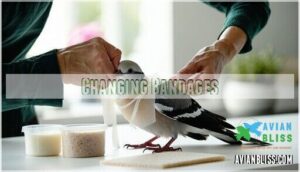
How often should you change your bird’s wound dressing?
Daily bandage change prevents infection and promotes faster healing.
Use sterile gauze pads and secure wrapping techniques, avoiding tight application that restricts circulation.
Fresh bandage materials guarantee the best bird wound care.
Monitor the wound during each dressing change, replacing soiled or wet bandages immediately for effective bird wound treatment.
Proper bird wound cleaning techniques are essential for preventing infection and promoting healing in injured birds, which is crucial for bird wound care.
Monitoring for Infection
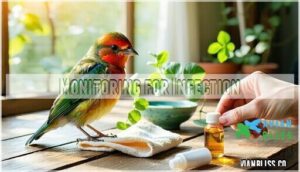
Watch for infection signs like increased wound swelling, persistent redness detection, or unusual discharge check around the injury site.
Your bird’s healing progress should show gradual improvement within days. Any worsening bird wound infection signs – including foul odors, excessive warmth, or spreading bird wound symptoms – demands immediate veterinary attention.
Proper infection prevention and continued antibacterial ointment application help avoid serious complications.
Regular use of antibiotic ointments is essential for preventing infection in bird wounds, and this is a key part of preventing infection and ensuring the wound heals properly with proper care.
Promoting Healing
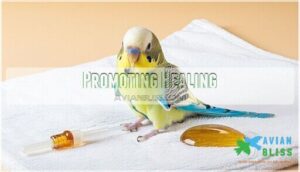
Once you’ve caught signs of infection early, supporting your bird’s natural healing process becomes your next priority.
Keep wounds clean and dry while your feathered friend recovers. Natural remedies like diluted honey can accelerate bird wound healing when applied sparingly.
Maintain consistent temperatures and minimize handling during bird injury recovery. The wound healing process typically shows improvement within 3-5 days with proper bird wound care.
Creating Safe Environment
Your bird’s recovery depends heavily on the environment you create during treatment.
You’ll need to establish a quiet, secure space that reduces stress while preventing additional injuries that could complicate healing.
Minimizing Stress

Your bird’s recovery depends heavily on creating the right atmosphere.
Place your injured bird in a quiet space away from household traffic and noise. Dim lighting helps reduce anxiety, while maintaining warmth between 85-90°F supports healing. Handle your bird minimally – every interaction should be purposeful and brief.
Essential stress reduction measures:
- Create a sanctuary – Choose the quietest room in your home, away from children and pets
- Dim the lights – Soft lighting mimics natural roosting conditions that promote rest
- Wrap the carrier – Cover transport boxes with towels to create a cozy, secure feeling
- Minimize handling – Only touch your bird when absolutely necessary for treatment
- Maintain silence – Keep voices low and eliminate sudden sounds that trigger panic responses
Preventing Further Injury
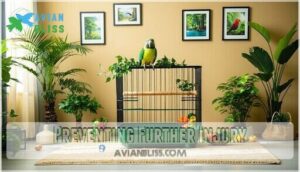
Remove sharp objects, toxic plants, and small items your bird might swallow from their recovery area.
Check cage safety by examining wire spacing, door latches, and perch placement.
Create a bird-friendly environment through proper hazard removal and environmental enrichment.
Supervising playtime becomes critical during recovery.
Safe bird handling techniques prevent additional trauma while stress reduction supports healing, ensuring a smooth recovery with proper bird handling.
Providing Proper Ventilation
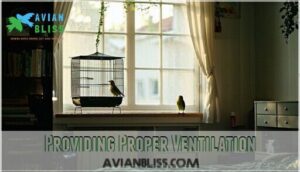
Proper ventilation creates the foundation for successful bird injury home treatment.
Fresh air circulation prevents respiratory complications while your feathered friend heals.
Position the recovery cage away from drafts but maintain steady airflow.
Air quality matters – avoid smoke, strong scents, and cleaning fumes.
Good ventilation systems support faster healing by maintaining ideal humidity control and reducing airborne bacteria.
Ensuring adequate ventilation systems is vital for the health and recovery of birds.
Emergency Care Procedures
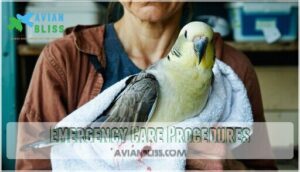
When your bird suffers a serious injury, you’ll need to act quickly to control bleeding and safely transport them to veterinary care.
These emergency procedures can mean the difference between life and death, but they require careful handling and immediate professional follow-up, which is crucial for a successful recovery.
Controlling Bleeding
Once you’ve secured your bird’s environment, bleeding control becomes your top priority. Fast action saves lives when blood loss threatens your feathered friend’s survival.
5 Critical Steps for Controlling Bleeding:
- Apply styptic powder directly to bleeding wounds – it’s your most effective tool for hemostasis
- Use gentle wound pressure with clean gauze to encourage blood clotting without restricting breathing
- Try flour or cornstarch as emergency alternatives when styptic powder isn’t available
- Monitor bleeding response – persistent bleeding requires immediate veterinary intervention
- Keep your bird calm in a dark, quiet space to prevent shock during bleeding control
Proper bird wound care starts with stopping the flow. Styptic powder works fastest for bird first aid situations involving broken blood feathers or small cuts. Remember, you’re buying time until professional help arrives.
Transporting Injured Birds
When transporting injured birds, use a sturdy ventilated box lined with soft towels.
Keep the container dark and quiet to create calm environments that reduce stress.
Handle gently with both hands supporting the body—never grab wings or legs.
Emergency kits should include properly sized carriers for safe handling.
Maintain steady temperatures during transport to prevent shock.
Seeking Veterinary Care
When your bird’s injury seems beyond home care, don’t hesitate to contact an avian vet immediately.
Emergency services and bird hospitals offer specialized urgent care that home treatment can’t match.
Avian specialists understand bird anatomy better than general vets, and for serious wounds, breathing problems, or shock symptoms, professional bird medical care becomes your feathered friend’s lifeline.
Frequently Asked Questions (FAQs)
How do you treat a bird wound at home?
Clean the wound gently with diluted saline or Betadine solution. Apply bird-safe antibiotic ointment sparingly.
Control bleeding with gentle pressure using clean cloth.
Serious injuries need immediate veterinary care—don’t attempt complex treatments yourself, as they require immediate attention.
How do you help an injured bird?
Like a gentle nurse, place the injured bird in a warm, quiet, ventilated box lined with towels.
Don’t handle unnecessarily.
Contact an avian vet immediately—professional care guarantees the best recovery outcome.
How to provide first aid for minor bird injuries?
Handle gently with a towel, control bleeding with gentle pressure, clean wounds with diluted antiseptic, apply styptic powder if needed, keep warm and quiet, then contact an avian veterinarian immediately.
What is a natural bird wound treatment?
Raw honey and pure aloe vera gel offer natural healing properties for minor bird wounds.
Both have antimicrobial effects that can promote recovery.
However, you’ll need veterinary guidance before applying any home remedy to guarantee your bird’s safety.
Can a warm compress help a bird wound?
Yes, you can apply a gentle warm compress to help a bird wound heal faster.
Like medieval healers knew, warmth promotes blood flow and healing.
Wrap it in soft towel and monitor carefully for overheating.
How do you treat a broken bird wing?
If a bird’s wing is broken, don’t try to set it yourself.
Gently secure the bird in a ventilated box, keep it warm and quiet, and contact an avian vet or wildlife rehabilitator immediately.
How to treat a bird wound at home naturally?
Think of the wound as a garden needing care.
Clean it gently with diluted Betadine or saline, dab raw honey for healing, and watch closely for signs of infection.
Always consult a vet for serious injuries.
How to help an injured bird at home?
Place the injured bird in a ventilated box lined with a towel, keep it warm and quiet, and avoid handling it excessively.
Contact a vet or wildlife rehabilitator quickly—home care has its limits.
Can a bird’s wound heal on its own?
Wounds don’t magically vanish like Houdini’s tricks.
Small cuts might heal if kept clean and infection-free, but deeper wounds need your attention and possibly a vet’s care to avoid complications or delayed healing.
What is a natural pain reliever for birds?
Raw honey and pure aloe vera gel work wonders as natural pain relievers for birds.
Both soothe discomfort and promote healing.
Always check with a vet first to confirm safety for your feathered friend, using natural methods can be beneficial.
Conclusion
Even Florence Nightingale would agree—quick action saves lives.
With proper bird injury home treatment, you can stabilize your feathered friend and prevent complications.
Assess wounds, control bleeding, and disinfect carefully, but don’t ignore signs of worsening conditions.
Birds mask pain, so what seems minor might need a vet’s expertise.
Create a calm, safe space and monitor healing closely.
Remember, home care is a first step, not a substitute for professional attention when it’s truly needed.