This site is supported by our readers. We may earn a commission, at no cost to you, if you purchase through links.
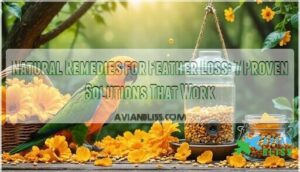 When your bird’s feathers start disappearing faster than socks in the laundry, natural remedies for feather loss can help restore their plumage safely.
You’ll want to tackle the root causes first—mites, poor nutrition, or stress often trigger feather problems.
Marigold and calendula petals work like nature’s healing balm, soothing irritated skin when sprinkled in their food.
Omega-rich seeds rebuild feather structure from the inside out, while a protein-packed diet gives their bodies the building blocks they need.
Don’t forget stress reduction—a calm bird is a healthy bird.
These gentle approaches work together to address multiple causes simultaneously, creating the perfect storm for feather regrowth.
Table Of Contents
- Key Takeaways
- Feather Loss Causes
- Natural Remedies
- Feather Health Nutrition
- Managing Stress Factors
- Preventing Feather Loss
- Frequently Asked Questions (FAQs)
- How do you treat chicken feather loss?
- How to prevent chickens from losing their feathers?
- How do I get my chickens feathers back?
- What should I do if my bird loses a feather?
- How can I help my bird grow a healthy feather?
- Can stress cause feather loss in chickens?
- How to treat feather loss in birds naturally?
- What promotes feather growth?
- What can I give my chickens for feather loss?
- What helps bird feathers grow back?
- Conclusion
Key Takeaways
- Identify the root cause first – You’ll need to check for mites, parasites, nutritional deficiencies, or stress factors before treating feather loss, since different causes require different approaches.
- Feed protein-rich foods and natural supplements – You should provide 20-25% protein feed during molting, add omega-rich seeds like sunflower seeds, and sprinkle marigold or calendula petals in their food for anti-inflammatory benefits.
- Create a stress-free environment – You must maintain clean coops with proper ventilation, provide adequate space (4 square feet per bird), offer dust baths, and reduce overcrowding to prevent stress-induced feather plucking.
- Practice prevention over treatment – You’ll save time and effort by maintaining weekly coop cleaning, conducting regular parasite inspections, and ensuring balanced nutrition rather than waiting to treat feather loss after it occurs.
Feather Loss Causes
Before you can fix feather loss, you’ll need to understand what’s causing it in the first place.
The three main culprits behind bare patches and thinning plumage are tiny parasites like mites and lice, missing nutrients in your bird’s diet, and stress from changes in their environment or living conditions.
Mites and Parasites
Tiny troublemakers like red mites and lice are sneaky culprits behind your bird’s feather loss.
Tiny pests like red mites and lice silently sabotage your bird’s beautiful plumage, leaving bare patches in their wake.
These parasites cause relentless itching, leading to excessive scratching and bare patches. You’ll spot infestation symptoms like white eggs at feather bases or tiny moving specks.
Effective red mite control is essential for preventing further feather loss.
Coop sanitation becomes your first defense—clean bedding weekly and use natural insecticides like diatomaceous earth for effective parasite prevention without harsh chemicals, ensuring a safe and healthy environment for your birds, and providing proper care.
Nutritional Deficiencies
Poor nutrition hits your bird’s feathers hard.
Protein deficiency weakens feather structure, while vitamin imbalance disrupts growth cycles.
Mineral absorption problems create brittle, dull plumage.
Seed-only diets lack essential nutrients for healthy bird diet maintenance.
Diet optimization requires balanced pellets, fresh vegetables, and careful supplementation risks management.
Nutritional deficiencies cause more feather loss than most owners realize, making natural bird care essential for feather regrowth.
Stress and Environmental Factors
Beyond nutrition, stress and environmental factors can trigger feather loss in your flock.
Overcrowding effects create tension, while temperature extremes and poor coop ventilation stress birds.
Predator stress keeps chickens on edge, and routine changes disrupt their comfort.
These behavioral changes signal your birds need environmental adjustments.
Natural remedies work best when you address these underlying stressors first, and make necessary adjustments to reduce tension and promote a healthier environment by considering environmental factors.
Natural Remedies
You can use gentle, plant-based solutions to help your birds regrow healthy feathers without harsh chemicals or expensive treatments.
These time-tested natural remedies work by providing essential nutrients and supporting your bird’s natural healing process, giving you safe options that won’t stress already vulnerable birds, using natural remedies.
Marigold Petals

Marigold petals pack a powerful punch for feather regrowth, offering natural remedies that support your bird’s recovery.
These golden blooms contain potent anti-inflammatory properties that promote skin health during molting periods. As a bonus, they can also enhance egg yolk color.
- Feather color enhancement – Carotenoids boost vibrant plumage pigmentation
- Molting aid support – Antioxidants reduce oxidative stress during feather renewal
- Immune system boost – Natural compounds strengthen overall bird health supplements
- Holistic bird care – Safe, gentle approach to treating bird feather loss
- Proper marigold dosage – Sprinkle dried petals in feed sparingly
Calendula Petals

You’ve discovered calendula petals pack powerful antioxidants that support feather regrowth naturally. These bright orange flowers contain lutein, zeaxanthin, and beta-carotene—compounds your bird’s body converts to vitamin A for healthy skin and vibrant plumage.
Like calendula, red clover offers benefits with its rich supply of beta-carotene, calcium, and vitamin C.
| Application Method | Petal Dosage | Expected Results |
|---|---|---|
| Mixed in feed | 1 tsp dried petals daily | Enhanced feather color within 2-3 weeks |
| Scattered in coop | 2-3 fresh petals weekly | Gradual improvement in plumage quality |
| Topical application | Light dusting on affected areas | Reduced irritation and faster regrowth |
| Tea preparation | 1 tbsp steeped petals | Improved overall feather health |
| Supplement powder | ½ tsp ground petals | Consistent nutritional support |
Sourcing calendula from organic suppliers guarantees you’re providing pure, chemical-free benefits. This natural remedy shines during molting season when your birds need extra nutritional support for healthy feather development, promoting healthy skin and vibrant plumage.
Omega Fatty Acids

Essential omega fatty acids act like building blocks for healthy feathers and glowing skin.
You’ll find these powerhouse nutrients in flaxseed, fish oil, and hemp seeds – prime omega sources that boost egg quality and immune support.
These healthy fats create that coveted feather sheen while promoting natural feather regrowth, making them invaluable for avian wellness and combating bird feather loss effectively.
Supplementing with fresh foods is important for a balanced diet, ensuring your bird gets all the nutrients it needs, and omega-3s are essential for overall wellness.
Feather Health Nutrition
Your bird’s diet acts like fuel for a car engine – without the right nutrients, feathers can’t grow strong and healthy.
You’ll need to provide proper protein levels, essential vitamins, and key minerals to support your feathered friend’s natural molting process and prevent unnecessary feather loss.
Balanced Diet

Your bird’s feathers need proper fuel to grow strong and healthy.
A balanced diet prevents nutritional deficiencies that cause feather loss and supports vitamin absorption for maximum plumage development.
- 60-70% high-quality pellets provide essential bird vitamins and mineral balance
- 20% fresh fruits and vegetables deliver natural nutrients and diet variety
- Omega fatty acids from nuts and seeds promote shiny, resilient feathers
- Adequate protein intake supports keratin production for strong feather structure
- Clean water daily helps guarantee proper nutrient transport and metabolic function
Protein Sources
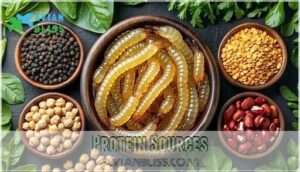
Your birds need quality protein to rebuild those lost feathers.
High-protein feeds containing 20-25% protein work best during molting season.
Insect protein from mealworms provides complete amino acids that feathers require.
Plant-based proteins like legumes offer affordable alternatives.
You can boost protein intake with specialized protein supplements when regular nutrition falls short.
Remember, feathers are 85% protein, so adequate protein intake supports healthy regrowth and requires complete amino acids from sources like insect protein.
Vitamin and Mineral Supplements

Beyond proper protein, vitamins and minerals act like building blocks for healthy feathers.
You’ll need zinc, manganese, and selenium for feather development, plus biotin for regrowth.
Vitamin A, C, and E create strong plumage.
Watch for deficiency symptoms like dull feathers or slow growth.
Environmental enrichment can also promote natural behaviors.
Organic supplements work best when you follow dosage guidelines and avoid supplement interactions to ensure healthy feathers.
Managing Stress Factors

When your birds face stress from overcrowding, temperature changes, or predator threats, their feather health suffers dramatically.
You’ll need to create calm environments with proper spacing, stable temperatures, and safe roosting areas to help your flock regrow healthy plumage naturally.
Environmental Modifications
Your coop’s environmental conditions directly impact feather health.
Proper coop ventilation prevents humidity buildup that encourages parasites.
Meet space requirements of 4 square feet per bird to reduce stress-induced feather plucking.
Install predator protection to eliminate anxiety triggers.
Maintain comfortable roosting areas and guarantee adequate dust bathing spots.
Control temperature and lighting fluctuations through thoughtful environmental modifications.
Parrots benefit from consistent mental stimulation to prevent destructive behaviors.
Social Interaction
You’ll find that pecking order disruptions cause significant stress and feather damage.
Healthy flock dynamics require careful bullying prevention and gradual introduction protocol for new members.
Create social enrichment through:
- Multiple feeding stations to reduce competition
- Separate roosting areas for different personality types
- Supervised pet interaction sessions during free-range time
- Behavioral observation to identify stress-inducing relationships early
Comfortable Living Conditions
Creating the right environment is like setting up a cozy home for your feathered friends.
You’ll need proper space requirements, good coop ventilation, and solid predator protection to keep stress levels low.
Temperature and humidity control, along with quality roosting bars, help birds feel secure and comfortable.
| Comfort Factor | Minimum Standard | Stress Reduction Benefit |
|---|---|---|
| Space per bird | 4 sq ft coop/10 sq ft run | Prevents overcrowding fights |
| Ventilation | 1 sq ft per 10 sq ft floor | Reduces respiratory issues |
| Roosting height | 2-4 feet off ground | Promotes natural behavior |
A stimulating environment with dust bathing areas and proper lighting supports healthy feather growth while keeping your flock happy and stress-free.
Preventing Feather Loss
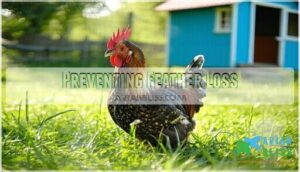
You can stop feather loss before it starts by keeping your coop clean, providing dust baths, and controlling parasites with simple steps.
Think of prevention like brushing your teeth – it’s much easier than fixing problems later, and your birds will thank you with healthy, beautiful feathers.
Regular Cleaning
The cleanest coops produce the healthiest birds with lustrous plumage.
Daily waste removal and weekly bedding management prevent harmful bacteria buildup that weakens feather condition.
Disinfecting surfaces with natural cleaning solutions eliminates pathogens while equipment cleaning removes debris that harbors parasites.
Maintaining a clean coop also requires the right poultry disinfectant products and creates an environment where natural feather loss remedies work effectively, supporting your flock’s overall health and well-being.
Dust Baths
Your chickens need dust baths like we need showers.
Your birds crave dust baths the way you crave a hot shower after a long day.
These natural anti-itch treatments let birds roll around in dirt, sand, or diatomaceous earth (DE), controlling mites and keeping feathers healthy.
Set up coop dust baths using fine sand mixed with wood ash.
Bathing frequency increases during molting when feather condition matters most.
Alternative materials include diatomaceous earth (DE) application for enhanced parasite control, which can be particularly useful in conjunction with the natural benefits of dust baths, including dust baths and maintaining healthy feathers.
Parasite Control Measures
External parasites like mites and lice are sneaky culprits behind feather loss.
You’ll need regular inspections for early detection – check under wings and around vents weekly.
Natural insecticides like food-grade diatomaceous earth work wonders in dust baths.
Maintain strict coop sanitation by cleaning weekly and replacing bedding.
Proper mite identification helps you choose effective natural remedies for poultry parasites.
Addressing the bird’s environmental conditions is also essential for prevention and maintaining a healthy environment.
Frequently Asked Questions (FAQs)
How do you treat chicken feather loss?
Like a detective solving a mystery, you’ll need to identify the cause first.
Check for mites, improve nutrition with protein-rich feed, reduce stress, make certain coops are clean.
Consult your vet for persistent problems, and ensure you have addressed all potential issues to resolve the mystery.
How to prevent chickens from losing their feathers?
Maintain balanced nutrition with 16-20% protein, guarantee clean coops with proper ventilation.
Provide dust baths, reduce stress from overcrowding, check regularly for mites and parasites.
Offer environmental enrichment to prevent boredom-induced feather pecking.
How do I get my chickens feathers back?
You’ll boost feather regrowth by providing high-protein feed with 20-25% protein content.
Add omega-3 supplements, make certain clean living conditions, reduce stress factors.
Give molting birds extra nutrition during their natural renewal process.
What should I do if my bird loses a feather?
Sarah noticed her parrot dropped a tail feather during play.
Don’t panic – single feather loss is normal.
Check if it’s molting season, make certain proper nutrition with protein-rich foods, and watch for excessive loss patterns, as this will help identify if the loss is part of a normal process.
How can I help my bird grow a healthy feather?
Feed your bird a protein-rich diet with 20-25% pellets, fresh vegetables, and omega fatty acids.
Make certain clean water, reduce stress, maintain proper lighting, and provide dust baths for natural preening and healthy feather regrowth, including proper lighting.
Can stress cause feather loss in chickens?
Yes, stress absolutely causes feather loss in your chickens.
Overcrowding, predators, extreme temperatures, and coop changes trigger this response.
You’ll notice patchy feather loss without new pin feathers emerging, signaling stress rather than natural molting.
How to treat feather loss in birds naturally?
You can treat feather loss naturally by providing protein-rich foods.
You can also add apple cider vinegar to water, offering dust baths with diatomaceous earth.
Reducing stress factors, and ensuring proper ventilation in your coop, are also important for treating feather loss naturally.
What promotes feather growth?
Building a feather-friendly foundation starts with protein-rich nutrition. You’ll need quality pellets, fresh vegetables, and supplements like biotin. Regular preening, stress reduction, and clean environments also nurture healthy regrowth naturally.
What can I give my chickens for feather loss?
Boost your chickens’ protein intake with high-quality pellets containing 20-25% protein.
Add sunflower seeds, mealworms, or scrambled eggs.
Provide fresh vegetables, guarantee clean water access, and maintain stress-free environments for ideal feather regrowth.
What helps bird feathers grow back?
Proper nutrition speeds feather regrowth—you’ll need high-protein feed with 20-25% protein, omega fatty acids, and vitamins A and E.
Reduce stress, control parasites, and guarantee clean living conditions for superior results, ensuring that all factors contributing to health are addressed, with high-protein feed being a crucial element.
Conclusion
Watching your feathered friend’s vibrant plumage return is like witnessing a small miracle unfold.
These natural remedies for feather loss work best when you combine multiple approaches—addressing parasites, boosting nutrition, and reducing stress simultaneously.
You’ll need patience, as feather regrowth takes weeks, but consistent application of marigold petals, omega-rich foods, and environmental improvements creates lasting results.
Monitor your bird’s progress closely, and don’t hesitate to consult an avian veterinarian if feather loss persists despite your efforts.