This site is supported by our readers. We may earn a commission, at no cost to you, if you purchase through links.
Most bird owners don’t realize their parrot’s feather-destroying habit or a finch’s sudden lethargy might trace back to something as fixable as diet or daily stress—not disease. Birds are masters at masking illness, so by the time something looks obviously wrong, the problem has usually been brewing for weeks. That gap between "fine yesterday" and "sick today" is exactly where natural bird wellness remedies earn their place: not as replacements for veterinary care, but as the daily maintenance that keeps small problems from becoming serious ones.
What follows covers the remedies with real evidence behind them, the warning signs worth acting on fast, and the handful of "natural" options that can quietly do more harm than good.
Table Of Contents
- Key Takeaways
- When Natural Bird Remedies Help
- Wellness Signs to Watch
- Nutrition-Based Wellness Remedies
- Natural Feather and Skin Support
- Herbal Anti-Inflammatory Bird Remedies
- Calming Remedies and Stress Relief
- Remedies to Avoid or Use Carefully
- Frequently Asked Questions (FAQs)
- How can I Help my Bird Eat a healthy diet?
- Do birds need natural care?
- What is a good diet for calming birds?
- How can I help my bird with arthritis?
- Can chamomile & lemon balm help with stress in birds?
- How can a feathered bird be calming?
- How to treat a sick bird at home naturally?
- What is the best natural antibiotic for birds?
- What is a natural sedative for birds?
- What is a natural antiviral for the bird flu?
- Conclusion
Key Takeaways
- Natural remedies work best as daily maintenance alongside veterinary care, not as replacements — your vet should always diagnose before you treat at home.
- Birds mask illness until problems are serious, so tracking small changes in droppings, appetite, feathers, and behavior is your earliest and most reliable warning system.
- Diet is the foundation of everything: fresh produce, quality pellets, sprouted seeds, raw nuts, and clean filtered water address most common deficiencies before they become health issues.
- Not all "natural" options are safe — PTFE fumes, undiluted apple cider vinegar, pesticide residues, and casually dosed herbs can quietly cause real harm without proper avian vet guidance.
When Natural Bird Remedies Help
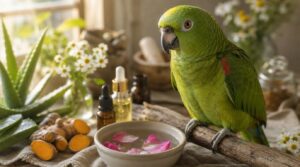
Most bird owners don’t want to reach for medication every time their parrot seems off — and honestly, you don’t always have to. Natural remedies can genuinely support your bird’s health when used thoughtfully alongside proper veterinary care.
For a solid starting point, natural remedies for sick birds covers which options are genuinely safe and when to stop second-guessing and call a vet.
Here’s where they tend to make the most difference.
Common Wellness Goals for Pet Birds
Most bird owners share a few core goals: keeping their feathered companion at a healthy body weight, supporting a strong immune system, and maintaining joint mobility support as birds age. Good care also means ensuring adequate hydration, meaningful social interaction, and reducing daily stress. Integrated approaches to avian health — including nutritional supplementation, immune support for birds, stress reduction, and probiotic therapy for birds — all work toward these same aims.
- Maintain healthy weight through balanced, species-appropriate nutrition
- Support immunity and gut health with targeted supplementation
- Reduce stress through consistent routines and social engagement
Regular check-ups, such as annual veterinary examinations, help catch health issues early.
Natural Remedies Versus Veterinary Treatment
Natural remedies and veterinary treatment aren’t opposites — they work best as partners. An evidence-based comparison shows that integrative veterinary medicine excels at supporting daily wellness, while conventional care manages emergencies, diagnostics, and dosage guidelines for serious illness.
Think of integrating conventional and integrative avian medicine like a safety net with layers: herbal remedies for parrots fill supportive roles, but rapid response situations — bleeding, poisoning, breathing trouble — always need your vet first.
Safe Supportive Care for Minor Concerns
Supportive care for minor concerns — think perch cleaning, hydration checks, and temperature monitoring — can make a real difference day to day.
Consistent handling routines reduce stress, while supervised wing exercises keep muscles healthy.
Natural supplements like aloe vera and herbal remedies for parrots such as chamomile support skin and calm. These practical steps form the backbone of natural avian therapy and natural immune boosters working quietly in the background.
Why Diagnosis Comes Before Home Care
Diagnosis has to come first, as symptom differentiation matters profoundly. Two birds exhibiting feather plucking may require entirely different care—one driven by hormonal triggers, the other by a bacterial infection. This underscores the necessity of targeted treatment grounded in clinical prioritization, shielding your bird from well-intentioned but misguided interventions.
Accurate risk assessment and vigilant bird health monitoring are non-negotiable. They form the foundation for integrated avian medicine, which functions optimally alongside—not in place of—these critical practices.
Wellness Signs to Watch
Your bird can’t tell you something’s wrong — but its body usually can. Knowing what to look for makes all the difference between catching a problem early and missing it until it’s serious.
Your bird cannot voice its pain, but its body speaks volumes for those who know how to listen
Here are the key wellness signs worth watching closely.
Feather Plucking and Feather Damage
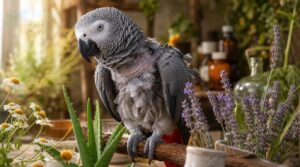
Feather plucking is one of the most distressing things to witness in a pet bird — and one of the hardest to untangle.
- Hormonal Imbalance triggering compulsive feather picking
- Chronic Pain from arthritis expressing as feather mutilation
- Social Stressors like new pets or routine disruption
- Environmental Irritants including aerosols, smoke, or hand creams transferred to feathers
Persistent feather plucking risks permanent follicle infection and follicle damage, so early attention matters.
Low Energy, Aggression, or Depression

When your bird exhibits behavioral changes like becoming quiet, snappy, or withdrawn, these shifts often signal stress, hormonal fluctuations, or psychological disorders developing beneath the surface. Watch these stress indicators closely:
| Signal | Possible Cause | Natural Support |
|---|---|---|
| Low energy | Disrupted sleep patterns | Consistent lighting schedule |
| Aggression | Social dynamics changes | Calming stress support herbs |
| Depression | Chronic stress | Homeopathic remedies, stress reduction |
Natural anti-anxiety remedies like chamomile offer gentle calming support.
Limping, Stiffness, or Joint Discomfort
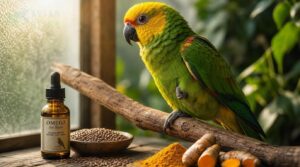
When your parrot starts limping or favoring one leg, don’t brush it off as clumsiness. Gait assessment matters here — subtle shifts in weight, shortened steps, or guarded movement often point to real avian joint health concerns like arthritis or soft tissue strain. Watch for:
- Uneven perching or refusing supportive perches
- Visible swelling, warmth, or redness around joints
- Stiffness that limits normal range of motion
- Reluctance to climb or bear weight
Pain monitoring alongside herbal anti-inflammatory options, curcumin therapy, omega fatty acids, plus mobility exercises and weight management can genuinely help.
Appetite, Droppings, and Drinking Changes
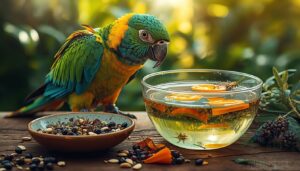
Your bird’s droppings are a daily health report — don’t ignore them. Appetite shifts, changes in dropping consistency, and altered drinking frequency often signal trouble before other symptoms appear.
Supporting gut health with something like apple cider vinegar for birds can help keep droppings consistent and give you a clearer baseline for spotting early warning signs.
Unusual droppings (dark, watery, or yellow-tinged) paired with loss of appetite and reduced urate volume deserve prompt attention.
Seasonal intake variations are normal, but consistent changes warrant evaluation.
Offer fresh water and hydration with natural fluids alongside herbal and nutritional remedies for birds.
Skin Irritation or Excessive Scratching
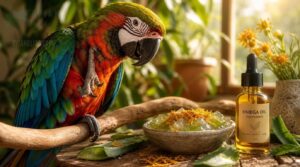
Scratching that won’t quit is your bird’s way of saying something’s wrong. Persistent itching often signals underlying issues requiring immediate attention.
Contact dermatitis from detergent residue, perch residue, or dust accumulation can silently irritate sensitive skin. Always check for mite infestation first, as parasites are a primary culprit.
Evaluate airflow management and environmental triggers like poor ventilation or irritants. These factors exacerbate skin sensitivity and compromise comfort.
Supporting recovery with herbal and nutritional remedies, antioxidant intake, and essential fatty acids helps rebuild a compromised skin barrier naturally. Prioritize interventions that strengthen skin and feather health holistically.
Nutrition-Based Wellness Remedies
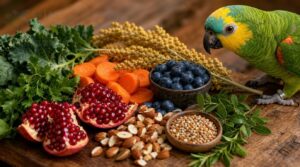
What your bird eats shapes almost everything — feather quality, energy levels, even mood. Getting the basics right doesn’t have to be complicated, but it does start with knowing which foods actually make a difference.
Here’s what belongs in a genuinely nourishing bird diet.
Fresh Vegetables, Fruits, Grains, and Beans
Think of your bird’s bowl as a living pharmacy. Seasonal Produce Selection keeps nutrients rotating and prevents boredom. A Colorful Antioxidant Mix — red peppers, berries, leafy greens — supplies carotenoids and flavonoids that commercial pelleted feed simply can’t match alone.
Addressing nutrient deficiencies naturally is straightforward with:
- Leafy Green Diversity — rotate kale, dandelion, and chard weekly
- Fiber-Rich Grains — oats and brown rice aid digestion
- Bean Variety Benefits — lentils and chickpeas add plant protein
Organic sprouts bridge fresh fruits and a natural diet beautifully.
High-quality Pellets for Balanced Nutrition
Fresh produce does a lot, but it can’t cover every gap on its own. That’s where a commercial pelleted diet earns its place.
Look for Species Specific Formulas with verified Micronutrient Balance — vitamins A, D3, E, plus chelated minerals.
Ingredient purity and uniform pellet texture matter too, since a consistent texture means your bird actually eats the nutrients, not just sorts around them.
Follow Feeding Portion Guidelines closely.
Sprouted Seeds for Added Nutrients
Sprouted seeds take your bird’s nutrition a step further. Germination triggers enzyme activation that breaks down anti-nutrients, releasing bound minerals your bird couldn’t otherwise absorb — that’s real mineral release working in your favor.
You’ll also see an antioxidant increase as carotenoids and folate concentrate during early growth.
For a genuine bioavailability boost, introduce organic sprouts gradually and always check for sliminess or off smells first — sprout safety matters.
Raw Nuts and Seeds for Fatty Acids
Raw nuts and seeds bring something sprouted seeds don’t — concentrated essential fatty acids, including linolenic and linoleic acids, that directly support skin integrity and feather structure.
Walnuts lean toward omega-3 nuts, while most seeds carry linoleic-dominant seed fatty profiles. Rancidity prevention matters here: discard anything smelling off.
Species’ fat needs vary, so treat nuts as treats, not staples, and keep portions small.
Vitamin E for Feather and Skin Health
Those fatty acids your bird just got from nuts? They need vitamin E to actually work. Without it, the body can’t absorb or use them properly. Vitamin E’s antioxidant membrane protection role shields feather follicles and skin cells from oxidative stress damage at the cellular level.
Nuts — especially almonds and walnuts — supply it naturally, supporting feather and skin support and skin barrier reinforcement simultaneously.
Filtered or Spring Water for Hydration
What your bird drinks matters just as much as what it eats. Tap water’s chlorine filtration byproducts can discourage drinking; filtered or spring water is typically preferred for its taste, encouraging consistent hydration with natural fluids.
- Mineral content varies by source; spring water adds trace electrolytes
- Water temperature affects acceptance — lukewarm is often preferred
- Bowl hygiene prevents contamination regardless of water quality
- Bird-friendly water filtration reduces chlorine without stripping beneficial minerals
Natural Feather and Skin Support
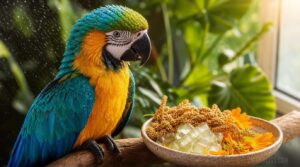
Feathers say a lot about how a bird is actually doing on the inside. What your bird eats, how often it bathes, and even the humidity in the room all play a role in keeping its feathers looking healthy and full.
Here’s what you can do naturally to support your bird’s skin and feathers from the outside in.
Essential Fatty Acids for Healthy Feathers
Think of essential fatty acids as the building blocks your bird’s feathers literally can’t grow without. Linolenic and linoleic acids — both unsaturated fatty acids — support fatty acid metabolism, cell membrane integrity, and the feather growth cycle.
Seed oil selection and dietary ratio monitoring matter here: too much omega-6 without enough omega-3 tips the balance ratios toward inflammation.
| Source | Fatty Acid Type | Best Use |
|---|---|---|
| Flaxseed | ALA (omega-3) | Daily sprinkle on food |
| Walnuts | Omega-3 & omega-6 | Small portions, 2–3x weekly |
| Hemp seed | Balanced omega mix | Mixed into chop or pellets |
Aloe Vera for Irritated Skin
When your bird’s skin looks irritated or inflamed, Pure Aloe Gel can offer real relief — but only if you choose a bird-safe formulation that contains no alcohol, fragrances, or preservatives. Always start with patch testing on a small area.
Among natural remedies and comprehensive approaches to avian health, aloe aids feather and skin support through:
- Anti-inflammatory compounds that calm mild redness
- Hydrating polysaccharides that soothe irritated tissue
- Application frequency of 3–6 times daily per 100 g body weight
- The need to avoid additives found in human skincare products
Safe Bathing Routines for Feather Condition
Bathing is one of the simplest things you can do for feather damage prevention. Offer lukewarm water in a shallow dish or via a gentle stream from a faucet—several times weekly, which works well for most species.
Always prioritize safe drying in a warm, draft-free spot afterward. Use bird-friendly water filtration to keep bathing water free of contaminants that stress feathers and skin.
Humidity Support for Dry Skin
Dry indoor air does real damage to feathers and skin — think of it like living in a desert year-round. Ideal humidity between 40–60% keeps skin supple and promotes feather skin support naturally.
To manage humidity effectively:
- Use a hygrometer for accurate hygrometer placement near the cage.
- Run a humidifier for steady airflow distribution.
- Time misting sessions for mist timing during warmer daytime hours.
- Watch windows for condensation prevention signals of over-humidification.
Molting Support Supplements for Birds
Molting places significant nutritional demands on a bird’s body. New feathers require a precise amino acid balance, trace mineral inclusion (such as zinc, copper, and selenium), and fat-soluble vitamins for proper formation.
Water-soluble formulas like Multivet with Molt Aid dissolve cleanly into water, simplifying dosage timing. These supplements effectively support plumage maintenance through targeted dietary care.
Vitamin D3 plays a critical role in absorption support, ensuring birds utilize essential nutrients efficiently during this demanding period.
Addressing Feather Plucking Triggers Naturally
Feather plucking rarely has a single cause. Boredom prevention through foraging toys, humidity control around 50–60%, and thoughtful cage location away from loud, high-traffic areas all make a genuine difference.
Companion compatibility and noise management matter too — stress builds quietly.
Comprehensive approaches to avian health combine these environmental enrichment strategies with natural remedies, addressing the real causes and treatments of feather plucking rather than just the symptoms.
Herbal Anti-Inflammatory Bird Remedies
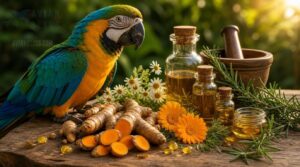
Some herbs do more than add flavor — they carry real anti-inflammatory compounds that can gently support your bird’s comfort, especially when joint stiffness or chronic irritation is part of the picture. The good news is that several kitchen staples you might already have at home have been studied for their analgesic and antioxidant properties in avian care.
Here’s a closer look at the herbal options worth knowing about.
Turmeric and Curcumin for Inflammation
Turmeric’s active compound, curcumin, is one of the most studied herbal anti-inflammatory remedies for reducing inflammation in birds—especially joint stiffness.
Here are the critical considerations for safe use:
- Formulation Types vary widely in curcumin content
- Absorption Boosters like healthy fats improve uptake
- Dosage Calculations must follow avian, not human, standards
- Interaction Risks require avian vet review before starting
Safety monitoring is non-negotiable.
Ginger for Antioxidant Support
Like ginger, turmeric works through multiple pathways — and that’s what makes it worth understanding. Its active compounds, including gingerols and shogaols, enhance glutathione levels and enzyme support via superoxide dismutase and catalase. Research using the DPPH assay confirms that ginger water extracts demonstrate strong free-radical scavenging capacity.
| Ginger Form | Bird-Safe Use |
|---|---|
| Fresh grated rhizome | Tiny pinch in food |
| Ginger oleoresin | Vet-guided dosing only |
| Water extracts | Mixed into drinking water |
| Dried powder | Sprinkled sparingly on meals |
As a herbal anti-inflammatory and nutritional supplement for birds, ginger gently supports antioxidants. Introduce it slowly and monitor droppings carefully.
Ceylon Cinnamon for Gentle Wellness Support
Ceylon cinnamon — true cinnamon, Cinnamomum verum — brings a gentler flavor your bird may actually accept without fuss. Its cinnamaldehyde benefits include anti-inflammatory and antioxidant potency that support pet bird wellness naturally.
As a natural avian medicine option, it fits flavor integration easily — a tiny pinch on food. Always confirm safe avian dosage with your vet first.
Rose Hips as Antioxidant-rich Treats
Rose hips punch well above their weight as natural supplements for birds. Their Vitamin C Boost and Polyphenol Power — from quercetin, catechin, and proanthocyanidins — deliver genuine antioxidant properties that support Oxidative Enzyme Support, such as superoxide dismutase activity.
In integrated veterinary medicine, rose hips serve as a practical, bird immune support treat. They can be offered dried or as tea-steeped water, occasionally, to provide both nutritional and antioxidant benefits.
Additionally, each serving supplies Fiber Benefits and Seed Nutrition, further enhancing their value as a holistic supplement for avian health.
Cayenne Pepper for Mild Pain Support
Cayenne pepper garners significant attention as a capsaicin analgesic and natural pain relief plant, but its use in birds demands caution.
Topical application — not ingestion — is the recommended method for sensory desensitization and mild pain support in birds. However, potential irritation to sensitive respiratory systems makes strict safety precautions essential.
Without proper dosage guidelines from an avian vet, this herbal anti-inflammatory risks causing more harm than good. Always prioritize professional veterinary advice to ensure safe usage.
Safe Dosing With Avian Vet Guidance
Every herbal remedy your bird receives should go through your avian veterinarian first — because weight-based dosing matters more than most people realize. A bird’s metabolism doesn’t forgive guesswork. Your vet will consider:
- Administration route (oral vs. topical vs. environmental)
- Dose timing and treatment duration
- Record keeping and monitoring side effects closely
Integrated veterinary medicine works best when natural remedies follow proper safety considerations and dosage guidelines for herbal safety in avian patients.
Calming Remedies and Stress Relief
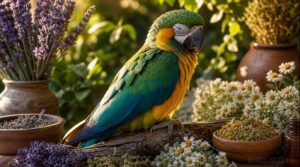
Stress is one of the most overlooked drivers of feather plucking, and it’s more common than most bird owners expect. The good news is that several gentle, bird-safe remedies can help take the edge off anxiety — both herbal and environmental.
Herbal and environmental solutions offer effective ways to alleviate stress. Here’s a look at what’s actually worth trying.
Chamomile for Gentle Calming Support
Chamomile tea is one of the gentler herbal treatments worth knowing for stress reduction in pet birds. Its key compound, apigenin, aids in calming stress by interacting quietly with relaxation pathways — think of it as turning the volume down, not off.
For preparation techniques, steep dried German chamomile flowers in hot water, cool the mixture to lukewarm, and offer small amounts to the bird. Ensure the tea is fully cooled and never force consumption.
Dosage guidelines and safety monitoring are critical. Always introduce chamomile gradually, observe the bird’s behavior closely, and discontinue use immediately if signs of distress or adverse reactions appear.
Lavender in Bird-safe Calming Blends
Lavender works best in dried form for stress reduction in pet birds — not as an essential oil. Placement matters: keep sachets outside the cage but close enough for gentle scent diffusion. Watch for lavender sensitivity signs like sneezing or lethargy.
Linalool risk management means avoiding diffusers entirely. In integrated avian medicine, lavender serves as a supporting note in calming blends, not the whole song.
Passionflower for Anxiety-related Plucking
Passionflower (Passiflora incarnata) shows real promise as one of the alternative calming herbs for anxiety-related plucking — but species sensitivity matters here. Liquid extracts are the most consistent extraction type for dosing accuracy.
Watch for sedation signs like unusual quietness or reduced alertness, which signal you’ve given too much. Long-term use hasn’t been well-studied in birds, so always loop in your avian vet first.
Foraging Toys and Rotating Enrichment
Herbs can calm the mind, but birds’ bodies also need to stay busy. Foraging enrichment is behavioral enrichment your bird genuinely needs — not a bonus.
- Match Toy Difficulty Levels to your bird’s skill so frustration doesn’t replace anxiety
- Use smart Placement Strategies along climbing routes to increase Interaction Time
- Confirm Material Safety — only bird-safe components
- Follow a Rotation Scheduling plan to keep novelty alive
Quiet Cage Placement and Stable Routines
Where your bird’s cage sits matters more than most owners realize. A Corner Cage Location — one side against a wall — gives your bird a sense of security that no toy can fully replace.
Combine that with quiet room placement, a stable perch position, a predictable feeding schedule, and a consistent light cycle, and you’ve built the foundation of genuine calming stress support and integrated avian medicine at home.
Exercise, Climbing, and Supervised Flight
Movement is medicine for birds. Step-Up Perches at Progressive Height build leg strength and confidence without overwhelming your bird. Short supervised flight sessions with clear Flight Recall cues and Safe Landing Zones reduce anxiety better than any supplement.
Rotate environmental enrichment toys regularly, use perches of varying sizes, and practice Foot Health Monitoring after climbing. This holistic approach combines bird behavioral enrichment with integrated veterinary care.
This integrated strategy ensures birds thrive through physical activity, mental stimulation, and proactive health oversight.
Remedies to Avoid or Use Carefully
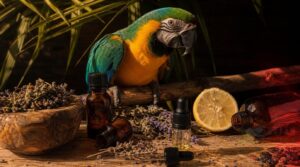
Not everything labeled "natural" is automatically safe for your bird — some common household items and well-meaning remedies can cause real harm. Here’s what to watch out for before you open the cabinet.
A few others are fine in theory but need careful handling to avoid backfiring.
Toxic Cookware Fumes and Aerosol Sprays
Your kitchen can be one of the most dangerous rooms in your home for a pet bird. Nonstick fume toxicity poses a significant risk in pet bird toxicology — even brief exposure to overheated oil smoke or aerosol propellant risks can cause acute respiratory failure.
- Move your bird before using aerosol sprays or high-heat cooking
- Prioritize bird-safe cooking methods and ensure proper kitchen ventilation
- Environmental toxins from PTFE coatings require no direct contact to cause harm
Pesticide Residues on Fresh Foods
Fresh produce feeds your bird’s immune system — but pesticide residues on imported fruits and vegetables can undermine that same system. Systemic pesticides, which absorb into edible tissue, cannot be fully removed by washing alone. Detection methods like LC-MS/MS confirm residues persist even after rinsing.
| Concern | Risk Level | Your Action |
|---|---|---|
| Surface residues | Moderate | Wash thoroughly, peel when possible |
| Systemic pesticides | High | Choose organic feeding options |
| Regulatory limits | Variable | Follow safe food handling guidelines |
Consumer exposure accumulates over time, reinforcing the organic advantages as a meaningful solution.
Lead-based Paint and Unsafe Cage Materials
Lead Paint Hazards and Cage Metal Toxicity are two environmental toxins that often go overlooked. Deteriorating paint chips and dust create dust ingestion pathways through grooming — a bird preens contaminated feet, then ingests lead directly.
Coating degradation risks on galvanized or poorly finished cages expose birds to heavy metal contamination over time.
In integrated veterinary medicine and toxicology for pet birds, stainless steel preference isn’t optional — it’s foundational.
Soy-heavy Diets and Anti-nutrient Concerns
Soy sounds harmless, but it’s trickier than it looks in a parrot’s diet. Raw or minimally processed soy retains phytate mineral binding compounds, protease inhibitors, and lectins — all of which disrupt digestion and reduce iron, zinc, and calcium absorption.
Fermented soy benefits absorption considerably more than raw forms. For integrated approaches to avian health, keep soy occasional, not central.
Apple Cider Vinegar Precautions
Apple cider vinegar can support gut health, but dilution ratio matters — one teaspoon per 500 ml of water is the safe threshold. Avoid direct beak contact to skip dental protection concerns.
Undiluted ACV causes skin irritation and digestive upset.
For birds on heart or diabetes medications, medication interactions are a real concern. Always confirm dosage limits with your avian vet first.
Probiotics After Antibiotics or Gut Disruption
After antibiotics, your bird’s avian gut microbiome needs real support — not guesswork. Strain selection matters enormously here; not every probiotic delivers the same probiotic benefits.
- Timing intervals: Space probiotics at least two hours from antibiotic doses
- CFU dosage: Confirm viable counts with your avian vet
- Microbiome rebound: Continue probiotic therapy one to two weeks post-treatment for barrier reinforcement and lasting bird digestive health
When to Call an Avian Veterinarian
Some situations do not wait for home remedies. Respiratory distress — open-mouth breathing, tail bobbing, wheezing — means call your avian vet now. The same goes for neurologic collapse, seizures, severe trauma, bleeding, or loss of balance.
GI emergencies like regurgitation, abdominal swelling, or rapid weight loss signal a decline that’s happening fast.
Knowing when to seek veterinary care for birds is itself the most important part of integrated avian medicine.
Frequently Asked Questions (FAQs)
How can I Help my Bird Eat a healthy diet?
Think pellets solve everything? Not quite. Focus on gradual food shift, proper portion size guidelines, and consistent food presentation.
Monitor eating behavior closely, and consider rotating seasonal diet options alongside quality nutrition.
Do birds need natural care?
Yes — whole-body health and preventive care go hand in hand for birds. Evidence-based natural remedies support everyday wellness, but integrative collaboration with an avian vet ensures safe home remedies complement, never replace, professional diagnosis.
What is a good diet for calming birds?
A calming diet starts with balanced calcium greens, low-sugar fruit, and seed-free protein sources. Add flaxseed oil for omega-3s, prebiotic fiber for gut health, and keep portions consistent daily.
How can I help my bird with arthritis?
Arthritis hurts — and birds can’t tell you how much. Simple changes like perch height adjustment, cushioned cage flooring, and warm ambient temperatures help.
Add turmeric as an herbal anti-inflammatory for natural plant-based anti-inflammatory treatment, gentle mobility exercises, and routine joint assessments.
Can chamomile & lemon balm help with stress in birds?
Both can help. Chamomile’s apigenin facilitates calming through GABA-A receptors, while lemon balm offers mild stress reduction.
Follow herb safety guidelines carefully — use small amounts, no additives, and watch your body’s response closely.
How can a feathered bird be calming?
A bird that feels safe is a calmer bird.
Use visual barriers, consistent light cycles, soft background music, and predictable handling to lower stress and support natural anti-anxiety remedies through environmental enrichment for birds.
How to treat a sick bird at home naturally?
Keep a sick bird warm, quiet, and hydrated. Offer soft food options, practice safe isolation from other pets, and run a quick observation checklist.
Natural home care for sick birds bolsters comfort—but always call your vet first.
What is the best natural antibiotic for birds?
No single herb earns the "best" title. Garlic allicrol and oregano carvacrol offer real antibacterial spectrum support, but vet-guided supplementation always comes first — especially when your bird shows signs beyond mild sniffles.
What is a natural sedative for birds?
Chamomile, passionflower, and valerian root are gentle herbal sedatives worth considering.
L‑theanine supplement blends offer non-drowsy calming stress support.
Always follow bird-specific formulas and dose guidelines — too much causes lethargy.
What is a natural antiviral for the bird flu?
Here’s an honest truth: there are no proven natural antivirals for bird flu.
Edible bird’s nest and oxymatrine extract show lab promise, but these remain unproven in clinical settings.
Confirmed avian influenza demands veterinary care, not home remedies.
Conclusion
The birds that thrive longest aren’t the ones who never face health challenges—they’re the ones whose owners noticed the quiet signs early. Natural bird wellness remedies won’t replace a skilled avian vet, but they build the foundation that makes veterinary visits less urgent and less frequent.
Feed well, observe daily, reduce stress where you can, and trust what your bird’s behavior tells you. That steady attention is its own kind of medicine.
- https://www.nhvnaturalpetproducts.com/other-pets/birds/remedies-by-breed/?srsltid=AfmBOop3PE-YuP49R35jN0nDAC8-sc_uZL-GN8HJ624GF68ZYImjuWFK
- https://www.naturalremedy.com/blog/boosting-immunity-in-stressed-poultry-using-natural-remedies/
- https://www.animalmedical.net/blog/exploring-natural-solutions-holistic-remedies-for-common-pet-ailments/
- https://silverhomestead.com/immune-support-for-backyard-chickens/
- https://birdsupplies.com/blogs/news/7-bird-nutrition-secrets-every-owner-should-master?srsltid=AfmBOoozNrXlMxx4bTiCa0sM5Y1148wBmDSgzpvOQHnUsQ6xSO-zVXTs