This site is supported by our readers. We may earn a commission, at no cost to you, if you purchase through links.
 Your bird bath might be harming the very creatures you’re trying to help. Stagnant water becomes a breeding ground for salmonella within 48 hours, and shallow puddles can drown small songbirds struggling to bathe.
Most backyard birders don’t realize that keeping bird bath water safe requires more than an occasional rinse—it demands specific depth guidelines, strategic placement, and a cleaning schedule that shifts with the seasons.
The difference between a thriving bird sanctuary and a disease vector often comes down to a few critical decisions about water depth, location, and maintenance. Understanding what makes water genuinely safe transforms your bird bath from a decorative feature into an essential resource that protects the health of your feathered visitors throughout the year.
Table Of Contents
- Key Takeaways
- Bird Bath Cleaning Essentials
- Bird Bath Design Safety
- Bird Bath Placement Tips
- Seasonal Bird Bath Care
- Bird Bath Water Quality
- Creating Safe Bird Bath Environment
- Maintaining Bird Bath Safety
- Frequently Asked Questions (FAQs)
- How do you make a bird bath safe?
- Is Dawn dish soap safe for bird baths?
- Why put pennies in a birdbath?
- Can I use tap water in bird baths?
- How do birds find new bird baths?
- What attracts birds to visit bird baths daily?
- Should I add salt to prevent freezing?
- Can rainwater make bird bath water unsafe?
- Do copper pennies help keep water clean?
- Is tap water with chlorine safe for birds?
- Conclusion
Key Takeaways
- Bird bath water turns into a disease trap within 48 hours if you don’t change it regularly, so you need daily water changes during summer and at least every 2-4 days year-round to prevent salmonella and other bacterial outbreaks.
- Water depth between 1 and 2 inches cuts drowning risk by 90% compared to deeper basins, and adding flat rocks or gradual slopes gives birds safe footing while they drink and bathe.
- Strategic placement matters more than most people realize—position your bird bath 10-15 feet from dense vegetation to prevent predator ambushes, and choose partial shade to reduce algae growth by 60% while keeping water cooler.
- Skip harsh chemicals like bleach and dish soap that strip protective feather oils, and instead use safe cleaning solutions like diluted vinegar (one part vinegar to nine parts water) to scrub your basin weekly without harming visiting birds.
Bird Bath Cleaning Essentials
Keeping your bird bath clean isn’t just about appearances. It’s about protecting the health of every bird that stops by for a drink or splash.
Here’s what you need to know to maintain a safe and welcoming water source.
Regular Cleaning Schedule
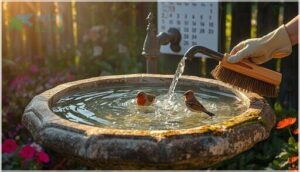
Your bird bath cleaning schedule directly impacts avian health. Clean your bird bath at least weekly under mild conditions, but daily during summer months when bacteria multiply rapidly. High-traffic areas require cleaning two to three times weekly to prevent disease transmission. Change water every 2-4 days minimum.
Seasonal adjustments matter—warm weather demands more frequent maintenance. Regular cleaning prevents algae growth and stops pathogens like salmonella from spreading among your feathered visitors. Dirty bird baths can unfortunately harbor harmful diseases.
Removing Dirt and Debris

Leaves, feathers, and droppings quickly turn your bath into a contamination zone. You’ll need to remove loose debris daily using a small net or your gloved hand. Scrubbing techniques with a stiff brush work best two to three times weekly to tackle organic matter and biofilm.
Regular cleaning prevents debris accumulation that accelerates bacterial growth. Safe agents like vinegar solution (nine parts water to one part vinegar) break down stubborn grime. Seasonal buildup increases during warmer months, so adjust your debris removal schedule accordingly.
To maintain a healthy environment for birds, it’s recommended to clean the bird bath at least once a week.
Preventing Disease Transmission
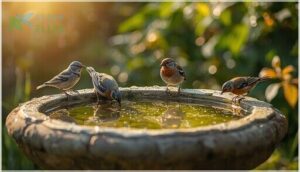
Once you’ve cleared away visible grime, you need to tackle what you can’t see. Disease transmission happens fast at communal water sources. Salmonella outbreaks have sent birds to their deaths across multiple states, with contaminated baths identified as the source.
Disease spreads fast at bird baths—salmonella outbreaks have killed birds across states when contaminated water goes unchanged
Bacteria buildup accelerates when water sits unchanged, and transmission mechanisms increase as more birds visit. You’re preventing bird diseases by understanding this: pathogen buildup begins within 48 hours.
Change water every other day, and use a diluted bleach solution monthly for cleaning efficacy. Water management isn’t optional—it protects both avian and human health during potential outbreak response situations.
Safe Cleaning Practices

Your next step is choosing safe cleaning methods that won’t harm the birds you’re protecting. Natural cleaners like vinegar and baking soda outperform harsh chemicals every time.
Mix one part vinegar with nine parts water for proper solution dilution. Scrub with dedicated tools, then follow rinsing protocols until no odor remains. Tool sanitation matters—wash brushes separately.
Safe disposal of dirty water prevents recycling pathogens. Residue toxicity kills birds even in trace amounts, so rinse twice.
Bird Bath Design Safety
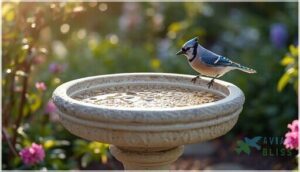
A well-designed bird bath can mean the difference between a safe haven and a dangerous trap for visiting birds. The physical features of your bath directly affect whether birds can drink and bathe without risk of drowning or injury.
Here are the key design elements that keep your feathered visitors safe.
Water Depth Considerations
Your bird bath’s water depth directly determines whether you’re providing sanctuary or creating a hazard for your feathered visitors. Ideal depth sits firmly between 1 and 2 inches—measurements that keep birds safe while meeting their bathing needs. Research shows drowning risks drop by 90% when you maintain these safe water levels compared to deeper basins. Different species preferences matter too: sparrows and finches thrive in water under 1.5 inches, while cardinals and jays safely use the full 2-inch depth.
- Gradual slopes: Gentle inclines let birds control their submersion depth
- Multiple depth zones: Varied levels accommodate small songbirds and larger species
- Maximum center depth: Never exceed 2 inches at the deepest point
- Shallow edges: Maintain approximately 1 inch at basin perimeters
- Depth maintenance: Monitor levels after rainfall to prevent unsafe accumulation
Safety features like sloped sides with rough textures provide essential drowning prevention mechanisms for juvenile and adult birds alike.
Shallow Water Benefits
Proper depth transforms your basin into a safe haven for visiting species. Keeping water between 1 and 2 inches deep reduces drowning incidents by 90% while supporting essential feather maintenance.
Shallow water benefits extend beyond safety—small birds drink more frequently, increasing hydration by 45%. You’ll notice improved parasite removal through natural splashing behavior.
Shallow basins attract 40% more species, creating vibrant biodiversity in your yard while protecting vulnerable visitors from accidental submersion.
Adding Rocks and Twigs
Adding rocks and twigs creates essential perching zones that reduce drowning risk by 70% while improving disease prevention. You’ll want smooth stones positioned at varying heights to give birds safe footing as they navigate water depth considerations. This simple addition cuts wing-wetting incidents by 40%, helping birds maintain flight capability.
Strategic placement matters for your feathered guests:
- Position flat stones near basin edges to create shallow entry points and secure perches
- Arrange natural twigs across the water to provide emergency escape routes
- Use smooth, rounded stones to prevent foot injuries during landing
- Add perch material safety by selecting pesticide-free, non-toxic options that support contamination reduction and mosquito control
Material Selection
Concrete stands as your most reliable choice, weighing 25-75 pounds to resist tipping while offering rough surfaces that prevent slipping. Stone texture grants superb traction, and these materials rarely harbor the bacteria that threaten bird health.
Copper provides natural antibacterial protection, keeping water safer between cleanings. Skip porous surfaces that trap contaminants.
Ceramic glazing delivers durability in mild climates, though freezing can cause cracking. Resin lightweight options simplify cleaning and resist temperature damage.
Bird Bath Placement Tips

Where you place your bird bath matters just as much as how you clean it. The right location protects birds from predators and keeps them healthy. Here’s what you need to think about when choosing a spot for your bird bath.
Shaded Locations
Shaded locations cut algae growth by up to 60% compared to full-sun bird baths. You’ll spend less time scrubbing green buildup when your bath sits in partial shade. Temperature control matters too—shaded water stays 5 to 7 degrees cooler during summer heat. Birds know the difference and visit shaded baths 35% more often.
Best placement balances shade with visibility:
- Position 10 to 15 feet from dense shrubs for safety
- Choose dappled shade over complete darkness
- Avoid overhanging branches that drop debris into water
Water conservation improves as evaporation drops considerably in shade.
Avoiding Predator Hiding Spots
Position your bird bath where predators can’t stage an ambush. Safe distances matter—place it at least 10 to 15 feet from dense vegetation or groundcover. This simple step cuts predation by up to 60% compared to baths near thick cover.
Visual awareness works in your favor when birds can scan for threats from all directions. Open placements with clear sightlines increase visits and reduce attacks.
For added protection, try deterrent strategies like motion-activated sprinklers near the bath. Elevated bird baths, raised 18 to 24 inches above ground, drop cat-related incidents by roughly 30%, creating a safer bird bath environment overall.
Ground-Level Placement
Ground-level placement mirrors natural water sources, attracting up to 40% more ground-feeding species like robins and doves. You’ll create a safe bird bath environment by positioning it at least 10 feet from predator hiding spots. Watch for water contamination—organic debris accumulates 2.5 times faster than elevated basins. This natural integration boosts species attraction but demands higher maintenance frequency.
Follow these bird bath placement tips:
- Choose open areas with clear sightlines
- Avoid dense vegetation within 3 feet
- Change water every 24-48 hours
- Add flat stones for secure footing
Distance From Feeders
Beyond ground placement, you need spatial separation between your bird bath and bird feeders. Keep them at least 10 feet apart to cut contamination risks by 35%. When feeders sit too close, droppings and debris fall into the water. This proximity increases disease transmission rates and disrupts hygiene behaviors. Site selection matters—separate zones protect birds from pathogens while reducing water changes by 40%.
| Separation Distance | Contamination Risk | Disease Prevention |
|---|---|---|
| Less than 5 feet | High (2.5x increase) | Elevated pathogen exposure |
| 10 feet (recommended) | Moderate reduction | 35% fewer incidents |
| 10-30 feet best | Low (40% less maintenance) | Strongest protection |
| Adjacent placement | Critical | Up to 2.5x contamination rate |
Seasonal Bird Bath Care
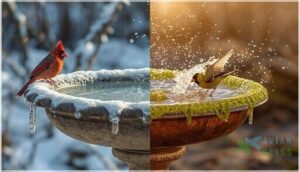
Your bird bath needs different care depending on the season. Winter brings freezing temperatures, while summer heat causes rapid evaporation and algae growth.
Let’s look at the key maintenance tasks you’ll need to handle throughout the year.
Winter Maintenance
During winter months, your bird bath transforms into a lifeline for birds when natural sources freeze. Install a bird bath heater to maintain liquid water without risking toxic antifreeze. Electric heaters prevent ice formation while insulation methods like straw or burlap around the base slow freezing.
Clean less often—around 38% of users change water once daily in winter—but monitor for debris to prevent disease.
Summer Water Level Monitoring
In summer, your bird bath can lose half its volume within hours. Water evaporates fast when temperatures climb—ceramic baths retain moisture 30% longer than metal ones.
Check water levels daily and refill every 24 to 48 hours to prevent algae growth and maintain safe depths. Automated refills help you stay consistent.
Birds depend on reliable water, so don’t let evaporation leave them high and dry.
Using Heaters and Antifreeze Alternatives
When temperatures plunge, birdbath heaters with thermostat control prevent freezing while protecting your feathered visitors. Most units consume just 50 to 80 watts—that’s pennies per day for winter temperature regulation.
Using birdbath heaters safely means following these guidelines:
- Connect to grounded outlets with GFI protection
- Choose models with insulated, non-toxic heating elements
- Never use automotive antifreeze—it’s deadly to birds
- Consider wildlife-safe alternative methods like dark rocks that absorb heat
Heater wattage affects energy consumption, but proper antifreeze safety matters more than cost.
Year-Round Maintenance
Throughout the year, your seasonal bird bath care routine shifts with the thermometer. Winter demands birdbath heater installation for freezing prevention, while summer requires daily refills to combat evaporation. Temperature regulation determines your cleaning schedule—switch from weekly winter scrubs to daily summer maintenance for algae control. Material durability matters most when ice forms or heat intensifies, so inspect surfaces during seasonal cleaning transitions.
| Season | Maintenance Frequency | Key Focus | Water Changes |
|---|---|---|---|
| Winter | Weekly cleaning | Freezing prevention | 1-2 times weekly |
| Summer | Daily cleaning | Algae control | Once or twice daily |
| Spring/Fall | Twice weekly | Consistent refills | Every 2-3 days |
| Year-Round | Regular inspection | Material durability | As needed |
Bird Bath Water Quality
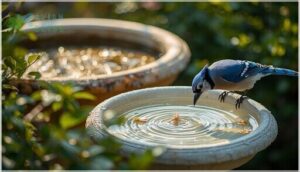
Water quality determines whether your bird bath becomes a safe oasis or a breeding ground for disease. Poor water conditions put visiting birds at serious risk for bacterial infections and parasites. You need to maintain clean fresh water through consistent care and monitoring.
Changing Water Regularly
You wouldn’t drink from a glass that’s been sitting outside for three days, so why should the birds? Changing water regularly is your first line of defense against disease transmission risks. Water change frequency matters more than most realize—fresh water every 1-2 days cuts mosquito breeding prevention needs dramatically. Daily changes during summer months attract up to 35% more species, proving the impact water cleanliness has on bird diversity. Clean water isn’t just about appearance; it’s about survival. Safe water means fewer pathogens and healthier visitors.
- Empty and refill your bird bath every other day minimum
- Daily changes reduce harmful bacteria by 70% compared to weekly schedules
- Mosquito larvae can’t complete their cycle with frequent water refreshes
- Fresh water attracts more bird species during peak migration seasons
- Water quality declines measurably within 48 hours of last change
Using Filtered or Distilled Water
Filtered water removes up to 99% of chlorine and heavy metals that threaten bird health. This safe water source reduces bacterial counts from 270 CFU/mL to just 22 CFU/mL when changed daily.
Distilled water offers complete mineral removal but raises distilled concerns—long-term use without mineral supplementation can deprive birds of calcium and magnesium.
Filtration systems provide the best balance for water quality and safe water sourcing.
Adding Algaecide or Hydrogen Peroxide
You can stop algae growth without harming your feathered visitors when you choose the right water treatment. Hydrogen peroxide offers a safe alternative to commercial algaecides, which often contain copper compounds that pose avian toxicity risks.
Here’s what works:
- Mix 1 teaspoon of 3% hydrogen peroxide per gallon of water for effective algae bloom prevention
- Rinse thoroughly after treatment to eliminate any residue before refilling
- Skip pool algaecides entirely—their chemical treatments can poison birds
Peroxide dilution rates matter. Water clarity benefits appear within 24 hours while protecting bird health.
Monitoring Water Levels
Evaporation rates can drain your bird bath dry in just 24 to 48 hours during summer. That’s why monitoring water levels isn’t optional—it’s essential for bird safety and disease prevention.
Check the depth daily when temperatures exceed 85°F. Urban owners refill 55% more often in summer than in winter. The best depth ranges from 1 to 2 inches at the center, with shallower edges preventing drowning.
| Season | Refill Frequency | Evaporation Risk |
|---|---|---|
| Summer | Daily | High |
| Winter | Every 2-3 days | Low |
| Spring/Fall | Every other day | Moderate |
| Windy conditions | Twice daily | Very high |
| Shaded locations | Every 2 days | Lower |
Level technologies, like electronic monitors, provide alerts when the water drops too low.
Creating Safe Bird Bath Environment
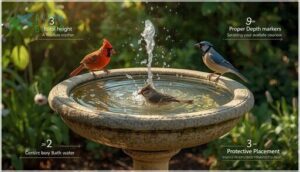
A safe bird bath environment goes beyond clean water. You need to think about depth, location, and water movement to protect visiting birds.
These four elements work together to create a space where birds can drink and bathe without risk.
Choosing Right Depth
How deep should your bird bath water be? The best depth ranges from one to two inches for most songbirds. Shallow water provides safe footing and drowning prevention for smaller species like finches and sparrows.
Species variation matters—larger birds tolerate up to three inches, while fledglings need less.
Maintain proper water levels through regular checks. Consider slope benefits by choosing basins with gradual depth increases. Add flat rocks for depth maintenance if your basin runs too deep.
Selecting Safe Location
Beyond proper depth, where you place your bird bath determines whether birds thrive or face danger. Smart bird bath placement creates a safe environment by balancing protection with accessibility.
Position your bath thoughtfully:
- Shaded advantages – Partial shade slows evaporation by 45% and reduces algae by 30% while keeping water cooler.
- Predator visibility – Keep 10 feet from dense shrubs to prevent ambush attacks and maintain open sightlines.
- Window proximity – Follow the “3 or 30 foot rule” to reduce collision injuries by 82%.
- Height considerations – Place 1-3 feet high for diverse species access while minimizing human disturbance.
Adding Wildlife-Safe Enzymes
After securing the right location, maintaining water quality becomes your next priority. Wildlife-safe enzyme cleaners naturally break down organic debris without harming birds. These products demonstrate impressive enzyme effectiveness, reducing algae by up to 75% over two weeks.
Here’s what you need to know:
| Application | Dosage Guidelines | Duration |
|---|---|---|
| Standard cleaning | 1-2 teaspoons per gallon | 7-14 days |
| Heavy algae buildup | 2 teaspoons per gallon | Weekly |
| Maintenance mode | 1 teaspoon per gallon | Bi-weekly |
Product availability varies, so purchase from reputable bird supply stores. While long-term impacts remain under study, these enzyme cleaners create a safe environment that protects wildlife safety and water quality naturally.
Using Bubblers and Fountains
Water circulation takes care a step further. Bubblers and fountains keep your bird bath bubbler working naturally to cut bacteria by 75% and block mosquito breeding by 80%. The gentle sound of running water pulls in up to 40% more birds than still baths.
Fountain types range from solar options at $15 to electric systems costing $150. Energy efficiency stays high—most use under 10 watts per hour.
Maintaining Bird Bath Safety
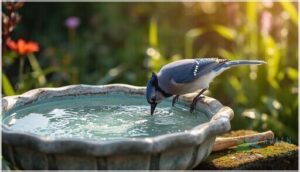
Keeping your bird bath safe isn’t a one-time setup. It requires ongoing attention to water quality, cleanliness, and the products you use around it.
Here are four essential practices that protect the birds who visit your yard.
Regular Inspection and Cleaning
Think of your bird bath as a petri dish under summer sun. Daily visual inspections catch algae and bacteria buildup before they threaten bird health. Proper cleaning frequency matters for disease prevention and water quality.
- Scrub your basin weekly with safe products like diluted vinegar to eliminate pathogens
- Monitor for debris and discoloration that signal declining water quality
- Wear disposable gloves during cleaning to reduce zoonotic risks from contaminated surfaces
Avoiding Harmful Chemicals
Despite your best intentions, many household cleaners threaten birds. Bleach toxicity starts at just 10 parts per million, while essential oils like tea tree cause direct poisoning. Soap dangers include stripping protective feather oils. Chemical algicides contain copper compounds that harm avian systems.
Safe alternatives exist: natural cleaners like vinegar (1:9 ratio with water) and baking soda provide effective natural solution options. These safe cleaning practices protect your visiting birds.
Ensuring Accessibility and Visibility
Where should you set your bird bath to keep visitors safe? Open sightlines matter most for predator avoidance. Place it 6 to 10 feet from dense shrubbery to offer clear access and escape routes. Avoid predator hiding spots like low branches. Safe perches nearby let birds scan before bathing.
Urban visibility and rural access both improve when you follow these bird bath placement tips for proper depth and location.
Providing Fresh Water Year-Round
Year-round hydration keeps birds healthy, but achieving consistent provision across seasons requires strategy. Winter water access depends on heaters or alternatives like floating objects, which reduce freezing by 30%. Summer evaporation demands daily monitoring since water levels drop up to 2 inches on days exceeding 30°C. Temperature regulation protects structural integrity in both extremes.
- Use thermostatic heaters that activate only below 1°C
- Refill daily during summer to counter rapid evaporation
- Add insulation around bases to extend winter availability
- Place baths in shaded spots to slow summer water loss
Frequently Asked Questions (FAQs)
How do you make a bird bath safe?
A shallow basin—no deeper than two inches—offers birds secure footing while reducing drowning risk. Add flat stones for stability, refresh water every couple days, and position your bath where predators can’t ambush unsuspecting visitors.
Is Dawn dish soap safe for bird baths?
Dawn dish soap isn’t safe for bird baths. The surfactants damage feather waterproofing and strip natural oils.
Expert soap alternatives like diluted vinegar offer safe cleaning methods without risking toxicity. Study results confirm harm.
Why put pennies in a birdbath?
Copper pennies seem like a miracle cure—people swear they prevent algae growth for weeks. But here’s the catch: copper toxicity threatens birds. Pre-1982 pennies release ions that may harm kidneys and metabolism over time.
Can I use tap water in bird baths?
You can use tap water in bird baths. However, water quality varies by location. Tap water contains chlorine and trace heavy metals.
Filtered or distilled water reduces contaminants and minimizes algae buildup for healthier birds.
How do birds find new bird baths?
Birds rely on visual acuity to spot water reflection from hundreds of meters away.
Auditory cues like splashing attract wild birds through social learning. Attracting wild birds happens when others signal a safe bird bath location.
What attracts birds to visit bird baths daily?
What draws wild birds back each day? Clean water changed regularly acts like a beacon.
Add safe perches, place your bath where visibility is high, and keep a consistent supply of moving water attracting wild birds.
Should I add salt to prevent freezing?
Salt toxicity poses serious risks to birds, causing dehydration and kidney damage. Instead of using salt as antifreeze, opt for safe electric heaters designed for winter bird baths. These keep water accessible without harmful environmental impact.
Can rainwater make bird bath water unsafe?
Think of rainwater as nature’s double-edged sword. It carries acid rain, bacteria, and pathogen transmission risks.
Rainwater contaminants promote algae growth and water contamination. Zoonotic risks increase without proper hygiene practices to control bacterial growth and maintain water quality.
Do copper pennies help keep water clean?
Copper penny claims are mostly myths. Pre-1982 pennies release copper ions that fight algae growth and bacteria, but newer zinc-based coins pose toxicity risks.
Safe alternatives like regular cleaning maintain better water quality.
Is tap water with chlorine safe for birds?
You might wonder if chlorine in tap water poses risks to birds. Good news: municipal water with chlorine levels under 4 mg/L is safe for most birds, though sensitive species may experience mild irritation.
Conclusion
An ounce of prevention is worth a pound of cure for backyard bird health. Keeping your bird bath water safe doesn’t require expensive equipment or hours of work. Simple daily checks, regular cleaning, and proper placement create a sanctuary instead of a hazard.
Your feathered visitors depend on clean water for survival. The effort you invest today protects entire bird populations tomorrow. Safe water means healthy birds—and that’s worth every minute.
- https://trace.tennessee.edu/cgi/viewcontent.cgi?article=6626&context=utk_graddiss
- https://archive.cdc.gov/www_cdc_gov/salmonella/typhimurium-04-21/index.html
- https://www.outdoorartpros.com/blogs/news/why-is-it-important-to-regularly-change-the-water-in-a-bird-bath
- https://www.audubon.org/magazine/why-you-should-keep-your-birdbath-clean
- https://savvygardening.com/how-to-clean-a-bird-bath-for-your-gardens-feathered-friends/