This site is supported by our readers. We may earn a commission, at no cost to you, if you purchase through links.
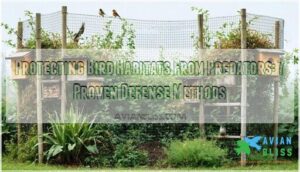 You’ll need smart strategies for protecting bird habitats from predators like cats, raccoons, and hawks.
Install predator guards on birdhouses, place feeders away from hiding spots, and use wire fencing around feeding areas.
Keep cats indoors and secure trash cans to reduce attractants.
Native plants provide natural shelter while elevated nesting boxes offer safer breeding spots.
Clean feeders regularly to prevent disease, and position them near escape cover but away from windows.
Think of your yard as a fortress where every placement matters – from the height of your seed dispensers to the distance from potential ambush points, considering native plants and elevated nesting boxes.
Table Of Contents
- Key Takeaways
- Bird Habitat Threats
- Protecting Bird Houses
- Native Plant Benefits
- Creating Bird Friendly Habitats
- Providing Shelter and Nesting
- Sustainable Gardening Practices
- Supporting Bird Health
- Predator Prevention Strategies
- Community Involvement and Conservation
- Effective Conservation Methods
- Frequently Asked Questions (FAQs)
- How to protect a bird house from predators?
- How do birds stay safe from predators?
- How to protect bird nest from predators naturally?
- How to predator proof an aviary?
- What time of year do most predators target nesting birds?
- How do weather conditions affect predator behavior patterns?
- Which bird species are most vulnerable to specific predators?
- What natural predator deterrents do birds use themselves?
- How far should bird feeders be from potential hiding spots?
- Conclusion
Key Takeaways
- Mount birdhouses at least 10 feet high on metal poles – You will create an impenetrable fortress by installing predator guards, such as stovepipe baffles, at a 4-foot height, positioning houses away from trees and fences that offer climbing access to raccoons and snakes.
- Create strategic landscape defenses with native plants – You will build natural barriers using dense shrubs and native hedgerows that provide escape routes while eliminating hiding spots within 10-12 feet of feeders where predators can ambush birds.
- Maintain clean feeding stations and fresh water sources – You will prevent disease outbreaks and reduce predator attraction by cleaning feeders weekly with a bleach solution and securing trash cans to eliminate food sources that draw raccoons and other threats.
- Combine multiple protection methods for maximum effectiveness – You will achieve 70% better results by layering defenses, such as motion-activated sprinklers, reflective tape for hawks, brush piles for shelter, and consistent monitoring, rather than relying on single solutions.
Bird Habitat Threats
You’re facing a perfect storm of threats that can devastate local bird populations faster than you might expect.
Your backyard birds face a deadly combination of predators and vanishing habitats that threatens their survival.
Hawks, owls, cats, raccoons, and snakes actively hunt nesting birds, while habitat destruction and climate change eliminate the safe spaces birds desperately need to survive and reproduce, which is a perfect storm of threats.
Predator Types
Understanding the threat is half the battle when protecting backyard birds.
You’ll encounter various predators that pose different challenges to your feathered friends.
- Mammalian Predators – Domestic cats, raccoons, foxes, and squirrels target nests and adult birds
- Avian Predators – Hawks, owls, crows, and ravens naturally hunt smaller bird species
- Reptilian Threats – Snakes climb trees to raid nests for eggs and chicks
- Feline Predation – Both indoor/outdoor pets and feral cats cause significant bird mortality
- Human Impact – Development increases predator-bird encounters through habitat fragmentation
Raptors help to control bird populations.
Habitat Loss Causes
You’re witnessing a perfect storm of habitat destruction that’s making birds sitting ducks for predators.
Urban sprawl and agricultural expansion have eliminated 3 billion birds since 1970, while deforestation effects remove critical nesting sites.
Pollution impact weakens birds’ immune systems, making predator encounters deadlier.
| Habitat Loss Cause | Impact on Birds | Predator Advantage |
|---|---|---|
| Urban sprawl | Forces birds into smaller territories | Concentrates prey for avian predators |
| Agricultural expansion | Eliminates diverse food sources | Reduces escape cover options |
| Deforestation effects | Destroys nesting sites | Exposes vulnerable populations |
The combination of these factors creates a perfect storm that threatens bird populations, highlighting the need for conservation efforts to protect these vulnerable species.
Climate Change Effects
Climate change disrupts bird habitats through shifting environmental conditions that affect their survival strategies.
Climate change creates a deadly game of musical chairs where birds lose their homes while predators circle overhead.
Rising temperatures force habitat shifts as species seek cooler regions, while extreme weather events destroy nesting sites and food sources.
You’ll notice these climate change effects impacting birds in three critical ways:
- Food scarcity from altered insect emergence patterns
- Migration patterns becoming misaligned with seasonal resources
- Breeding impacts from unpredictable weather during nesting season
These changes make avian predators more aggressive as they compete for dwindling resources, requiring enhanced bird habitat protection measures.
Protecting Bird Houses
You’ll transform any backyard birdhouse into a fortress with proper placement and predator guards.
Strategic mounting at least 10 feet high on metal poles, combined with baffles and cone-shaped barriers, creates an impenetrable defense system that even the craftiest raccoons can’t breach.
Strategic Placement
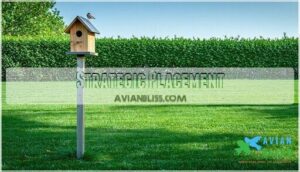
Mount your bird houses at least 10 feet high on metal poles for ideal predator control.
Position them away from trees and fences that offer climbing access, face entrance holes away from prevailing winds, and clear the surrounding area of brush.
This mounting height and pole material combination creates effective barriers against ground-based predators seeking nest access, providing ideal predator control.
Predator Guard Installation
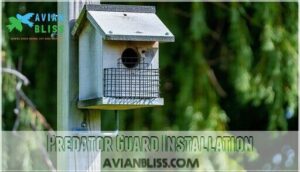
Before you add predator guards, measure your birdhouse entrance—it’s Goldilocks precision that matters.
Choose a guard material type that stands up to weather and tough customers. For best bird house safety, follow the Installation Height Guide—at least 10 feet up.
Using metal poles can help with bird house protection. Don’t forget DIY guard options; they can outsmart regional predator variations and keep your birdhouse predators guessing.
Regular Maintenance

Because neglecting maintenance can turn your best defenses into predator highways, you’ll need weekly guard inspections and monthly baffle upkeep.
Check for loose bolts, rust damage, or debris that creates climbing aids. Clean feeders with bleach solution, refresh water sources, and repair damage immediately.
Remove any predator tracks or signs around nest protection areas. Think of it as routine wildlife management – a small investment that pays big dividends for bird habitats.
Native Plant Benefits
Native plants create the perfect defense system for birds by providing natural camouflage and year-round food sources that support healthy populations.
When you choose plants that evolved alongside local bird species, you’re basically building a fortress that feeds and hides your feathered friends while starving out many predators, which is a key factor in creating a safe and healthy environment for them to thrive, with natural elements working in their favor.
Food Source Provision
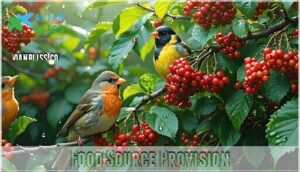
Native plants serve as nature’s grocery store for your feathered visitors.
These powerhouses produce native berries, tree nuts, and seeds that provide essential nutrients year-round.
Unlike store-bought options, native species attract insects that deliver vital insect protein to growing chicks.
During harsh winters, reliable food sources from indigenous plants often mean the difference between survival and starvation for local bird populations, making them a crucial part of the ecosystem that supports the native berries.
Shelter and Nesting
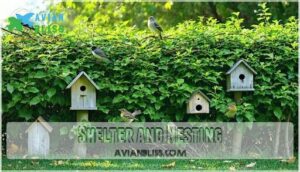
Beyond providing food, you’ll want to create natural shelters that protect birds from predators year-round.
Dense shrubs and native hedgerows offer perfect roosting habitats where birds can hide from hawks and other threats.
These living fortresses also provide essential nesting materials like twigs and leaves.
For cavity nesting species, consider adding a strategically-placed birdhouse alongside natural options, creating multiple safe nesting places that predators can’t easily access.
You can also improve your yard by creating a bird friendly habitat with native plants.
Water Conservation

Smart water conservation makes your bird habitat thrive during droughts while cutting costs.
Native plants need 50% less water than non-natives, creating sustainable ecosystems that attract birds year-round.
Here are five water-smart strategies:
- Rainwater Harvesting – Install gutters directing to galvanized laundry tubs
- Drought-Tolerant Plants – Choose natives requiring minimal irrigation
- Greywater Systems – Reuse household water for landscape watering
- Efficient Irrigation – Use drip systems targeting plant roots
- Local Water Source – Position bird baths near natural water features
Creating Bird Friendly Habitats
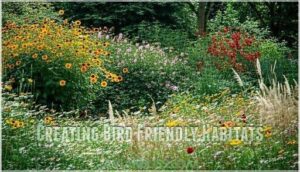
You can transform your yard into a fortress against predators by creating multi-layered landscapes that naturally protect birds while providing essential resources.
Strategic habitat design with native plants, wildflower meadows, and proper plant sourcing creates defensive barriers that keep threats at bay while supporting healthy bird populations, utilizing native plants to achieve this goal.
Layered Landscapes
Creating effective Habitat Layers mimics nature’s Vertical Structure, stacking trees, shrubs, and groundcover like a three-story apartment building.
This Plant Diversity attracts different bird species to each level while boosting Insect Abundance.
Strategic layering creates protective Microclimates that confuse predators and provide escape routes, making your habitat management efforts far more successful than single-level plantings.
Wildflower Meadows
Throughout your garden, wildflower meadows create stunning seasonal blooms while providing essential seed sources for meadow birds.
These biodiverse spaces support habitat preservation by offering natural bird nesting sites and reducing predator access through dense vegetation.
- Meadow biodiversity attracts beneficial insects that birds love to eat
- Maintenance strategies include selective mowing to preserve nesting areas
- Predator removal becomes easier with open sightlines around meadow edges
Native Plant Nurseries
Local nurseries serve as your best allies when selecting native plants for habitat restoration.
You’ll find expert advice on species that attract beneficial insects while deterring predators naturally. Many nurseries offer nursery certification programs, guaranteeing quality plant availability for your bird-friendly landscape.
Remember to prioritize native plants for birds to guarantee a thriving ecosystem.
| Service Type | Benefit for Birds |
|---|---|
| Expert Consultation | Species selection guidance for predator removal |
| Seed Sourcing | Access to native plant communities |
| Certification Programs | Quality assurance for habitat success |
Providing Shelter and Nesting
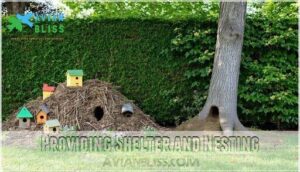
You’ll create natural shelters that provide both nesting opportunities and protection from predators when you establish brush piles, preserve tree snags, and install strategic mud spots throughout your yard.
These habitat features work together with native hedgerows and properly placed birdhouses to form a thorough defense system that gives birds multiple escape routes and secure breeding locations, creating a thorough defense system.
Brush Piles and Tree Snags
You’ll want to create brush piles using fallen branches and pruned limbs – they’re like nature’s apartment buildings for birds.
Stack branches loosely, creating gaps for wildlife refuge while allowing natural decay to attract insects.
Tree snags provide prime real estate for cavity-nesting species, offering protection from predators through their elevated positions and multiple escape routes.
Birds like baya weavers construct intricate suspended nests for added security.
Mud Spots and Native Hedgerows
Beyond providing clean water, mud spots serve as essential construction zones where birds gather high-quality nest building materials.
A native hedgerow acts as wildlife corridors, supporting hedgerow plant diversity while creating protective barriers against predators.
These living fences reduce predator impact on nesting birds more effectively than any brush pile, with soil composition effects directly influencing mud source quality for protecting birdlife.
Many birds build cup nests for protection, utilizing the resources provided by their environment to create safe nesting sites.
Birdhouse Installation
Beyond providing mud spots and hedgerows, proper birdhouse installation creates secure nesting sites while deterring predators.
Follow these birdhouse security guidelines:
- Mounting Height: Position houses 5-10 feet high on metal poles
- Entrance Direction: Face openings away from prevailing winds
- Material Choice: Use cedar or recycled plastic for weather protection
- Hole Size: Match entrance diameter to target species (1.25" for wrens)
- Predator Guards: Install baffles below houses to block climbing threats
These guidelines are crucial for ensuring the safety and effectiveness of the birdhouses, and by following them, you can create a secure and welcoming environment for the birds.
Sustainable Gardening Practices
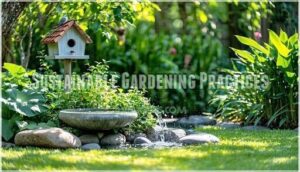
Your garden’s sustainable practices can make or break a bird’s survival chances against predators.
Smart mulching and water management create natural barriers while strengthening the ecosystem that supports our feathered friends.
Mulch and Arborist Chips
Using mulch and arborist chips creates a protective barrier that benefits bird habitats while deterring ground predators.
These sustainable materials suppress weeds, moderate soil temperature, and decompose to attract insects—a vital protein source for birds.
| Mulch Benefits | Protection Value |
|---|---|
| Pest Control | Deters ground predators |
| Soil Enrichment | Attracts beneficial insects |
| Sustainable Sourcing | Free arborist chips available |
| Chip Decomposition | Creates bug habitat for birds |
| Protective Measures | Reduces maintenance needs |
Weed Suppression and Soil Health
Healthy garden soil starts with proper weed control—and mulch delivers impressive results.
Wood chips suppress weeds by blocking sunlight while moderating soil temperature fluctuations that stress plants.
These mulch benefits include enhanced moisture retention, creating ideal conditions for beneficial microorganisms.
As arborist advantages become clear, decomposing chips gradually enrich your soil, feeding the very birds you’re protecting with proper weed control.
Water Conservation Methods
Smart water conservation keeps your bird-friendly garden thriving while deterring predators.
Efficient irrigation and rainwater harvesting reduce costs, while xeriscaping benefits include drought-tolerant plants that need less maintenance.
Greywater reuse systems work perfectly for watering native vegetation.
Strategic water features for birds like elevated birdbaths provide safe drinking spots away from ground predators, creating secure water sources that support both conservation and predator protection efforts.
Supporting Bird Health
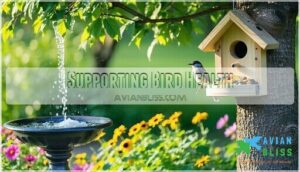
Supporting bird health requires more than just providing food—it demands consistent maintenance and diverse resources that keep your feathered visitors thriving year-round.
Clean feeders weekly with a bleach solution, offer varied seeds and suet for balanced nutrition, and maintain fresh water sources alongside secure nesting boxes to create a thorough health support system.
This approach ensures that you provide a comprehensive environment for the birds, including fresh water sources, which is essential for their well-being.
Feeder Cleaning and Maintenance
Regularly scrubbing your bird feeders—ideally every week—helps keep mold and illness at bay.
Choose feeder materials that are easy to clean, like smooth plastic or metal. Use mild detergent or a safe solution, rinsing thoroughly.
To maintain a healthy feeding environment, consider purchasing a specialized feeder cleaner.
Consistent cleaning frequency supports supplemental feeding, and it also discourages predators and keeps both bird house predators and harmful pathogens in check.
Diverse Seed and Suet Provision
Beyond just filling feeders, you’ll want to offer diverse seed variety and suet types to meet birds’ nutritional needs throughout seasonal changes.
High-fat seed like sunflower and nyger attracts different species, while suet provides essential energy during cold months.
Consider offering sunflower seeds to attract a wider variety of birds.
Rotate supplemental feeding options based on feeding frequency – some birds prefer constant access, others visit sporadically, and this can help meet their nutritional needs and provide essential energy.
Fresh Water and Nesting Boxes
You’ll want to maintain clean water sources daily since birds need fresh water for drinking and bathing habits.
Install shallow birdbaths with textured surfaces for better grip. Position your birdhouse using strategic placement – mount boxes 5-15 feet high with entrance holes facing east.
Choose nesting box design that matches local species requirements. Seasonal usage peaks during spring breeding, so protective measures against predators become critical then.
Predator Prevention Strategies
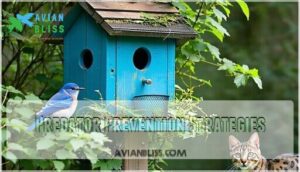
You’ll need effective predator control methods to protect your feathered friends from threats like cats, raccoons, snakes, and hawks that can devastate bird populations.
Smart deterrent strategies and habitat modifications can reduce predation by up to 70%, giving birds the safe spaces they need to thrive.
Cat and Raccoon Deterrents
Multiple deterrents work best against these common predators.
Keep Indoor Cats contained, as they kill billions of birds annually.
Install motion-activated sprinkler systems and Deterrent Devices like fake owls near feeding areas.
Secure Trash Security with heavy-duty lids to prevent raccoons from scavenging.
Create Habitat Escape routes using low bushes, while maintaining Rodent Control to reduce food sources attracting larger predators.
Snake and Hawk Control
When facing these aerial and ground-based threats, you’ll need targeted protective measures that address each predator’s unique hunting patterns.
Snake deterrents and hawk deterrents require different approaches since climbing predators use stealth while raptors rely on speed and surprise attacks.
- Install metal baffles on poles – 24-inch stovepipe guards prevent snakes from accessing elevated nest boxes
- Position reflective tape near feeding areas – Moving strips create visual disturbances that discourage hawk hunting attempts
- Maintain dense shrub coverage within 10 feet – Provides quick escape routes for smaller birds fleeing aerial predators
- Remove brush piles near birdhouses – Eliminates snake hiding spots while maintaining protective habitat elsewhere
- Rotate deterrent methods seasonally – Prevents both hawks and snakes from becoming accustomed to single protection strategies
Trash Can Security and Pesticide-Free Yards
Smart homeowners understand that secure trash containers prevent raccoons and other predators from raiding garbage, which reduces their presence near bird habitats.
When you eliminate food sources and use chemical alternatives to pesticides, you’ll protect the garden ecosystem that supports safe insects for birds.
Rodent control through proper waste management creates effective protective measures for bird conservation.
Community Involvement and Conservation

You can’t protect birds alone—community involvement amplifies conservation efforts by 70% when neighbors work together.
Educational programs and citizen science initiatives create lasting change while policy support guarantees long-term habitat protection.
Local Conservation Efforts
Local conservation efforts create powerful networks that protect bird habitats from predators through citizen monitoring programs and habitat restoration projects.
You’ll find funding opportunities through community education initiatives that support policy advocacy for protective measures.
These grassroots programs install predator guards and implement bird deterrents, creating safer environments where local conservation thrives through habitat restoration and community education.
Educational Programs and Partnerships
Educational programs amplify bird conservation efforts by teaching youth about avian protection methods.
School partnerships bring conservation awareness directly to classrooms, where students learn hands-on habitat creation techniques.
Community partnerships between wildlife organizations and local groups foster scientific collaboration through workshops and training sessions.
These birdfriendly communities develop stronger citizen involvement when residents understand predator prevention strategies and conservation science basics.
Citizen Science Initiatives and Policy Review
When you participate in citizen science initiatives, you’re contributing valuable data collection that directly influences policy updates for bird conservation.
These programs leverage over 100,000 volunteers annually, creating public awareness while monitoring habitat management effectiveness.
Your observations help scientists track bird population decline and assess conservation impact.
Community engagement through digital platforms enables real-time reporting, strengthening environmental policies that protect birds from predators, which is crucial for their bird conservation.
Effective Conservation Methods
You’ve got individual strategies down, but successful bird conservation requires bigger-picture protection methods that work at the community and policy level.
Research shows that protected areas increase bird population stability by 45%, while legal frameworks and environmental assessments prevent habitat destruction in most development cases.
Protected Area Designation and Policy Implementation
Protected area designation works like a safety net for vulnerable bird species, boosting population stability by 45% through habitat protection laws.
You’ll find that conservation enforcement paired with regulatory updates creates lasting avian conservation success.
Policy effectiveness improves when wildlife protection measures target specific predators threatening nesting sites, forming the backbone of modern bird conservation efforts.
Enforcement of Hunting and Development Restrictions
You can’t protect bird habitats without enforcing hunting regulation and development compliance effectively.
Legal penalties for violating habitat preservation laws create real consequences that deter harmful activities.
When authorities consistently enforce these restrictions, wildlife protection improves dramatically, reducing predators and habitat loss while strengthening avian conservation strategies, which rely on effective enforcement to succeed.
Environmental Impact Assessments and Regular Monitoring
Beyond regulatory measures, you’ll need ongoing assessment effectiveness through systematic monitoring technologies.
Environmental impact assessments prevent habitat destruction in 85% of cases, while data analysis from long-term studies reveals predator patterns affecting nesting success rates.
- Monitoring Technologies: Motion cameras track predators near bird species territories
- Data Analysis: Software identifies trends in habitat management success rates
- Mitigation Strategies: Adaptive predator deterrents based on monitoring results
- Long-term Studies: Multi-year research guides effective conservation planning
Frequently Asked Questions (FAQs)
How to protect a bird house from predators?
Mount your birdhouse at least 10 feet high on a metal pole, away from trees.
Install stovepipe guards or cone-shaped baffles at 4 feet height to block climbing predators like raccoons and snakes.
How do birds stay safe from predators?
Birds rely on several natural survival strategies to evade predators.
They use camouflage, flock together for safety, stay alert with keen eyesight, and quickly escape to dense cover when threatened by hawks, cats, or other dangers, utilizing their keen eyesight to stay safe.
How to protect bird nest from predators naturally?
Natural deterrents work best: plant thorny shrubs around nesting areas, maintain brush piles for escape routes, and position birdhouses away from trees.
You’ll reduce predator access while creating safe havens naturally.
How to predator proof an aviary?
Since 85% of environmental impact assessments prevent habitat destruction, you’ll need strategic defenses.
Install 1/4-inch hardware cloth underground and 8-feet high, add predator guards on poles, secure roof mesh, and eliminate climbing access points near your aviary’s perimeter to prevent habitat destruction.
What time of year do most predators target nesting birds?
Spring through early summer poses the greatest threat to nesting birds.
You’ll find predators most active during April through July when eggs and helpless chicks are abundant.
Peak vulnerability occurs in May and June when most species are actively breeding and raising young.
How do weather conditions affect predator behavior patterns?
Weather conditions substantially impact predator activity patterns around bird habitats.
You’ll notice increased predator pressure during harsh weather when food becomes scarce, forcing mammals and raptors to hunt more aggressively near feeders and nesting areas where birds concentrate.
Which bird species are most vulnerable to specific predators?
Ground-nesting species face 60% higher predation rates than tree nesters.
You’ll find that quail, sparrows, and warblers suffer most from cats, raccoons, and snakes, while cavity nesters like chickadees remain safer from ground predators but vulnerable to climbing threats.
What natural predator deterrents do birds use themselves?
Birds employ several clever natural deterrents to protect themselves from predators.
You’ll observe flocking behavior, where safety comes in numbers and multiple eyes spot danger.
They use alarm calls to warn others and mobbing tactics, where groups harass predators together.
How far should bird feeders be from potential hiding spots?
Picture predators crouching in dense shrubs, eyes fixed on unsuspecting birds—you’ll want to place feeders at least 10-12 feet from bushes, trees, or structures.
This distance prevents ambush attacks while giving birds clear escape routes when danger approaches.
Conclusion
Think of your backyard as a battlefield where every strategic decision counts.
Protecting bird habitats from predators requires consistent vigilance and smart planning. You’ve learned proven methods from predator guards to native landscaping that create safe havens for wildlife.
Success comes from combining multiple defense strategies rather than relying on single solutions. Your efforts matter—each protected nest contributes to species survival and ecosystem health.
Start implementing these techniques today, monitor their effectiveness, and adjust as needed for maximum protection.
- https://besjournals.onlinelibrary.wiley.com/doi/full/10.1111/1365-2664.14619
- https://environmentalevidence.org/wp-content/uploads/2014/09/SR38.pdf
- https://biquantumarc.com/articles/strategies-for-bird-protection-guide/
- https://synthorum.com/articles/bird-habitats-strategies-conservation/
- https://openaccesspub.org/international-ornithology/bird-conservation-strategies