This site is supported by our readers. We may earn a commission, at no cost to you, if you purchase through links.
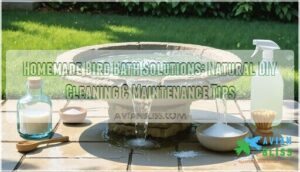 You can create effective homemade bird bath solutions using simple household items.
Mix equal parts white vinegar and water for regular cleaning, or make a paste with baking soda and water for scrubbing stubborn buildup.
These natural cleaners remove algae and bacteria without harmful chemicals that could endanger visiting birds.
For deeper disinfection, use a diluted hydrogen peroxide solution or citric acid mixed with water.
Change the water every few days and position your bath in partial shade to prevent excessive algae growth.
Regular maintenance with these gentle, bird-safe solutions keeps your feathered friends healthy while they drink and bathe.
The secret lies in understanding which natural ingredients work best for different cleaning challenges, using natural ingredients and maintaining a clean environment.
Table Of Contents
Key Takeaways
- Mix natural cleaning solutions – You’ll get the best results by combining equal parts white vinegar and water for regular cleaning, or make a baking soda paste for scrubbing tough buildup without harming birds.
- Change water every 2-3 days – You’ll prevent algae growth and mosquito breeding by replacing stagnant water regularly, especially when you place your bath in partial shade.
- Use safe disinfectants only – You can disinfect effectively with diluted hydrogen peroxide or citric acid solutions, but you should avoid harsh chemicals that could poison visiting birds.
- Maintain consistent cleaning routines – You’ll keep birds healthy by scrubbing 2-3 times weekly with natural solutions and allowing the bath to dry out completely every few days.
Cleaning Bird Baths
You’ll need simple, safe ingredients to keep your bird bath clean and your feathered visitors healthy.
Natural cleaning solutions work effectively without introducing harmful chemicals that could endanger birds or contaminate their drinking water, using natural and safe methods.
Mixing White Vinegar Solution
Create the perfect vinegar bird bath solution by mixing nine parts water with one part white vinegar. This homemade bird bath solution provides ideal vinegar concentration while ensuring bird safety.
Room temperature water works best for proper vinegar dilution ratio. The vinegarwater solution maintains material compatibility with most bird bath surfaces.
Room temperature water mixes perfectly with vinegar for effective, surface-safe bird bath cleaning.
You can even find pre-mixed vinegar solutions for added convenience. Mix fresh batches weekly to maintain cleaning effectiveness and prevent bacterial growth in your natural cleaning mixture.
Using Baking Soda for Scrubbing
For stubborn stain removal, baking soda becomes your bird bath’s best friend.
Mix baking soda with water until you achieve a paste consistency that clings to surfaces. Apply this bird bath cleaner directly to algae buildup and mineral deposits.
You can also add white vinegar for disinfection. The gentle abrasive properties make baking soda bird bath cleaning highly effective for safe scrubbing methods without scratching surfaces.
Rinse thoroughly afterward to remove all residue before refilling.
Removing Debris With Natural Agents
A pressure hose blasts away loose leaves and larger debris quickly.
Follow up with a stiff brush to scrub stubborn buildup from corners and surfaces.
White vinegar dissolves mineral deposits naturally, while baking soda tackles tough stains.
For a vinegar soak, let the solution sit ten minutes before scrubbing, then use safe rinsing to remove all natural cleaning agents completely.
Avoiding Harsh Chemicals for Bird Safety
While natural cleaning agents work well, you must avoid harsh chemicals that threaten bird health.
Commercial cleaners, ammonia, and strong detergents create chemical risks that can poison visiting birds.
Safe alternatives like white vinegar and baking soda protect both birds and environment.
These nontoxic bird bath solutions maintain cleanliness without compromising safety, making eco-friendly baths that welcome feathered friends.
Preventing Algae Growth
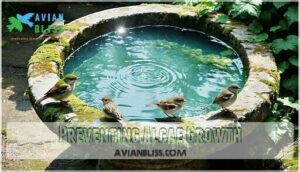
You can prevent algae growth in your bird bath by placing it in partial shade and changing the water every 2-3 days.
Strategic positioning away from direct sunlight combined with fresh water replacement keeps algae at bay and maintains a healthy environment for visiting birds.
Placing Bird Baths in Partial Shade
Position your bird bath in partial shade to control sunlight exposure and prevent rapid algae growth.
Direct sunlight heats water temperature beyond bird preference levels while creating perfect conditions for algae prevention challenges.
Shade benefits include cooler water that birds favor and reduced algae formation.
Strategic bird bath placement near trees or shrubs provides natural bird bath surroundings that discourage bird bath algae while supporting effective bird bath maintenance.
Changing Water Regularly
Change your bird bath water every two days to maintain ideal water freshness and prevent stagnant water conditions.
This frequency importance can’t be overstated for effective bird bath maintenance.
Fresh water source replacement stops mosquito breeding cycles and supports bird health.
Regular bird bath water changes eliminate bacteria buildup that thrives in standing water.
Consistent bird bath care through frequent water changes keeps your feathered visitors healthy and happy.
Using Natural Algae Inhibitors
Why settle for harsh chemicals when nature provides effective algae inhibitors?
Several natural methods keep your bird bath algae-free while protecting feathered visitors.
Here are three proven natural algae inhibitors:
- Copper Disks – Place copper pennies or disks in water; copper ions naturally suppress algae growth for days
- Barley Straw – Submerge mesh bags containing barley straw; decomposition releases algae-inhibiting compounds lasting weeks
- Plant Extracts – Add white vinegar (1:10 ratio) to fresh water for natural algae prevention
These bird bath algae solutions work alongside natural cleaning agents like baking soda and white vinegar for thorough algae prevention.
A solar powered fountain can also prevent algae growth.
Monitoring for Early Signs of Algae
Check your bird bath water daily for these warning signs that algae’s taking hold.
Daily checks catch algae before it takes over your bird bath.
Green or brown algae color changes signal trouble brewing, while thick water viscosity means it’s time for action.
| Warning Sign | What to Look For |
|---|---|
| Algae Color Changes | Green, brown, or black tints in water |
| Water Viscosity | Thick, slimy texture when stirred |
| Surface Slime | Film or scum floating on top |
| Odor Detection | Musty, fishy, or stagnant smell |
| Bird Behavior | Fewer visits or hesitation to drink |
Surface slime and odor detection help you catch problems before they worsen.
When birds start avoiding your bird bath solution, that’s nature’s way of saying the water quality has dropped.
Quick algae removal beats waiting for full algae prevention measures later.
Natural Disinfectants
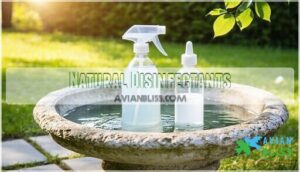
You’ll want to disinfect your bird bath regularly to prevent harmful bacteria from making your feathered visitors sick.
Natural disinfectants like white vinegar and hydrogen peroxide kill germs effectively without exposing birds to dangerous chemicals that could harm their delicate respiratory systems.
Using White Vinegar as Disinfectant
White vinegar serves as nature’s powerhouse disinfectant for bird baths.
The vinegar concentration of 1:9 ratio with water creates an effective bird bath cleaner that eliminates harmful bacteria without compromising bird safety. This vinegar dilution ratio provides perfect bird bath disinfection while supporting algae prevention.
Always rinse thoroughly after applying the vinegarwater solution to guarantee complete removal. A copper disk can also help control algae.
Here’s why white vinegar effectiveness makes it your go-to bird bath cleaner:
- Kills 99% of germs naturally – No harsh chemicals threatening your feathered friends
- Costs pennies per cleaning – Your wallet stays as happy as the birds
- Works in minutes – Simple application, powerful results every time
Hydrogen Peroxide as Safe Bleach Alternative
Hydrogen peroxide serves as an effective bird bath cleaner when properly diluted for bird safety.
Mix one part hydrogen peroxide with nine parts water to create a safe bird bath solution. This HP concentration provides excellent algae control and bird bath disinfection without harsh chemicals.
Always rinse thoroughly after cleaning to eliminate residue concerns and guarantee complete bird bath sanitation.
Grapefruit Seed Extract for Antimicrobial Properties
Grapefruit seed extract (GSE) offers powerful antimicrobial effectiveness against over 800 bacterial and viral strains.
This natural alternative disrupts pathogen cell membranes within 15 minutes while maintaining bird safety at proper dilutions.
For homemade bird bath solutions, GSE provides safe disinfection without toxic residues.
Independent tests confirm the absence of toxins.
GSE Application for Bird Bath Sanitation:
- Dilution ratio: Mix 10-15 drops per cup of water for effective natural cleaning agents
- Contact time: Allow 15 minutes for complete pathogen elimination in your bird bath solution
- Safety margin: Remains non-toxic at 1:512 dilution while maintaining antimicrobial properties
- Pathogen control: Targets E. coli, Salmonella, and Staphylococcus common in bird environments
- Biodegradable: Breaks down naturally without environmental impact or harmful residues
Citric Acid for Natural Disinfection
Citric acid provides natural disinfection and gentle bleaching properties for bird bath maintenance.
This white crystalline powder dissolves easily in water, creating an effective cleaning solution that breaks down mineral deposits and eliminates harmful bacteria.
You’ll find citric acid particularly useful for removing stubborn lime scale and calcium buildup.
| Citric Acid Uses | Application Method |
|---|---|
| Disinfection Effectiveness | Mix 1 tablespoon per gallon of water |
| Safe Concentrations | Use 2-3% solution maximum |
| Residue Concerns | Rinse thoroughly after 15 minutes |
| Bird Health | Non-toxic when properly diluted |
| Natural Cleaning Agents | Combine with baking soda for scrubbing |
DIY Bird Bath Designs
You can transform everyday household items into functional bird baths with minimal effort and cost.
These creative designs range from repurposed sinks and recycled glassware to solar-powered systems and decorative mosaic art pieces.
Repurposing Old Sinks and Containers
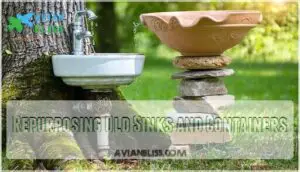
Old sinks make excellent Sink Birdbaths when cleaned and sealed properly.
You’ll find Container Materials like plates, shallow bowls, and planters work perfectly for upcycled bird bath projects. Creative Pedestals from recycled materials add height and stability.
Consider these repurposing options:
- Salvaged sink – Attach to tree with PVC pipe base for instant DIY bird bath
- Serving dishes – Stack with table legs for weatherproof Design Stability
- Large planters – Seal drainage holes using Weatherproofing Methods
These recycled materials create functional, cost-effective solutions that birds love.
Creating Solar-Powered Bird Baths
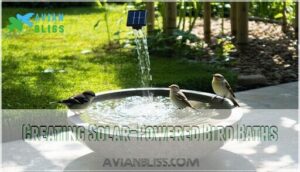
You can harness the sun’s power to create self-sustaining bird bath water circulation.
Solar pump types include submersible and floating models that keep bird bath water moving without electricity costs.
Battery backup options store energy for cloudy days, ensuring continuous operation.
| Solar Component | Function | Benefits |
|---|---|---|
| Submersible pumps | Underwater circulation | Quiet operation, hidden design |
| Floating pumps | Surface water movement | Easy installation, portable |
| Battery systems | Energy storage | Continuous operation, weather protection |
Shade sail integration protects your solar-powered bird bath from excessive heat while maintaining functionality.
These DIY bird bath solutions combine renewable energy with practical bird bath maintenance, creating eco-friendly systems that attract more birds through moving water features.
Using Recycled Glassware and Materials
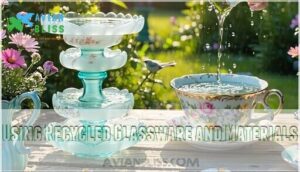
Transform yesterday’s cast-offs into tomorrow’s birdbath treasures. Recycled glassware creates stunning Glassware Pedestals when you stack vintage vases, bowls, and serving dishes.
Teacup Birdbaths offer whimsical charm using mismatched crockery from thrift stores. These Stacked Designs showcase your creativity while maintaining Vintage Style.
Consider upcycling old vases for quirky designs. Remember Material Weatherproofing—seal all connections with outdoor-grade adhesives to withstand weather changes.
Incorporating Mosaic Art and Natural Materials
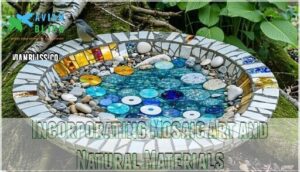
Beyond recycled glassware, you can create stunning artistic designs using mosaic materials and natural elements.
These homemade bird bath projects combine creativity with functionality, offering birds beautiful water sources while adding visual interest to your garden space.
- Mosaic Materials: Use broken CDs, ceramic tiles, or colored glass pieces to create vibrant patterns on your natural bird bath surface
- Natural Elements: Incorporate birch branches, stone accents, or driftwood pieces for rustic, weatherproof bird bath designs
- Artistic Designs: Layer different textures like pebbles, shells, or smooth river rocks around your mosaic bird bath rim
- Material Durability: Choose frost-resistant ceramics and sealed wood elements that withstand seasonal weather changes
- Weatherproofing Methods: Apply outdoor-grade sealants and adhesives to protect your bird bath materials from rain and temperature fluctuations
Maintaining Bird Baths
You’ll need to maintain your DIY bird bath regularly to keep it clean and safe for visiting birds.
Proper maintenance involves consistent cleaning routines and natural solutions that protect both the birds and your homemade creation.
Regular Cleaning and Scrubbing
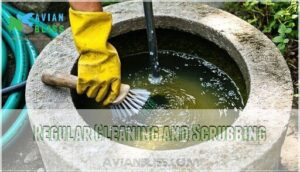
You’ll want to scrub your bird bath 2-3 times weekly for ideal bird bath maintenance.
Use a stiff-bristled brush for effective algae removal and grime prevention.
Focus on crevices and corners where buildup hides.
Tool selection matters—choose brushes that won’t scratch surfaces.
Apply safe solutions like vinegar mixtures during bird bath scrubbing sessions.
Regular bird bath cleaning prevents stubborn deposits from forming.
To further prevent algae, consider adding a bubbler to the water, which aids in effective algae removal and promotes a healthy environment for ideal bird bath conditions.
Replacing Fresh Water Daily
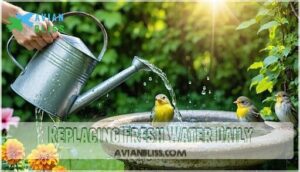
Fresh water replacement stands as your first defense against mosquito breeding and poor water quality.
Daily water changes prevent stagnant conditions that attract pests and compromise bird health.
- Mosquito Prevention: Replace water every 24-48 hours to disrupt breeding cycles
- Bird Health: Fresh water reduces disease transmission between visiting birds
- Water Quality: Daily routine maintains ideal pH and oxygen levels
- Frequency Benefits: Consistent changes eliminate bacterial buildup and debris accumulation
Regular bird bath water change creates a welcoming environment that supports local wildlife while simplifying your bird bath maintenance schedule through proactive care.
Drying Out Baths Periodically
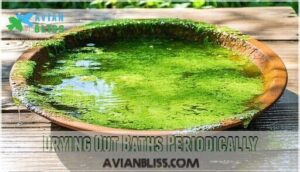
In between regular cleanings, allow your DIY bird bath to dry out completely every few days.
This periodic drying kills algae that might otherwise establish permanent colonies in your safe bird bath.
The routine care practice extends bath life substantially by preventing stubborn buildup that damages surfaces.
Simply empty the bird bath water, let it sit dry for 24 hours, then refill.
This algae prevention method works better than constant scrubbing for effective bird bath maintenance, which is a key part of regular cleanings.
Using Enzyme-Based Cleaners for Maintenance
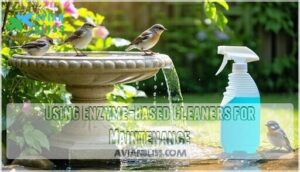
Enzyme-based cleaners offer superior bird bath maintenance with minimal effort.
These natural formulas break down organic debris while reducing stains and mineral buildup by up to 80%. Unlike harsh chemicals, enzyme cleaners remain safe for wildlife while providing long-term benefits.
Many use enzyme cleaners safely with their birds. Weekly applications keep water clear and extend time between deep cleans, making bird bath cleaning solutions more effective for busy gardeners, providing a natural way to maintain a clean bird bath.
Frequently Asked Questions (FAQs)
Do copper pennies prevent algae?
Scientists found that copper ions can reduce algae growth by up to 90% in water systems.
You can use copper pennies in your bird bath, but they’ll work slowly and need regular replacement since modern pennies contain minimal copper.
Why put pennies in a birdbath?
People add pennies to birdbaths hoping copper will prevent algae growth.
While copper does have antimicrobial properties, modern pennies contain mostly zinc with minimal copper, making them ineffective for algae control in practice.
How deep should homemade bird bath water be?
Like ancient Roman fountains, your DIY birdbath needs water that’s just one to two inches deep.
This shallow depth lets small songbirds wade comfortably while larger birds can drink safely without drowning risk.
What temperature water works best for birds?
Room temperature water (65-75°F) works best for birds.
Cold water can shock their systems, while hot water may burn their delicate feet.
You’ll want to match the ambient temperature naturally.
Can I use tap water in bird baths?
Yes, you can use tap water in bird baths.
Most tap water is safe for birds, but let it sit overnight to allow chlorine to evaporate before adding it to the bath.
How do I winterize my bird bath?
Don’t put all your eggs in one basket—you’ll need multiple winterizing strategies.
Remove heaters before freezing, add birdbath heaters or de-icers, and position units in sheltered spots to prevent total freeze-up, using multiple winterizing strategies is key.
What attracts birds to new bird baths?
Fresh water, moving water features, shallow depths (1-2 inches), and nearby perches attract birds to new baths. Place them near trees but away from hiding spots for predators.
Conclusion
Creating your own homemade bird bath solutions transforms maintenance from a chore into an art form.
These natural cleaning methods guarantee your feathered visitors enjoy safe, pristine water while you avoid toxic chemicals.
By combining simple ingredients like vinegar, baking soda, and citric acid, you’ll maintain a healthy environment that attracts birds year-round.
Regular water changes, strategic placement, and consistent cleaning create the perfect sanctuary.
Your dedication to these homemade bird bath solutions rewards you with vibrant wildlife activity and crystal-clear water that birds instinctively trust.
- https://happygardens.com/blogs/news/homemade-bird-bath-ideas
- https://www.houseofhawthornes.com/diy-bird-bath-thrift-store-glassware/
- https://www.birdsandblooms.com/backyard-projects/diy-bird-bath/diy-concrete-leaf-birdbath/
- https://www.theempowerededucatoronline.com/2017/01/diy-garden-birdbath.html/
- https://www.outdoorescape.com.au/blogs/news/the-ultimate-bird-bath-guide-do-not-buy-the-bird-bath-until-you-read-this