This site is supported by our readers. We may earn a commission, at no cost to you, if you purchase through links.
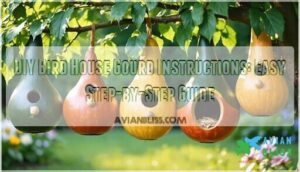 You’ll transform ordinary gourds into charming bird houses with basic tools and creativity. Start by selecting bottle gourds or birdhouse gourds that are completely dry and mold-free.
Clean the exterior thoroughly, then cut a 1.5-inch entrance hole about one-third from the top. Add small drainage holes at the bottom and ventilation holes near the top.
Sand all cut edges smooth to prevent injury to visiting birds. Apply weatherproof stain or paint for durability, leaving the interior natural.
Install sturdy hanging hardware like eye screws or wire loops. The key lies in proper placement and seasonal maintenance that keeps your feathered friends returning year after year.
Table Of Contents
- Key Takeaways
- Selecting Gourd Types
- Preparing Gourd Shell
- Cutting Gourd Holes
- Adding Birdhouse Features
- Decorating Birdhouse
- Mounting Birdhouse
- Frequently Asked Questions (FAQs)
- What size hole do you drill in a gourd for a birdhouse?
- How do you plant gourds for birdhouses?
- What is the best finish for a birdhouse gourd?
- How long do gourd birdhouses last outdoors?
- What birds prefer gourd birdhouses over wooden ones?
- When is the best season to hang gourds?
- Can squirrels damage gourd birdhouses easily?
- How often should I clean gourd birdhouses?
- Conclusion
Key Takeaways
- Select the right gourd type – You’ll need completely dry, hard-shell bottle gourds or birdhouse gourds that match your target bird species, with larger gourds (9.5-12 inches) for purple martins and smaller ones (6-8 inches) for songbirds.
- Cut precise entrance holes – You must drill 1.5-inch holes about one-third from the top, plus drainage holes at the bottom and ventilation holes near the top, then sand all edges smooth to prevent bird injuries.
- Apply weatherproof protection – You’ll need to seal your gourd with exterior-grade polyurethane or marine varnish after decorating to ensure it lasts 3-5 years outdoors and protects nesting birds from moisture.
- Mount securely and maintain annually – You should hang your birdhouse in early spring (February-March) using galvanized hardware in a spot with 6 hours of daily sun, then clean it each fall to remove old nesting materials and prevent bacteria buildup.
Selecting Gourd Types
You’ll want to select the right gourd variety based on the bird species you’re hoping to attract to your yard.
Different birds prefer specific entrance hole sizes and interior space dimensions, so choosing a gourd with appropriate size and wall thickness guarantees your feathered visitors will actually use their new home, which is a complete concept to consider for their habitat.
Choosing Right Gourd Size
When selecting your diy birdhouse gourd, match the gourd capacity to your target bird size for ideal nesting success.
Purple martins need 9.5-12 inch diameter gourds with spacious interiors, while smaller songbirds thrive in 6-8 inch options.
The gourd birdhouse dimensions directly impact predator defense and entry hole placement, so choose thick-walled varieties that provide adequate nesting needs support.
Gourds are a bird-friendly option that blends well in natural surroundings, making them a great choice for a birdhouse.
Gourd Shape Considerations
When choosing the right shape for your diy birdhouse gourd, prioritize round or teardrop varieties that offer ideal Shape Functionality for bird species.
These Natural Variations provide excellent Bird Accessibility while maintaining Visual Appeal that attracts feathered visitors.
Some species, like Purple Martins, thrive in birdhouses with crescent-shaped entrance holes.
Consider Gourd Availability in your area when selecting shapes for your gourd birdhouse design project.
Gourd Material Durability
Hard-shell gourds offer remarkable structural integrity once properly cured, transforming from green shells into wood-like materials perfect for birdhouse gourd plans.
Hard-shell gourds transform into wood-like durability once cured – nature’s perfect birdhouse material.
Your gourd lifespan typically spans 5-10 years outdoors with basic care. With proper preparation, gourds can become durable nesting options for various bird species.
Consider these durability factors when selecting birdhouse gourd materials:
- Weather resistance develops during months-long curing in dry conditions
- Pest damage remains minimal due to natural disease-resistant properties
- Rot prevention improves with proper ventilation holes and drainage
- Structural integrity rivals hardwood after complete drying process
- Birdhouse gourd size affects wall thickness and overall durability
Follow proper birdhouse gourd tutorial methods and gourd birdhouse cleaning practices to maximize longevity.
Preparing Gourd Shell
Before you start cutting and drilling, you’ll need to properly prepare your gourd shell for transformation into a birdhouse.
This critical step involves cleaning the surface, ensuring complete drying, and smoothing any rough edges to create a safe, attractive home for your feathered visitors.
Cleaning Gourd Surface
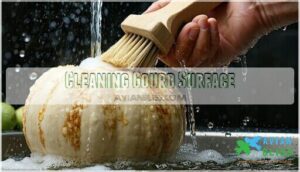
First, scrub your gourd’s exterior with warm soapy water to tackle mold removal and surface disinfection.
Use a stiff brush for grit removal, paying attention to stubborn areas that need stain removal.
Enzyme-based cleaners offer a safe cleaning alternative.
Rinse thoroughly and let it air dry before applying any wax application.
This birdhouse gourd cleaning step guarantees your gourd birdhouse plans start with a pristine foundation for successful birdhouse gourd crafting in your DIY crafts project.
Drying Gourd Completely
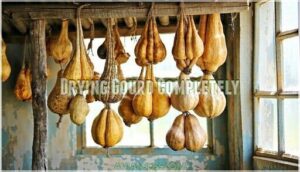
After cleaning your gourd birdhouse, you’ll need proper ventilation and patience for complete drying.
Allow 2-4 weeks drying time in a well-ventilated area to prevent mold prevention issues. Watch for gourd discoloration and shrinkage factors during this period.
Your gourd birdhouse project requires thorough moisture removal before proceeding with gourd birdhouse crafting steps outlined in gourd instructions.
Aiding the drying process involves a specialized drying apparatus to support the drying process and ensure a successful outcome with complete drying.
Smoothing Gourd Edges
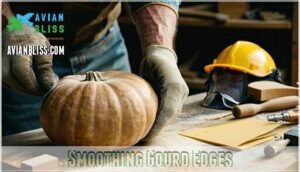
After your gourd has dried completely, you’ll need to smooth any rough edges before cutting. This vital step in your gourd instructions guarantees clean cuts and prevents splintering during your birdhouse gourd project.
- Sanding techniques: Use 120-grit sandpaper for initial smoothing, progressing to 220-grit for final finishing
- Tool selection: Choose sanding blocks for flat surfaces and flexible sanding sponges for curved areas
- Safety precautions: Wear dust masks and safety glasses to protect against gourd particles
- Edge filling: Apply wood filler to any cracks or imperfections before final sanding
Cutting Gourd Holes
You’ll need to create precise entry holes that match the bird species you want to attract.
The cutting process requires careful measurement and steady hands to guarantee clean, properly sized openings.
Measuring Hole Sizes
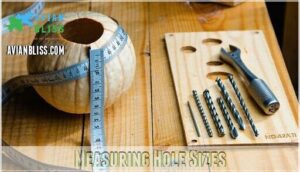
Why should you measure precisely when creating your bird house gourd project? Accurate hole dimensions determine which bird species will call your creation home.
Purple martins need 2.125-inch openings, while bluebirds require exactly 1.5 inches. Using templates and proper drill bit selection guarantees birdhouse gourd dimensions meet specific bird species needs.
Correct hole size impact prevents predator access, protecting your future feathered residents from unwanted visitors, and this is crucial for the bird species to feel safe.
Cutting Techniques Tips

Sharp tool selection makes the difference between clean cuts and disaster.
Use a fine-toothed saw or craft knife for precision cutting, keeping steady pressure throughout.
Mark your hole placement carefully before starting – rushing leads to cracks that’ll ruin your build birdhouse gourd project.
A quality cutting tool enhances precision.
Safety measures include securing the gourd firmly and cutting away from your body.
These cutting techniques guarantee your birdhouse gourd ideas become reality.
Sanding Rough Edges

After cutting your entrance hole, rough edges can splinter and harm visiting birds. Proper sanding creates smooth, safe openings that welcome feathered friends.
Smooth edges keep feathered friends safe from splinters and injury.
Use these sanding techniques for professional results:
- Medium grit sandpaper (120-150) removes major roughness quickly
- Fine grit (220-320) creates smooth, bird-safe surfaces
- Dust control with tack cloth prevents debris buildup during work
Safety measures include wearing masks and eye protection while sanding your birdhouse gourd project.
Adding Birdhouse Features

Now you’ll transform your basic gourd into a functional bird home by adding essential features that guarantee comfort and safety.
These additions include proper roofing to protect from weather, sturdy perches for easy access, and ventilation holes to maintain healthy airflow inside the gourd.
Installing Roofing Material
After cutting the entrance hole, you’ll need proper roofing to protect your feathered tenants.
Weather-resistant materials like faux pine cone scales or copper sheeting work best for gourd birdhouse kits. Many options exist for gourd birdhouse roofing.
Position overhangs 1-2 inches beyond the gourd body to shield from rain.
Sand the surface lightly, then secure roofing with weatherproof adhesive like Goop Glue. Apply two coats of exterior sealant for weatherproofing techniques.
Attaching Perch Supports
Once your roof’s secure, add perch supports for bird comfort.
Drill pilot holes 1-2 inches below entrance holes for Perch Placement. Insert wooden dowels or small branches as Perch Material, ensuring Secure Attachment with wood glue.
Choose Perch Size around ¼-inch diameter for most songbirds.
Weather Resistance improves with sealed connections, making your gourd birdhouse kits and DIY projects last longer through seasons.
Creating Ventilation Holes
Proper ventilation prevents moisture buildup that can harm baby birds.
Drill two small holes (1/8 inch diameter) near the top of your gourd, positioning them on opposite sides for cross-ventilation.
This hole placement creates airflow while preventing drafts that could chill nestlings.
Good ventilation also helps with condensation control and pest prevention in your finished birdhouse.
Decorating Birdhouse

Now you’re ready to transform your plain gourd into an attractive home for birds.
The decorating process involves three key steps that will protect your birdhouse while making it visually appealing.
Painting Gourd Surface
Now you’re ready to transform your gourd into artwork. Birdhouse gourd painting requires selecting appropriate paint types for outdoor conditions. Acrylic paints work best for DIY woodworking projects, offering durability against weather elements.
Consider these color schemes that attract specific bird species:
- Earth tones – browns and greens blend naturally with surroundings
- Bright colors – reds and yellows appeal to hummingbirds and finches
- Neutral shades – grays and whites suit most backyard birds
Apply thin coats using steady brush strokes. Surface preparation guarantees paint adhesion, while proper painting techniques prevent drips. Birdhouse gourd patterns can include simple stripes or geometric designs for enhanced exterior design appeal.
Applying Waterproof Sealant
You’ll want to apply waterproof sealant after your birdhouse gourd painting dries completely.
Choose marine spar varnish or exterior-grade urethane for maximum weather protection. Apply two thin coats using a brush, ensuring complete coverage of all cut edges and drilled holes.
Regular cleaning helps with bird house sanitation. This weatherproofing technique extends your DIY project’s durability while maintaining the decorative finish underneath.
Adding Hangging Hardware
Once you’ve sealed your gourd birdhouse, selecting the right hardware options guarantees secure DIY fixtures.
Choose galvanized or stainless steel components for weather resistance. Consider weight considerations when selecting mounting points.
Hardware options for birdhouse gourd mounting:
- Eye screws – Install at the top for simple hanging techniques
- Wire loops – Thread through drilled holes for flexible placement height
- Metal brackets – Attach to gourd sides for wall mounting in gardening areas
- Chain or rope – Use weather-resistant materials for outdoor DIY projects
- Carabiners – Quick-release hardware for seasonal repositioning
Mounting Birdhouse
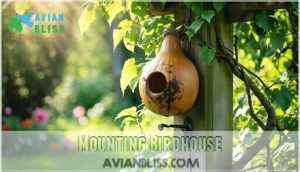
Once you’ve finished decorating your gourd birdhouse, it’s time to secure it in the perfect outdoor spot.
Proper mounting guarantees your feathered friends will have a safe, stable home that withstands weather and provides easy access for nesting, which is crucial for their well-being and stable environment.
Choosing Tree Location
Choose your gourd’s birdhouse location with sunlight exposure and predator protection in mind.
Select branches receiving six hours of daily sun for ideal drying and bird attracting success. Strong branches handle wind exposure while maintaining accessibility for birdhouse gourd maintenance.
Consider incorporating predator deterrents for enhanced safety. Position your gourd where gardening activities won’t disturb nesting birds, ensuring proper birdhouse gourd mounting conditions and providing a safe environment with predator protection and adequate sunlight.
Installing Mounting Hardware
Once you’ve found the perfect spot, secure your gourd with proper hardware types like galvanized screws or stainless steel brackets for weather resistance.
Mount at appropriate height using a sturdy pole or tree bracket system.
DIY installations require secure attachment points that protect against predators while maintaining easy access for birdhouse gourd maintenance and attracting desired bird species.
Ensuring Birdhouse Stability
After installing the mounting hardware, focus on keeping your birdhouse gourd steady and safe. A wobbly house won’t attract many birds or stand up to storms.
For better Weather Resistance and Predator Protection, consider these steps:
- Use strong Hanging Techniques
- Add Reinforcement Methods
- Check Base Support
- Pick a sheltered birdhouse gourd location
- Regularly inspect for stability.
Enjoy the DIY benefits!
Frequently Asked Questions (FAQs)
What size hole do you drill in a gourd for a birdhouse?
Bird species prefer entrance holes measuring 25 to 5 inches in diameter.
You’ll drill this opening about one-third down from the gourd’s top using a spade bit, creating the perfect-sized doorway for wrens, chickadees, and other cavity-nesting birds.
How do you plant gourds for birdhouses?
Plant gourd seeds directly in soil after frost danger passes.
Space them 6-8 feet apart in full sun with rich, well-draining soil.
Water regularly and provide sturdy support for climbing vines.
What is the best finish for a birdhouse gourd?
Apply two thin coats of exterior polyurethane or marine varnish for weather protection. You’ll want something that breathes but blocks moisture – avoid paint since it can trap humidity inside.
How long do gourd birdhouses last outdoors?
Like weathered driftwood aging gracefully, your gourd birdhouse will typically last 3-5 years outdoors with proper sealing and maintenance.
Though untreated gourds may deteriorate within 1-2 seasons due to moisture exposure.
What birds prefer gourd birdhouses over wooden ones?
Purple martins, tree swallows, and house wrens often prefer gourd birdhouses because they’re naturally shaped like tree cavities. The curved interior and thicker walls provide better insulation than wooden boxes.
When is the best season to hang gourds?
Timing’s everything when hanging your gourd birdhouse.
You’ll want to get it up by early spring, around February or March, well before breeding season kicks in.
This gives cavity-nesting birds like purple martins time to scout and claim their new digs.
Can squirrels damage gourd birdhouses easily?
Squirrels can chew through gourd birdhouses if they’re determined, since their teeth are strong and always growing.
To keep them at bay, use thicker gourds, add metal entrance guards, or hang houses away from trees.
How often should I clean gourd birdhouses?
Many folks think cleaning can wait, but annual cleaning prevents bacteria buildup that harms nestlings.
Clean your gourd birdhouses each fall after birds migrate, removing old nesting materials and scrubbing with diluted bleach solution.
Conclusion
Creating your gourd birdhouse is like planting seeds in a garden—your efforts today will bloom into years of avian visitors.
These DIY bird house gourd instructions transform simple materials into functional homes that attract various bird species.
Your handcrafted sanctuary provides shelter while adding natural beauty to your outdoor space.
Regular cleaning and seasonal maintenance guarantee longevity and continued use.
With proper placement and care, you’ll enjoy watching feathered families nest in your custom creation season after season.
- https://shop.seedsavers.org/birdhouse-gourd
- https://welburngourdfarm.com/products/birdhouse-gourds-pre-cut-and-craft-ready
- https://www.gardeners.com/how-to/how-to-grow-birdhouse-gourds/9686.html
- https://www.gourdsforbirds.com/how-to-gourd-birdhouse/
- https://www.ahs.com/home-matters/lifestyle/diy-gourd-birdhouse/