This site is supported by our readers. We may earn a commission, at no cost to you, if you purchase through links.
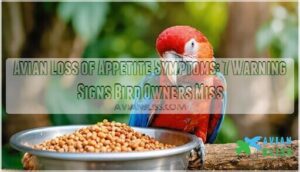 You’ll spot avian loss of appetite symptoms when your bird leaves food untouched, loses weight rapidly, or produces abnormal droppings.
Watch for lethargy, fluffed feathers, and sitting at the cage bottom instead of perching. Your feathered friend might stop vocalizing or seem disinterested in favorite treats.
Changes in dropping color, consistency, or frequency signal digestive issues.
Don’t wait if you notice labored breathing, discharge from eyes or nostrils, or unusual behavioral shifts.
Birds hide illness well, so subtle changes often mean serious problems. These warning signs can indicate infections, stress, nutritional deficiencies, or environmental factors that many owners overlook until it’s almost too late.
Table Of Contents
- Key Takeaways
- Recognizing Appetite Loss
- Bird Health Diagnosis
- Causes of Appetite Loss
- Symptoms of Sick Birds
- Care and Prevention Measures
- Frequently Asked Questions (FAQs)
- What happens if a bird is tired?
- How do you know if a bird has avian flu?
- How do you know if a bird is tired?
- How do you know if a bird has HPAI?
- How do you know if a pet bird has health problems?
- How do you know if a feathered bird is hungry?
- Why is my bird suddenly not eating?
- How do birds act when they are sick?
- What are gastrointestinal symptoms in birds?
- What are the symptoms of vitamin A deficiency in birds?
- Conclusion
Key Takeaways
- Monitor your bird’s weight weekly – Even small weight drops signal serious problems since birds hide illness well, and catching changes early makes treatment possible instead of critical.
- Watch droppings daily for color and consistency changes – Dark green, yellow, watery, or loose droppings indicate digestive issues, infections, or organ problems before other symptoms appear.
- Do not wait if you notice lethargy, fluffed feathers, or breathing difficulties – These signs, combined with appetite loss, often mean your bird needs immediate veterinary attention since conditions worsen rapidly.
- Create a stress-free environment with proper nutrition – Clean cages daily, provide pellet-based diets with fresh vegetables, and maintain consistent routines to prevent appetite loss from environmental factors.
Recognizing Appetite Loss
Your bird’s appetite changes can slip by unnoticed until serious health problems develop. Learning to spot early warning signs of appetite loss helps you catch illness before it becomes life-threatening.
Weight Loss Indicators

Despite your bird’s full food bowl, subtle changes in body weight reveal the truth about avian inappetence.
Gram tracking provides quantifiable signs that bird anorexia has begun, often before you notice behavioral changes.
Early detection through weekly weight monitoring catches parrot weight loss when it’s still treatable, not critical.
Changes in Droppings
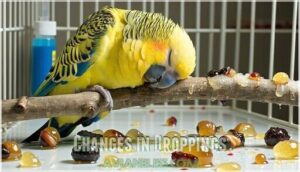
Your bird’s droppings tell a story that’s easy to miss. When appetite drops, these waste products become detective clues revealing internal problems. Fresh droppings should look firm and coiled with clear liquid—anything else signals trouble brewing.
Your bird’s droppings are nature’s health report card – read them carefully.
Key droppings changes to watch:
- Color Variations – Dark green stool or yellow hues indicate digestive problems and poor nutrient absorption
- Droppings Consistency – Watery texture or loose stools suggest illness affecting the digestive tract
- Urates Analysis – White portions becoming discolored or absent point to kidney or liver issues
- Undigested Food – Visible seeds or pellets in droppings mean your bird’s system isn’t processing nutrients properly
Bird droppings analysis helps catch avian loss of appetite early. Consider using analysis products for birds to gain further insight. Normal Droppings Frequency varies by species, but sudden changes warrant attention. These bird symptoms often appear before obvious bird illness signs, making daily monitoring your best defense against serious health problems.
Lethargy and Inactivity
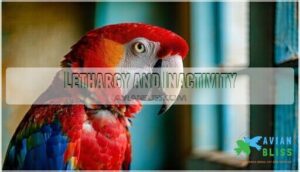
When your bird displays energy conservation behaviors, it’s signaling potential bird illness symptoms.
Watch for reduced movement and altered sleep patterns – healthy birds stay active throughout the day.
Social isolation often accompanies weakness signs, as sick birds withdraw from their usual interactions.
Bird lethargy manifests through prolonged perching without normal preening or play.
These avian loss of appetite indicators require immediate attention, as bird appetite loss frequently follows decreased activity levels, which can be a sign of bird illness symptoms.
Loss of Interest in Food
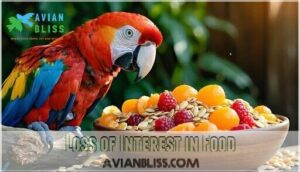
When your bird turns up its beak at favorite snacks or starts skipping meals, you’re witnessing classic avian appetite loss.
These eating habits changes signal trouble since birds have high metabolic rates, making dangerous lapses in feeding potentially life-threatening.
Whether it’s parrot not eating, chicken refusing food, or finch decreased appetite, monitor closely.
Stress from environmental changes can also reduce a bird’s appetite, which is a significant concern due to the potential for life-threatening consequences, and it is crucial to address the issue of avian appetite loss promptly.
Bird Health Diagnosis
When your bird stops eating, you’ll need a proper diagnosis that goes beyond guesswork.
Your vet will examine droppings for color changes, parasites, and infections while reviewing your bird’s medical history to pinpoint the exact cause of appetite loss.
Analyzing Droppings Color
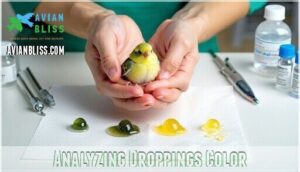
Looking beyond the surface, your bird’s droppings reveal essential health information that many owners overlook.
Green droppings often signal appetite loss or bile concentration from reduced food intake. Yellow hues in urates typically indicate liver problems, while watery stool suggests digestive issues.
Changes in urates composition reflect kidney function. Normal bird droppings contain three distinct parts – monitoring these helps detect early bird illness requiring immediate bird veterinary care.
Veterinary Examination Procedures
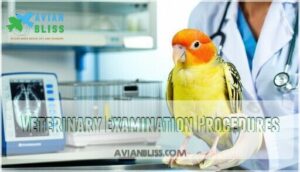
During your bird’s veterinary examination, the vet performs a thorough physical examination, checking eyes, beak, and body condition.
Diagnostic testing may include blood work and radiographs to identify underlying issues.
Sample collection from droppings helps detect infections or parasites.
Your vet will discuss anesthesia risks if procedures require sedation.
Post-exam care instructions guarantee your bird’s recovery at home.
Medical History Reviews
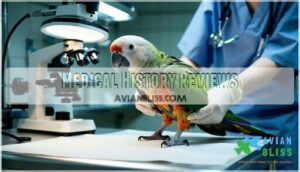
Your vet’s medical history review acts like detective work, piecing together past illnesses and genetic predispositions that might explain current avian anorexia causes.
They’ll examine medication history, previous treatments, and vaccination records to identify patterns.
This bird medical history review helps pinpoint specific avian diseases or hereditary issues affecting your bird’s appetite, making the avian veterinary examination more targeted and effective.
Causes of Appetite Loss
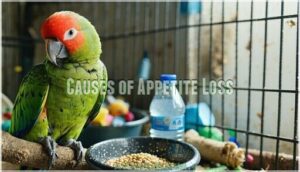
Understanding what triggers appetite loss in your bird can mean the difference between early intervention and emergency vet visits.
Your feathered friend’s eating habits change for four main reasons: stress from environmental shifts, infections lurking in their system, missing nutrients in their diet, or natural seasonal patterns.
Stress and Environmental Factors
Environmental stress hits your bird like a perfect storm, disrupting appetite faster than you’d expect.
Stress strikes birds instantly, turning eager appetites into dangerous refusal faster than most owners realize.
Poor cage placement near high-traffic areas creates constant anxiety, while routine changes shake their sense of security.
Common stress triggers include:
- Noise pollution from TVs, vacuum cleaners, or construction
- Social isolation when birds lack interaction with owners or companions
- Inadequate environmental enrichment without toys, perches, or mental stimulation
- Sudden routine changes in feeding times, cage location, or household schedules.
Your bird’s environment shapes their eating habits more than most owners realize.
Infections and Parasites
Tiny invaders pack a powerful punch in regards to stealing your bird’s appetite.
Bacterial infections like salmonella hit hard and fast, while fungal diseases creep in slowly.
Protozoal infections cause gut inflammation that makes eating painful.
Worm infestations steal nutrients before your bird can use them.
These avian parasites often work together, creating a perfect storm of illness that requires immediate preventative treatments.
Regular check-ups can help identify types of parasites early on.
Nutritional Deficiencies
Poor nutrition hits birds harder than most owners realize.
Seed-only diets lack essential nutrients, creating a domino effect of health problems.
Your bird’s refusal to eat might stem from these common deficiencies:
- Vitamin A deficiency – causes oral lesions that make eating painful
- Calcium deficiency – leads to muscle tremors and lethargy
- Protein shortfalls – result in weakness and decreased appetite
- Mineral imbalances – disrupt normal bodily functions.
Bird nutritional deficiencies affect 75% of parrots on all-seed diets.
Supplementation risks exist, so consult your vet before making changes.
Seasonal Changes and Diet
During Molting Season, your bird’s energy redirects toward feather growth, naturally reducing appetite.
Breeding Season brings hormonal shifts affecting food intake.
Temperature Effects alter metabolism – cooler weather increases caloric needs while heat decreases them.
Seasonal Foods like fresh fruits can spark interest.
Smart Dietary Adjustments help maintain proper bird nutrition throughout these natural bird seasonal changes, including considerations for Seasonal Foods.
Symptoms of Sick Birds
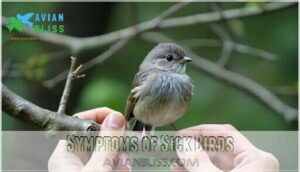
When your bird stops eating, other symptoms often appear that reveal the full picture of their illness.
Watch for respiratory issues, changes in feather condition, labored breathing, and shifts in behavior that signal your pet needs immediate veterinary attention.
Discharge and Respiratory Issues
Beyond appetite changes, you’ll notice discharge from your bird’s eyes or nostrils signaling potential respiratory infections.
Watch for these warning signs that often accompany breathing difficulties:
- Nasal discharge – Clear or colored fluid from nostrils indicates infection
- Eye discharge – Watery or thick secretions suggest illness progression
- Labored breathing – Tail bobbing or open-mouth breathing shows distress
- Excessive sneezing – More than occasional sneezing warrants veterinary attention
Changes in Feather Condition
Your bird’s feathers act like a health barometer—dullness, ruffled appearance, or excessive preening signal trouble.
Healthy feathers should look sleek and smooth, not constantly fluffed or patchy from feather plucking.
Watch for molting issues outside normal seasonal patterns, as abnormal growths or persistent feather dullness often accompany avian loss of appetite and indicate underlying illness requiring veterinary attention.
Labored Breathing and Swelling
Respiratory distress shows up as labored breathing, wheezing, or open-beak breathing during rest.
You’ll notice your bird working harder than normal to breathe.
Body swelling around the abdomen or face often signals fluid accumulation from heart problems or infections.
Lumps or unusual growths may indicate tumor indicators requiring immediate veterinary attention.
These aspergillosis symptoms worsen quickly, making early detection essential for treating bird respiratory health issues effectively.
Immediate action is needed because air sac mites can cause labored breathing.
Behavioral Changes and Lethargy
When your bird starts acting like a feathered zombie, you’re witnessing bird behavioral changes that signal trouble.
Activity decline and social isolation replace normal curiosity.
Vocalization changes mean fewer chirps or unusual sounds.
Sleep pattern disruptions, excessive bird lethargy, and feather plucking indicate stress.
These bird appetite changes often accompany avian loss of appetite, creating a concerning cycle related to avian loss.
Care and Prevention Measures
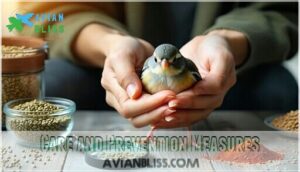
You can prevent appetite loss by creating the right environment and staying alert to changes in your bird’s health.
Think of yourself as a detective – watching for subtle shifts in eating habits, weight, and behavior that could signal trouble before it becomes serious.
Providing a Clean Environment
Creating a spotless bird environment isn’t rocket science, but it’s your feathered friend’s lifeline. Clean cages daily, removing waste and replacing food bowls.
Disinfect perches weekly using bird-safe cleaners. Change water twice daily for proper water sanitation.
Good air quality prevents respiratory issues. Simple hygiene protocols like washing your hands before handling birds reduce disease transmission risks substantially.
Maintaining a clean cage is essential, and you can find essential cleaning supplies to help.
Balanced Diet and Hydration
When providing proper nutrition becomes your bird’s lifeline, you’ll want to focus on nutrient absorption through diverse food choices. A bird nutritious diet requires premium pellets as the foundation, complemented by fresh vegetables and limited fruits to promote maximum food variety.
Many owners find it useful to buy electrolyte solutions for their birds.
- Water Quality: Replace fresh water daily and clean bowls with hot, soapy water to prevent bacterial growth
- Hydration Methods: Offer electrolyte solutions during illness and consider bird encouraging hydration techniques like shallow dishes
- Dietary Supplements: Consult your vet before adding vitamins, as over-supplementation can harm nutrient absorption
- Bird Diet Balance: Provide 2 teaspoons of pellets daily with varied fresh produce, avoiding seed-only diets that lack essential nutrients
Regular Veterinary Check-ups
Annual wellness exams offer your best defense against appetite-related health crises.
Your avian veterinarian can detect subclinical illnesses before symptoms appear, potentially catching problems in 60% of birds during routine check-ups.
| Exam Component | Detection Rate | Prevention Benefit |
|---|---|---|
| Blood work analysis | 30% liver/kidney issues | Early intervention possible |
| Parasite screening | 20% infestations found | Prevents appetite decline |
| Weight monitoring | 10% weight loss detected | Signals underlying disease |
| Nutritional counseling | 35% diet improvements | Reduces illness risk |
| Vaccine updates | Disease prevention | Protects against anorexia-causing viruses |
Regular vet visits increase your bird’s lifespan by 15-25% compared to those without preventative care.
Monitoring Weight and Behavior
Weekly bird weight monitoring catches problems before they become emergencies.
Track your bird’s grams daily since even small Weight Fluctuations signal trouble.
Watch Activity Levels, Social Interaction patterns, and Vocalization Changes closely.
Notice Sleep Patterns shifts too—sick birds often sleep more than usual.
These behavioral changes alongside weight loss reveal bird appetite loss causes early.
Examining parrot droppings regularly can also provide valuable health insights.
Frequently Asked Questions (FAQs)
What happens if a bird is tired?
Like a phone running low on battery that still works but moves slower, tired birds simply need rest and will perk up after napping or sleeping overnight.
Maintaining normal appetite and behavior when awake.
How do you know if a bird has avian flu?
You’ll spot avian flu through sudden death, lack of energy, decreased appetite, swollen head/eyes/neck, blue discoloration around the head, and respiratory distress like coughing and sneezing.
Most infected birds die within forty-eight hours, which can be a key indicator of the respiratory distress caused by the infection.
How do you know if a bird is tired?
Early bird catches the worm"—but tired birds just need rest!
You’ll notice tired birds remain alert when awake, still eat normally, and perk up after napping, unlike sick birds who stay consistently lethargic.
How do you know if a bird has HPAI?
You’ll recognize HPAI in birds through sudden death, dramatic drops in egg production, nasal discharge, coughing, sneezing, diarrhea, and severe incoordination.
Many birds show no symptoms before dying, making it particularly dangerous.
The virus has also been confirmed in dairy cattle cases across several states, which is a critical finding related to HPAI.
How do you know if a pet bird has health problems?
Healthy birds chirp cheerfully while sick ones sit silently—watch for appetite loss, weight drops, dull feathers, unusual droppings, discharge from eyes or nose, and lethargy lasting over twelve hours.
How do you know if a feathered bird is hungry?
Watch your bird’s behavior around feeding time – they’ll vocalize more, move excitedly toward food, and show increased activity.
Hungry birds often bob their heads, flap wings, or pace near their food bowl when you approach.
Why is my bird suddenly not eating?
Imagine your feathered friend sitting quietly at their food bowl, untouched seeds scattered like forgotten treasures.
You’re likely seeing illness, stress, or environmental changes affecting their appetite – all requiring immediate veterinary attention since birds hide sickness well.
This situation indicates that your bird needs immediate care to address the underlying issue.
How do birds act when they are sick?
Sick birds act lethargic, fluff their feathers, lose appetite, and hide symptoms. You’ll notice discharge from eyes or nose, changes in droppings, labored breathing, and unusual vocalizations indicating illness.
What are gastrointestinal symptoms in birds?
Looking for trouble signs in your bird’s belly? You’ll notice changes in droppings like unusual colors, watery consistency, or undigested food pieces, plus vomiting and decreased appetite.
What are the symptoms of vitamin A deficiency in birds?
You’ll notice your bird’s eyes becoming inflamed or infected, respiratory problems developing, and their immune system weakening.
Their feathers may look dull, and they’ll be more susceptible to infections throughout their body, with a weakening of their overall immune system.
Conclusion
Sure, some bird owners think appetite loss isn’t urgent, but waiting can be fatal. Recognizing avian loss of appetite symptoms early saves lives.
Your bird depends on you to notice subtle changes before they become emergencies. Watch for weight loss, abnormal droppings, and behavioral shifts daily.
Don’t second-guess yourself when something seems off. Trust your instincts and contact an avian veterinarian immediately.
Quick action transforms what could be a tragedy into a successful recovery story for your feathered companion.
- https://vcahospitals.com/know-your-pet/recognizing-the-signs-of-illness-in-pet-birds
- https://stfrancisanimalandbird.com/proventricular-dilatation-disease/
- https://www.advancedmobilevet.com/blog/474993-common-sicknesses-in-birds
- https://www.petmd.com/bird/behavior/how-tell-if-your-bird-unhappy-or-stressed-and-what-do
- https://birdsupplies.com/blogs/news/signs-of-bird-malnutrition-and-how-to-fix-your-bird-s-diet