This site is supported by our readers. We may earn a commission, at no cost to you, if you purchase through links.

Most backyard birds won’t eat snow to stay hydrated—they’ll burn precious calories searching for open water instead. On a bitter January morning, a frozen bird bath isn’t just useless; it’s a missed opportunity to support birds through their hardest season.
The good news is that keeping water liquid costs less effort than you’d think, and the difference it makes to your local flock is immediate and measurable.
Whether you’re working with a concrete pedestal bath or a plastic dish on your deck rail, the right combination of placement, insulation, and low-tech tricks will keep water flowing all winter long.
Table Of Contents
- Key Takeaways
- Winter Bird Bath Protection Basics
- Smart Placement for Less Freezing
- Insulation and Cover Options
- Low-Cost Ice Prevention Methods
- Top 7 Heated Bird Bath Picks
- Safe Materials and Winter Maintenance
- Frequently Asked Questions (FAQs)
- How to protect bird bath in winter?
- Can a bird bath be left out in the winter?
- How do you keep a bird bath from freezing without electricity?
- Can I leave my bird bath out all winter?
- Why put pennies in a birdbath?
- What do you do with a bird bath in the winter?
- Can birds use frozen bird baths safely?
- What temperature should bird bath water be?
- How often should winter bird baths be refilled?
- Should bird baths be moved indoors during blizzards?
- Conclusion
Key Takeaways
- Birds need liquid water every single day in winter—not just for drinking, but to keep their feathers insulating properly and their metabolism running in the cold.
- Where you place your bird bath matters as much as what you put in it—a south-facing spot with wind protection and an elevated stand can reduce freezing without any extra gear or electricity.
- Freeze-thaw cycles quietly destroy ceramic and concrete baths from the inside out, so switching to frost-resistant materials like fiberglass, stone resin, or reinforced plastic is a smart long-term move.
- You don’t need expensive equipment to keep water liquid—floating a ping pong ball, pouring warm water each morning, and keeping the depth at 2–3 inches are low-cost tricks that genuinely work on most winter days.
Winter Bird Bath Protection Basics

Winter is harder on your bird bath than you might think — and on the birds that depend on it. frozen basin isn’t just useless; it can crack, and the birds lose a critical water source overnight.
Even ground-level setups aren’t immune — learn which bird bath styles best support ground-dwelling birds before the cold hits.
Here’s what you need to know before the first frost hits.
Why Birds Need Unfrozen Water
Even in winter, birds need liquid water every single day — and not just for drinking. Hydration needs, digestive efficiency, and preening support all depend on access to unfrozen water.
Here’s what’s actually at stake:
- Bird hydration keeps metabolism running during bitter cold
- Calorie conservation — an unfrozen source means no energy wasted melting snow
- Digestive efficiency improves when birds can drink freely alongside their seeds
- Preening support keeps feathers insulating properly, which is their best thermoregulation aid
- Winter wildlife care starts with one simple thing: a freezeproof birdbath they can actually use
Providing fresh water availability helps birds avoid the energetic cost of melting snow.
How Freezing Damages Bird Baths
Keeping water liquid protects the birds — but it also protects the bath itself. Freeze-thaw cycles put real material stress on basins. Water seeps into tiny pores through porous absorption, freezes, and expands by nearly 9%. That pressure causes joint separation, surface cracking, and rim warping over time.
Freeze-thaw cycles don’t just threaten birds — they silently crack, warp, and split the bath itself
| What Happens | Why It Matters |
|---|---|
| Porous absorption | Water enters cracks and freezes inside |
| Frost damage | Hairline fractures widen each cycle |
| Surface ice load | Adds weight stress to thin walls |
| Joint separation | Loosens basin from pedestal |
| Heat loss | Accelerates deep freezing in shallow baths |
Ceramic and concrete suffer most from porosity and structural issues.
Signs Your Bath Needs Protection
Your bath often shows the warning signs before things get serious. Watch for these four red flags:
- Ice Crust Formation along the rim, or frost around the base
- Water Cloudiness after temperature dips — a sign of bacterial buildup
- Leaking Seals, where the water surface freezes and expands against edges
- Bird Avoidance — when they stop visiting, frost damage has likely set in
Best Times to Start Winterizing
Once you’ve spotted those warning signs, don’t wait. Early Fall Preparation is your best friend here — aim to start winterizing bird baths to prevent freezing by early October, or mid-September if you’re in a colder region.
Watch Regional Freeze Forecasts and use Seasonal Daylight Changes as your cue.
A simple Calendar Reminder Setup for October 1st keeps cold weather from catching you off guard.
Smart Placement for Less Freezing
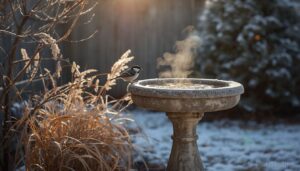
Where you put your bird bath matters more than most people realize. A little strategic thinking about sun, wind, and elevation can cut down on freezing without any extra gear.
Here are the placement moves that make the biggest difference.
Choose a Sunny South-facing Spot
Sunlight is your first line of defense.
A south-facing spot gives your birdbath roughly 6–8 hours of sunlit hours through winter, gently warming the water without any electricity.
Look for a shadow-free zone with clear sky overhead and no overhanging trees.
A slight slope drainage helps keep the base dry, while a heat-reflective surface nearby boosts solar heating for birdbaths naturally.
Shield The Bath From Wind
Even a light wind strips heat from water fast — that’s why a good windbreak matters as much as sunlight. Dense evergreens make a natural Living Evergreen Shield, while Portable Fabric Screens handle sudden cold snaps.
For Aesthetic Wind Breaks, bamboo or a decorative stone wall work beautifully. Aim for Microclimate Optimization with Wind Barrier Materials placed on your prevailing wind side, cutting gusts by up to 60 percent.
Raise It Off Cold Ground
Cold ground pulls heat from your bath faster than you’d think — Ground Heat Isolation starts with getting the basin off the soil entirely.
Raising the basin on bricks or a sturdy pedestal also makes bird bath cleaning and maintenance easier, especially when you’re rinsing with a simple vinegar solution.
Elevated Stand Materials make this simple:
- Cedar or cedar-composite stands offer natural Thermal insulation and moisture resistance
- Stability Bracing with cross-supports manages winter wind without wobbling
- Raised height means Easy Refill Access — no kneeling in frozen mud
Visual Height Appeal is a bonus.
Keep It Near Safe Perches
A perch placed 3 to 6 feet away gives small birds a safe landing zone before they hop in — that’s your Perch Distance Guidelines working quietly in the background. Aim for Perch Height Safety at 5 to 7 feet off the ground.
Choose rough wood for Perch Material Grip, apply a Predator Guard Design on the pole, and don’t skip your Seasonal Perch Inspection after ice storms.
Insulation and Cover Options
Good placement helps, but insulation and covers take your winter setup to the next level. simple additions can make a real difference in how long your water stays liquid.
Here are the best options to explore.
Use Dark Materials to Absorb Heat

Dark colors are quiet workhorses on cold sunny days. Painting your basin’s interior with durable dark coatings — ones using carbon black pigments and a matte surface finish — pulls in thermal absorption from sunlight and holds warmth longer than plain concrete ever could.
- Line the basin with a black liner or black waterproof insulation
- Choose dark-colored birdbaths for passive solar benefits
- Apply rough texture benefits by using textured coatings for better light capture
- Try thermal mass pairing with a concrete or stone base
- Use flat matte paint — gloss reflects the warmth you need
Add Straw, Burlap, or Foam Insulation
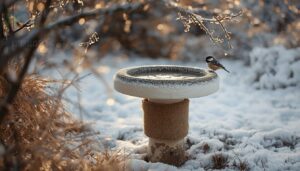
Think of these materials as a cozy scarf for your bird bath. Straw boasts an impressive R-value of 30–40, acting as a slow-release thermal buffer overnight.
Wrap burlap snugly around the basin — its breathable weave naturally manages moisture venting, preventing mold buildup. A foam collar fit seals the base tightly against ground frost.
All three are renewable insulation benefits worth layering together.
Try Clear Dome or Wind Covers

Once your bath is wrapped up snugly, a clear dome or wind cover takes things further. These shields offer excellent light transmission so solar warmth still reaches the water, while blocking the gusts that drain heat fastest.
Good ventilation benefits prevent foggy condensation buildup inside. Most use frost-resistant materials with a solid snow load rating — practical, attractive weatherproof birdbath accessories that blend quietly into your garden.
Compare Heated Birdbath Covers for Winter

Once you’ve got your dome or wind cover sorted, heated birdbath covers are worth a look. They vary quite a bit in price per watt, thermostat accuracy, and thermal insulation quality.
Some energy efficient heating options run as low as 25 watts. Better models include solid safety features and longer warranty length.
Compare a few before committing — budget and pricing options exist for every setup.
Check Fit, Weather Resistance, and Safety

Once you’ve picked a cover, make sure it actually fits your setup. Check that your insulated basin sits level — base leveling matters more than it sounds.
Look for corrosion-resistant fasteners, solid seal integrity around the rim, and frost-resistant materials that won’t crack at -10°C.
Electrical ground fault protection is non-negotiable. Good windbreak placement and weather-resistant materials round out a safe, temperature-regulated winter bath.
Low-Cost Ice Prevention Methods
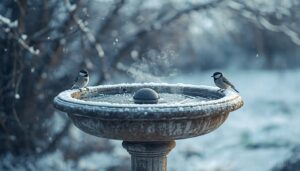
Keeping your bird bath ice-free doesn’t have to mean spending a lot of money or running an extension cord across the yard. A few simple, low-tech tricks can make a real difference on most winter days.
Here’s what actually works.
Use Floating Objects to Break Ice
Something as simple as a rubber duck can be a surprisingly effective icebreaker.
Drop a ping pong ball or cork into the bath — buoyancy dynamics keep them bobbing, and wave-driven drift means they’re constantly nudging the surface.
Object shape effects matter too: rounder floats crack ice more evenly. Place them safely away from perches, and surface texture impact stays minimal for visiting birds.
Add Warm Water in The Morning
Every morning, a simple pour of warm water does more than melt surface ice — it helps Bird Health Support and keeps your winter bird care routine consistent.
Here’s how to make it count:
- Pour 240 ml of warm water (35–40°C) for gentle Thermal Comfort
- Time it early for Morning Hydration Boost
- Avoid boiling water — it cracks basins
- Skip a bird bath heater? This buys time
- Repeat for steady water temperature management
Keep Water 2–3 Inches Deep
Keeping water at 2–3 inches hits a sweet spot for Depth Heat Retention and Ice Layer Management. Shallow basins freeze more slowly than you’d expect because the Surface Area Ratio works in your favor — less exposed water, less heat lost overnight.
It’s also ideal for Bird Access: small birds land and drink confidently.
Top up regularly for smart Water Renewal Frequency and consistent freeze prevention.
Use Gentle Flow With a Dripper
Adding a dripper turns still water into moving water — and moving water is nature’s own freeze prevention trick. Even at 2–5 watts, a quiet drip mechanism disrupts ice crystal formation all morning long.
- Set Dripper Height Optimization at 2–4 inches above the surface
- Use Flow Rate Calibration to keep output gentle, not splashy
- Try a Solar Dripper for cord-free winter use
- Pick an Anti-Ice Drip Design with a frost-resistant outlet
- Pair with a small bird bath pump for better water turnover
Combine Passive and Active Methods
Think of it as a backup plan that actually works. Pair a solar heater with dark, frost-resistant materials and a low-wattage bird bath heater — your own Hybrid Heat System.
Toss in floating objects as icebreakers for bird baths, wrap the base with thermal insulation for birdbaths, and you’ve got an Insulated Pump Loop with Thermostat Circulation.
Dual-Mode Energy Saver thinking without the big energy bill.
Top 7 Heated Bird Bath Picks
If you’re ready to skip the workarounds and just keep things reliably unfrozen, a heated bird bath is worth every penny. There are some solid options out there, whether you want a full heated basin or just a heater that fits what you already own.
Here are seven worth taking a look at.
1. Ikuchelife Outdoor Bird Bath Heater
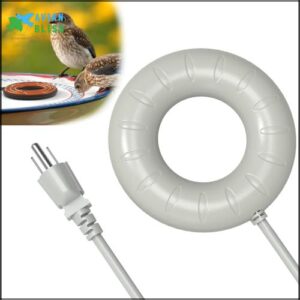
The Ikuchelife Outdoor Bird Bath Heater keeps things simple — drop it in, plug it in, done.
Its 70W thermostat-controlled element activates only when water nears freezing, then shuts off once things warm up, so it’s not running your electricity bill unnecessarily.
The corrosion-resistant housing holds up through wet winter conditions, and since no permanent mounting is needed, you can move it between baths as needed.
It’s a low-fuss option that quietly does its job all season.
| Best For | Backyard bird lovers and small farm owners who want a simple, no-install way to keep water available for wildlife through the winter. |
|---|---|
| Power Rating | 250W |
| Thermostat Control | Yes |
| Basin Diameter | 7.52 in |
| Mounting Type | Freestanding |
| Safety Certified | No |
| Cord Length | 3.3 ft |
| Additional Features |
|
- Plug-and-play setup — no tools, no wiring, just drop it in and go
- Built-in thermostat keeps water from freezing without running constantly
- The fountain effect looks nice and draws in more wildlife like deer and turkeys
- Pump failures are a common complaint, sometimes stopping after just a short time
- Can trip GFCI outlets, which hints at some electrical design quirks
- Water evaporates fast in cold or windy conditions, so you’ll be refilling it often
2. Reallnaive Heated Outdoor Bird Bath Insulation Tape
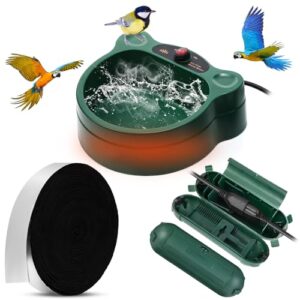
The Reallnaive takes a different approach — instead of sitting in the water, it works from the outside in. heated bowl holds about 0.475 gallons and keeps water between 98.6°F and 107.6°F using built-in thermostatic control, so birds always find something drinkable.
The real bonus is the 32.8-foot insulation tape included in the kit. Wrap it around exposed pipes or the bath’s base, and you’re cutting heat loss before it starts.
Practical, bird-safe, and surprisingly thorough for what it’s.
| Best For | Anyone who wants to keep outdoor wildlife and pets hydrated through winter while also protecting exposed pipes from freezing. |
|---|---|
| Power Rating | Unspecified |
| Thermostat Control | Yes |
| Basin Diameter | 9.06 in |
| Mounting Type | Ground/Deck |
| Safety Certified | No |
| Cord Length | 5 ft |
| Additional Features |
|
- The thermostat keeps water in a safe, drinkable range without any guesswork — just plug it in and forget it.
- The 32.8-foot insulation tape is a genuinely useful bonus, giving exposed pipes real protection against cold snaps.
- Lightweight and compact enough to drop anywhere — deck, patio, or ground — without any real setup hassle.
- The 0.475-gallon bowl is pretty small, so if you’ve got a busy backyard, you’ll be refilling it often.
- No extension cord included, so you’ll need to have one on hand before it’s useful.
- The insulation tape’s adhesive can start to fail on rough surfaces or after extended outdoor exposure.
3. API Heated Outdoor Bird Bath
Where the Reallnaive wraps warmth around the outside, the API Heated Outdoor Bird Bath keeps things simple and self-contained. Its 50-watt thermostatically controlled heater sits fully enclosed beneath the basin — birds never touch it, and nor does the weather.
The 12-inch plastic basin is shallow enough for small birds to use comfortably, and the 30-inch corrosion-resistant metal stand keeps water well above snow level.
Solid, no-fuss, and built to stay outside all winter without complaint.
| Best For | Bird lovers who want a safe, spacious winter water source that works in seriously cold weather and fits on whatever mounting setup they already have. |
|---|---|
| Power Rating | Unspecified |
| Thermostat Control | Yes |
| Basin Diameter | 20 in |
| Mounting Type | Pole/Pedestal |
| Safety Certified | CSA & UL Listed |
| Cord Length | Unspecified |
| Additional Features |
|
- Big 20-inch basin gives multiple birds room to drink and bathe at the same time
- Fully enclosed heater keeps wildlife safe and holds up past -30°C
- Flexible mounting options — poles, logs, pedestals, you name it
- No stand included, so you’ll need to sort out your own mounting solution
- Basin runs pretty deep for smaller birds; a stone insert helps but it’s an extra step
- At $129.99, it’s on the pricier side compared to other heated birdbaths out there
4. Prime Retreat Heated Deck Bird Bath
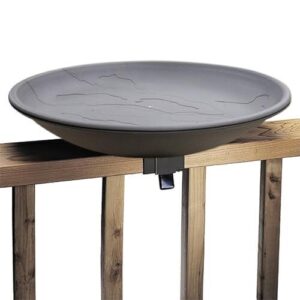
If your birds tend to gather near the deck, this one’s worth a look.
The Prime Retreat Heated Deck Bird Bath mounts directly onto a horizontal wooden rail, freeing up floor space while keeping fresh water right where the action is.
Its 20-inch bowl sits at a comfortable height, holds about 2 inches of water, and the 150-watt enclosed heater manages sub-zero temperatures without fuss.
The tilt bracket makes refilling genuinely easy — no lifting, no spilling.
| Best For | Backyard bird watchers who want a low-maintenance, winter-ready water source mounted right on their deck. |
|---|---|
| Power Rating | Unspecified |
| Thermostat Control | Yes |
| Basin Diameter | 20 in |
| Mounting Type | Deck Rail |
| Safety Certified | No |
| Cord Length | Unspecified |
| Additional Features |
|
- The integrated heater keeps water liquid even in sub-zero temps, so birds have a reliable spot all winter long
- The tilt bracket makes refilling and cleaning a breeze — no awkward lifting or spillage
- Deck-rail mounting saves floor space and puts the birds right at eye level
- The bracket can have alignment issues with certain rail designs, sometimes needing a shim or extra screws to sit right
- At $112.99, it’s a bigger investment than a basic bird bath, so it’s not ideal if you’re on a tight budget
- The 20-inch bowl is roomy, but that size can feel like a lot on a smaller deck
5. Xyingshine Outdoor Bird Bath Heater
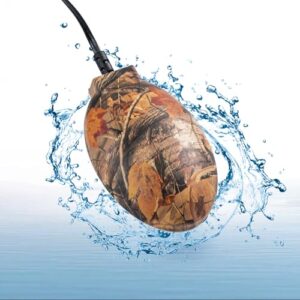
Already got your deck sorted? Good. Now here’s a no-fuss option for your existing bath.
The Xyingshine Outdoor Bird Bath Heater drops straight into any basin — no assembly, no guesswork. Its 60-watt element kicks on at 35.6°F and cuts off at 95°F, so it’s only running when it actually needs to.
Compact at under 5 inches wide, it fits most standard baths easily. Just note: the two-prong cord isn’t grounded, so pair it with a GFCI outlet for safe outdoor use.
| Best For | Bird and poultry owners who want a simple, drop-in solution to keep outdoor water from freezing during mild winters. |
|---|---|
| Power Rating | 60W |
| Thermostat Control | Yes |
| Basin Diameter | 4.9 in |
| Mounting Type | Submersible |
| Safety Certified | No |
| Cord Length | 38 in |
| Additional Features |
|
- Plug-and-play setup — just drop it in and plug it in, no tools needed
- Built-in thermostat means it only runs when necessary, keeping energy use low
- Compact size fits most standard bird baths and small poultry waterers
- Struggles in hard freezes below 20°F, so it’s not reliable in colder climates
- Two-prong, non-grounded cord raises safety concerns for outdoor/submerged use
- Construction feels more plastic than the advertised aluminum, which could affect durability and heat transfer
6. API Heated Bird Bath with Stand
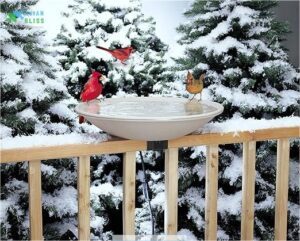
Want something that stands on its own — literally? The API Heated Bird Bath with Stand gives you a complete setup right out of the box.
The 30-inch rust-resistant metal stand keeps the basin lifted off cold ground, and three ground stakes lock it in place when wind picks up.
A fully enclosed 50-watt thermostatically controlled heater maintains unfrozen water without running constantly.
The 12-inch plastic basin is easy to clean, and the whole unit works year-round.
| Best For | Backyard birders who want a freestanding heated bath that works right out of the box, no railing or deck required. |
|---|---|
| Power Rating | 150W |
| Thermostat Control | Yes |
| Basin Diameter | 20 in |
| Mounting Type | Deck Rail/Stand |
| Safety Certified | CSA & UL Listed |
| Cord Length | Unspecified |
| Additional Features |
|
- Fully enclosed 150W heating element keeps water liquid even on sub-zero nights, so birds always have a reliable drink
- Comes with both a 30-inch metal stand and a deck-rail clamp, giving you flexible placement options
- Quick-release latch makes draining and cleaning fast — no tools needed
- The basin sits at a tilt by design, which can look a little off if you prefer a clean, symmetrical setup
- Stand assembly can be tricky, and some users have had to improvise to get everything lined up right
- The power cord isn’t waterproof, so you’ll need to buy a separate outdoor-rated extension cord
7. Farm Innovators Heated Bird Bath
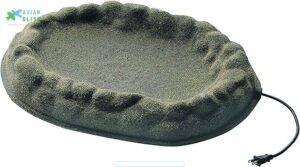
If you want versatility without the fuss, the Farm Innovators BD-75 3-in-1 Heated Bird Bath is worth a look.
A built-in 75-watt thermostat kicks in automatically when temperatures drop, keeping water usable down to -23°C.
Mount it on a deck, post, or set it at ground level — your call.
The 13-inch dark green basin pops out for quick cleaning, and the weather-resistant seals hold up through freeze-thaw cycles.
Simple, flexible, and built for real winter conditions.
| Best For | Backyard bird watchers and wildlife enthusiasts who want a low-maintenance, natural-looking heated bath that blends into the garden through winter. |
|---|---|
| Power Rating | 70W |
| Thermostat Control | Yes |
| Basin Diameter | 25.75 in |
| Mounting Type | Ground |
| Safety Certified | No |
| Cord Length | Unspecified |
| Additional Features |
|
- The thermostat only kicks in near freezing, so energy costs stay low — we’re talking pennies a day.
- That sand-coated rock finish looks great in a garden and sits stable on the ground without tipping.
- Zero assembly — just plug it in, fill it up, and you’re done.
- The sand coating can crack or flake over time, which sometimes leads to hard-to-find leaks.
- At only 3.5 lbs, a strong gust can knock it out of place — you may need to weigh it down.
- Prolonged deep freezes (below -10°C) can push the heater past its limits, and some users found it gave out after a couple of winters.
Safe Materials and Winter Maintenance
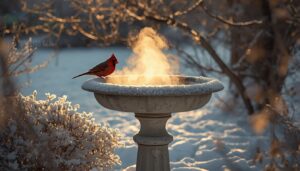
Getting through winter without cracking your bird bath — or losing it to a bad freeze — comes down to two things: what it’s made of and how you look after it. Some materials handle cold beautifully; others don’t stand a chance.
Here’s what to keep in mind to protect your bath all season long.
Choose Frost-resistant Bath Materials
Not all bath materials survive winter equally.
Ceramic cracks unless tiles have proper expansion gaps. Stone and cast stone fare better — their density holds ambient heat longer. Fiberglass with UV stabilization stays flexible instead of brittle. Stone resin’s thermal mass slows freezing noticeably. Metal alloy baths need insulation surrounds but handle hard freezes well.
Choosing frost-resistant, weather-resistant materials upfront saves you a cracked basin by February.
Avoid Salt, Antifreeze, and Chemicals
Tempting as it is to reach for rock salt or antifreeze when ice forms, don’t. Both are genuinely dangerous to birds — ethylene glycol is toxic if ingested, and salts alter water chemistry and damage basin surfaces.
Avoiding harmful practices like boiling water or salt keeps your setup bird-safe.
Instead, lean on natural ice breakers, a solar water circulator, or eco-friendly de-icing methods for bird-safe cleaning and non-toxic additives.
Inspect Cords, Seals, and Heaters
A fraying cord near water is a real danger — don’t wait for something to go wrong. Before freezing temps arrive, run through these quick checks:
- Cord Integrity Checks: Look for fraying, heat spots, or exposed wires; chew-resistant cords and a GFCI outlet are non‑negotiables for electrical safety for outdoor devices.
- Seal Leak Detection and Gasket Condition Monitoring: Feel around the basin edges for gaps; compromised waterproof sealing lets moisture into the housing.
- Heater Performance Testing: Confirm your low voltage heating elements activate at the right temperature and heat evenly — no buzzing or cold patches.
- Electrical Safety Audits: Inspect the junction box for condensation and tighten any loose cord connector kit components before the first hard frost.
Clean and Refill Water Regularly
Fresh water is your birds’ best winter gift. daily water refresh keeps things drinkable and slows ice formation — stale water freezes faster.
algae prevention routine is simple: scrub the basin with a soft brush, rinse twice, and refill with room-temperature water.
Regularly monitor for cloudiness or odor. Biofilm scrubbing tips and safe refill materials matter too — skip soap residue and never add salt.
Prevent Cracking During Freeze-thaw Cycles
Freeze-thaw cycles are basically slow torture for porous stone or ceramic basins. Water seeps into tiny cracks, expands as it freezes, and widens them a little more each time.
Choosing frost-resistant materials with a flexible rim design and thermal expansion joints prevents this.
Add a moisture barrier coating, insulate your basin to build thermal mass, and you’ll sidestep most seasonal stress damage entirely.
Frequently Asked Questions (FAQs)
How to protect bird bath in winter?
Keep water unfrozen by combining smart placement, eco-friendly insulation, and low-cost methods to keep bird bath water unfrozen. Winterizing bird baths to prevent freezing starts before the first frost hits.
Can a bird bath be left out in the winter?
Yes, but it depends on the material. Metal and reinforced plastic handle winter well. Ceramic and concrete crack under freeze-thaw cycles.
With smart placement and basic winterizing of bird baths to prevent freezing, most baths survive the season intact.
How do you keep a bird bath from freezing without electricity?
Position it in full sun, add thermal mass rocks to the basin, and float a ping pong ball to create bubble circulation.
Wrap the base with nighttime insulation tents for extra warmth.
Can I leave my bird bath out all winter?
It depends entirely on your bath’s material. Metal and durable plastic can handle winter just fine.
Stone or ceramic? Those are hard freeze away from cracking.
Know what you have before leaving it out.
Why put pennies in a birdbath?
pre-1982 pennies in your birdbath releases copper ions that act as a natural biocide, slowing algae growth and improving water clarity — a simple, low-cost addition to any maintenance routine.
What do you do with a bird bath in the winter?
Keep it ice-free, clean, and full of fresh water.
A little insulation, smart placement, and the occasional warm top-up go a long way toward winterizing bird baths to prevent freezing all season.
Can birds use frozen bird baths safely?
Not really. Ice has sharp edges that can cut delicate feet, and cold water drains energy fast. Birds need liquid water year-round — a frozen bath just isn’t a safe alternative.
What temperature should bird bath water be?
The ideal range sits around 35–40°F (7–4°C) — just above the ice formation threshold.
That small window allows species tolerance across most winter visitors while preventing temperature fluctuations that trigger rapid freezing.
How often should winter bird baths be refilled?
Check daily in hard freezes, every two to three days with a heated bath.
Cold snaps, wind, and snow melt impact water depth fast — keep at least two inches ready for birds.
Should bird baths be moved indoors during blizzards?
Not usually.
weatherproof heated bath outdoors does more for winter bird bath care than hauling everything inside. Save indoor setups for extreme blizzards — just mind ventilation concerns, power source stability, and proper window placement.
Conclusion
Even the town crier couldn’t spread the word faster than a reliable water source does among your local flock. Once birds discover it, they’ll return daily—and bring friends.
Your commitment to bird bath winter weather protection doesn’t need to be complicated: a sunny spot, a simple heater, and fresh water added each morning cover most of what winter throws at you.
Small efforts, faithfully repeated, are what see birds through to spring.