This site is supported by our readers. We may earn a commission, at no cost to you, if you purchase through links.
 When you see your parrot vomiting and shaking, you’re dealing with a potential emergency.
These symptoms often signal serious issues like infections, poisoning, or severe stress. The combination is particularly concerning because it suggests your bird’s body is fighting something significant.
Don’t wait to see if it gets better on its own. Keep your parrot warm, remove any food that might be spoiled, and minimize noise and activity around the cage.
Contact an avian veterinarian immediately, as birds hide illness well and deteriorate quickly. While some causes are treatable, timing matters enormously.
Understanding what triggers these symptoms can mean the difference between recovery and tragedy, emphasizing the importance of swift action to potentially save your parrot’s life.
Table Of Contents
- Key Takeaways
- Parrot Vomiting Causes
- Shaking Symptoms Analysis
- Parrot Health Signs
- Emergency Care Procedures
- Preventing Parrot Illness
- Frequently Asked Questions (FAQs)
- Why is my bird shaking and throwing up?
- Why is my parrot trembling?
- What are two signs that a parrot may want to interact with you?
- What should I do if my parrot is vomiting?
- Can parrots vomit from overheating temperatures?
- How long should vomiting episodes last?
- Do certain parrot breeds vomit more frequently?
- Can hormonal changes trigger vomiting behaviors?
- Should I isolate a vomiting parrot immediately?
- Conclusion
Key Takeaways
- Act immediately – Don’t wait to see if your parrot gets better on its own, as vomiting and shaking together signal a serious illness that can deteriorate rapidly in birds.
- Contact an avian vet right away – General vets often lack specialized bird knowledge, so you’ll need an experienced avian veterinarian for a proper diagnosis and treatment.
- Provide emergency care while waiting – Keep your parrot warm, remove food to prevent choking, minimize stress with quiet surroundings, and ensure they’re upright to help with breathing.
- Prevention beats treatment – You can avoid most parrot illnesses through proper nutrition, clean living conditions, regular vet checkups, and maintaining a toxin-free environment.
Parrot Vomiting Causes
When your parrot starts vomiting, you’re likely dealing with one of several serious causes that need immediate attention.
Understanding these causes can mean the difference between a quick recovery and a life-threatening emergency, as it allows for immediate action to be taken.
Dietary Factors

When feeding your parrot, toxic foods like avocado and chocolate can trigger severe vomiting episodes.
Corn concerns include potential yeast growth, while bean safety requires proper cooking – raw kidney beans are particularly dangerous.
Poor nutritional balance weakens your bird’s digestive system, and always follow sprouting guidelines to prevent parrot vomiting.
Avoid processed foods to maintain ideal parrot health through careful dietary management.
Infections and Diseases
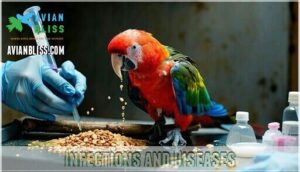
Infectious agents pose serious threats to your parrot’s health.
Viruses, bacteria, and parasites can quickly overwhelm your parrot’s immune system.
Viral pathogens like avian bornavirus cause parrot vomiting and shaking in 70% of proventricular dilatation disease cases.
Bacterial diseases such as psittacosis affect 20% of pet parrots, triggering tremors and digestive upset.
Fungal infections and parasitic infestations also contribute to sick parrot symptoms, requiring immediate veterinary attention.
Toxic Substances
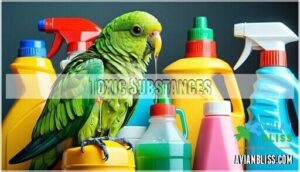
Around your home, toxic substances lurk everywhere, creating serious bird vomiting causes and parrot shaking episodes.
Heavy metals from old paint chips and zinc-coated toys trigger immediate illness. Household cleaners release fumes that damage delicate respiratory systems.
Plant toxins from common houseplants cause rapid poisoning. Even scented candles affect air quality.
A common issue is environmental toxin exposure. Always choose safe toys and maintain toxin-free environments to prevent avian illness.
Stress and Anxiety
Beyond toxic exposure, your parrot’s stress and anxiety can trigger severe vomiting and shaking episodes.
Stress alone can make your parrot physically sick with tremors and vomiting.
Birds hide illness well, making stress-related symptoms particularly dangerous.
Common stress triggers include:
- Environmental Enrichment changes – new cage locations or missing toys
- Social Interaction disruptions – separation from bonded companions
- Training Techniques that overwhelm – forcing unwanted handling
- Behavioral Modification attempts – punishment-based corrections
- Calming Strategies absence – no quiet retreat spaces
Parrot shaking often accompanies bird vomiting causes when anxiety peaks.
Watch for parrot behavior changes like feather plucking or aggression.
These avian illness signs require immediate attention, as parrot health issues worsen rapidly under stress.
Shaking Symptoms Analysis
When your parrot starts shaking along with vomiting, you’re seeing clear warning signs that something’s seriously wrong.
These tremors can indicate anything from poisoning to severe illness, and they often mean your bird’s body is struggling to cope with whatever’s causing the problem, which can be a sign of a severe condition.
Impacts On Daily Life

When your parrot shows shaking symptoms, expect major lifestyle changes that ripple through every aspect of daily living.
Social isolation becomes common as sick birds withdraw from interaction, while altered routines dominate your schedule with frequent vet visits and medication schedules.
Financial strain from emergency care compounds emotional distress, creating ongoing challenges that extend far beyond typical bird health issues, including major lifestyle changes, social isolation, and emotional distress.
Workplace Adaptation Strategies

When parrot shaking head or parrot lethargy affects your schedule, remote work offers flexibility for emergency vet visits.
Flexible schedules let you monitor bird regurgitation symptoms without missing deadlines. Set up an ergonomic setup near your bird’s cage for constant observation.
Use communication tools to update colleagues about parrot loss appetite emergencies. Stress can be a factor in these situations.
Prioritize mental wellbeing by arranging backup care plans with trusted avian vet contacts readily available, ensuring you can handle emergency vet visits.
Future Societal Changes

Within twenty years, avian veterinary care will transform through groundbreaking technological advances and evolving legal frameworks.
- Tech Integration: AI-powered diagnostic tools will instantly detect parrot disease symptoms like head shaking and lethargy
- Economic Shifts: Telemedicine consultations will make expert care accessible when your parrot shows regurgitation or behavioral changes
- Ethical Considerations: New legal frameworks will mandate faster emergency response protocols for critical avian health situations
Parrot Health Signs
You’ll spot serious health problems in your parrot by watching for four key warning signs that demand immediate attention.
These symptoms can signal everything from minor digestive upset to life-threatening emergencies that require fast action to address serious health issues.
Vomiting and Regurgitation
Differentiating vomiting from regurgitation saves your parrot’s life.
True vomiting involves forceful, projectile expulsion with stomach contents, while regurgitation appears gentler with undigested food.
Behavioral regurgitation happens during bonding, but persistent episodes signal crop issues or parrot disease.
When treating sick parrot symptoms, an immediate parrot vet visit becomes critical.
Contact your avian vet for any bird emergency involving repeated vomiting episodes, which may indicate a serious condition requiring prompt avian vet attention.
Tremors and Seizures
When your parrot starts shaking or convulsing, you’re witnessing serious neurological origins that demand immediate attention.
Seizure types range from brief tremors to full convulsions lasting up to two minutes. Tremor causes include hypocalcemia, toxin exposure, and viral infections.
African greys show genetic predisposition to calcium-related seizures. Understanding avian neurologic anatomy is essential for proper diagnosis.
Emergency protocols require removing cage hazards and scheduling an urgent parrot vet visit for proper parrot diagnosis through your avian vet when treating sick parrot emergencies.
Lethargy and Weakness
When your parrot sits hunched with drooping wings, it’s showing classic signs of lethargy that signal serious parrot medical conditions.
Energy Depletion manifests as Reduced Activity and unusual Sleep Changes. Watch for Feather Ruffling without grooming and potential Muscle Atrophy from prolonged weakness.
These symptoms warrant an immediate parrot vet visit since lethargy often precedes parrot emergency situations. Contact your avian vet quickly—weak birds decline rapidly, which can lead to serious parrot emergency situations.
Loss of Appetite
When appetite disappears alongside vomiting and shaking, your parrot’s body is waving red flags that demand immediate attention.
This trio of symptoms often signals serious parrot medical conditions requiring urgent veterinary care.
- Nutritional Deficiencies – Poor diet creates cascading health problems affecting appetite and causing tremors
- Underlying Illnesses – Infections, organ dysfunction, or metabolic disorders trigger food refusal and weakness
- Environmental Stressors – Temperature changes, loud noises, or new surroundings disrupt normal eating patterns
- Behavioral Issues – Stress, depression, or territorial disputes manifest as food avoidance and physical symptoms
Emergency Care Procedures
When your parrot shows signs of vomiting and shaking, quick action can save their life.
You’ll need to act fast while staying calm to provide proper emergency care before reaching your veterinarian.
First Aid for Vomiting
When you spot your parrot vomiting, act fast but stay calm.
Remove all food immediately to prevent crop stasis and reduce aspiration risk.
Never give home remedies or activated charcoal without consulting avian vets first.
Focus on hydration methods like offering small amounts of warm water.
Consider stocking up on essential avian supplies for such emergencies.
Keep your bird upright and monitor breathing patterns closely while preparing for emergency veterinary care.
Stabilizing The Bird
Create a secure environment first. Move your bird to a quiet, dimly lit space away from household chaos.
Wrap them gently in a soft towel for warmth provision and comfort. Keep the temperature around 80-85°F using a heating pad on low.
Offer small amounts of water through a syringe if they’re alert. Immediate actions include removing food temporarily and minimizing stress through calm, quiet movements.
Preparing for veterinary care is crucial, and all these steps should be taken while doing so, ensuring a quiet environment to reduce further distress.
Seeking Veterinary Help
When your parrot’s health takes a nosedive, don’t waste precious time. Contact an avian veterinarian immediately—general vets often lack specialized bird knowledge. Call ahead describing symptoms for Vet Urgency assessment.
- Finding Avian specialists: Search "avian veterinarian near me" or contact local bird clubs for recommendations
- After Hours emergencies: Locate 24-hour animal hospitals with avian experience before you need them
- Cost Concerns preparation: Ask about payment plans or emergency funds—veterinary care costs vary widely
- Specialist Needed situations: Severe symptoms require immediate professional intervention, not home remedies
- Transport safely: Use a small, secure carrier with minimal handling to reduce stress during transport
Medication and Treatment
Your veterinarian will prescribe antiemetic options to stop vomiting and antibiotic usage for bacterial infections.
Supportive therapy includes fluid replacement and nutritional support during recovery. Holistic approaches may complement traditional treatments.
Always follow dosage guidelines exactly – never guess with bird medications. For specialized treatment, explore options for parrot antiemetic products.
Proper parrot care requires professional avian health guidance. Your veterinarian understands bird health better than online forums or bird care tips, providing the best professional guidance.
Preventing Parrot Illness
You can prevent most parrot illnesses by focusing on four key areas that work together to keep your bird healthy.
Proper nutrition, clean living conditions, a safe environment, and routine vet visits will catch problems before they become emergencies, which involves providing a safe environment.
Nutrition and Diet
Proper nutrition prevents many health problems that cause vomiting and shaking in birds. Your parrot’s diet directly impacts their well-being and recovery ability.
Follow these feeding guidelines for ideal avian nutrition: Remember that the majority of their diet should be a pelleted complete diet.
- Safe beans: Lentils, peas, and mung beans work well when sprouted or cooked properly
- Corn concerns: Fresh sweetcorn offers limited nutrition – feed sparingly to avoid digestive issues
- Cooking methods: Steam vegetables or boil beans for 10 minutes, then simmer covered
- Sprouting guide: Soak overnight, grow to ½" tails for maximum nutritional benefits
Hygiene and Sanitation
Everyone knows clean cages prevent illness, but water quality matters most.
Change water daily using filtered sources when possible. Scrub food bowls thoroughly after each meal to eliminate bacteria buildup.
Clean toys weekly with bird-safe disinfectants. Replace perches showing wear or staining.
Air purification systems help reduce airborne pathogens that cause respiratory issues. Maintaining clean feeders is essential to preventing disease spread, which is crucial for preventing illness.
Environmental Factors
Your bird’s environment directly affects its health more than you might think.
Air Quality matters most – avoid aerosols, candles, and cleaning products near your parrot.
Cage Location should be away from kitchens and drafty windows.
Temperature Control keeps your bird comfortable between 65-80°F.
Light Exposure needs 10-12 hours daily for proper sleep cycles.
Noise Levels shouldn’t stress your feathered friend constantly, and Air Quality, Temperature Control, and Light Exposure are crucial for its well-being.
Regular Health Checkups
Schedule vet visits every six months for wellness exams and early detection of health issues.
Your avian veterinarian can spot problems before symptoms appear, making treatment easier and more effective.
Regular parasite control and preventative care protect your bird’s long-term health.
These checkups are your best defense against serious illness in parrot care.
Frequently Asked Questions (FAQs)
Why is my bird shaking and throwing up?
Like a canary in a coal mine, your bird’s distress signals demand immediate attention.
Shaking and vomiting indicate serious illness requiring urgent veterinary care.
Don’t wait – contact an avian vet immediately.
Why is my parrot trembling?
Your parrot’s trembling could signal illness, fear, temperature changes, or stress. Check for other symptoms like lethargy, appetite loss, or breathing issues. Contact an avian vet immediately if trembling persists.
What are two signs that a parrot may want to interact with you?
Eyes sparkling like tiny diamonds signal curiosity and enthusiasm. Your parrot will lean forward, bob its head, or stretch its neck toward you, showing clear interest in interaction and engagement.
What should I do if my parrot is vomiting?
Get your parrot to an avian vet immediately.
Vomiting can signal serious illness, infection, or poisoning.
Don’t wait – birds hide symptoms until they’re critically ill, making prompt veterinary care essential.
Can parrots vomit from overheating temperatures?
While birds typically keep their cool naturally, extreme heat can indeed trigger vomiting in parrots.
You’ll need to move your bird to a cooler area immediately and provide fresh water to prevent dangerous dehydration.
How long should vomiting episodes last?
Vomiting episodes shouldn’t last more than a few minutes. If your bird continues vomiting for over 30 minutes or shows repeated episodes, contact an avian vet immediately for proper evaluation.
Do certain parrot breeds vomit more frequently?
Like snowflakes in a storm, some breeds do show different vomiting patterns.
Cockatiels and budgerigars tend to regurgitate more during breeding season, while larger parrots like macaws vomit less frequently but need immediate attention due to their vomiting patterns.
Can hormonal changes trigger vomiting behaviors?
Yes, hormonal changes can definitely trigger vomiting in parrots. Breeding season hormones often cause regurgitation behaviors, especially in males trying to feed mates or perceived partners like their human caretakers.
Should I isolate a vomiting parrot immediately?
Isolate your parrot immediately to prevent potential disease spread and reduce stress. Monitor breathing, droppings, and behavior closely. Contact an avian vet right away for proper diagnosis.
Conclusion
Recognizing when your feathered companion isn’t feeling well can save their life.
Parrot vomiting and shaking together create a serious situation that demands immediate attention.
You’ve learned the warning signs, emergency steps, and prevention methods that protect your bird’s health.
Don’t hesitate when these symptoms appear, as your quick response and proper care make the difference between recovery and loss.
Trust your instincts, contact your avian veterinarian promptly, and remember that early intervention offers the best outcomes for your beloved parrot.
- https://www.birds-online.de/wp/en/birds-online-english/health-and-diseases/infectious-diseases/vomiting-crop-infection/
- https://www.msdvetmanual.com/bird-owners/disorders-and-diseases-of-birds/disorders-affecting-multiple-body-systems-of-pet-birds
- https://www.merckvetmanual.com/bird-owners/disorders-and-diseases-of-birds/digestive-disorders-of-pet-birds
- https://vcahospitals.com/know-your-pet/recognizing-the-signs-of-illness-in-pet-birds
- https://nwparrotrescue.org/parrot-education/signs-of-illness-and-injury