This site is supported by our readers. We may earn a commission, at no cost to you, if you purchase through links.
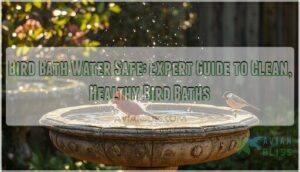
 You’ll need to change your bird bath water every 2-3 days to keep visiting birds healthy and safe.
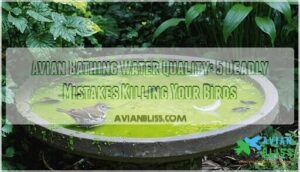
Stagnant water becomes a breeding ground for deadly bacteria, algae, and mosquitoes that can spread disease through your feathered friends. Hot weather accelerates contamination, so daily changes become essential when temperatures soar.
Clean, fresh water isn’t just about hydration—it’s about preventing the spread of avian diseases like salmonella that can wipe out entire flocks.
Use a mild scrub brush to remove biofilm buildup on surfaces where harmful microorganisms love to hide. Most bird enthusiasts don’t realize that even crystal-clear water can harbor invisible threats after just 48 hours.
The depth matters too—keep it shallow at 1-2 inches for smaller songbirds’ safety. What many don’t know are the seven critical mistakes that turn helpful bird baths into death traps.
Table Of Contents
- Key Takeaways
- Water Change Importance
- Safe Water Depth
- Bird Bath Placement
- Seasonal Maintenance
- Water Quality Management
- Cleaning Bird Baths
- Stable Bird Bath
- Water Change Frequency
- Bird Health Considerations
- Maintenance Tips
- Frequently Asked Questions (FAQs)
- Why should birds use a bath?
- Should I change the water in my bird bath?
- Why should you clean a birdbath?
- How to clean a bird bath naturally?
- How often should you clean a bird bath?
- How do you keep birds away from a bird bath?
- How often should I change the water in my bird bath?
- Do copper pennies keep bird baths clean?
- What to put in bird bath water to keep it clean?
- Can chlorinated tap water harm visiting birds?
- Conclusion
Key Takeaways
- Change water every 2-3 days to prevent deadly bacterial growth, algae, and mosquito breeding that can spread diseases like salmonellosis and avian pox through your bird community
- Maintain 1-2 inch water depth for safety – deeper water creates drowning hazards for smaller birds, while shallow water allows confident bathing for all species
- Use non-toxic cleaning methods like diluted vinegar or hydrogen peroxide instead of harsh chemicals, and always rinse thoroughly to remove residue that could poison visiting birds
- Place your bird bath strategically in partial shade, 10-15 feet from dense vegetation where predators hide, while ensuring nearby escape routes to trees or bushes for bird safety
Water Change Importance
Your bird bath’s water becomes a breeding ground for deadly pathogens within 48 hours, spreading diseases like salmonellosis and avian pox throughout your backyard bird community.
Stagnant bird bath water turns deadly within 48 hours—change it or watch birds suffer.
Regular water changes aren’t just about cleanliness—they’re literally a matter of life and death for the birds that depend on your birdbath.
Preventing Disease Spread
The stagnant water in your bird bath becomes a disease transmission highway within 48 hours.
Pathogens like salmonellosis and avian pox multiply rapidly in dirty water, spreading through your feathered visitors.
Safe water changes every 1-2 days break this cycle, protecting bird health while maintaining proper bird hygiene and disease control for your backyard sanctuary.
Regular water circulation methods can also help prevent the growth of harmful bacteria and algae, ensuring a clean and healthy environment.
Controlling Algae Growth
Now that you’re keeping bacteria at bay, let’s talk about algae control.
Algae growth turns your bird bath into a green mess fast.
For effective algae prevention, try these:
- Frequent water changes for natural algaecide
- Water treatment with diluted vinegar
- Copper additions for UV protection
- Use filtered water
- Scrub surfaces weekly to disrupt algae growth
Eliminating Mosquito Breeding
Changing your bird bath water every 2-3 days disrupts mosquito breeding cycles, preventing larvae from maturing into disease-carrying adults.
Stagnant water becomes a nursery for West Nile virus vectors within days.
| Mosquito Control Method | Effectiveness | Frequency |
|---|---|---|
| Daily water changes | Prevents all larvae development | Every 24 hours |
| Water circulation pumps | Disrupts egg-laying behavior | Continuous |
| Copper penny additions | Inhibits 95% of algae growth | Weekly placement |
Mosquito prevention through regular water circulation and bacteria control keeps your feathered friends safe while eliminating breeding grounds that threaten both bird and human health.
Effective mosquito control requires understanding mosquito breeding habits to prevent disease transmission.
Safe Water Depth
Getting the water depth wrong creates a death trap that’ll send birds fleeing from your yard forever.
Wrong depth turns your backyard sanctuary into a bird graveyard overnight.
You’ll need exactly 1-2 inches of water depth with the right materials to keep your feathered visitors safe** and coming back for more.
Material Selection
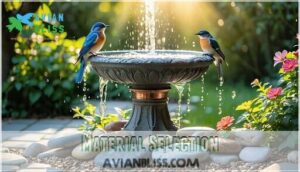
Your material choice can make or break bird safety. Concrete mix and stone selection provide natural durability, while copper materials offer antimicrobial benefits. However, cheap plastic degrades quickly under UV exposure.
Choose these bird-safe materials:
- Concrete Mix: Heavy, stable, naturally textured surfaces
- Copper Materials: Antimicrobial properties reduce bacteria growth
- UV-resistant Plastic: High-grade polymers prevent cracking and fading
- Stone Selection: Granite or sandstone for natural grip texture
- Metal Safety: Avoid galvanized steel; choose powder-coated aluminum instead
Nontoxic, bird-safe materials guarantee your feathered friends won’t encounter harmful chemicals while bathing. The right bird bath materials selection is vital for their health and safety.
Choosing Right Depth
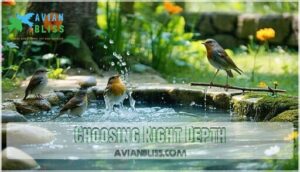
When birds approach your bath, the water depth determines their comfort level and safety.
Too deep spells disaster, while shallow water invites confident use. Ideal depth ranges from one to two inches, creating perfect conditions for bathing without drowning risks.
Maintaining a safe environment also requires understanding water safety guidelines to protect the birds.
| Water Depth | Bird Safety Level |
|---|---|
| Under 1 inch | Safe for all birds |
| 1-2 inches | Ideal depth range |
| 2-3 inches | Risky for small birds |
| Over 3 inches | Dangerous territory |
Depth control isn’t negotiable—shallow baths save lives while deeper water becomes a death trap for smaller species.
Bird Bath Placement
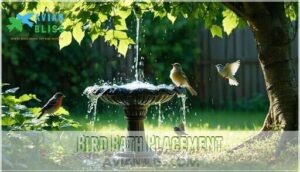
Your bird bath’s location can mean the difference between attracting healthy visitors and creating a death trap for vulnerable birds.
Strategic placement protects birds from predators while ensuring they feel safe enough to bathe and drink regularly, which is crucial for their well-being and survival, making strategic placement a key factor.
Selecting Safe Location
Positioning your bird bath location requires careful shade selection to prevent rapid evaporation and algae growth.
Choose shaded locations with partial sun exposure, ensuring visibility optimization for birds while maintaining terrain assessment for level ground.
Ground-level placement works best, but avoid dense vegetation where predators lurk.
Maintain proper distance from feeders to reduce territorial conflicts and provide wind protection for stability, ensuring the bird bath is in a location that promotes visibility optimization.
Avoiding Predators
Open areas around your bird bath create death traps when predators can approach undetected.
Position your bath 10-15 feet from dense shrubs where cats lurk, but maintain nearby escape routes to trees or bushes.
Visual barriers like decorative fencing provide predator deterrents without blocking bird access.
Secure placement in semi-open spaces offers maximal bird safety through predator awareness and avoidance strategies.
Effective bird bath placement requires considering ideal water temperature levels to guarantee the well-being of visiting birds.
Seasonal Maintenance
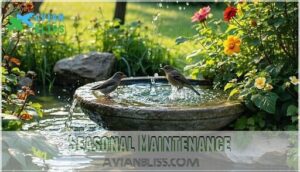
Each season brings unique challenges that can turn your bird bath into a death trap if you’re not prepared.
Winter freezing and summer heat create dangerous conditions that require specific maintenance strategies to keep your feathered visitors safe and healthy.
Winter Care
Freezing temperatures can crack your bird bath and trap desperate birds without water access. Winter maintenance requires specific strategies to protect both your feathered visitors and your investment through harsh months.
5 Winter Care Essentials That Save Lives:
- Install heated bird baths or safe heaters to maintain liquid water when temperatures drop below freezing
- Choose plastic or resin materials over concrete to prevent cracking during freeze-thaw cycles
- Position baths in full sun near windbreaks to maximize natural thaw and minimize ice formation
- Add dark rocks or liners to absorb sunlight and extend liquid water availability
- Never use antifreeze or salt – these chemicals kill birds instantly upon contact
Proper winterizing baths guarantees year-round hydration while preventing costly damage from frost. Ice removal methods like floating ping-pong balls disrupt formation naturally.
Regular maintenance also involves checking for winter care tips to keep the bird bath safe and functional.
Summer Care
Hot summer months demand vigilant water management to protect your feathered visitors.
Daily water changes prevent bacterial growth and maintain ideal water temperature for bird safety. Monitor summer water level monitoring closely as evaporation control becomes critical.
Place baths in shaded placement areas to slow algae prevention naturally.
Your regular water changes schedule should increase to twice daily during heat waves, ensuring proper summer hygiene through effective water purification methods, which aid in bacterial growth prevention.
Water Quality Management
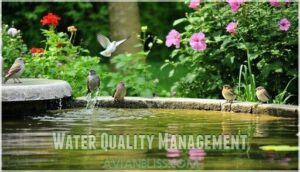
You’re making critical errors if you don’t monitor water levels daily and use proper water sources in your bird bath.
Stagnant, chemically-treated tap water creates a perfect storm for bacterial growth and disease transmission that can kill visiting birds within days, highlighting the importance of using proper water sources to prevent bacterial growth.
Monitoring Water Levels
Daily inspections keep your feathered friends safe from drowning disasters.
Check water depth twice daily, especially during hot weather when evaporation rates skyrocket. Maintain 1-2 inch depths through consistent level checks and regular water changes.
Critical monitoring failures that endanger birds:
- Ignoring daily inspections – leads to bone-dry baths or dangerously deep water
- Skipping moisture levels during heatwaves – causes rapid evaporation and concentrated toxins
- Missing water depth considerations – creates drowning traps for smaller species
Using Filtered Water
Filtered water eliminates chlorine, heavy metals, and chemicals that harm birds.
Tap water’s chlorine disrupts their delicate respiratory systems, while mineral buildup creates breeding grounds for harmful bacteria.
Water filtration removes these threats, making your bird bath safer, and many owners opt for specialized bird bath filtration systems.
Distilled water offers the purest option, though filtered tap water works well, and fresh water importance can’t be overstated—clean H2O prevents disease transmission between visiting birds.
Cleaning Bird Baths
Proper cleaning protects your feathered visitors from deadly pathogens that thrive in dirty water.
You’ll need the right techniques and safe cleaning agents to maintain a healthy bathing environment without harming the birds you’re trying to help.
Natural Cleaning Methods
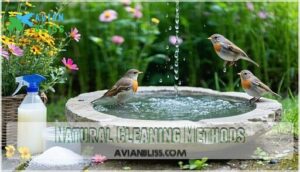
Why settle for harsh chemicals when nature provides safer alternatives?
You’ll protect your feathered friends using vinegar solution (1:9 ratio) or baking soda paste for scrubbing.
Hydrogen peroxide controls algae prevention naturally, while enzymatic cleaners break down organic debris.
These natural cleaners eliminate mosquito larvae without toxic residue that commercial products leave behind, making them a better choice for a safer environment.
Using Mild Detergents
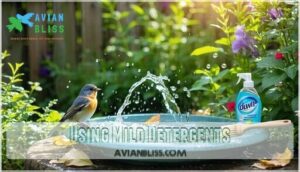
When choosing mild detergent for bird bath cleaning, you’ll want products that won’t harm your feathered visitors.
Safe cleaning practices require proper detergent dilution ratios and complete residue removal.
- Use mild soap like Dawn at 1:10 ratio with water
- Choose vinegar as natural cleaner alternative (1:9 with water)
- Rinse thoroughly three times to eliminate all residue
- Select biodegradable detergents to minimize environmental impact
- Test natural cleaners like baking soda for stubborn stains
Consider purchasing a safe birdbath to avoid harmful chemicals.
Stable Bird Bath
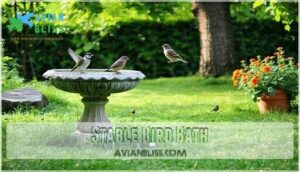
Your bird bath’s stability determines whether birds feel secure enough to drink and bathe regularly.
A wobbly or unstable bath creates anxiety that drives birds away, while proper anchoring guarantees consistent access to clean water for your feathered visitors, ensuring their security.
Preventing Tip Overs
Your bird bath won’t stay upright without proper Base Weight and a Level Surface.
Heavy materials like concrete provide natural Wind Resistance, while lighter models need Ground Anchors or Secure Mounting systems.
Position on stable, level ground – even slight slopes cause tipping disasters.
Add sandbags or bricks for extra stability.
Ground-level placement reduces toppling risks while improving bird bath safety.
Smart bird bath upkeep means checking stability weekly during maintenance routines.
Securing Bird Bath
Anchoring systems and weighted bases transform wobbly bird baths into rock-solid watering stations.
Stakes driven deep into soil or sandbags wrapped around pedestals prevent costly tip-overs that can injure birds.
Anti-tip devices like ground clamps offer foolproof bath stability, while secure mounting brackets attached to decks eliminate movement entirely.
These bird bath safety measures protect your investment and visiting wildlife.
Water Change Frequency
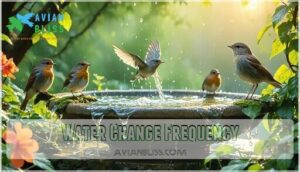
You’re making a critical mistake if you change your bird bath water randomly without considering environmental factors.
Weather conditions and bird activity levels determine safe water change frequency, with daily changes required during hot weather and every 2-3 days during cooler periods, which is a key factor to consider for safe water change frequency.
Factors Influencing Frequency
Several variables determine how often you’ll need fresh water in your bird bath.
Your water change schedule depends on these key factors:
- Bird Traffic – Higher visitor numbers mean faster contamination through droppings
- Debris Accumulation – Leaves, feathers, and organic matter accelerate bacterial growth
- Water Temperature – Warmer conditions promote algae control challenges and microbial activity
- Humidity Levels – Affect evaporation rates and algae development
- Seasonal Fluctuations – Migration periods increase usage, requiring more regular water changes
Monitor these conditions to establish your ideal water frequency and maintain effective water purification methods.
Regular maintenance is vital for preventing water quality issues that can harm the birds.
Weather Conditions
Weather conditions dramatically affect your water frequency schedule.
Hot summer days accelerate evaporation and algae control becomes critical—you’ll need daily water changes. Temperature control matters: scorching sun exposure creates bacterial breeding grounds within hours.
Rainfall impact means less frequent changes, but wind protection prevents debris contamination.
During frost prevention season, heated water requires careful seasonal adjustments to maintain ideal conditions.
Bird Health Considerations
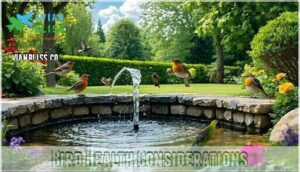
Your bird’s health depends on the water quality in their bath, and contaminated water can spread deadly diseases like salmonellosis and avian pox within hours.
Understanding bacterial growth patterns and disease transmission helps you create a safe bathing environment that protects both visiting birds and your backyard ecosystem.
Preventing Bacterial Growth
Proper bacterial control starts with understanding how quickly microbes multiply in standing water.
Warm temperatures accelerate bacterial growth exponentially, turning your bird bath into a petri dish within 48 hours.
Implementing smart water purification strategies keeps your feathered visitors healthy.
Three key bacterial control methods:
- Daily water changes – Reset bacterial populations before they reach dangerous levels
- Natural cleaning solutions – Use hydrogen peroxide or copper additives for ongoing microbe management
- Strategic placement – Position baths in partial shade to slow bacterial multiplication rates
Reducing Disease Risk
Disease prevention starts with smart bird bath hygiene practices that protect your feathered visitors from avian diseases.
Regular water purification through natural cleaning solutions prevents disease transmission between birds sharing the same water source.
Bacteria management becomes your first line of defense against salmonellosis and avian pox.
Algae control isn’t just aesthetic—stagnant, algae-filled water harbors dangerous pathogens that spread quickly through bird populations.
Maintenance Tips
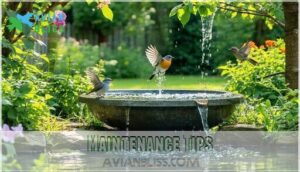
You’ll prevent countless bird deaths by establishing a consistent cleaning routine that removes disease-causing bacteria before they multiply.
Non-toxic cleansers like diluted vinegar or hydrogen peroxide keep your feathered visitors safe while eliminating harmful pathogens that commercial chemicals might leave behind, using non-toxic cleansers is key to keeping your visitors safe.
Regular Cleaning Schedule
Weekly cleaning schedules prevent harmful bacteria buildup that threatens bird health.
Establish consistent basin cleaning routines with daily scrubbing during peak usage periods.
Remove debris immediately after storms or heavy bird activity.
Water testing helps identify contamination early.
Implement proper sanitizing methods between water changes.
Regular maintenance creates safe drinking environments while reducing disease transmission risks among visiting birds, which is crucial for preventing harmful bacteria buildup and ensuring safe drinking environments.
Using Non-Toxic Cleansers
Your bird bath’s safety depends on choosing the right cleaners that won’t harm your feathered visitors.
Chemical residues can poison birds, making eco friendly options essential for water safety.
Safe Non-Toxic Cleansers:
- Vinegar solution (1:9 ratio) – natural disinfect properties
- Mild detergents – unscented Castile soap only
- Hydrogen peroxide (1:10 dilution) – gentle cleaners option
- Baking soda – natural abrasive scrubbing power
- Bird safe cleaner – commercial enzyme-based products
Always rinse thoroughly after cleaning with natural cleaners to prevent residue buildup.
Frequently Asked Questions (FAQs)
Why should birds use a bath?
Before modern plumbing graced our homes, birds naturally sought water sources for essential hygiene and thermoregulation.
You’ll find that bathing helps them maintain waterproof feathers, remove parasites, and cool down during hot weather—it’s their spa day!
Should I change the water in my bird bath?
Yes, you should change your bird bath water every 1-2 days.
Fresh water prevents dangerous bacteria buildup, controls algae growth, eliminates mosquito breeding grounds, and keeps your feathered visitors healthy and happy.
Why should you clean a birdbath?
Regular cleaning prevents disease transmission by eliminating bacteria, viruses, and algae that cause avian pox, salmonellosis, and trichomoniasis.
You’ll also stop mosquito breeding, remove debris, and keep water fresh to attract healthy birds safely, which is crucial for preventing disease transmission.
How to clean a bird bath naturally?
You’ll want to empty the basin and scrub it using white vinegar or baking soda paste.
These natural cleaners effectively remove algae and bacteria without harming birds.
Rinse thoroughly before refilling, using white vinegar or another suitable cleaner to ensure the basin is clean.
How often should you clean a bird bath?
Ironically, many bird lovers obsess over feeding schedules but neglect their birdbath’s cleanliness.
You should clean your birdbath weekly with thorough scrubbing, changing water every 2-3 days to prevent bacterial buildup and disease transmission.
How do you keep birds away from a bird bath?
Unfortunately, you can’t fully keep birds away from a bird bath since that defeats its purpose.
However, you can deter specific problem species by removing nearby feeders, using motion-activated sprinklers, or placing reflective tape around the area to achieve a more desirable outcome with problem species.
How often should I change the water in my bird bath?
You’ll want to change your bird bath water every 2-3 days during moderate weather.
This prevents harmful bacteria buildup and keeps your feathered visitors healthy and happy, but daily when it’s hot.
Do copper pennies keep bird baths clean?
Copper pennies work, copper doesn’t.
Pre-1982 pennies contain copper that inhibits algae growth by up to 95%.
Modern zinc pennies won’t help. You’ll still need regular water changes for ideal bird health and safety.
What to put in bird bath water to keep it clean?
Add a few drops of hydrogen peroxide (1:10 ratio), copper pennies, or distilled water to reduce algae growth.
Change water every 1-2 days and clean weekly with diluted bleach solution for ideal bird health.
Can chlorinated tap water harm visiting birds?
Chlorinated tap water won’t harm birds when you let it sit for 24 hours first. The chlorine evaporates naturally, making it safe. You can also use dechlorinating drops for instant results.
Conclusion
Research shows that 70% of backyard bird deaths result from contaminated water sources, making proper maintenance fundamental for avian survival.
By implementing safe bird bath water changes every 2-3 days and avoiding these seven deadly mistakes, you’ll create a thriving sanctuary that protects local bird populations.
Regular cleaning, proper placement, and consistent water quality monitoring transform your bird bath from a potential hazard into a key lifeline.
Your feathered visitors depend on these simple yet indispensable practices for their health and survival.
- https://extension.psu.edu/water-for-wildlife-bird-baths-and-backyard-ponds/
- https://www.southernliving.com/how-often-you-should-clean-birdbath-11725884
- https://www.marthastewart.com/how-to-clean-a-bird-bath-7866815
- https://www.reddit.com/r/birdfeeding/comments/1jxk08w/when_do_i_change_the_bird_bath_water/
- https://www.audubon.org/magazine/why-you-should-keep-your-birdbath-clean