
This site is supported by our readers. We may earn a commission, at no cost to you, if you purchase through links.

A bird bath can produce a full generation of mosquitoes in under a week—enough adults to make your backyard noticeably worse by Saturday. The math is blunt: one female Culex mosquito lays up to 300 eggs in a single raft on still water, and at 27°C, those eggs hatch in 48 hours.
Most people blame their yard’s mosquito problem on the neighbors or the nearby drainage ditch. The culprit is often sitting right next to the garden, collecting warm, stagnant water and bird droppings—both signals mosquitoes read as prime real estate.
The good news is that the same bird bath causing the problem can be configured to actively work against mosquitoes without putting a single bird at risk.
Table Of Contents
- Key Takeaways
- Why Mosquitoes Breed in Bird Baths
- Choose a Less Mosquito-Friendly Setup
- Keep Water Moving and Shallow
- Use Bird-Safe Mosquito Controls
- Follow a Simple Maintenance Routine
- Frequently Asked Questions (FAQs)
- How do you prevent mosquitoes in a bird bath?
- Do mosquitoes eat bird bath water?
- Which bird bath is best for mosquitoes?
- How do you keep mosquitoes away from a bath?
- What can I put in a bird bath to prevent mosquitoes?
- How to get rid of mosquitoes in a birdbath?
- How do I prevent mosquitoes from hijacking my bird bath?
- Do mosquitoes breed in bird baths?
- What to put in a bird bath to prevent mosquitoes?
- Are bird baths mosquito breeding grounds?
- Conclusion
Key Takeaways
- A neglected bird bath can cycle through a full mosquito generation in under a week, so changing the water every 2–3 days is your single most effective nonchemical defense.
- Moving water—whether from a bubbler, solar pump, or a DIY drip bottle—breaks the still surface that female mosquitoes need to lay eggs, turning your bath into a hostile breeding zone.
- A small fragment of a Bti mosquito dunk (about a quarter of one tablet) safely kills larvae for 30 days without harming birds, pets, or the surrounding wildlife.
- Design choices matter before a single mosquito arrives: a wide, shallow basin (1–2 inches deep) in a sunny, open spot drains faster, is easier to inspect, and gives mosquitoes far fewer places to hide.
Why Mosquitoes Breed in Bird Baths
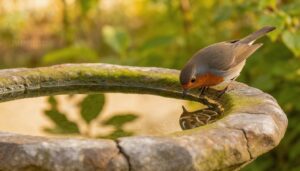
A bird bath looks harmless, but to a mosquito, it’s prime real estate. Still, shallow water is exactly what female mosquitoes need to lay eggs and raise larvae.
Even a bottle cap’s worth of standing water can kickstart a whole generation of mosquitoes, which is why using mosquito dunks in your bird bath is one of the smartest low-effort fixes you can make.
Here’s why your bird bath is such an easy target — and what’s actually happening in there.
Stagnant Water and Egg Laying
Still water is a mosquito’s invitation.
Culex females deposit floating egg rafts, sometimes 100 to 300 eggs per cluster, directly on undisturbed surfaces, while Aedes mosquitoes use waterline egg placement, sticking single eggs to damp basin walls above the waterline.
Organic debris cues like algae and droppings signal a quality breeding site.
Sheltered basin stagnation and surface tension effects make neglected bird baths surprisingly productive nurseries.
Mosquito Life Cycle in Warm Weather
Once eggs land in standing water, the mosquito life cycle runs on a tight clock — especially when temperatures hover between 24 and 30°C. Effective standing water removal can halt the cycle early. Warm conditions drive Temperature-Accelerated Development through every stage:
- Egg Survival Strategies allow dry-laid eggs to hatch on contact with water
- Larval Instar Progression moves through four feeding stages quickly in heat
- Pupal Maturation Rate peaks when water stays consistently warm
- Adult Mating Timing follows within hours of emergence
Regular water changes and Mosquito Dunks interrupt this cycle before it finishes.
How Fast Larvae Can Develop
That quick timeline is what makes larval habitat disruption so urgent.
Egg hatching time can be under 48 hours, and from there, each instar duration moves fast — some species complete the full mosquito life cycle in seven days.
Species growth rate and temperature impact how quickly pupae form, shortening the pupal period substantially in heat.
Frequent water changes to disrupt larvae development are your best defense against standing water becoming a nursery.
Why Small Amounts of Water Matter
Don’t underestimate a teaspoon. Mosquitoes need almost nothing to get started — bottle cap’s worth of standing water is enough for egg laying.
Waterline Egg Bands cling to your basin’s inner wall, surviving dry spells through Egg Band Persistence until Refill Triggered Hatching kicks in with your next top-off. Hidden Wet Pockets lurk in grooves, carved rims, and tilted corners.
Incomplete emptying keeps larval habitat disruption from working the way it should. Regular water changes and consistent water turnover only count when you’ve removed every drop — including what’s hiding.
- Eggs stuck to sidewalls survive dry periods and hatch when water returns
- Decorative grooves and off-level bases trap water even after dumping
- Daily topping off rewets the same egg band repeatedly
- thin leftover film at the bottom still qualifies as standing water
Risks to Birds, Pets, and People
neglected bird bath doesn’t just bother you — it quietly threatens everything that uses it.
| Who’s at Risk | What Can Happen |
|---|---|
| Birds | West Nile risk, Salmonella contamination, feather waterproofing loss from surface oils |
| Pets | Heartworm danger from infected mosquito bites; fecal bacteria from fouled water |
| People | West Nile neurological illness, especially in adults over 60 |
chemical toxicity avoidance matters here.
Safe biological alternatives for mosquito control, like Bti dunks, support bird health protection without the collateral damage that harsh treatments cause to wildlife.
Pairing Bti dunks with bird-safe plants that naturally repel mosquitoes like lavender and marigolds creates a layered, chemical-free defense around your backyard water features.
Choose a Less Mosquito-Friendly Setup
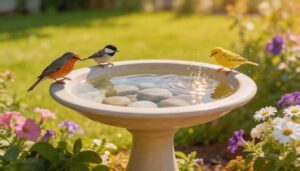
Before a single mosquito lays an egg, your bird bath’s design already tips the odds one way or the other. The shape, depth, and location you choose can make your setup far less inviting to mosquitoes — without making it any less useful for birds.
Here’s what to look for when setting yours up the right way.
Shallow Basin Depth for Faster Refreshing
Depth is your first line of defense.
Keeping your bird bath between 1 and 2 inches deep delivers serious advantages for reduced water volume and rapid drainage—without sacrificing bird comfort.
- Quick dump refill takes roughly one minute with a garden hose.
- Shallow water cuts refill volume by about 50 percent.
- Regular water changes every 2–3 days eliminate standing water before mosquito larvae mature.
- Lower refill frequency becomes realistic when each change takes under two minutes.
- Energy efficient refilling means less water wasted per cycle.
Wide Basins Vs. Deep Decorative Bowls
Shape matters more than you’d think for mosquito breeding prevention. wide, open basin gives you better inspection visibility, faster evaporation rate, and greater water movement reach from even a small bubbler. deep decorative bowls hide debris accumulation at the bottom and create dead zones where surface area exposure stays low and mosquitoes lay eggs undisturbed.
| Feature | Wide Basin vs. Deep Bowl |
|---|---|
| Surface area exposure | Wide basin: ~254 sq in vs. deep bowl: ~113 sq in |
| Debris accumulation | Spreads thin vs. piles in hidden pockets |
| Evaporation rate | Faster, reducing stagnation vs. slower, promoting standing water |
| Water movement reach | Ripples cover full surface vs. weakens at walls |
| Inspection visibility | Larvae visible at a glance vs. requires reaching inside |
Sloped Sides for Bird Safety
Sloped sides aren’t just about comfort — they’re a quiet line of defense. A basin with a gentle entry angle and gradual depth zones naturally discourages mosquito egg laying by reducing still, deep pockets where larvae thrive.
As a secure footing surface and small bird access point, the incline also provides fast exit safety.
Look for these three design features:
- Rough-textured slopes that grip wet claws without trapping birds
- Outer edges under 1.25 cm deep for small species like wrens and chickadees
- center depth around 5 cm — shallow enough to refresh quickly
Best Placement for Sun and Airflow
Placement is your first line of defense. Aim for Morning Sun Hours — four to six hours of east-facing sun warms water early and speeds evaporation.
Afternoon Shade Balance prevents overheating. Open Wind Exposure creates ripples that disrupt egg laying, and Overhead Cover Clearance reduces leaf debris.
Effective placement of bird baths to deter mosquitoes means revisiting your spot each season, since Seasonal Sun Changes shift shade patterns considerably.
Avoiding Low, Damp, Sheltered Areas
Where you set the bath matters as much as how you clean it. Low ground holds rainwater for days, turning one puddle into a nursery.
To select an ideal bird bath location to deter mosquitoes, choose a raised ground level with soil drainage enhancement nearby. Trim dense shrubs, eliminate structural corners, and remove hidden puddles within a few feet.
Sunny location beats any shaded area every time.
Keep Water Moving and Shallow
Still water is a mosquito’s best friend — and your bird bath is full of it. The good news is that a little movement changes everything.
Here are a few practical ways to keep water circulating without making your bath uncomfortable for birds.
Why Moving Water Deters Mosquitoes
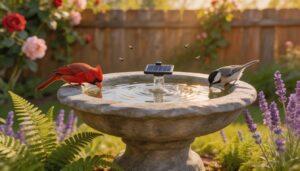
Still water is a mosquito’s best friend. When your bird bath sits undisturbed, females zero in on it for egg displacement onto that calm surface.
Water movement changes everything — surface disturbance interrupts larval respiration, forcing larvae to burn energy staying near the top instead of feeding. Circulation also cuts algae reduction opportunities, depleting the food supply that larvae depend on.
Standing water elimination starts with keeping it moving.
Using a Fountain or Bubbler
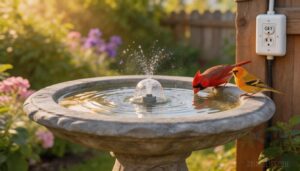
A fountain or bubbler turns your bird bath fountain into a hostile breeding zone for mosquitoes. Proper water circulation starts with three basics:
- Pump Flow Matching — pick a small submersible pump with a flow-control slider to avoid overflow
- Nozzle Pattern Selection — choose a low bubbler dome over tall sprays to minimize splash and water loss
- Intake Screen Maintenance — rinse the screen weekly; mineral buildup kills flow fast
Keep water level monitoring part of your daily routine, since shallow basins drop quickly in summer heat. Plug into a GFCI outlet — Electrical Safety Practices aren’t optional near water.
This simple setup delivers aeration and eco‑friendly mosquito control without harsh chemicals. Install A Bird Bath Bubbler, and mosquitoes lose their favorite nursery overnight.
Solar-Powered Pumps for Bird Baths

A solar-powered pump takes the work you’ve already done with a bubbler and makes it wire‑free. Panel orientation matters more than most people expect — shade from a nearby fence can slow the pump to a crawl.
Battery capacity should be prioritized for cloudy days, along with nozzle selection for low splash, adequate lift height, and a clean intake filter.
Solid water agitation techniques: zero cords.
DIY Drip Systems for Gentle Ripples

No cords? No pump? A DIY drip system manages water circulation just as effectively.
Hang a gravity bottle reservoir above the bath, poke a small hole in the cap, and thread aquarium tubing down to the basin. Drop rate calibration is simple — one to three drops per second create steady ripples for mosquito control.
Nail drip point placement 2–5 cm above open water for best effect. Winterize by emptying tubing before the first freeze.
Balancing Water Motion With Bird Comfort
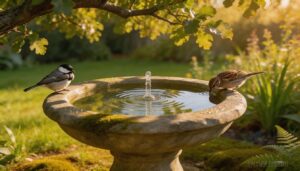
Birds need calm edges as much as they need clean water.
Keep your bubbler or drip system aimed toward the basin’s center, so Gentle Ripple Intensity stays low and Edge Landing Zones around the rim stay undisturbed.
Low Splash Height protects feather waterproofing, while Surface Tension Management through steady aeration discourages larvae without overwhelming small birds.
Pump Noise Levels matter too — quieter pumps attract more visitors.
Use Bird-Safe Mosquito Controls

Sometimes the best defense is a targeted one. If changing the water and keeping it moving isn’t enough on its own, a few bird-safe products and plants can fill the gap without putting your visitors at risk.
Here’s what actually works.
How Bti Mosquito Dunks Work
Mosquito Dunks work through a surprisingly precise mechanism. The active ingredient, Bacillus thuringiensis israelensis, is a biological larvicide that targets mosquito larvae through larval feeding — larvae ingest it while filter-feeding near the surface.
Gut toxin activation then kicks in, as the alkaline larval gut triggers the proteins, destroying the digestive lining. The slow-release matrix keeps releasing Bti for 30 days.
Target specificity and environmental safety make this ideal for safe wildlife practices around bird baths.
When to Use Summit Mosquito Dunk Tablet
A dunk makes the most sense when your routine breaks down. After a Heat Wave Surge or Rainstorm Aftermath, Extended Stagnation sets in fast — especially in Deep Basin Retention setups.
Infrequent Water Changes let larvae develop unchecked, so Mosquito Dunks step in as backup.
The Bacillus thuringiensis israelensis, or Bti, controls larvae while you focus on restoring the frequency of water changes to disrupt larvae development.
Replace the dunk every 30 days.
Proper Dosing for Small Bird Baths
Most bird baths are far smaller than you’d think in regard to surface area dosing. quarter dunk portion covers 25 square feet — your 18-inch bath uses barely 7% of that.
Cut the ring evenly, drop the fragment in, and replace the dunk every 30 days. After heavy rain, check that the piece hasn’t washed out; rain impact can displace small fragments fast.
Why Bleach, Oils, and Harsh Chemicals Are Unsafe
Bleach might seem like a quick fix, but it’s one of the worst things you can pour into a bird bath. Chemical Burn Risk is real — household bleach runs 5–9% sodium hypochlorite, which irritates skin, eyes, and mouths on contact.
Oils cause Feather Oil Damage by stripping preen-gland coatings. Fumes trigger Respiratory Irritation.
Lingering Residue Problems and Toxic Drinking Exposure follow.
Never use household cleaning products — safe biological alternatives for mosquito control exist.
Safe Landscaping With Mosquito-Repellent Plants
Your landscaping can pull double duty. Tuck basil containers and lemongrass pots two to four feet from the bath — both release aromatic compounds that interfere with mosquito host-seeking.
Lavender borders and marigold edging work the same way along bed fronts.
This aromatic herb ring of mosquito repellent plants like citronella, basil, lavender oil-rich foliage, and marigold flowers adds passive protection without touching the water.
Follow a Simple Maintenance Routine

Keeping mosquitoes out of your bird bath doesn’t require a complicated system — just a consistent routine. A simple habits, done on a regular schedule, are enough to break the mosquito life cycle before it gets started.
Here’s what routine looks like in practice.
Change Water Every 2 to 3 Days
Regular water changes are your strongest nonchemical mosquito deterrent — and the schedule matters more than most people realize. In warm weather, eggs can hatch within 48 hours, so a Monday-Wednesday-Friday rhythm keeps larvae from ever gaining a foothold. This simple pattern also helps algae suppression, water quality monitoring, and overall bird health through seasonal scheduling.
Change your bird bath water every 48 hours — mosquito eggs hatch fast, and consistency is your strongest defense
- Day 1 – Fresh, clean water goes in
- Day 2 – Surface film and pollen start building up
- Day 3 – Algae and bacteria begin multiplying
- Day 4 – Larvae are actively feeding if you haven’t changed it
- Day 5+ – Temperature impact accelerates development fast
Empty The Basin Completely Before Refilling
Changing water every 2–3 days only works if you actually empty the bird bath completely. A partial dump leaves that bottom layer untouched — and that’s exactly where larvae keep developing.
Full Drain Tilt the basin until the last trickle runs out, then confirm Dry Bottom Verification before you refill with fresh water. Use Drain Plug Usage on fitted models for cleaner Hidden Pocket Removal and Water Trap Elimination around grooves and pump housings.
Scrub Away Algae, Debris, and Eggs
Once the basin is empty, grab a stiff brush and get scrubbing. Algae biofilm dissolution doesn’t happen from a rinse alone — that slick green film sticks hard to rough concrete and stone.
Use the edge scrubbing technique along the waterline, where egg clusters hide in plain sight.
Good debris removal tools, like narrow brushes, reach decorative grooves where soggy leaves and larvae food collect.
Rinse Thoroughly Without Soap Residue
After scrubbing, rinse thoroughly using the Rinse Angle Technique — tilt the basin slightly while running water across every surface. This Plain Water Flush clears residue from grooves and rims until you get a Suds-Free Finish.
Skip dish soap; a Running Water Rinse after the Vinegar Rinse Method — 9 parts water, 1 part vinegar — keeps clean water weekly without leaving film that strips feather oils.
Check Nearby Containers for Standing Water
Your bird bath won’t stay mosquito-free if the yard around it is doing the breeding instead.
Inspect gutters, empty plant saucers, and remove tire water weekly — these three spots fuel more larvae than most people expect.
Also cover recycling bins, seal bucket lids, and eliminate any standing water pooling in toys, tarps, or upturned lids nearby.
Weekly Upkeep Checklist for Mosquito Prevention
Here’s a quick checklist to keep things on track each week: inspect basin cracks for trapped moisture, track water changes every 2–3 days, clean pump filters to maintain water circulation, and observe bird activity for signs of stress or algae buildup.
Test water pH if using Bti mosquito dunks.
Regular cleaning and maintenance of bird baths, done consistently, stop larvae before they ever get started.
Frequently Asked Questions (FAQs)
How do you prevent mosquitoes in a bird bath?
Change water every 2–3 days, add Bti Mosquito Dunks monthly, and keep water circulating with a bubbler.
Fine Mesh Covers, natural mosquito repellents, and larval monitoring round out a solid prevention routine.
Do mosquitoes eat bird bath water?
Mosquitoes don’t actually "eat" water — adults sip nectar for energy, while mosquito larvae filter microorganisms from standing water.
That larval water intake is exactly what makes a stagnant bath so dangerous.
Which bird bath is best for mosquitoes?
The best design combines moving water fountains, a removable bowl, surface smoothness, and adjustable depth.
These design features, which discourage mosquito egg laying, make any eco-friendly mosquito solution more effective from the start.
How do you keep mosquitoes away from a bath?
A single tablespoon of standing water is all it takes. Regular water changes every 2–3 days, moving water fountains, Bti mosquito dunks, and fine mesh screens stop mosquitoes before they establish.
What can I put in a bird bath to prevent mosquitoes?
The safest option is Bti, found in mosquito dunks. A small fragment covers most bird baths for 30 days.
Skip copper sulfate, adding oil, essential oils, and the copper penny trick — they harm birds.
How to get rid of mosquitoes in a birdbath?
Empty the basin every two to three days, scrub out eggs, and refill with fresh water.
Adding Bti mosquito dunks or improving water circulation stops larvae before they ever become biting adults.
How do I prevent mosquitoes from hijacking my bird bath?
Stop mosquitoes from taking over by combining regular water changes every 2–3 days, Bti mosquito dunks, and water circulation to disrupt mosquito larvae before they mature.
Do mosquitoes breed in bird baths?
Yes, mosquitoes breed in bird baths.
Still water triggers egg laying, and larvae only need a few centimeters to develop. In warm weather, that cycle completes in roughly seven to ten days.
What to put in a bird bath to prevent mosquitoes?
The safest thing to put in a bird bath is a small piece of a Bti mosquito dunk.
It kills larvae without harming birds, pets, or wildlife — and lasts about 30 days.
Are bird baths mosquito breeding grounds?
Bird baths can absolutely become mosquito breeding grounds. Still, warm water gives females the perfect conditions for egg viability, and some species prefer shallow garden containers over larger water sources.
Conclusion
Imagine your bird bath as a double-edged sword: it can either harbor a mosquito nursery or become a mosquito-repelling oasis.
By implementing a few simple tweaks, you can turn the tide against these pests.
Use a shallow basin, moving water, and bird-safe mosquito controls to create a haven for birds, not mosquitoes. With your newfound knowledge, transform your bird bath into a mosquito-deterring haven using a bird bath to deter mosquitoes, keeping your backyard safe and serene.
- https://c.next2.io/?sid=11175396&said=gardeningknowhow.com&partnerId=gardeningknowhow-us-5797059908962955863&link=https%3A%2F%2Fwww.lowes.com%2Fpd%2FBIRDS-CHOICE-Resin-Waterfall-8-in-H-Charcoal-Resin-Complete-Birdbath%2F5005473001&merchantId=199898&fallback_url=https%3A%2F%2Flowes.sjv.io%2Fc%2F221109%2F897039%2F12374%3FsubId1%3Dgardeningknowhow-us-5797059908962955863%26sharedId%3Dgardeningknowhow-us%26u%3Dhttps%253A%252F%252Fwww.lowes.com%252Fpd%252FBIRDS-CHOICE-Resin-Waterfall-8-in-H-Charcoal-Resin-Complete-Birdbath%252F5005473001
- https://wtop.com/lifestyle/2026/04/from-bottle-caps-to-bird-baths-how-to-stop-the-dmvs-upcoming-mosquito-season/
- https://uglyweeds.com/blog/war-on-mosquitoes
- https://riverlegacy.org/blog/how-to-prevent-mosquitoes-from-breeding-in-your-birdbath
- https://www.audubon.org/magazine/why-you-should-keep-your-birdbath-clean