This site is supported by our readers. We may earn a commission, at no cost to you, if you purchase through links.
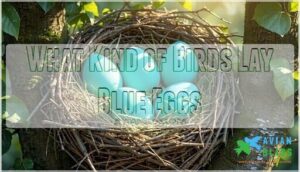 You’ll spot blue eggs from several common backyard birds.
American Robins lay the most recognizable sky-blue eggs, while Eastern Bluebirds produce pale blue shells with occasional white spots.
Blue Jays create blue-green eggs with brown speckles, and Mountain Bluebirds lay pure turquoise eggs.
European Starlings also contribute blue eggs to the mix.
The blue color comes from biliverdin, a pigment that protects developing chicks from harmful UV rays.
These birds don’t just randomly choose blue – it’s nature’s smart design for egg survival.
Each species has unique patterns and shades that tell their own story about adaptation and breeding success.
Table Of Contents
- Key Takeaways
- Birds Laying Blue Eggs
- What Kind of Birds Lay Blue Eggs
- Blue Egg Characteristics
- Nesting Habits of Blue Birds
- Benefits of Blue Eggs
- Frequently Asked Questions (FAQs)
- Which bird has blue color eggs?
- Are blue eggs good to eat?
- Do birds other than robins have blue eggs?
- Do cardinals lay blue eggs?
- What common bird has blue eggs?
- What bird gives birth to blue eggs?
- Do finches lay blue eggs?
- How do you identify bluebird eggs?
- Are blue eggs safe to eat?
- How rare are blue eggs in nature?
- Conclusion
Key Takeaways
- You’ll find blue eggs from common backyard birds like American Robins, Eastern Bluebirds, Blue Jays, and European Starlings – each species creates unique shades from pale powder blue to vibrant turquoise.
- The blue color comes from biliverdin pigment that isn’t just decorative – it protects developing chicks from harmful UV rays and signals the mother’s good health to potential mates.
- You can identify different species by their egg characteristics: American Robins lay classic sky-blue eggs, Eastern Bluebirds produce unmarked pale blue shells, while Blue Jays create blue-green eggs with brown speckles.
- These birds choose specific nesting locations and materials to protect their colorful eggs – robins prefer wooded areas at medium heights, while bluebirds favor cavity nests in boxes or natural hollows.
Birds Laying Blue Eggs
You’ll discover that several bird species produce stunning blue eggs, from the bright sky-blue shells of American robins to the pale powder-blue eggs of eastern bluebirds.
These colorful eggs aren’t just beautiful – they contain a special pigment called biliverdin that protects developing chicks from harmful UV rays while signaling the mother’s good health.
Nature’s blue eggs are living jewels that showcase both beauty and brilliant evolutionary engineering in every delicate shell.
European Starling
When you spot a European Starling nest, you’ll find bluish to greenish-white eggs that showcase this invasive species’ adaptability.
Their starling egg color varies based on diet influence, while their flexible nesting location preferences help them thrive in urban environments across North America.
These birds, however, differ from bluebirds, which often nest in artificial nest boxes, and they lay 3-6 eggs per clutch, measuring about 1.1-1.3 inches long, making them a unique species to study in terms of invasive species and urban environments.
American Robin
American Robin eggs are among the most recognizable blue eggs you’ll find.
These bright blue treasures measure about 1.1 inches long and appear in clutches of 3-5.
Robins build sturdy nests using twigs, grass, and mud in wooded areas and backyards.
Their distinctive robin songs help identify these blue egg birds during breeding season across diverse Robin Habitats.
Mountain Bluebird
Mountain Bluebirds truly stand out among blue egg birds with their remarkable high altitude nesting habits.
You’ll find these bluebirds thriving in western mountains, laying 4-8 pale blue eggs per clutch.
Their clutch size variation depends on food availability and elevation, and these hardy birds prefer open meadows and grasslands for their habitat preferences, making their conservation status relatively stable compared to other bluebird species.
Blue Jay
Blue jays surprise many with their jay egg color – bluish shells dotted with brown speckles.
These clever birds lay 2-7 eggs per clutch, with females handling most incubation duties.
Their nest building behavior involves constructing sturdy platforms high in tree forks using twigs and roots.
Blue jay diet includes acorns, insects, and occasionally other bird eggs, making them opportunistic forest dwellers.
Eastern Bluebird
Finding an Eastern Bluebird nest feels like discovering nature’s treasure chest.
Spotting brilliant blue eggs in the wild is like stumbling upon nature’s hidden gems scattered throughout the forest.
These charming songbirds create powder-blue masterpieces that’ll make you catch your breath.
You’ll spot up to seven bluebird eggs per clutch, with females often practicing nest reuse for multiple broods.
Here’s what makes Eastern Bluebird nesting special:
- Cozy cup construction – They weave grass and pine needles into perfect nurseries
- Smart location choices – Open fields with scattered trees become their preferred neighborhoods
- Devoted parenting – Both parents share feeding duties with incredible dedication
- Conservation comeback – Their recovery from near-extinction proves nature’s resilience
What Kind of Birds Lay Blue Eggs
Looking at blue eggs in the wild is like finding nature’s own Easter surprises.
You’ll discover that specific bird families have mastered this colorful trick through genetic determination over thousands of years.
American Robin eggs showcase the classic powder-blue shade that most people recognize, while bluebirds produce eggs ranging from pale sky-blue to deeper turquoise tones.
The secret behind egg color lies in biliverdin function – a pigment that creates these stunning hues.
Species identification becomes easier when you know which birds produce blue eggs.
Beyond robins and bluebirds, you’ll find Blue Jays, European Starlings, and House Finches among the blue egg producers.
Blue jay nests are often built high in tree branches.
Egg pigment origins trace back to evolutionary advantages, though many of these species face conservation status challenges today.
Understanding which birds lay blue eggs helps you appreciate the remarkable diversity in your backyard, and learn about the importance of species identification.
Blue Egg Characteristics
You’ll notice that blue eggs come in many different shades, from the pale powder blue of Eastern Bluebird eggs to the deeper turquoise-green of Wood Thrush eggs.
These eggs also vary in size, texture, and markings, with some species adding brown speckles or dark spots that help protect their developing chicks, which can be considered a complete concept and also involves developing.
Size and Shape

Now that you know which birds lay blue eggs, let’s examine their actual Egg Dimensions and physical traits.
These bluebird eggs show fascinating Volume Variation and Shape Differences across species:
- Size range: Most bird egg shape measures 0.8-1.3 inches long with varying Shell Thickness
- Clutch Size: Bluebirds typically lay 3-8 eggs per nest
- Form: Oval to slightly pointed, with egg markings affecting overall appearance
Color Variations

From sky blue to teal, you’ll discover that bird egg colors span an impressive spectrum.
Pigment intensity varies dramatically between species, with bluebird eggs ranging from pale powder blue to deep turquoise.
Biliverdin levels determine these stunning variations, while genetic influence and environmental factors create unique patterns.
Diet effects can even alter eggshell color within the same species.
The blue color in bird eggs is primarily the result of biliverdin egg pigmentation.
Shell Texture

Blue eggs aren’t just pretty to look at – they’ve got some fascinating shell characteristics that’ll surprise you.
Shell smoothness varies between species, with American robins sporting glossy surfaces while house finches have slightly rougher textures.
Shell thickness and shell strength depend on the bird’s diet and calcium intake.
Shell porosity affects gas exchange during incubation, and shell luster indicates the mother’s health.
Speckles and Markings

Many blue eggs showcase distinctive speckles and markings that serve multiple purposes.
American Robin eggs display subtle brown spots, while Bluebirds often have unmarked shells.
Speckle density varies based on genetic influence and biliverdin intensity. These camouflage patterns help protect eggs from predators, with markings ranging from fine dots to bold blotches that complement the base eggshell color.
Incubation Period

When you’re watching blue eggs develop, incubation length varies substantially between species.
American Robin eggs need 11-13 days, while Eastern Bluebird eggs require 12-14 days.
Mountain bluebirds take longer at 13-17 days.
Typical clutch size is usually four to five eggs.
Temperature effects and parental roles directly impact hatching success. Each development stage depends on consistent warmth, with both parents sharing incubation duties for ideal results, which is crucial for the incubation length.
Nesting Habits of Blue Birds
You’ll discover that birds laying blue eggs show fascinating nesting patterns that directly affect their egg-laying success.
These species choose specific locations and use particular materials to build their nests, which helps protect their colorful eggs from predators and weather, ultimately influencing their egg-laying success.
Nest Location Preferences

Bird species with blue eggs show distinct habitat selection patterns when choosing nest locations.
You’ll find American Robins preferring wooded areas at medium heights, while Blue Jays seek tall trees for security.
House Finches adapt to urban nesting in buildings and structures.
Eastern Bluebirds favor cavity preference in nest boxes, often demonstrating nest reusability across multiple broods throughout breeding seasons.
To enhance nesting success, consider nest box placement facing east or southeast for optimal breeding.
Nest Construction Materials
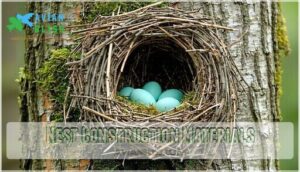
When you’re building your nest, you’ll notice how American Robin and Eastern Bluebird species select materials based on Material Availability in their environment.
These birds prioritize Nest Stability by weaving twigs and grass together, while adding soft moss for Insulation Properties.
You can find bluebird nesting products online.
They cleverly choose Camouflage Materials like bark strips during Material Acquisition, ensuring their precious blue eggs stay hidden from predators.
Clutch Size and Frequency

When you’re observing blue egg-laying birds, you’ll notice clutch size varies dramatically between species.
American Robins typically produce 3-5 blue eggs per clutch, while Mountain Bluebirds can lay 4-8 eggs.
Most species manage multiple broods during breeding seasons, with Eastern Bluebirds often raising three separate families.
Brood frequency depends on food availability and weather conditions, influencing replacement clutches when needed.
The robin eggs’ dimensions are fairly consistent across clutches, which is an important factor in understanding breeding seasons.
Incubation Behavior

Blue eggs require dedicated incubation from their devoted parents.
American Robin females sit on their clutch for 12-14 days, turning eggs regularly for even temperature regulation.
Bluebirds share incubation duties between mates, with the female handling most responsibilities.
This careful egg turning and consistent warmth guarantees proper development.
To automate this process, consider using a reliable egg turner.
The incubation period varies by species, but maintaining steady temperatures remains vital for hatching success.
Parental Care Strategies

Many species with blue eggs share incubation duties between parents, creating stronger family bonds.
American Robin males help feed nestlings every few minutes, while Eastern Bluebird pairs take turns defending their territory.
Some birds practice cooperative breeding, where older offspring assist with fledgling care.
This teamwork guarantees better survival rates and demonstrates nature’s collaborative parenting strategies.
Benefits of Blue Eggs
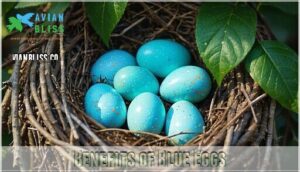
You might wonder why some birds lay bright blue eggs instead of plain white ones.
These colorful shells aren’t just beautiful – they protect growing chicks from harmful UV rays and help parent birds recognize their own eggs among others in crowded nesting areas, which is a crucial aspect of their survival.
Protection From UV Radiation
Think of blue eggs as nature’s sunscreen for developing chicks.
The biliverdin pigment that creates their stunning color blocks harmful ultraviolet radiation from penetrating the shell.
This UV radiation protection becomes essential at higher altitudes where radiation intensity increases.
Shell thickness correlation with pigment density enhances embryo survival rates, especially as climate change impact intensifies UV exposure across bird habitats.
Camouflage Techniques
Nature’s blue eggs aren’t just pretty—they’re master disguises.
These eggshell patterns blend seamlessly with sky-colored surroundings, making nest concealment incredibly effective.
You’ll find adaptive coloration helps with predator avoidance through visual deception.
Blue eggs disappear against morning shadows and dappled light, while their cryptic bird egg camouflage matches substrates perfectly, ensuring successful reproduction.
Prevention of Brood Parasitism
You’ll find that blue eggs serve as a clever defense against sneaky parasitic birds like the brown-headed cowbird.
These uninvited guests prefer dropping their eggs in nests with plain, white shells.
Host species have developed impressive strategies:
- Egg recognition – Parents memorize their distinctive blue coloration
- Parasite detection – Spotting foreign eggs becomes easier
- Rejection behavior – Removing unwanted eggs quickly
- Nest guarding – Increased vigilance during laying season
Signaling Healthy Mates
When you spot vibrant blue eggs, you’re witnessing nature’s dating profile in action.
Egg brightness directly reflects female health and genetic quality, with brighter blues signaling superior mates.
American Robin and Eastern Bluebird females producing vivid egg color attract more dedicated partners who provide better offspring care.
This mate signaling guarantees stronger chicks through enhanced parental investment and superior genetics.
Bluebirds typically lay four to five eggs per clutch, ensuring a successful breeding cycle with better offspring care.
Evolutionary Advantages
Blue eggs offer remarkable evolutionary advantages that help birds thrive.
The pigments strengthen shell integrity, making eggs more durable during incubation. UV protection shields developing chicks from harmful radiation, while camouflage benefits reduce predator detection.
These colorful eggs also serve as parasitism deterrents, preventing other species from laying in their nests. Additionally, vibrant egg coloration supports mate selection by signaling healthy genetics to potential partners.
Frequently Asked Questions (FAQs)
Which bird has blue color eggs?
You might think only exotic species produce colorful eggs, but common backyard birds create stunning blue ones.
American robins, eastern bluebirds, and blue jays all lay beautiful blue eggs you’ll easily spot around your neighborhood.
Are blue eggs good to eat?
Yes, you can eat blue eggs just like any other bird eggs.
The shell color doesn’t affect taste or nutrition.
Robin, starling, and other blue-egg species taste similar to chicken eggs.
Do birds other than robins have blue eggs?
You’ll find blue eggs from bluebirds, blue jays, house finches, European starlings, and song thrushes.
Each species creates different shades, from pale powder blue to vibrant turquoise, making birdwatching quite the colorful adventure.
Do cardinals lay blue eggs?
Like expecting snow in summer, you won’t find blue eggs in cardinal nests.
Cardinals lay white or pale blue-green eggs with brown speckles, not the brilliant blue you’d see from robins or bluebirds.
What common bird has blue eggs?
American robins lay the most recognizable blue eggs you’ll spot in your backyard.
These common songbirds produce beautiful pale blue eggs, typically 3-5 per nest, making them nature’s easiest blue egg discovery.
What bird gives birth to blue eggs?
Like medieval scribes illuminating manuscripts, several bird species create beautiful blue eggs.
You’ll find American robins, eastern bluebirds, and blue jays among the most common.
These species use biliverdin pigment to produce their distinctive sky-blue coloration.
Do finches lay blue eggs?
House finches lay pale blue-green eggs with dark speckles, not pure blue like robins or bluebirds.
You’ll find their clutches contain 2-6 eggs in cup-shaped nests lined with soft materials in your backyard.
How do you identify bluebird eggs?
What’s more perfect than nature’s own Easter egg? You’ll spot bluebird eggs by their distinctive pale blue color, small size, and smooth, unmarked shells found in cavity nests or birdhouses.
Are blue eggs safe to eat?
Blue eggs from wild birds aren’t recommended for eating.
You’d be disturbing protected species and their nests, which is often illegal.
Stick to chicken eggs from the store – they’re safer, regulated, and won’t land you in trouble.
How rare are blue eggs in nature?
Only 3% of all bird species lay blue eggs, making them relatively uncommon in nature.
You’ll find these azure treasures from robins, bluebirds, and starlings – nature’s way of signaling healthy mothers and strong offspring ahead.
Conclusion
Surprisingly, you’ve discovered that what kind of birds lay blue eggs isn’t just about color preference—it’s about survival strategy.
These fifteen species demonstrate nature’s brilliant engineering, using biliverdin pigment to shield their offspring from UV damage while creating stunning visual displays.
You’ll now recognize these azure treasures in your backyard with newfound appreciation, whether it’s a robin’s classic sky-blue shell or a starling’s speckled masterpiece, each egg represents millions of years of evolutionary perfection designed for successful reproduction, showcasing nature’s brilliant engineering.
- https://nestwatch.org/learn/how-to-nestwatch/faqs/why-study-clutch-size/
- https://news.illinoisstate.edu/2019/03/ask-a-redbird-scholar-why-are-bird-eggs-different-colors/
- https://www.allaboutbirds.org/news/the-beauty-and-biology-of-egg-color
- https://www.sciencedaily.com/releases/2012/05/120514122838.htm
- https://pubmed.ncbi.nlm.nih.gov/16553287/