This site is supported by our readers. We may earn a commission, at no cost to you, if you purchase through links.
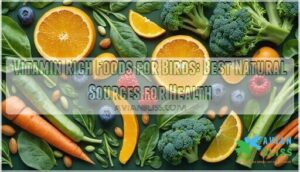 You’ll find the best vitamin rich foods for birds include dark leafy greens like kale and spinach, which pack essential vitamin A that commercial seeds often miss.
Fresh berries, citrus fruits, and vegetables such as carrots and sweet potatoes deliver key vitamins C and beta-carotene your feathered friend needs for strong immunity.
Sprouted seeds and legumes offer concentrated nutrition that mirrors wild foraging, while pellets provide balanced baseline nutrition.
Don’t forget calcium-rich foods like broccoli and almonds for bone health. The secret lies in variety and understanding which seasonal foods release your bird’s peak vitality.
Table Of Contents
- Key Takeaways
- Vitamin Rich Foods
- Choosing Bird Food
- Essential Vitamins for Birds
- Superfoods for Birds
- Feeding Birds Seasonally
- Frequently Asked Questions (FAQs)
- What vitamins should a bird take?
- What is the best bird food for birds?
- What supplements can a bird eat?
- Do birds eat vitamin A?
- How to prevent vitamin A deficiency in birds?
- Does vitamin A help a bird grow a feather?
- What vitamins do birds need?
- How to increase vitamin A in birds?
- What is the most common vitamin deficiency in birds?
- Can birds overdose on vitamin supplements safely?
- Conclusion
Key Takeaways
- You’ll need to provide fresh fruits and vegetables like carrots, sweet potatoes, berries, and dark leafy greens since they’re packed with essential vitamins A and C that commercial seeds often lack.
- You should offer sprouted seeds and legumes alongside high-quality pellets to create a balanced foundation that mirrors your bird’s natural foraging instincts.
- You’ll want to include calcium-rich foods like broccoli and almonds in your bird’s diet to support strong bone health and proper egg production.
- You must vary your bird’s diet seasonally and by species, adjusting nutrition during breeding, molting, and winter periods while avoiding over-supplementation that can cause toxicity.
Vitamin Rich Foods
Your feathered friends need a variety of vitamin-rich foods to maintain vibrant health, strong immunity, and beautiful plumage.
You’ll discover that dark leafy greens, colorful fruits, and nutrient-packed seeds provide essential vitamins A, C, D, and B-complex that support everything from bone strength to respiratory function, which is crucial for their overall health.
Leafy Greens Benefits
Why settle for ordinary greens when leafy powerhouses can transform your bird’s health?
Leafy greens like kale, spinach, and collard greens pack essential vitamins A, C, and K for strong bones and vigorous immune systems.
These vitamin rich foods deliver vital mineral content including calcium and iron, supporting bone health while providing natural hydration source benefits.
The fiber benefits aid digestion, making leafy greens cornerstone elements of ideal bird nutrition and overall bird health.
Fruits High in Vitamins
Beyond leafy greens, vibrant fruits pack your feathered friend’s diet with essential vitamin rich foods.
Tropical fruits like papaya and mango deliver abundant vitamin A birds need for immune function, while citrus benefits include vitamin C for antioxidants.
Berry varieties offer concentrated nutrients in small packages.
Always practice proper fruit preparation by removing seeds from apples.
Choose safe fruits over sugary options.
Seeds and Nuts for Birds
Seeds and nuts pack serious nutritional punch for your feathered friends.
Nature’s powerhouse treats fuel your bird’s vitality with concentrated nutrition in every bite.
Sunflower seeds offer vitamin E and healthy fats, while almonds provide protein and magnesium.
Sprouting seeds boosts their vitamin content substantially.
Store seeds in airtight containers to prevent rancidity.
Avoid salted peanuts – stick to raw, unsalted varieties.
Different seed varieties like chia and flax deliver omega-3s your bird needs.
Flaxseed supports heart function and beak care.
Choosing Bird Food
Selecting the right bird food requires understanding your feathered friend’s specific nutritional needs and life stage.
You’ll want to balance high-quality commercial pellets with fresh produce, while carefully considering when supplements might help or harm your bird’s health.
Commercial Pellets Options

Commercial pellets serve as your bird’s nutritional foundation, offering complete diets packed with vitamins and minerals.
When comparing brands, examine pellet ingredients for whole grains and natural preservatives. Choose appropriate pellet size for your bird’s species.
Consider buying bird pellets from trusted retailers. Store pellets in airtight containers to maintain freshness.
Switching pellets requires gradual mixing over 7-10 days to prevent digestive upset and confirm acceptance of the balanced diet.
Fresh Fruits and Vegetables
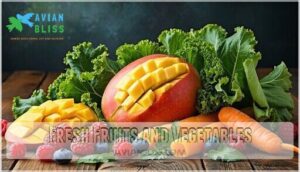
Fresh fruits and vegetables form nature’s pharmacy for your feathered friends.
Organic produce reduces pesticide exposure, while proper preparation methods guarantee safety.
Safe fruits like apples, berries, and mangoes deliver vitamin A birds need for immune function.
Vegetable variety including carrots and leafy greens provides vitamin D birds require for calcium absorption.
Consider appropriate serving sizes when offering these vitamin-rich foods.
Supplementing With Vitamins
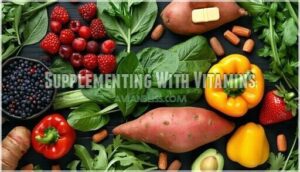
While vitamin-rich natural foods should be your bird’s foundation, strategic supplementation can address specific deficiencies.
Over-supplementation risks exist with synthetic vs natural options, so veterinary guidance guarantees proper deficiency diagnosis and supplement timing.
Consider avian vitamin products for targeted support.
Avian vitamins like vitamin A birds need, vitamin D birds require indoors, and vitamin E birds use for immunity demand careful dosing to prevent vitamin deficiencies.
Essential Vitamins for Birds
Your bird needs three critical vitamins to thrive: vitamin A for immune function and vibrant feathers, vitamin D for strong bones and proper calcium absorption, and calcium itself for skeletal health and egg production.
Understanding these essential nutrients helps you choose the right foods that’ll keep your feathered friend healthy and active.
Vitamin a Role
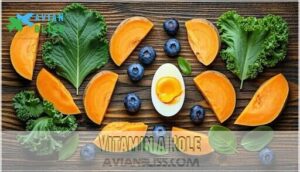
Beyond selecting quality food, your bird’s vitamin A intake directly affects their overall wellbeing. This powerhouse vitamin supports hormone production, immune response, and feather health in ways that’ll surprise you.
Here’s what vitamin A deficiency symptoms look like:
- White spots appearing around your bird’s beak
- Frequent respiratory infections that won’t clear up
- Dull, brittle feathers that lose their natural shine
- Lethargy and decreased appetite affecting daily activities
- Digestive problems leading to diarrhea and discomfort
Treatment options include beta-carotene supplements and vitamin A sources like sweet potatoes, carrots, and egg yolks. These foods naturally boost your bird’s vitamin levels without risking overdose from synthetic supplements. Ensuring adequate intake is vital for maintaining sharp vision, which is crucial for your bird’s overall wellbeing.
Vitamin D Importance

Your bird’s body can’t make vitamin D on its own, so sunlight exposure becomes critical for proper bone health and feather quality.
Deficiency symptoms include weak bones, fractures, and poor feather development.
Natural sunlight or UV lighting provides the best vitamin D sources, helping your feathered friend absorb calcium efficiently and maintain strong skeletal structure.
Calcium for Birds

When calcium levels drop, your bird’s bones become weak and egg-laying becomes dangerous.
Dark leafy greens provide excellent calcium sources, while cuttlefish bone offers concentrated supplementation.
Watch for seizures or muscle tremors—classic deficiency signs requiring immediate attention.
Maintain proper calcium-phosphorus balance through quality pellets and fresh foods.
Breeding birds need extra calcium supplements to support healthy egg production and strong bone development.
Many owners find avian calcium products helpful for their birds.
Superfoods for Birds
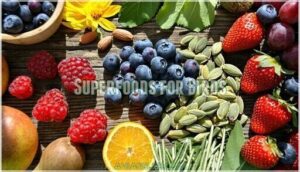
Just like athletes need the right fuel to perform their best, your feathered friends thrive when you provide them with nutrient-packed superfoods that boost their immune system and keep their feathers vibrant.
These powerhouse foods deliver concentrated vitamins and minerals that support everything from strong bones to brilliant plumage, making them essential additions to any bird’s daily menu, which can help maintain their immune system.
Berries and Fruits
Nature’s candy pack delivers powerful berry antioxidants that boost your bird’s immune system and feather quality.
Blueberries, strawberries, and raspberries provide essential vitamins while oranges supply vitamin C.
Always practice proper seed removal from fruits to prevent toxicity.
Limit fruit sugars by offering berries sparingly – they’re treats, not staples.
Proper fruit preparation guarantees safe, nutritious snacking for your feathered friend, with powerful and essential nutrients.
Leafy Greens and Vegetables
Dark leafy greens like kale and spinach pack essential vitamins A, C, and K for strong immunity and bone health.
When preparing greens for your feathered friend’s vegetable bird diet, wash thoroughly and choose organic options to avoid pesticide exposure.
Sprouted greens offer enhanced nutritional balance, while proper greens preparation guarantees your bird meets dietary needs without requiring excessive vitamin supplements for peak bird health.
Seeds and Grains
While leafy greens pack vitamins into every bite, seeds and grains deliver B vitamin sources that keep your bird’s nervous system humming.
Sprouted seeds release extra nutrition through grain preparation, making nutrients more bioavailable. Choose diverse seed mixtures over monotonous wild birdseed blends, but watch for seed toxicity from moldy options.
Consider safflower seeds, which offer low fat nutrition. Quality seed variety beats quantity every time, reducing your need for vitamin supplements with diverse seed mixtures.
Feeding Birds Seasonally
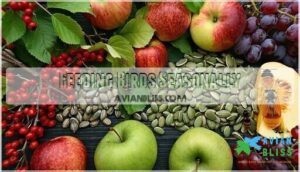
Just as wild birds adjust their diets with changing seasons, you’ll want to modify your feathered friend’s nutrition throughout the year to support their natural rhythms.
Understanding seasonal feeding patterns helps you provide ideal nutrition during breeding, molting, migration, and winter survival periods.
Spring and Summer Diets
During breeding season and molting support periods, your feathered friends need extra nutrition.
Fresh produce becomes essential – offer calcium sources like dark leafy greens and broccoli. Increase protein through insect consumption or cooked eggs.
Bird dietary needs shift dramatically now. Fruit for birds should include vitamin-rich options like papaya and mango.
Vegetables like sweet potatoes boost energy. Remember bird food moderation – variety matters more than quantity during these demanding seasons.
Fall and Winter Feeding
As colder months approach, your feathered friends need high-energy winter food sources to survive harsh conditions.
When winter winds howl, your birds need fuel-rich foods to power through nature’s toughest season.
Cold-weather hydration becomes challenging when water sources freeze, making fresh water availability critical for bird health. Consistent backyard bird feeding supports local bird populations.
Essential Winter Bird Care:
- Offer fattening foods like suet, nuts, and seeds rich in healthy fats
- Maintain unfrozen water sources using heated bird baths or frequent water changes
- Provide weatherproof feeders that protect food from snow and ice
- Support seasonal foraging by leaving seed heads on native plants
- Consider shelter by placing feeders near protective cover
Winter survival depends on meeting increased bird dietary needs through consistent feeding schedules and nutrient-dense options.
Species Specific Nutrition
Different bird species have unique nutritional needs that vary dramatically from backyard cardinals to exotic toucans.
Understanding these species-specific diets helps you provide ideal nutrition year-round, whether you’re feeding garden birds or caring for pet parrots.
| Bird Type | Key Nutritional Focus |
|---|---|
| Psittacines (Parrots) | Beta-carotene from carrots, dark leafy greens for healthy mucous membranes |
| Lorikeets | Water-soluble vitamins from soft fruits like papaya, mango for digestive health |
| Seed-eating Finches | Vitamin-rich spinach additions improve feather quality by 20% |
Exotic bird diets require careful attention to iron content – toucans need iron-poor fruits like bananas to prevent storage disease.
Garden bird needs focus on native seed preferences, while raptor nutrition demands whole prey for complete amino acid profiles.
Baby bird feeding involves precise formulas with gradual weaning protocols.
These seasonal food changes support natural behaviors, ensuring your bird species thrive with proper species-specific diets customized to their bird nutritional requirements and promoting healthy bird food variety.
Frequently Asked Questions (FAQs)
What vitamins should a bird take?
Here’s the secret your feathered friend won’t tell you: they can’t synthesize their own vitamins.
You’ll need to provide vitamins A, D3, E, B-complex, and essential minerals through balanced pellets and fresh foods rather than standalone supplements.
What is the best bird food for birds?
You’ll want high-quality pellets as your bird’s foundation, supplemented with fresh vegetables like kale, carrots, and bell peppers. Add fruits sparingly, cooked eggs occasionally, and always provide clean water daily.
What supplements can a bird eat?
Birds can safely take vitamin supplements, omega-3 fatty acids, calcium, and probiotics under veterinary guidance.
You’ll want to avoid over-supplementation since it’s potentially toxic, and most balanced diets already provide adequate nutrition, ensuring that veterinary guidance is crucial.
Do birds eat vitamin A?
Like a sponge soaking up water, your bird’s body craves vitamin A for healthy vision, strong immunity, and vibrant feathers.
You’ll find it naturally in colorful foods like carrots, sweet potatoes, and papaya.
How to prevent vitamin A deficiency in birds?
Feed your bird vitamin A-rich foods like carrots, sweet potatoes, papaya, and dark leafy greens daily.
You’ll also want to provide high-quality pellets and consider supplements if recommended by your avian veterinarian.
Does vitamin A help a bird grow a feather?
Yes, vitamin A directly supports feather development by maintaining healthy epithelial tissues that produce keratin, the protein forming feathers.
You’ll notice deficient birds develop dull, brittle plumage while well-nourished birds sport vibrant, strong feathers.
What vitamins do birds need?
Your feathered friend needs vitamins A, D3, E, and B-complex for peak health.
Vitamin A supports vision, immune function, and feather quality.
D3 helps calcium absorption for strong bones.
E provides antioxidant protection while B vitamins boost energy metabolism.
How to increase vitamin A in birds?
Think of vitamin A as your bird’s golden shield—it protects everything from vision to immune function.
You’ll boost vitamin A by offering orange and dark leafy vegetables like carrots, sweet potatoes, and kale daily.
What is the most common vitamin deficiency in birds?
Vitamin A deficiency is the most common nutritional shortfall you’ll encounter in pet birds.
This deficiency affects their immune system, vision, and respiratory health, often causing white spots around the beak and dull feathers.
Can birds overdose on vitamin supplements safely?
No, birds can’t safely overdose on vitamin supplements.
You’ll risk toxicity, organ damage, and potentially fatal complications.
Excessive vitamins A and D are particularly dangerous, causing liver problems and calcium imbalances that harm your feathered friend’s health substantially.
Conclusion
Providing vitamin rich foods for birds creates healthier feathers, strengthens immunity, and extends lifespans.
Offering fresh produce mimics natural foraging behaviors while supporting superior nutrition.
Remember that variety remains your most powerful tool—rotating seasonal fruits, vegetables, and sprouted seeds guarantees your bird receives thorough nutrition year-round.
You’ll notice improved energy levels, brighter plumage, and stronger overall health when you consistently provide these nutrient-dense options alongside quality pellets, which is a key factor in maintaining superior nutrition.