This site is supported by our readers. We may earn a commission, at no cost to you, if you purchase through links.
Most pet birds don’t die from disease—they die from what their owners feed them.
seed-only diet, which millions of well-meaning bird owners rely on, is roughly the equivalent of raising a child on potato chips.
Seeds taste great to birds, but they’re loaded with fat and stripped of the vitamins, calcium, and protein a bird needs to thrive long-term.
The result shows up quietly: dull feathers, brittle bones, shortened lifespans.
bird nutrition right isn’t complicated once you know what actually matters—and this guide breaks it down species by species, meal by meal.
Table Of Contents
- Key Takeaways
- Bird Nutrition Essentials
- Pellets, Seeds, and Base Diets
- Fruits and Vegetables Birds Eat
- Supplements, Calcium, and Grit
- Treats, Chop, and Enrichment
- Top 3 Bird Food Picks
- Frequently Asked Questions (FAQs)
- How do I tell a parrot I love you?
- Why put a potato in your bird feeder?
- What should a bird eat?
- How do you feed wild birds a healthy diet?
- How much protein should a bird eat a day?
- How to feed a pet bird a healthy diet?
- What nutrients do birds need?
- What is a good source of protein for a bird?
- How often should I change bird food?
- Can birds eat cooked grains and legumes?
- Conclusion
Key Takeaways
- seed-only diet quietly causes fatty liver, vitamin A deficiency, and brittle bones long before you’ll notice anything’s wrong—pellets should make up 60–75% of your bird’s daily food instead.
- Fresh water isn’t optional: biofilm builds fast, so wash the bowl daily and refresh it twice a day, especially in summer or dry indoor heat.
- Avocado, chocolate, onions, and fruit pits aren’t just bad for your bird—they can cause seizures, organ damage, or death, so keep them off the cutting board entirely.
- Supplements only fill real gaps (molting, breeding, illness recovery, low sunlight)—if your bird’s already on quality pellets, adding more without vet guidance can do more harm than good.
Bird Nutrition Essentials
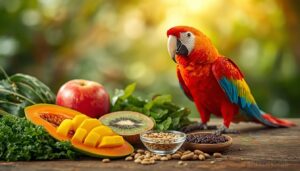
Getting bird nutrition right starts with understanding what your bird actually needs to thrive. It’s less complicated than it sounds, but the basics — macronutrients, vitamins, water, and warning signs — are worth knowing well.
Once you’ve got the basics down, building a balanced avian diet plan tailored to your specific bird makes the whole process a lot more manageable.
Here’s what every bird owner should have on their radar.
Macronutrients for Birds
Think of macronutrients as your bird’s fuel mix.
Protein Ratios matter most — proteins (12–20% for adults, 25–30% for young birds) drive feather growth and muscle repair.
Fat Sources, like omega‑rich seeds, supply Energy Density for active days.
Carb Balancing from fruits and grains keeps daily activity humming.
Get this balanced avian diet right, and everything else falls into place. pelleted diets provide balanced nutrition for most species, reducing common deficiencies.
Key Vitamins and Minerals
Macronutrients set the foundation, but vitamins and minerals are where things get precise. Vitamin A Vision support starts with foods like egg yolk or Beta Carotene Conversion through leafy greens.
B Vitamin Energy helps your bird actually use what it eats. Getting the Phosphorus Ratio and Trace Mineral Needs right matters too — that’s where a quality vitamin and mineral supplement earns its place.
- Vitamin A keeps eye tissue healthy and promotes cell renewal
- Essential vitamins for birds like B12 fuel red blood cells and nerve function
- Calcium supplement sources and mineral supplementation prevent bone weakness and thin eggshells
Daily Water Requirements
Vitamins keep your bird running, but fresh, clean water keeps everything moving. Bird hydration is non‑negotiable — birds can’t store water the way some mammals do, so clean bowl matters every single day.
Water Bowl Hygiene means daily washing, not just topping off. Old water builds biofilm fast, especially in warm rooms.
| Factor | What to Watch | Best Practice |
|---|---|---|
| Temperature Effects | Cold water discourages drinking | Offer room-temperature water |
| Seasonal Water Needs | Heat increases intake quickly | Refresh bowls more often in summer |
| Water Quality Filtration | Chlorine can reduce palatability | Use filtered or dechlorinated water |
| Hydration Monitoring | Dark droppings signal low intake | Check bowl twice daily |
| Container Material | Some materials retain residue | Use stainless steel or ceramic |
Watch your bird’s droppings — that’s your simplest Hydration Monitoring tool. Seasonal Water Needs shift too, so adjust your routine when temperatures climb or your heating system kicks on indoors.
Signs of Nutritional Imbalance
Your bird’s body tells you when something’s off — you just need to know what to look for.
Feather Dullness, Skin Flakiness, and feather plucking are early red flags for nutrient deficiencies. Muscle Weakness or Digestive Issues often follow.
Left unchecked, poor nutrition leads to fatty liver disease, a weakened immune system, and Immune Suppression — along with behavioral signs of nutritional imbalances in birds, like sudden aggression or withdrawal.
Pellets, Seeds, and Base Diets
What you put in your bird’s bowl every day matters more than most people realize.
Seeds alone won’t cut it, and not all pellets are created equal.
Here’s what you need to know to build a solid base diet, your bird will actually thrive on.
If you’re watching out for additives, this guide to bird seed options for small parrots helps you spot cleaner choices without the artificial colors.
Why Pellets Should Be The Staple
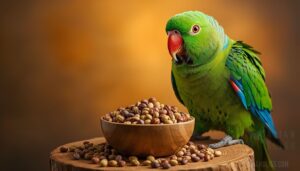
Pellets deserve the top spot in your bird’s bowl, and here’s why: they deliver consistent nutrient delivery in every single bite. Unlike seeds, pellets prevent selective eating, meaning your bird can’t cherry-pick favorites and leave the rest.
You get simplified portioning, reduced food waste, and a pellet foundation that promotes enhanced feather quality and lower obesity risk — all from one balanced diet staple.
Risks of Seed-only Feeding
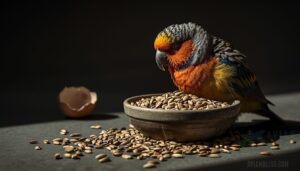
Seeds look harmless in the bowl, but a seed-only diet quietly stacks the risks. Fatty liver, Vitamin A deficiency, calcium deficiency, and protein deficiency can all develop before you notice anything wrong.
A seed-only diet looks harmless until fatty liver, vitamin deficiencies, and bone loss quietly take hold
- Chronic fat overload damages the liver over time
- Poor feather quality and respiratory issues from low Vitamin A
- Weak bones and soft-shelled eggs from calcium gaps
- Dehydration risk increases without water-rich foods
Choosing a Balanced Pellet Formula
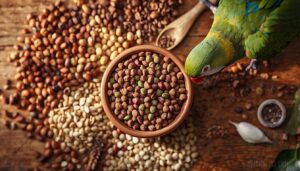
Not all pellets are created equal — and in the seed vs pellet debate, quality matters as much as format. Look for these markers when selecting a premium daily diet pellet:
| What to Check | Why It Matters |
|---|---|
| Ingredient Transparency | Recognizable whole grains first |
| Species Specific / Life Stage Nutrition | Matches your bird’s unique needs |
Additive quality, shelf stability, and a nutritionally complete formula make the difference between a balanced diet for companion birds and just filling a bowl.
Transitioning Birds From Seed to Pellets
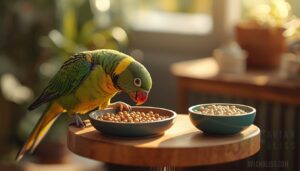
Switching from seed to pellets doesn’t have to be a battle. Start with a Gradual Ratio Shift — 75% seed, 25% pellets in week one — then nudge pellets up each week.
Pellet Timing matters too: offer them first thing when your bird is hungriest.
Watch Behavioral Cues and practice Weight Monitoring throughout.
Owner Consistency is what actually gets adapting birds to pelleted diets across the finish line.
Fruits and Vegetables Birds Eat
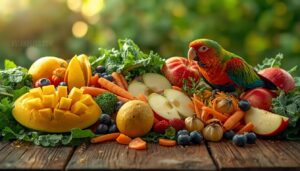
Fresh produce is one of the best things you can add to your bird’s bowl, but not every fruit or vegetable belongs there. Knowing which ones are safe, how to prep them, and what to keep far away makes all the difference.
Here’s what you need to know.
Safe Fruits for Birds
Fresh fruits make wonderful treats for your bird — think of them as nature’s multivitamin. Use this quick Fruit Safety Checklist when building your Fruit Variety Guide:
- Wash everything — rinse strawberries, apples, and grapes thoroughly
- Remove pits and seeds — cherries, peaches, and apples need this step
- Cut to size — small, bite-sized Fruit Serving Sizes prevent choking
- Skip avocado — it’s toxic, full stop
Blueberries, mango, and watermelon are reliable Seasonal Fruit Options worth rotating in regularly.
Best Vegetables for Daily Feeding
Vegetables are the backbone of a balanced diet for pet birds — and variety is the whole point. Dark and leafy greens like kale and collard greens pack serious Leafy Green Benefits, while carrots and sweet potatoes deliver Root Veggie Energy that your bird burns through fast.
Broccoli brings Cruciferous Antioxidants, and bell peppers load up on Colorful Pepper Vitamins.
Rotate with Seasonal Veggie Rotation to keep bird nutrition well-rounded.
How to Wash and Prepare Produce
Once you’ve picked your produce, prep matters just as much as selection.
Rinse Under Running cool water for 15 to 60 seconds, then brush firm produce like apples and carrots with a clean scrub brush. Pat Dry Thoroughly before serving.
A quick Cold Water Soak loosens hidden grit, and always use separate cutting boards to keep things safe.
Toxic Foods Birds Should Avoid
Now that your produce is prepped, watch what stays off the cutting board entirely.
Avocado Toxicity is real — persin in avocado can cause heart damage and respiratory distress quickly. Chocolate Caffeine can trigger seizures. Onion Garlic Poisoning damages blood cells. Fruit Seed Cyanide from apple or cherry seeds is genuinely dangerous. High Salt Risks and Rhubarb leaves round out this toxic foods list.
Supplements, Calcium, and Grit
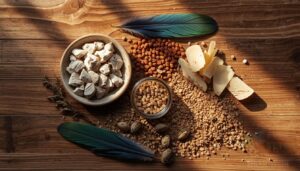
Even a well-rounded diet sometimes needs a little backup.
Supplements, calcium sources, and grit can fill real gaps — but only when used the right way.
Here’s what you actually need to know before adding anything to your bird’s routine.
When Birds May Need Supplements
Most birds don’t need supplements if they’re eating a quality pellet diet — but certain situations change that picture quickly. Here are four times nutrient supplementation makes real sense:
- Molting feather support — Growing new feathers drains resources fast.
- Breeding calcium boost — Egg-laying females need extra micronutrients.
- Illness recovery nutrients and post-antibiotic support — Gut disruption affects absorption.
- Indoor vitamin D — Limited sunlight creates genuine gaps.
Calcium Sources for Bone Health
Calcium deficiency sneaks up fast, especially during breeding season. A cuttlebone calcium source hung in the cage lets your bird self-regulate intake — simple and effective. Mineral blocks work the same way.
For leafy green calcium options, try leafy green calcium from collard greens, fish bone calcium from canned sardines, almond calcium snacks, or sesame seed calcium sprinkled on chop.
Oyster shell and cuttlefish bone supply round out your toolkit nicely.
Grit for Finches and Canaries
Unlike parrots, finches and canaries actually benefit from grit — but carefully. A Grit Types Comparison matters here: insoluble grit (crushed granite) aids gizzard grinding, while soluble grit supplies calcium.
For Grit Feeding Frequency, a small pinch every few months is plenty.
Watch for Grit Impaction Risk if your bird is on a seed-only diet. Good Grit Storage Practices keep it dry and uncontaminated.
Vet-guided Supplementation Tips
Before adding any dietary supplement to your bird’s routine, check with an avian veterinarian first. Supplements can interact with medications, and wrong doses cause real harm.
Start with gradual introduction at the lowest dose, then watch your monitoring indicators — droppings, energy, appetite.
Timing with meals improves fat-soluble vitamin absorption. Dose adjustment matters most during molting and breeding, when nutrient deficiencies peak.
Treats, Chop, and Enrichment
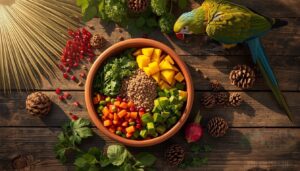
Treats and enrichment foods do more than just reward your bird — they keep mealtime interesting and mentally stimulating. Getting the balance right takes a little know-how, but it’s easier than you’d think.
Here’s what you need to know about limits, chop, foraging, and safe homemade options.
Healthy Treat Limits
Treats should make up no more than 10% of your bird’s daily food intake — that’s the rule worth keeping. Portion Size Guidelines shift depending on species size, so a macaw’s "small treat" would overwhelm a finch.
Follow a Frequency Scheduling approach: offer treats a few times weekly, not daily. Monitor Sugar Content and apply Fat Intake Caps for seeds and nuts, rotating Treat Variety to keep nutrition balanced.
How to Make Bird Chop
Bird chop is one of the best homemade recipes for pet birds you can make.
Start with a leafy green base — kale or spinach — then layer in fresh vegetables like carrots and bell peppers, cooked lentils for protein, and optional fresh fruits like berries.
Texture Balance matters, so mix steamed and raw pieces.
Portion Guidelines, rotate ingredients weekly for variety, and refrigerate in airtight containers for Storage Safety.
Food-based Foraging Enrichment
Foraging enrichment turns mealtime into a game your bird actually wins. Try Puzzle Feeding Strategies like hiding bird chop inside a container to encourage natural searching behavior.
Rotating Scatter Feeding Patterns across the cage floor and incorporating Perch Placement Games or Texture Variation keeps things fresh, stimulating your bird’s instincts.
Portion Control ensures foraging enrichment complements — never replaces — your bird’s complete base diet.
Safe Homemade Treat Ideas
Making homecooked bird meals doesn’t have to be complicated.
Try Fruit‑Veggie Pops by freezing chopped mango and carrot in water — a hit on warm days. A No‑Salt Nut Mix or Herb‑Infused Snacks sprinkled over bird chop adds variety without risk.
Egg‑Based Treats offer clean protein, while Low‑Sugar Fruit keeps things balanced.
Follow safe snack and treat guidelines for pet birds, and always practice healthy snack portion control.
Top 3 Bird Food Picks
With so many bird foods on the market, narrowing it down can feel overwhelming.
These three picks stand out for their quality ingredients, balanced nutrition, and consistent results across different species.
Here’s what’s worth your money.
1. Kaytee Exact Rainbow Parrot Conure Food
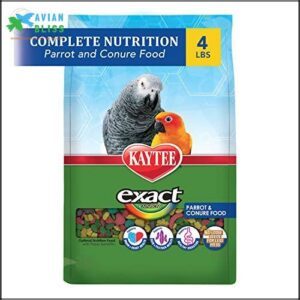
Kaytee Exact Rainbow is a solid everyday pellet for parrots and conures, and it’s easy to see why avian vets recommend it.
Each nugget is fully consumable — no hulls, no shells, less mess.
The formula includes omega-3s from ground flax seed for heart and brain support, plus prebiotics and probiotics to keep digestion running smoothly.
At around $19.95 for a 4 lb bag, it’s affordable.
One heads-up: it does contain artificial colors, so if your bird has sensitivities, keep that in mind.
| Best For | Bird owners looking for a clean, vet-recommended staple diet for small to medium parrots and conures who want less feeding mess and solid nutritional support. |
|---|---|
| Net Weight | 4 lb (1.81 kg) |
| Price | $19.95 |
| Hull-Free Format | Yes, extruded nuggets |
| Preservation Method | Mixed tocopherols & rosemary extract |
| Artificial Colors | Yes (Yellow 40, Blue 1) |
| Target Species | Parrots & conures |
| Additional Features |
|
- No hulls or shells means less mess and every bite counts
- Packed with omega-3s, prebiotics, and probiotics for heart, brain, and gut health
- Avian vets and nutritionists have backed it for years — that trust is earned
- Contains artificial colors (Yellow 40, Blue 1) that may not suit sensitive birds
- Can be dusty, so you might need to strain it before storing
- Nugget size runs small, making it a poor fit for larger birds like African Greys
2. ZuPreem FruitBlend Bird Pellets
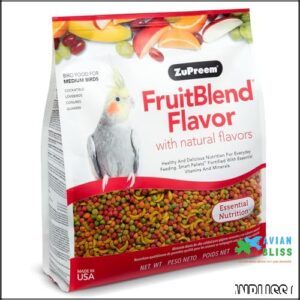
If you want something your bird might actually get excited about, ZuPreem FruitBlend is worth a look. The pellets come in banana, apple, orange, and grape flavors, and the different shapes genuinely seem to keep picky eaters engaged.
It’s formulated as a complete daily diet — about 14% protein and 4% fat — with vitamins A, D3, and E built in. One thing to know: it does contain artificial colors and added sugars, so it’s not ideal for birds with metabolic sensitivities.
| Best For | Bird owners with medium-sized parrots like cockatiels, lovebirds, or small conures who want a colorful, complete daily diet that keeps picky eaters engaged. |
|---|---|
| Net Weight | 2 lb (0.91 kg) |
| Price | Not listed |
| Hull-Free Format | Yes, pellets |
| Preservation Method | Citric acid & mixed tocopherols |
| Artificial Colors | Yes (Yellow 5, Red 40, Yellow 6, Blue 1) |
| Target Species | Cockatiels, lovebirds, conures, lorikeets |
| Additional Features |
|
- Comes in four fruit flavors with fun shapes that encourage natural foraging and make mealtime more interesting for curious birds.
- Covers all the nutritional bases — vitamins, minerals, and a solid protein-fat ratio — so you’re not juggling a dozen supplements.
- Backed by a 100% satisfaction guarantee, which takes some of the risk out of trying a new food.
- Contains artificial dyes (Yellow 5, Red 40, and others) and added sugar, which some owners would rather avoid entirely.
- Certain shapes — especially the banana pieces — tend to get tossed aside, so expect some waste and maybe some sorting.
- Not a great fit for birds with corn, soy, or wheat sensitivities, or species that need a higher-protein diet.
3. LAFEBERS Tropical Fruit Nutri Berries
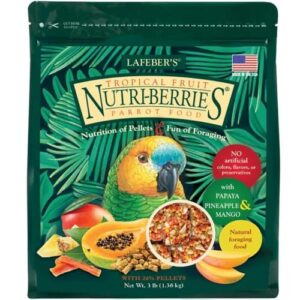
If ZuPreem is the fun option, Lafeber’s Tropical Fruit Nutri-Berries are the smart one.
Each round berry packs real mango, papaya, and pineapple into a shape your bird can grip, hold, and peck apart — which naturally doubles foraging time compared to standard pellets.
No artificial colors, no wasted seed hulls.
The formula is avian vet-approved, with balanced omega-3 and omega-6 fatty acids, and it works for most species at any life stage.
At $39.99 for 3 lbs, it’s solid value.
| Best For | Bird owners who want a vet-formulated, zero-waste food that keeps their parrot or conure mentally stimulated and nutritionally covered at every life stage. |
|---|---|
| Net Weight | 3 lb (1.36 kg) |
| Price | $39.99 |
| Hull-Free Format | Yes, Nutri-Berries |
| Preservation Method | No artificial preservatives |
| Artificial Colors | None |
| Target Species | Large parrots, conures, canaries |
| Additional Features |
|
- Real tropical fruit (mango, papaya, pineapple) with no artificial colors, flavors, or preservatives
- The round berry shape doubles foraging time and gives birds a natural beak and foot workout
- Nutritionally complete for all life stages, so it works as a full daily diet — not just a treat
- Berries can crumble or break apart during shipping, which means some pieces arrive too small to use as intended
- Warm storage causes mushiness, so you have to be careful about where you keep the bag
- Manufacturers still recommend adding fresh fruits and veggies on the side, so it’s not a total set-it-and-forget-it solution
Frequently Asked Questions (FAQs)
How do I tell a parrot I love you?
Parrots can’t hear "I love you," but they feel it. Slow blink at your bird, offer calm hands, and sit nearby often. That quiet presence speaks louder than any word.
Why put a potato in your bird feeder?
Cooked potato gives birds a quick calorie boost, especially in cold weather.
It’s starchy, easy to digest, and rich in potassium and B vitamins.
Always serve it plain—no salt or butter.
What should a bird eat?
Think your bird can thrive on seeds alone? It can’t.
Birds need protein, healthy fats, carbohydrates, vitamins, minerals, and fresh water daily — a balanced mix that keeps feathers bright and energy steady.
How do you feed wild birds a healthy diet?
Start with variety — offer seeds, fresh berries, and clean water in a shallow dish. Replace water daily, and never put out avocado or salted snacks.
Simple, consistent, and safe win every time.
How much protein should a bird eat a day?
Protein is the "feather" in your bird’s cap — adult birds generally need 12–20% protein daily, while young, molting, or breeding birds need closer to 25–30%.
How to feed a pet bird a healthy diet?
Feed your bird a mix of 60–75% quality pellets, fresh vegetables daily, and the occasional fruit or treat. Keep water clean, rotate produce, and avoid avocado, chocolate, and onions.
What nutrients do birds need?
Your bird needs six core nutrients to thrive: protein, fat, carbohydrates, vitamins, minerals, and water.
Without the right balance, even a "fed" bird can quietly decline in ways you won’t notice until it’s serious.
What is a good source of protein for a bird?
Hard-boiled eggs are your best starting point — they deliver complete amino acids in a form most birds readily accept.
cooked lentils and quality pellets round out a solid protein routine nicely.
How often should I change bird food?
Change dry seed every 3 to 5 days, or every 2 to 3 days in humid weather. Always remove old food completely before refilling.
Can birds eat cooked grains and legumes?
Plain cooked rice, oats, quinoa, lentils, and chickpeas are all safe for most birds. Just skip the salt, cool them down first, and serve in small portions.
Conclusion
wild parrot in the rainforest never reads a label—it just knows instinctively which fruit, bark, and seed keeps it sharp and bright-feathered. You now have something better than instinct: a clear, science-backed bird nutrition food guide that removes the guesswork entirely.
Swap the seed bowl for pellets, rotate fresh produce daily, and treat sparingly. Your bird can’t tell you what it needs, but after reading this, you can.
- https://lafeber.com/pet-birds/bird-food-guide/
- https://www.petco.com/content/petco/PetcoStore/en_US/pet-services/resource-center/food-nutrition/fruits-for-birds.html
- https://vcahospitals.com/know-your-pet/plants---toxic-for-birds
- https://www.innersouthvets.com.au/5-reasons-why-not-to-feed-only-seed/
- https://www.dvm360.com/view/pet-birds-need-fewer-seeds-more-formulated-diets