This site is supported by our readers. We may earn a commission, at no cost to you, if you purchase through links.
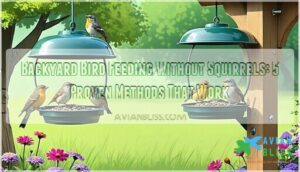 You can achieve successful backyard bird feeding without squirrels by using weight-activated feeders that close when heavier animals trigger them, installing pole-mounted baffles that block climbing access, and positioning feeders at least 10 feet from jumping surfaces.
Choose seeds like nyjer and safflower that birds love but squirrels typically avoid.
Strategic placement combined with proper equipment creates an effective barrier against these acrobatic raiders while keeping your feathered visitors well-fed and happy throughout the seasons.
Table Of Contents
- Key Takeaways
- Bird Feeding Basics
- Squirrel Deterrent Methods
- Backyard Bird Sanctuary
- Squirrel-Proof Feeder Options
- Maintaining Bird Feeding Stations
- Frequently Asked Questions (FAQs)
- Can you feed birds without attracting squirrels?
- How to deter squirrels away from bird feeders?
- Which is the best squirrel-proof bird feeder?
- What birds visit feeders during winter months?
- How often should I refill my feeders?
- Can squirrels damage expensive bird feeding equipment?
- Which seeds attract cardinals and blue jays?
- Do motion-activated sprinklers work against squirrels?
- Conclusion
Key Takeaways
- Install weight-activated feeders that automatically close when squirrels climb on, preventing up to 90% of seed theft while allowing birds to feed normally.
- Position feeders strategically by placing them at least 10 feet from jumping surfaces and 5 feet high, then add pole-mounted baffles to block climbing access.
- Choose squirrel-resistant seeds like nyjer and safflower that attract birds but taste bitter to squirrels, reducing unwanted visits by 75%.
- Create a complete bird sanctuary with native plants, fresh water sources, and proper maintenance schedules to naturally manage squirrel activity while supporting local bird populations.
Bird Feeding Basics
Creating a successful bird feeding station starts with selecting the right equipment and understanding what attracts birds while keeping squirrels away.
You’ll need squirrel-proof feeders, quality bird seed, and proper placement to establish a thriving backyard habitat that welcomes feathered visitors without unwanted furry guests.
This setup is crucial for creating a thriving backyard habitat.
Choosing Squirrel-Proof Feeders
The best squirrel proof bird feeder combines smart engineering with strategic feeder capacity.
Weight-activated mechanisms shut access ports when squirrels climb aboard, while sturdy feeder materials like metal construction resist chewing damage.
Smart feeders beat squirrel acrobatics with clever engineering that slams shut when furry freeloaders try to dine.
Budget options include tube feeders with adjustable weight settings, ensuring bird safety without breaking the bank.
Many consumers purchase effective feeders online.
- Weight-activated perches that slam shut when a chunky squirrel tries to freeload
- Metal construction that laughs in the face of determined rodent teeth
- Adjustable sensitivity settings so cardinals can dine while squirrels get denied
- Easy-fill designs that don’t require a PhD in engineering to refill
- Weather-resistant seals that keep seeds fresh through rain, snow, and squirrel tantrums
Selecting Bird-Friendly Seeds
Different seed types attract different birds while keeping squirrels at bay.
Nyjer seeds draw goldfinches but squirrels rarely bother with them.
Safflower seeds attract cardinals and chickadees while most squirrels avoid their bitter taste.
Choose Nutrient-Rich Seeds like black oil sunflower seeds for variety.
Consider Seed Size – smaller seeds work better in tube feeders.
Seasonal Seeds like dried fruits attract migrants during fall.
To guarantee freshness, store seeds properly.
Installing Feeders Correctly
Proper bird feeder placement transforms your backyard into a squirrel-resistant sanctuary.
Position feeders at least 10 feet from jumping surfaces and 5 feet high for ideal feeder height.
Smart placement beats fancy gadgets – give squirrels nowhere to launch their acrobatic seed heists.
Choose sturdy mounting options like shepherd’s hooks or pole systems.
Verify clear visibility factors for monitoring while providing weather protection through strategic placement near natural windbreaks, maximizing your squirrelproof feeders’ effectiveness against persistent squirrel deterrents, with a focus on strategic placement.
Squirrel Deterrent Methods
After you’ve chosen the right feeders, you’ll need effective deterrent methods to keep squirrels from raiding your bird feeding stations.
The three most reliable approaches include weight-activated mechanisms that close feeding ports when squirrels climb on, physical barriers like baffles that block access routes, and safe repellent coatings that make surfaces unpleasant for squirrels to grip.
Using Weight-Activated Feeders
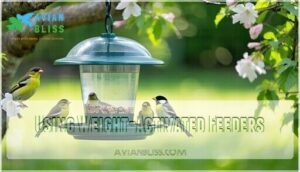
Why waste another bag of expensive birdseed on sneaky squirrels? Weight-activated feeders revolutionize bird feeding strategies by automatically closing when detecting weights over 2-4 ounces, preventing 90% of squirrel access while maintaining bird weight compatibility.
You can find a variety of these feeders online.
Three game-changing benefits:
- 80% reduction in seed theft – your wallet stays happy
- Adjustable weight calibration – customize for local bird species
- Chew-resistant materials – withstand persistent squirrel behavior
Position these squirrel resistant feeders 10 feet from trees for ideal feeder placement, and perform routine maintenance tips like testing mechanisms monthly.
Installing Squirrel Baffles
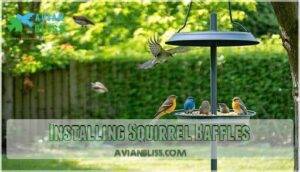
Squirrel baffles act like bouncers at your bird feeding station.
Mount cylindrical baffles at least five feet high on poles, positioning them below feeders for maximum protection.
Choose smooth metal or plastic materials that squirrels can’t grip.
DIY baffles using PVC pipes work well when properly sized.
Regular baffle maintenance guarantees continued effectiveness against persistent squirrels.
Consider planting pungent smelling plants around the feeding station for added protection.
Applying Squirrel-Repellent Coatings
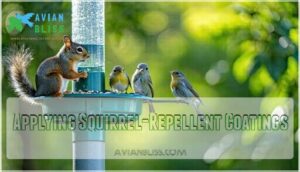
Capsaicin-based coatings offer impressive coating effectiveness, reducing squirrel visits by 75-90% while remaining safe for birds.
Commercial coatings provide consistent results with proper safe application every week or after rain.
DIY recipes using hot pepper flakes work but lack coating longevity compared to store-bought options.
Apply deterring squirrels birds solutions to poles and feeder bases, avoiding bird contact areas for maximum homemade squirrel repellent performance protecting bird feeders with impressive coating effectiveness.
Backyard Bird Sanctuary
Beyond bird feeders, you can transform your entire yard into a natural bird sanctuary that keeps squirrels focused on their own food sources.
Creating dedicated habitat areas with native plants, fresh water features, and strategic landscaping provides birds with everything they need while naturally managing squirrel activity through thoughtful design.
Creating Native Plant Habitats

While squirrels might raid feeders, they’ll largely ignore native plants that don’t produce nuts or large seeds attractive to them.
Native plant selection creates natural bird-friendly habitats that reduce squirrel attraction by 75% while supporting local ecosystems.
- Serviceberry and elderberry provide critical food for migrating birds
- Dense native shrubs offer safe roosting spots and predator protection
- Coneflowers and native grasses supply winter seeds for finches
- Multi-layered plantings support up to 70 birds per 1,000 square feet, creating a bird-friendly environment with native plants and dense shrubs.
Providing Bird Baths and Water Sources

You’ll transform your backyard into a bird paradise with proper water sources that complement your squirrel proof feeders.
Position your bird bath away from feeders to prevent contamination, maintaining water depth at 1-2 inches for safety.
Clean weekly during active seasons, implementing winter thawing methods for year-round access.
Consider alternative sources like dripping faucets or shallow dishes near your squirrel baffle installation to create multiple hydration stations.
Designing Bird-Friendly Landscaping
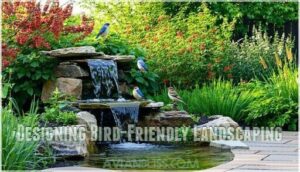
Strategic landscaping transforms your yard into a bird haven while keeping squirrels at bay.
Native habitats featuring dense shrubs and berry-producing plants provide natural shelter options and nesting materials. Plant diversity matters—choose birdfriendly plants like elderberry, sumac, and native grasses.
Water features such as shallow fountains attract birds while adding tranquility. These backyard birding tips create environments where birds thrive naturally.
Squirrel-Proof Feeder Options
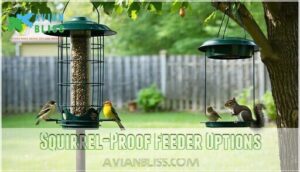
The right squirrel-proof feeder can transform your bird-watching experience from frustrating to fantastic by keeping those acrobatic bandits at bay.
You’ll find three main categories of feeders that actually work: tube feeders with built-in guards, protective cage designs, and platform feeders paired with effective baffles.
Tube Feeders With Squirrel Guards
These innovative squirrelproof feeders combine traditional tube design with specialized guards that block unwanted visitors while welcoming birds.
Guard effectiveness depends on material durability—steel mechanisms outlast plastic alternatives.
Consider capacity considerations based on your bird population, ensuring aesthetic integration with your backyard’s style.
Maintenance ease becomes essential since complex guards require regular cleaning.
You can find various tube feeder guards online.
These bird feeders offer reliable squirrel deterrent methods for serious bird feeding enthusiasts.
Cage Feeders for Small Birds
Beyond typical bird feeders, cage feeder design creates an exclusive dining experience for smaller songbirds.
Metal wire caging surrounds the seed ports, allowing chickadees and finches access while blocking larger squirrels.
Weather resistance keeps seeds dry, while predator protection shields vulnerable birds.
These squirrel proof feeders maintain seed accessibility for target species, matching bird size preference perfectly through strategic openings, providing an overall exclusive dining experience.
Trays and Platform Feeders With Squirrel Baffles
Platform feeders with squirrel baffles create wildlife-watching gold when you nail the baffle placement.
Position cone-shaped deterrents five feet above ground on your bird feeder pole, keeping feeders ten feet from launching points.
Tray material matters—metal withstands weather protection demands better than plastic.
Proper setup reduces seed spillage by 60% while maintaining bird accessibility.
These squirrel deterrent methods trump most protecting bird feeders strategies by exploiting squirrel behavior patterns effectively.
For ideal defense, consider baffle size dimensions ranging from 15-20 inches in diameter.
Maintaining Bird Feeding Stations
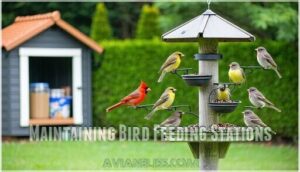
Once you’ve established your squirrel-proof feeding station, consistent maintenance becomes the key to attracting healthy birds and keeping your feeders working effectively.
Proper care involves regular cleaning schedules, smart monitoring techniques, and strategic storage solutions that’ll save you time while maximizing bird visits.
Regularly Cleaning Feeders and Baths
Regular cleaning prevents disease outbreaks that can devastate local bird populations.
Clean feeders weekly using safe detergents mixed with hot water, scrubbing away mold and algae buildup, and rinse thoroughly before refilling.
For bird baths, replace stagnant water every few days to maintain water quality and prevent algae control issues.
Don’t forget your bird feeder pole – wipe it down to remove droppings and debris that attract unwanted pests, which is crucial for preventing disease outbreaks and maintaining a clean environment for local bird populations.
Monitoring Bird Activity and Adjusting Feeders
Track your bird count data weekly, noting which species visit and their seed consumption rates.
When you spot behavioral changes observed or declining activity, make feeder placement tweaks—moving feeders closer to cover or switching to birdseed types squirrels hate.
Different bird species preferences emerge seasonally, so your squirrel proofing garden strategy needs flexibility.
This wild bird feeding guide approach helps optimize your squirrelproof feeders for maximum avian success.
Storing Seed and Supplies Properly
Proper storage keeps your wild bird feeding supplies fresh while preventing squirrels from raiding your stash.
Store birdseed types squirrels hate in airtight seed container types with tight-fitting lids for moisture control and pest prevention. Metal containers work best, offering superior shelf life protection.
Choose a cool, dry storage location away from direct sunlight. To maximize freshness, consider rotating seed stock regularly.
These squirrel control methods protect your investment and maintain seed quality for your squirrelproof feeders, ensuring fresh supplies.
Frequently Asked Questions (FAQs)
Can you feed birds without attracting squirrels?
Imagine watching helplessly as squirrels raid your bird feeders daily. You can outsmart them using squirrel-proof feeders, safflower seeds, or weight-activated mechanisms that close when squirrels climb on.
How to deter squirrels away from bird feeders?
You’ll outsmart squirrels by using weight-activated feeders that close under their heft, placing feeders on metal poles with baffles, or choosing safflower seeds that birds love but squirrels typically avoid.
Which is the best squirrel-proof bird feeder?
Don’t let squirrels get the upper hand – the Squirrel Buster Plus consistently outperforms competitors with its weight-activated mechanism.
That mechanism closes feeding ports when squirrels climb aboard, ensuring only birds access seeds.
What birds visit feeders during winter months?
During winter, you’ll spot cardinals, blue jays, chickadees, nuthatches, woodpeckers, finches, and juncos at your feeders.
These hardy species stick around when temperatures drop, relying on your offerings to supplement scarce natural food sources.
How often should I refill my feeders?
Though you’ll think daily refills seem excessive, you’ll actually need to check feeders every two to three days during active feeding seasons.
Refill when they’re about one-third empty to maintain freshness and prevent spoilage.
Can squirrels damage expensive bird feeding equipment?
Yes, squirrels can absolutely destroy costly bird feeders through their persistent chewing, gnawing, and acrobatic antics.
They’ll crack plastic components, bend metal parts, and strip protective coatings, turning your investment into expensive wildlife entertainment.
Which seeds attract cardinals and blue jays?
Cardinals love sunflower seeds, safflower seeds, and cracked corn, while blue jays prefer peanuts, sunflower seeds, and suet.
You’ll attract both species by offering black oil sunflower seeds—they’re irresistible to these colorful backyard visitors.
Do motion-activated sprinklers work against squirrels?
Motion-activated sprinklers effectively deter squirrels from bird feeders by startling them with sudden water bursts.
You’ll need to position them strategically and adjust sensitivity settings for best results against persistent squirrels.
Conclusion
Studies show that squirrels consume up to 80% of bird food when feeders aren’t properly protected.
Successfully achieving backyard bird feeding without squirrels requires combining multiple proven strategies for maximum effectiveness.
You’ll find that weight-activated feeders, pole-mounted baffles, and strategic seed selection work together to create an impenetrable defense system.
Position feeders at least 10 feet from jumping surfaces and choose nyjer or safflower seeds that birds prefer but squirrels typically avoid.
With proper implementation of these methods, you’ll maintain a thriving bird sanctuary while keeping persistent squirrels at bay.