This site is supported by our readers. We may earn a commission, at no cost to you, if you purchase through links.
 South Carolina’s backyard birds create a vibrant ecosystem right outside your door.
You’ll spot the brilliant red Northern Cardinal year-round, often paired with brown females at feeders.
Carolina Wrens belt out surprisingly loud songs from dense shrubs, while American Crows patrol with surprising intelligence.
Blue Jays flash their bright plumage as they cache acorns, and Mourning Doves coo softly from power lines.
These backyard birds of South Carolina thrive with the right mix of native plants, fresh water, and quality feeders.
House Finches, Tufted Titmice, and Carolina Chickadees round out your regular visitors.
The secret lies in understanding what each species needs to transform your yard into their preferred habitat.
This involves providing the right environment, which includes fresh water and quality feeders, to attract a variety of species, such as the Northern Cardinal and Carolina Wrens.
Table Of Contents
- Key Takeaways
- Common Backyard Birds of South Carolina
- Identifying Backyard Birds in South Carolina
- Attracting Birds to Your South Carolina Backyard
- Types of Bird Feeders for South Carolina Yards
- Best Bird Food for South Carolina Backyard Birds
- Seasonal Birds in South Carolina Backyards
- Rare and Unusual Backyard Birds in South Carolina
- Creating a Bird-Friendly Habitat in Your Backyard
- Photographing Backyard Birds in South Carolina
- Conservation Efforts for South Carolina Backyard Birds
- Frequently Asked Questions (FAQs)
- How do I identify a bird in my backyard?
- What is the most common bird in SC?
- What birds lay eggs on the ground in South Carolina?
- What is the national bird of South Carolina?
- What is the most common bird in South Carolina?
- What is the tiny bird in South Carolina?
- What birds should I attract to my yard?
- How do South Carolinas backyard birds cope with hurricanes?
- What are the legal restrictions on feeding wild birds?
- What impact do feral cats have on backyard bird populations?
- Conclusion
Key Takeaways
- You’ll attract the most common South Carolina backyard birds—Northern Cardinals, Carolina Wrens, and American Crows—by providing native plants, fresh water sources, and quality feeders with sunflower seeds.
- You can identify backyard birds by observing four key features: size, color patterns, behavior (ground feeding vs. tree clinging), and distinctive calls like the Carolina Wren’s "teakettle" song.
- You’ll create the ideal bird habitat by planting native species like American Holly and Eastern Red Cedar, installing clean water features, and positioning nest boxes 5-15 feet high facing away from prevailing winds.
- You’ll support year-round residents like Cardinals and seasonal visitors by participating in citizen science projects like eBird, avoiding pesticides, and providing consistent food sources through platform, tube, and hopper feeders.
Common Backyard Birds of South Carolina
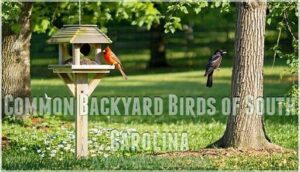
You’ll discover three primary birds that frequent South Carolina backyards year-round: the vibrant Northern Cardinal, the energetic Carolina Wren, and the intelligent American Crow.
Discover the colorful trio that brings year-round joy to your South Carolina backyard.
These common species offer excellent starting points for backyard birdwatching, each displaying unique characteristics that make identification straightforward for beginners, and are a great example of backyard birdwatching.
Northern Cardinal
How can you resist the Northern Cardinal’s brilliant red male plumage and cheerful presence in your South Carolina birds collection?
This common birds SC favorite displays fascinating feeding habits, preferring sunflower seeds at ground feeders while males sing territorial Cardinal songs from high perches.
Their nesting behavior involves building cup-shaped nests in dense shrubs, making them perfect backyard birds for bird identification enthusiasts seeking year-round residents.
Carolina Wren
Carolina Wrens bring year-round charm to South Carolina backyard birds with their distinctive teakettle song and curious nature.
You’ll recognize their wren behavior immediately—they hop through dense shrubs with tails cocked upright, searching for insects and spiders in their preferred wren habitat.
These skilled nest building experts stuff cavities with twigs and leaves, creating cozy homes in mailboxes or flower pots.
Their varied wren diet includes beetles, caterpillars, and occasional berries, making bird identification easy when you spot their rusty-brown coloring and bold white eyebrow stripe.
American Crow
American Crow intelligence rivals that of primates, making these South Carolina backyard birds fascinating to observe.
You’ll recognize their jet-black plumage and distinctive "caw" calls echoing through neighborhoods.
These adaptable corvids communicate through complex vocalizations and demonstrate remarkable problem-solving abilities in urban environments.
Crow behavior patterns include:
- Tool use – They’ll drop nuts onto roads for cars to crack
- Social learning – Young crows learn foraging techniques from parents
- Memory retention – They remember human faces and feeding locations
Their omnivorous diet spans insects, fruits, and food scraps, while crow mythology depicts them as clever tricksters across cultures.
Identifying Backyard Birds in South Carolina
You’ll become a backyard bird detective once you learn the key identification features that separate species.
Start by observing size, shape, color patterns, and behavior—these four elements will help you confidently identify most South Carolina birds within minutes, using key identification features.
Physical Characteristics
Looking at your backyard birds, you’ll notice distinct physical traits that make identification straightforward.
Size comparison ranges from tiny chickadees to crow-sized birds, while plumage variations create stunning visual differences.
| Bird Species | Size (inches) | Key Features |
|---|---|---|
| Carolina Chickadee | 4-5 | Black cap, white cheeks, gray body |
| Northern Cardinal | 8-9 | Bright red (male), brown with red highlights (female) |
| Carolina Wren | 5-6 | Rusty brown, white eyebrow stripe, upturned tail |
| Mourning Dove | 9-13 | Soft gray-brown, black wing spots, pointed tail |
The backyard birds can be identified by their distinct physical traits and size comparison, making it easier to recognize them.
Behavior and Habits
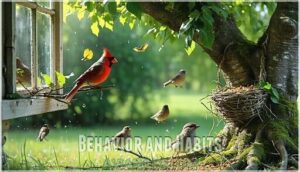
Once you’ve noted their physical features, observing backyard birds reveals fascinating daily routines and social behavior patterns.
Northern Cardinals often attack their own reflections in windows, mistaking them for territorial rivals. Carolina Wrens hop through dense shrubs while foraging, rarely venturing into open spaces. Mourning Doves display unique feeding habits by storing seeds in their crop before digesting them later.
Bird behavior observations become easier when you understand these key patterns:
- Mating displays occur primarily during breeding season when males perform elaborate courtship rituals
- Nesting rituals vary by species, with some birds reusing old nests while others build fresh ones annually
- Social behavior ranges from solitary hunters like wrens to flocking species like cardinals
- Feeding habits differ throughout the day, with peak activity during early morning and late afternoon
- Bird habitats influence behavior, as ground-feeders act differently than canopy dwellers
Calls and Songs
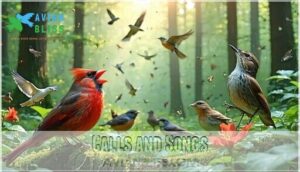
You’ll recognize South Carolina backyard birds by their distinctive bird sounds and bird calls. Each species has unique vocalization identification markers that make spotting them easier, even when hidden.
| Bird Species | Signature Call/Song |
|---|---|
| Northern Cardinal | Clear whistle "birdy-birdy-birdy" |
| Carolina Wren | Loud "tea-kettle-tea-kettle" chant |
| American Crow | Sharp "caw-caw-caw" calls |
Bird recordings help you learn these patterns before heading outside. Cardinals show song complexity with varied melodies, while Blue Jays display impressive mimicry abilities.
Regional dialects exist within species – Carolina Wrens in coastal areas sound slightly different from mountain populations. Understanding call functions reveals whether birds are claiming territory, seeking mates, or warning of danger.
Attracting Birds to Your South Carolina Backyard
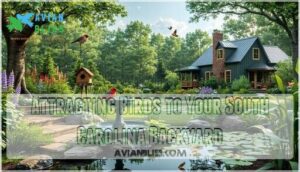
You can transform your backyard into a bird paradise by providing three essential elements that South Carolina’s feathered residents need to thrive.
Native plants, reliable water sources, and proper nesting boxes create an irresistible habitat that’ll have cardinals, wrens, and other species flocking to your yard year-round, making it a haven for native plants and various bird species.
Native Plants
Native plants create the perfect foundation for attracting backyard birds to your South Carolina garden.
These indigenous species provide natural food sources and nesting materials that local birds have relied on for generations, making your yard an irresistible bird habitat.
Consider these top native plant choices for your garden design:
- American Holly – produces berries that Cardinals and Blue Jays can’t resist
- Eastern Red Cedar – offers year-round cover and attracts Cedar Waxwings
- Flowering Dogwood – provides fruit that supports local ecosystems naturally.
Plant benefits extend beyond attracting birds.
South Carolina’s native plants also support local biodiversity.
Native species require less water and maintenance while supporting seed sources that feed countless species throughout the seasons.
Water Sources
Beyond native plants, water sources serve as magnets for South Carolina backyard birds. You’ll attract more species with clean, accessible water year-round.
Bird bath types range from shallow pedestal models to ground-level basins that accommodate different bird sizes. Clean your water features every 2-3 days to prevent disease spread and algae buildup. Moving water features are especially enticing to birds.
Here’s why water sources transform your backyard into a bird haven:
- Hydration during scorching Lowcountry summers when temperatures soar above 90°F
- Bathing opportunities that help birds maintain proper feather insulation and flight efficiency
- Winter water access when natural sources freeze during occasional cold snaps
- Increased bird activity as multiple species visit throughout the day for drinking and bathing
Nesting Boxes
Installing birdhouses transforms your yard into a breeding haven for cavity-nesting species.
You’ll want untreated wood boxes with proper ventilation and drainage holes.
Box placement matters tremendously—mount them 5-15 feet high, facing away from prevailing winds.
Species preferences vary dramatically: bluebirds need 1.5-inch entry holes, while wrens prefer smaller openings.
Add predator guards below boxes to deter snakes and raccoons.
Box cleaning each fall removes parasites and old nesting materials.
Match box materials and dimensions to your target native plants and local backyard birds’ nesting habits.
Using birdhouse kits can simplify the construction process for these birdhouses.
Types of Bird Feeders for South Carolina Yards
Choosing the right feeder type makes all the difference in attracting South Carolina’s diverse backyard birds to your yard.
Each feeder design caters to specific bird species and feeding behaviors, so you’ll want to match your setup to the birds you hope to see, which is crucial for attracting the desired diverse backyard birds.
Platform Feeders
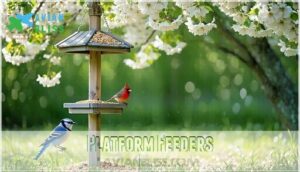
Platform feeders offer the most open design for accommodating ground-feeding species like mourning doves and cardinals in your South Carolina backyard.
These bird feeders excel at wildlife attraction because they allow multiple birds to feed simultaneously while supporting various seed types.
Feeder placement matters—position yours away from predators but within easy viewing distance.
Bird preferences favor mixed seeds on these feeders.
Feeder maintenance requires frequent cleaning since the open surface collects debris, especially during South Carolina’s humid summers when mold can quickly develop.
For ideal results, consider using quality feeder products to attract a diverse range of bird species.
Tube Feeders
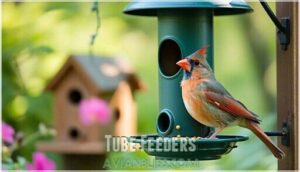
Tube feeders work perfectly for South Carolina birds like finches, chickadees, and titmice.
You’ll want cylindrical designs with multiple feeding ports that protect seeds from moisture.
Fill them with black oil sunflower seeds or nyjer for best bird attraction results.
Regular feeder maintenance prevents mold in humid conditions.
Using the right bird feeder types can substantially enhance your backyard birding experience.
Hopper Feeders
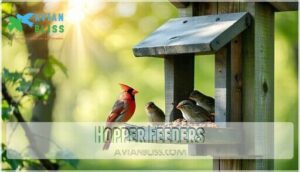
Hopper feeders serve as reliable workhorses for South Carolina bird watching, featuring seed-dispensing mechanisms that attract diverse backyard birds like cardinals and grosbeaks.
Their roofed design shields seeds from the state’s frequent rainfall, though you’ll need vigilant feeder maintenance to prevent mold in humid conditions.
Consider these filling tips for ideal bird attraction:
- Feeder placement: Position 5-6 feet high, away from predator hiding spots
- Seed types: Use mixed blends or sunflower seeds for variety
- Materials: Choose weather-resistant cedar or recycled plastic construction
These bird feeders offer larger seed capacity than tube feeders, reducing your refilling frequency while accommodating South Carolina’s year-round residents.
Best Bird Food for South Carolina Backyard Birds
Choosing the right bird food can transform your backyard into a bustling bird paradise that attracts South Carolina’s most beloved species year-round.
You’ll discover that three key food types—sunflower seeds, nyjer seeds, and suet—serve as the foundation for feeding the diverse mix of cardinals, wrens, chickadees, and seasonal visitors that call the Palmetto State home.
Sunflower Seeds
Black oil sunflower seeds are the gold standard for attracting backyard birds in South Carolina.
Their thin shells make cracking easy for smaller species like Carolina Chickadees and Northern Cardinals.
These oil-rich seeds provide essential energy year-round, supporting healthy feather growth and breeding success.
Store your sunflower seeds in airtight containers to prevent spoilage, and offer them in tube or hopper feeders for maximum bird attraction results.
Nyjer Seeds
Throughout South Carolina’s seasons, nyjer seeds serve as premium fuel for finches seeking high-energy nutrition.
These oil-rich black seeds require specialized feeders with tiny holes to prevent waste and attract colorful American goldfinches year-round.
Smart bird enthusiasts choose nyjer for three key reasons:
- Finch Preferences: American goldfinches can’t resist these nutrient-dense seeds
- Bird Attraction: Creates vibrant feeding stations that draw diverse backyard birds
- Seed Storage: Stays fresh longer than mixed bird seeds when stored properly
Suet
High-energy suet attracts woodpeckers, nuthatches, and chickadees to your South Carolina backyard.
This fat-rich bird food provides essential winter supplements when insects are scarce.
Place suet cages strategically around your yard to accommodate different bird preferences.
Various suet types—plain, mixed with seeds, or fruit-enhanced—appeal to diverse backyard birds, making your feeder designs more effective year-round.
Seasonal Birds in South Carolina Backyards
South Carolina’s backyard birds change with the seasons, offering you a year-round parade of feathered visitors to discover and enjoy.
You’ll spot different species as spring migrants arrive, winter visitors settle in, and year-round residents adapt their behaviors throughout the changing months, which can be a fascinating parade.
Spring Migrants
Spring Migrants transform South Carolina backyards into bustling waypoints during spring arrivals.
Eastern Phoebes appear in early March, followed by spectacular warbler migration patterns peaking through April and May.
You’ll spot Baltimore Orioles and Chimney Swifts joining the parade.
Bird tracking becomes exciting as migratory birds display fresh feather molting and distinct flock behavior.
These backyard birds offer perfect opportunities to observe bird migration firsthand in your own yard.
Winter Visitors
When spring migrants head north, winter visitors arrive seeking South Carolina’s milder temperatures. These cold weather refugees transform your backyard into a bustling winter wonderland.
Dark-eyed Juncos hop through frosty mornings while Yellow-rumped Warblers flutter among bare branches. Winter bird migration brings unexpected guests to snowy landscapes, making bird watching tips essential for identifying these seasonal travelers.
- Watch juncos create mini avalanches as they scratch through fallen leaves
- Spot warblers flashing their signature yellow patches against gray winter skies
- Discover how migratory birds navigate using stars and magnetic fields during their journey south
Year-round Residents
South Carolina’s year-round residents form your backyard’s reliable cast.
The Northern Cardinal’s bright red plumage makes Bird Identification easy, while Carolina Wrens deliver their signature "teakettle" calls from dense shrubs.
Carolina Chickadees and Tufted Titmice frequent feeders consistently, displaying predictable Feeding Patterns.
These Resident Birds adapt to diverse Bird Habitats Year Round, making them perfect starter species for novice birdwatchers seeking consistent wildlife encounters.
Understanding common backyard birds is essential for creating an inviting environment that attracts various species throughout the year.
Rare and Unusual Backyard Birds in South Carolina
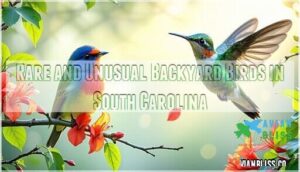
You’ll occasionally spot true gems in your South Carolina backyard that make fellow birders green with envy.
These rare visitors like the stunning Painted Bunting or the lightning-fast Ruby-throated Hummingbird can turn an ordinary morning into an unforgettable birding experience.
Painted Bunting
Painted Buntings are South Carolina’s most spectacular backyard birds. Males showcase brilliant blue heads, red underparts, and green backs, while females display subtle yellow-green plumage.
South Carolina’s painted jewel – a living masterpiece with colors so vivid they seem painted by nature’s finest artist.
These secretive songbirds prefer dense shrubs and woodland edges for nesting.
Key Painted Bunting Facts:
- Habitat Needs: Dense thickets, brushy areas, and forest edges
- Breeding Patterns: Nest in low shrubs during late spring
- Color Variations: Males vibrant blue/red/green, females yellow-green
- Migration Routes: Winter in Central America, return spring through fall
- Dietary Preferences: Small seeds, insects, and berries
Unfortunately, habitat loss and illegal pet trade have caused population declines. Creating shrubby borders with native plants can attract these gems to your South Carolina backyard during birdwatching season.
Ruby-throated Hummingbird
Anyone who’s spotted these aerial acrobatics knows why Ruby-throated Hummingbirds captivate South Carolina birdwatchers.
These tiny marvels beat wings 80 times per second during incredible Hummingbird Migration journeys.
Smart Feeder Placement near trumpet honeysuckle attracts them.
Simple Nectar Recipes using four parts water to one part sugar work perfectly.
Watch their fascinating Hummingbird Behavior as males display iridescent ruby throats.
Proper Feather Care keeps them flight-ready for backyard visits.
Pileated Woodpecker
The majestic Pileated Woodpecker stands as South Carolina’s largest woodpecker, commanding attention with its crow-like size and distinctive appearance.
These remarkable birds transform mature forests into their personal workshops, creating rectangular holes while hunting for carpenter ants.
- Woodpecker Habitat: Prefers mature forests with large dead trees (snags) for Woodpecker Nesting
- Pileated Diet: Feeds primarily on carpenter ants and wood-boring beetles beneath bark
- Pecking Behavior: Creates distinctive rectangular holes during foraging activities
- Tree Selection: Chooses large dead or dying trees for both nesting and feeding
- Backyard birds: Occasionally visits wooded suburban areas in South Carolina during birdwatching seasons
Creating a Bird-Friendly Habitat in Your Backyard
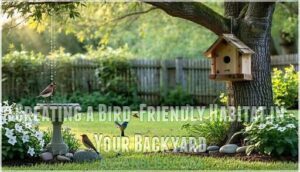
You’ll create a welcoming environment for South Carolina’s feathered visitors by focusing on three key areas: smart landscaping choices, chemical-free yard care, and adequate shelter options.
Transform your backyard into a bird haven that supports local species year-round while giving you front-row seats to nature’s daily drama.
Landscaping Tips
Transform your backyard into a bird sanctuary through thoughtful native plant landscaping and garden design.
Native plants support 75% of local bird species‘ food needs while reducing water usage by 30%. Plant beautyberry, dogwood, and oak trees for natural food sources.
Position birdhouses near dense shrubs and bird feeders throughout different yard zones. Add bird baths with moving water features to increase activity by 50%.
Smart yard lighting helps you observe evening bird behavior. Proper soil management guarantees healthy native plants that attract diverse species year-round.
Avoiding Pesticides
Beyond chemical pest control, you’ll protect South Carolina’s backyard birds by embracing organic gardening and natural methods.
Pesticides reduce insect populations by 50%, eliminating vital food sources for many species. Bird mortality increases dramatically in areas with heavy pesticide use, making eco-friendly alternatives essential for bird conservation.
- Natural pest control methods: Companion planting with marigolds, introducing beneficial insects like ladybugs, using neem oil sprays, and encouraging native plants that naturally repel pests while supporting sustainable living practices.
Manual removal and water sprays effectively manage pests without harming your bird-friendly habitat.
These natural methods create safer environments for birdwatching enthusiasts while maintaining the delicate ecosystem balance that resident and migratory birds depend on.
Providing Shelter
Beyond just avoiding chemicals, you need to create safe havens where birds can rest and nest.
Install bird houses and nesting boxes designed for local bird species like Carolina Wrens and Eastern Bluebirds.
Dense shrubs and shelter plants provide roosting sites year-round, while brush piles offer quick escape routes from predators.
These natural hideaways complement your bird feeders perfectly, creating an all-in-one backyard sanctuary that’ll keep your feathered friends safe and happy.
Photographing Backyard Birds in South Carolina
You’ll capture South Carolina’s backyard birds best during the golden hours of early morning and late afternoon when they’re most active and the light is perfect.
With the right equipment and patience, you can photograph everything from vibrant Cardinals to elusive Painted Buntings right in your own yard, which is made easier during these golden hours.
Best Times for Bird Photography
Golden Hour transforms ordinary backyard bird photography into stunning visual stories.
You’ll capture South Carolina’s backyard birds at their most active during sunrise shots and evening sessions when soft morning light creates perfect conditions.
This magical time eliminates harsh shadows while highlighting vibrant cardinal reds and wren browns beautifully.
Bird behavior peaks during these periods as they forage and socialize actively.
Your bird photography success increases dramatically when you’re positioned and ready before dawn breaks.
The birdwatching community knows this secret—early birds truly get the best shots!
Birdwatching tips include arriving thirty minutes before prime lighting begins, allowing birds to adjust to your presence naturally.
Equipment Recommendations
Essential bird photography gear starts with these five core items:
- Camera with manual settings for exposure control
- Telephoto lens (200-400mm) to capture birds without disturbing them
- Sturdy tripod for sharp images during long waits
- Binoculars (8×42) for spotting and identifying species before shooting
- Field guide or birding app for quick identification.
Consider adding camera traps near bird feeders for automatic shots.
Quality bird watching gear doesn’t break the bank—start with basics and upgrade gradually as your skills develop.
Understanding the importance of a proper equipment checklist is vital for capturing stunning bird photos.
Techniques for Capturing Bird Behavior
Once you’ve got your equipment ready, mastering bird behavior photography requires strategic positioning and timing.
Set up camera traps near feeding stations for consistent shots of backyard birds.
Practice wildlife observation to predict movement patterns – cardinals often return to the same perch, while wrens prefer ground-level hunting.
Use burst mode during active periods for bird tracking success.
These photography tips will elevate your behavioral studies documentation.
Conservation Efforts for South Carolina Backyard Birds
You can make a real difference in protecting South Carolina’s backyard birds by understanding the challenges they face and taking action.
From habitat loss to climate change, these feathered friends need your help to thrive in an increasingly challenging world, and by doing so, you can help them face the challenges of climate change.
Threats to Local Bird Populations
Bird populations across South Carolina face mounting challenges that directly impact your backyard visitors. Habitat Loss through urbanization and development removes critical nesting sites, while Climate Change disrupts migration timing and breeding cycles. Pesticide Use eliminates insect food sources, and Fragmentation isolates bird communities.
Two major immediate threats require your attention:
- Bird Collisions with windows kill millions annually
- Invasive Species outcompete native birds for resources
Understanding these Threats to Local Bird Populations helps you create safer environments. Simple changes like strategic feeder placement and native plant choices support bird conservation efforts while maintaining excellent birdwatching opportunities in your yard. Effective bird conservation efforts are essential for protecting local species.
How to Participate in Citizen Science Projects
Throughout your backyard observations, citizen science projects transform casual birdwatching into meaningful research participation.
By joining programs like eBird and FeederWatch, you contribute valuable data collection for species monitoring while building community engagement around shared conservation goals.
| Project | Focus |
|---|---|
| eBird | Daily bird observations and species tracking |
| FeederWatch | Winter feeder bird surveys |
| NestWatch | Breeding success monitoring |
| Christmas Bird Count | Annual population census |
| Great Backyard Bird Count | Four-day global bird survey |
These birdwatching resources provide bird identification guides and research participation opportunities that directly support conservation efforts.
Supporting Local Bird Conservation Organizations
Beyond citizen science, you can amplify your impact by supporting South Carolina’s bird conservation organizations.
Join your local Audubon chapter for volunteer work opportunities and community outreach programs.
Consider making donations to bird sanctuaries that protect critical habitats. Many organizations offer donation tips on their websites, helping your contributions go further.
Research conservation grants available to birdwatching organizations – your support helps fund vital research and habitat restoration projects throughout the state.
Frequently Asked Questions (FAQs)
How do I identify a bird in my backyard?
Observe the bird’s size, shape, and color patterns first.
Note its behavior – does it hop on the ground or cling to tree bark?
Check the bill shape and tail length for clues.
What is the most common bird in SC?
Cardinals top the charts—they’re spotted in roughly 62% of South Carolina bird watching lists year-round, making them your most reliable backyard visitors with their brilliant red plumage and melodious songs.
What birds lay eggs on the ground in South Carolina?
You’ll find several ground-nesting birds in South Carolina.
Mourning Doves commonly build shallow nests on the ground.
Eastern Towhees scratch through leaf litter, creating ground nests in dense vegetation and shrubs for protection.
What is the national bird of South Carolina?
Since 1948, South Carolina’s official state bird has been the Carolina Wren. You’ll recognize this small brown bird by its distinctive "teakettle" call echoing through your backyard.
What is the most common bird in South Carolina?
The Northern Cardinal is South Carolina’s most common backyard bird, appearing in 67% of summer and 58% of winter sightings, making it your best bet for spotting feathered friends year-round.
What is the tiny bird in South Carolina?
Like David facing Goliath, you’ll spot South Carolina’s tiniest champion—the Carolina Chickadee.
This palm-sized songbird sports a black cap, white cheeks, and gray body, making it easily recognizable at your feeders year-round, with its distinctive features being a key part of its identity as a songbird.
What birds should I attract to my yard?
You’ll love attracting Northern Cardinals with their vibrant red plumage, cheerful Carolina Wrens with melodious songs, and tiny Carolina Chickadees.
These year-round residents thrive with sunflower seeds, suet feeders, and native plants.
How do South Carolinas backyard birds cope with hurricanes?
Birds become flying fortresses during hurricanes, hunkering down in dense cover like thickets and evergreens.
They’ll seek shelter in tree cavities, under eaves, or dense shrubs, riding out the storm with remarkable resilience.
What are the legal restrictions on feeding wild birds?
Feeding wild birds in your backyard is generally legal, but you’ll need to check local ordinances since some cities restrict it.
Keep feeders clean and never attempt to handle birds—they’re protected by federal law.
What impact do feral cats have on backyard bird populations?
Feral cats kill billions of birds annually in the US, devastating backyard populations. They’re particularly deadly to ground-nesting species and fledglings, reducing your local bird diversity substantially.
Conclusion
Research shows that South Carolina backyards can support over 350 bird species throughout the year, making your outdoor space a vital wildlife corridor.
You’ve now got the tools to identify and attract the backyard birds of South Carolina that’ll transform your yard into a thriving ecosystem.
Start with native plants, add reliable water sources, and choose quality feeders matched to your target species.
Remember, consistency matters more than perfection—your feathered visitors will reward your efforts with endless entertainment and natural pest control.