This site is supported by our readers. We may earn a commission, at no cost to you, if you purchase through links.
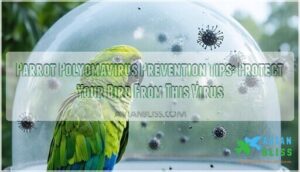 You’ll protect your parrot from deadly polyomavirus through vaccination, strict hygiene, and quarantine protocols.
This virus spreads through direct contact, contaminated surfaces, and airborne particles, making prevention your bird’s lifeline. Vaccinate annually and disinfect cages with chlorine bleach – regular cleaners won’t cut it against this resilient virus.
Quarantine new birds for 30 days minimum, and maintain spotless food bowls and perches. Young birds face the highest risk, so early vaccination is vital.
Think of parrot polyomavirus prevention tips as building an invisible shield around your feathered friend. The right combination of medical protection and environmental controls creates multiple barriers this silent killer can’t penetrate.
Table Of Contents
- Key Takeaways
- What is Avian Polyomavirus
- Polyomavirus Symptoms
- How Birds Become Infected
- Diagnosing Polyomavirus
- Preventing Polyomavirus
- Treating Polyomavirus
- Managing Polyomavirus
- Protecting Your Parrot
- Frequently Asked Questions (FAQs)
- How do you treat polyomavirus in parrots?
- Do parrots have polyomavirus?
- What is the treatment for polyoma virus in birds?
- How do you treat polyomavirus in caique parrots?
- How do you test for polyomavirus in birds?
- How do you know if a parrot has polyomavirus?
- How do you prevent polyomavirus in birds?
- How to prevent parrots from sickness?
- Can polyomavirus survive on surfaces for weeks?
- Is polyomavirus transmissible to other bird species?
- Conclusion
Key Takeaways
- Vaccinate annually starting at 35 days old – The vaccine offers 93% protection and requires yearly boosters to maintain immunity against this deadly virus.
- Maintain strict quarantine protocols – Isolate new birds for 30-90 days minimum and conduct PCR testing before introducing them to your flock.
- Disinfect with chlorine bleach daily – Regular household cleaners will not kill polyomavirus; you will need proper disinfectants on cages, perches, toys, and food bowls.
- Practice rigorous hand hygiene – Wash your hands thoroughly before and after handling birds or equipment, since the virus spreads through direct contact and contaminated surfaces.
What is Avian Polyomavirus
Avian polyomavirus is a highly contagious viral infection that affects parrots and other birds through multiple transmission routes.
You’ll need to understand how this virus spreads to protect your feathered companion from potentially fatal infection.
Transmission Through Direct Contact
Direct contact with infected birds poses the highest risk for polyomavirus transmission.
Direct contact spreads polyomavirus faster than you think—protect your feathered friend.
Your parrot can contract the virus through seemingly innocent interactions that spread bodily fluids and contaminated materials.
Here are four primary direct contact transmission routes:
- Grooming transmission – Birds sharing preening behaviors with carrier birds
- Shared perches – Multiple birds using the same roosting spots
- Direct exposure to droppings during cage cleaning or play
- Contaminated feeding – Birds eating from shared food dishes.
Even asymptomatic carrier birds can spread the virus through these direct interactions.
Contaminated Surfaces and Objects
Touching contaminated surfaces spreads polyomavirus faster than you’d think.
Your bird’s cage, toys, perches, and food bowls become viral highways when infected birds shed the virus through droppings and dander.
Regular cage disinfection with bird-safe disinfectant prevents transmission.
Toy sanitation, perch cleaning, and bowl hygiene matter too.
Surface materials hold the virus longer than expected, making consistent disinfection your strongest defense against contaminated surfaces, and emphasizing the importance of hygiene.
Airborne Transmission
You can’t see parrot polyomavirus floating through the air, but aerosol spread happens when infected birds cough, sneeze, or shake their feathers.
Feather dander carries viral particles that linger in poorly ventilated spaces.
Air purifiers with HEPA filters help reduce airborne contamination, while proper ventilation systems prevent viral buildup.
Remember, quarantine protocols protect against this invisible threat during bird disinfection routines. Implementing strict hygiene practices is also essential for disease control and maintaining proper ventilation.
Polyomavirus Symptoms
Recognizing polyomavirus symptoms early can save your parrot’s life and prevent the virus from spreading to other birds in your home.
You’ll notice several key warning signs that indicate your bird may be infected, ranging from obvious physical changes to subtle behavioral shifts, which can be crucial for early diagnosis.
Weight Loss and Regurgitation
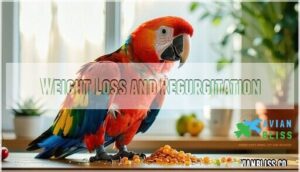
Weight loss and regurgitation serve as early warning signs that parrot polyomavirus has taken hold in your bird’s system.
These symptoms often appear together within 7-14 days after exposure, signaling your parrot’s body is fighting the infection.
Watch for these key indicators:
- Sudden appetite loss leading to noticeable weight reduction
- Frequent regurgitation or vomiting after eating
- Delayed crop emptying that causes food backup
Early diagnosis of these symptoms helps determine treatment severity and prevention strategies for other birds in your home, which is crucial for maintaining their health and preventing the spread of the parrot polyomavirus.
Feather Abnormalities and Neurological Signs

Feather deformities serve as telltale signs your parrot’s battling polyomavirus. You’ll notice frayed, broken feathers or complete feather loss in affected birds.
Neurological symptoms include tremors, weakness, and dramatically reduced activity levels. These neurological signs often signal the virus is attacking essential systems, potentially leading to organ failure.
Implementing strict parrot quarantine and avian virus control measures becomes essential for parrot disease prevention when these abnormalities appear.
Respiratory Distress and Gastrointestinal Disturbances
Your parrot’s lungs and digestive system can become battlegrounds when polyomavirus strikes.
Breathing Difficulties emerge as labored breathing and wheezing signals respiratory distress.
Gastrointestinal disturbances bring Regurgitation Risks, Diarrhea Causes dehydration, and Appetite Loss leads to dangerous weight decline.
Abdominal Swelling indicates organ complications.
These symptoms demand immediate attention—parrot disease prevention through hygiene for parrots and regular disinfect bird cages routines protects your feathered friend.
How Birds Become Infected
Understanding how birds become infected with polyomavirus helps you protect your parrot from this serious threat.
Your bird can contract the virus through direct contact with infected birds, contaminated food and water bowls, or vertical transmission from infected parents to offspring.
Direct Contact With Infected Birds
Direct contact remains the primary pathway for polyomavirus transmission between birds.
When you handle infected birds or allow grooming between companions, the virus spreads easily through saliva and physical contact.
Shared perches create transmission hotspots, especially dangerous since asymptomatic carriers shed the virus without showing symptoms.
New bird introductions pose the highest risk, making proper bird quarantine procedures your first line of defense against this silent threat.
Contaminated Food and Water Bowls
Sharing food and water bowls between birds creates perfect conditions for polyomavirus transmission.
Infected birds shed the virus through saliva and fecal matter, contaminating these essential items.
- Biofilm Formation – Bacteria and viruses stick to bowl surfaces, especially porous materials
- Water Quality deteriorates quickly when multiple birds drink from shared sources
- Cleaning Frequency must increase dramatically with shared bowls to prevent disease spread
Use bird-safe disinfectant daily and avoid shared bowls entirely for proper bird hygiene and clean environment maintenance.
Vertical Transmission From Parents
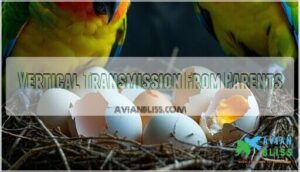
Unhatched eggs carry a hidden danger when infected parents pass polyomavirus directly to developing chicks through egg contamination.
This vertical transmission creates congenital infections that bypass natural chick immunity defenses.
Breeding birds require thorough parental screening before mating to prevent polyomavirus transmission.
Effective breeding management includes thorough bird quarantine protocols and regular bird screening to identify carriers before they reproduce and spread the virus.
Diagnosing Polyomavirus
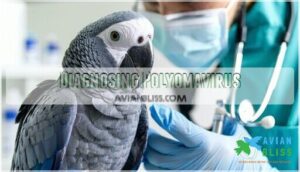
When your parrot shows concerning symptoms, you’ll need proper diagnostic testing to confirm polyomavirus infection.
Your veterinarian will use several methods including physical examination, blood tests, and imaging to determine if your bird has contracted this serious virus.
Physical Examination and PCR Testing
When your vet suspects polyomavirus, they’ll start with clinical observation during a physical examination, checking for telltale signs like feather abnormalities and weight loss.
PCR testing through sample collection from blood, oral, or cloacal swabs provides definitive polyomavirus diagnosis. Recognizing behavioral changes can also aid in early detection.
Early detection through timely diagnosis saves lives, so choose proper lab selection and follow recommended testing frequency for accurate result interpretation.
Serology and Viral Load Estimation
Blood tests reveal the whole story through serology and viral load estimation.
Your vet uses antibody detection to identify if your parrot’s immune system has battled polyomavirus, while viral quantification shows current infection levels.
These complementary tests improve test accuracy by correlating clinical symptoms with infection stage, giving you a complete picture for effective polyomavirus diagnosis, which is crucial for understanding the immune system.
Radiographs and Ultrasound
When blood tests aren’t enough, your vet may recommend radiographs and ultrasound for organ assessment.
These imaging modalities help detect internal organ anomalies that polyomavirus can cause.
X-rays show organ enlargement, while ultrasound reveals tissue changes.
These procedures are safe and provide clinical applications for accurate diagnosis, supporting differential diagnosis when symptoms overlap with other conditions, using techniques like ultrasound.
Preventing Polyomavirus
Preventing polyomavirus in your parrot isn’t rocket science, but it does require consistent effort and attention to detail.
You’ll need to focus on three key areas: maintaining excellent hygiene, establishing a regular cleaning routine, and implementing proper quarantine and vaccination protocols, which are all crucial for preventing polyomavirus and require attention to detail.
Good Hygiene and Clean Environment
Once you’ve confirmed polyomavirus through proper testing, maintaining a spotless environment becomes your bird’s first line of defense.
Think of hygiene as building an invisible shield around your feathered friend.
- Cage Cleaning: Scrub perches, bars, and surfaces daily with birdsafe disinfectant
- Toy Sanitation: Rotate and disinfect toys weekly using recommended disinfectant solutions
- Food Hygiene: Replace fresh foods daily and wash bowls with hot, soapy water
- Hand Hygiene: Wash hands thoroughly before and after handling your bird or equipment
To guarantee safety, use a certified bird disinfectant for cleaning.
Regular Cleaning and Disinfection
You’ll want to establish cleaning schedules that work around your bird’s routine.
Clean cages, perches, and toys weekly using birdsafe disinfectant like diluted bleach solution.
Effective disinfectants must contact surfaces for proper kill times. Consider using a parrot safe option for peace of mind.
Different cage materials require specific safe products—stainless steel handles stronger solutions than plastic. Simple DIY solutions work well for daily maintenance between deep cleans.
Quarantine and Vaccination
Quarantine protocols provide your first line of defense against avian polyomavirus.
Isolate new birds for 30-90 days while monitoring symptoms and conducting PCR testing.
As the virus spreads through feather dander and droppings, hygiene is essential.
The federally licensed vaccine offers 93% efficacy when given at 5 weeks with annual boosters, which is a crucial part of a vaccine schedule that protects your flock from viral transmission.
Treating Polyomavirus

When your parrot contracts polyomavirus, there’s unfortunately no cure available to eliminate the virus completely.
However, you can help your bird recover through supportive care that manages symptoms and strengthens their body’s ability to fight the infection, which can be achieved by providing the right environment and manages symptoms.
Symptom Management and Supportive Care
Unfortunately, there’s no cure for polyomavirus, so your focus shifts to managing symptoms and keeping your bird comfortable.
Supportive care becomes your lifeline—think fluid administration to prevent dehydration, nutritional assistance when appetite wanes, and hemorrhage control if bleeding occurs.
Pain management helps ease discomfort while monitoring for secondary infections that exploit weakened immune systems.
Birds may also develop secondary conditions like aspergillosis fungal infections that require treatment for secondary infections.
Fluid Therapy and Nutritional Support
When your bird battles polyomavirus, think of fluid therapy and nutritional support as life-saving fuel for a weakened engine.
Your vet will carefully monitor electrolyte balance while providing essential care:
- IV fluids – Restores hydration and maintains essential organ function
- Feeding tubes – Delivers nutrition when appetite fails completely
- Electrolyte supplementation – Prevents dangerous imbalances that worsen symptoms
- Appetite stimulants – Encourages natural eating when possible
This supportive care buys precious time for recovery.
Vitamin K Injections for Hemorrhaging
Beyond basic supportive care, hemorrhaging birds need immediate intervention.
Vitamin K injections provide rapid hemorrhage control when polyomavirus damages liver function. These injections bypass digestive absorption issues, delivering clotting factors within 6-12 hours.
| Aspect | Details | Impact |
|---|---|---|
| Dosage | 0.5-2.5 mg/kg injection | Stops bleeding fast |
| Success Rate | 85% hemorrhage resolution | Saves bird lives |
| Timeline | 24-hour improvement | Quick relief |
Veterinarians administer vitamin K1 intramuscularly for maximum treatment efficacy, monitoring clotting improvement while managing potential side effects.
Managing Polyomavirus
Once you’ve identified and treated polyomavirus in your parrot, managing the ongoing situation becomes your next vital step.
You’ll need to focus on three key areas: reducing environmental contamination, screening all birds with DNA testing, and maintaining annual vaccination boosters to prevent future outbreaks.
This approach will help in preventing the spread of the disease and ensuring the health of your parrot.
Reducing Environmental Contamination
Proper bird polyomavirus disinfection doesn’t stop at treatment—you need to tackle contamination head-on.
This virus spreads like wildfire through your bird polyomavirus aviary environment, making thorough cleanup essential.
Here’s your contamination control checklist:
- Feces Removal – Clean droppings immediately using disposable gloves
- Feather Control – Vacuum loose feathers and dander daily
- Surface Sanitization – Disinfect cages, perches, and toys with chlorine bleach
- Air Filtration – Install HEPA filters to capture airborne particles
- Carrier Identification – Monitor asymptomatic birds for viral shedding
Screening Birds With DNA Probe Test
DNA probe testing offers the most reliable way to identify polyomavirus carriers in your flock.
This molecular screening detects viral DNA in blood, cloacal swabs, or feather samples with high accuracy.
Testing frequency should include entry screening for new birds plus periodic checks of breeding stock.
Sample collection requires proper technique to avoid contamination, while result interpretation distinguishes active shedders from latent carriers.
Though cost analysis reveals higher upfront expenses, early carrier identification prevents costly outbreaks, making it a crucial step in maintaining a healthy flock with reliable way to manage diseases.
Annual Vaccination Boosters
After screening confirms your bird’s health status, maintaining protection requires ongoing vigilance.
Vaccination isn’t a one-and-done deal – your parrot needs annual booster doses to stay protected against polyomavirus.
Consider these booster effectiveness factors:
- Vaccination Schedule – Annual boosters maintain immunity levels, especially for birds exposed to others at shows or boarding facilities
- Vaccine Side-effects – Most avian vaccines cause minimal reactions, though some birds may show temporary lethargy after immunization
- Cost Analysis – Breeder considerations include balancing annual vaccine expenses against potential polyomavirus outbreak losses in breeding programs
Your vet will customize the immunization schedule based on your bird’s risk factors and exposure level.
Protecting Your Parrot
You’ll want to make protecting your parrot from polyomavirus a top priority since prevention is far easier than treatment.
Creating a thorough protection plan involves regular vet visits, proper nutrition, and maintaining spotless hygiene throughout your bird’s environment.
Regular Veterinary Check-ups
Regular veterinary checkups serve as your first line of defense against polyomavirus and other avian diseases.
Schedule annual visits with an avian veterinarian who specializes in bird health management and can provide expert advice on disease prevention.
These preventative care appointments enable early detection through routine health monitoring, catching infections before symptoms appear.
Your vet will assess your parrot’s overall condition and recommend specific avian veterinary care protocols customized to your bird’s needs and risk factors, including routine health monitoring.
Balanced Diet and Immune System Boost
A balanced diet packed with high-quality pellets, fresh fruits, and vegetables acts like armor for your parrot’s immune system.
Antioxidants from berries and leafy greens fight infection, while probiotics support gut health.
Dietary supplements and proper hydration strategies guarantee your feathered friend’s defenses stay strong against polyomavirus threats.
A varied diet, including fresh fruits daily, is essential for ideal health, providing your parrot with the necessary nutrients to thrive in a healthy environment.
Strict Hygiene Practices and Disinfection
Thorough cleaning protocols form your first line of defense against polyomavirus spread.
Use oxidizing disinfectants like chlorine bleach for cage sanitation, as the virus resists most standard cleaners.
Practice strict hand hygiene when handling birds or cleaning aviaries.
Surface cleaning should target all perches, toys, and food bowls daily.
Strong biosecurity measures and consistent disinfection routines protect your feathered friends from this persistent threat.
Frequently Asked Questions (FAQs)
How do you treat polyomavirus in parrots?
Unfortunately, there’s no cure for polyomavirus in parrots.
Treatment focuses on supportive care like fluid therapy, nutritional support, and managing symptoms.
You’ll need veterinary help for proper care and monitoring throughout recovery.
Do parrots have polyomavirus?
Yes, parrots can contract polyomavirus, a serious viral infection that affects various parrot species.
The virus spreads through direct contact, contaminated surfaces, and airborne particles, making prevention essential for your bird’s health.
What is the treatment for polyoma virus in birds?
No specific cure exists for polyomavirus in birds. You’ll need to provide supportive care including fluid therapy, nutritional support, and symptom management. Vitamin K injections help with mild hemorrhaging cases.
How do you treat polyomavirus in caique parrots?
Can your caique survive this viral infection?
Unfortunately, there’s no specific cure for polyomavirus in caique parrots.
You’ll need to provide supportive care through fluid therapy, nutritional support, and symptom management while working closely with your avian veterinarian.
How do you test for polyomavirus in birds?
You’ll test birds using PCR or DNA analysis from blood, oral, or cloacal swabs sent to reference labs.
Multiple negative tests spaced 90 days apart confirm carriers.
Serological tests detect antibodies indicating past infection.
How do you know if a parrot has polyomavirus?
Recognizing polyomavirus in parrots requires watching for telltale signs that typically appear 10-14 days after exposure.
You’ll notice weight loss, lethargy, regurgitation, and diarrhea as primary symptoms, plus feather abnormalities or respiratory distress in affected birds.
How do you prevent polyomavirus in birds?
Quarantine new birds for thirty days, maintain strict hygiene by regularly cleaning cages and equipment, vaccinate starting at thirty-five days old, and test birds before introducing them to your flock.
How to prevent parrots from sickness?
Protecting your feathered friends from illness isn’t rocket science, but it’s absolutely vital for their survival.
Maintain strict quarantine protocols, guarantee spotless hygiene, provide balanced nutrition, schedule regular vet checkups, and avoid overcrowding their living spaces.
Can polyomavirus survive on surfaces for weeks?
Polyomavirus can indeed survive on surfaces for weeks, especially in cooler environments.
You can help reduce viral contamination of the environment by manually removing droppings and feathers and carefully disinfecting the environment.
Regular cleaning with chlorine bleach is essential for prevention.
Is polyomavirus transmissible to other bird species?
Yes, polyomavirus affects multiple bird species beyond parrots. You’ll find it transmissible to finches, canaries, cockatiels, and other pet birds, making cross-species infection a real concern in mixed aviaries.
Conclusion
What’s the most effective way to guarantee your feathered companion stays healthy and virus-free?
Protecting your parrot from polyomavirus requires consistent effort and vigilance. These parrot polyomavirus prevention tips form your bird’s primary defense against this serious threat.
Regular vaccinations, strict hygiene protocols, and proper quarantine procedures create multiple protective layers.
Clean food bowls daily, disinfect surfaces with appropriate solutions, and maintain annual veterinary checkups.
Remember, prevention always costs less than treatment, and your proactive approach today determines your parrot’s health tomorrow.
- https://monvet.com/en/polyomavirus-birds-virus-psittacines/
- https://avian2.animalgenetics.com/Avian/Disease_Testing/Polyomavirus.asp
- https://www.revivalanimal.com/product/psittimune-avian-polyomavirus-vaccine
- https://pubmed.ncbi.nlm.nih.gov/8911004/
- https://www.northernparrots.com/blog/vaccinations-for-parrots-should-parrots-have-injections/