This site is supported by our readers. We may earn a commission, at no cost to you, if you purchase through links.
Most parrots eating seed-only diets develop fatty liver disease by age five. Seeds taste good to them, the same way candy tastes good to children, but neither builds a healthy body.
The problem isn’t that owners don’t care. It’s that pet store advice rarely reflects what avian research actually shows. Creating a balanced parrot diet requires understanding that your bird’s nutritional needs shift by species, age, and even time of year.
Get the ratios right, and you’ll see it in brighter feathers, steadier weight, and a bird that actually thrives.
Table Of Contents
- Key Takeaways
- Build a Balanced Parrot Diet
- Pellets as The 60–80% Daily Nutrition Foundation
- Fresh Vegetables and Leafy Greens at 15–30%
- Fruit Limited to 5–10% Because of Sugar
- Seeds and Nuts as Occasional Treats Only
- Safe Protein Sources Like Beans, Lentils, Egg, and Cooked Chicken
- Calcium-rich Foods for Bones, Beak, and Egg-laying Health
- Vitamin a Foods for Immunity and Feather Quality
- Healthy Fats From Limited Nuts, Chia, and Flax
- Whole Grains and Legumes for Fiber and Energy
- Customize Diet by Species and Life Stage
- Budgerigar Diet Ratios and Seed Limits
- African Grey Calcium and Protein Needs
- Macaw Diet Adjustments for Size and Energy
- Cockatoo and Amazon Protein and Calcium Needs
- Diet Changes for Breeding Parrots
- Molting Nutrition and Increased Energy Requirements
- Weight-loss Adjustments for Overweight Parrots
- Choosing Species-specific Plain Pellets
- Feed Safely and Monitor Health
- Daily Portion Sizes Based on Body Weight
- Morning and Evening Meal Scheduling
- Removing Fresh Food Before Spoilage
- Toxic Foods Including Avocado, Chocolate, Caffeine, and Alliums
- Dangerous Pits, Seeds, Leaves, and Uncooked Beans
- Gradually Introducing New Foods
- Preventing Selective Eating With Variety and Rotation
- Using Parrot Chop for Balanced Fresh Meals
- Foraging Toys for Mental Stimulation
- When Vitamin Supplements May Be Necessary
- Monitoring Weight, Feathers, Beak, and Activity
- Top 5 Parrot Diet Support Items
- Frequently Asked Questions (FAQs)
- What is a balanced diet for a parrot?
- What is a healthy diet for a parrot?
- How do you make your own parrot food?
- Should parrots have food all day?
- What do parrots like to eat the most?
- How long can prepared parrot chop stay frozen?
- Should parrot food be served warm or cold?
- When do baby parrots transition to adult food?
- Can parrots eat food meant for other pets?
- How often should vitamin supplements be given parrots?
- Conclusion
Key Takeaways
- Pellets should make up 60–80% of your parrot’s daily diet — they are the foundation upon which everything else is built.
- Fresh vegetables constitute 15–30%, but fruit stays at 5–10% because too much sugar leads to obesity and liver stress.
- Seeds and nuts aren’t staples — keep them under 10%, or else liver disease and nutrient deficiencies will follow quickly.
- Every parrot’s needs shift with species, life stage, and season, so a one-size-fits-all diet won’t suffice for long-term health.
Build a Balanced Parrot Diet
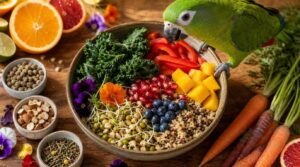
What your parrot eats every day shapes everything — their energy, feathers, beak strength, and long-term health. Getting the balance right isn’t complicated, but it does come down to knowing which foods belong in the bowl and in what amounts.
For a deeper look at what that balance actually involves, complete nutrition for pet birds breaks down the key nutrients your parrot needs at every life stage.
Here’s what a truly balanced parrot diet looks like, piece by piece.
Pellets as The 60–80% Daily Nutrition Foundation
Commercial pellets should make up 60–80% of your parrot’s daily diet. Think of them as the foundation everything else builds upon.
- Pellet nutrient balance stays consistent across every bite, unlike seed mixes
- Balanced pellet-based diet formulation prevents selective eating
- Pelleted diets versus seed mixes show pellets win on completeness
- Cold-pressed pellet advantages include better moisture content and texture preference retention
Adding vitamin‑A‑rich vegetables daily helps support immunity and longevity.
Fresh Vegetables and Leafy Greens at 15–30%
Fresh vegetables and leafy greens constitute 15–30% of a balanced parrot diet. A Colorful Veg Mix—featuring kale, carrots, and Swiss chard—provides essential nutrients like vitamin A, calcium, and magnesium in a single serving.
To maintain nutritional diversity and prevent boredom, implement Seasonal Green Rotation. Exercise Oxalate Awareness by limiting spinach due to its high oxalate content.
Balance flavors by rotating bitter greens like arugula with milder options, such as romaine lettuce, to ensure meals remain appealing.
| Vegetable | Key Nutrient | Serving Tip |
|---|---|---|
| Kale | Vitamin A & C | Chop finely, offer raw |
| Swiss Chard | Magnesium, Vitamin A | Rotate with spinach |
| Romaine Lettuce | Vitamin K, Fiber | Rinse thoroughly |
| Arugula | Calcium, Potassium | Offer 2–3 times weekly |
| Spinach | Iron, Folate | Limit — high oxalates |
Proper preparation and storage are critical: refrigerate chopped greens for up to three days to maintain freshness and safety.
Fruit Limited to 5–10% Because of Sugar
Vegetables cover the greens — but fruit needs a tighter leash. Limit fruit to 5–10% of a parrot’s diet to maintain balance, as excessive fruit intake raises glycemic impact and risks sugar-related obesity. Oral health and microbiome balance also suffer from excess sweetness.
Prioritize low-sugar fruit selection, such as berries over mango, to support smarter weight management and species-specific dietary considerations.
Seeds and Nuts as Occasional Treats Only
Seeds and nuts belong in your parrot’s bowl — just not as a staple. Keep them at or below 10% of daily intake (5% for smaller species).
Too much fat raises calorie density and risks liver issues. High phosphorus disrupts calcium-phosphorus balance.
Mold prevention matters too — store seeds in airtight containers.
Poor portion control invites choking risk and nutrient gaps from selective eating.
Safe Protein Sources Like Beans, Lentils, Egg, and Cooked Chicken
Protein keeps your parrot’s feathers strong and muscles healthy. Rotate sources to cover all amino acids.
Beans and lentils each offer 15–18g of protein per cooked cup — just cook them fully to eliminate lectins. Egg protein, about 6g per egg, promotes feather growth.
For chicken portioning, offer small pieces of plain cooked breast 2–3 times weekly.
Calcium-rich Foods for Bones, Beak, and Egg-laying Health
Calcium does more than build bones — it shapes your bird’s beak and powers healthy eggshells. For egg-laying female parrots, calcium needs spike considerably.
Offer cuttlebone chewing access daily, add crushed eggshell, and serve dark leafy greens like kale regularly. Limestone grit helps fill gaps.
Remember Vitamin D3 and calcium work together — without Vitamin D synergy, even a calcium-rich diet won’t prevent calcium deficiency.
Vitamin a Foods for Immunity and Feather Quality
Vitamin A quietly powers two critical systems — immune barrier defense and feather follicle health. Without enough, your bird’s plumage dulls and infections take hold faster.
Vitamin A silently guards every feather and fights every infection — let it fall short, and your parrot shows it fast
Feed these three sources consistently:
- Carrots and sweet potatoes — high beta-carotene bioavailability
- Kale and spinach — seasonal green rotation keeps intake steady
- Cooked squash or palm oil supplement — useful when greens run short
Vitamin A deficiency is preventable. Rotate sources weekly.
Healthy Fats From Limited Nuts, Chia, and Flax
Fat is essential — but easy to overdo. Flax leads with about 23 g of omega-3s per 100 g, while chia provides roughly 17 g plus the benefits of chia gel when soaked before serving. Both seeds offer distinct advantages in nutritional profiles.
Ground flax utilization improves nutrient absorption compared to whole seeds. Both sources deliver lignan antioxidants, with flax containing notably higher concentrations.
Keep controlled fat portions tight — seeds and nuts should remain under 10% of daily intake to maintain balanced consumption.
Whole Grains and Legumes for Fiber and Energy
Whole grains and legumes are the quiet workhorses of balanced parrot nutrition. Oats and barley deliver beta-glucan impact by slowing digestion and stabilizing energy. Quinoa and lentils pair as a smart nutrient pairing strategy—together they complete the amino acid profile.
Rotating your selections weekly builds the microbiome’s fiber diversity.
For low-glycemic blends, combine brown rice with chickpeas. Monitor grain texture balance—never serve mushy grains.
Customize Diet by Species and Life Stage
Not every parrot eats the same way, and that’s not a flaw — it’s just biology. A budgie and a macaw have very different needs, and so does the same bird at different points in its life.
Here’s how to adjust the diet for your specific bird.
Budgerigar Diet Ratios and Seed Limits
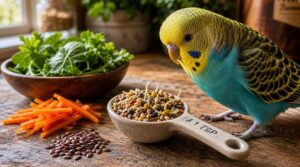
Budgies are small birds with big dietary needs. Seed measure guidelines are crucial here: offer 1.5 to 2 level teaspoons daily, no more. Seeds should constitute no more than 10% of their total intake.
The importance of offering a mix of seed varieties cannot be overstated; relying on a single seed type rapidly creates nutrient gaps.
Sprouted seeds provide enhanced nutrient absorption benefits, but their portion must be counted within the daily seed allowance.
Limit treat frequency for oilier seeds like flax—these should constitute less than 5% of the diet, and monitor calorie intake closely to prevent imbalances.
African Grey Calcium and Protein Needs
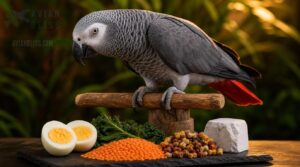
African Greys have unusually complex calcium metabolism — more so than most parrots. Without enough calcium, they can develop tremors or collapse. Here’s what to prioritize:
- Offer mineral block chewing daily for steady calcium intake
- Secure that the Vitamin D3 role is met through supplementation indoors
- Apply phosphorus restriction by limiting seed-heavy meals
- Maintain protein-calcium balance with eggs, lentils, and pellets
- Adjust for seasonal calcium needs and egg-laying females
Pellets covering 70–75% of the diet help address calcium deficiency in African Greys consistently.
Macaw Diet Adjustments for Size and Energy
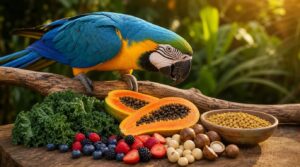
Macaws are built big, and their energy needs match that size. A 1,000-gram macaw burns around 220 kilocalories daily just for maintenance. That is why calorie scaling matters — size-specific pellet ratios of 50–70% keep the diet stable.
Activity-based portions should shift with seasonal changes in energy requirements and exercise levels. Fat treat budgeting ensures nuts stay under 10% of the diet.
These dietary guidelines for large parrots prevent obesity by balancing nutritional intake with metabolic demands.
Cockatoo and Amazon Protein and Calcium Needs
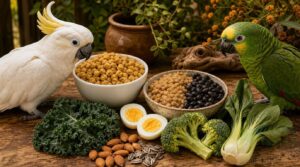
Cockatoos and Amazons have similar demands regarding protein and calcium. Both need solid amino acid balance from pellets, supplemented with occasional beans, lentils, or cooked egg. Seasonal protein shifts also matter, as activity changes directly impact a bird’s nutritional requirements.
Calcium is essential for beak growth and bone density. Egg-laying calcium peaks can quickly strain reserves, so consistent access to calcium-rich greens and fortified pellets is critical.
Diet Changes for Breeding Parrots
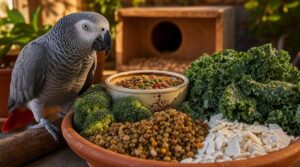
Breeding changes everything. As egg-laying approaches, shift your Breeding Pellet Ratio to 70–80% of daily intake. Apply a Pre‑Lay Veggie Surge—incorporating more kale, broccoli, and leafy greens—while practicing a Reduced Fruit Load to cut sugars. Balance your Ca:P Ratio to 2:1 to meet calcium demands for egg-laying female parrots.
- Add beans or lentils for Enhanced Legume Protein
- Avoid Nutrient gaps caused by seed-heavy diets
- Apply calcium supplementation via cuttlebone for breeding birds
- Follow Species-specific dietary considerations for parrots and adjust for breeding age and health conditions
Molting Nutrition and Increased Energy Requirements
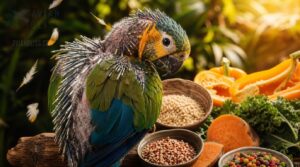
Molt is demanding work. Your bird’s body is rebuilding dozens of feathers while maintaining essential functions, substantially increasing energy needs and amino acid requirements.
Shift to protein-rich pellets and supplement with energy-dense grains like quinoa or brown rice. Vitamins E and A act as antioxidants, supporting tissue recovery during this critical period.
A consistent molt feeding schedule is vital. This prevents nutritional deficiencies caused by seed-heavy diets, which cannot meet the elevated demands of molting alone.
Weight-loss Adjustments for Overweight Parrots
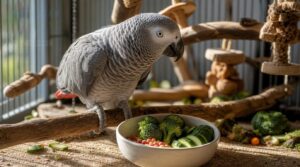
If your parrot is carrying extra weight, a gradual Calorie Reduction Plan works better than sudden changes.
Shift away from seed-heavy bowls and tighten Pellet Portion Control — measured daily amounts only. Swap fatty nuts for Low-Fat Treats.
Try Active Food Distribution by hiding vegetables across the cage to encourage movement.
Run Weekly Weight Checks to track real progress and adjust portions steadily.
Choosing Species-specific Plain Pellets
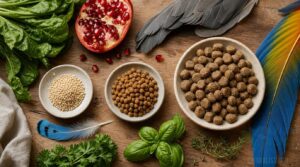
Not all pellets are created equal. Choosing the right one starts with matching texture size and caloric density to your bird’s species and life stage. Look for brand certification, allergen-free formulation, and full ingredient transparency — no artificial dyes, no added sugars.
- Small pellets for budgies and cockatiels
- Medium pellets for African Greys and Amazons
- Larger, denser pellets for macaws
- Plain, unflavored formulas only
- Species-labeled bags from certified brands
Feed Safely and Monitor Health
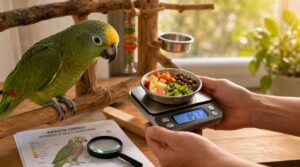
Feeding right is only half the job. Knowing what to watch for keeps your parrot safe and healthy long-term. Here’s what every owner should stay on top of.
Daily Portion Sizes Based on Body Weight
Your bird’s daily food total should equal 10–20% of its body weight, as weight scaling matters because calorie density varies across food types. For instance, an 80-gram cockatiel requires about 12 grams of pellets and 4 grams of vegetables daily.
Adjust portion size guidelines for parrot feeding based on growth stages, seasonal metabolic changes, and obesity risk. Monitor your bird’s weight weekly and update amounts accordingly to maintain optimal health.
Morning and Evening Meal Scheduling
Feeding consistency is the backbone of a healthy routine. Offer a morning fresh chop meal soon after wake-up to support your parrot’s morning activity boost. Follow a twice-daily feeding schedule with a lighter evening dry mix meal a few hours before bedtime.
Portion timing matters — active birds need more earlier. A small midday snack keeps energy steady without disrupting evening crop emptying.
Removing Fresh Food Before Spoilage
Fresh food left out too long is a silent health risk. Once food is placed in the bowl, the clock starts, as warm air accelerates bacterial growth.
Follow these food safety protocols for avians:
- Discard Protocols: Remove uneaten fresh fruits and vegetables within 2–3 hours.
- Cold Storage: Refrigerate prepared food promptly; use within 3 days.
- Shelf-Life Monitoring: Check daily for sour odor, slime, or mold.
- Bacterial Growth Prevention: Never return bird-mouthed food to storage containers.
- Cross-Contamination Prevention: Wash bowls thoroughly after every meal.
Toxic Foods Including Avocado, Chocolate, Caffeine, and Alliums
Some common household foods toxic to parrots sit right on your counter. Avocado causes persin toxicity, which damages the heart rapidly. Chocolate and coffee trigger methylxanthine poisoning, producing seizures and heart arrhythmias. Onions and garlic cause allium hemolysis, destroying red blood cells.
Toxic symptom signs include labored breathing, tremors, and lethargy. There is no safe home first aid—call your vet immediately.
Dangerous Pits, Seeds, Leaves, and Uncooked Beans
Beyond alliums, other hidden dangers in your kitchen deserve attention.
Cyanogenic pits from apples, cherries, and peaches release pit-derived cyanide during digestion. Poisonous leaf species like rhubarb and tomato leaves cause organ damage. Raw bean lectins — especially from kidney beans — trigger severe poisoning. Avoid these four:
- Fruit pits and apple seeds
- Rhubarb and tomato leaves
- Uncooked beans (raw bean lectins)
- Seed mix toxicity from unsupervised loose seeds
Gradually Introducing New Foods
Single Food Introduction works best when you add just one new item at a time. Start with a small taste — Portion Scaling means tiny first, bigger later.
Match the Texture Consistency your parrot already accepts.
Acceptance Tracking helps you spot patterns across meals.
Watch Exposure Timing closely: some parrots need several days before showing interest.
Preventing Selective Eating With Variety and Rotation
Once your parrot accepts a new food, don’t serve it the same way every day. Rotation Scheduling prevents selective eating by switching offered items every three to four days.
To maintain engagement, prioritize Texture Variation and Color Contrast, ensuring meals remain visually and texturally interesting.
Additionally, Snack Rotation and Food Puzzle Integration enhance menu diversity, reinforcing the critical role of dietary variety. This approach ensures a genuinely balanced diet by discouraging monotony and encouraging consistent nutritional intake.
Using Parrot Chop for Balanced Fresh Meals
Making parrot chop is one of the smartest meal prep moves. Finely chop carrots, kale, bell peppers, cooked quinoa, and lentils. Your parrot chop should aim for roughly 40% vegetables, 30% grains and legumes, and keep fruit minimal for portion control.
Prioritize a colorful presentation to discourage picky eating.
For storage and microbial safety, refrigerate up to three days or freeze in portions.
Foraging Toys for Mental Stimulation
Foraging toys do more than entertain — they make mealtime work for your bird’s brain. Hide treats inside puzzle feeders, snuffle mats, or hide-and-seek boxes to spark natural foraging enrichment and mental stimulation for captive parrots.
- Puzzle Difficulty – Start simple, then increase complexity gradually
- Toy Material Safety – Choose non-toxic wood and natural fibers only
- Species Specific Design – Match toy size to your bird’s beak
- Rotation Schedule – Swap toys every 3–7 days
- Enrichment Benefits – Longer play sessions reduce stress behaviors
When Vitamin Supplements May Be Necessary
Most parrots don’t need vitamin supplements if they eat a varied, pellet-based diet. However, veterinary diagnosis can reveal deficiency symptoms—like poor feather quality from low vitamin A—that food alone cannot address quickly enough.
Malabsorption illnesses, age-related needs, and breeding demands can create nutritional gaps, requiring targeted intervention. Fat-soluble vitamins mean over-supplementing is just as dangerous, as excess accumulation poses serious health risks.
Always consult a veterinarian before adding supplements. Only add vitamins when your vet confirms a deficiency, ensuring safe and appropriate treatment.
Monitoring Weight, Feathers, Beak, and Activity
Your bird’s body tells a story — you just have to learn to read it. Track these three indicators weekly:
- Baseline Weight — A 5% shift signals it’s time to act.
- Feather Fault Bars and Keel Fat Score — Visible stress marks and keel prominence reveal nutritional gaps.
- Beak Surface Health and Perch Activity Monitor — Rough texture or reduced movement often precede illness.
Top 5 Parrot Diet Support Items
The right tools make feeding your parrot much easier. From foraging toys to quality food blends, a few key items can genuinely support your bird’s daily nutrition and mental health.
Here are five worth keeping on your radar.
1. Yixund Colorful Bird Rope Perch Toys

Mental enrichment matters just as much as nutrition. The Yixund Colorful Bird Rope Perch Toy set offers your parrot interactive engagement through five bird-safe components: rattan baskets, balls, popsicle-style wood, plastic beads, and shredded paper.
These bird-safe materials ensure safety during play. Hide treats inside the basket to stimulate natural foraging behavior, encouraging mental stimulation and physical activity.
The cotton rope perch attaches securely to standard cage bars, providing a functional resting spot. This set is ideal for cockatiels, conures, and medium-sized species, offering durable interaction when used appropriately.
Larger parrots like macaws may damage pieces quickly due to their strength. Always monitor wear and replace as needed to maintain safety and longevity.
| Best For | Small-to-medium parrot owners — think cockatiels and conures — who want to give their bird something fun to chew, forage, and climb on. |
|---|---|
| Primary Material | Rattan, wood, cotton rope |
| Primary Use | Chewing and play |
| Unit Weight | 8.82 oz |
| Quantity Included | 5 toys |
| Price Range | Not specified |
| Durability Concern | Destroyed quickly by large birds |
| Additional Features |
|
- Five different toy types in one kit, so your bird gets variety without you buying multiple products.
- Foraging and shredding elements keep curious birds mentally busy and their beaks in good shape.
- Easy to hang anywhere — the cotton rope perch clips right onto standard cage bars in seconds.
- Aggressive chewers can tear through these fast, so expect to replace them more often than you might like.
- Too small for large parrots like macaws — they’ll destroy the pieces before you know it.
- The colors you get might not match what you saw in the product photos, so don’t get too attached to a specific look.
2. BBjinronjy Large Parrot Chewing Toy
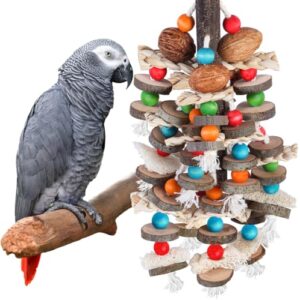
Chewing isn’t just a habit — it’s a health need. The BBjinronjy Large Parrot Chewing Toy gives your bird exactly that. It combines apple wood blocks, loofah, woven corn, cotton rope, and food-grade dyed beads into one 12.9-inch toy. Each texture targets beak and jaw conditioning.
It mounts easily inside standard cage bars and works well for African Greys, Amazons, and conures.
Aggressive chewers may go through it in 3–4 days, so keep a replacement ready.
| Best For | Medium-sized birds like African Greys, Amazons, conures, and cockatiels who need regular beak and jaw exercise. |
|---|---|
| Primary Material | Apple wood, cotton rope |
| Primary Use | Chewing and biting |
| Unit Weight | Not specified |
| Quantity Included | 1 toy |
| Price Range | $12.99 |
| Durability Concern | Breaks in 3–4 days for aggressive chewers |
| Additional Features |
|
- Mix of textures (wood, loofah, rope, corn) keeps birds mentally stimulated and entertained
- All-natural, food-safe materials so you don’t have to worry about what your bird’s chewing on
- Easy to hang in any standard cage — no fuss, no tools
- Heavy chewers can destroy it in just 3–4 days, so it’s not the most cost-effective for aggressive birds
- Runs small compared to the photos, which can be misleading at checkout
- Not a great fit for large birds like macaws or big cockatoos — they’ll shred it too fast
3. Natural Corn Cob Parrot Chew Toy
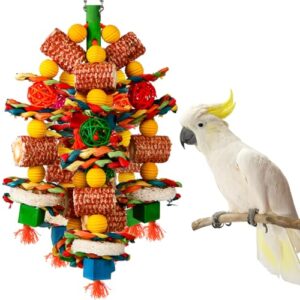
Once your bird shreds through something like the BBjinronjy, a simpler option can round out your toy rotation. The Natural Corn Cob Parrot Chew Toy is built from corn cob, corn husk, rattan, loofah slices, and wood beads — all natural, unscented, and free of synthetic dyes.
It satisfies instinctive pecking and shredding urges while supporting beak conditioning.
Best suited for medium to large species like African Greys and cockatoos, this toy offers durable engagement. However, aggressive chewers may go through it quickly, so buying a few at a time is recommended.
| Best For | Medium to large parrots like African Greys, cockatoos, and Amazons who love to chew and need regular beak stimulation. |
|---|---|
| Primary Material | Corn cob, rattan, wood |
| Primary Use | Chewing and foraging |
| Unit Weight | Not specified |
| Quantity Included | 1 toy |
| Price Range | Not specified |
| Durability Concern | Hook may detach under stress |
| Additional Features |
|
- Made from all-natural materials — corn cob, loofah, rattan, and wood beads — with no synthetic dyes or scents
- Hooks up easily to any cage or branch, so setup takes about five seconds
- Keeps birds mentally engaged and can help curb feather-plucking from boredom
- Aggressive chewers can demolish it in just a few days
- Runs small — not a great fit for very large macaws or tiny birds like parakeets
- The hanging hook can detach with heavy use, so you’ll want to check it regularly
4. Kaytee Fiesta Parrot Food Blend
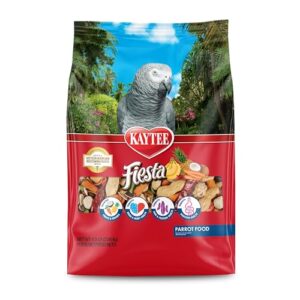
Kaytee Fiesta Parrot Food Blend offers a seed-and-grain mix with fruits, vegetables, omega-3 fatty acids, probiotics, and prebiotics in a resealable 4.5 lb bag for $19.95.
It promotes feather, digestive, and heart health through its varied ingredients.
Keep in mind the high seed and nut content — use it as a supplemental treat or rotation food, not a sole diet staple, especially for seed-sensitive birds.
| Best For | Parrot owners who want to add variety and enrichment to their bird’s diet with a nutrient-rich mix that encourages natural foraging behavior. |
|---|---|
| Primary Material | Grains, seeds, nuts, fruits |
| Primary Use | Nutrition and foraging |
| Unit Weight | 4.5 lb |
| Quantity Included | 1 bag |
| Price Range | $19.95 |
| Durability Concern | Bag sealing issues reported |
| Additional Features |
|
- Packed with a wide range of ingredients — grains, fruits, veggies, nuts — so your bird gets variety and mental stimulation in every meal.
- Includes omega-3s, probiotics, and antioxidants to support feather health, digestion, and heart function.
- The 4.5 lb resealable bag keeps food fresh and means fewer trips to restock.
- High seed and nut content makes it a poor choice as a sole diet, especially for birds on seed-restricted feeding plans.
- Contains artificial dyes (Red 40, Yellow 5, Blue 1) that some bird owners would rather skip.
- A few buyers have had issues with the bag seal, leading to spills during shipping.
5. Gravel Company Recycled Asphalt Millings
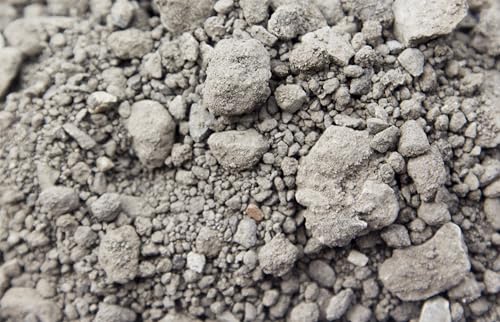
Recycled asphalt millings are a paving and driveway material — not a parrot diet product. They contain bitumen binder and recycled pavement aggregate, which have no place near your bird’s food, cage, or feeding area.
Including it in a diet support list appears to be a cataloging error. Stick to the pellets, fresh chop, and enrichment toys covered earlier.
Your parrot’s health depends on what you choose — so choose carefully.
| Best For | Homeowners, contractors, and property managers looking for an affordable, durable material for driveways, parking areas, road base, or general grading projects. |
|---|---|
| Primary Material | Recycled asphalt aggregate |
| Primary Use | Driveway surfacing |
| Unit Weight | 40 lb |
| Quantity Included | 1 bag |
| Price Range | Not specified |
| Durability Concern | Softens in hot weather if uncompacted |
| Additional Features |
|
- Cost-effective alternative to fresh asphalt — great bang for your buck on large surface areas.
- Gets stronger over time as the residual binder rebonds under heat and pressure.
- Sheds water well and resists rutting, making it a solid long-term surface option.
- Color, texture, and odor can vary bag to bag, so don’t expect a perfectly uniform look.
- Can track onto shoes and tires, and may soften in extreme heat if compaction or drainage isn’t done right.
- Not a good fit for indoor spaces, garages, or play areas due to potential staining and softening issues.
Frequently Asked Questions (FAQs)
What is a balanced diet for a parrot?
What goes into a truly healthy parrot’s bowl? A balanced diet combines 65–80% pellets, 15–30% fresh vegetables, and just 5–10% fruit — keeping seeds and nuts as occasional treats only.
What is a healthy diet for a parrot?
A healthy parrot diet includes pellets as the daily base, fresh vegetables, limited fruit, and occasional seeds or nuts.
Think of it like a plate — mostly pellets, a good handful of greens, and just a little fruit.
How do you make your own parrot food?
Funny enough, most parrots prefer homemade food over store-bought. Start with chopped vegetables, cooked grains, and legumes.
Add plain pellets and mix well. That’s your parrot chop — fresh, balanced, and ready in minutes.
Should parrots have food all day?
Most parrots do best with scheduled meals, not all-day access. Feed twice daily — morning and evening.
Remove fresh food after two to three hours to prevent spoilage and reduce grazing habits.
What do parrots like to eat the most?
Most parrots go straight for seeds, nuts, and fruit — berries, figs, hazelnuts, cashews. These are favorites, but they’re treats, not staples. Fresh vegetables and pellets should still lead every meal.
How long can prepared parrot chop stay frozen?
Prepared parrot chop can stay frozen for up to three months at -18°C.
Portion it before freezing, label each bag with the date, and thaw only what your bird needs within 24 hours.
Should parrot food be served warm or cold?
Think of temperature like Goldilocks — not too hot, not too cold. Serve fresh food at room temperature and avoid refrigerator-cold produce.
Never exceed 106°F for warm foods. Maintaining just-right conditions ensures your bird remains comfortable and supports smooth digestion.
When do baby parrots transition to adult food?
Most baby parrots start exploring adult foods around 3–5 weeks old. By week five, many begin refusing formula. Full weaning usually happens once they’re eating solids consistently on their own.
Can parrots eat food meant for other pets?
No, don’t feed your parrot dog or cat food. Those formulas suit mammal biology, not birds. Stick to species-appropriate pellets, fresh vegetables, and safe whole foods instead.
How often should vitamin supplements be given parrots?
Most parrots on a quality pellet diet don’t need routine supplements. If your bird eats mostly seeds, add vitamins a few times per week — always follow the product label.
Conclusion
Every choice you make at the food bowl shapes what your parrot looks like a year from now. Bright feathers, steady weight, and alert eyes don’t happen by accident.
Creating a balanced parrot diet is the single most direct way to add healthy years to your bird’s life.
Start with pellets. Add variety. Watch what changes. Your parrot can’t ask for better nutrition—but you can give it anyway.
- https://veterinarypartner.vin.com/default.aspx?pid=19239&catId=254004&id=10891591
- https://bestfriends.org/pet-care-resources/best-parrot-diet-and-toxic-foods-avoid
- https://www.northernparrots.com/blog/seeds-vs-pellets/
- https://thinkparrot.com/parrots-toxic-food/
- https://www.birdsprees.com/blogs/news/why-you-should-switch-from-seed-to-pellets-balanced-parrot-nutrition-guide?srsltid=AfmBOooCFJqr1L-D-rMasZl6_prnorBx0f_C-VM4xNFNrvTcQxhr-xtj