This site is supported by our readers. We may earn a commission, at no cost to you, if you purchase through links.
 Mealworms are indeed excellent for wild birds, offering up to 50% protein content that’s essential for feather development, egg production, and overall health.
They’re packed with essential fats and minerals that birds crave, especially during breeding season and harsh weather. You’ll find both live and dried varieties work well, though live ones tend to be more attractive to birds.
Think of mealworms as nature’s energy bars—they provide concentrated nutrition that seeds alone can’t match. Whether you’re feeding bluebirds, wrens, or woodpeckers, these protein-rich treats will become a backyard favorite.
The secret lies in how you serve them and which birds you’re hoping to attract, making mealworms a great way to support the overall health of wild birds, and they can be especially beneficial during harsh weather.
Table Of Contents
- Key Takeaways
- Mealworms Nutritional Value
- Feeding Mealworms Responsibly
- Live Vs Dried Mealworms
- Choosing The Right Feeder
- Offering Mealworms Effectively
- Mealworms for Wild Birds Benefits
- Frequently Asked Questions (FAQs)
- What are the disadvantages of mealworms?
- What wild bird eats mealworms?
- Where to place mealworms for birds?
- Can mealworms carry diseases to birds?
- Are mealworms safe for baby birds?
- Do mealworms attract unwanted pests or rodents?
- Can birds become dependent on mealworms?
- What happens if mealworms get moldy?
- Conclusion
Key Takeaways
- You’ll boost bird health significantly – Mealworms pack 50% protein that’s essential for feather development, breeding success, and winter survival when natural insects are scarce.
- You can choose between live and dried varieties – Live mealworms attract more birds through movement but require refrigeration, while dried ones offer convenience and longer shelf life at a lower cost.
- You need proper feeding techniques – Limit mealworms to less than 20% of total offerings, use smooth-sided feeders to prevent escape, and maintain consistent morning feeding schedules.
- You’ll attract diverse bird species – Over 30 songbird species, including bluebirds, chickadees, wrens, and nuthatches, prefer mealworms, making your backyard a wildlife hotspot.
Mealworms Nutritional Value
When you’re choosing mealworms for your backyard birds, you’ll want to understand their impressive nutritional profile that makes them such a valuable food source.
These protein-packed larvae contain 49-60g of protein per 100g (comparable to beef or chicken) along with essential fats, minerals, and vitamins that support birds through energy-intensive activities like breeding, migration, and winter survival, which is made possible by their high content of essential fats.
High Protein Content
Maximizing protein sources in your backyard feeding strategy delivers exceptional amino acids that wild birds desperately need.
You’ll provide nutrient value equivalent to premium bird nutrition supplements when offering mealworms with their impressive 50% protein content by dry weight.
- Energy boost potential: Protein supports rapid muscle development and healthy feather growth during molts
- Essential amino acid profile: Contains lysine, arginine, and methionine matching wild birds’ dietary requirements
- Superior digestibility: 85% bioavailability guarantees efficient absorption compared to seed-based alternatives
- Breeding season benefits: High protein content increases fledging success rates up to 17% in bluebirds
Fat and Moisture Levels
Mealworms pack a nutritional punch with their fat content ranging from 11-25% in live forms and jumping to 38% when dried.
Fresh mealworms contain about 64% moisture, providing natural hydration that birds crave, while dried versions concentrate nutrients by removing water.
This protein balance makes mealworms for birds an ideal energy-dense treat, especially during winter when fat reserves fuel survival.
Essential Minerals and Vitamins
Beyond protein and fat, you’ll find mealworms packed with essential minerals like phosphorus, magnesium, potassium, zinc, and manganese.
These nutritional powerhouses support feather health, strengthen bones, and aid digestion.
Bird nutrition studies show mealworms contain copper, iron, and sodium plus important vitamins that keep your backyard visitors thriving.
This mineral-rich content makes mealworms an excellent supplement for ideal bird nutrition.
Providing birds with natural calcium sources is also important for maintaining their overall health and well-being.
Comparison to Other Bird Foods
Compared to traditional bird food, mealworms deliver superior nutrition that makes your feathered friends thrive.
With 50% protein versus sunflower seeds’ 20-25%, mealworms outperform most backyard offerings.
Here’s how mealworms stack up against common bird foods:
- Protein content: Mealworms (50%) vs. sunflower seeds (20-25%)
- Fat levels: Balanced 28-32% vs. suet’s excessive 90%
- Moisture: Live mealworms provide 65% hydration vs. dry seeds
- Species attraction: Over 30 songbird species prefer mealworms
- Natural diet mimicry: Matches insect prey better than processed feeds
Feeding Mealworms Responsibly

While mealworms offer excellent nutrition for wild birds, you’ll need to feed them thoughtfully to avoid creating dependency or health issues.
Proper feeding practices guarantee birds receive maximum benefits while maintaining their natural foraging behaviors and diverse dietary needs.
Moderation and Variety
While mealworms pack impressive nutritional value, offering them responsibly requires careful portion control and a balanced diet approach.
You shouldn’t make mealworms the star of your backyard buffet—they work best as supporting cast members in a diverse nutritional mix.
A well-planned wild bird food strategy includes understanding the importance of proper wild bird nutrition.
| Feeding Approach | Bird Health Impact |
|---|---|
| Mealworms Only | Poor eggshell quality, weak bones |
| Varied Diet Mix | Strong populations, natural foraging |
| Seasonal Balance | Ideal breeding success |
Smart feeding schedule means limiting mealworms to less than 20% of total offerings.
Mix them with seeds, fruits, and suet to support proper bird dietary needs and encourage healthy bird feeding habits.
Soaking or Crushing Mealworms
Preparing mealworms properly helps your feathered friends digest their protein-packed treats more easily.
Soaking dried mealworms in warm water for 10-15 minutes softens their tough exoskeletons, making them gentler on smaller birds’ throats.
You can also crush larger mealworms into bite-sized pieces, preventing choking hazards while maintaining their nutritional benefits for safe, enjoyable feeding.
Storage and Handling
Proper mealworm storage and handling guarantee your feathered friends receive nutritious, safe treats.
Live mealworms need refrigeration at 40-50°F to remain dormant, while dried versions require airtight containers for freshness.
Store live mealworms in the fridge, dried ones in sealed containers—proper storage keeps your feathered friends well-fed.
- Mealworm Refrigeration: Store live mealworms in ventilated plastic containers with wheat bran bedding
- Storage Containers: Use sealed bags for dried mealworms, preventing moisture and maintaining quality
- Moisture Control: Keep storage areas dry and check regularly for spoilage signs
Nesting Box Distance Considerations
When positioning feeders, maintain at least 15 feet from bird nesting boxes to prevent disrupting bird breeding cycles.
This feeder distance protects nesting birds from excessive foot traffic while keeping mealworms accessible.
Smart habitat layout considers both bird safety and natural foraging patterns, creating feeding zones that complement rather than compete with nesting proximity requirements for successful bird boxes.
Proper nest box placement involves considering the best nest box heights to guarantee the safety and accessibility of the birds, ensuring a successful breeding environment.
Live Vs Dried Mealworms

When choosing between live and dried mealworms for your backyard birds, you’ll need to weigh convenience against natural appeal.
Live mealworms wiggle enticingly and contain more moisture, making them irresistible to birds.
While dried varieties offer longer shelf life and easier storage at a lower cost, with convenience being a significant factor.
Attractiveness to Birds
Birds show distinct preferences when choosing between live and dried mealworms, with movement being the key factor.
Live mealworms wiggle and squirm, triggering natural foraging behavior that attracts species like bluebirds, chickadees, and wrens.
This movement mimics insects birds hunt in the wild, making live options irresistible for attracting birds to your feeder.
| Aspect | Live Mealworms | Dried Mealworms |
|---|---|---|
| Visual Appeal | High movement attracts birds | Requires bird discovery |
| Species Variety | Preferred by insectivores | Accepted by most species |
| Feeding Habits | Triggers hunting instincts | Convenient supplement |
| Nesting Attractions | Ideal for parent birds | Good for year-round feeding |
| Foraging Behavior | Mimics natural prey | Easy ground scattering |
Convenience and Cost
When weighing your options, dried mealworms clearly win the convenience battle.
You’ll spend less time managing storage and feeding schedules, while your wallet stays happier too.
| Factor | Live Mealworms | Dried Mealworms |
|---|---|---|
| Cost Effectiveness | $15-25/lb, higher long-term | $8-15/lb, better value |
| Purchase Frequency | Weekly refrigerated trips | Monthly bulk ordering |
| Storage Options | Refrigeration required, short shelf life | Pantry storage, 12+ months |
Budget planning becomes straightforward with dried varieties – you can stock up during sales without worrying about spoilage.
Bird feeding costs drop substantially since dried mealworms offer concentrated nutrition per dollar spent, making them ideal for consistent feeding programs across multiple feeder types.
The nutritional value of dried mealworm products is also an essential consideration for wild bird enthusiasts.
Nutritional Differences
While both forms deliver impressive protein content around 50%, significant nutritional differences emerge between live and dried mealworms that directly impact bird health.
Live varieties retain superior vitamin benefits and mineral value, while dried options concentrate fat levels and nutrient density.
| Nutritional Aspect | Live Mealworms | Dried Mealworms |
|---|---|---|
| Moisture Content | 63-65% | 5-10% |
| Protein Concentration | 18% fresh weight | 49% dry weight |
| Vitamin Retention | High (A, E, B-complex) | Reduced during processing |
Shelf Life and Storage
Storage considerations become critical when you’re investing in mealworms for your feathered friends.
Live mealworms need refrigeration at 40-50°F and stay fresh for several weeks, while dried varieties can last months when stored properly in sealed containers.
| Storage Aspect | Live Mealworms | Dried Mealworms |
|---|---|---|
| Temperature | 40-50°F refrigeration | Room temperature |
| Container | Ventilated plastic with bedding | Sealed bags/containers |
| Shelf Life | 2-3 weeks | 6-12 months |
| Maintenance | Feed vegetables weekly | Check for moisture/pests |
| Cost Factor | Higher due to spoilage | Lower long-term investment |
Proper mealworm storage and freshness maintenance protect your investment while ensuring mealworm quality remains high.
Humidity control matters—too much moisture spoils dried varieties, while live ones need adequate ventilation.
These refrigeration methods and storage tips help maintain mealworm safety and preserve nutritional value for ideal bird health.
Choosing The Right Feeder
Selecting the right feeder guarantees your mealworms stay contained and accessible to birds, preventing waste and attracting more species to your yard.
You’ll need feeders with specific features like smooth sides and protective covers to keep mealworms from escaping or spoiling in wet weather.
Platform Feeders and Rimmed Dishes

Setting up your feeding station correctly makes all the difference for attracting wild birds.
Platform feeders and rimmed dishes work best for mealworms because they prevent escape while allowing easy access. Choose feeding heights between 3-5 feet, placing your bird feeding platform near natural cover.
These mealworm containers offer excellent bird safety through stable designs that accommodate multiple species at your bird feeding station. When selecting a feeder, consider the benefits of platform feeders to create an ideal bird feeding environment with multiple species.
Smooth-Sided Dishes and Trays
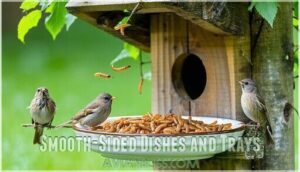
Smooth-sided containers prevent mealworms from crawling away, keeping your feathered friends well-fed.
Glass, ceramic, or plastic dishes work best—their slippery surfaces create natural mealworm containment.
Choose shallow trays with raised edges for ideal bird feeding trays. The right dish materials guarantee bird safety while maintaining proper feeder placement for easy access and visibility.
Birdfy Smart Feeders and Seed Guards
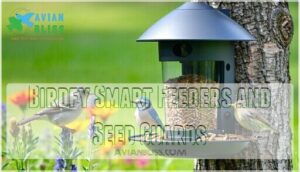
Birdfy Smart Feeders revolutionize mealworm feeding through advanced feeder design and integrated seed protection systems.
These innovative bird feeders capture stunning footage while preventing mealworms from scattering with specialized seed guards. Smart technology enhances bird safety by monitoring feeder placement and activity patterns.
Built-in pest control features deter unwanted visitors while maintaining ideal conditions for wild birds. The combination of weatherproof construction and intelligent monitoring makes mealworm feeding more effective and enjoyable for backyard bird enthusiasts.
By incorporating a bird house with feeder combo, users can create a perfect bird friendly environment that attracts a variety of species and promotes a healthy ecosystem.
Specialized Feeders for Specific Species
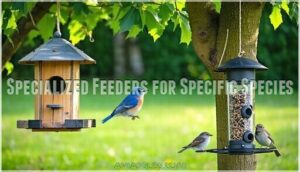
Different bird species prefer distinct feeder designs that match their natural feeding behaviors.
Bluebird feeders feature entrance holes sized for smaller songbirds, while wren feeders use restrictive openings to limit larger competitors.
Robin-specific ground platforms accommodate their foraging style, and chickadee tube feeders mix dried mealworms with seeds.
These species specific feeders increase target bird visitation rates substantially through thoughtful bird feeder design and strategic feeder placement strategies, which enhance overall bird visitation.
Offering Mealworms Effectively
Successfully offering mealworms requires strategic placement and consistent timing to attract birds while keeping the food fresh and accessible.
You’ll need to take into account environmental factors like weather protection and pest deterrence, along with establishing regular feeding schedules that align with birds’ natural foraging patterns, using consistent timing.
Placement Near Vegetation
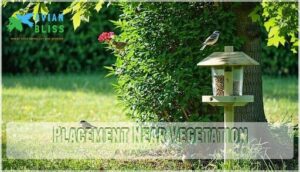
Strategically position your mealworm feeders within 10-25 feet of natural vegetation like shrubs, trees, or dense plantings.
This placement mimics bird habitat preferences, providing essential cover for quick escapes from predators while maintaining clear sightlines to your feeding station.
Garden birds feel safer approaching feeders near familiar shelter, substantially improving wildlife attraction and feeding success rates.
Effective bird feeding also relies on understanding seed types attraction to cater to various species’ preferences.
Timing and Frequency
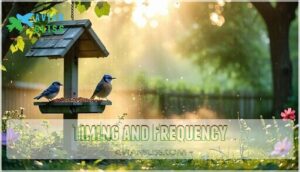
Feeding schedules matter for bird feeding success.
Offer mealworms during early morning hours when birds actively forage after overnight fasting.
Peak activity occurs around dawn and dusk, making these prime feeding times.
Seasonal timing adjustments help too – increase frequency during spring breeding season when protein demands spike.
Daily allocation works best with consistent morning offerings, though frequency adjustment based on local bird activity patterns guarantees better results with optimal timing.
Quantity and Consistency
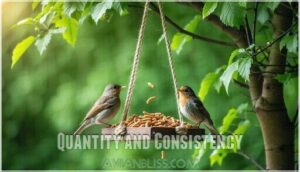
Proper portion control guarantees you’re not overwhelming your feathered visitors while maintaining their interest.
Start small with these guidelines:
- Begin with one tablespoon of mealworms per feeder daily
- Adjust based on bird visitation – increase if quickly consumed
- Maintain consistent feeding schedules for regular visitors
- Monitor mealworm rations to prevent waste and spoilage
- Scale portions seasonally – more during breeding, less in winter
Consistent feeding frequency builds trust with local bird populations, creating reliable food sources they’ll return to regularly.
Protecting Mealworms From Pests and Rain
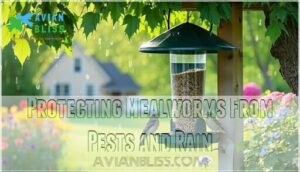
Weather protection keeps your mealworm investment safe from spoilage and unwanted visitors.
Rain shields and covered feeder designs prevent mold growth, while proper pest control measures deter ants and rodents from raiding your bird buffet.
| Protection Method | Benefits | Maintenance |
|---|---|---|
| Rain Shields/Domes | Prevents mold, keeps mealworms dry | Clean weekly, check drainage |
| Elevated Feeders | Deters ground pests, improves access | Monitor stability, refill regularly |
| Sealed Storage | Maintains freshness, blocks insects | Check seals, rotate stock monthly |
The use of rain shields, elevated feeders, and sealed storage are crucial for maintaining a safe and healthy mealworm environment, preventing issues like mold growth and pest infestations, which can lead to significant losses in your mealworm investment.
Mealworms for Wild Birds Benefits

Feeding mealworms to wild birds provides exceptional nutritional support during critical periods like breeding, molting, and harsh winter months when natural insect sources become scarce.
You’ll discover that these protein-rich treats both attract diverse bird species to your yard and contribute to healthier populations through targeted nutrition that closely mimics their natural diet, providing exceptional nutritional support.
Supporting Bird Health and Energy
Mealworms deliver targeted bird nutrition that supports critical energy needs throughout the year.
Their high protein content strengthens beak strength and promotes feather health, while essential fats fuel demanding migration patterns.
This nutritional content helps birds maintain prime health during breeding seasons and harsh winters, and the balanced diet mealworms provide guarantees your backyard visitors get concentrated nutrients they’d naturally seek, supporting their overall prime health.
Attracting Various Bird Species
Beyond just bluebirds, you’ll attract an impressive variety of bird species with strategic mealworm storage and feeder placement.
Chickadees, thrushes, titmice, wrens, nuthatches, and kinglets all relish these protein-packed treats.
Wild birdwatching becomes more rewarding when you position feeders near vegetation where different species feel secure, creating a buffet that draws both common backyard visitors and occasional surprises to your space, making your bird feeding efforts a success with strategic placement.
Ecological Impact and Sustainability
Feeding wild birds creates ripple effects throughout local ecosystems, making sustainable feeding practices increasingly important for wildlife preservation.
Commercial mealworm farming offers remarkable environmental benefits compared to traditional protein sources.
Consider these sustainable feeding practices that support ecosystem balance:
- Reduced carbon footprint – Mealworm production generates 90% fewer greenhouse gas emissions than beef farming
- Water conservation – Uses only 1% of the water required for cattle protein production
- Land efficiency – Produces 200-300 times more protein per hectare than conventional livestock
- Waste reduction – Mealworms transform organic waste into valuable protein while reducing landfill burden
- Biodiversity support – Supplements natural food sources during insect scarcity without depleting native populations
This approach to bird conservation helps maintain ecological balance while supporting local bird population management through responsible supplementation.
Responsible Feeding Practices for Optimal Benefits
Through careful feeding guidelines and proper bird nutrition planning, you’ll maximize mealworm benefits while protecting local ecosystems.
Follow bird feeding best practices by limiting offerings to twice daily, using appropriate mealworm storage techniques, and maintaining strategic feeder placement.
Seasonal adjustments guarantee your mealworm feeder supports bird nutritional requirements without disrupting natural foraging behaviors, creating responsible feeding practices that benefit both birds and environment, ensuring a balance that maximizes local ecosystems protection.
Frequently Asked Questions (FAQs)
What are the disadvantages of mealworms?
While nutritious treats boost bird health, you’re right to ponder potential downsides. Overfeeding creates dependency, causes malnutrition from unbalanced diets, and increases choking risks for nestlings without proper preparation.
What wild bird eats mealworms?
Bluebirds, chickadees, wrens, thrushes, titmice, nuthatches, and kinglets all enthusiastically devour mealworms.
You’ll attract these insect-loving species to your yard by offering this protein-rich treat that mimics their natural diet perfectly.
Where to place mealworms for birds?
Picture yourself frantically searching for the perfect bird buffet location while mealworms escape everywhere.
Place your mealworms on platform feeders with tall sides, positioned near vegetation but away from windows for ideal bird safety and feeding success.
Can mealworms carry diseases to birds?
Yes, mealworms can carry diseases to birds.
Mealworms may harbor bacterial pathogens like Salmonella when stored improperly, and contaminated mealworms can transmit infections to healthy birds.
Buy from reputable suppliers to minimize risks.
Proper handling and storage of mealworms can reduce the risk of mealworm parasites.
Are mealworms safe for baby birds?
A parent robin struggles to find enough protein-rich insects for her growing chicks during a late spring cold snap.
Mealworms can safely nourish baby birds when offered properly – they’re protein-packed and digestible, but you’ll want to crush or soak them first to ensure they are a suitable substitute for the insects the robin would naturally find.
Do mealworms attract unwanted pests or rodents?
Properly stored mealworms won’t attract pests, but scattered or spoiled ones can draw ants, mice, and raccoons.
You’ll avoid problems by using covered feeders, cleaning up spills, and storing dried mealworms in sealed containers away from moisture.
Can birds become dependent on mealworms?
While birds won’t become truly dependent on mealworms like addiction, they can develop feeding habits around your yard.
You’re basically creating a reliable food source that birds remember and revisit regularly.
What happens if mealworms get moldy?
Moldy mealworms pose serious health risks to birds and should never be offered.
You’ll need to discard contaminated mealworms immediately, clean feeders thoroughly with bleach solution, and make certain proper drainage to prevent future mold growth, which involves immediately addressing the issue.
Conclusion
Absolutely revolutionary nutrition awaits your feathered friends when you discover how mealworms good for wild birds can transform your backyard into a bustling avian paradise.
You’ve learned that these protein powerhouses support everything from breeding success to winter survival.
Whether you choose live or dried varieties, proper feeding techniques and quality feeders make all the difference.
Remember to offer mealworms in moderation alongside varied foods, maintain consistent feeding schedules, and store them properly to ensure responsible feeding practices.
Your commitment to these practices will reward you with healthier bird populations visiting your yard year-round.