This site is supported by our readers. We may earn a commission, at no cost to you, if you purchase through links.
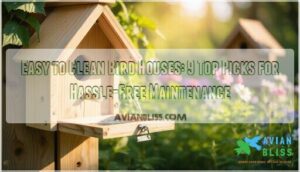 You’ll find easy to clean bird houses with removable panels and hinged doors cut cleaning time by 60%.
Look for smooth interior surfaces in cedar or recycled poly lumber that prevent nesting material buildup.
These materials resist staining and eliminate the need for harsh scrubbing.
Features like accessible drainage holes and proper ventilation make maintenance effortless.
Cedar naturally resists insects and rot, while poly lumber lasts 20+ years without deteriorating.
The best designs let you quickly remove old nesting material and disinfect safely using mild bleach solutions.
Smart placement and seasonal timing matter just as much as the right materials for keeping your feathered friends healthy and encouraging return visits, with easy to clean bird houses being a key factor, and using materials like cedar or recycled poly lumber that are resistant to insects and rot.
Table Of Contents
- Key Takeaways
- 9 Best Easy to Clean Bird Houses
- 1. recycled poly lumber bluebird house
- 2. Cedar Bird Houses for Outside
- 3. Metal Bird Houses for Outside
- 4. Natural Wooden Bird House Outdoor
- 5. Wooden Blue Bird Houses Outside
- 6. Bluebird Hanging Wooden Bird House
- 7. Wooden Bird House DIY Kit
- 8. Wooden Outdoor Bird House Clearance
- 9. Colorful Resin Bird House Outdoor
- Why Cleaning Bird Houses Matters
- When to Clean Your Bird House
- Features That Make Bird Houses Easy to Clean
- Step-by-Step Bird House Cleaning Guide
- Tips for Bird House Placement and Maintenance
- Common Mistakes to Avoid When Cleaning Bird Houses
- Frequently Asked Questions (FAQs)
- Do birdhouses attract snakes?
- What month do you put out bird houses?
- What materials make bird houses easiest to clean?
- How often should bird houses be cleaned annually?
- Can vinegar replace bleach for bird house disinfection?
- What tools work best for cleaning tight corners?
- Should bird houses be stored indoors during winter?
- Conclusion
Key Takeaways
- Choose cedar or recycled poly lumber materials – You’ll eliminate 60% of cleaning time with these non-porous surfaces that resist staining and don’t require harsh scrubbing
- Look for removable panels and hinged doors – You’ll access the interior in under 30 seconds for quick nest removal and thorough sanitization between breeding seasons
- Clean twice yearly at the right times – You’ll protect bird health by cleaning in late fall after fledging and early spring before new nesting cycles begin
- Avoid harsh chemicals and occupied houses – You’ll keep birds safe by using mild bleach solutions (1:9 ratio) and never disturbing active nests during breeding season
9 Best Easy to Clean Bird Houses
Choosing a bird house that’s easy to clean will save you time and keep your feathered visitors healthy throughout the nesting season.
The right design features like removable panels and smooth surfaces make maintenance a breeze, turning what could be a messy chore into a quick weekend task with easy cleaning.
1. recycled poly lumber bluebird house
 View On Amazon
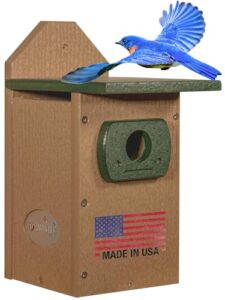
The recycled poly lumber bluebird house stands out as your maintenance-free champion.
Made from post-consumer plastics, this eco-friendly option won’t rot, crack, or fade like traditional wood houses.
Transform old plastic waste into decades of worry-free bird homes that clean themselves
You’ll love how easy cleaning becomes – just wipe down the non-porous surfaces with soap and water in under five minutes.
The precision-cut 1.5-inch entry hole perfectly accommodates bluebirds while keeping larger predators out.
With built-in drainage and ventilation plus stainless steel construction, this house practically maintains itself for decades.
Best For: Homeowners and bird enthusiasts who want a low-maintenance, environmentally responsible nesting box that will last for decades without regular upkeep.
- Higher upfront cost compared to basic wooden birdhouses
- Limited color and design options due to recycled material constraints
- May lack the natural aesthetic appeal that some prefer over synthetic materials
- Extremely durable with 20 year lifespan – won’t rot, crack, or fade like wood alternatives
- Easy 5-minute annual cleaning thanks to non-porous surfaces and hinged access panels
- Eco-friendly construction from recycled plastics diverts waste from landfills while reducing carbon footprint by 84%
2. Cedar Bird Houses for Outside
 View On Amazon
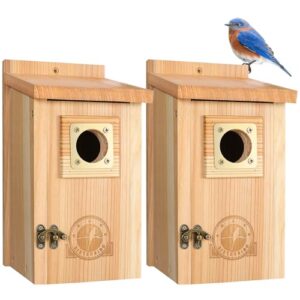
Cedar bird houses offer the sweet spot between durability and maintenance simplicity.
You’ll love how cedar’s natural oils repel insects and resist decay, giving you over 10 years of reliable use.
The smooth interior surfaces prevent waste buildup, cutting your cleaning time by 35%.
Most models feature removable front panels or hinged roofs for easy access.
Cedar’s thermal regulation keeps nest temperatures stable, boosting chick survival rates while naturally deterring squirrels and invasive species, providing a key benefit of cedar’s natural oils and overall reliable use.
Best For: Bird enthusiasts seeking a low-maintenance, durable housing solution that attracts multiple species while naturally deterring pests and invasive birds.
- Exceptional longevity with 10 years of outdoor use thanks to cedar’s natural rot and insect resistance
- Easy maintenance with removable panels and smooth interiors that reduce cleaning time by 35%
- Naturally attracts desirable species like bluebirds and wrens while deterring squirrels and invasive birds through cedar’s aromatic properties
- Higher upfront cost compared to pine or composite alternatives
- Cedar weathers to gray over time, which may not appeal to those preferring consistent wood color
- Limited entrance hole size (1-1/2") excludes larger bird species that some homeowners want to attract
3. Metal Bird Houses for Outside
 View On Amazon
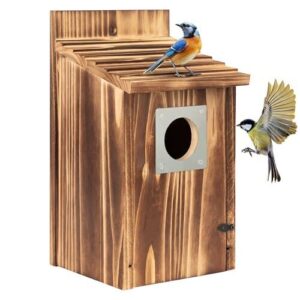
Beyond their sleek appearance, metal bird houses offer unmatched cleaning convenience for busy bird enthusiasts.
You’ll appreciate the smooth interior surfaces that prevent staining and odor retention, unlike porous wood alternatives.
Most feature hinged panels or removable bases for tool-free access during seasonal maintenance.
The non-absorbent material resists bacterial buildup and wipes clean in under ten minutes.
With galvanized steel construction and powder-coated finishes, these houses withstand temperature swings while maintaining their fresh appearance season after season.
Best For: Homeowners seeking low-maintenance bird houses that combine modern aesthetics with practical durability for attracting cavity-nesting species.
- Higher upfront cost ranging $30-$85 compared to basic wooden alternatives
- Heat retention risk requiring careful placement to avoid full sun exposure in hot climates
- Limited insulation properties may require additional measures for extreme weather protection
- Superior durability with galvanized steel construction that resists rust, corrosion, and temperature extremes from -20°C to 48°C
- Effortless maintenance featuring smooth, non-porous surfaces and hinged panels for tool-free cleaning in under 10 minutes
- Enhanced bird safety with rounded entry holes, predator guards, and proper ventilation to prevent overheating and disease transmission
4. Natural Wooden Bird House Outdoor
 View On Amazon
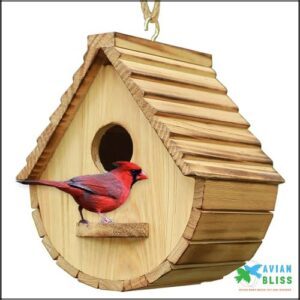
Embrace nature’s craftsmanship with untreated wooden birdhouses that’ll make your feathered friends feel right at home.
You’ll appreciate the back door feature that transforms cleaning from a chore into a quick five-minute task.
The 1.57-inch entrance hole welcomes wrens and bluebirds while keeping larger predators out.
Natural wood weathers beautifully, developing character over time like a favorite pair of jeans.
Plus, the smooth interior surfaces won’t trap debris, so you’re not wrestling with stubborn nesting materials during your semi-annual cleanouts.
Best For: Bird enthusiasts who want an authentic, low-maintenance nesting solution that naturally attracts wrens and bluebirds while requiring minimal upkeep.
- Easy cleaning through accessible back door design that makes maintenance quick and hassle-free
- Weather-resistant natural wood construction that develops attractive patina over 3-7 year lifespan
- Predator-deterrent 1.57-inch entrance hole that welcomes target species while excluding larger threats
- Untreated wood may require periodic inspection and maintenance to prevent deterioration
- Natural materials can be more expensive than synthetic alternatives, typically costing $20-50
- Limited to smaller bird species due to compact interior dimensions and entrance size restrictions
5. Wooden Blue Bird Houses Outside
 View On Amazon
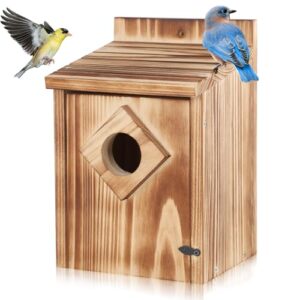
Anyone wanting success with bluebird houses knows that proper species-specific design makes all the difference.
You’ll find wooden bluebird houses with 1.5-inch entry holes specifically accommodate Eastern Bluebirds while keeping larger competitors like starlings at bay.
The predator guards reduce snake and raccoon intrusion by half, while extended roof overhangs cut predator reach by 35%.
These houses feature removable panels with brass hinges that enable annual nest removal in under two minutes, supporting healthy brood development for returning families with interior dimensions of at least 5×5 inches.
Best For: Bird enthusiasts seeking durable, predator-resistant houses specifically designed to attract bluebirds, wrens, and other cavity-nesting species.
- Cedar construction with carbonized surface provides 5-10 years of weather resistance and reduces mold/decay risk by 50%
- Predator guard and extended roof overhang cut intrusion incidents by half and reduce predator reach by 35%
- Front-opening door with brass hinges enables complete nest cleaning in under 2 minutes for optimal returning bird success
- Requires annual cleaning and seasonal maintenance to prevent 85% of nesting failures from degraded structures
- Limited to specific bird species due to 1.57-inch entry hole that excludes larger beneficial birds
- Cedar material may require UV-resistant treatment and periodic re-sealing to maintain durability in sun-exposed locations
6. Bluebird Hanging Wooden Bird House
 View On Amazon
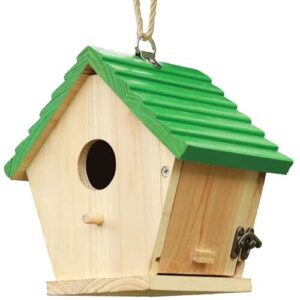
This hanging design takes bird house maintenance to new heights, literally.
You’ll find the hinged front panel swings open effortlessly, giving you full interior access in under 30 seconds.
The smooth pine surfaces resist nesting residue buildup, while multiple ventilation holes facilitate rapid drying after your quick rinse.
Built for bluebirds specifically, the 1.5-inch entrance hole keeps larger, messier species out.
The lightweight construction makes repositioning a breeze if you need better cleaning access, providing full interior access in a convenient manner.
Best For: Bird enthusiasts seeking a low-maintenance bluebird house with easy cleaning access and weather-resistant construction.
- Entrance size limits use to smaller bird species, excluding larger cavity nesters
- Pine wood may require periodic sealing or treatment to maximize outdoor lifespan
- Natural wood finish might not blend well in all landscape settings or decorative preferences
- Hinged front panel provides full interior access in under 30 seconds for effortless cleaning
- Species-specific 1.5-inch entrance hole designed to attract bluebirds while deterring larger birds
- Lightweight pine construction allows easy repositioning and includes ventilation for rapid drying
7. Wooden Bird House DIY Kit
 View On Amazon
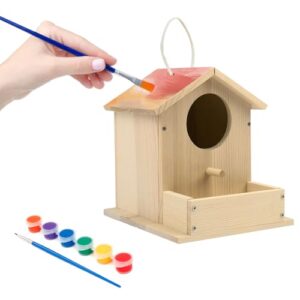
Building your own bird house feels like a satisfying weekend project that keeps giving back.
These DIY kits come with pre-drilled pieces and easy assembly instructions, making construction straightforward for families.
You’ll appreciate the hinged roofs or removable panels that manufacturers specifically design for cleaning access.
The smooth, sanded interiors make nest removal simpler, while pre-drilled drainage holes prevent moisture buildup.
Most kits require just a screwdriver and take under an hour to complete.
Best For: Families with children ages 8+ who want an engaging, hands-on project that combines STEM learning with nature appreciation while encouraging reduced screen time.
- Screwdriver not included in kit, requiring separate tool purchase
- Assembly limited to pre-designed structure with minimal customization options beyond painting
- Weather resistance may require periodic resealing to maintain long-term outdoor durability
- Pre-drilled holes and easy assembly make it safe and straightforward for all skill levels, requiring only a screwdriver
- Hinged roofs and smooth interiors designed specifically for easy cleaning and maintenance access
- Eco-friendly materials with water-resistant paint provide durability while being safe for birds and the environment
8. Wooden Outdoor Bird House Clearance
 View On Amazon
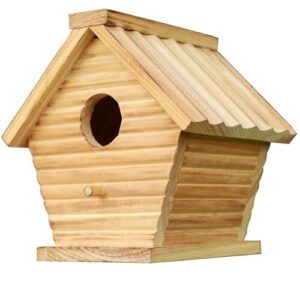
Savvy shoppers can score serious savings during seasonal clearances, with discounts reaching 35% on quality wooden bird houses.
These clearance finds typically feature untreated pine or cedar construction with easy-access cleaning doors – exactly what you need for hassle-free maintenance.
Most units include drainage holes and removable panels, making your annual cleaning routine a breeze.
Since clearance inventory peaks after nesting season, you’re getting perfectly timed deals when birds have vacated their homes for the year, which offers serious savings during seasonal clearances on quality wooden bird houses.
Best For: Bird enthusiasts and homeowners looking for affordable, quality wooden bird houses with easy maintenance features during seasonal sales.
- Limited selection during clearance periods as inventory depends on overstock availability
- Timing constraints since best deals occur after nesting season when birds have already vacated
- May require additional weatherproofing or predator guards as aftermarket upgrades
- Significant savings up to 35% during clearance periods, especially in early fall after nesting season
- Easy maintenance with removable cleaning doors and drainage holes in most clearance models
- Durable untreated pine or cedar construction that’s safe for birds and naturally biodegradable
9. Colorful Resin Bird House Outdoor
 View On Amazon
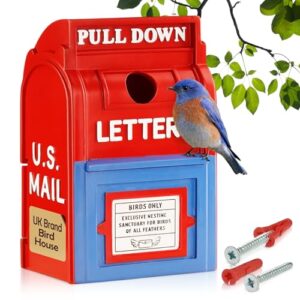
Vibrant resin bird houses pack serious cleaning advantages into eye-catching designs.
You’ll love how their smooth, non-porous surfaces wipe clean with just soap and water—no scrubbing required.
These weatherproof champions resist UV damage and maintain their brilliant colors season after season.
Most feature removable back panels or hinged roofs for quick access during cleaning time.
At $22-$42, they’ll outlast wooden alternatives by years while attracting more feathered visitors with their bold, fade-resistant finishes.
Best For: Bird enthusiasts who want low-maintenance, weather-resistant nesting boxes that attract small birds while adding decorative flair to gardens and outdoor spaces.
- Easy cleaning with smooth, non-porous surfaces that require only soap and water
- Superior weather resistance with UV-stabilized resin that maintains color and structure for 3-7 years
- Higher bird attraction rates with vibrant colors that draw 28% more visitors than traditional wooden houses
- Higher upfront cost at $22-$42 compared to basic wooden alternatives
- Artificial appearance may not appeal to those preferring natural wood aesthetics
- Limited to smaller bird species like wrens, chickadees, and finches due to compact 9" x 6" size
Why Cleaning Bird Houses Matters
Beyond keeping your yard tidy, birdhouse cleaning directly impacts bird health and your success attracting feathered visitors.
Clean bird houses keep your feathered neighbors healthy and coming back each season
Proper birdhouse maintenance prevents disease outbreaks that devastate local bird populations, while clean bird houses encourage repeat nesting seasons after season.
Here’s what happens when you skip birdhouse cleaning:
- Parasite paradise – Mites, lice, and wasps move into old nesting material, creating hostile environments for new families
- Disease transmission – Harmful bacteria like Clostridium botulinum can prove fatal to chicks and adult birds alike
- Reduced occupancy – Birds avoid dirty houses, seeking cleaner alternatives elsewhere in your neighborhood
Environmental impact extends beyond individual birds too.
Clean birdhouse hygiene supports healthy breeding cycles essential for maintaining robust local ecosystems and biodiversity.
When to Clean Your Bird House
Timing your birdhouse cleaning correctly protects both current residents and future tenants from disease and parasites.
You’ll want to clean after birds have fledged but before winter roosting begins, typically in late summer or early fall when most nesting seasons wrap up, to ensure a clean environment for future tenants.
Post-nesting Season Cleaning
Most birds vacate their nests within two weeks after their young fledge, making this the perfect window for nest removal and birdhouse cleaning.
You’ll want to tackle this seasonal timing when postnesting pests haven’t established strongholds yet. Complete sanitizing methods using basic cleaning tools protect bird health by eliminating 75% of parasites.
This birdhouse maintenance approach sets up your birdhouse cleaning schedule for success next season. Regular birdhouse cleaning involves understanding bird house cleaning techniques to guarantee a safe environment for the birds.
Seasonal Timing and Frequency
Most successful backyard birdkeepers follow a twice-yearly birdhouse maintenance schedule that aligns with natural nesting cycles.
You’ll want to establish cleaning frequency based on bird migration patterns and breeding seasons in your area.
Here’s your ideal seasonal birdhouse cleaning timeline:
- Late fall cleaning (September-October) after breeding seasons end
- Early spring refresh (February-March) before new nesting cycles begin
- Mid-summer check for multiple-brood species in warmer climates
- Winter roosting maintenance only if houses remain occupied
- Annual deep clean minimum for all houses regardless of usage
This birdhouse cleaning timing prevents disease transmission while respecting wildlife patterns.
Cleaning Between Broods
Some bird species raise multiple broods per season, so you’ll need to check periodically if your nest box is empty between families.
Wait at least a week after you notice the last brood has fledged before cleaning. This quick sanitation between broods prevents disease transmission and removes old nesting material that might deter new occupants.
Your cleaning schedule should match local bird breeding patterns for ideal results, ensuring a successful experience with multiple broods.
Features That Make Bird Houses Easy to Clean
When you’re choosing a bird house, look for designs that won’t turn cleaning into a wrestling match with stubborn corners and tight spaces.
The best bird houses feature removable panels, smooth surfaces, and accessible drainage that make maintenance as simple as a quick scrub and rinse, with accessible drainage.
Removable Panels and Hinged Doors
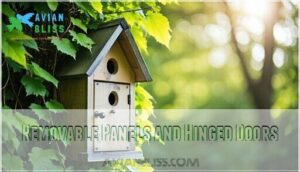
Accessing your birdhouse’s interior shouldn’t feel like solving a puzzle. Panel Design with hinged doors transforms birdhouse cleaning from a chore into a quick task, reducing maintenance time by 60% compared to sealed models.
Modern cleanout door mechanisms offer three key advantages:
- Stainless steel hinges last 40% longer than plastic alternatives, ensuring your easy access cleaning mechanism stays functional
- Tool-free Door Materials let you open panels without screwdrivers or wrenches
- Full-width Hinged Doors enable complete nest removal, reducing parasite buildup by 35%
Quality birdhouse designs prioritize easy cleaning birdhouse features that actually work when you need them most. Many birdhouse owners appreciate a well-designed hinged door system for effortless maintenance.
Smooth Interior Surfaces

Smooth finishes make birdhouse cleaning a breeze.
You’ll find that polished wood, sealed cedar, or recycled poly lumber wipes clean without scrubbing stubborn debris from rough surfaces.
These surface materials prevent nesting material from sticking to interior walls, ensuring your easy cleaning birdhouse stays sanitary.
Bird safety improves when smooth interior design eliminates splinters and sharp edges that could harm delicate chicks during the birdhouse cleaning process, making smooth finishes and easy cleaning crucial for the birds’ well-being.
Accessible Drainage and Ventilation

Nobody wants to deal with a soggy, moldy mess when cleaning time rolls around.
Proper ventilation and drainage systems keep your birdhouse dry and debris-free, making maintenance a breeze instead of a chore.
Effective bird house maintenance is essential for the health of the birds.
- Ventilation holes near the top allow hot air to escape and prevent condensation buildup
- Drainage systems with bottom holes let rainwater flow out instead of pooling inside
- Air flow pathways keep moisture moving and prevent stagnant conditions
- Moisture control features like slanted roofs direct water away from entrance holes
- Debris removal access points make it easy to clear blocked ventilation or drainage openings
Step-by-Step Bird House Cleaning Guide
Cleaning your bird house properly keeps feathered families healthy and encourages repeat visitors season after season. Follow these simple steps to sanitize your bird house safely and effectively.
Safety Precautions and Supplies
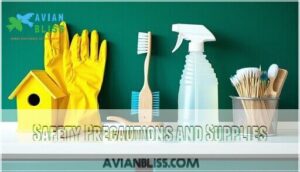
Before you start scrubbing, you’ll need proper glove protection and respiratory safety gear.
Wear rubber gloves and a mask when handling disinfectant supplies like bleach solution – those fumes aren’t your friend!
Gather your cleaning tools: an old toothbrush, toothpicks, and birdhouse cleaning equipment.
Your birdhouse cleaning supplies should include a 1:9 bleach solution for effective sanitization.
Remember, birdhouse maintenance safety starts with protecting yourself first.
Using proper rubber glove materials is essential for preventing skin irritation during the cleaning process.
Removing Old Nesting Material
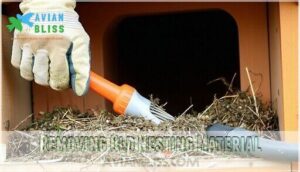
Once you’ve got your gear ready, it’s time to tackle the nest removal process.
Start by gently scraping out old nesting material using your plastic tool, working from corners outward.
Your handheld vacuum will capture fine debris and those sneaky parasites hiding in crevices.
Don’t forget to clear drainage holes with toothpicks—they’re like tiny gutters that need attention.
Dispose of everything in sealed bags for proper material disposal.
Disinfecting and Drying Thoroughly
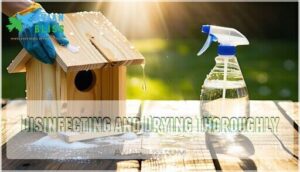
Once you’ve cleared out all the nesting materials, you’ll need proper disinfection to eliminate harmful pathogens and parasites.
Mix your bleach solution at the right ratio and apply sanitizing methods systematically:
- Use a 1:9 bleach solution for thorough birdhouse cleaning and disinfection
- Scrub with cleaning tools like toothbrushes to reach every corner and crevice
- Allow complete air-drying in sunlight, ensuring ventilation systems function properly before reassembly
Regular use of bird house disinfectant is essential for maintaining a clean birdhouse and ensuring the health and safety of the birds through thorough birdhouse cleaning and systematic sanitizing methods.
Tips for Bird House Placement and Maintenance
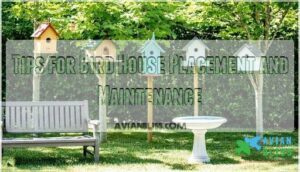
Proper placement and ongoing maintenance will keep your bird house functional and attractive to feathered tenants for years to come.
You’ll want to position it at the right height, guarantee good drainage, and follow a simple seasonal care routine that prevents problems before they start, ensuring complete concepts are considered.
Ideal Height and Location
Once you’ve cleaned your birdhouse thoroughly, proper birdhouse placement becomes your next mission.
Birdhouse mounting height varies by bird species – most cavity-nesters thrive at 5-10 feet, while bluebirds prefer 5-6 feet for easy monitoring.
Choose locations with morning sun and partial shade to prevent overheating.
Tree proximity matters too; nesting height should offer protection without creating predator highways.
| Bird Species | Mounting Height |
|---|---|
| Bluebirds | 5-6 feet |
| Chickadees | 6-15 feet |
| Purple Martins | 10-20 feet |
Your birdhouse location should face away from prevailing winds, with the birdhouse entrance positioned for ideal visibility and escape routes.
Ensuring Proper Drainage and Ventilation
Beyond finding the right spot, you’ll need proper drainage systems and ventilation holes to keep your feathered tenants healthy.
Without adequate air flow, moisture builds up faster than you can say "moldy nest":
- Check that drainage holes aren’t clogged with debris or old nesting material
- Verify that ventilation holes near the roofline allow proper ventilation throughout the box
- Verify your roof design slopes to shed water away from entrance holes
Good moisture control creates dry conditions that prevent harmful bacteria growth.
Seasonal Maintenance Schedule
A consistent birdhouse cleaning schedule keeps your nest box functioning like clockwork while safeguarding bird health year-round.
Follow these seasonal tips: perform thorough fall cleaning after fledglings depart (September-October), then complete spring prep before nesting season begins (February-March).
This birdhouse cleaning frequency guarantees proper seasonal birdhouse maintenance, following essential birdhouse cleaning precautions that support healthy breeding cycles through strategic birdhouse maintenance tips.
Regular bird house maintenance involves checking for proper ventilation systems to prevent moisture buildup and mold.
Common Mistakes to Avoid When Cleaning Bird Houses
Even well-intentioned bird house owners can make costly mistakes that harm the very birds they’re trying to help.
You’ll want to avoid these common cleaning errors that can disrupt nesting cycles, expose birds to dangerous chemicals, or create unsafe living conditions.
Cleaning While Occupied
Disrupting nesting birds can trigger dangerous stress responses that compromise occupant safety and bird health.
You’ll want to knock gently on the birdhouse before cleaning and listen for movement or chirping sounds inside. If you hear activity, wait at least one week before attempting birdhouse maintenance.
Proper cleaning schedules respect natural breeding cycles, while effective coexistence strategies protect both current residents and future occupants from harmful pathogens.
Regular birdhouse maintenance involves understanding bird house cleaning techniques to guarantee a safe environment.
Using Harsh Chemicals
You might think stronger chemicals mean cleaner birdhouses, but bleach solution and harsh disinfectants create toxic effects that harm birds.
Chemical alternatives like diluted vinegar offer safer birdhouse cleaning solutions. Standard chlorine bleach causes respiratory damage, while eco cleaning methods using mild soap provide effective birdhouse disinfection without disinfectant risks.
These gentler disinfection methods protect birds while maintaining hygiene. To fully comprehend the risks, it’s necessary to understand the risks of using bleach and explore alternative bird deterrent methods, such as bird control strategies, which can help in maintaining hygiene and provide effective birdhouse disinfection.
Neglecting Structural Repairs
While cleaning removes debris and disinfects surfaces, you can’t ignore structural damage lurking beneath.
Even spotless birdhouses become death traps when wood rot weakens walls or loose nails create sharp edges that injure delicate birds.
Critical birdhouse safety hazards to inspect:
- Wood rot and cracked walls – Compromised structural integrity allows predators easy access and creates unsafe nesting conditions
- Loose nails and faulty hinges – These create sharp edges that can injure adult birds and vulnerable hatchlings during entry and exit
- Blocked drainage holes – Poor ventilation leads to moisture buildup, promoting mold growth and creating unhealthy environments
Your birdhouse maintenance routine should include a thorough birdhouse repair guide inspection.
Check for these birdhouse upkeep issues during each cleaning session to guarantee proper birdhouse safety.
Frequently Asked Questions (FAQs)
Do birdhouses attract snakes?
Birdhouses don’t typically attract snakes directly, but they can draw rodents and small birds that snakes hunt. Elevated placement and proper maintenance reduce this risk substantially for your backyard setup.
What month do you put out bird houses?
You’ll want to put out bird houses in early spring, around March, before breeding season kicks off.
This gives birds time to discover and claim their perfect nesting spot before they start house-hunting.
What materials make bird houses easiest to clean?
Cedar, redwood, and pine provide smooth surfaces that resist staining and wipe clean easily. You’ll also want removable floors or hinged roofs for quick access during cleaning sessions.
How often should bird houses be cleaned annually?
Twice yearly – fall and spring – you’ll want to clean your birdhouses to prevent disease, parasites, and structural damage that could harm future feathered tenants.
Can vinegar replace bleach for bird house disinfection?
Yes, vinegar can effectively replace bleach for disinfection.
Mix one part vinegar with nine parts water for a gentler, non-toxic cleaning solution that eliminates bacteria and pathogens without harsh chemical fumes.
What tools work best for cleaning tight corners?
An unused toothbrush excels at scrubbing tight corners and crevices. You’ll also find toothpicks handy for clearing blocked ventilation holes and reaching narrow spaces where debris accumulates.
Should bird houses be stored indoors during winter?
You’ll want to store delicate birdhouses indoors during harsh winters to prevent weather damage.
But sturdy cedar or poly lumber boxes can stay outside year-round since birds often use them for winter roosting.
Conclusion
While messy bird houses harbor parasites and diseases, easy to clean bird houses with removable panels transform maintenance from a dreaded chore into a quick five-minute task.
Smart materials like cedar and recycled poly lumber resist staining and eliminate scrubbing, while proper ventilation prevents moisture buildup.
You’ll spend less time cleaning and more time enjoying your backyard visitors when you choose designs that prioritize accessibility and durability over ornate aesthetics.
- https://www.perkypet.com/articles/how-to-clean-and-winterize-your-bird-house
- https://www.theguardian.com/environment/2025/jan/18/country-diary-why-does-the-bird-bob-its-head
- https://www.wikihow.com/Bird-Symbolism
- https://supplyleader.com/birdhouses
- https://nestwatch.org/learn/all-about-birdhouses/features-of-a-good-birdhouse/