This site is supported by our readers. We may earn a commission, at no cost to you, if you purchase through links.
A poorly built birdhouse doesn’t just look bad after one winter—it becomes a death trap. Warped wood, rusted hardware, and flooded cavities expose nesting birds to hypothermia, parasites, and predators at their most vulnerable.
Bluebird populations, already recovering from decades of habitat loss, depend on nest boxes that actually hold up through freeze-thaw cycles, driving rain, and summer heat.
The difference between a house that lasts one season and one that lasts fifteen comes down to materials, design details, and a few minutes of maintenance each year.
These five durable bird houses for all weather are worth every penny—and the birds in your yard will show you exactly why.
Table Of Contents
- Key Takeaways
- Top 5 Durable All-Weather Bird Houses
- Best Materials for All-Weather Bird Houses
- Must-Have Weatherproof Safety Features
- Placement and Maintenance for Longevity
- Best Mounting Heights for Bluebirds, Wrens, and Chickadees
- Positioning Entrances Away From Wind and Harsh Sun
- Secure Pole, Tree, and Wall Mounting Options
- Seasonal Cleaning to Prevent Mold and Parasites
- Inspecting Seals, Roofs, and Hardware After Storms
- Reapplying Protective Finishes to Extend Birdhouse Life
- Frequently Asked Questions (FAQs)
- Should bird houses be left out in the winter?
- What are the common mistakes when building a birdhouse?
- How long do bird houses last?
- What kind of birdhouses will birds actually use?
- Do birds stay in birdhouses in the winter?
- How do you weatherproof a birdhouse?
- Do you clean out bird houses every year?
- What paint colors attract different bird species?
- How often should birdhouses be relocated?
- Can multiple birdhouses be placed close together?
- Conclusion
Key Takeaways
- Cedar and recycled HDPE are the top material choices for all-weather birdhouses—cedar fights rot and insects naturally, while HDPE absorbs almost no moisture and never needs repainting.
- The right entrance hole size isn’t optional: bluebirds need 1.5 inches, wrens need just 1 inch, and getting it wrong means the wrong birds move in—or none at all.
- Features like drainage holes, ventilation gaps, a sloped roof with overhang, and a cleanout door aren’t extras—they’re what separates a birdhouse that lasts 15 years from one that fails after one winter.
- Placement and maintenance matter as much as the box itself—mount at the right height, face the entrance east, clean it out twice a year, and reapply exterior sealant every one to three years.
Top 5 Durable All-Weather Bird Houses
Finding a birdhouse that holds up through rain, wind, and full sun isn’t as simple as grabbing whatever looks good at the garden center. The right one depends on materials, design, and how well it’s built to protect the birds using it.
For birds that need both shelter and food in one spot, a bird house with feeder combo can simplify your setup while keeping everything weather-ready.
Here are five options worth a close look.
1. Woodlink Bluebird House BB1
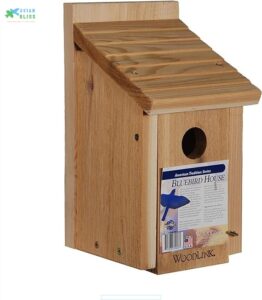
The Woodlink BB1 is a solid starting point if you’re serious about attracting bluebirds. Built from kiln-dried inland red cedar, it naturally resists insects and weathers well without heavy treatment.
The 1½-inch entrance hole is sized specifically for Eastern, Western, and Mountain Bluebirds, and the front panel slides open for quick seasonal cleanouts.
A ventilation gap at the top and a drain hole at the base keep the interior dry and comfortable.
It arrives fully assembled, so you can mount it and get started right away.
| Best For | Backyard birders who want a low-maintenance, ready-to-mount nesting box designed to reliably attract Eastern, Western, or Mountain Bluebirds. |
|---|---|
| Material | Inland Red Cedar |
| Entrance Hole | 1.5 in |
| Easy Cleaning | Slide-down front panel |
| Ventilation | 0.5 in top slot |
| Drainage | Base drain hole |
| Weight | 1 lb |
| Additional Features |
|
- Made from kiln-dried inland red cedar — naturally insect-repellent and built to hold up outdoors without a lot of upkeep.
- The sliding front panel makes seasonal cleaning quick and easy, so you can keep the box healthy between nesting cycles.
- Comes fully assembled with rust-resistant screws, ventilation, and a drain hole — just mount it and you’re good to go.
- The door latch can leave a small gap, which may let in unwanted species or cause issues for nesting birds.
- The entrance hole is large enough to admit house sparrows, so you might need a hole reducer to keep things species-specific.
- At just 1 lb, it’s light enough to shift in strong wind — you’ll need a solid, stable mount to keep it in place.
2. Rustic Cedar Bluebird Bird House
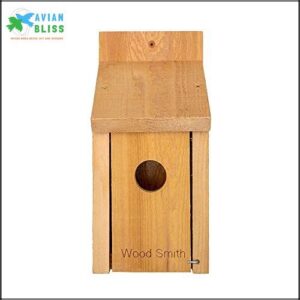
Another excellent option worth your attention is the Wood Smith USA Rustic Cedar Bluebird Bird House. Made from natural Western Red Cedar by experienced American carpenters, it’s built to last without any added chemicals — good news for the birds and your peace of mind.
The 1.5-inch entrance hole welcomes bluebirds, wrens, and chickadees, while top ventilation vents and a bottom drain slot keep conditions inside stable.
The twist-latch front door makes seasonal cleanouts genuinely easy.
| Best For | Backyard birders who want a low-maintenance, chemical-free home that attracts bluebirds, wrens, and other small songbirds. |
|---|---|
| Material | Western Red Cedar |
| Entrance Hole | 1.5 in |
| Easy Cleaning | Twist-latch front door |
| Ventilation | Top vents |
| Drainage | Bottom drain slot |
| Weight | 2.41 lb |
| Additional Features |
|
- Built from natural Western Red Cedar — durable, weather-resistant, and completely chemical-free
- The twist-latch front door makes cleaning quick and easy between nesting seasons
- Comes fully assembled with hardware included, so you can hang it and be done
- No built-in predator guard, so you may need to add one separately if cats or raccoons are an issue
- The 1.5-inch hole is sized for small birds only — larger species won’t fit
- Cedar will gray out over time, which is totally normal but worth knowing if aesthetics matter to you
3. Cartman Hanging Colorful Wooden Birdhouse
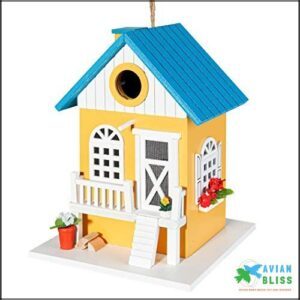
If you want something that doubles as a garden accent, the Cartman Hanging Colorful Wooden Birdhouse earns a second look. Its smooth-sanded cedar body resists insects naturally, while the bright yellow finish with multicolored cutouts makes it genuinely pleasant to look at year-round.
At just 1.1 lb, it hangs easily from a branch or hook.
The front hinged door with magnet closure and removable mesh nest platform make cleaning straightforward — no tools, no fuss.
| Best For | Bird lovers and gardeners who want a charming, low-maintenance birdhouse that looks just as good as it functions. |
|---|---|
| Material | Cedar Wood |
| Entrance Hole | Unspecified small |
| Easy Cleaning | Front hinged door |
| Ventilation | Vented top |
| Drainage | Mesh screen base |
| Weight | 1.1 lb |
| Additional Features |
|
- Cedar wood naturally fights off insects and holds up well outdoors without much fuss
- Front hinged door and removable mesh platform make cleaning quick and tool-free
- Comes fully assembled with hanging hardware — ready to go straight out of the box
- Lightweight build can sway or tip in strong winds, so extra anchoring might be needed
- A few buyers reported loose or unglued pieces on arrival, so give it a once-over before hanging
- The unpainted roof absorbs heat fast, which could be an issue in warmer climates
4. Perky Pet Wren Birdhouse
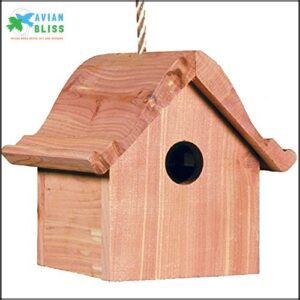
For something a little more compact, the Perky-Pet Wren Birdhouse (model 50301) is worth keeping on your list.
Its compact size and thoughtful entry hole make it a great fit for wrens, and choosing the right wooden birdhouse design can mean the difference between a busy nest and an empty one.
At 6.52 × 7.49 × 14.13 inches and just 1.43 lb, it’s lightweight enough to hang from a branch with its built-in rope — no ladder required.
The 1.5-inch entrance keeps larger birds out, while the Dutch-style roof lifts off cleanly for seasonal maintenance.
Fir wood with a weather-resistant white finish holds up through rain and sun without demanding much from you.
| Best For | Backyard bird lovers, educators, and kids who want to attract small cavity-nesting birds like wrens and chickadees without a lot of setup. |
|---|---|
| Material | Fir Wood |
| Entrance Hole | 1.5 in |
| Easy Cleaning | Removable Dutch roof |
| Ventilation | Built-in vents |
| Drainage | Drainage openings |
| Weight | 1.43 lb |
| Additional Features |
|
- The Dutch-style roof lifts right off, so cleaning between seasons takes about 30 seconds
- Built-in rope means you can hang it from a tree or porch the moment it arrives
- Fir wood with a weather-resistant finish holds up year-round without much maintenance
- The 1.5-inch entrance is great for small birds but locks out anything bigger
- A few buyers have reported minor issues out of the box — rough edges, roof misalignment, or (rarely) a missing entrance hole
- The rope length isn’t specified, so depending on where you’re mounting it, you may need extra hardware
5. Audubon Coppertop Bluebird House
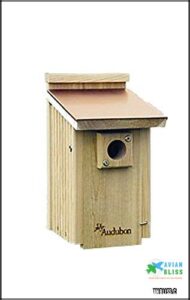
If you’re serious about attracting Eastern Bluebirds, the Audubon Coppertop Bluebird House is hard to overlook. Handcrafted in the USA from solid cedar with walls nearly an inch thick, it’s built to handle year-round weather without fuss.
The copper-colored metal roof sheds rain efficiently, while the 1.5-inch entrance hole — paired with a predator guard — keeps raccoons and larger birds at bay.
A front latch opens easily for cleaning between broods.
At $44.99, it’s a dependable, conservation-approved choice.
| Best For | Backyard birders and conservation-minded homeowners who want a durable, species-specific nesting box for Eastern Bluebirds in open rural or suburban-edge settings. |
|---|---|
| Material | Solid Cedar |
| Entrance Hole | 1.875 in |
| Easy Cleaning | Latch-open front panel |
| Ventilation | Pre-drilled vents |
| Drainage | Pre-drilled drainage |
| Weight | 3.6 lb |
| Additional Features |
|
- Solid cedar construction with a weather-resistant metal roof means it holds up season after season without much babying.
- The predator guard and correctly sized entrance hole give eggs and chicks a real fighting chance against raccoons and larger birds.
- The front latch makes cleaning between broods quick and simple — which actually matters for keeping birds healthy and coming back.
- The predator guard extension and hole depth fall slightly short of ideal specs, so it’s not perfectly optimized out of the box.
- Quality control can be hit or miss — some buyers have reported a detached roof or gaps in the front door that could let in drafts or small predators.
- Bluebirds are picky about location, so if you don’t have open field edges and the right spacing from other houses, you may wait a long time for tenants.
Best Materials for All-Weather Bird Houses
birdhouse survives its second winter, and the difference almost always comes down to what it’s made of. Choosing the right material isn’t complicated, but it does matter — for the birds and for your wallet.
holds up best when the weather turns ugly.
Cedar and Redwood for Natural Rot Resistance
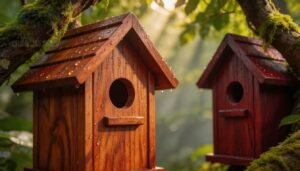
Cedar and redwood stand out among weather-resistant materials because they protect themselves from the inside out.
Both woods rely on heartwood chemistry — cedar’s thujaplicin antifungal compounds and redwood’s polyphenolic decay resistance actively slow rot without chemical treatments.
Natural oil deterrence and moisture repellent properties keep fungal growth at bay.
For long‑lasting results, solid cedar wood or untreated cedar outperforms most natural wood alternatives in wet climates.
The Redwood heartwood weather resistance is higher than its sapwood.
Recycled HDPE and Poly Lumber Durability
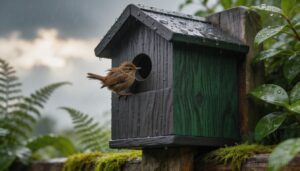
If you want a material that practically takes care of itself, recycled HDPE poly lumber is worth serious consideration.
Its moisture absorption sits below 0.01%, so it won’t swell, rot, or grow mold after heavy rain.
Carbon black additives and UV stabilization protect against sun damage, while good mechanical strength retention through thermal expansion cycles keeps your birdhouse fitting together season after season — no repainting required.
Exterior-grade Plywood With Weatherproof Sealants
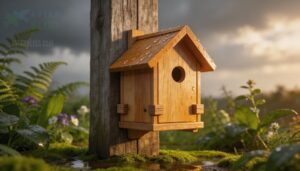
Exterior-grade plywood — when sealed correctly — builds weatherproof birdhouses that last for years outdoors.
Plywood Grade Classification matters here: CDX manages rain well, while marine-grade offers the strongest Adhesive Bond Integrity.
Pair either with a flexible Sealant Choice like polyurethane or silicone for real Moisture Barrier Design.
Add Backer Block Reinforcement around mounting holes, and your weatherproof coated wood structure stays solid season after season.
- Resists warping through freeze-thaw cycles
- Weatherproof finish seals every seam tightly
- Flexible sealants absorb wood movement without cracking
- Weather-resistant materials keep nesting cavities dry and safe
- Easy maintenance cleaning keeps interior conditions healthy for birds
Stainless Steel Fasteners for Corrosion Resistance
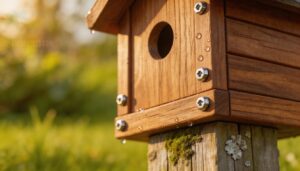
The fasteners holding your birdhouse together matter more than most people realize.
Alloy Grade Selection starts with 316-grade stainless steel — its molybdenum content gives it real chloride exposure resistance and passive film stability that cheaper hardware simply can’t match.
Geometry‑induced crevice zones under screw heads trap moisture, so regular cleaning and inspection keeps rustproof, weatherproof hardware performing season after season.
UV-resistant Finishes for Sun and Moisture Protection
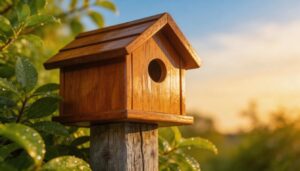
Sun is a slow destroyer — and the right finish is your birdhouse’s best defense.
Clear UV absorbers block photo-oxidation without altering the wood’s natural look, while aliphatic polyurethane coatings resist yellowing and cracking across seasons.
Waterborne UV coatings keep VOCs low, and pigmented UV finishes double as color accents.
Nanoparticle reinforcement adds hardness, making weatherproof coated wood genuinely tougher against rain and sun.
Must-Have Weatherproof Safety Features
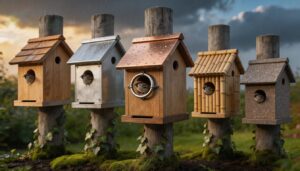
A good birdhouse isn’t just about looks — it’s about keeping birds safe through every season. The right safety features make the difference between a house that actually gets used and one that sits empty.
A great birdhouse keeps birds safe through every season, not just looking good in your garden
Here’s what to look for before you buy.
Entrance Hole Size for Target Bird Species
Getting the entrance hole size right is one of the most important decisions you’ll make. Species Hole Standards exist for good reason — a 1½ inch entry hole welcomes bluebirds perfectly while blocking starlings.
Wrens need just 1 inch. Following Hole Diameter Guidelines and Entrance Height Guidelines (6 inches above the floor for bluebirds) keeps small songbirds safe and Target Species Sizing accurate.
Predator Guards for Squirrels, Cats, and Raccoons
Once you’ve nailed the entrance hole, the next layer of defense is predator protection.
Stovepipe Baffles — especially 8-inch metal versions — create a slick, wobbling barrier, raccoons and cats simply can’t grip. Noel Mesh Guards extend reach protection at the opening, while Hole Extenders block paw access.
Pair these predatorproof features with generous Roof Overhangs and smart Pole Placement away from trees for real results.
Ventilation Holes for Airflow and Temperature Control
Good predator guards keep threats out — but ventilation holes keep the interior livable once birds move in.
Smart ventilation design starts with Top Placement: holes near the roofline let rising heat escape naturally. Consider these five features:
- Adjustable Vents — customize airflow by season
- Mesh Screens — block insects without restricting air
- Vent Slots — promote steady cross-circulation
- Seasonal Vent Covers — seal drafts during cold snaps
- Humidity Management — cedar’s natural porosity facilitates passive drying
Drainage Holes to Prevent Interior Moisture Buildup
Ventilation holes manage heat above — drainage holes handle the moisture below.
Place drainage holes at opposite corners of the floor for Corner Placement efficiency, letting water escape even on tilted mounts.
Size Optimization means 6–10mm Round vs Slot openings that clear water without chilling nestlings. A slightly sloped floor with Angle Design directs runoff toward the holes, supporting Clog Prevention year‑round.
| Feature | Recommended Spec | Benefit |
|---|---|---|
| Hole Size | 6–10mm diameter | Balances drainage and floor strength |
| Placement | Opposite floor corners | Ensures drainage on uneven mounts |
| Shape | Round or corner slot | Easy to clean, resists cracking |
Sloped Roofs and Overhangs for Rain Protection
A well-designed roof does more than look good — it’s your birdhouse’s first defense against rain.
A 4:12 to 6:12 Pitch Ratio sheds water fast, while an Overhang Depth of at least 1–2 inches keeps the entrance dry.
Add a Drip Edge Design and Water Diverter to channel runoff away, and your weatherproof design elements for bird shelters will hold up through any storm.
Clean-out Doors for Easier Seasonal Maintenance
Even the sturdiest birdhouse becomes a problem if you can’t clean it out easily. A well-placed cleanout door makes seasonal maintenance straightforward, not a chore.
Look for these four design features:
- Hinged Side Panels for one-hand access
- Wing-nut Fasteners for tool-free removal
- Front Panel Inspection to view the nest chamber directly
- Roof Access Latch secured against wind
Side cleanout doors with easy cleaning access keep your box healthier season after season.
Placement and Maintenance for Longevity
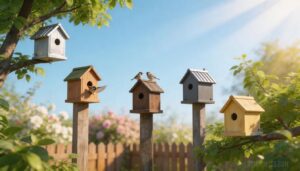
Getting a birdhouse is only half the work — where you put it and how you care for it makes all the difference.
The right placement keeps birds safe, and a simple maintenance routine keeps your house standing season after season.
Here’s what you need to know to get both right.
Best Mounting Heights for Bluebirds, Wrens, and Chickadees
Height zoning makes a real difference in who moves in. Mount bluebird houses 4 to 6 feet up, wrens at 6 to 10 feet, and chickadees anywhere from 5 to 15 feet depending on nearby cover. These species’ height overlap zones reduce territorial conflict naturally.
Predator height strategies work best when boxes stay spaced 30 to 50 feet apart, with seasonal height adjustments kept within easy-reach for cleaning.
Positioning Entrances Away From Wind and Harsh Sun
Where your entrance hole faces matters more than most people realize. Smart Entrance Orientation keeps rain, wind, and harsh afternoon sun from turning a cozy box into a stress zone for nesting birds.
- Face openings east or southeast for gentle morning warmth
- Apply Shade Utilization by positioning near shrubs or fences
- Use Windbreak Placement to block prevailing storm gusts
- Practice Microclimate Buffering in partially shaded, sheltered spots
- Adjust for Seasonal Sun Tracking as foliage changes exposure
Secure Pole, Tree, and Wall Mounting Options
How you mount your birdhouse can make or break its long-term stability. A solid Two‑Point Attachment reduces twisting in the wind far better than a single mounting hook.
Pole Bracket Design works well in open yards, while Tree Strap Materials, like nylon webbing, protect bark without puncturing it. Wall Anchor Types — lag screws or bracket plates — suit fences and siding.
| Mounting Option | Best Feature |
|---|---|
| Integrated pole stand | Adjustable Height Mechanism for easy access |
| Tree strap system | Bark-safe, removable secure mounting options for outdoor bird houses |
| Wall anchor bracket | Rigid, wind-resistant with corrosion-resistant mounting hardware |
Seasonal Cleaning to Prevent Mold and Parasites
Clean your birdhouse at least twice a year — late summer after fledging and again before breeding season begins. Remove old nesting material, then wipe interior surfaces with non‑toxic cleaning solutions, and let Interior Drying happen fully before closing it up.
HEPA Vacuuming pulls out fine debris and parasite eggs.
Tuck in Silica Gel packets to manage moisture, and run through your Seasonal Inspection Checklist to stay ahead of mold.
Inspecting Seals, Roofs, and Hardware After Storms
After cleaning, you’ll want to check Seal Integrity and Roof Leak Detection—storm winds can pry open even tiny seams.
Press gently along roof edges, inspect Fastener Tightness, and look for Moisture Intrusion inside.
A quick Storm Damage Assessment keeps weatherproof birdhouses ready for the next downpour.
Weather‑resistant materials and rustproof hardware help, but regular checks are your best defense.
- Roof Leak Detection
- Fastener Tightness
- Moisture Intrusion
Reapplying Protective Finishes to Extend Birdhouse Life
Once seals and hardware check out, it’s time to think about your finish. A good Seasonal Recoat Schedule — every one to three years — keeps wood locked against moisture.
Use Low VOC Sealants with UV Blocking Additives on exterior surfaces only, leaving interiors untreated. Light Surface Sanding Techniques between coats improve adhesion. Respect Curing Temperature Control: apply only in dry conditions.
| Finish Type | Best Use |
|---|---|
| Water-based polyurethane | UV coating, outer walls |
| Oil-based finish (spar urethane) | High-exposure roofs |
| Linseed oil (nontoxic paint alternative) | Cedar surfaces |
| Low VOC sealant | Seams and joints |
| Weatherproofing spray | Quick annual touch-ups |
Frequently Asked Questions (FAQs)
Should bird houses be left out in the winter?
Yes, leave your cold weather birdhouse out year-round. Chickadees, bluebirds, and wrens rely on Winter Roosting Benefits — using boxes for thermal insulation and Wind Shielding Techniques on brutal nights.
What are the common mistakes when building a birdhouse?
The biggest mistakes come down to small oversights: untreated wood choice, sharp edge hazards, incompatible fasteners, improper roof pitch, and neglecting sun exposure.
Get these wrong, and even the best birds won’t stay.
How long do bird houses last?
With proper care, a well-built cedar or recycled HDPE birdhouse usually lasts 10 to 15 years. Material degradation from climate impact shortens that lifespan fast without regular repair intervals and seasonal maintenance.
What kind of birdhouses will birds actually use?
Birds are surprisingly picky.
They need species-specific dimensions, natural cavity mimicry, correct entrance size for bird nesting, perch avoidance, and interior texture comfort — the closer your box matches their instincts, the faster they’ll move in.
Do birds stay in birdhouses in the winter?
Some cavity-nesting birds do use birdhouses year-round.
Winter Roosting Patterns show bluebirds, chickadees, and titmice sheltering overnight when temperatures drop, making year-round use and Low Entrance Design key factors in Heat Retention Strategies.
How do you weatherproof a birdhouse?
Start with two thin coats of rain shedding roof on all outer surfaces, install a rain shedding roof with wide overhang, add drainage channel design at the base, and use weather-resistant materials throughout.
Do you clean out bird houses every year?
Yes, clean your birdhouse at least once a year. Seasonal cleaning of bird houses removes old nesting materials, prevents mold, and controls parasites. Late summer or early spring works best.
What paint colors attract different bird species?
Think of your birdhouse as a garden signal. Red draws hummingbirds, yellow invites finches, and soft neutrals comfort cavity nesters.
Blue accents attract bluebirds.
Match colors to species for a truly bird-friendly garden.
How often should birdhouses be relocated?
Relocate birdhouses only after two consecutive unused seasons. Avoid moving during March through September.
Prioritize habitat quality triggers and record keeping practices, spacing new sites at least 100 meters apart for species sensitivity.
Can multiple birdhouses be placed close together?
You can, but spacing matters. Territorial species like bluebirds need 300 feet between boxes, while Tree Swallows need just Pairing different species nearby works well when their habits don’t overlap.
Conclusion
Just as a sturdy tree shelters birds through life’s storms, durable bird houses for all weather safeguard their well-being. By choosing a well‑crafted home and following simple care tips, you create a haven that endures.
A little extra effort upfront means years of joy watching your feathered friends thrive. With the right materials and maintenance, your birdhouse becomes a lasting sanctuary, not just a fleeting shelter.
Your investment pays off in countless bird visits.
- https://www.atlanticpondsupply.com/woodlink-wooden-bluebird-house-20140331083546
- https://www.woodlink.com/Products/Bluebird-House__24301-fslsh-BB1.aspx
- https://dickeybub.net/p/bb1-bluebird-house-natural-inland-red-cedar-with-hole-size-715038350033
- https://www.homedepot.com/p/reviews/Woodlink-Bluebird-Bird-House-BB1/203074698/1
- https://plasticlumberyard.com/the-difference-between-hdpe-lumber-and-composite-lumber/