This site is supported by our readers. We may earn a commission, at no cost to you, if you purchase through links.
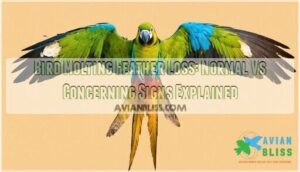 Bird molting feather loss is your bird’s natural annual makeover—shedding worn-out feathers to grow fresh, functional replacements.
You’ll notice symmetrical feather loss across both sides, lasting 4-8 weeks for smaller birds and several months for larger species.
Healthy molting includes emerging pinfeathers with protective keratin sheaths.
However, watch for red flags: bald patches, skin irritation, excessive plucking, or molting extending beyond three months.
Nutritional deficiencies, parasites, and stress can trigger abnormal feather loss that mimics normal molting.
The key difference? Normal molts follow predictable patterns, while problematic loss creates irregular bare spots and behavioral changes that signal your feathered friend needs help.
Table Of Contents
- Key Takeaways
- What is Bird Molting?
- Typical Molting Patterns in Birds
- Signs of Healthy Molting
- Causes of Abnormal Feather Loss
- Recognizing Problematic Feather Loss
- Nutrition for Birds During Molting
- Environmental Factors Affecting Molting
- Behavioral Changes During Molting
- Molting Care Tips for Bird Owners
- When to Consult an Avian Veterinarian
- Frequently Asked Questions (FAQs)
- Conclusion
Key Takeaways
- You’ll notice healthy molting shows symmetrical feather loss and new pinfeathers emerging, usually lasting 4-8 weeks for small birds and up to several months for larger ones.
- Watch for red flags like bald patches, skin irritation, excessive plucking, or molting that drags on beyond three months—these signal health problems, not normal molting.
- Your bird needs extra protein, vitamins, and hydration during molting, so adjust their diet and make sure they always have fresh water.
- Keep your bird’s environment calm, with stable temperature and humidity, to reduce stress and support smooth feather regrowth.
What is Bird Molting?
Molting is your bird’s natural process of shedding old feathers and growing fresh ones, essential for maintaining flight capability and temperature regulation.
Your feathered friend’s seasonal makeover keeps them flight-ready and perfectly temperature-controlled
Think of it as your feathered friend’s seasonal wardrobe change—new feathers replace worn-out ones to keep your bird healthy and ready for whatever life throws their way, which is also related to temperature regulation.
Definition and Purpose of Molting
During seasonal shifts, bird molting represents nature’s remarkable feather renewal system.
This systematic process replaces worn plumage with fresh feathers, ensuring ideal flight performance and temperature regulation. Think of it as your bird’s annual wardrobe upgrade—essential for survival and wellbeing.
- Plumage Maintenance: Old, damaged feathers shed to make room for new growth
- Molting Benefits: Enhanced flight efficiency and improved insulation properties
- Evolutionary Significance: Critical survival mechanism developed over millions of years
- Feather Composition: New keratin structures provide superior strength and flexibility
Biological Functions of New Feathers
New feathers serve multiple critical biological functions that keep your bird thriving.
Fresh plumage provides superior flight aerodynamics through precise wing surface control, while enhanced insulation properties regulate body temperature efficiently.
Updated feather coloration supports mating displays and camouflage needs.
These renewed structures also maintain waterproofing mechanisms and sensory functions, making healthy feather growth essential for survival.
Importance for Bird Health
Vitality hinges on successful feather growth during bird molting, as feather quality directly impacts your bird’s survival capabilities.
Proper feather loss and regrowth guarantee prime flight ability, maintaining essential insulation value for temperature regulation.
Healthy molting also supports mating success through vibrant plumage displays.
When feather condition remains strong throughout the molting process, your bird’s overall wellbeing improves substantially, establishing the foundation for long-term bird health.
Typical Molting Patterns in Birds
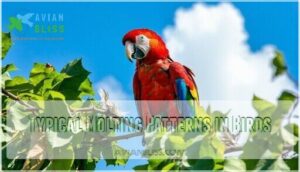
Understanding your bird’s molting patterns helps you distinguish between healthy feather renewal and potential health concerns.
Most birds follow predictable seasonal cycles, but timing and intensity vary markedly between species and age groups.
Seasonal Molting Cycles
Most birds experience one to two annual molting cycles triggered by seasonal changes and daylight shifts.
Spring and fall molting seasons align with breeding cycles and migration patterns, helping birds prepare for temperature extremes.
Environmental impact from stress or poor nutrition can disrupt these natural molting triggers, affecting your bird’s annual timing and overall health.
Species-Specific Molting Differences
Different species follow wildly different molting cycles.
Eagle molting stretches across five years, while waterfowl molt creates temporary flight loss for weeks.
Parrot molting duration varies dramatically—canaries finish in six weeks, but larger parrots need months.
Songbird molting typically happens twice yearly, though timing differs.
Understanding your bird species’ specific patterns helps you provide appropriate species-specific care during these natural cycles.
This process of feather replacement, known as bird molting, is essential for feather maintenance and overall bird health, emphasizing the importance of natural cycles.
First-Time Molts in Young Birds
Young birds experience their first molt between 2-12 months old, marking the shift from juvenile plumage to adult feathers.
This milestone brings significant nutritional needs and behavioral changes as pin feathers emerge.
Unlike adult bird molting patterns, young bird molting often appears more dramatic and uneven.
Post-molt care becomes critical during this vulnerable period when their energy reserves run low and stress levels peak, requiring careful attention to their energy reserves and overall well-being, especially to minimize stress levels.
Signs of Healthy Molting
Understanding healthy molting patterns helps you distinguish between normal feather replacement and potential health concerns in your bird.
Recognizing the key characteristics of natural molting guarantees you’ll provide appropriate care while knowing when veterinary attention might be necessary.
Symmetrical Feather Loss

Healthy avian molt displays remarkable symmetry, with feathers shedding evenly across both sides of your bird’s body.
This balanced feather loss maintains your pet’s ability to regulate flight stability and temperature regulation throughout the molting process.
Here’s what normal molting symmetry looks like:
- Mirror-image feather loss – Primary wing feathers drop simultaneously from matching positions on both wings
- Balanced body coverage – Contour feathers shed proportionally across chest, back, and sides
- Even timing patterns – Molt progression follows predictable sequences on left and right body halves
- Consistent feather distribution – No random bare patches or one-sided baldness appears during healthy cycles
This molt symmetry prevents your bird from becoming lopsided or losing aerodynamic balance. You’ll notice feathers dropping in organized waves rather than chaotic clumps.
The process maintains your pet’s ability to regulate body temperature and execute normal preening behaviors. Watch for this orderly pattern – it’s nature’s way of guaranteeing your feathered friend stays functional while upgrading their plumage.
Appearance of Pinfeathers
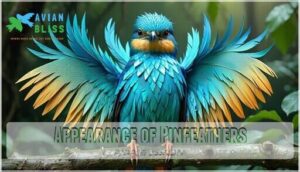
During bird molting, fresh pinfeathers emerge with a distinctive waxy coating called keratin sheaths.
These protective tubes safeguard developing new feathers as they push through growth stages.
Healthy pinfeathers appear symmetrically across your bird’s body, though they may cause mild pinfeather irritation.
You’ll notice your bird preening to assist with natural sheath removal, revealing vibrant feather growth underneath these temporary casings.
Expected Duration and Timeline

Timing your bird’s molting cycle helps you spot when something’s off track.
The normal molting process typically spans four to eight weeks for smaller birds, while larger parrots may take several months to complete their molting season.
- Molting Speed: Canaries finish their cycle in 6-8 weeks, while macaws need 3-4 months
- Environmental Impact: Cooler temperatures and shorter daylight can slow the molting process
- Age Influence: Young birds experience their first complete molt around one year of age
Causes of Abnormal Feather Loss
While most feather loss during molting follows predictable patterns, several factors can disrupt this natural process and cause concerning hair loss in your feathered friend.
Understanding these underlying causes helps you distinguish between normal seasonal changes and health issues that need immediate attention.
Nutritional Deficiencies
Poor nutrition breaks down the feather-growing process at its core.
Protein deficiency creates brittle, slow-growing feathers since keratin needs adequate amino acids. Vitamin imbalances – especially A, D, and B vitamins – disrupt follicle health and delay pinfeather emergence.
Mineral absorption issues with zinc, iron, and calcium weaken feather structure. Seed-only diets lack essential nutrients, causing 50% more regrowth problems.
Diet supplementation with balanced nutrition prevents most nutritional deficiencies during bird molting. Addressing these deficiencies can also help prevent compulsive feather plucking.
Parasites and Infections
When do parasites turn from minor nuisances into major threats to your bird’s feather health? These unwelcome guests can transform normal molting into a concerning medical issue.
Understanding the molting process details is essential for identifying potential issues.
- Mite Infestations – Head mites cause persistent baldness outside molting season, particularly affecting areas birds can’t preen
- Viral Impacts – BFDV and polyomavirus create symmetric feather loss with dystrophic growth patterns and secondary complications
- Bacterial Infections – Poor hygiene practices lead to follicle damage and irregular feather replacement cycles
- Internal Parasites – Compromise nutrient absorption, resulting in poor feather quality during critical growth periods
Hormonal and Environmental Factors
Your bird’s hormone imbalance can trigger unexpected feather loss outside normal molting seasons.
Reproductive cycles, age changes, and stress affect hormonal influence on feather growth.
Environmental stressors like poor lighting effects, inconsistent temperature control, and wrong humidity levels disrupt natural rhythms.
Sudden environmental stress from cage moves or loud noises compounds these issues, creating perfect conditions for abnormal shedding due to the combination of these factors and the bird’s overall health, influenced by its hormonal influence.
Recognizing Problematic Feather Loss
While normal molting follows predictable patterns, problematic feather loss creates distinct warning signs that require your immediate attention.
You’ll notice irregular bald patches, skin inflammation, or behavioral changes that signal something beyond typical seasonal shedding is occurring, which can be a sign of problematic feather loss, indicating distinct warning signs.
Bald Spots and Skin Irritation
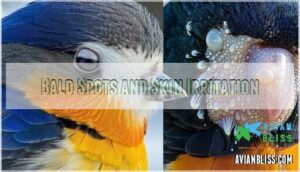
Unlike healthy molting, bald patches signal trouble brewing beneath your bird’s surface.
These smooth, featherless areas lack the protective pinfeather growth you’d expect during normal shedding.
Watch for skin lesions, feather pustules, or irritated patches that feel warm to touch.
Underlying medical conditions often manifest through compromised skin health, creating itchy feathers and persistent bald spots that won’t heal naturally without intervention.
Feather Plucking Vs. Normal Molt
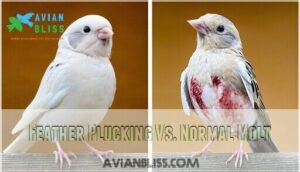
Distinguishing between feather plucking and normal molting patterns requires careful observation of your bird’s behavior.
During healthy molting, feathers fall naturally without excessive preening, while stress-related feather loss involves deliberate removal through plucking behaviors.
Here are key differences to watch for:
- Natural molting shows symmetrical feather loss – both wings lose feathers at the same rate
- Plucking creates irregular bald patches – often concentrated on chest and wing areas
- Normal molting birds don’t damage their skin – pluckers may cause bleeding or irritation
- Healthy molts happen seasonally – plucking occurs year-round during stressful periods
- Pin feathers emerge quickly during molts – plucked areas remain bare longer
Understanding these molting signs helps identify when bird behavior shifts from natural feather care to problematic plucking causes.
Warning Signs Requiring Attention

Several red flags indicate your bird needs immediate veterinary attention.
Emergency signs include persistent bald spots that don’t regrow feathers, bleeding from skin irritation, and abnormal shedding patterns lasting over three months.
Feather plucking combined with appetite changes or lethargy suggests underlying illness.
Stress-related feather loss often accompanies behavioral shifts, while abnormal feather loss causes range from infections to hormonal imbalances requiring professional diagnosis.
These signs can be critical and it’s essential to monitor your bird’s health closely, looking for any indication of abnormal shedding patterns.
Nutrition for Birds During Molting
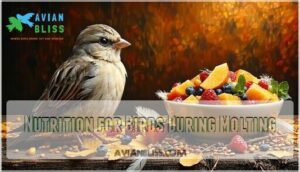
During molting season, your bird’s nutritional needs shift dramatically as their body works overtime to manufacture new feathers from scratch.
Think of it like your bird running a 24/7 feather factory that requires premium fuel—especially protein and essential vitamins—to produce strong, healthy plumage that’ll keep them flying and thriving.
Protein and Amino Acid Needs
During molting, your bird’s protein needs skyrocket since feathers contain 85-90% keratin.
You’ll want to boost dietary protein to 16-18% from the usual 12%.
Focus on high-quality amino acids like methionine and cysteine through cooked eggs, legumes, and fortified pellets.
Without proper protein sources, nutritional deficiencies trigger feather plucking and poor keratin production, derailing healthy feather growth.
Ensuring adequate high protein foods is essential for supporting your bird’s overall health during this period.
Vitamins and Minerals for Feather Growth
Beyond protein, your bird’s feathers need specific vitamins and minerals to flourish.
Vitamin A supports healthy keratin production, while calcium needs increase dramatically during feather replacement.
Essential nutrients like zinc and B-vitamins prevent nutritional deficiencies that cause weak, brittle plumage.
Quality mineral supplements provide dietary solutions when regular food falls short, ensuring robust feather growth.
Proper bird supplement choices are vital for maintaining healthy feather health during molting, with the right supplements being a crucial part of a healthy diet.
Hydration and Electrolyte Support
Water acts like liquid gold during your bird’s molting process, supporting cellular regeneration and nutrient transport.
Fresh water intake should increase 20-30% as feather production demands peak hydration levels.
Electrolyte balance becomes vital—offer diluted sports drinks sparingly or electrolyte supplements designed for bird health.
Regular bird baths and misting sessions help maintain ideal fluid therapy while preventing nutritional deficiencies that worsen feather loss.
Providing the right electrolyte supplements can substantially support your bird’s overall health during this period, ensuring proper hydration and optimal health.
Environmental Factors Affecting Molting

Your bird’s environment plays a vital role in determining how smoothly the molting process unfolds.
Factors like temperature, humidity, lighting schedules, and stress levels can either support healthy feather replacement or trigger problematic molting patterns, which is influenced by the bird’s overall environment.
Temperature and Humidity
Beyond proper nutrition, your bird’s molting environment plays a key role in successful feather regrowth. Temperature and humidity control directly impact thermal comfort during this energy-intensive process. Climate management prevents heat stress while maintaining ideal air quality for healthy environmental factors throughout bird molting season.
Effective humidity control systems, such as a humidity controller, are essential for maintaining perfect conditions.
- Maintain 65-75°F ambient temperature – cooler environments stress molting birds who’ve lost insulating feathers
- Keep humidity levels at 50-60% – dry air irritates sensitive pin feathers and developing follicles
- Eliminate drafts and temperature fluctuations – sudden changes disrupt the delicate molting environment
- Provide consistent environmental management – stable conditions support efficient feather loss and regrowth cycles
Lighting and Circadian Rhythms
Your bird’s internal clock runs on light exposure like clockwork.
Photoperiodism triggers molting through melatonin role changes – too much artificial light disrupts this natural rhythm.
Circadian impact from inconsistent lighting creates environmental stressors, causing patchy feather loss.
Darkness effects allow proper hormone cycling, and managing your molting environment means providing 10-12 hours of full-spectrum light, then complete darkness to prevent stress and anxiety.
Stress Reduction Strategies
Creating a peaceful environment during molting helps reduce stress behaviors that can worsen feather loss.
Stressed birds may develop abnormal plucking patterns or experience delayed regrowth.
- Maintain consistent daily routines – predictable feeding and sleep schedules reduce anxiety
- Minimize loud noises – sudden sounds can trigger stress-related feather damage
- Provide hiding spots – covered perches offer security during vulnerable molting periods
- Use calming techniques – soft music or white noise creates relaxing atmospheres
- Offer environmental enrichment – rotating toys prevent boredom-induced stress behaviors
Proper stress management supports healthy molting supplements absorption and natural feather care processes.
Behavioral Changes During Molting

Your bird’s molting behavior tells a clear story about what’s happening inside their body during this energy-intensive process.
You’ll notice distinct changes in how they act, interact, and spend their time as they channel resources into growing new feathers, which is a clear indication of their molting behavior.
Fatigue and Irritability
During molting, your bird’s body redirects enormous energy toward growing new feathers, leaving them genuinely exhausted.
When feathers become your bird’s full-time job, exhaustion is the natural result of this biological marathon
This molting exhaustion manifests as increased sleeping, reluctance to play, and general crankiness. You’ll notice irritability signs like snapping at favorite treats or avoiding social interaction.
Molting stress creates a perfect storm of feather pain and bird anxiety, making your normally cheerful companion seem downright grumpy until fresh plumage emerges.
Increased Preening and Grooming
Notice how your bird transforms into a dedicated grooming expert during molting season? This natural behavior intensifies as new pinfeathers emerge, creating uncomfortable sensations that drive excessive preening habits.
Your feathered friend’s enhanced feather care routine serves three critical purposes:
- Removing keratin sheaths from developing pinfeathers to allow proper feather expansion
- Distributing natural oils across emerging plumage for ideal skin health and feather condition
- Relieving itchy sensations caused by tight pinfeather casings beneath the skin
These grooming measures represent healthy beak maintenance and essential feather loss management during bird molting cycles.
Understanding the molting bird care process is vital for providing the right support during this period.
Social and Activity Adjustments
Witnessing your feathered friend’s personality shift during molting reveals fascinating behavioral changes that mirror human stress responses.
Your bird may become less social, preferring solitude over interaction as new pinfeathers cause discomfort.
Activity reduction is normal—expect decreased playfulness and more rest periods.
Environmental adjustments help manage these stress-related behaviors, creating calm spaces for recovery and maintaining gentle owner interactions, which can help alleviate the bird’s discomfort.
Molting Care Tips for Bird Owners
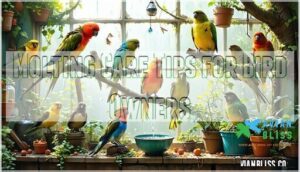
Supporting your bird through molting requires attention to their physical comfort and mental well-being.
You’ll need to adjust their environment, provide proper bathing opportunities, and keep them mentally engaged during this energy-demanding process, which is crucial for their overall health and mental well-being.
Bathing and Misting Recommendations
While your bird adjusts behaviorally during molting, proper hydration becomes essential for healthy feather development.
Regular misting and strategic bathing help soothe irritated skin and support new feather growth through this demanding physiological process.
Effective Misting Techniques and Bathing Frequency:
- Mist daily with lukewarm water using fine spray bottles to avoid startling your bird
- Offer shallow dish baths 2-3 times weekly, allowing natural bathing behaviors
- Maintain water temperature around 70-75°F for ideal comfort and feather cleaning
- Time sessions during morning hours when birds naturally preen and groom themselves
- Use gentle aloe-based sprays for additional skin soothing during heavy molting periods
Creating a Comforting Environment
During the molting season, your feathered friend needs environmental control like never before.
Maintain temperatures between 68-78°F and avoid drafts that can stress sensitive pinfeathers.
Dimming harsh lights creates comfort zones while gentle handling becomes essential.
Simple stress reduction techniques—like soft music and consistent routines—help establish relaxation methods that transform your bird’s space into the ultimate calm environment.
Understanding molting bird care is vital for providing the right support during this sensitive period, using the right stress reduction techniques and creating a suitable space for your bird.
Mental Stimulation and Enrichment
Boredom breeds behavioral issues during molting season, so smart environmental enrichment becomes your bird’s best friend.
Rotate toys weekly, introduce sensory play materials like foraging boxes, and maintain social interaction through gentle conversation.
Cognitive stimulation through puzzle feeders prevents stress-related feather loss while supporting your bird’s mental health during this vulnerable period, making environmental enrichment a crucial aspect of care.
When to Consult an Avian Veterinarian

While most feather loss is part of your bird’s natural molting cycle, certain warning signs require immediate veterinary attention.
You’ll want to contact an avian vet if you notice bald patches without new growth, persistent scratching, bleeding skin, or molting that extends beyond three months.
Prolonged or Severe Feather Loss
While proper molting care helps your bird stay comfortable, some situations signal serious trouble.
Molting that drags on beyond three months often indicates underlying health problems that won’t resolve without veterinary intervention.
Here are three red flags that demand immediate attention:
- Bald patches spreading rapidly – Your bird’s skin becomes vulnerable to infection and injury when feather coverage disappears too quickly
- Chronic molting cycles repeating endlessly – This exhausting pattern frequently stems from malnutrition or metabolic disorders that require diagnostic testing
- Secondary skin damage developing – Crusting, bleeding, or inflammation alongside prolonged feather loss creates dangerous complications
Abnormal feather loss outside typical molting seasons can indicate molting disorders or avian dermatitis.
When feather regrowth stalls completely, leaving persistent bare areas, your bird faces increased risk for plumage issues and feather damage that may become permanent without proper treatment.
Signs of Illness or Distress
Several red flags during molting demand immediate attention.
Lethargy, weight loss, or decreased appetite signal systemic illness beyond normal molt stress.
Abnormal feather coloration or brittle textures indicate vitamin deficiencies.
Skin inflammation, bleeding, or excessive feather plucking creates infection risks.
Watch for respiratory difficulty or digestive changes—these constitute medical emergencies requiring prompt veterinary intervention.
Preventative Wellness Checkups
You shouldn’t wait until problems arise to schedule regular checkups with your avian veterinarian.
Annual vet visits help catch health screens that reveal underlying issues before they affect molting patterns.
These bird exams detect nutritional deficiencies and hormonal imbalances early, which is a key part of preventative care.
Preventative care includes blood tests during molting seasons, ensuring your feathered friend gets proper avian veterinarian consultation for maintaining bird health year-round.
Frequently Asked Questions (FAQs)
Can molting patterns predict bird age accurately?
Age estimation through molting patterns isn’t foolproof, but you’ll find consistent clues.
Young birds show predictable molt sequences, while adults develop irregular patterns.
Eagles’ five-year feather development offers reliable aging markers, though individual variation and environmental factors can throw off your assessments.
Do indoor birds molt differently than outdoor?
Indoor birds typically molt on the same biological schedule as outdoor birds.
But you’ll notice their molting patterns can shift due to artificial lighting, controlled temperatures, and consistent food availability disrupting natural seasonal cues, which affects their overall behavior and physiology, particularly in terms of molting patterns.
How does molting affect bird flight capabilities?
During molting, you’ll notice your bird’s flight becomes temporarily compromised as primary flight feathers shed asymmetrically, creating gaps that reduce lift and maneuverability until new feathers grow completely.
Can stress permanently damage future molting cycles?
Chronic stress can disrupt your bird’s normal molting patterns by altering hormone levels and depleting essential nutrients.
While most birds recover with proper care, severe or prolonged stress may cause lasting irregularities in future molt timing, affecting the bird’s overall health due to prolonged exposure.
What medications interfere with normal molting processes?
Picture a bird’s delicate hormonal symphony disrupted by chemical interference.
You’ll find that antibiotics, anticoagulants, hormonal treatments, and anti-inflammatory drugs can throw off your bird’s natural molting rhythm, disrupting feather development timing and quality.
Conclusion
Understanding bird molting feather loss is like having a roadmap to your feathered friend’s health journey.
You’ve now learned to distinguish normal symmetrical shedding from concerning bald patches that signal trouble.
Remember, healthy molts follow predictable patterns with pinfeathers emerging, while problematic loss creates irregular bare spots.
When you notice extended molting beyond three months, skin irritation, or behavioral changes, don’t hesitate to consult your avian veterinarian for proper diagnosis and treatment.
- https://www.google.com/search?q=Environmental+Stressors+and+Their+Impact&sourceid=chrome&ie=UTF-8
- https://bioone.org/journals/ardeola/volume-65/issue-2/arla.65.2.2018.rp1/Moult-in-Birds-of-Prey--A-Review-of-Current/10.13157/arla.65.2.2018.rp1.full
- https://www.wolfecology.com/molts-plumages
- https://journal.afonet.org/vol95/iss3/art9/
- https://www.aba.org/birding_archive_files/v40n6p5w1.pdf