This site is supported by our readers. We may earn a commission, at no cost to you, if you purchase through links.
Feathers are roughly 90% protein, which means your bird basically builds an entirely new coat from scratch every molt season. That’s no small task—and most birds do it while still flying, foraging, and maintaining body temperature with incomplete plumage.
The nutritional demands spike fast, and a diet that worked fine three months ago may now leave your bird struggling with brittle shafts, stalled regrowth, or unexpected weight loss.
Getting the best avian nutrition tips for molting right isn’t about exotic supplements or complicated feeding schedules.
It comes down to understanding what feathers are actually made of, then giving your bird the raw materials to build them well.
Table Of Contents
- Key Takeaways
- Why Molting Nutrition Matters
- Prioritize Protein and Amino Acids
- Add Key Vitamins and Minerals
- Adjust Feeding During Molt
- Choose Molting Foods Wisely
- Frequently Asked Questions (FAQs)
- What to give birds when molting?
- What is the 90/10 rule for chicken?
- What to feed parrots during molting?
- What is the best food for molting birds?
- What should you feed chickens when they are molting?
- How do I help my bird during molting?
- What is the best source of protein for molting chickens?
- How often do birds typically molt?
- What are the signs of a healthy molt?
- Can I give my bird human vitamins?
- Conclusion
Key Takeaways
- Feathers are about 90% protein, so your bird’s diet needs to hit 12–20% protein during molt, with amino acids like lysine, methionine, and cysteine doing the real structural work.
- Your bird’s metabolic rate climbs up to 32% during molt, so feeding smaller, more frequent meals every 3–4 hours keeps energy steady without overloading the digestive system.
- Micronutrients like vitamin A, biotin, zinc, copper, and omega-3 fatty acids directly shape feather strength and follicle health, but fat‑soluble vitamins can build to toxic levels fast, so stick to label doses.
- Prolonged molt beyond three months, bare skin patches, or sudden weight loss go beyond nutrition and need a vet visit to rule out infection or underlying disease.
Why Molting Nutrition Matters
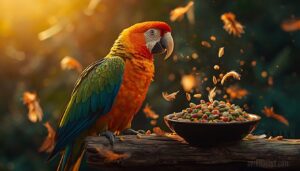
Molt is one of the most physically demanding periods in a bird’s life, and what you feed during this time makes a real difference. Your bird’s body is basically rebuilding itself from the inside out, feather by feather.
Getting the nutrition right really does matter—what to feed your bird during molt can speed up recovery and help those new feathers come in strong.
Here’s what you need to know about why nutrition sits at the heart of a healthy molt.
Feather Regrowth and Protein Demand
When your bird starts molting, its body fundamentally runs a protein construction project around the clock. Adequate protein requirement during molting is essential for ideal keratin synthesis. Feathers are over 85% keratin, so protein requirements during feather regrowth spike sharply.
Watch for these demands:
- Keratin Synthesis Rate accelerates, pulling heavily from sulfur amino acids
- Feather Follicle Signaling depends on steady amino acid timing to trigger growth
- Protein Digestibility Index determines how much your bird actually absorbs
Energy Needs During Feather Replacement
Building new feathers costs your bird far more energy than most owners realize. Beyond protein, your bird’s Metabolic Rate Increase during molt can reach 28–32%, with a striking Nighttime Energy Surge of up to 60% in some species.
| Energy Factor | What It Means for Your Bird |
|---|---|
| Thermoregulation Costs | Incomplete plumage increases heat loss |
| Hormonal Energy Control | Thyroid hormones regulate molt pace |
| Energy Budgeting Strategies | Spread high energy density of foods for molting birds across multiple daily meals |
Understanding these metabolic demands of feather regeneration helps you meet your bird’s true energy and calorie needs in molting birds without guessing.
How Diet Affects Feather Strength and Shine
What your bird eats directly shapes feather quality from the inside out. Three factors matter most:
- Keratin Sulfur Bonds — cysteine and methionine strengthen the Feather Strength Index.
- Feather Lipid Profile — omega-3 fatty acids support shine and barb integrity.
- Antioxidant Enzyme Support — vitamin E and Trace Mineral Synergy protect follicles during keratin synthesis.
Vitamin A, protein needs for feather growth, and zinc work together quietly but powerfully.
Signs of Poor Molting Nutrition
When diet falls short, your bird’s body sends clear signals.
Retained feather sheaths that stay capped too long, brittle slow-growing feathers that snap easily, and abnormal skin dryness around pin feathers all point to nutrient deficiencies.
Watch for a feather picking surge, persistent low appetite, or unexpected weight loss too — these behavioral changes often appear before feather quality assessment reveals the full picture.
When Molting Becomes a Health Concern
Sometimes molt crosses a line from normal into worrying. Watch for these red flags:
- Prolonged molting lasting beyond three months
- Rapid feather loss leaving bare, exposed skin
- Skin inflammation with crusting or bleeding
- Systemic illness signs — lethargy, weight loss, or respiratory changes
These can signal underlying disease, not just unmet nutritional requirements for molting birds. Your vet needs to rule out infection before any vitamin and mineral supplementation strategies help.
Prioritize Protein and Amino Acids
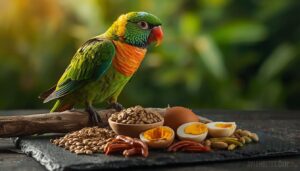
Protein is the backbone of every feather your bird grows, and getting it right during molt makes a real difference. Your bird’s diet needs to deliver the right amino acids in the right amounts, or feather quality will suffer.
Vitamin A plays a big role too—it keeps the tissues that produce keratin healthy, so exploring vitamin-rich foods that support feather growth is worth your time during molt.
Here’s what to focus on when building a protein-forward molt diet.
Best Protein Sources for Molting Birds
Not all protein sources are created equal when your bird is in molt.
Animal-based options like mealworms, crickets, Earthworm Protein, and dark-meat chicken deliver complete amino acids your bird’s body can actually use.
Mealworm Powder, Fish Meal Supplement, and Soybean Meal Blend are practical concentrated options.
Alfalfa Leaf Protein and high-protein seed mixes round out a solid, protein-rich feeding plan.
Eggs, Legumes, Insects, and Quality Pellets
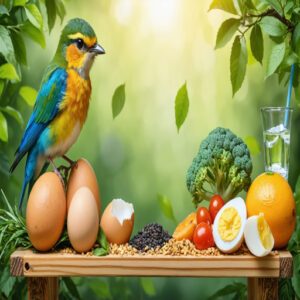
Four foods earn their place in a molting bird’s bowl every single day:
- Boiled egg — complete protein plus Eggshell Calcium Integration when you crush the shell in
- Cooked beans — Legume Fiber Benefits slow digestion, steadying energy between meals
- Insects — Insect Chitin Role adds zinc and iron alongside high Protein Digestibility Index
- High-quality pellets — Pellet Moisture Control prevents mold; they reliably cover protein requirements
- Together, these four meet every amino acid gap molt creates.
Lysine, Methionine, and Cysteine for Keratin
Not all protein is created equal — your bird’s feathers are built from keratin protein, and keratin demands specific dietary amino acids to form correctly. Lysine-Methionine Balance and the Sulfur Amino Ratio determine whether Disulfide Bond Formation and Keratin Cross-Linking actually happen.
Think of these essential amino acids as a construction crew — missing one stops the whole job.
Essential amino acids work like a construction crew — if even one is missing, the whole job stops
| Amino Acid | Role in Keratin Synthesis |
|---|---|
| Lysine | Builds the keratin polypeptide framework |
| Methionine | Supplies sulfur for cross-linking bonds |
| Cysteine | Drives Disulfide Bond Formation directly |
When any essential amino acids for keratin synthesis fall short, they become Amino Acid Limiting factors, weakening feather growth regardless of total protein needs for feather growth.
How Much Protein Molting Birds Need
Your bird’s feathers are roughly 90 percent protein — so what goes in directly shapes what grows out. Protein Percentage Guidelines suggest 12–15 percent for most pet birds, rising to 20 percent or higher for heavy molters.
Protein Quality Metrics for feather growth also depend on Protein Quality Metrics and Meal Frequency Impact:
- Aim for 12–15% protein during light molts
- Push toward 20% for species with large feathers
- Prioritize high-quality animal protein sources for better Ideal Protein Timing
- Watch the protein to calorie ratio — too many calories, too little protein stalls regrowth
- Protein Overload Risks include kidney stress, so don’t overcorrect
Increasing Protein Gradually and Safely
Think of it like turning up the heat slowly — a little more each day instead of all at once.
Add small amounts of protein-rich foods across several meals using Gradual Meal Scaling, and practice Protein Source Rotation between eggs, legumes, and quality pellets.
Digestive Tolerance Monitoring keeps you on track: loose droppings mean slow down.
Kidney Health Checks matter too, especially for gout-prone species.
Add Key Vitamins and Minerals
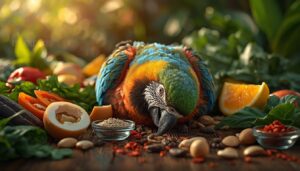
Protein gets a lot of attention during molt, but vitamins and minerals do just as much heavy lifting behind the scenes. Without the right micronutrients, even a high-protein diet won’t produce strong, healthy feathers.
Here’s what your bird actually needs to get through molt in good shape.
Vitamin a for Skin and Feather Follicles
Vitamin A does more than you might expect during molt. It drives keratinocyte differentiation, meaning it tells skin cells how to develop properly around each follicle.
Without adequate vitamin A, epithelial integrity breaks down, follicle regeneration slows, and new feathers grow weak or misshapen.
Retinoid signaling directly promotes feather growth and skin health — but vitamin A toxicity is a real risk, so don’t over-supplement.
Vitamin E for Immune and Tissue Support
Just like vitamin A helps the follicle from the outside, vitamin E works from within.
It’s a fat-soluble antioxidant, so it sits right inside cell membranes, providing antioxidant membrane protection and oxidative stress reduction during active feather regrowth.
That tissue repair enhancement keeps immune signaling balance steady.
Aim for label-recommended amounts only — safe dosage guidelines matter, since too much can backfire.
Biotin, Zinc, and Copper for Feather Quality
Three micronutrients quietly do the heavy lifting for feather quality: biotin, zinc, and copper.
Biotin drives keratin production, zinc strengthens the feather’s structure, and copper facilitates the tissue processes behind each new shaft.
Their biotin-zinc synergy works best when copper-zinc balance stays intact — competing mineral absorption pathways mean too much zinc blocks copper uptake.
Watch supplement dosage timing carefully, and stay within toxicity thresholds.
Calcium and Vitamin D3 for Healthy Growth
Calcium and vitamin D3 work as a team — without enough vitamin D3, your bird can’t absorb calcium properly, even from a calcium-rich supplement. Vitamin D3 synthesis depends on direct sunlight or UVB lighting.
For calcium sources, offer cuttlebone or crushed eggshells. This calcium D3 interaction promotes bone development and feather shafts during molt, but watch calcium supplementation carefully — excess strains the kidneys.
Omega-3 Fatty Acids for Skin and Plumage
Omega-3 fatty acids do more than add shine — they actively support inflammatory balance in your bird’s skin, helping reduce irritation during molt.
Fish oil supplies EPA/DHA sources directly, while flaxseed oil offers ALA for feather quality and barrier hydration.
These essential fatty acids influence lipid composition beneath each feather follicle, making omega-3 benefits for feathers real and measurable.
The role of fatty acids in avian skin health is significant — don’t overlook them.
Safe Supplement Use During Molt
Supplements aren’t a replacement for good food — they’re a backup plan. Start with single ingredient focus, introducing one product at a time so you can catch side effects quickly.
Follow label compliance exactly, since dose accuracy matters more than you’d think with fat‑soluble vitamins. Gradual introduction keeps your bird’s system steady, and vitamin and mineral supplementation for molting works best when it fills a real gap, not every gap.
Adjust Feeding During Molt
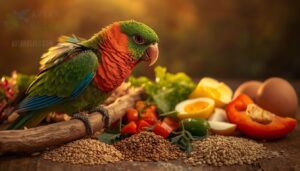
Molt puts real demands on your bird’s body, and what you feed is only part of the picture—how and when you feed matters just as much. few simple changes to your daily routine can make a big difference in how smoothly your bird moves through this stage.
Here’s what to adjust while your bird is actively regrowing feathers.
Increasing Daily Food Intake Safely
Bumping up your bird’s intake during molt isn’t guesswork — it’s a system. Start with Portion Scaling Steps that increase daily food by 10–25%, then use Calorie Density Adjustments by adding small amounts of protein-rich foods like chopped nuts or cooked legumes. Food Texture Softening also helps reluctant eaters consume more.
- Track leftovers daily using a simple Waste Tracking System
- Adjust portions only after the bird consistently finishes meals
- Prioritize pellets first, then layer in fresh additions
- Avoid overfeeding by increasing one food type at a time
Small, Frequent Meals for Steady Energy
Think of your bird’s energy like a slow-burning fire — it needs steady fuel, not one big log. Smaller, more frequent meals support blood sugar balance and metabolic stability during molt.
Aim for feeding schedule adjustments during molt that space meals every 3–4 hours. Each snack portion should include protein to meet protein needs for feather growth, maintain hunger cue consistency, and support a balanced macronutrient profile through smart meal timing.
Hydration Needs During Feather Regrowth
Water is easy to overlook, but the hydration importance during molt is real. Feather follicles depend on steady circulation, and dehydration slows that down fast.
Keep fresh water available at all times, and watch for sunken eyes or thick droppings as hydration monitoring cues. Match water bowl depth to your bird’s size, increase access during heat-induced drinking spikes, and respect species water needs.
Monitoring Weight and Food Consumption
Molt is the best time to sharpen your tracking habits, because small shifts in weight or appetite can signal bigger problems early.
Use these five monitoring practices to stay ahead:
- Weighing Consistency — Weigh at the same time daily.
- Food Log Precision — Record type, grams, and leftovers.
- Meal Timing Patterns — Note morning, afternoon, and evening intake separately.
- Baseline Intake Comparison — Compare current totals against pre-molt averages.
- Alert Thresholds — Flag three consecutive weight drops or two days of reduced intake immediately.
Preventing Overfeeding and Weight Gain
Once you’ve nailed weight monitoring, the next step is acting on what you see. Overfeeding during molt is easy because appetite naturally rises, but portion sizing matters.
Keep treat frequency low, watch the calorie density and energy density of foods for molting birds, and stick to a consistent feeding schedule. Good body condition means steady weight — not creeping gains.
Removing Spoiled Fresh Foods Promptly
Fresh foods spoil faster than you’d expect, especially at room temperature. Do smell checks and visual checks every 30 minutes — off odors, slime, or browning mean prompt removal is needed.
Store fresh fruits and vegetables in separate containers to avoid cross-contamination, and always clean dishes before refilling them.
Fresh water should stay clean too. This is basic food safety for molting birds.
Choose Molting Foods Wisely
What your bird eats during molt can make the difference between dull, brittle feathers and a full, healthy coat. food belongs in the bowl, and some choices work far better than others.
Here’s what actually helps when you’re building a solid molting diet.
Balanced Pellets for Molting Support
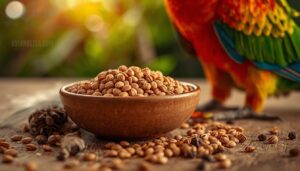
If you want one food doing the heavy lifting, quality pellets are hard to beat. Look for ingredient transparency on the label — protein source purity, chelated minerals, and added vitamins should all be clearly listed. Pellet particle uniformity means your bird gets the same nutrient density in every bite, not a lucky dip.
Choose pellets that include:
- 18–20% crude protein with balanced amino acids
- Mineral chelate inclusion for zinc and copper absorption
- Vitamin A, D3, and E fortification
- Shelf life stability with no rancid fats or fillers
Fresh Vegetables Rich in Micronutrients
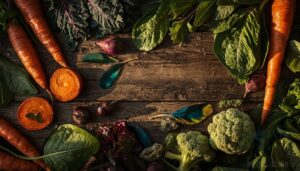
Pellets lay the foundation, but fresh fruits and vegetables fill the gaps pellets can’t always cover. Beta-Carotene Rich carrots and sweet potatoes feed healthy follicles, while Folate-Packed Leafy greens like kale, spinach, and collard greens support rapid cell turnover during regrowth.
Sulfur-Loaded Cruciferous vegetables and Magnesium-Boost Swiss Chard round out the mix.
Steam lightly for Vitamin C Preservation — Incorporating fresh produce for micronutrients works best when variety stays consistent.
Healthy Seeds, Nuts, and Omega-rich Foods
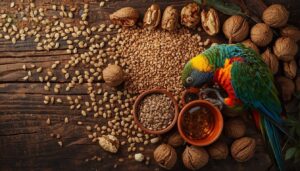
Seeds and nuts pull real weight during molt. Hemp seeds deliver fatty acid balance through both omega-3 and omega-6, while flaxseed oil adds concentrated omega-3 fatty acids, your bird’s skin needs. Antioxidant-rich nuts like walnuts round out high-quality seed mixes nicely.
For omega seed storage, freshness rotation matters — rancid oils do more harm than good. Keep portions small; these are calorie-dense foods.
Simple Homemade Molting Food Recipes
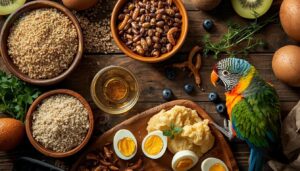
Making your own molting food doesn’t have to be complicated. A Seasoned Grain Mix — cooked quinoa, mashed lentils, and chopped boiled egg — covers your bird’s protein needs well.
Stir in flaxseed oil and mealworms for fatty acids and amino acids.
Try Herb Infused Yogurt with biotin-rich herbs, add Fruit Enrichment for vitamins, and always follow Spice-Free Prep.
Use Batch Freezing Tips to prep homemade molting food recipes ahead, keeping fresh fruits and vegetables ready daily.
Species-specific Feeding Tips
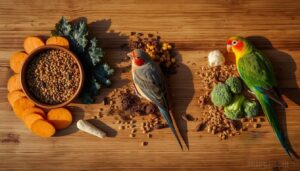
Every bird molts a little differently, so your feeding approach should match the species.
- Parrots need parrot pellet ratios of ~30% protein plus vitamin-A-rich veggies for the best homemade food for molting parrots.
- Finches/Canaries benefit from finch insect supplement additions and cockatiel calcium sources like cuttlebone.
- Cockatiels/Budgerigars need guidance on what to feed a molting cockatiel: budgerigar fresh greens, legumes, and limited nuts, following species-specific molting nutrition guidelines.
Common Molting Diet Mistakes to Avoid
Even small missteps can quietly derail a molt. Excessive seed feeding crowds out the balanced nutrition your bird actually needs. Rapid diet shift causes appetite dips right when demand peaks.
Vitamin overdose, especially calcium overload, creates mineral imbalance that disrupts feather development.
Dehydration effects are easy to miss but slow recovery substantially.
These common mistakes in molting nutrition are avoidable with steady, gradual adjustments and consistent monitoring.
Frequently Asked Questions (FAQs)
What to give birds when molting?
During molt, your bird is basically "re-feathering" its wardrobe — and that takes real fuel.
Prioritize protein-rich foods, omega-3 fatty acids, fresh fruits and vegetables, and calcium-rich supplements to support strong, healthy feather regrowth.
What is the 90/10 rule for chicken?
The 90/10 rule means 90% of your chicken’s daily intake should be complete feed for nutrient balance, while treat allocation covers just 10%, keeping their protein-rich diet consistent and supporting proper feather growth.
What to feed parrots during molting?
During molting, feed your parrot protein-rich foods for feather development like boiled eggs, cooked legumes, and quality pellets.
plus vitamin A veggies, omega-3 fatty acids from flaxseed, and a calcium-rich supplement like cuttlebone.
What is the best food for molting birds?
Eggs, legumes, and mealworms top the list.
protein-rich diet paired with fresh fruits and vegetables, high-quality seed mixes, and omega-3 fatty acids gives your bird everything it needs to grow strong, healthy feathers.
What should you feed chickens when they are molting?
Feed chickens a protein-rich diet of 16–18% protein, add crushed eggshells for calcium, offer omega-3 fatty acids from flaxseed, and include vitamin A-rich greens to support strong feather regrowth.
How do I help my bird during molting?
Helping your bird through molt means pairing protein-rich foods for feather development with stress reduction, proper bathing routine, perch placement, environmental humidity, lighting adjustments, omega-3 fatty acids, calcium-rich supplements, and consistent hydration importance in molting period.
What is the best source of protein for molting chickens?
Think of feathers like a construction project — you can’t build walls without bricks.
For molting chickens, Mealworm Protein, Black Soldier Fly larvae, Whole Egg, Soybean Meal, and Pea Protein are your best high-protein foods.
How often do birds typically molt?
Most birds go through a seasonal molt once a year, though some species molt twice. Molting cycle length and timing vary by species, age, and location, making each bird’s molting period uniquely its own.
What are the signs of a healthy molt?
Symmetrical feather loss, steady pinfeather development, increased preening, stable body weight, and normal breathing are all reassuring signs.
Your bird’s feather regrowth should look even, with no raw skin or sudden behavioral changes.
Can I give my bird human vitamins?
No — human vitamins carry real human supplement toxicity risk for birds. Fat-soluble risks from vitamin D3 or A build up fast.
Always choose bird-specific supplements and follow veterinary guidance for safe species dosing.
Conclusion
you’re what you eat—and for your bird, that truth shows up in every feather. best avian nutrition tips for molting aren’t complicated: boost protein, fill micronutrient gaps, and watch your bird closely.
Molt is demanding work, and your bird can’t ask for what it needs.
But when the new feathers come in smooth, vibrant, and strong, you’ll know the extra attention during those weeks made every difference.
- https://www.merckvetmanual.com/management-and-nutrition/nutrition-exotic-and-zoo-animals/nutrition-in-psittacines
- https://www.audubon.org/news/what-do-birds-eat
- https://www.google.com/url?q=https://go.vetpetschat.online&sa=D&source=editors&ust=1777908833075889&usg=AOvVaw3IMOW4E091VRrCtBIjkq3u
- https://cdnsciencepub.com/doi/10.1139/cjz-2019-0170
- https://www.journals.uchicago.edu/doi/abs/10.1086/physzool.66.4.30163805