This site is supported by our readers. We may earn a commission, at no cost to you, if you purchase through links.
 You can fix damaged bird feathers using simple bird feather repair methods that restore their natural structure.
Start by evaluating the damage – frayed barbules disconnect but stay attached to barbs, while bent shafts create unnatural curves.
Gently realign frayed barbs by pinching and pulling outward in the natural preening direction.
Steam helps rehydrate the keratin, making barbs flexible for easier realignment.
For washing, use mild soap or baby shampoo in lukewarm water.
Essential oils like clove and thyme provide natural sanitization.
Remember to wear gloves and sanitize wild feathers to avoid zoonotic diseases.
Advanced techniques like imping can replace severely damaged sections with donor feathers.
Table Of Contents
Key Takeaways
- You’ll need to assess damage types first – Check for frayed barbules, bent shafts, or missing sections to choose the right repair method, since different damage requires specific techniques.
- Steam rehydrates keratin proteins for easier realignment – Hold feathers 6-8 inches from steam for 10-30 seconds, then gently preen barbules back into place while they’re flexible.
- Always wear gloves and sanitize wild feathers – Use alcohol-peroxide solutions to kill pathogens and prevent zoonotic diseases like salmonella before handling any wild bird specimens.
- Advanced imping can replace severely damaged sections – This falconry technique uses donor feathers and specialized adhesives to restore flight capability when traditional steaming methods won’t work.
Bird Feather Structure and Damage Causes
You’ll need to understand feather structure to repair them effectively, since each feather contains a central shaft with barbs that branch out like tiny fingers.
When the microscopic hooks on these barbs separate, you get the fraying and tattering that makes feathers look damaged and prevents them from lying flat.
Anatomy of Feathers (Barbs, Barbules, Vane)
Think of a feather’s shaft as its backbone—everything branches out from this central structure.
Like a feather’s backbone, everything in bird repair starts with understanding the central shaft structure
The barbs extend outward from the shaft, while tiny barbules with microscopic hooks branch off each barb.
These Barbule Interlocking systems work like Velcro, creating the smooth vane surface essential for Vane Aerodynamics.
The Feather Keratin Composition provides Feather Shaft Strength, making this Barb Hook Structure remarkably efficient yet delicate.
Common Feather Damage Types (Fraying, Tattering, Bends)
Feather damage manifests in several recognizable patterns that affect your repair approach.
When barbules separate from their microscopic hooks, you’ll notice fraying causes the vane to lose its smooth appearance. More severe structural weakness creates tattered edges where sections break away completely.
Feather plucking can also indicate underlying medical issues.
- Fraying – Barbules disconnect but remain attached to barbs
- Tattering – Complete loss of feather sections or chunks
- Bending – Unnatural curves from twisted or compressed shafts
- Splitting – Lengthwise tears along the main shaft structure
Why Feather Structure Affects Repair Methods
Understanding feather structure is the key to successful repair because each component serves a specific function.
The microscopic hooklets on barbules work like tiny zippers, holding barbs together to maintain vane integrity. When you know how these keratin structures connect, you can target structural weaknesses effectively.
Different damage types require specific approaches based on whether the barb arrangement, hooklet function, or overall feather structure is compromised.
Step-by-Step Feather Repair Techniques
Before you start fixing damaged feathers, you’ll need to carefully examine each one to determine what type of repair it needs.
Look for frayed barbs, separated barbules, unnatural bends, or missing sections that will guide your choice of restoration method.
Assessing Feather Condition Before Repair
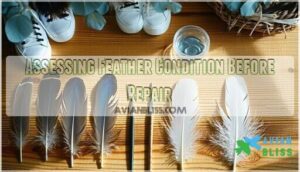
Before you begin any repair work, examine each feather carefully to determine what fixes are actually possible.
Your detective work here saves time and prevents further damage to already fragile specimens.
- Damage Identification – Look for frayed barbs, tattered edges, bent shafts, or missing sections that indicate specific repair needs
- Feather Flexibility – Gently bend the shaft to test brittleness; stiff or cracking feathers need moisture treatment first
- Infestation Signs – Check for tiny holes, dust, or movement that suggests pest damage requiring sanitization before repair
- Overall Integrity – Assess color fading and feather degradation to determine if steaming will help or cause further breakdown.
Birds also utilize avian preening techniques to maintain their feathers.
Realigning Frayed Barbs and Barbules
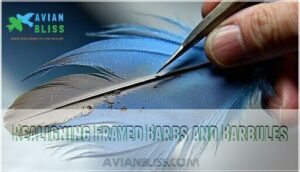
When barbs separate like a broken zipper, you’ll need gentle barb manipulation to restore the vane.
Pinch frayed barbs close to the shaft, then pull outward following the natural preening direction.
This realigns the microscopic hooks that keep feathers flat.
Work systematically along damaged sections, mimicking how birds naturally groom themselves.
The cooling process allows realigned barbs to set properly.
Using Steam for Feather Restoration
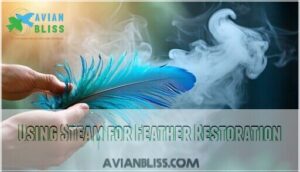
Steam restores damaged feathers by rehydrating keratin proteins, making barbs flexible for realignment.
Steam breathes life back into damaged feathers, restoring their natural flexibility and smooth appearance
This gentle method works particularly well for waterfowl and parrot feathers.
- Steam Temperature: Hold feathers 6-8 inches from 80-100°C steam sources
- Steaming Duration: Apply 10-30 second intervals, cooling between sessions
- Post-Steam Care: Gently preen barbules into place, mimicking natural grooming patterns
Steam preening revitalizes feathers without harsh chemicals, achieving 90% visual improvement for minor damage.
Tools and Safety Precautions (Gloves, Steam Source)

Proper equipment protects you during feather repair. Heat-resistant gloves prevent burns from steam sources like irons or teapots. For maximum protection, consider specific glove features.
Work in well-ventilated areas to avoid inhaling moisture. Clean tools regularly to prevent contamination between feathers.
| Equipment Type | Best Options | Safety Notes |
|---|---|---|
| Glove Materials | Heat-resistant silicone, leather | Must withstand 200°F+ temperatures |
| Steam Sources | Garment steamer, iron, teapot | Keep 6+ inches from feathers |
| Steaming Alternatives | Humidifier, damp cloth method | Lower heat, longer exposure time |
| Tool Maintenance | Clean between uses, dry storage | Prevents mold, bacteria transfer |
| Workspace Ventilation | Open windows, exhaust fans | Reduces moisture buildup, fumes |
Advanced Imping for Broken or Missing Feathers
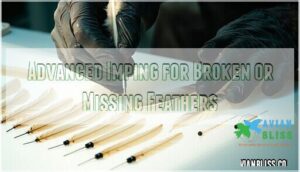
When traditional steaming fails, feather imping offers professional-grade repair for severely damaged flight feathers. This centuries-old falconry technique replaces broken sections with donor feathers, restoring flight capability in days rather than months.
Essential Imping Materials and Steps:
- Imping needles (fiberglass or bamboo splints) sized to match feather shaft diameter
- Donor feathers from same species, ideally stored molted specimens from rehabilitation centers
- Fast-setting epoxy adhesive designed for keratin bonding and flexibility
- Precise alignment tools including rulers, clamps, and talcum powder for protection
- Post-procedure monitoring to guarantee proper aerodynamic function and natural molt cycles
This broken feather repair method requires veterinary expertise for raptor care and flight restoration. Avian prosthetics through imping restores hunting ability and survival instincts, making it invaluable for wildlife rehabilitation.
Professional falconry techniques guarantee donor feather compatibility and proper shaft drilling for secure attachment. The process of flight rehabilitation is vital for restoring natural behaviors in birds.
Cleaning and Caring for Bird Feathers
Proper cleaning protects feathers from damage while maintaining their natural structure and appearance. You’ll need gentle techniques that preserve the delicate keratin fibers while removing dirt, oils, and potential contaminants.
Gentle Washing With Mild Soap or Baby Shampoo
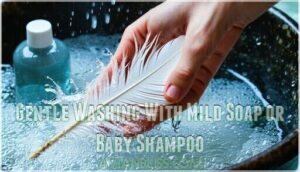
When cleaning feathers, you’ll want to handle them like precious silk scarves.
Fill a basin with lukewarm water and add a few drops of baby shampoo or mild dish soap.
Gently swish the feather through the soapy water, mimicking natural feather preening motions.
Rinse thoroughly with clean lukewarm water, ensuring all soap residue disappears.
Pat dry with a soft towel.
For best cleaning results, using a mild soap product is highly recommended to preserve the feathers’ natural condition.
Essential Oils and Natural Cleaning Methods

Beyond basic soap washing, natural cleaning methods offer powerful alternatives for feather care.
Essential oils provide aromatic remedies while herbal sanitizers protect delicate keratin structures without harsh chemicals.
- Clove and thyme oil blends achieve 90% mite elimination within two hours
- Apple cider vinegar solutions (5ml per liter) reduce parasites and odors safely
- Lavender-orange combinations enhance feather sheen while adding pleasant fragrance
For effective feather sanitizing, consider using methods described in feather sanitization to guarantee cleanliness and safety.
Safe Machine Washing and Drying Tips
Machine washing feathers requires finesse, not force.
Use delicate cycle tips with front-loading washers only—central agitators destroy feather structure.
Choose gentle detergents designed for down, never fabric softeners.
Cold water protects delicate barbs.
For safe drying tips, select low heat settings and add tennis balls to restore loft.
Multiple cycles guarantee thorough drying.
Preventing Mold, Sunlight Damage, and Brittleness
Keratin fibers break down when exposed to moisture and harsh light. You’ll need to control your environment carefully to prevent these common threats from destroying your feathered treasures.
- Store feathers in dark, cool spaces away from windows and heat sources
- Maintain low humidity levels using silica gel packets or dehumidifiers
- Allow complete air drying before storing to prevent mold growth
- Use breathable containers that allow airflow while blocking light exposure
- Apply natural preservatives like borax to protect delicate keratin structures
Storing and Preserving Feathers Safely
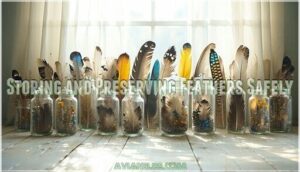
Once you’ve repaired your feathers, proper storage becomes essential for maintaining their condition and preventing future damage.
The right storage methods will protect your feathers from pests, moisture, and deterioration while keeping them ready for your next project.
Choosing The Right Storage Containers
Your storage container choices make or break feather preservation success.
Shoeboxes, plastic containers, and ziplock bags work well as feather boxes, though airtight containers aren’t strictly necessary.
Focus on pest deterrence by adding moth balls, cedar chips, or dryer sheets inside.
Choose container sizes that prevent crushing—fancy boas need large boxes or hanging space, while individual feathers store flat in smaller preservation methods setups.
For ideal storage, consider using containers with proper seal types to maintain a consistent environment and ensure proper seal.
Using Borax and Natural Preservatives
Proper preservation extends your feathers’ lifespan substantially. Borax offers excellent Keratin Protection by inhibiting mold growth and dehydrating organic residue that causes decomposition.
Here’s your preservation toolkit:
- Dust feathers lightly with borax before storing feathers in sealed containers
- Add cedar chips or lavender sachets as natural pest deterrents around storage boxes
- Include moth balls or dryer sheets to repel feather-eating insects effectively
- Apply essential oils sparingly on tissue paper near feathers for antimicrobial benefits
- Replace natural preservatives every 6-12 months to maintain prime protection
These Natural Preservation methods work together, creating multiple defense layers against pests and decay while maintaining feather flexibility and color integrity.
Pest Control and Routine Inspections
Regular feather inspection acts like a health checkup for your collection.
Check monthly for tiny holes, dust trails, or moving specks that signal pest problems.
Freeze feathers at 0°F for 48 hours to eliminate insects and eggs. Use alcohol-peroxide solutions for feather sanitization and mite removal.
Diatomaceous earth provides natural parasite control when sprinkled directly on affected areas. Understanding feather mite control is essential for maintaining healthy feathers and preventing infestations.
Proper Packing and Separation of Delicate Feathers
When delicate feathers pile together like fragile glass, they’ll tangle and break without proper separation.
Pack individual feathers between acid-free tissue paper sheets in storage containers. Use container dividers to create separate compartments, avoiding pressure on delicate barbs.
For boa storage, hang pieces or use large airtight containers with proper storage methods that prevent crushing, ensuring the feathers remain intact and delicate.
Legal and Health Considerations for Feather Handling
Before you start repairing feathers, you’ll need to understand the legal rules and health risks that come with handling them.
Most wild bird feathers are protected by federal laws, and all feathers can carry diseases that require proper sanitization to keep you safe.
Laws on Feather Collection and Use
Before collecting feathers, you’ll need to navigate complex legal requirements. The Migratory Bird Act protects over 800 species, making possession illegal without federal permit requirements.
Protected species include eagles, hawks, and songbirds. Commercial use restrictions apply strictly. Only domestic fowl feathers are exempt.
International trade requires CITES documentation. Raptor Feather Laws impose heavy penalties.
Always verify Feather Protection Laws before collecting to guarantee ethical sourcing compliance.
Health Risks and Proper Sanitization
Wild bird feathers harbor zoonotic diseases like salmonella and West Nile virus.
Before handling, sanitize feathers using a 50/50 alcohol-peroxide solution to kill pathogens and prevent mite infestations.
Wear disposable gloves to avoid allergen exposure and work in well-ventilated areas.
Chemical hazards exist—avoid bleach which damages keratin.
Proper sanitizing protects your health during feather projects.
Consistent sanitation is essential to prevent disease transmission and ensures a safe working environment with proper handling.
Safe Handling for Crafts and Collections
Anyone crafting with feathers needs smart Handling Practices to stay safe.
Wear disposable gloves for Allergen Avoidance and use masks to prevent dust inhalation.
Choose Ethical Sourcing from domestic birds like chickens or turkeys.
Store collections in clean, dry containers using proper Display Methods.
Practice Collection Safety by sanitizing feathers before crafting.
These Handling Precautions and Crafting Safety steps protect you while creating beautiful projects.
International Shipping and Regulatory Tips
Shipping feathers internationally requires traversing complex regulations that vary by country.
You’ll need shipping permits and species documentation for most feathers, plus sanitization proof showing proper treatment.
Legal feathers from domestic birds face fewer restrictions than wild species.
International laws like CITES govern threatened species trade.
Import restrictions can ban certain feathers entirely – some countries prohibit all imports.
Legal feather harvesting documentation prevents customs seizures.
International shipping rules demand health certificates costing $100-175, while export declarations may be required for non-domestic species.
Frequently Asked Questions (FAQs)
How do weather conditions affect feather repair success?
High humidity ruins feather repair while dry conditions perfect it.
You’ll find steam works best in low-humidity environments where barbules lock together properly.
Moisture prevents hooks from adhering, making your careful work worthless.
Can synthetic materials substitute for natural feather parts?
You can’t replace natural feather parts with synthetic materials effectively.
While scientists experiment with bioengineered options, traditional imping uses real donor feathers from the same species to maintain proper flight mechanics and natural properties, utilizing traditional methods.
What age makes feathers too brittle to repair?
When push comes to shove, you can’t repair feathers over five years old. They become too brittle from keratin breakdown, making steaming ineffective and causing further damage during handling.
How long do professionally repaired feathers typically last?
Professional feather repairs typically last until the bird’s next natural molt, usually 6-12 months. Imped feathers shed naturally during molting cycles, requiring replacement if continued flight support’s needed.
Conclusion
Mastering bird feather repair methods transforms damaged plumes into pristine specimens through careful technique and patience.
You’ve learned to assess damage types, realign frayed barbules using steam, and clean feathers with gentle solutions.
Remember proper safety protocols when handling wild specimens to prevent health risks.
Advanced techniques like imping offer solutions for severely compromised feathers.
With practice, you’ll restore feathers to their natural beauty while preserving their structural integrity for years.
- https://www.youtube.com/watch?v=MNNkT6QckXo
- https://en.wikipedia.org/wiki/Imping
- https://ncwildliferehab.org/wp-content/uploads/2023/01/Feather-Imping.pdf
- https://www.awrc.org.au/uploads/5/8/6/6/5866843/15_melanie_barsony_the_art_of_imping_melanie_final.pdf
- https://www.reddit.com/r/Falconry/comments/1h9ibrd/questions_about_feather_selection_in_the_imping/