This site is supported by our readers. We may earn a commission, at no cost to you, if you purchase through links.
A bird mite measures half a millimeter, smaller than a grain of table salt, yet a single nest tucked under your eaves can seed thousands of them into your walls within weeks.
You’ll feel them before you see them: itchy welts that flare up at 2 a.m., specks crawling near a windowsill that vanish when you reach for tweezers.
Spring nesting season turns this from nuisance to infestation fast, and conventional pesticides often carry risks you don’t want near your flock or your family.
That’s where avian parasite control natural remedies earn their place, pairing field-tested compounds like diatomaceous earth and diluted essential oils with the habitat changes that keep mites from coming back.
Get the dilution ratios and timing wrong, though, and you’ll undercut the whole effort.
Table Of Contents
- Key Takeaways
- Identify Avian Parasites Early
- Natural Remedies That Work
- Apply Remedies Safely
- Clean Habitats and Nesting Areas
- Top 5 Natural Control Products
- Prevent Future Parasite Outbreaks
- Frequently Asked Questions (FAQs)
- How did Native Americans treat parasites?
- What herbs are antiparasitic to chickens?
- What is a natural antibiotic for birds?
- What are the best natural remedies for intestinal parasites?
- How to control parasites and diseases in poultry?
- How do parasites affect bird reproduction?
- Can birds develop immunity to parasites?
- Are parasite treatments safe during molting?
- How frequently should natural dewormers rotate?
- Can parasites transfer between different bird species?
- Conclusion
Key Takeaways
- Food-grade diatomaceous earth and essential oil sprays (diluted to 1–2%) are your most reliable natural acaricides, but wrong dilution ratios or moisture exposure will kill their effectiveness before they reach a single mite.
- Mite infestations move quickly in spring, so early detection—itchy welts peaking at night, dark specks near windows, excessive preening in your flock—is what separates a minor problem from a weeks-long battle.
- Treating birds and bedding isn’t enough; you need to sanitize coop surfaces with a fresh 1% disinfectant solution, vacuum baseboards with a HEPA filter weekly, wash bedding at 140°F minimum, and hold indoor humidity between 30–50% RH to deny mites the environment they need to rebuild.
- Reapply treatments every 2–3 days for two full weeks to break the 7–10 day mite life cycle, and seal attic entry points plus install bird deterrents before nesting season so you’re not fighting the same infestation twice.
Identify Avian Parasites Early

Bird mites move fast — and so does an infestation if you miss the early signals. Catching the problem before it spreads means knowing exactly what to look for, whether you’re watching your flock or noticing something’s not right in your own home. Here’s what the warning signs actually look like.
Excessive feather pecking, restless roosting, and tiny dark specks in nesting boxes all point to mites, so check this avian mite and lice control guide for a closer look.
Bird Mite Warning Signs
Bird mites are tiny — roughly 0.5 mm — and nearly invisible to the naked eye, yet they leave a pattern of evidence that’s hard to miss once you know what to look for. The clearest early signals are:
- Intensely itchy bites that peak at night or early morning
- Tiny moving specks clustering near windows, vents, and exterior walls
- A crawling sensation on skin even when nothing visible is present
If you’ve noticed unexplained bites and there’s a bird nest within about 10 feet of your home, that proximity is the key clue separating a bird mite infestation from bed bugs, which aren’t nest-linked the same way. Mite activity is highest in spring and early summer, so expect more bites during spring and early summer activity.
Feather Loss and Preening
Excessive preening is one of the earliest signs that mites have taken hold.
When mites irritate skin and feather follicles, birds groom compulsively — pulling at damaged barbs and disrupting feather barb alignment, which compromises both insulation and flight.
The uropygial gland produces preen oil that waterproofs feathers, but mite-driven over-grooming depletes that protection, leaving patchy feather loss and cold‑stress vulnerability.
Itchy Bites in Humans
While your bird preens itself raw, your own skin may start reacting, too. Small, itchy welts clustering near bedding contact points signal classic bite pattern recognition for bird mites.
Nighttime itch intensity often spikes since mites feed while you sleep, triggering allergic reactions in sensitive people. Watch for infection warning signs—redness, warmth, pus—and trace bites to nearby nest sources promptly.
Mites Versus Bed Bugs
A bird mite infestation differs from bed bugs through arachnid biology.
- Microscopic visibility clues separate dust mite vs bird mite from visible adult bed bugs.
- Hiding spot differences matter: mites stay near nests, bed bugs hide in seams.
- Identifying bite patterns helps, since scattered welts differ from clustered rows.
- Allergy vs infestation confusion raises misdiagnosis risks for natural insect repellents.
When Birds Need Diagnosis
Once excessive scratching turns into broader behavioral patterns, like lethargy, you’re past home remedies. Watch for abnormal dropping patterns, sudden weight loss, or respiratory distress signs—open-mouth breathing means urgent care, no exceptions.
Neurological symptom observation, such as head tilting, points to issues beyond mites alone. A vet pairs physical symptoms, visual evidence, and diagnostic blood testing for early detection of mite infestation.
Natural Remedies That Work
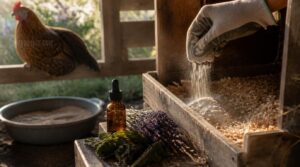
Once you’ve spotted the signs, you need treatments that actually kill mites, not just annoy them. The good news is several natural options have real acaricidal power, backed by mechanism and measurable results. Here are five methods worth your attention, starting with one of the simplest tools in pest control.
Food-grade Diatomaceous Earth
Think of diatomaceous earth as microscopic glass shards for mites. This fossilized silica, roughly 80–90% pure in food‑grade form, relies on particle porosity to strip protective lipids from a mite’s exoskeleton, triggering mite desiccation within hours.
Diatomaceous earth acts like microscopic glass shards, stripping a mite’s protective lipids and causing it to dry out within hours
Always confirm food‑grade purity—pool‑grade silica risks your lungs. Apply it dry; application moisture clumps the powder and kills its effectiveness.
Among natural insecticides, food‑grade DE remains your safest weapon against bird mite infestation.
Essential Oil Sprays
When mixed correctly, essential oils disrupt a mite’s nervous system on contact, but oil and water never blend without help.
Add witch hazel or Castile soap as a solubilizer before diluting with distilled water.
Stick to safe spray dilutions—1–2% potency using tea tree, lavender, eucalyptus, or peppermint oil.
Use a fine mist nozzle for even coverage, and always shake well first.
Vinegar Contact Treatments
Plain white vinegar punches above its weight, and that’s purely chemistry. Household vinegar sits at 4-5% acetic acid concentration, strong enough for genuine surface contact effectiveness against a bird mite infestation.
Target micro-habitats like perches, seams, and equipment directly, since cuticles need wet exposure to break down. Spray before re-entry, mitigating respiratory irritation, and ventilate well.
This nontoxic pest control method demands smart application timing strategies for real results.
Heat and Steam Control
Heat hits mites where it hurts: their thermal death point sits near 130°F. Steam cleaning efficacy depends on Surface Temperature Targets and Steam Penetration Depth reaching hidden seams.
- Perches and crevices hitting lethal heat
- Brief Heat Retention Benefits finishing the kill
- Birds kept clear until surfaces dry
Manage residual moisture promptly, and follow steam safety protocols for eyes and lungs.
Garlic and Neem Options
Garlic’s pungent sulfur compound, allicin, gives this bulb its repellent action against avian mites, while neem oil’s azadirachtin suppresses growth at the larval stage. Garlic spray delivery and neem leaf infusion methods both work as organic insecticide options when applied directly to roosting surfaces.
Test small areas first; botanical safety considerations matter, since these natural remedies still warrant preventive measures and careful monitoring.
Apply Remedies Safely

Knowing which remedy to use is only half the job, you still need to apply it correctly. A wrong dilution or a skipped precaution can turn a helpful treatment into a hazard for your bird, your lungs, or your pets. Here’s what you need to get right before you reach for that spray bottle or dust applicator.
Bird-safe Dilution Rates
Every essential oil concentration matters more than the species you’re treating. Start at the label’s lowest oil dilution ratio, then scale up only if needed.
Patch testing a small surface first catches aerosol exposure risks and respiratory irritation before they reach your flock.
Herbal solutions and natural treatments stay bird-friendly only when diluted conservatively, never applied full-strength near airways.
Avoid Toxic Oils
Dilution ratios only protect your flock if the oil itself is safe. Petroleum-based oils create residue buildup and skin irritation, while undiluted carrier oils risk chemical toxicity and skin burns.
Essential oils have neurotoxic properties at high strengths, raising respiratory irritation hazards near airways.
Skip carrier oil dangers entirely—stick to water-based dilutions, never oily bases, to keep your birds’ skin and lungs protected.
Protect Eyes and Lungs
Your own safety matters as much as your birds’.
Wear a particulate respirator during DE application, since disturbed silica dust raises inhalation hazards quickly. Add wraparound goggles or safety glasses to block airborne debris from reaching your eyes.
Keep the room ventilated, wash hands before touching your face, and avoid eye rubbing—small habits that limit irritation and exposure considerably.
Keep Pets Away
Cats and dogs investigate anything new, so curious noses find treated surfaces fast.
Block access with closed doors or baby gates for the full application and dry time. Motion-activated deterrents and ultrasonic devices at entry points reinforce supervised treatment timing. Secure feeder placement stops licking.
These petsafe, childfriendly, humanfriendly natural treatments stay environmentally safe when access stays controlled.
Reapply on Treatment Schedule
Because the mite life cycle completes in 7–10 days, your treatment schedule can’t stop after one pass. Reapply on a 2–3 day interval for two weeks, watching for:
- Renewed bites or itching
- Birds scratching more
- Humid surfaces
- Recent deep cleaning
Humidity shortens efficacy, cleaning strips residue, and missing the reapplication window lets hatchlings restart the cycle. Maintain strict posttreatment sanitation.
Clean Habitats and Nesting Areas
Treating your bird and your body is only half the battle — the environment needs attention too. Mites can linger in nests, coop corners, and bedding long after your initial treatment, quietly rebuilding their numbers. Here’s what to tackle first.
Remove Empty Nests Legally

If you’re keen to reclaim your attic or eaves, don’t rush—active bird nests are federally protected under the Migratory Bird Treaty Act. Always verify nest inactivity before removal, consulting local agency guidelines and securing permits if needed. Use legal disposal methods and document actions. For exclusion, install mesh covers and deterrents before nesting season.
| Permit Needed | Nest Status | Legal Action |
|---|---|---|
| Yes | Active | Leave undisturbed |
| Sometimes | Inactive | Remove with care |
| No | Abandoned | Dispose properly |
| Required | Protected | Seek expert advice |
| Advised | Unclear | Confirm with agency |
Sanitize Cages and Coops
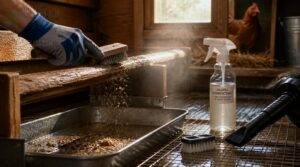
Restoring cage and coop hygiene starts with scraping and pre-soaking all surfaces to loosen debris. Mix disinfectant at a 1% solution for general surfaces, using fresh batches each time. Keep surfaces wet for adequate dwell time, then dry thoroughly to limit metal corrosion. Target crevices and corners with vacuum or stiff brushes, inspecting for hidden contaminants before final sanitation.
- Scrape and soak before disinfecting
- Mix solutions fresh, correct ratios
- Dwell wet, then dry fully
- Inspect crevices, vacuum debris
Wash Bedding Hot

A hot wash is your best defense against parasites hiding in bedding. Set the water to at least 140°F for full sanitizing—anything lower risks incomplete mite removal.
Always check fabric care labels first, since some materials shrink or weaken at high heat.
Use a strong detergent and dry thoroughly on a compatible heat setting to prevent moisture, mold, and recontamination.
Vacuum Cracks and Baseboards
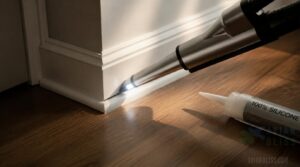
Dust and debris in cracks and baseboards create a haven for parasite eggs and larvae. Use a HEPA filter vacuum every week, focusing on seams, corners, and under furniture. Seal baseboard gaps with flexible silicone caulk to block moisture intrusion and minimize expansion during seasonal humidity changes.
- Vacuum cracks and crevices
- Seal gaps with caulk
- Inspect edges annually
Control Humidity Levels

Humidity is a silent driver of mite outbreaks—think of it as a hidden fuel source. Aim for 30–50% RH indoors; poultry houses should stay below 60% RH. Use smart sensors for real-time monitoring. Maintain dehumidifiers monthly, and balance ventilation exchange rates to avoid moisture buildup. Seal gaps to block moisture ingress. Here’s a quick guide:
| Control Method | Action Step |
|---|---|
| RH Monitoring | Install hygrometer, log data |
| Dehumidifier Use | Clean, set to target RH |
| Ventilation | Use humidity-sensing fans |
| Moisture Prevention | Seal windows and doors |
Top 5 Natural Control Products
Once you’ve got your treatment protocol dialed in, having the right product in hand makes all the difference. These five options cover the full range of natural mite control, from targeted sprays to whole-room fogging. Here’s what’s worth keeping on your shelf.
1. Natures Dome Plant Pest Spray
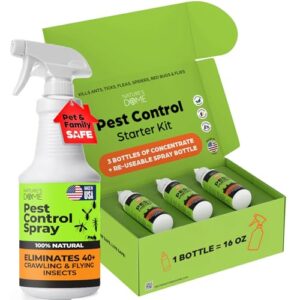
When evaluating Nature’s Dome Plant Pest Spray for avian parasite control, you’ll find its geraniol and cinnamon oil blend offers broad-spectrum efficacy against mites, fleas, and ants.
The formula is child- and pet-safe when used as directed, with coverage up to 4,500 sq ft per kit.
For infested aviaries or home zones, apply the mixed solution to baseboards, furniture, or coop surfaces, ensuring ventilation.
Reapplication is needed during persistent infestations; avoid direct contact with pets until the area dries.
| Best For | Anyone who wants a plant-based way to handle common bugs around the house, from kitchens and bedrooms to patios and gardens, without using harsh chemicals. |
|---|---|
| Application Method | Spray |
| Target Parasites | Ants, roaches, spiders, fleas, ticks, mosquitoes |
| Natural Ingredients | Essential oils |
| Safe for Birds | Yes |
| Coverage Area | Up to 4,500 sq ft |
| Repeat Application | Recommended for heavy infestations |
| Additional Features |
|
- Kills ants, roaches, spiders, fleas, ticks, mosquitoes, and dozens of other pests on contact.
- Safe around kids and pets thanks to its essential oil blend of geraniol, cinnamon, and cottonseed oil.
- Covers up to 4,500 sq ft total, so one kit goes a long way indoors and out.
- Heavy infestations may need repeat applications to fully clear out.
- The herbal scent is strong and can hang around in closed rooms for a few days.
- Tougher, hard-shelled bugs like big roaches may not respond as well as they would to standard chemical sprays.
2. LONYEON Electric ULV Fogger
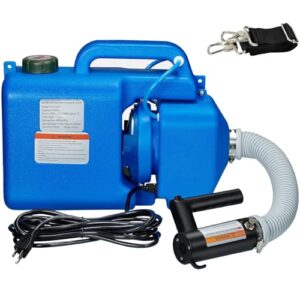
For broad-spectrum mite control in aviaries and attics, the LONYEON Electric ULV Fogger offers fast area saturation with adjustable droplet size (0–50 µm) and a long flexible hose for targeting cracks and nest sites. The 8 L tank delivers hands‑free coverage up to 40 ft, ideal for large habitats.
Use only approved pest control liquids, wear protective gear, and limit fogging sessions to under 20 minutes to prevent motor overheating. Clean nozzle assemblies after each use for consistent performance.
| Best For | Facility managers, pest control professionals, or anyone needing quick, hands-free fogging for large indoor spaces like aviaries, warehouses, or barns. |
|---|---|
| Application Method | Misting Sprayer |
| Target Parasites | General pests, odor, bacteria |
| Natural Ingredients | Not specified |
| Safe for Birds | No |
| Coverage Area | 200 sq ft/minute |
| Repeat Application | Recommended for large areas |
| Additional Features |
|
- Adjustable droplet size and long hose make it easy to target hard-to-reach spots.
- Covers wide areas quickly with hands-free backpack operation.
- Easy to refill and use, with a built-in ON/OFF switch on the handle.
- Can overheat if used for more than about 20 minutes at a time.
- Backpack straps may be uncomfortable during long sessions.
- Requires protective gear due to dense fog output and occasional nozzle issues.
3. Natural Poultry Mite Spray
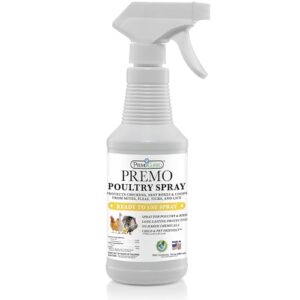
If fogging feels like overkill for your flock, a clove-scented Natural Poultry Mite Spray gives you contact‑kill action against mites, lice, fleas, and ticks, hitting eggs, larvae, and adults alike.
It’s safe for chicks, hens, and roosters, with no egg withdrawal required, and works on coops, nesting boxes, roosts, and surrounding yards.
NPA‑certified and GMP‑produced in the U.S., it skips synthetic chemicals entirely.
Just avoid spraying near eyes or mucous membranes for best results.
| Best For | Flock owners who want an easy, chemical-free spray to knock out mites, lice, fleas, and ticks without pulling eggs from the kitchen. |
|---|---|
| Application Method | Spray |
| Target Parasites | Mites, lice, fleas, ticks |
| Natural Ingredients | Essential oils |
| Safe for Birds | Yes |
| Coverage Area | Birds, coops, yards |
| Repeat Application | Required for egg-stage pests |
| Additional Features |
|
- Kills pests at every stage—eggs, larvae, and adults—on contact
- No egg withdrawal needed, so you can keep collecting and eating eggs right away
- Made with natural clove oil, NPA-certified, and produced in a GMP facility in the U.S.
- New eggs can hatch between treatments, so you’ll likely need to spray again and again
- Doesn’t work as well on a bird’s face, and you have to keep it away from eyes and mucous membranes
- Not meant to replace vet-approved treatment if the infestation gets really bad
4. Natural Mite Killer Spray
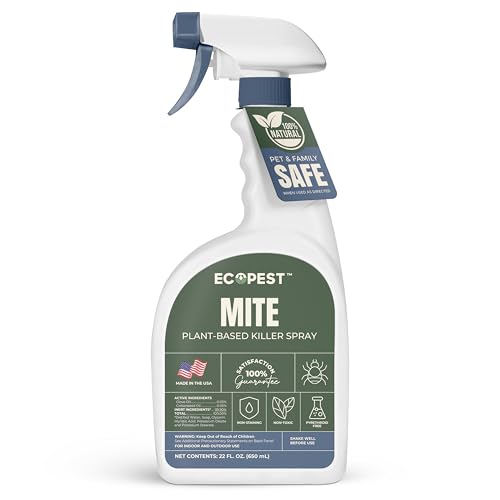
Where the clove-scented poultry spray sticks to flocks, Natural Mite Killer Spray casts a wider net, tackling dust, bird, and spider mites on bedding, furniture, and stored items alike.
It’s a shake-and-spray formula, ready to use straight from the bottle, and safe around chickens, ducks, rabbits, dogs, cats, and reptiles when applied as directed. No dyes, no added fragrance, just a contact kill that dries clean.
Keep in mind: it offers no residual activity, so heavy infestations need repeat treatments, and certain reptile species may react poorly.
| Best For | Pet owners and homesteaders who need a quick, odor-free way to knock out mites on bedding, furniture, or coops without harsh chemicals. |
|---|---|
| Application Method | Spray |
| Target Parasites | Mites, dust, spiders |
| Natural Ingredients | Clove oil |
| Safe for Birds | Yes |
| Coverage Area | Bedding, furniture, pet enclosures |
| Repeat Application | Needed for severe infestations |
| Additional Features |
|
- Kills mites on contact using a botanical clove oil formula, no synthetic pesticides involved
- Won’t stain mattresses, furniture, or carpets, and dries clean with zero residue
- Free of dyes and added fragrance, so it’s gentle around pets and living spaces
- No residual protection, so bad infestations mean spraying again and again
- Some reptile species may not tolerate it well, so check before using
- A few shipments arrive missing the spray nozzle or with a cracked cap
5. KG Bird Pest Control Spray
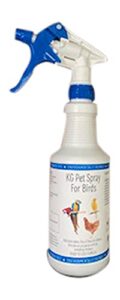
Precision matters with KG Bird Pest Control Spray. This unscented, enzyme-based spray targets bird mites, lice, fleas, and their eggs right on your birds and their surroundings, letting you treat without moving the flock.
The formula soothes itching while eliminating parasites and neutralizing odors, a distinct advantage in multi-bird homes.
Avoid the eyes, beak, and nares; apply in a well-ventilated area. Multiple applications may be required for severe infestations, but safety and versatility remain strong selling points.
| Best For | Bird owners dealing with mites, lice, or fleas across multiple birds or species who want a fast, no-fuss treatment without relocating their flock. |
|---|---|
| Application Method | Spray |
| Target Parasites | Bird mites, lice, fleas |
| Natural Ingredients | Enzymes |
| Safe for Birds | Yes |
| Coverage Area | Birds, cages, bedding |
| Repeat Application | Needed for full eradication |
| Additional Features |
|
- Kills parasites on contact — including eggs and larvae — so you’re not just treating the surface problem
- Safe to use directly on birds and their cages, perches, and bedding all at once
- Enzyme-infused formula helps soothe itching while it works, giving your birds quicker relief
- You need to keep it away from eyes, beaks, and nostrils, so application takes some care
- Heavy infestations may need more than one round of treatment to clear completely
- The bottle can swell in heat, which could mean the formula has been compromised before you even use it
Prevent Future Parasite Outbreaks

Treating an active infestation is only half the job — keeping mites from returning is where long-term control actually lives. A few structural and seasonal measures, applied consistently, can break the cycle before it starts. Here’s what to put in place.
Seal Attic Entry Points
Every mite infestation traces back to one entry point birds found first. Attic hatch sealing with rigid foam and weatherstripping closes that gap fast.
Cover vents with corrosion-resistant mesh, caulk utility penetrations with fire-rated sealant, and maintain weatherstripping each season.
This isn’t optional housekeeping; it’s exclusion, fundamentally, the foundation every nest management strategy depends on before birds ever arrive.
Install Chimney Caps
Stop bird mites at the source: install chimney caps that fit your flue with precision, using stainless steel for corrosion resistance and a spark screen for safety. Maintain masonry seal integrity and choose an aerodynamic hood to reduce downdraft.
- Measure flue diameter
- Select stainless steel
- Confirm spark screen
- Inspect masonry seals
- Check hood design
Use Bird Deterrents
Bird deterrents act as your first defense against mite infestations, breaking the cycle before nesting begins. Install spiked ledges or bird netting to block entry points, while rotating reflective tape and predator eye discs confuse birds and limit habituation.
Pair bioacoustic alarm calls with visual barriers for greater effect. Maintain seasonal repositioning and clearances to guarantee long-term efficacy in preventive avian care.
Inspect Before Nesting Season
Nesting season approaches quickly, so preseason inspection logs and nesting site photography are indispensable. Document bird behavior shifts—such as increased courtship or new droppings near entry points—especially in high-risk structures like old barns.
Track humidity, look for early mite signs with sticky traps, and monitor environmental conditions.
Early detection here gives you control before a mite infestation takes hold.
Call Professionals When Needed
When itchy bites linger or mites reappear after home treatment, you need expert on-site inspections. Professionals offer species identification, pinpointing hidden sources in attics, walls, or bedding.
If birds show feather loss or irritation, seek veterinary health consultation for targeted care.
Safety matters—professionals choose methods to protect your family and pets, ensuring effective parasite control without unnecessary risk.
Frequently Asked Questions (FAQs)
How did Native Americans treat parasites?
Healers combined traditional plant anthelmintics like creosote bush with spiritual healing rituals, communal sanitation routines, and topical skin poultices, treating internal and external infestations through herbal preparations, indigenous dietary practices, and nontoxic methods rooted in restoring balance.
What herbs are antiparasitic to chickens?
Garlic’s sulfur compounds, neem seed extracts, and carefully dosed wormwood top your antiparasitic herb list.
Oregano and thyme add concentrated aromatic punch, while black walnut hulls support deworming—pair with diluted lavender, peppermint, or eucalyptus oils for extra coverage.
What is a natural antibiotic for birds?
There is no true natural antibiotic for birds; botanical options like garlic or neem oil may have limited antimicrobial or acaricidal effects, but both carry toxicity risks, and dietary supplements should never replace veterinary-directed antimicrobial therapy.
What are the best natural remedies for intestinal parasites?
Pumpkin seed benefits, papaya seed powder, and garlic’s sulfur compounds support gut health, while neem oil efficacy aids parasite control. Combine these with food hygiene practices and veterinary guidance for backyard flocks facing confirmed infections.
How to control parasites and diseases in poultry?
Picture your coop as a fortress under siege: defend it with integrated pest management, food-grade DE, strict sanitation, humidity control, and routine health monitoring, paired with sustainable flock management to keep poultry mites and ectoparasites permanently outside the walls.
How do parasites affect bird reproduction?
Parasites disrupt reproductive hormones, shrinking clutch size, interrupting incubation rhythms, and lowering offspring survival. They also dull plumage signals tied to mate choice, weakening egg production and breeding success even in well-maintained nesting areas.
Can birds develop immunity to parasites?
Birds can develop immunity to parasites through both acquired antibody responses and innate defenses, though effectiveness varies by species, sex, and condition. Resistance and tolerance strategies evolve over time, shaped by ongoing parasite coevolution and chemical pesticide resistance.
Are parasite treatments safe during molting?
Energy diverted to feather growth leaves little reserve for medication stress response.
Molting skin sensitivity raises topical application risks, so delayed treatment timing, confirmed by veterinary diagnosis, protects avian health and bird welfare better than rushing natural remedies during active molting.
How frequently should natural dewormers rotate?
Rotate natural dewormers every 6–8 weeks, switching active ingredient classes each time. Fecal egg testing confirms whether a class still works. Risk and results should drive your schedule, not just the calendar.
Can parasites transfer between different bird species?
Yes — cross-species transmission is well-documented. Hematophagous mites move between birds through shared nesting sites and direct contact, with mixed colonies showing particularly high parasite exchange rates across resident and migratory species.
Conclusion
What separates a one-time infestation from a recurring problem is rarely the remedy itself—it’s the follow-through.
Avian parasite control natural remedies work precisely because they disrupt the mite lifecycle at multiple points: desiccating exoskeletons, repelling reinfestation, and eliminating the harborage sites that let populations rebuild.
Seal the entry points, maintain your treatment schedule, and inspect before nesting season arrives.
Do those three things consistently, and the mites simply run out of room.
- https://www.backyardchickens.com/threads/diatomaceous-earth-does-it-work.1158873
- https://pmc.ncbi.nlm.nih.gov/articles/PMC8743764
- https://www.bhwt.org.uk/blog/health-welfare/diatomaceous-earth-powder
- https://npic.orst.edu/factsheets/neemgen.html
- https://eorganic.org/pages/70027/control-of-external-parasites-in-organic-poultry-production