This site is supported by our readers. We may earn a commission, at no cost to you, if you purchase through links.

A dirty bird dish doesn’t just look bad—it can kill. Salmonella and E. coli thrive in old, wet seed, and birds visiting contaminated feeders carry those pathogens to every other feeder in the neighborhood. Most backyard birders never connect a sudden drop in visitors to the grime quietly building up in their dishes.
The good news? Cleaning bird food dishes takes maybe ten minutes and a few basic supplies you probably already own. Done right, it keeps your feathered regulars healthy, your yard smelling fresh, and your feeders looking good enough that new birds actually want to stop by.
Table Of Contents
- Key Takeaways
- Why Clean Bird Food Dishes Regularly
- Essential Supplies for Safe Dish Cleaning
- Step-by-Step Guide to Cleaning Bird Food Dishes
- Top 5 Products for Cleaning Bird Food Dishes
- Frequently Asked Questions (FAQs)
- What to clean bird dishes with?
- What’s the best thing to use to clean bird feeders?
- How to clean a bird water dish?
- How to clean dishes used for multiple bird species?
- Can plastic dishes retain odors after washing?
- Is it safe to use a dishwasher for bird dishes?
- What to do if mold is found on dishes?
- How to store clean bird dishes to avoid contamination?
- How often should hummingbird feeders be cleaned?
- Can bird dishes be cleaned in a dishwasher?
- Conclusion
Key Takeaways
- Dirty bird dishes are a real health hazard — Salmonella and E. coli thrive in old, wet seed and can spread from feeder to feeder across your whole neighborhood.
- A simple daily routine (dump old seed, scrub with hot soapy water, rinse well) takes about ten minutes and stops most bacterial buildup before it starts.
- For deep cleaning, a 1:9 bleach-to-water soak once a month kills 99.9% of pathogens — just rinse thoroughly and air-dry completely before refilling.
- Cleaning frequency isn’t one-size-fits-all — hummingbird feeders need a refresh every one to three days, while seed tubes and suet feeders can go one to two weeks between washes.
Why Clean Bird Food Dishes Regularly
Cleaning bird food dishes isn’t just about keeping things tidy — it’s one of the most important things you can do for the birds visiting your yard. A dirty dish can quietly become a hotspot for bacteria, disease, and smells that drive birds away fast.
Daily scrubbing with hot, soapy water keeps biofilm from building up — check out these bird grooming and hygiene tips to make sure you’re covering all the bases.
Here’s why making this a regular habit actually matters.
Preventing The Spread of Avian Diseases
Disease spreads fast at a crowded feeder. Salmonellosis and Mycoplasmal conjunctivitis are two of the most common culprits, hitchhiking on contaminated dishes and passing between birds in seconds.
Poor bird sanitation and beak hygiene turn your yard into a transmission hotspot — even for avian flu. Regular cleaning is your first line of avian disease prevention. Following can greatly reduce the risk of disease spreading among wild birds.
Maintaining Bird Health and Safety
Beyond disease, dirty dishes quietly chip away at overall bird health. Think about it — would you eat from a moldy plate? Your backyard visitors won’t either, and when they do, it costs them.
Dirty bird dishes quietly chip away at health — just like you, birds won’t eat from a moldy plate
Proper Bird Feeder Maintenance promotes:
- Stronger Avian Nutrition absorption
- Cleaner Beak Health and feeding surfaces
- Safer Bird Habitat conditions
- Better Feather Care (no contaminated preening)
- Reliable Nest Safety for nearby broods
Regular cleaning using helps prevent the spread of disease and ensures birds’ ongoing health.
Reducing Odors and Unsightly Residue
Health isn’t the only reason to stay on top of residue cleaning — your nose will thank you, too. Old seed and droppings break down fast, feeding biofilm and mold that leave feeders smelling sour.
A quick vinegar rinse or diluted bleach soak manages odor prevention and sanitizing methods in one shot, keeping bird feeders fresh and your yard looking sharp.
Attracting More Birds to Your Yard
Here’s the thing — a clean bird feeder doesn’t just keep birds healthy, it actually pulls more of them in. Fresh, dry bird seed is far more inviting than clumped, moldy leftovers.
Pair that with smart feeder placement, bird-friendly plants, and a thoughtful yard layout, and you’re building a real wildlife habitat.
More bird species will show up, making your bird-watching sessions worth every scrub.
Essential Supplies for Safe Dish Cleaning
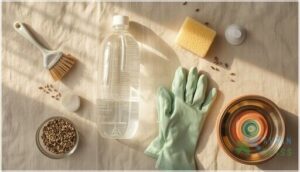
Before you start scrubbing, it helps to have the right stuff on hand. Using the wrong products can do more harm than good for your birds.
Here’s what you’ll actually need to get the job done safely.
Recommended Cleaning Agents for Bird Dishes
You don’t need a cabinet full of harsh chemicals to keep bird dishes safe. Three gentle disinfectants do the job beautifully: mild dish soap with hot water sanitizing for daily washes, a bleach solution (1 part bleach to 32 parts water) for monthly deep cleans, and vinegar cleaners — equal parts water and vinegar — as a natural cleaning solution for mineral buildup.
Simple, effective, bird-safe.
Protective Gear and Tools Needed
Before you scrub a single dish, gear up right. Gloves Selection matters — rubber gloves or nitrile keep bleach and dirty water off your skin. Toss on Protective Clothing you don’t mind splashing. Safety Goggles or Face Shields guard your eyes from spray.
Then grab your Cleaning Brushes, a stiff scrub brush, a bucket, disinfectant, and soap — and you’re set.
Avoiding Harmful Chemicals Around Birds
Some cleaners that work great in your home are quietly dangerous for birds. Bleach fumes, ammonia, scented sprays — even aerosol disinfectants — can damage their tiny lungs fast. That’s why toxic free cleaning matters so much here.
Stick to bird safe products like diluted white vinegar, a natural disinfectant that’s gentle and effective. Chemical free alternatives and non toxic disinfectants keep your bird feeder clean without the risk.
Step-by-Step Guide to Cleaning Bird Food Dishes
Cleaning bird food dishes doesn’t have to feel like a chore — it just takes a simple routine you can stick to. Once you know the steps, the whole process becomes second nature.
Here’s exactly what to do, from quick daily tidying to deeper monthly cleans.
Daily Removal of Old Food and Debris

Every day counts regarding bird health. Old seed sitting in dishes is basically a bacteria hotel — and salmonella loves a good layover.
Make daily debris removal part of your morning routine:
- Dump leftover seed into the trash
- Tap dishes upside down to dislodge stuck hulls
- Remove any clumped, discolored, or wet waste immediately
Smart seed rotation and consistent waste management keep your feeders sanitized and disease-free.
Washing With Dish Soap and Hot Water
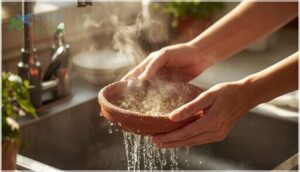
Hot water is your best friend here — it softens dried seed and suet so scrubbing actually works. A small squirt of unscented dish soap in hot water is all it takes.
| Step | What To Do |
|---|---|
| Soak | 15 minutes in hot soapy water |
| Scrub | Use a bottle brush on tubes and edges |
| Repeat | Fresh soak for heavily soiled dishes |
Gentle cleaning methods like this disinfect without harsh fumes.
Rinsing, Drying, and Reassembling Dishes

Rinsing is where most people rush — don’t. Run clean hot water over every port, perch, and tray for at least 10–20 seconds per part. That’s your best rinsing technique.
Then let pieces air dry completely in sunlight, which naturally helps disinfect too. Safe reassembly only happens once everything is bone dry, so no moisture gets sealed inside your bird feeders.
Deep Cleaning With Bleach or Vinegar Solutions
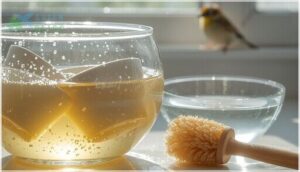
Once your dishes are dry, it’s time for real dish sanitizing. Once a month, go deeper.
Here’s how to do it right:
- Mix 1 part bleach to 9 parts water for your bleach solution
- Or use a 1-to-1 vinegar mix for a gentler option
- Soak for 10 minutes (bleach) or 60 minutes (vinegar)
- Scrub again after soaking
- Rinse thoroughly — bird safety depends on zero residue
Both work great for bird feeder cleaning.
Adjusting Cleaning Frequency for Different Feeders
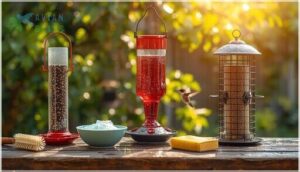
Not all bird feeders follow the same rules. Feeder Type Variations matter a lot here — and once you’ve nailed your deep clean routine, matching your cleaning frequency to each feeder type is the smart next step.
| Feeder Type | Cleaning Frequency |
|---|---|
| Seed Tube | Every 1–2 weeks |
| Hummingbird | Every 1–3 days (hot weather) |
| Suet Feeder | Every 2 weeks (cool); more in heat |
Weather Factors shift everything. Damp climates, summer heat, and heavy bird traffic all demand shorter intervals.
Hummingbird Hygiene is especially unforgiving — sugar water ferments fast. Stay consistent, and your feeder maintenance routine becomes second nature.
Top 5 Products for Cleaning Bird Food Dishes
Having the right tools makes cleaning bird food dishes so much easier — and less of a chore you keep putting off. A few solid products can handle everything from stubborn seed gunk to full disinfection, without putting your birds at risk.
Here are five worth keeping on hand.
1. Aspects Quick Clean Seed Tube Feeder
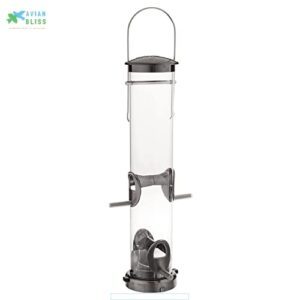
The Aspects Quick Clean Seed Tube Feeder might just be your best friend on cleaning day. Its push-button removable base slides off in one motion — no tools, no fuss — giving you full access to the tube’s interior. That means you can scrub out compacted seed and bacteria buildup without wrestling the thing apart.
The UV-stabilized polycarbonate tube won’t yellow over time, and with four feeding ports plus a built-in seed deflector, it’s genuinely easy to keep clean and bird-safe.
| Best For | Bird lovers who want a low-maintenance feeder that’s quick to clean and built to last through the seasons. |
|---|---|
| Material | Plastic and metal |
| Easy Cleaning | Removable base |
| Durability | Die cast metal caps |
| Color | Brushed Nickel |
| Weight | 0.77 kg |
| Indoor/Outdoor Use | Outdoor |
| Additional Features |
|
- The removable base pops off without any tools, so cleaning takes minutes instead of a whole afternoon.
- Four feeding stations mean more birds at once, and the built-in seed deflector helps cut down on waste.
- The UV-stabilized polycarbonate tube stays clear over time — no yellowing, no cracking.
- Big birds like grackles won’t be deterred, so you may end up sharing more than you’d like.
- The plastic perch covers can wear down with heavy use over time.
- It’s pricier than a basic feeder, so the value really depends on how much you care about easy maintenance.
2. OXO Bottle Cleaning Brush
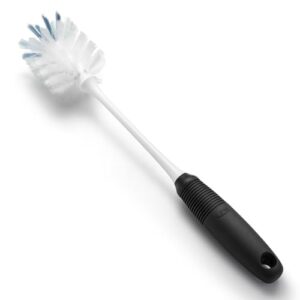
Once your feeder’s clean and reassembled, you need the right brush to maintain that standard.
The OXO Good Grips Bottle Brush is a solid pick here. Its 13-inch length reaches deep into narrow seed tubes and nectar reservoirs, while dual nylon bristles handle both gentle wiping and serious scrubbing.
The non-slip handle won’t betray you mid-clean, even with soapy hands. Plus, it’s safe for glass and clear plastic — so no scratching your feeders.
| Best For | Anyone who regularly cleans bird feeders, water bottles, or narrow-necked glassware and needs a brush that can actually reach the bottom without a fight. |
|---|---|
| Material | Synthetic nylon |
| Easy Cleaning | Dishwasher safe |
| Durability | Durable nylon bristles |
| Color | Black |
| Weight | 2.33 oz |
| Indoor/Outdoor Use | Indoor |
| Additional Features |
|
- The flexible neck bends to hit angles a straight brush just can’t reach — great for curved nectar tubes.
- Dual bristles mean you can go gentle on glass or scrub harder when gunk’s built up, all with the same brush.
- The non-slip grip holds steady even with soapy, wet hands, so you’re not dropping it mid-scrub.
- If your feeder has a really narrow neck, getting the brush in — and back out — can take more effort than you’d expect.
- The bristles soften over time, so the scrubbing power you start with won’t last forever.
- At 12.5 inches, it works for most feeders, but extra-deep reservoirs might still leave you stretching.
3. Oxo Deep Clean Brush Set
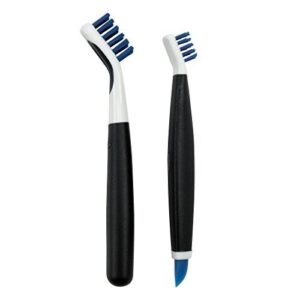
Sometimes a single brush just won’t cut it — and that’s where the OXO Deep Clean Brush Set earns its place in your cleaning kit. You get two brushes in one package: a large one for scrubbing wide feeder surfaces and dried seed residue, and a small pointed brush for tight corners, screw areas, and narrow seams where mold loves to hide.
The small brush even has a rubber wiper blade to scrape out packed seed sludge from drain holes. Solid value, great reach.
| Best For | Anyone who wants to get into the gross little corners and crevices that a regular sponge just can’t reach. |
|---|---|
| Material | Stainless steel |
| Easy Cleaning | Rinse after use |
| Durability | Durable stiff bristles |
| Color | Blue |
| Weight | 0.01 oz |
| Indoor/Outdoor Use | Indoor |
| Additional Features |
|
- Two brushes in one set — the large one handles grout and stovetops, the small one gets into tight spots around faucets and hinges
- Non-slip grip makes scrubbing actually comfortable, even when things get wet and slippery
- That rubber wiper blade is a nice touch for clearing out drain buildup in one swipe
- The bristles run a bit short, so some spots might still give you trouble
- The wiper blade is on the softer side — it won’t win against really stubborn gunk
- It’s a little pricey for a brush set, depending on your budget
4. Clorox Concentrated Bleach Cleaner
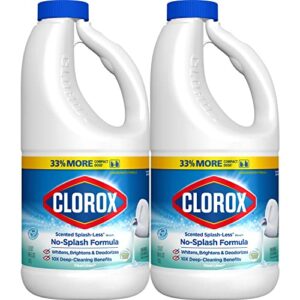
Clorox Concentrated Bleach Cleaner is the heavy hitter your feeder cleaning routine has been missing.
Mix just 1 part bleach to 9 parts water, scrub your pre-washed dishes, and let the solution sit for 5–10 minutes — it kills 99.9% of bacteria, including Salmonella and E. coli.
The concentrated formula means a little goes a long way. Just rinse thoroughly until no bleach smell remains, then air dry completely before refilling.
Safety first, always.
| Best For | Anyone who wants a powerful, easy-to-pour bleach that tackles tough stains on white clothes and keeps household surfaces clean without making a mess. |
|---|---|
| Material | Liquid |
| Easy Cleaning | Dilute and rinse |
| Durability | Concentrated formula |
| Color | White/Clear |
| Weight | 2.5 lbs |
| Indoor/Outdoor Use | Indoor |
| Additional Features |
|
- Thicker formula means fewer spills and a more controlled pour — less waste, less cleanup
- Concentrated dose works hard on stubborn stains like red wine, grass, and blood
- Safe for both standard and HE washers, so it fits most households
- The quantity feels small for the price compared to regular bleach options
- Packaging may vary, so what you see isn’t always what you get
- Needs careful rinsing when used on surfaces — that bleach smell doesn’t mess around
5. Dawn Ultra Dish Soap
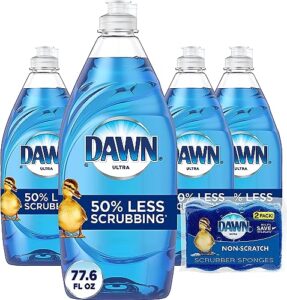
Dawn Ultra Dish Soap is a go-to for everyday feeder cleaning — and for good reason. Wildlife rehabilitators have trusted it for decades to safely remove oils and grease from birds’ feathers, so you know it’s gentle enough for your feeders.
Its concentrated formula cuts grease fast, meaning a few drops go a long way. Just mix with hot water, scrub well, and rinse thoroughly until zero soap residue remains. Residue left behind can harm birds, so don’t rush that final rinse.
| Best For | Anyone who hand-washes a lot of dishes and wants a concentrated soap that actually cuts through grease without going through a bottle every week. |
|---|---|
| Material | Liquid |
| Easy Cleaning | Rinse with water |
| Durability | Concentrated formula |
| Color | Blue |
| Weight | 4.75 lbs |
| Indoor/Outdoor Use | Indoor |
| Additional Features |
|
- Super concentrated — a little goes a long way, so four bottles last a good while
- 3x more grease-cutting power per drop than non-concentrated competitors, which means less effort on stuck-on food
- Comes with two non-scratch sponges, so you’re ready to go right out of the box
- Some people aren’t fans of the scent — a few find it a bit sour or off-putting
- Can dry out your hands with regular use, so lotion nearby isn’t a bad idea
- Only available online, so you can’t just grab it at your local store
Frequently Asked Questions (FAQs)
What to clean bird dishes with?
For bird dishes, your best bet is a simple combo: unscented dish soap with hot water for daily washing, plus a diluted bleach solution (1:9 ratio) for weekly disinfecting.
What’s the best thing to use to clean bird feeders?
Mild dish soap and warm water are your go-to combo for routine cleaning.
For deeper disinfection, a 10 percent bleach solution — nine parts water, one part bleach — works great on plastic and metal feeders.
How to clean a bird water dish?
Surprisingly, the “cleanest-looking” dish is often the most dangerous. Rinse daily, scrub weekly with mild soap and a brush, then disinfect with diluted bleach. Rinse well and air-dry before refilling.
How to clean dishes used for multiple bird species?
When multiple species share the same dish, germs spread fast. Clean shared dishes weekly, soak in a 10% bleach solution for 10 minutes, rinse completely, and let them air dry before refilling.
Can plastic dishes retain odors after washing?
Out of sight, out of mind” — but not out of smell. Plastic dishes can hold onto odors even after washing, because tiny surface pores trap food oils and bacteria deep inside.
Is it safe to use a dishwasher for bird dishes?
Yes, you can use a dishwasher for bird dishes — just check that they’re labeled dishwasher safe first. Top rack, hot cycle, fully disassembled. That’s really all it takes.
What to do if mold is found on dishes?
Mold spotted? Act fast. Toss the food, scrub the dish with warm soapy water, soak it in a 1:10 bleach solution, rinse well, and let it fully dry before refilling.
How to store clean bird dishes to avoid contamination?
Once dishes are fully dry, store them in a lidded bin away from seed, off the floor, and out of rain.
That keeps bacteria, bugs, and rodents from undoing all your hard work.
How often should hummingbird feeders be cleaned?
Hummingbird feeders need cleaning every one to three days in mild weather — and daily when it’s hot out. Above 80°F, nectar spoils fast, so don’t wait.
Can bird dishes be cleaned in a dishwasher?
Some bird dishes are totally dishwasher safe — just check the label first.
Glass and stainless steel handle the heat well, but thin plastic can warp.
Top rack, hot cycle, and you’re good.
Conclusion
Think of your yard as a tiny ecosystem—and you’re the one keeping it balanced. Every time you spend ten minutes cleaning bird food dishes, you’re not just scrubbing grime. You’re breaking the invisible chain that spreads Salmonella from feeder to feeder, yard to yard.
Birds can’t read warning labels or choose safer stops. But you can choose for them. That small habit? It’s the difference between a thriving backyard flock and an empty, silent yard.
- https://homeygnomevet.com/a-guide-to-sanitation-and-disinfection-for-avian-species/
- https://www.petmd.com/bird/budgie-care-sheet
- https://wpvet.com/avian-care-guides/pet-bird-husbandry/
- https://www.forthebirdsdvm.com/pages/caring-for-your-pet-bird
- https://bestfriends.org/pet-care-resources/bird-safe-cleaning-products-and-air-purifiers-birds