This site is supported by our readers. We may earn a commission, at no cost to you, if you purchase through links.
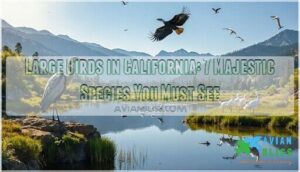 California’s large birds showcase nature’s grandeur across diverse ecosystems.
You’ll spot the magnificent California Condor with its 10-foot wingspan soaring over mountain ranges, while Great Blue Herons wade through coastal wetlands and Great Egrets display their pristine white plumage in freshwater marshes.
Double-crested Cormorants dive for fish along rocky shorelines, and Turkey Vultures circle overhead with impressive 6-foot wingspans.
These avian giants inhabit everything from Redwood forests to desert oases, creating unforgettable wildlife encounters.
Each species brings unique behaviors and adaptations that’ll transform your understanding of California’s wild spaces.
Table Of Contents
- Key Takeaways
- Large Bird Species
- Bird Size Comparisons
- California Bird Habitats
- Bird Conservation Status
- Bird Watching Locations
- Frequently Asked Questions (FAQs)
- What are the biggest birds in California?
- Is it rare to see a California Condor?
- Can a California Condor carry a human?
- What is the largest bird of prey in California?
- How do large birds adapt to Californias wildfire seasons?
- Which large birds are most commonly photographed in California?
- How do Californias large birds communicate with each other?
- Conclusion
Key Takeaways
- You’ll find seven impressive large bird species across California’s diverse ecosystems, from the massive California Condor with its 10-foot wingspan to Great Blue Herons standing over four feet tall in coastal wetlands.
- The California Condor stands as the only endangered large bird on both state and federal lists, with only 500 existing worldwide, making sightings extremely rare despite successful conservation efforts that increased numbers from 22 to over 410 birds.
- You can spot these magnificent birds in four distinct habitat types – coastal wetlands for herons and cormorants, mountainous regions for condors and eagles, desert landscapes for roadrunners and burrowing owls, and freshwater lakes for diverse waterfowl.
- Conservation challenges threaten all large bird populations through habitat loss (90% of wetlands have vanished), climate change impacts, human encroachment, pollution, and hunting, making protected areas like Point Reyes and Channel Islands critical for species survival.
Large Bird Species
California’s most impressive birds showcase remarkable diversity, from the massive California Condor with its nearly 10-foot wingspan to the elegant Great Blue Heron standing over four feet tall.
You’ll discover these magnificent species inhabit everything from coastal wetlands to mountain peaks, each perfectly adapted to their unique environment, showcasing their ability to thrive in various ecosystems, including the coastal wetlands.
California Condor Characteristics

The California condor stands as North America’s largest land bird, with wingspans reaching 9.5 feet and weighing up to 25 pounds.
With nearly 10-foot wingspans, California condors soar as North America’s true giants of the sky.
These endangered species showcase striking black plumage coloration with distinctive white wing patches.
Their impressive flight capabilities allow them to soar 150 miles daily while searching for carrion.
With lifespan details exceeding 60 years, these avian fauna display complex social behavior in communal roosts.
Conservation efforts, including captive breeding programs, have helped increase their numbers, focusing on conservation efforts and captive breeding.
Great Egret Habitat
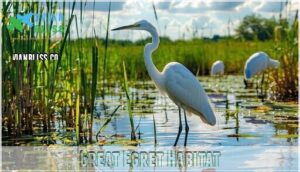
You’ll find Great Egrets thriving in California’s diverse wetland habitats where water quality and prey abundance create perfect conditions.
These magnificent birds establish nesting colonies in marshes, lagoons, and restored wetlands alongside snowy egret and great blue heron populations.
Climate change threatens these critical habitats, making marsh restoration efforts essential for maintaining California’s avian fauna in coastal and inland waterways.
Great Blue Heron Migration Patterns

Following seasonal migration triggers, great blue herons set out on remarkable journeys from their California breeding grounds.
These majestic birds navigate established flight paths, traveling hundreds of miles to reach suitable winter habitats in warmer regions.
Their migration patterns demonstrate California wildlife’s incredible adaptability, with bird migration timing perfectly synchronized with seasonal changes.
Understanding avian ecology helps support heron conservation efforts protecting these essential bird habitats.
Some herons undertake these journeys due to limited food availability in colder climates, which is a key factor in their seasonal migration.
Double-crested Cormorant Diet

Double-crested cormorants showcase remarkable prey selection skills, targeting small fish under six inches in California’s coastal waters.
These diving masters display adaptive foraging behavior, plunging twenty-five feet deep to chase schooling species.
Their diet variation includes crustaceans and amphibians, with seasonal changes affecting availability.
This double-crested cormorant’s hunting prowess substantially impacts ecosystems, influencing local fish populations across diverse bird habitats throughout California wildlife areas, demonstrating their significant role in ecosystems.
Bird Size Comparisons
When you’re standing face-to-face with California’s giants, the sheer scale becomes breathtaking.
These magnificent bird species showcase dramatic size differences that’ll leave you amazed at nature’s diversity.
| Species | Wingspan | Weight | Height |
|---|---|---|---|
| California Condor | 109 inches | 18-31 lbs | 46-55 inches |
| Great Blue Heron | 72 inches | 4.5-5.5 lbs | 38-54 inches |
| Great Egret | 67 inches | 1.5-3.3 lbs | 37-41 inches |
| Double-crested Cormorant | 52 inches | 2.6-5.5 lbs | 28-35 inches |
| Turkey Vulture | 67 inches | 1.4-5.3 lbs | 25-32 inches |
Weight differences reveal fascinating adaptations – condors carry massive body proportions for soaring efficiency, while herons maintain lighter frames for precise hunting.
Plumage size varies dramatically too, with condors sporting broad feathers optimized for thermal riding.
Flight adaptations become clear when comparing wingspan vs height ratios, showing how each species evolved for specific California ecosystems.
Considering the largest bird species like ostriches, these California birds, while large for the region, are substantially smaller.
These bird size comparisons demonstrate nature’s remarkable engineering solutions.
California Bird Habitats

You’ll find California’s large birds across four distinct habitat types that shape their behavior and distribution.
From coastal wetlands where Great Blue Herons stalk through shallow waters to mountainous regions where California Condors soar on thermal currents, each environment offers unique resources that support these impressive species, including the California Condors.
Coastal Wetlands
California’s coastal wetlands provide essential habitat for numerous large bird species, supporting diverse wildlife through complex ecosystem interactions.
These dynamic environments face significant challenges from pollution impacts and climate change, requiring ongoing wetland conservation efforts.
Key Coastal Wetland Features:
- Shallow Waters – Perfect feeding grounds where California gulls and American white pelicans hunt fish
- Salt Marshes – Nesting sites for double-crested cormorants amid protected vegetation
- Mudflats – Rich feeding areas exposed during low tides, supporting bird feeding opportunities
Habitat restoration projects actively combat environmental threats while preserving these essential California ecosystems.
Mountainous Regions
Mountain ecosystems showcase remarkable Habitat Diversity where large birds thrive despite Conservation Challenges.
You’ll find golden eagle and bald eagle soaring through these elevated domains, their Avian Adaptations perfectly suited for Altitude Effects.
California quail navigates rugged terrain while wildlife benefits from Mountain Ecosystems’ varied elevations and microclimates.
| Elevation Zone | Dominant Species |
|---|---|
| 3,000-6,000 ft | Golden Eagle, Red-tailed Hawk |
| 6,000-9,000 ft | Bald Eagle, Great Horned Owl |
| 9,000+ ft | White-tailed Ptarmigan, Rosy-crowned Finch |
| Mixed Zones | California Quail, Steller’s Jay |
Desert Landscapes
Venturing into California’s arid landscapes, you’ll discover remarkable Desert Adaptations among arid birdlife.
Golden eagles soar above rocky outcrops, while burrowing owls nest underground to escape heat. Greater roadrunners dash between cacti, and California quail seek scarce water sources.
These large birds face significant Conservation Challenges in Desert Ecology, adapting ingeniously to Water Scarcity through specialized behaviors and physiology.
Some species even have specialized salt glands to maintain fluid balance.
Freshwater Lakes
You’ll find California’s freshwater lakes teeming with avian life, where pristine water-bodies create perfect sanctuaries for large bird species.
These aquatic ecosystems support diverse California bird species through ideal habitat management and conservation efforts.
- Lake Ecology: Complex food webs support herons, egrets, and waterfowl populations
- Water Quality: Clean lakes attract more diverse avian communities for birdwatching in California
- Bird Interactions: Species compete for nesting sites and feeding territories
- Habitat Management: Controlled water levels maintain perfect breeding conditions
- Conservation Challenges: Pollution and development threaten these critical ecosystems
Bird Conservation Status
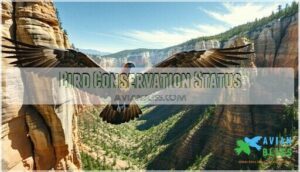
You’ll discover that California’s most impressive birds face serious conservation challenges that require immediate attention. Understanding their protected status helps you appreciate these magnificent species while supporting essential preservation efforts.
Endangered Species List
You’ll find the California condor stands as the only large bird species currently listed as endangered at both state and federal levels in California.
Listing criteria under the California Endangered Species Act and federal regulations protect this magnificent bird through strict legal protections.
Recovery plans target establishing two self-sustaining populations of 150 birds each, addressing habitat loss and population decline through intensive conservation efforts.
Threats to Large Birds
Understanding why these magnificent birds face extinction requires recognizing the multiple threats they encounter.
California’s large birds battle an uphill fight against modern challenges that threaten their survival.
You’ll find these major threats particularly concerning:
- Habitat Loss – Over 90% of California’s wetlands have vanished, eliminating essential nesting and feeding areas
- Climate Change – Drought and wildfire smoke directly impact bird health and reduce available water sources
- Human Encroachment – Urban development fragments remaining habitats, forcing birds into smaller, isolated territories
- Pollution Impact – Lead poisoning kills over 50% of condors in some regions, while pesticides contaminate water sources
- Hunting/Poaching – Illegal shootings and ammunition fragments continue threatening species recovery efforts
These interconnected challenges create a perfect storm for large bird populations, making conservation efforts increasingly critical for maintaining California’s biodiversity.
Globally, 78% of species face extinction due to similar factors.
Conservation Efforts
Successfully targeted breeding programs have revolutionized bird conservation across California, transforming near-extinct species into thriving populations.
**California’s bird conservation proves that dedicated intervention can reverse extinction trajectories, giving hope for future generations.
You’ll witness remarkable recoveries through habitat restoration, legal protections, and public awareness campaigns that protect great horned owl, red-tailed hawk, and turkey vulture populations alongside endangered condors.
| Conservation Strategy | Target Species | Success Metrics |
|---|---|---|
| Captive Breeding Programs | California Condor | 22 to 410+ birds |
| Habitat Restoration | Great Egret | Stable rookery colonies |
| Legal Protections | Great Blue Heron | Population recovery |
| Public Awareness Campaigns | Double-crested Cormorant | Community engagement |
| Funding Challenges | All Large Birds | Ongoing support needed |
Bird conservation and avian conservation efforts demonstrate that dedicated intervention can reverse extinction trajectories, giving hope for future generations.
Protected Areas
California’s protected areas serve as vital strongholds for large bird conservation through meticulous Area Management and Habitat Preservation programs.
These locations receive substantial Conservation Funding to support Species Recovery initiatives while balancing Ecotourism Impact with ecological research.
California’s key protected areas include:
- Point Reyes National Seashore – Critical habitat for Great Blue Herons and Double-crested Cormorants
- Channel Islands National Park – Essential breeding grounds for California Brown Pelicans
- Big Sur Coast – Protected nesting sites for California Condors with active monitoring
- San Francisco Bay National Wildlife Refuge – Wetland sanctuary supporting Great Egrets year-round
- Salton Sea – Desert oasis providing pivotal stopover habitat for migrating waterfowl
These protected zones blend ornithology research with environmental studies, creating natural laboratories where birdwatching enthusiasts and scientists collaborate.
Each area maintains strict protocols balancing public access with species protection, ensuring these majestic birds thrive for future generations.
Bird Watching Locations
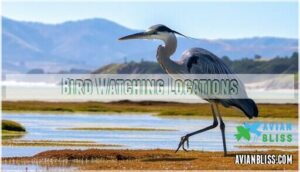
You’ll find California’s majestic large birds across diverse habitats, from coastal wetlands where Great Blue Herons wade through shallow waters to mountainous regions where California Condors soar on thermals.
The state’s varied landscapes create perfect opportunities for spotting these impressive species, whether you’re scanning the skies at Point Reyes or exploring the Los Padres National Forest.
National Parks
Point Reyes National Seashore offers unparalleled Park Birding opportunities with over 440 documented avian species.
This coastal sanctuary supports red-tailed hawk populations while providing critical Habitat Preservation for white pelican flocks.
California birdwatching enthusiasts appreciate how Species Management programs balance Visitor Impact with conservation goals.
For all your needs regarding national park birding, there are many resources available.
Death Valley’s 357 species demonstrate how Conservation Funding enhances ornithology research across diverse ecosystems.
Wildlife Refuges
Beyond national parks, wildlife refuges offer extraordinary opportunities for spotting California’s magnificent large birds.
The Sonny Bono Salton Sea National Wildlife Refuge exemplifies successful refuge management, attracting over 400 bird species annually through strategic habitat restoration and bird monitoring programs.
Many are interested in supporting these locations through various means.
- 37,900 acres of protected desert wetlands supporting sandhill cranes and snow geese
- 200+ winter species creating peak viewing during migration seasons
- Conservation funding enables ongoing ecological habitat improvements
- Public access trails connecting you to California birdwatching hotspots featuring exceptional avian biodiversity
Bird Sanctuaries
Bird sanctuaries protect California’s large bird populations through targeted conservation programs.
You’ll find these protected areas offer bird rehabilitation services and habitat restoration projects funded by sanctuary funding initiatives.
Public access varies by location, with many providing educational opportunities about species management and wildlife habitats.
These sanctuaries conduct bird habitats research, supporting conservation efforts for threatened species through dedicated programs that maintain stable bird populations across California’s diverse ecosystems.
Many people shop bird products to support these efforts for wildlife habitats.
Popular Birding Spots
Throughout California’s diverse landscapes, you’ll discover exceptional local birding opportunities where bird species diversity thrives.
Mono Lake and Elkhorn Slough offer prime birdwatching habitats during spring and fall migration seasons.
Big Sur’s accessibility makes it perfect for California condor photography, while guided tours at Bolsa Chica reveal ecological habitats supporting California’s rich natural history.
Spring migration brings vibrant species, similar to what can be seen in Virginia birding hotspots.
Frequently Asked Questions (FAQs)
What are the biggest birds in California?
Ever wondered what giants rule the Golden State’s skies?
You’ll find the California Condor reigning supreme – North America’s largest bird with a 5-foot wingspan.
Golden Eagles follow with seven-foot wingspans, making them powerful hunters soaring overhead.
Is it rare to see a California Condor?
Yes, it’s extremely rare to see a California Condor. You’d need incredible luck since only about 500 exist worldwide, with roughly 330 in the wild, making them one of America’s rarest birds.
Can a California Condor carry a human?
No, you can’t be carried by a California Condor.
Despite their impressive ten-foot wingspan, these magnificent birds weigh only 18-31 pounds and can lift just 2-3 pounds maximum.
You’d need something much stronger for that fantasy flight.
What is the largest bird of prey in California?
You’ll find the California Condor is the largest bird of prey in California, with wingspans reaching up to 109 inches.
These magnificent scavengers dominate the skies with their impressive size and soaring abilities.
How do large birds adapt to Californias wildfire seasons?
Like phoenixes rising from ash, you’ll find large birds develop remarkable strategies to survive wildfire seasons.
They fly away when fires break out, while some move into severely burned areas to forage on dead trees and use fire-created snags for nesting.
Which large birds are most commonly photographed in California?
You’ll capture stunning shots of Red-tailed Hawks , California condors, and brown and white pelicans – these iconic species dominate photographer portfolios statewide.
How do Californias large birds communicate with each other?
You’ll observe large California birds using diverse communication methods: vocalizations like the condor’s whistles, turkey vultures’ hisses, and great blue herons’ croaks.
Plus visual displays through wing spreading, head movements, and territorial posturing behaviors, which include diverse communication methods.
Conclusion
Ironically, California’s large birds in california have mastered the art of being simultaneously massive and graceful—unlike most tourists attempting to photograph them.
You’ve now discovered seven remarkable species that transform ordinary landscapes into extraordinary wildlife theaters.
From the California Condor’s dramatic comeback to the Great Blue Heron’s patient hunting techniques, these avian giants offer endless opportunities for observation and conservation support.
Grab your binoculars and venture into California’s diverse habitats to witness these magnificent creatures firsthand.