This site is supported by our readers. We may earn a commission, at no cost to you, if you purchase through links.
Somewhere around 96 million Americans watch birds regularly—more than those who hunt and fish combined. That number surprises most people, probably because birding doesn’t look like a hobby from the outside.
No gear piles, no crowds, no scoreboard. Just someone standing still in a good spot, paying attention.
And that’s exactly why it works: birds are already there, in your neighborhood park, along the reservoir trail, at the weedy edge of a drainage pond you’ve driven past a hundred times. Finding the best bird watching spots near you isn’t about traveling far—it’s about knowing where to look and when to show up.
Table Of Contents
- Key Takeaways
- Best Birding Spot Types Nearby
- How to Find Local Hotspots
- Best Times to Visit Nearby
- Birds to Expect by Habitat
- Plan Your Birding Outing
- Frequently Asked Questions (FAQs)
- Where to go birdwatching?
- Where is the best place to bird watch in Washington DC?
- How do I find a site near me?
- What is the Virginia bird and Wildlife Trail?
- Where can I watch birds in Washington State?
- Where can I find a birdingplace?
- Which are the best bird watching websites?
- What is a birding trail?
- Where can I find information about bird sightings in Virginia?
- Where can I find information about birding?
- Conclusion
Key Takeaways
- The best birding spots aren’t far away — parks, ponds, wetland edges, and woodland trails in your own area hold far more species than most people expect.
- Timing your visit around early morning and seasonal migration windows (especially April and October) makes a bigger difference than where you go.
- Tools like eBird and interactive hotspot maps take the guesswork out of finding active spots by showing you real sighting data filtered by season, species, and rarity.
- Habitat type shapes everything you’ll see — waterfowl cluster near shallow ponds, shorebirds work on wetland mudflats, and songbirds peak along forest edges where trees thin into open ground.
Best Birding Spot Types Nearby

Not every birding spot looks the same — and that’s actually a good thing. The type of habitat you visit shapes everything from which species show up to how your morning unfolds.
Learning to identify bird habitats by sound makes every outing richer — each call tells you exactly where you are before you even raise your binoculars.
Here are the main spot types worth knowing before you head out.
Neighborhood Parks and Greenways
Don’t overlook what’s right outside your door. Neighborhood parks and greenways are surprisingly solid birding spots — their accessible trail design, community picnic spots, and shaded greenways attract wrens, warblers, and woodpeckers year‑round.
Bioswale features and stormwater management plantings draw insects, which pull birds in close. Many offer family‑friendly hiking paths and even playground birding opportunities.
Check an interactive locations map or trail maps to find hotspots nearby.
Lakes, Reservoirs, and Ponds
Move from the park path to the water’s edge, and the birds change completely.
Lakes, reservoirs, and ponds are top-tier birding hotspots — each one shaped by water level management, aquatic plant diversity, and fish habitat zones that attract herons, ducks, and kingfishers.
Shoreline vegetation and algal bloom impacts shift what you’ll spot seasonally.
Use an interactive map to find Reservoir Park Trail and similar wetland habitats near you.
Understanding thermal stratification effects helps predict bird activity around deeper water layers.
Wetlands, Marshes, and Riverbanks
Wetlands pull in a different crowd than open water — think herons standing motionless in cattail stands, rails sneaking through reed beds, and warblers working the marsh edges at dawn.
Vegetation structure here shapes everything: dense bulrush cover hides nesting birds, while open mudflats draw shorebirds.
Hydrologic dynamics — seasonal flooding, sediment accumulation, even peat formation in boggy zones — constantly refresh these wetland and marsh bird habitats.
Top features that make wetlands outstanding birding spots:
- Rich invertebrate habitat beneath saturated soils draws feeding shorebirds and wading birds year-round.
- Emergent vegetation zones create layered cover that sustains species rarely found elsewhere.
- Interactive mapping tools flag active wetland birdwatching hotspots so you can time visits around water levels and migration pulses.
Nature Preserves and Wildlife Refuges
Nature preserves and wildlife refuges take birding to another level. These conservation areas use habitat zoning strategies to protect sensitive nesting zones while keeping trails open for visitors.
Volunteer stewardship programs and conservation funding sources drive invasive species control and educational outreach initiatives that keep habitats healthy.
Interactive mapping tools pinpoint the best wildlife refuge and nature preserve birding hotspots near you.
Forest Trails and Woodland Edges
Forest trails and woodland edges are some of the most rewarding bird watching hotspots you’ll find anywhere. Edge microhabitats — those transitional zones where trees thin out and light breaks through — concentrate food, cover, and activity in ways dense forest simply can’t. Moisture gradients shift from damp, mossy shoulders to drier open ground, each zone attracting different species.
Here’s what makes birding trails along woodland edges so productive:
- Wildlife corridors connect forest blocks, funneling birds along predictable routes you can intercept.
- Seasonal edge dynamics bring waves of wildflowers and insects in spring, drawing warblers and flycatchers.
- Fallen logs and understory pockets along nature trails offer nesting spots for wrens and thrushes.
- Edge management practices — like selective thinning — maintain habitat conservation by keeping structural diversity intact year-round.
Coastal, Shoreline, and Beach Areas
Coastal and shoreline habitats punch well above their weight for birders. Tidal Inlet Exploration alone can reveal species you won’t spot inland — salt marsh pockets and Coastal Marshes shelter waders, terns, and rails year‑round. Virginia’s coastline delivers some of the best Coastal Bird Migration corridors on the East Coast.
| Coastal Birding Location | What You’ll Find |
|---|---|
| Chincoteague National Wildlife Refuge | Shorebirds, snow geese, peregrine falcons |
| Virginia Beach shoreline | Terns, sanderlings, migrating warblers |
| Back Bay National Wildlife Refuge | Waterfowl, raptors, seaside sparrows |
| Eastern Shore tidal flats | Dunlins, dowitchers, black‑bellied plovers |
| Salt marsh edges | Clapper rails, great blue herons, egrets |
Dune Vegetation Management and Beach Nesting Surveys have helped restore critical habitat at many of these Birdwatching hotspots — meaning more nesting terns and piping plovers each season. Riprap Impact Assessment studies also guide where hard structures go, protecting natural sandy beach corridors. These Coastal birding locations and habitats reward patience and early starts.
How to Find Local Hotspots
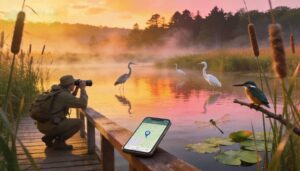
Finding good birding spots near you doesn’t require insider knowledge or hours of research. The right tools can point you straight to active hotspots, complete with species data and real birder feedback.
Here’s how to use them.
Use Interactive Birding Maps
Interactive mapping tools for birdwatchers put every local hotspot right in your pocket. Toggle between satellite and terrain views using Layer Customization to read the landscape before you arrive.
Heatmap Analysis shows where sightings cluster by season, while Real-Time Alerts flag fresh activity nearby. Save spots with Offline Map Sync, add your own User Annotations, and use the interactive map for exploring birding hotspots to find a site near you fast.
Search County and City Hotspot Lists
County and city hotspot lists are often overlooked — but they’re one of the sharpest tools you have. A good county-level birding hotspot directory pairs habitat classification tags with update frequency indicators so you know what’s fresh.
Use the search bar to pull up county bird guides fast, then check user-contributed hotspot write-ups for on-the-ground details that maps alone can’t give you.
Filter by Season and Species
Filtering by season and species is like narrowing your search from "somewhere out there" to "right here, right now." Migration period filters align your target species with species activity windows, so you’re not wading through off-season noise.
- Match habitat season alignment to your birding spot type
- Use time of year filters to surface seasonal bird sighting trends
- Apply migration period filters for shorebirds, raptors, or waterfowl
- Check real-time checklist sync for updated species distribution data
- Review seasonal rarity scores alongside rarity ratings to prioritize visits
Compare Rarity and Likelihood Scores
Not all birding spot scores mean the same thing — and knowing the difference can save you a wasted morning.
Rarity vs likelihood tell two different stories: a high rarity score means a species is uncommon at that hotspot, while likelihood shows how often you’d actually spot it there.
Habitat score impact and temporal score variation shift these numbers by season, so check both before you go.
Read User Reviews and Trail Notes
Numbers and scores only tell part of the story. Community reviews and photo reviews fill the gaps — real hikers flagging mud, closures, or a great heron sighting from last Tuesday.
- Trail Condition Updates — mud, washouts, and gate hours
- Birding Hotspot Alerts — recent rare sightings worth chasing
- User Safety Warnings — loose roots, slick crossings, crowding
- Accessibility Features — boardwalks, wheelchair paths, restroom availability
Don’t skip trail notes. They’re where Equipment Recommendations, trail difficulty, and length details, and User-contributed hotspot writeups live — practical gold before you leave the driveway.
Best Times to Visit Nearby

Knowing where to go is only half the equation — knowing when to show up is what separates a slow morning from a genuinely memorable one. Birds follow predictable rhythms tied to season, weather, and time of day, and once you understand those patterns, your odds of great sightings go way up.
Knowing when to show up matters as much as knowing where to go
Here’s what to keep in mind as you plan your next outing.
Early Morning Bird Activity
If there’s one rule serious birders live by, it’s this: get there early. Dawn Chorus Timing peaks within the first 30 minutes after sunrise — that’s when Territorial Song Flights fill the air and Insect Foraging Peaks draw warblers, sparrows, and thrushes into the open. Light Level Effects and cool, calm Weather-Driven Activity combine to make dawn your best window at any hotspot location.
| Time Window | Bird Behavior | Best Species to Watch |
|---|---|---|
| Pre-sunrise | Territory calls begin | Warblers, thrushes |
| First 30 minutes | Peak chorus and foraging | Sparrows, finches |
| 30–60 minutes | Active feeding continues | Waterfowl, raptors |
| 60–90 minutes | Activity starts tapering | Swallows, chickadees |
| Mid-morning | Quieter, heat building | Nuthatches, titmice |
Plan your birding trip around this window, and interactive mapping tools for birdwatchers to cross-check bird species rarity and likelihood analysis alongside seasonal bird sighting trends before you head out.
Spring and Fall Migration Windows
early morning is just the warm-up — migration season is when birding truly takes off.
Spring’s Peak Migration Timing runs March through May, with April delivering the most dramatic Weather-Driven Pulses of warblers and thrushes using Nocturnal Flight Windows.
Fall follows September through November.
Virginia’s Stopover Habitat Preference leans toward riparian corridors, so plan your birding trip near water and track Species Arrival Sequence through birding apps.
Summer Breeding Season Visits
Summer shifts the pace from migration chasing to something quieter — watching Breeding Pair Behavior unfold in real time. Peak Insect Abundance fuels nesting activity, especially along Riparian Habitat near streams and reservoirs.
Use interactive mapping tools for birdwatchers to find seasonal birding hotspots, check bird species rarity and likelihood analysis, and practice Disturbance Mitigation by staying on trail near active Nest Monitoring zones.
Winter Waterfowl and Raptor Watching
Winter opens up some of birding’s best moments.
Ice Edge Feeding pulls mallards, pintails, and teals into tight shoreline clusters — surprisingly easy to observe with Quiet Observation Techniques and a steady scope.
Bald eagles and harriers rely on Raptor Perch Strategies along fence lines and bare snags.
Use Hotspot Data Updates to find Waterfowl and shorebird wintering sites, and brush up on Winter Plumage Identification before heading out.
Weather Conditions That Improve Sightings
Weather shapes what you find out there more than most birders expect.
- Mild Temperatures (5–12°C) spark morning insect activity, pulling warblers and thrushes into view
- Light Winds sharpen distant silhouettes — small passerines become easier to track
- Overcast Light diffuses glare, revealing plumage details on waterfowl and shorebirds
- Post Rain Freshness concentrates feeding birds along mudflats and wetland edges
- Light Drizzle pushes flocks toward sheltered trail margins — predictable, dense gatherings
Monthly Planning for Target Species
Planning by month turns scattered outings into a system that actually works. Start with Species Prioritization — define your target birds, then use seasonal bird sighting trends and rarity ratings to build a Calendar Scheduling framework around peak windows.
A quick Data Review of prior records highlights gaps, while a Gear Checklist keeps you field-ready.
Citizen science data and individualized birding recommendations sharpen every Goal Setting decision.
Birds to Expect by Habitat
Where you go determines what you’ll see — and that’s what makes habitat the real starting point for any birding plan. Different spots draw completely different birds, from wood warblers threading through forest canopy to mergansers working the surface of a quiet reservoir.
Here’s what you can reasonably expect across the most common habitats near you.
Songbirds in Parks and Woodlands

Parks and woodlands are where songbirds truly shine. Warblers, wrens, finches, and chickadees thrive wherever vertical vegetation layers stack up — shrubs below, mid-canopy growth above, and towering trees overhead.
Insect food peaks in late spring, making forest ecosystems and bird watching trails some of the best birdwatching locations during breeding season.
Dead snag management and native shrub planting make these habitat hotspots even more productive.
Waterfowl at Lakes and Ponds

Lakes and ponds are some of the most reliable birdwatching hotspots you’ll find — especially if the water is shallow. Waterfowl have a clear depth preference, favoring spots between 0.5 and 1.5 meters deep, often lined with emergent vegetation like cattails.
Three things to watch for:
- Feeding Behaviors — Mallards tip forward to dabble; diving ducks disappear entirely
- Mixed-Species Flocks — Migration pulls together ducks, geese, and herons in the same cove
- Seasonal Migration patterns — Spring and fall bring the biggest variety to these wetland ecosystems
Shorebirds in Wetland Areas

Wetlands are where shorebird watching gets truly exciting. At low tide, exposed mudflats become busy feeding grounds — birds probe the soft surface for worms, crustaceans, and mollusks in what birders call mudflat foraging.
Tidal edge habitat shifts; salinity and prey shift constantly, so species variety changes hour to hour.
Human disturbance impacts foraging time noticeably, so arrive early and stay quiet.
Raptors Along Open Fields and Ridges

mudflats to open sky, and the whole game changes.
Red-tailed hawks ride thermal soaring currents above field edges, while northern harriers cruise low — almost hovering — scanning for movement below.
Ridge soaring concentrates migrating raptors into reliable flyways, making migration ridge use predictable enough to plan around.
Open field hunting puts the action right in front of you, often at eye level.
Backyard and Suburban Birds

You don’t have to drive anywhere to start building your life list. Your own yard — or the nearest suburban greenway — can deliver cardinals, chickadees, blue jays, and robins on a slow Tuesday morning.
A few smart moves make a real difference:
- Native plantings draw caterpillars that fuel nestlings through their most critical growth weeks.
- Feeder maintenance keeps mold out and finches coming back reliably.
- Water sources — even a simple drip bath — attract birds during dry stretches.
- Nest box installation gives cavity nesters a foothold where natural snags are scarce.
Citizen scientists logging backyard sightings contribute to custom birding recommendations through platforms that cross-reference your observations with local data — quietly growing your bird identification skills one familiar species at a time.
Rare Species at Local Hotspots

hotspots punch above their weight. A restored marsh might hold at least a bittern; a neighborhood pond edge could surprise you with a Virginia rail — rare species alerts flag exactly these moments.
Seasonal rarity peaks shift monthly, so microhabitat hotspots matter more than big acreage.
| Habitat | Rare Species | Peak Window |
|---|---|---|
| Urban wetland | Virginia rail | Spring |
| Reservoir shoreline | American bittern | Early morning |
| Woodland edge | Red-headed woodpecker | Late morning |
Citizen science contributions power bird species rarity and likelihood analysis, feeding individualized birding recommendations and interactive mapping tools for birdwatchers discovering new birding hotspots — habitat restoration impact turns overlooked corners into reliable finds.
Plan Your Birding Outing

A good birding outing doesn’t happen by accident — a little planning goes a long way. Knowing what to bring, where to park, and what the trail rules are can mean the difference between a smooth morning and a frustrating one.
what to sort out before you head out.
Choose Easy, Family-Friendly Trails
Not every trail needs to challenge you — sometimes the best birding happens on a slow, easy walk with curious kids in tow. Look for routes with these features:
- Stroller-friendly surfaces like packed gravel or boardwalks
- Low elevation gain — under 100 feet keeps it kid-friendly
- Accessible ramps at water viewpoints
- Quiet observation decks for steady, close-up sightings
- Kid-friendly benches placed near active habitat edges
Family-friendly hiking works best when the trail fits everyone’s pace.
Check Access, Parking, and Hours
Before you load up the car, take five minutes to check gate hours, parking availability, and access restrictions — it saves real frustration. Most parks open at 6 am, with seasonal rate changes kicking in spring through October.
Look for accessible entrances near main trailheads, confirm whether parking permits apply on weekends, and note vehicle limits at water-edge lots.
Trailhead information boards usually post current seasonal trail access updates.
Review Pet and Trail Rules
Knowing the rules before you hit the trail keeps your outing smooth — and respectful. Leash Regulations on Ashburn trails require leashed dogs at all times, and Pet Waste Management means carrying bags and using designated bins. Seasonal Trail Closures can limit access near nesting zones, so always check Trail Access Hours ahead of time.
- All pet-friendly trails require dogs on a 6-foot leash
- Wildlife Disturbance Prevention zones may ban pets entirely
- Pet and dog policies for Ashburn trails prohibit bikes, scooters, and ATVs
- Many paths are wheelchair-friendly — Trail usage rules protect everyone’s experience
Bring Binoculars, Apps, and Field Guides
The right birding gear makes a real difference out there. Pack 8×42 binoculars — they balance magnification and brightness well — and tuck a microfiber cloth inside your bag for lens care.
Weather protection matters too, so a small rain cover keeps your optics safe.
Download eBird for app notifications on rare sightings nearby. Mix digital and print guide formats so you’re covered with or without signal.
Use Sighting Lists to Build Life Lists
Your life list is a living record — and the more you feed it, the sharper it gets. Data Entry after each outing keeps details accurate. Digital Sync Tools like eBird make Naming Standardization easy across devices.
- Log every species with date and location
- Run a Gap Analysis to spot missing birds
- Apply Species Prioritization toward rare targets
- Use individualized birding recommendations from citizen science data
- Revisit hotspots that match your life list gaps
Follow Ethical Birdwatching Practices
Every bird you see deserves a fair deal. Good birdwatching etiquette and wildlife protection start with three simple habits — stay quiet, stay back, and stay on trail.
| Practice | What It Means | Why It Matters |
|---|---|---|
| Respect Nest Distances | Stay 20+ meters from nests | Protects breeding behavior |
| Quiet Observation | Keep voices low | Reduces wildlife stress |
| Ethical Photography | Use zoom lenses only | Prevents habitat disturbance |
Leave No Trace, Minimize Habitat Impact, and conservation education complete your birding checklist.
Frequently Asked Questions (FAQs)
Where to go birdwatching?
The world’s your oyster for finding the best birding locations — parks, wetlands, woodland edges, and hidden urban sanctuaries all hold surprises.
Seasonal migration corridors shift the odds in your favor depending on when you go.
Where is the best place to bird watch in Washington DC?
Rock Creek Park tops most local lists, but Dyke Marsh Preserve, Kenilworth Marsh, and the Anacostia Riverwalk each offer something different — forest, tidal wetland, and shoreline birds all within reach.
How do I find a site near me?
Start with interactive maps — they pull from over a billion real sightings, so you’re not guessing.
Filter by county, season, or rarity to zero in on birdwatching hotspots worth your time.
What is the Virginia bird and Wildlife Trail?
Virginia Bird and Wildlife Trail (VBWT) is a statewide driving network of 65 loops connecting top birdwatching destinations in Virginia — managed by the Virginia Department of Wildlife Resources and conservation partners.
Where can I watch birds in Washington State?
Washington State is a birder’s open book — from Nisqually’s tidal marshes to Mount Rainier’s alpine zones, and hotspot locations span every habitat.
Puget Sound parks, wildlife refuges, and birdwatching trails make it impressive.
Where can I find a birdingplace?
Check Citizen Science Platforms, Mobile Observation Apps, and Community Bird Boards to find hotspot locations near you.
Local Birding Clubs also share Seasonal Migration Guides and birdwatching trails with custom birding recommendations based on real sightings.
Which are the best bird watching websites?
Think of these platforms as your field team.
Merlin Bird ID offers mobile offline access and live sound libraries, while eBird integration delivers interactive maps, community reporting, and data visualization — all in one place.
What is a birding trail?
birding trail is a designated route connecting stop point guides through varied habitats, complete with habitat signage, seasonal highlights, and trail difficulty and length details — helping you spot bird species with purpose and ease.
Where can I find information about bird sightings in Virginia?
Virginia’s statewide birding database, citizen science platforms, county Audubon chapters, and mobile birding apps all connect you to historical sighting archives and the Virginia Birding and Wildlife Trail’s 65+ birdwatching hotspots.
Where can I find information about birding?
Start with eBird’s citizen science platforms and Cornell Lab’s All About Birds for solid identification help.
Audubon chapters, birding forums, and university extensions offer local insight, while field guide apps keep everything right in your pocket.
Conclusion
Nearly 100 million Americans enjoy birding, yet it often flies under the radar.
As you’ve discovered, finding great bird watching spots near me is about knowing where to look.
With over 700 species in North America, each locale offers a unique chance to connect with nature.
Grab your binoculars, hit the trails, and start exploring – you might just spot a rare warbler or a bright blue jay, igniting a lifelong passion for this quiet, enchanting hobby.