This site is supported by our readers. We may earn a commission, at no cost to you, if you purchase through links.
Fewer than 50 Imperial Amazons exist on Earth right now. Not in a zoo—in the wild, clinging to the forests of Dominica. That number sits uncomfortably close to zero, yet most people have never heard the bird’s name.
Rare birds don’t make headlines the way endangered mammals do, but their stories carry the same weight—and sometimes stranger details. A parrot that can’t fly. A duck rediscovered after being presumed gone. A sandpiper with a spoon for a face. These rare bird facts uncovered from the edges of the avian world reveal just how bizarre, fragile, and worth fighting for our feathered outliers truly are.
Table Of Contents
- Key Takeaways
- Fascinating Rare Bird Species Worldwide
- Unusual Traits and Behaviors of Rare Birds
- Major Threats Facing Rare Bird Species
- Remarkable Conservation Efforts and Successes
- Why Rare Birds Matter to Ecosystems
- Frequently Asked Questions (FAQs)
- What are some rare facts about birds?
- What is the most rare bird ever?
- How do birds sleep without falling off branches?
- Why dont birds get electrocuted on power lines?
- How do penguins stay warm in Antarctic temperatures?
- Whats the smallest egg laid by any bird?
- How do rare birds adapt to captivity?
- Which rare birds have the longest lifespans?
- How do rare birds communicate with each other?
- What role does ecotourism play in bird survival?
- Conclusion
Key Takeaways
- Some of the world’s rarest birds — like the Madagascar Pochard and Kakapo — survive only because of captive breeding programs that bought them just enough time to claw back from the edge.
- Habitat destruction, invasive predators, illegal trade, and climate change don’t take turns — they hit rare birds all at once, and most species can’t outrun all four.
- Rare birds aren’t just pretty faces; they disperse seeds, signal ecosystem health, and hold genetic diversity that took millions of years to build — lose them, and you pull a thread that unravels far more than you’d expect.
- The good news is that conservation actually works — rediscovered species, hatched chicks in the wild, and predator-free sanctuaries prove that when people commit to protecting these birds, the needle moves.
Fascinating Rare Bird Species Worldwide
Some birds are so rare birds that most people will never see them outside of a photograph.
The whooping crane is a heartbreaking example — with only around 600 left in the wild, your odds of spotting one are slim, but whooping crane conservation and wild sighting guides can help you understand where and when they’re most likely to appear.
Each species on this list has a story that’s hard to believe but completely true.
Here are five of the most fascinating rare birds found across the world today.
Madagascar Pochard – The World’s Rarest Duck

The Madagascar Pochard is the rarest duck on Earth — and it almost disappeared for good. Rediscovered in 2006 after 15 years of silence, this endangered bird clings to remote volcanic lakes in northern Madagascar. Its wetland ecology is fragile, and duck habitat is shrinking fast.
Here’s what makes this rare bird species notable:
- Fewer than 120 individuals exist globally
- Dives underwater for insects, averaging 24 seconds per dive
- Captive breeding saved it from extinction’s edge
Bird conservation efforts are working — but barely. Conservationists have established a to help grow the population and reintroduce these ducks into the wild.
Spix’s Macaw – Extinct in The Wild
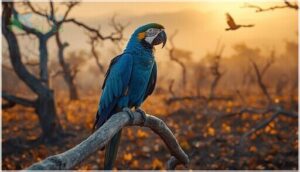
If the Madagascar Pochard shows what survival looks like by a thread, Spix’s Macaw shows what happens when that thread finally snaps in the wild.
This small blue parrot — the real-life inspiration for Rio — is classified as extinct in the wild. Its macaw habitat, Brazil’s Caatinga dry forest, was stripped away. Wild reintroduction began in 2022, and in 2023, a released pair hatched chicks — a quiet, notable comeback. Recent evidence from has renewed hope among conservationists.
| Category | Detail | Status |
|---|---|---|
| Conservation Status | Extinct in the wild (IUCN) | Critical |
| Captive Breeding | ~267 birds, ~60 chicks/year | Active |
| Wild Reintroduction | First chicks hatched 2023 | Ongoing |
| Conservation Genetics | High inbreeding risk | Managed |
| Species Revival | Releases near Curaçá, Brazil | In Progress |
Kakapo – The Flightless Parrot

Unlike Spix’s Macaw, the kakapo never lost its wildness — it just got cornered.
This flightless parrot is nocturnal, solitary, and weighs up to 4 kg. Its endangered status reflects decades of predation by introduced species.
Five kakapo facts worth knowing:
- Kakapo diet is entirely plant-based
- Flightless traits include short, balance-only wings
- Nocturnal behavior keeps it hidden by day
- Fewer than 250 remain — endangered birds don’t get rarer
- Wildlife conservation efforts now protect them on predator-free islands
Philippine Eagle – The Giant Forest Hunter

From a flightless night wanderer to a sky giant — meet the Philippine Eagle. This critically endangered bird rules the rainforest canopy across four Philippine islands, with a wingspan stretching over 2 meters.
For a striking contrast in scale, the Black-backed Woodpecker’s bold field markings show just how wildly bird evolution has diverged across the world’s forests.
Habitat destruction has pushed fewer than 500 individuals to the edge. Wildlife conservation efforts in Eagle Conservation and Species Research are fighting back, but Forest Habitat loss won’t slow itself down.
Imperial Amazon – Dominica’s Colorful Gem

The Imperial Amazon — Dominica’s Sisserou parrot — is a striking emblem of Island Ecology and national pride.
Found only in Dominica’s montane rainforest, fewer than 50 mature individuals survive today.
Parrot Conservation and Habitat Protection efforts, especially within Morne Diablotin National Park, give this Endangered Species a fighting chance.
Species Adaptation can only go so far — without sustained Wildlife Conservation and Forest Habitat preservation, this colorful gem won’t survive.
Unusual Traits and Behaviors of Rare Birds

Rare birds don’t just look different — they act different too.
Some have bills shaped like no other creature on Earth, while others live by rules that would seem strange to most animals.
Here are a few traits that make these birds genuinely hard to forget.
Spoon-billed Sandpiper’s Unique Bill
The Spoon-billed Sandpiper carries one of nature’s strangest tools — a tiny black bill that flares into a flat spatula at the tip. This Bill Shape Adaptation isn’t just for show. Packed with pressure-sensitive Sensory Structures called Herbst corpuscles, it detects hidden prey beneath mudflat sediment.
These Foraging Techniques and Feeding Mechanisms make this Endangered Species a marvel of Avian Ecology worth every Bird Conservation and Wildlife Conservation effort protecting it.
Kakapo’s Nocturnal Lifestyle
The Kakapo breaks every rule you’d expect from a parrot. This nocturnal bird spends its nights in exceptional Nocturnal Foraging — climbing trees, sniffing out food, and moving silently through dense forest.
Its Sensory Adaptations include sharp smell and low-light vision, replacing speed with stealth for Predator Avoidance. Understanding this unusual Nocturnal Habitat is central to modern Conservation Biology and ongoing Wildlife Conservation Efforts.
Shoebill’s Shoe-Shaped Beak
The Shoebill’s Beak Structure is basically nature’s version of a sledgehammer — blocky, wide, and built to dominate. Measuring up to 25 cm long and 20 cm wide, it’s a masterclass in Avian Biology.
Its Bill Coloration is a muted, mottled buff-gray, perfect for blending into papyrus swamps. These Hunting Tactics and Prey Capture strategies make it a cornerstone of Wildlife Preservation and Conservation Biology research.
African Grey Parrot’s Advanced Intelligence
The African Grey Parrot doesn’t just talk — it thinks. In Avian Biology, few species match its cognitive abilities. Here’s what makes it stand out:
- Vocal Imitation that connects words to real meaning
- Problem Solving across multi-step puzzle tasks
- Memory Capacity strong enough to recall faces after years
- Emotional Intelligence that reacts to your actual mood
Conservation Efforts increasingly recognize its ecological importance to species preservation.
Jabiru’s Striking Appearance
The jabiru is hard to miss. Standing up to 1.5 meters tall, its body size alone sets it apart from most wetland birds.
Its black bill shape — nearly 35 cm long and slightly upturned — works like a scoop for snagging prey. The white feather colors contrast boldly with its bare black head and that iconic red neck pouch, making it a vivid symbol of avian diversity worth protecting.
Major Threats Facing Rare Bird Species

Rare birds are fighting battles on multiple fronts, and the odds aren’t always in their favor.
From shrinking forests to rising temperatures, the pressures they face are real and relentless.
Here’s a closer look at the biggest threats pushing these species toward the edge.
Habitat Destruction and Fragmentation
Across the world’s forests, habitat destruction and fragmentation quietly push rare birds toward the edge. Forest fragmentation breaks connected habitats into isolated patches, triggering edge effects that expose nests and strip away shelter.
Habitat loss compounds species extinction risk fast — in southern Amazonia alone, road expansion cost roughly 83 forest bird species in under a decade. Smart ecosystem management and bold conservation efforts and conservation strategies can still turn this around.
Invasive Species and Predation
Habitat loss isn’t the only villain. Invasive species hit Ground Nester Vulnerability hard — rats, cats, and stoats raid nests that flightless birds simply can’t defend. Mammal Predator Impact is real: just 21 feral cats can collapse a seabird colony. Threats to Bird Populations multiply fast when an Invasive Bird carries disease too.
- Invasive stoats drove 62 New Zealand bird extinctions
- Feral cats and rats devastate rare seabird colonies together
- Invasive birds spread avian malaria to vulnerable native species
- Predator-free island sanctuaries now protect Rare Birds of the World
Climate Change Impact on Habitats
Climate change impact doesn’t ask permission — it just reshapes the world birds call home. Rising temperatures push species into climate migration, but mountains and coastlines block the path.
Sea level rise swallows coastal nests whole. Extreme weather floods eggs. Habitat fragmentation cuts populations off from each other, accelerating biodiversity loss.
| Climate Threat | Bird Impact |
|---|---|
| Sea Level Rise | Drowns shorebird nests |
| Extreme Heat | Reduces tropical survival by 38% |
| Habitat Fragmentation | Isolates small populations |
| Drought | Shrinks wetland breeding grounds |
| Extreme Weather | Floods eggs, disrupts foraging |
Hunting, Poaching, and Illegal Trade
Even after escaping habitat destruction, rare birds face another enemy: people. Wildlife trafficking pulls up to 5 million wild birds into illegal trade every year. Poaching methods are ruthless — mist nets, decoy traps, smuggled shipments.
- Bird smuggling funds organized criminal networks
- Illegal trade drives species extinction faster than habitat loss alone
- Conservation enforcement remains dangerously underfunded globally
Pollution and Environmental Degradation
Pollution hits rare birds from every angle. Plastic waste chokes seabirds, oil spills destroy feather insulation, and toxic chemicals like DDT thin eggshells until they crack. Heavy metals poison fish-eating birds quietly, over generations. Light pollution pulls night migrants straight into buildings.
Environmental degradation doesn’t just damage habitats — it unravels ecological balance entirely. Conservation efforts must tackle all of it.
| Threat | Impact | Example |
|---|---|---|
| Plastic Waste | Internal organ damage | Seabird chicks |
| Oil Spills | Hypothermia, death | Exxon Valdez murres |
| Heavy Metals | Neurological damage | Raptors, waterbirds |
Remarkable Conservation Efforts and Successes

The story of rare birds isn’t all loss — some of it’s genuinely worth celebrating.
Conservationists around the world have pulled species back from the edge using a handful of smart approaches. Here’s what’s actually working.
Captive Breeding and Reintroduction Programs
When a species drops to double digits, captive breeding becomes a lifeline. These programs don’t just keep birds alive — they buy time to fix the wild.
Three things make them work:
- Smart Breeding Techniques that prevent inbreeding
- Careful Habitat Preparation before any release
- Gradual Release Strategies with post-release monitoring
Strong Species Management turns conservation outcomes from hopeful to real.
Habitat Restoration Initiatives
Behind every thriving rare bird is a landscape someone fought to rebuild. Habitat Restoration and Ecosystem Restoration go hand in hand — think Wetland Restoration that adjusts flood timing for waterbirds, or Forest Regeneration fencing out feral animals in Hawaiʻi.
Native Replanting, Wildlife Corridors, and smart Ecosystem Engineering expand territories so populations can breathe. These Conservation Efforts are how Wildlife Conservation turns from intention into reality.
International Cooperation for Migratory Birds
Migratory birds don’t respect borders — and neither can the people protecting them. That’s why Flyway Conservation and Migratory Bird Treaties exist.
Through International Agreements like AEWA and the Convention on Migratory Species, over 100 countries coordinate Bird Migration Patterns research, Habitat Protection, and Wildlife Management Practices. Global Cooperation turns fragmented efforts into real Biodiversity Conservation — because a bird lost halfway through its journey is still lost.
Community Engagement and Education
Conservation doesn’t happen in labs alone — it lives in communities. Bird conservation efforts grow stronger when people get involved.
Education outreach programs bring rare bird stories into schools, festivals, and neighborhoods, sparking environmental awareness where it counts. Citizen science tools like eBird let you track real populations.
These community programs turn everyday people into active wildlife preservation and protection advocates, and that’s where avian conservation and research truly takes flight.
Rediscoveries of “Lost” Bird Species
Some birds don’t go extinct — they just disappear for a while. Lost Bird Lists now track around 126 missing species globally, guiding Rediscovery Efforts toward the right places.
Here are five notable finds driving Conservation Outcomes:
- Night Parrot — rediscovered in Australia after nearly 100 years
- Black-browed Babbler — resurfaced in Borneo after 172 years
- Kakapo — pulled back from near-extinction through Species Reintroduction
- Santa Marta Sabrewing — photographed after 76 years missing
- Spix’s Macaw — part of active Bird Species Tracking and captive recovery programs
Why Rare Birds Matter to Ecosystems

Rare birds aren’t just beautiful birds — they’re doing real work out there. Every species plays a role that keeps ecosystems running, and losing one can quietly unravel things you’d never expect.
Here’s why these rare birds matter more than most people realize.
Ecological Roles and Seed Dispersal
Rare birds aren’t just beautiful — they’re doing real work. Many endangered frugivores carry seeds hundreds of meters, fueling forest regeneration and maintaining ecosystem balance through species interactions no smaller bird can replicate.
Critically endangered macaws move large palm seeds deep into savanna woodlands. Lose these birds, and seed dispersal networks collapse, threatening biodiversity and the ecological balance entire habitats depend on for conservation.
Indicators of Environmental Health
Beyond seeds and forests, birds are also reading the environment so you don’t have to. They’re nature’s bioindicators — living signals of ecosystem health you can actually watch.
When rare species vanish, it means something’s wrong:
- Pollution signals shift in feather and tissue samples
- Climate shifts push ranges poleward
- Habitat destruction thins bird communities
- Biodiversity metrics drop as ecological balance breaks
That’s environmental conservation losing its early-warning system.
Contributions to Biodiversity
What rare birds do for biodiversity runs deeper than most people realize. Each species carries unique genetic diversity — lineages that don’t exist anywhere else.
That variety strengthens ecosystem balance, fuels species interactions, and keeps biodiversity hotspots resilient. Lose one bird, and you’re pulling a thread from a web built over millions of years. Avian biodiversity isn’t a bonus. It’s the foundation.
Lose one bird, and you pull a thread from a web built over millions of years
Inspiring Global Conservation Action
When you protect one endangered species, you’re making a statement about global citizenship. Rare birds have sparked real environmental policy shifts — World Migratory Bird Day now runs in over 100 countries. That’s eco activism at scale.
Wildlife preservation doesn’t happen in isolation; it needs people choosing sustainable living and demanding conservation efforts that treat habitat protection as non-negotiable.
Frequently Asked Questions (FAQs)
What are some rare facts about birds?
Some birds break every rule you thought nature followed. Ornithology keeps revealing wild surprises — from flightless parrots to extinct-in-the-wild macaws — proving rare birds rewrite what we understand about avian conservation and survival.
What is the most rare bird ever?
The Madagascar pochard holds that heartbreaking title. Once down to just 22 wild individuals, this critically endangered duck teeters on extinction’s edge — a sobering warning of why bird conservation and species survival efforts can’t wait.
How do birds sleep without falling off branches?
Their feet do the work for them. A tendon locking system tightens the foot grip automatically when they land, letting gravity balance hold them secure while brain sleep takes over — no effort needed.
Why dont birds get electrocuted on power lines?
When a bird grips one power line, its body stays at the same voltage throughout, so no current flows.
There’s no voltage difference, no completed circuit — just a safe perch above the world.
How do penguins stay warm in Antarctic temperatures?
Nature arms each creature for its climate. Penguins survive Antarctic cold through blubber layer insulation, dense feathers, group huddling, efficient heat exchange, and high metabolism — keeping their core temperature stable even below minus 40 degrees Celsius.
Whats the smallest egg laid by any bird?
The bee hummingbird holds the record. Its egg measures roughly 5 mm long — about the size of a coffee bean — and weighs less than a paperclip.
Tiny, but perfectly built for life.
How do rare birds adapt to captivity?
Rare birds don’t adapt overnight. Larger aviaries, captive diets, and behavioral enrichment ease the shift.
Stress response drops within days. Breeding challenges fade when space, diet, and pair bonding finally align.
Which rare birds have the longest lifespans?
Kakapo can live up to 90 years, making them lifespan champions among rare birds.
Imperial Amazons reach 70 in captivity.
Both species’ slow breeding impact makes every long-lived individual critical to conservation efforts.
How do rare birds communicate with each other?
Birds use long-distance calls, non-vocal signals, and vocal learning to stay connected.
Rare birds like the kakapo boom across valleys, while others use mimicry, drumming, or duets to find mates and warn of danger.
What role does ecotourism play in bird survival?
Ecotourism quietly funds bird survival. Park funding from bird watching fees pays rangers and fuels habitat protection.
Local livelihoods grow. Visitor education shifts behavior.
These conservation efforts drive sustainable development and real species survival.
Conclusion
These birds are canaries in a coal mine—their silence signals a world losing its balance. The rare bird facts uncovered throughout this article aren’t just curiosities; they’re urgent reminders that fragile lives depend on choices made today.
You don’t need to be an ornithologist to care. Support conservation efforts, spread awareness, and respect wild spaces. Every species lost dims something irreplaceable in the natural world. The ones still here are worth your attention.
- https://www.birdlife.org/news/2025/09/10/glimmer-of-hope-sought-after-lost-bird-rediscovered-in-india/
- https://www.livescience.com/rediscovered-papua-new-guinea-bird
- https://www.rewild.org/press/new-analysis-reveals-126-birds-are-lost-to-science
- https://planetofbirds.com/rarest-birds-in-the-world/
- https://www.theinvadingsea.com/2025/12/27/bird-declines-climate-change-extreme-weather-north-america-drought-heat-wave-habitat-loss/