This site is supported by our readers. We may earn a commission, at no cost to you, if you purchase through links.
 A Carolina chickadee weighs about as much as two pennies, yet it needs to consume roughly 35% of its body weight in food every single day just to survive. That’s why the feeder you choose matters more than you might think—small birds need easy access to high-quality food without competition from larger species or acrobatic squirrels stealing their meals.
Most standard feeders favor aggressive grackles and jays, leaving finches, chickadees, and nuthatches scrambling for leftovers. The right feeder changes everything: specialized designs with adjustable ports, weight-activated perches, and protective cages create a safe dining space where your tiniest backyard visitors can actually thrive.
Here’s how to pick feeders that give small birds the advantage they need.
Table Of Contents
Key Takeaways
- Small birds like chickadees need to consume roughly 35% of their body weight daily to survive, making reliable access to quality feeders with proper port sizes and weight-activated perches genuinely life-saving rather than just convenient.
- Specialized feeder designs—including caged tubes, upside-down suet feeders, and narrow feeding ports under 8mm—physically exclude aggressive larger species while creating safe dining spaces where finches, nuthatches, and chickadees can feed without competition.
- Strategic seed selection acts as a natural filter: safflower seeds and nyjer thistle deter starlings and grackles through bitter taste and tiny size, reducing nuisance visits by up to 70% while attracting target species.
- Feeder placement 10-15 feet from shrub cover combined with weekly cleaning using 10% bleach solution prevents both predation risks and disease transmission, turning basic maintenance into critical survival support for backyard visitors.
Best Bird Feeders for Small Birds: Top 8 Picks
Finding the right feeder can transform your backyard into a sanctuary for chickadees, goldfinches, and other delightful small birds.
We’ve tested dozens of feeders to bring you eight standout options that actually keep the bullies at bay while welcoming your tiny visitors.
Each of these picks solves a specific challenge—whether you’re dealing with persistent squirrels, aggressive starlings, or just want a closer look at your feathered friends.
1. Squirrel Proof Bird Feeder Tube
 View On Amazon
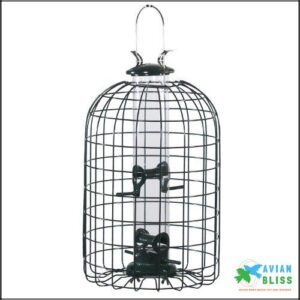
First up, let’s talk squirrelproof tube feeders—a tried-and-true favorite for anyone tired of acrobatics at the seed buffet. These clever designs have caged exteriors and weight-activated perches, letting small birds dine in peace while squirrels and larger bullies get politely blocked.
You’ll find tough feeder materials like powder-coated steel here, promising years of bird safety with minimal fuss. Squirrel resistance isn’t just clever marketing; it’s genuine, practical squirrel control, letting your yard become a haven for little visitors.
Best For: Small bird lovers who want an easy way to keep squirrels and big birds from hogging the feeder.
- Durable materials mean it stands up to weather and squirrel attacks.
- Let’s smaller birds feed safely while blocking most squirrels and large birds.
- Holds plenty of seed and is easy to watch from a window.
- Not 100% squirrel-proof—very determined or baby squirrels might sneak in.
- No rain shield, so seed can get wet and moldy if it rains.
- Can be tricky to clean, with the risk of breaking parts if handled roughly.
2. Window Mount Bird Seed Feeder
 View On Amazon
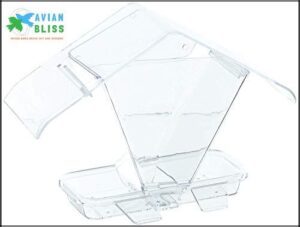
Next on your birdwatching journey, window bird feeders offer a front-row seat for the show—think of it as breakfast theater right on your glass.
These bird feeder designs shine when mounted with strong suction cups, ensuring Feeder Stability and Mounting Security even on breezy mornings. Carefully chosen Window Placement minimizes Bird Collision while maximizing Seed Visibility for tiny guests.
You’ll catch spirited chickadees and titmice feeding safely up-close, all while their world stays undisturbed by larger, pushier neighbors.
Best For: Anyone who wants to watch small birds up close and enjoy easy, mess-free feeding right at their window.
- Offers a fantastic view of songbirds like chickadees and titmice, perfect for bird lovers of all ages.
- Easy to refill and clean thanks to the sliding seed reservoir and removable tray.
- Stays firmly attached with strong suction cups designed to keep the feeder secure on your glass.
- Not suitable for attracting larger birds like cardinals or doves.
- Needs regular cleaning to prevent mold and keep birds healthy.
- Suction cups can lose grip over time if not installed properly or if the window isn’t very clean.
3. Squirrel Resistant Bird Feeder Model
 View On Amazon
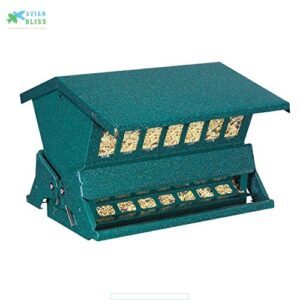
Now, about squirrel proofing—because nothing ruins a peaceful morning like a squirrel’s acrobatics. Squirrel Proof Bird Feeder designs lean on clever engineering: weight-activated perches shut tight when a furry heavyweight lands, keeping small birds happy and seeds secure.
Sturdy feeder materials like steel and polycarbonate withstand both the weather and persistent chewers. Squirrel deterrents such as sturdy cages and baffles add extra layers of Squirrel Control, tipping the balance in favor of finches, chickadees, and other small guests.
Best For: Backyard bird lovers who want to keep squirrels out and attract a wide range of small birds.
- Dramatically reduces wasted seed and squirrel interference.
- Durable metal and polycarbonate build stands up to weather and chewing.
- Adjustable features let you fine-tune feeding for different birds.
- Not effective against raccoons and may limit larger birds.
- Can be heavy and tricky to move or fill when full.
- Some models have sharp edges or require more frequent cleaning.
4. HummZinger High View Hummingbird Feeder
 View On Amazon
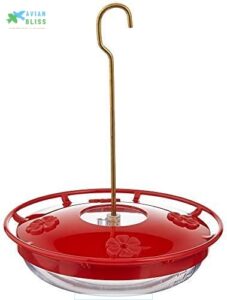
When your backyard’s full of squirrelly antics, you know it’s time for a little peace—and a touch of color. The Aspects HummZinger High View Feeder isn’t just a pretty face.
HummZinger features like a vibrant red lid and a wraparound perch call hummingbirds in for a comfortable, lingering meal.
Built tough with UV-stabilized polycarbonate, this hummingbird feeder means easy cleaning, exceptional feeder durability, and top nectar quality—making your bird viewing peaceful and downright delightful. It’s a personal favorite for hummingbird attraction.
Best For: Backyard bird lovers who want an easy-to-use, durable feeder that keeps hummingbirds in clear view.
- Super easy to clean and refill, with no tools required
- Built-in ant moat and raised ports help keep pests away
- Tough polycarbonate body handles sunlight and weather, plus a lifetime guarantee
- Lid can crack if pressed down too hard
- Needs at least 8oz of nectar to deter bees
- Price point may feel steep for some budgets
5. Upside Down Suet Feeder Taupe
Balance and ingenuity meet in the Upside Down Suet Feeder Taupe—a favorite among small bird enthusiasts. This clever suet feeder design lets chickadees, woodpeckers, and nuthatches cling naturally beneath the sturdy, recycled poly-lumber roof.
With upside down benefits and a feeding cage that thwarts larger bullies, you’ll see more of the tiny acrobats who make backyard birding rewarding.
Easy to clean, weather-resistant, and built for longevity, this is one feeder material selection that actually works with bird attraction methods and small bird preferences.
Best For: Bird lovers looking to attract chickadees, nuthatches, and woodpeckers while discouraging bigger, pesky birds in their backyard.
- Upside-down design keeps out most starlings and grackles, so small birds get the suet.
- Made from recycled plastic, so it’s eco-friendly and tough against weather.
- Super simple to clean and refill, with a roof that protects suet from rain.
- Larger birds like starlings and grackles may still find ways to access the suet.
- Some birds take a little while to figure out how to use the upside-down feeder.
- Only holds one suet cake at a time, so you might need to refill it often if bird traffic is heavy.
6. Black Suet Cage Bird Feeder
 View On Amazon
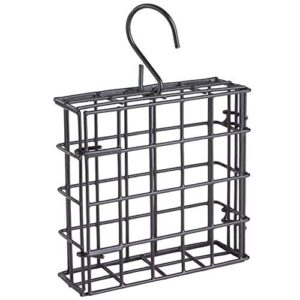
One little wonder that earns its keep is the Black Suet Cage Bird Feeder. Designed for clinging bird species like woodpeckers and nuthatches, it delivers the Suet Cake Benefits you’re after—energy, comfort, and plenty of action.
The cage grid provides sturdy footing, while mounting this suet feeder high and away from jumping points helps with Squirrel Resistance Methods.
Pair with blackoil sunflower seeds or upsidedown suet feeders for even more variety in your daily bird feeding habits.
Best For: Bird enthusiasts who want an easy and sturdy way to feed clinging birds like woodpeckers, nuthatches, and chickadees in their backyard.
- Durable, weather-resistant metal construction stands up to the elements.
- Cage design attracts clinging birds and keeps feeding action visible.
- Simple, double-locking closure makes refilling and cleaning a snap.
- Grid size may be too large for tiny birds or those with short beaks.
- Squirrels can still access suet unless extra precautions are taken.
- Suet may melt if feeder isn’t placed in a shady spot.
7. Pure Suet Bird Food Packs
 View On Amazon
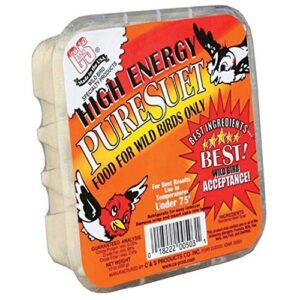
There’s nothing quite like placing pure suet bird food packs in your favorite suet feeders and watching the small birds appear. These high-quality packs deliver instant Bird Energy, loaded with essential Suet Nutrition—just what woodpeckers, titmice, and nuthatches crave, especially in cold months.
The absence of fillers means even skittish goldfinches and siskins drop by, savoring simple fat, even when insects or nyjer seed run low. Choose a feeder design that fits easy-to-use suet types, and you’ll see Bird Attraction all season.
Best For: Folks who want to attract woodpeckers and smaller songbirds—especially during cooler months—using natural, high-energy food with no fillers.
- Made from pure beef fat for maximum energy and easy digestion.
- Attracts woodpeckers, nuthatches, chickadees, and other insect-eating birds.
- Easy to use and keeps feeders less messy, with no shells or artificial additives.
- Gets soft or melts in warmer weather, creating a mess and possible spoilage.
- Can be pricier than seed-based or mixed suet options.
- Not all birds prefer pure suet—some species seek out blends with nuts or seeds.
8. Squirrel Proof Bird Feeder Cage
 View On Amazon
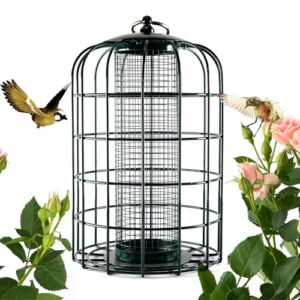
Ever noticed how squirrels eye your feeder like it’s their own buffet? A high-quality Cage Design—think Audubon Squirrel Proof Caged Bird Feeder—uses tough feeder materials and weighted perches to outsmart persistent squirrel behavior.
These caged tube feeders allow small bird species inside, while larger visitors stay puzzled outside. Squirrelproof designs matter, not just for seed savings, but for wildlife conservation too.
After all, protecting every visit from goldfinches or nuthatches feels a bit like guarding little backyard treasures.
Best For: People who want to feed small backyard birds while keeping squirrels and larger birds from stealing seed.
- Sturdy iron cage keeps most squirrels and big birds out, letting finches and chickadees feed safely.
- Seed stays fresh and dry in the covered box, with up to 1.5 pounds held before you need to refill.
- Easy to hang, refill, and clean, plus you can quickly see when seeds run low through the clear shell.
- Some small animals, like mice, may still get trapped inside if they squeeze through.
- Determined squirrels can sometimes damage the feeder or find ways in, especially if openings are too big.
- Doesn’t block larger birds like grackles, which might still access the seed.
Key Features of Small Bird Feeders
There’s a lot more to a great small bird feeder than meets the eye. Certain features make all the difference for keeping little visitors safe, comfortable, and well-fed.
Let’s look at the details that set the best designs apart.
Adjustable Dome Tops
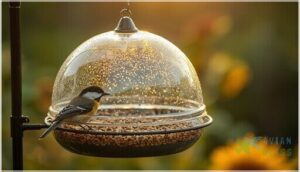
Imagine giving your backyard birds their own secret clubhouse—adjustable dome tops keep out the unwanted guests while small birds dine in peace.
With Dome Top Adjustments, you control the size of the entry, letting tiny guests slip in while discouraging bullies.
Feeder Dome Designs add both Seed Protection and easy Bird Access Control, making your bird feeders their favorite spot.
Weight-Activated Perches
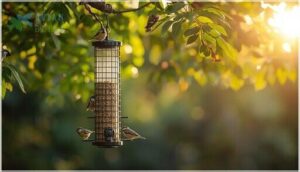
Isn’t it clever how a little bounce on the perch can tell you exactly who’s too heavy to join the feast? Weight-activated perches use a simple weight trigger to collapse under heavier animals, keeping squirrel deterrent features strong while protecting small birds.
This perch design ensures bird safety and feeder stability, making weighted perches on caged tube feeders a backyard breakthrough.
- Lightweight finches and chickadees trigger no response, dining comfortably
- Squirrels and jays cause perches to drop, blocking seed access instantly
- Adjustable sensitivity settings let you fine-tune which birds get through
Shallow and Small Base Designs
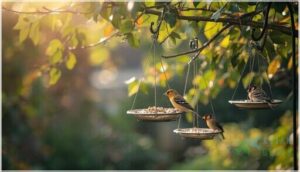
Once the perch does its job keeping the big guys out, the actual feeding platform needs to match the petite build of your feathered guests—and that’s where shallow and small base designs come into play.
Compact feeders with low profile trays let finches and chickadees perch comfortably without clinging awkwardly.
Miniature designs on finch feeders and caged tube feeders offer just enough room for tiny beaks, while shallow trays prevent larger species from settling in for a long meal.
Size and Shape of Feeding Ports
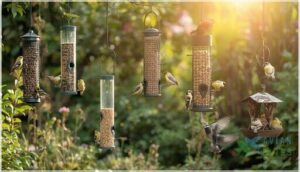
The port itself—that little opening where beaks go hunting for seeds—might be the single most important gatekeeper on your feeder. Feeding hole sizes and port design options determine which species can actually access your seed types.
Tube feeder shapes with narrow openings favor finches, while seed dispenser types with tiny slots keep starlings out. Different perch attachment styles also shift who stays for dinner, attracting small birds by design.
- Narrow slots (under 8mm) exclude house sparrows but welcome goldfinches
- Mesh-style ports let chickadees cling while deterring grackles
- Angled openings on nyjer feeders suit the feeding posture of finches
- Recessed ports prevent larger beaks from reaching deep into seed chambers
- Port spacing matters—close together works for small flocks, spread out reduces crowding
Durable Materials and Weather Resistance

Your feeder won’t do much good if it falls apart after one rainy week or cracks open when winter hits hard. Look for UV-stabilized materials and weatherproof designs that laugh off storms. Metal coatings with rust resistance protect feeder designs from corrosion, while durable plastics manage freeze-thaw cycles without splitting—both making bird feeder maintenance and feeder cleaning simpler over time.
| Material Type | Why It Works |
|---|---|
| Powder-coated steel | Exceptional rust resistance and longevity tests prove it outlasts painted metal |
| Polycarbonate plastic | UV-stabilized materials won’t fade or crack after sun exposure |
| Stainless steel mesh | Combines corrosion protection with easy cleaning—no scrubbing stuck seed |
| Cedar wood (treated) | Naturally weather-resistant and holds up through seasonal shifts |
Easy Cleaning and Refilling
Even the toughest feeder becomes a chore if you need pliers and a ladder just to top off the seed or scrub out moldy hulls. Look for feeder designs with wide-mouth openings and removable bases that make feeder cleaning quick—some even twist apart without tools.
Refill systems with easy cleaning access reduce bird feeder maintenance time, and sanitation methods stay simple when you can rinse components under a faucet.
Smart feeder maintenance saves birds from disease and saves you from frustration.
Preventing Bully Birds and Squirrels
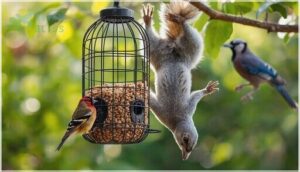
Let’s face it—larger birds and squirrels can turn your peaceful feeding station into an all-you-can-eat buffet.
The good news is that with the right strategies, you can keep these uninvited guests at bay while making sure your smaller songbirds get their fair share.
Here’s how to protect your feeders and create a space where finches, chickadees, and other petite visitors can dine in peace.
Caged Feeders and Weighted Perches
If you’ve ever watched a Blue Jay bully its way to your feeder while chickadees scatter like leaves in the wind, you already know why caged feeders and weighted perches have become game-changers for backyard birders.
Caged tube feeders like the Audubon Caged Tube Feeder use metal bars spaced just right—small birds slip through easily while grackles and jays can’t squeeze in.
Weighted perch feeders work differently: when a heavy bird lands, the perch drops and closes off the feeding ports, keeping your thistle seed reserved for finches and chickadees where it belongs.
Seed Types That Deter Larger Birds
Smart seed selection works like a velvet rope at an exclusive club—certain seeds naturally filter out the troublemakers. Safflower seeds pack a bitter punch that starlings and grackles can’t stand, while nyjer seed’s tiny size appeals almost exclusively to finches and siskins.
Here’s your lineup for preventing bully birds:
- Safflower seeds – Thick shells and bitter taste reduce nuisance visits by 45%
- Nyjer (thistle) seed – High oil content attracts finches; 70% fewer large bird visits
- White proso millet – Low calorie density deters energy-hungry bullies
- Striped sunflower types – 30% thicker shells challenge larger beaks
These seed choices let you roll out the welcome mat for chickadees and nuthatches while grackles move along to easier pickings. Understanding nyjer seed facts can help you make informed decisions about the best bird feeders for your yard.
Feeder Placement Strategies
Where you hang a feeder matters just as much as what you put inside it—location can mean the difference between a thriving hub of chickadees or an empty perch gathering dust. Position feeders 10-15 feet from tree cover so backyard birds feel safe while larger species lose their edge. This garden integration approach respects natural bird flight paths and yard layout.
Smart bird feeding strategies align feeder placement with how small birds naturally move through your space.
| Feeder Location | Why It Works |
|---|---|
| Near shrubs (10-15 ft) | Small birds escape quickly; bully birds exposed |
| Open lawn areas | Large birds prefer; avoid for feeder designs targeting small birds |
| Window-mounted | Intimate views; deters squirrels and larger species |
Upside-Down and Specialized Feeders
Some birds have figured out that eating upside-down beats waiting in line—and the feeders designed around this quirk turn natural agility into an all-access pass for the small guys.
Upside-down suet cages let woodpeckers and nuthatches cling comfortably while starlings struggle. Finch feeders with nyjer seed below perches work the same magic—goldfinches hang effortlessly, but grackles can’t manage the angle.
Cage feeders add another layer, physically blocking anything too bulky to squeeze through.
Predator Guards and Baffles
Squirrels aren’t the only uninvited guests—hawks, cats, and raccoons see your feeder setup as a buffet line, and without the right barriers, small birds become the entrée.
Dome baffles and cylinder guards block climbers from reaching squirrel-proof bird feeder types from above or below. Metal predator deterrents work better than plastic—they don’t crack or warp.
Positioning bird shields at least five feet off the ground and eight feet from launch points keeps bully birds and ground predators at bay, letting your chickadees feed without constantly scanning for threats.
Attracting More Small Birds to Your Yard

Getting more small birds to visit your feeders isn’t just about the feeder itself—it’s about creating a space where they feel safe and welcome. The right combination of food, water, and habitat makes all the difference in turning your yard into a haven for chickadees, finches, and wrens.
Let’s walk through the key strategies that’ll help you attract and keep these delightful visitors coming back.
Best Seeds and Foods for Small Birds
Think of seed selection as the menu that determines who shows up to your backyard café. Black-oil sunflower seeds draw chickadees and nuthatches, while nyjer seed (also called thistle) brings finches flocking in droves.
For peak bird nutrition, rotate between different types of bird food—suet cakes offer high-energy fats for winter survival, and peanut butter appeals to small species with specialized dietary needs.
This feeding strategy of providing food variety ensures you’re meeting the nutritional requirements of multiple species throughout the seasons. Understanding bird seed preferences is vital for attracting a diverse range of birds to your backyard.
Creating a Bird-Friendly Environment
Your bird-friendly environment extends beyond the feeder itself into sustainable gardening and thoughtful wildlife conservation practices. Native plant selection forms the foundation—oaks support over 530 caterpillar species that small birds rely on for protein, while invasive species offer minimal nutritional value.
Consider these bird habitat restoration strategies for eco-friendly landscaping:
- Replace lawn areas with native shrubs like winterberry and chokecherry
- Eliminate pesticides that kill the insects small birds need
- Provide dense vegetation within 10 feet of bird feeders for quick escape routes
- Aim for 40–60% canopy cover to attract species like Bewick’s Wren
Backyard bird feeding works best when paired with habitat that mirrors natural ecosystems.
Water Sources and Bathing Areas
You’ve built the habitat—now let’s talk about the water feature that’ll turn your yard into the neighborhood hot spot for chickadees and warblers.
Bird baths with shallow basins (1–2 inches deep) are perfect—small birds won’t risk deeper water. Adding fountain systems creates movement that catches their eye from blocks away.
Clean your birdbath twice weekly to maintain bird health and prevent disease transmission among backyard bird feeding stations.
Placement for Maximum Small Bird Activity
Location matters more than you might think—set up your feeders 10–12 feet from dense shrubs or trees, giving small birds a quick escape route to cover while keeping them visible enough that predators can’t ambush from the bushes.
Here’s how to arrange your yard layout for maximum activity:
- Window bird feeders thrive on east-facing walls where morning sun warms visiting chickadees without afternoon glare
- Position tube feeders at varying heights (3–6 feet) to accommodate different species’ comfort zones
- Space multiple bird feeders 15–20 feet apart to reduce competition and territorial squabbles
- Avoid placing feeders directly under heavy tree canopy where hawks perch and scan for prey
Using Native Plants and Cover
Your feeder setup is only half the battle—native shrubs, grasses, and berry-producing plants turn your yard into an all-season buffet and safe haven that small birds can’t resist.
Focus on wildlife-friendly landscaping with species like serviceberry, elderberry, and native grasses—they provide natural seeds, nesting sites, and insect populations that support bird conservation.
Layered garden cover design, from ground-level perennials to mid-height shrubs, gives backyard bird feeding visitors multiple escape routes from predators while attracting diverse bird species year-round.
Bird Feeder Maintenance and Bird Safety Tips
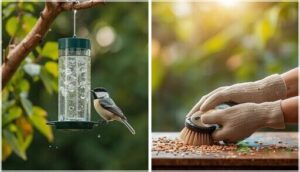
Keeping your feeders clean and your feathered visitors safe doesn’t have to be complicated, but it makes all the difference in creating a thriving backyard habitat.
A little routine care prevents disease, keeps food fresh, and protects small birds from everyday hazards they face at feeding stations.
Here’s what you need to know to maintain a healthy, welcoming environment for your smallest guests.
Regular Cleaning and Hygiene Practices
If you’ve ever watched a flock of house sparrows swoop in and scatter disease like confetti at a wedding, you already know that feeder hygiene isn’t just about keeping things tidy—it’s about keeping your backyard visitors alive.
You’ll want to scrub your feeders weekly with a 10% bleach solution, rinse thoroughly, and let them dry completely before refilling. This simple cleaning schedule stops mold prevention issues before they start and keeps avian diseases like salmonellosis from spreading through your local bird population.
Checking and Repairing Feeders
Even a perfectly designed feeder won’t serve your small birds well if a cracked perch sends a chickadee tumbling or a broken port wastes your premium seed on the ground.
You’ll want to inspect your feeders monthly for damage assessment—look for rust, cracks, or loose components that compromise feeder design. Keep basic repair tools handy, and factor maintenance costs into your choosing bird feeders decision, since proper bird feeder maintenance extends their lifespan considerably.
Preventing Mold and Spoiled Seed
One moldy feeder can turn a welcoming breakfast buffet into a health hazard faster than you’d think—sometimes in as little as 48 hours during humid weather.
You’ll prevent spoilage by dumping uneaten seed weekly and keeping your seed storage dry and airtight. Stick to a cleaning schedule—sanitize feeders every seven days with a diluted bleach solution—and watch for clumped seed or musty odors that signal mold’s already taken hold.
Avoiding Harmful Foods
Not all treats belong at the feeder—some foods that seem harmless can actually poison the very birds you’re trying to help. Skip chocolate, avocado, salt, and anything caffeinated—these toxic food sources shut down a bird’s metabolism fast.
Stick to safe bird treats like black-oil sunflower seeds, suet, and nyjer—healthy treats that support bird nutrition without the hazardous substances lurking in processed human snacks.
Reducing Window Collisions and Predation Risks
Tragically, up to 1 billion birds die every year from window strikes in the U.S. alone—making window safety critical alongside feeder placement.
Position window bird feeders within 3 feet of glass (birds can’t build lethal speed) or beyond 30 feet. Apply bird window decals or window films to the outside surface—internal treatments don’t work.
Place feeders 10–12 feet from shrubs to allow escape routes without attracting predators, since nests near feeders face five times higher predation risk.
Frequently Asked Questions (FAQs)
How often should I refill my small bird feeder?
Here’s the thing about refill schedules: they’re less about the calendar and more about watching what’s actually happening at your feeder.
Most small birds will empty feeders every three to seven days, depending on feeder capacity, seed consumption rates, and local bird activity—so check daily and refill when seed drops below half-full to keep your backyard birds happy and healthy.
Do small birds prefer feeders in sun or shade?
Most backyard birds actually prefer shade or partial shade over full sun exposure.
Feeders placed in direct sunlight heat up quickly, making perches uncomfortable and spoiling seed faster—plus it leaves small birds vulnerable while feeding.
Conclusion
That empty feeder isn’t just a missed meal—it’s a tiny chickadee burning precious calories searching elsewhere, a nuthatch vulnerable to hawks while foraging exposed ground, a goldfinch skipping your yard entirely.
The bird feeders for small birds you choose become lifelines, especially during migration and winter when every calorie counts. Keep ports clean, seed fresh, and placements strategic.
Your backyard can become exactly what these resilient little survivors need: a reliable refuge where two-penny birds with oversized hearts know they’ll always find what they’re looking for.
- https://jcswildlife.com/absolute-ii-squirrel-proof-bird-feeders-green-heritage-farms-7536-pole-and-hanger-included/?ref=hVhUWmk6vKk1IL
- https://petandlife.com/how-to-attract-wild-birds-to-your-feeder/
- https://www.perkypet.com/squirrel-x-by-more-birds-x1-squirrel-proof-bird-feeder-with-spring-loaded-perches
- https://store.bromebirdcare.com/products/squirrelsolution-150-1017
- https://www.pennington.com/all-products/wild-bird/squirrel-resistant-feeder-bronze