This site is supported by our readers. We may earn a commission, at no cost to you, if you purchase through links.
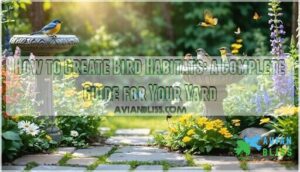 A patch of native flowers can transform your backyard into a bustling crossroads for birds, insects, and life you might never notice otherwise. It’s not just about pretty wings flitting past your window—birds quietly devour pests, connect green spaces, and even help you feel calmer on tough days.
When you choose plants that belong in your region, you’re building a lifeline for local wildlife and supporting the ecosystem right at your doorstep.
If you’re wondering how to create bird habitats that truly make a difference, you’re about to discover practical steps that turn your outdoor space into a haven for both birds and people.
Table Of Contents
Key Takeaways
- Planting native flowers and shrubs in your yard creates vital food, shelter, and nesting sites for local birds and supports insect populations they depend on.
- Bird-friendly gardens boost biodiversity, help birds disperse seeds, and connect fragmented habitats, making a real difference against habitat loss.
- Spending time with birds in your outdoor space can lower stress, improve mental health, and build community through shared nature experiences.
- Reducing pesticides, providing clean water, and joining citizen science projects help protect birds and keep your backyard habitat thriving year-round.
Why Create Bird Habitats at Home?
Creating a bird habitat in your yard isn’t just about helping feathered friends—it’s a choice that ripples out in surprising ways. From supporting fragile ecosystems to improving your own sense of wellbeing, the benefits reach further than you might expect.
Let’s look at four compelling reasons to turn your outdoor space into a haven for birds.
Benefits for Birds and Biodiversity
By creating habitat, you help birds disperse seeds for over 40% of woody plant species, strengthening biodiversity and ecosystem functioning. Birds provide essential pest control, consuming millions of tons of insects yearly, while nutrient cycling from seabirds and vultures maintains healthy ecosystems.
Diverse native plants increase species richness, and monitoring bird populations guides wildlife conservation efforts effectively. Because of their sensitivity to environmental changes, birds indicate ecosystem health.
Positive Impacts on Human Health and Wellbeing
Beyond supporting birds, creating habitat directly improves your mental wellbeing and physical health. Birdwatching reduces stress and offers therapeutic benefits, while backyard wildlife management gets you moving outdoors.
Connecting with nature through observing birds fosters mental health benefits and community building when neighbors share their experiences. According to recent research, birdlife exposure is linked to lasting improvements in mental wellbeing.
These therapeutic gardens transform ordinary spaces into places where both birds and people thrive together.
Combating Habitat Loss and Fragmentation
While your garden offers birds a welcoming place to rest and feed, North America has lost nearly 3 billion breeding birds since 1970, making every backyard habitat a critical piece of the larger conservation puzzle.
With nearly 3 billion breeding birds lost since 1970, every backyard habitat now plays a vital role in conservation
Urban sprawl and habitat loss fragment wildlife corridors, isolating bird populations. Your backyard bird habitat creates habitat connectivity, linking green spaces that support avian habitat restoration.
By transforming lawns into native plantings, you’re joining reforestation efforts that counter fragmentation and help birds move safely across landscapes.
Economic and Environmental Advantages
Bird-friendly yards don’t just help wildlife—they save you money and lighten your environmental footprint at the same time. Native plants require less water, supporting water conservation and reducing utility bills. Birds provide natural pest control, cutting down on chemical use while boosting property value.
These habitats support carbon sequestration and ecosystem support, creating a sustainable environment that benefits environmental health.
Plus, birdwatching contributes billions to ecotourism benefits annually, showing real economic impact alongside environmental protection.
Choosing The Right Native Plants for Birds
The plants you choose can make or break your bird habitat. Native species provide the right food, shelter, and nesting materials that local birds have evolved to depend on.
Let’s look at the key plant types that’ll turn your yard into a thriving bird sanctuary.
Why Native Plants Matter for Bird Survival
Think of native plants as nature’s own catering service—they’ve spent thousands of years perfecting the menu for your local birds. Regional adaptation ensures native plant nutrition matches what birds evolved to eat, especially through the insect-bird link that’s vital for raising chicks. Here’s why plant diversity benefits matter:
- Oak trees host over 500 caterpillar species, providing protein-rich food for nestlings
- Native berries ripen precisely when migrating birds need energy-dense fuel
- Habitat complexity from diverse native plantings creates safe foraging zones at multiple heights
- Local wildflowers support insect populations year-round, sustaining birds between breeding seasons
Non-native plants can’t replicate these connections—they simply don’t support the insects that 96% of land birds depend on to feed their young.
Best Trees, Shrubs, and Flowers for Local Birds
Your plant choices create layers of opportunity—from treetops to ground level—maximizing seasonal habitat value throughout the year. Native trees like oaks support over 530 caterpillar species, while serviceberry trees serve 35 bird species. The shrub layer foraging zone attracts the most activity, accounting for nearly 28% of bird foraging behavior.
| Plant Type | Top Choices & Benefits |
|---|---|
| Native Trees | Oaks, birches, willows—host caterpillars for nestlings; serviceberry intercepts 220 gallons of rainfall yearly |
| Shrubs | Arrowwood viburnum, elderberry, hawthorn—provide nesting cover and winter berries for robins, waxwings, thrushes |
| Flower Nectar Sources | Cardinal flower, bee balm, native columbine—fuel hummingbirds during migration and breeding |
| Seed Producers | Native sunflowers, asters, coneflowers—sustain finches and sparrows through autumn |
| Multi-Season Value | Rowan, crab apple—offer fruits during migration; ivy flowers support winter insects |
Plant diversity impact is clear: sites with greater tree and shrub variety consistently report higher bird species richness and abundance in urban environments.
Supporting Insects and Pollinators With Plant Choices
Without insects humming through your habitat, even the most carefully chosen plants won’t sustain the birds you’re hoping to attract. The role of insects in bird diets is essential—96% of North American songbirds feed insects to nestlings. Here’s how your plant choices support insect populations:
- Choose larval host plants like oaks and willows that native caterpillars depend on
- Reduce pesticides completely to protect pollinator-friendly plants and insect biodiversity
- Include diverse flowering natives that bloom sequentially, feeding pollinators spring through fall
- Create habitat connectivity by clustering plants rather than scattering them thinly
- Leave some "messy" spaces where insects overwinter in stems and leaf litter
Climate-Resilient and Low-Maintenance Options
Your local climate may already be shifting, but native plants adapted to your region can withstand both today’s weather and tomorrow’s uncertainties.
Drought-tolerant plants like native grasses require minimal watering once established, making sustainable gardening practical even during dry spells.
These climate-resilient species thrive with reduced mowing and maintenance while supporting birds through climate change, proving that water conservation and wildlife habitat can go hand in hand.
Planning and Designing a Bird-Friendly Garden
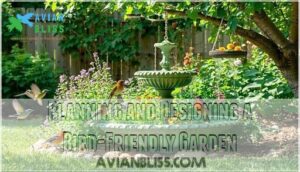
Creating a bird-friendly garden starts with understanding what you’re working with. Your space—whether it’s a sprawling backyard or a small balcony—has unique conditions that will shape which plants thrive and which birds visit.
Let’s walk through how to assess your site and design a habitat that aids birds throughout the year.
Assessing Your Space and Site Conditions
Before you plant a single seedling, take a good look at what you’re working with—every successful bird habitat starts with understanding the unique conditions of your space. Here’s what you need to evaluate:
- Sunlight exposure – Track how many hours of direct sun each area receives daily
- Existing vegetation – Note which plants are already thriving and providing natural habitat
- Soil type – Test whether you’re working with clay, sand, or loam
- Water availability – Identify drainage patterns and naturally moist spots
- Habitat layers – Observe vertical space from ground cover to canopy for diverse nesting sites
Mapping Sun, Shade, Soil, and Moisture Needs
Once you’ve mapped out which corners of your yard bake in full sun and which stay cool in the shade, you can match the right plants to the right spots—and that’s when your bird habitat really starts to come alive.
Sketch a simple site map showing sunlight exposure, soil type, and moisture levels throughout your space. This helps you spot microclimates—those naturally sheltered or damp areas where certain native plants will thrive without extra work, creating habitat layers that support diverse bird populations.
Creating Plant Diversity for Year-Round Support
Layered planting design creates a year-round bird habitat by combining plants with different seasonal bloom times and fruiting periods. Native plant guilds—groups of species that naturally support each other—provide food for birds throughout every season.
Evergreen shelter plants offer winter protection, while succession planting ensures berries ripen spring through fall. Plant diversity means something’s always available, whether caterpillars in May or seed heads in January, keeping birds fed and sheltered no matter the weather.
Designing for All Garden Sizes, Including Balconies
You don’t need acres of land to make a difference—even a small balcony can become a thriving stopover for migrating birds and pollinators. Container gardening with small-space natives transforms vertical habitats into balcony birdscapes that provide essential resources.
- Choose compact native plants suited for container gardens like dwarf coneflowers or native grasses
- Install vertical planters to expand your balcony’s habitat design potential
- Add a shallow water dish secured safely to attract thirsty visitors
- Confirm balcony safety by checking weight limits and securing containers
- Position your bird-friendly garden near natural cover to encourage use
Providing Essential Food, Water, and Shelter
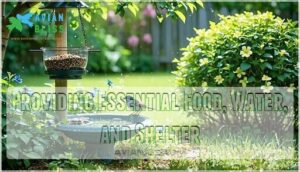
Once you’ve planted native species, your next step is making sure birds have what they need to thrive: food, water, and safe places to nest. These three essentials work together to turn your garden into a true habitat rather than just a pretty landscape.
Let’s look at how you can provide each of these resources effectively.
Natural Food Sources: Berries, Seeds, and Nectar
Birds thrive when their natural menu of berries, seeds, and nectar is abundant, and your yard can become a reliable source of these essential foods. Native plants offer the best food source through seasonal availability—serviceberries ripen during breeding season, while coneflowers and sunflowers provide seed diversity for fall migration.
Berry variety benefits thrushes and waxwings, nectar abundance fuels hummingbirds, and plant-insect symbiosis ensures protein-rich caterpillars for nestlings.
Bird Feeders and Seasonal Feeding Tips
Supplementing those natural food sources with well-placed feeders can bridge seasonal gaps when berries are sparse and seed heads have been scoured clean by winter flocks. Feeder variety matters—tube feeders dispense nyjer for finches, while platform feeders accommodate larger species.
Winter feeding strategies emphasize high-energy suet and sunflower seeds, whereas summer feeding focuses on nectar for hummingbirds. Proper feeder maintenance and strategic placement help avoid pests like squirrels and reduce disease transmission.
Installing Birdbaths, Fountains, and Water Features
Clean water ranks right up there with food for keeping your backyard birds healthy and coming back for more. When installing bird baths, consider these key factors:
- Water depth should stay shallow—one to two inches—so small songbirds can bathe safely without risk of drowning.
- Birdbath materials like ceramic or concrete retain coolness, while textured surfaces prevent slipping during bathing.
- Fountain placement in partial shade reduces algae growth and keeps water sources fresher longer.
- Cleaning frequency matters—scrub baths weekly to prevent disease transmission among visiting flocks.
Adding movement with a simple dripper attracts more species, and winterizing baths with heaters ensures year-round access.
Creating Nesting Sites and Safe Shelter Areas
After birds have found water they can trust, they’ll start scoping out your yard for safe places to raise their young and take cover from predators. Dense foliage from native shrubs creates natural shelter options where birds can hide and roost overnight.
Birdhouses with predator-safe design—proper entrance hole sizes and placement six feet high—offer secure nesting sites for cavity-nesters like bluebirds and chickadees. Leave some nesting material diversity scattered around, like twigs and dried grasses, to help birds build their nesting areas more easily.
Maintaining Habitats and Protecting Bird Populations
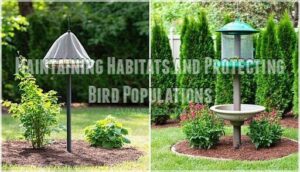
Creating a bird habitat is just the beginning—keeping it safe and thriving takes ongoing care. Your efforts can protect birds from common dangers while supporting wider conservation goals.
Let’s explore the key practices that’ll help your habitat make a lasting difference for local bird populations.
Sustainable Gardening and Pesticide Reduction
Chemical pesticides don’t just harm pests—they wipe out the insects birds depend on for survival. Reducing pesticide use is one of the most powerful bird-safe practices you can adopt. Gardens with lower pesticide application rates support higher bird abundance and species richness.
Consider organic gardening methods like diatomaceous earth, beneficial insect introductions, and organic mulching to manage pests naturally. Fostering insect populations through sustainable gardening practices creates a thriving ecosystem.
Pair pesticide alternatives with water conservation techniques like drip irrigation to build truly resilient habitat conservation efforts.
Safe Pruning and Nest Monitoring Practices
Timing your garden maintenance can mean the difference between nurturing a thriving bird family and accidentally destroying it. Avoid pruning during nesting season—usually March through August—when birds are actively building nesting sites and raising young. If you must prune, check branches carefully for nests first. Use safe tools that minimize noise and vibration.
Follow monitoring ethics like Cornell Lab’s NestWatch protocol to track nesting spaces without causing nest disturbance, habitat safety and predator protection for vulnerable young birds.
Preventing Window Collisions and Cat Predation
Did you know glass hazards claim up to two billion birds in the U.S. each year? Cat predation impact is just as staggering. For a safe environment, consider these effective deterrents:
- Window decals break up reflections
- Feather Friendly markers reduce strikes
- Keep cats indoors—responsible pet ownership saves lives
- Catios offer predator protection
- Community solutions curb roaming predators
Participating in Citizen Science and Conservation Efforts
Imagine turning your backyard into a living laboratory where your observations help protect bird populations across the country. By joining citizen science projects like the NestWatch program, you’ll track bird migration patterns, document nests, and share data. Partnering with local conservation groups amplifies your data contribution impact, weaving community science benefits into bird conservation efforts and supporting bird populations year-round.
| Citizen Science Project | How You Help |
|---|---|
| NestWatch Program | Document and share nests |
| Migration Tracking | Log bird migration patterns |
| Local Groups | Support conservation events |
| Data Contribution | Boost nationwide research |
Frequently Asked Questions (FAQs)
How can I attract migratory birds to my garden?
Picture your garden as a rest stop along a migration highway. By offering seasonal food offerings, reliable water sources, and shelter options, you’ll create habitat corridors that attract migrating birds and support their journey with supplemental feeding and safe refuge.
What are signs of a healthy bird habitat?
A healthy bird habitat shows abundant birdlife, diverse species, and breeding success. You’ll notice natural food, clean water, and shelter available, with cleanliness observed throughout the wildlife habitat—clear signs of a thriving ecosystem in your yard.
How do I discourage invasive bird species?
Sometimes the loudest guests aren’t the ones you want. Limit food and remove nests to discourage invasive bird species, disrupt roosts, and favor native competition by planting native plants and removing invasive plants—protecting your wildlife habitat and ecosystem.
What should I do if I find an injured bird?
If you find an injured bird, assess injuries from a safe distance and avoid touching unless necessary.
Provide temporary care in a quiet box, guarantee bird safety from predators, and contact a licensed rehabber for transportation tips and bird wellbeing.
Are artificial nesting boxes effective for local birds?
Artificial nesting boxes can help local birds, but box size matters for each species. Box material impact, placement considerations, and predator protection all influence success.
Maintenance importance is key—cleaning and monitoring birdhouses fosters safe nesting sites and breeding.
Conclusion
It’s ironic—while birds need only the basics to thrive, humans often complicate things with elaborate plans. Yet, by embracing native plants and simple steps, you’re learning how to create bird habitats that offer genuine sanctuary.
Your yard becomes a stage for nature’s daily drama, where every seed and puddle matters. In giving birds a home, you’ll find your own sense of belonging deepens, too.
Sometimes, the smallest changes bring the most enduring rewards.
- https://chicagobirdalliance.org/blog/2023/2/13/a-year-of-helping-birds-provide-habitat-plant-native-plants-leave-the-leaves
- https://pmc.ncbi.nlm.nih.gov/articles/PMC10682877/
- https://todayshomeowner.com/lawn-garden/guides/landscaping-tips-for-a-bird-friendly-yard/
- https://www.frontiersin.org/journals/environmental-science/articles/10.3389/fenvs.2023.1156360/full
- https://www.3billionbirds.org/findings