This site is supported by our readers. We may earn a commission, at no cost to you, if you purchase through links.
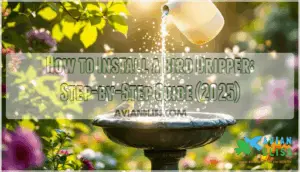 Last spring, I watched a Tennessee warbler land at my neighbor’s silent birdbath, glance around, and fly off without drinking. Two hours later, the same bird spent fifteen minutes at my dripper setup, bathing and preening while water droplets caught the morning sun.
That’s the difference moving water makes—it transforms your yard from a place birds pass through into a destination they seek out.
Installing a bird dripper takes about thirty minutes and requires nothing fancier than a plastic jug, some tubing, and a valve you can adjust with your fingers. The payoff comes within days when species you’ve never seen before start showing up at dawn, drawn by the sound and sparkle of falling drops that signal safe, fresh water from hundreds of feet away.
Table Of Contents
- Key Takeaways
- Why Install a Bird Dripper in Your Yard?
- Choosing Materials for Your Bird Dripper
- Preparing Your Bird Bath and Installation Site
- Step-by-Step Bird Dripper Installation Guide
- Maintenance, Upgrades, and Troubleshooting Tips
- Frequently Asked Questions (FAQs)
- How do I install a Rain Bird Drip system?
- How do you make a birdbath dripper?
- Do birdbath Drippers work?
- Do birds like a dripper?
- How do you drip a bird bath?
- How does a Rain Bird Drip system work?
- How often should I refill the dripper container?
- What water depth works best for different birds?
- Can I use tap water or rainwater only?
- How do I prevent squirrels from damaging it?
- Conclusion
Key Takeaways
- Moving water from a dripper attracts birds from up to 100 meters away through auditory and visual cues, increasing species diversity by 56% compared to still birdbaths while doubling detection rates.
- A functional bird dripper costs under $5 using recycled containers and basic tubing, requires only 30 minutes to install, and conserves 30-50% more water than traditional methods while preventing mosquito breeding.
- Optimal dripper placement combines partial shade with nearby cover 10-15 feet from shrubs, delivering one drip every two seconds to maximize bird safety and attraction without causing overflow or stress.
- Weekly cleaning with vinegar, refilling every 2-3 days, and winterizing with heaters or frost-resistant materials maintains water quality and keeps the system functioning year-round when birds need it most.
Why Install a Bird Dripper in Your Yard?
You’re about to turn your backyard into a bird haven, and a dripper is your secret weapon. Birds can’t resist the sound and shimmer of moving water—it pulls them in from hundreds of feet away.
Let’s look at three solid reasons why this simple upgrade pays off.
Attracting More Birds With Moving Water
Birds can hear auditory cues from moving water up to 100 meters away—that’s your secret weapon. A bird bath drip system transforms a quiet basin into an irresistible beacon.
Here’s what moving water delivers:
- Auditory attraction doubles detection rates compared to still birdbaths
- Visual attraction through sunlight glints increases recognition by 70%
- Species diversity jumps 56% at sites with water motion
- Migration magnet for warblers and thrushes seeking hydration
You’re not just adding a dripper—you’re creating bird-friendly habitat that pulls in rare visitors and increases flock sizes threefold. This is because moving water attracts birds more effectively.
Health and Safety Benefits for Birds
Beyond attraction, dripping water protects bird health in ways still water can’t match. Fresh water sources reduce disease transmission by 40% compared to stagnant basins where bacteria multiply fast. The constant flow improves water quality and bird hygiene, washing away contaminants before they concentrate.
Dripping water cuts disease transmission by 40% while washing away contaminants that concentrate in stagnant basins
Drippers also prevent mosquito breeding—eliminating standing water that harbors West Nile virus. Your bird-friendly setup becomes a genuine safety feature, not just decoration. By incorporating a birdbath dripper system, you can create a healthier environment for the birds.
Water Conservation and Reduced Mosquitoes
Drip systems deliver dripper water savings of 30-50% compared to traditional methods—water goes straight to the root zone with minimal evaporation. Choosing eco-friendly materials like recycled jugs makes your water conservation efforts even smarter.
Your DIY dripper or bird bath drip system installation doubles as mosquito prevention by keeping water moving. Mosquito larvae control happens naturally when water circulates, eliminating breeding sites that spread waterborne disease. You’re practicing sustainable bird watering while protecting public health.
Choosing Materials for Your Bird Dripper
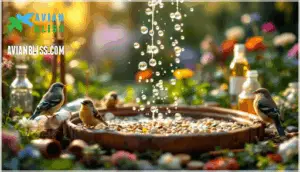
Your dripper can be as simple as a recycled milk jug or as polished as a commercial kit—both work beautifully if you choose the right materials. The secret is matching your setup to your budget, your birds’ needs, and how much tinkering you enjoy.
Let’s break down what you’ll need to get water dripping and wings flapping.
DIY Options—Jugs, Bottles, and Tubing
You probably have everything you need to build a bird dripper sitting in your recycling bin right now. Grab a plastic milk jug or soda bottle—any food-grade container works.
Punch a tiny hole in the bottle cap to control water flow, then attach flexible tubing materials if you want to extend your reach.
This DIY dripper transforms your birdbath into a drip system that’ll have birds lining up.
Store-Bought Vs. Homemade Drippers
When weighing dripper comparison and cost analysis, think of it this way: homemade setups cost under $5 and get birds visiting, while store-bought models run $15–$49 but deliver precision water flow and last years longer.
- DIY dripper builds take 10–15 minutes with household tools
- Commercial kits install in under 30 minutes with zero extra equipment
- Drip efficiency differs—store-bought units save 30% more water annually
- Bird preferences don’t discriminate—both birdbath styles boost visits and species diversity
Your bird bath drip system choice depends on budget versus longevity in your bird bath maintenance routine.
Eco-Friendly and Upcycled Material Ideas
Old milk jugs, wine bottles, and even cracked ceramic mugs become bird-saving water features when you redirect them from the landfill to your yard. Recycled plastics and reused components give you sustainable designs without the price tag—your DIY birdbath gains character while practicing eco-friendly gardening.
Food-grade containers keep water bird-friendly, and glass bottles add visual appeal. These green options prove sustainable gardening doesn’t mean sacrificing attraction power.
Essential Tools and Supplies
Grab a drill, some tubing, and a few basic hand tools—your bird dripper setup won’t demand a garage full of equipment or weekend-warrior expertise. You’ll need:
- Flexible tubing materials (¼-inch vinyl works great for drip system connections)
- Adjustable valve types for precise flow control—keeps drip rates bird-safe
- Measuring tape and pipe cutter for accurate tubing cuts
- Pliers or trowel for securing connections and positioning
Water pumps are optional for recirculating setups, but gravity-fed systems work brilliantly without electricity.
Preparing Your Bird Bath and Installation Site
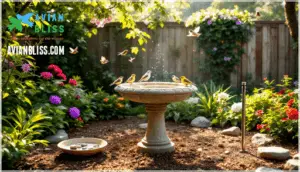
Before you hook up your dripper, you need to get the basics right. The location you pick and how you prep the bath can make or break your success with birds.
Let’s walk through the three key steps that’ll set you up for a thriving backyard bird hub.
Selecting The Best Location
Your bird dripper’s location can make the difference between a lively parade of visitors and a setup that sits ignored—so let’s nail down the perfect spot. Choose a site with partial shade to keep water fresh and comfortable. Position your birdbath near shrubs or trees where birds feel safe, but keep it open enough so they can spot predators. Close proximity to a water source makes refilling easier.
Your bird-friendly water feature design works best when birds feel secure and the setup fits naturally into their daily routines.
| Factor | Ideal Conditions | Why It Matters |
|---|---|---|
| Sun Exposure | Partial shade, morning sun | Prevents overheating; keeps water fresh longer |
| Yard Layout | Open view with nearby cover | Birds scan for danger before landing |
| Bird Habitat | 10-15 feet from shrubs | Escape routes reduce stress; increases bird attraction |
| Garden Placement | Visible from windows | You’ll enjoy watching; easier to monitor your bird bath drip system |
Cleaning and Setting Up The Bird Bath
A dirty birdbath is like serving dinner on last week’s plates—birds notice, and they won’t stick around if the water looks sketchy. Scrub your birdbath with a stiff brush and rinse thoroughly—skip the soap, which harms bird health. Fresh water matters for water quality and bird safety.
Quick cleaning checklist:
- Empty old water completely
- Scrub basin with brush or coarse sponge
- Rinse until water runs clear
- Refill with fresh water before dripper installation
- Check for cracks that affect bath placement
Clean setups boost bird attraction and prepare your basin for peak dripper noise and performance.
Positioning for Maximum Bird Attraction
Put your birdbath where birds feel safe but you can still watch the show—think open sight lines with nearby cover, not a bullseye for every hawk in the neighborhood. Place your bird bath drip system 10-15 feet from tree canopy or shrubs for quick escape routes. Morning sun orientation keeps water fresh without overheating.
Avoid feeder proximity under three feet—crowding stresses birds and reduces your bird attraction techniques’ effectiveness in creating ideal bird habitat.
Step-by-Step Bird Dripper Installation Guide
Now you’re ready to put everything together. The actual installation takes just a few minutes once you have your materials prepped.
Here’s how to assemble your dripper, hook it up, and get the water flowing at just the right pace for your feathered visitors.
Assembling Dripper Components
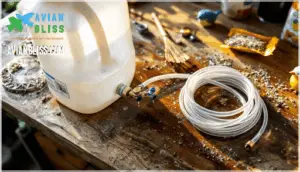
Once you’ve got your materials lined up—whether it’s a recycled milk jug or a precision store-bought dripper—it’s time to put everything together so water flows just right.
Start with your container and drill a small hole near the bottom for your tube fittings. Thread the tubing through and attach your drip valve to control the drip rate. If you’re using a birdbath dripper kit, snap the components together following the layout.
Test your water flow before final assembly—you want gentle drops, not a stream.
Connecting and Securing Tubing
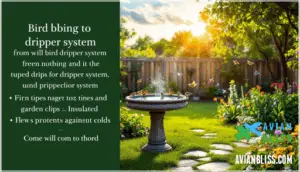
Now that your components are assembled and water’s ready to flow, the tubing needs a secure path from container to birdbath—no leaks, no kinks, just steady drops hitting the mark. Run your tubing along a natural route and anchor it every few inches.
Here’s what keeps your drip system running smoothly:
- Push fittings firmly until you feel resistance—loose connections mean puddles, not drips
- Use zip ties or garden clips to prevent wind from yanking tubes loose
- Check for sharp bends that restrict water flow and create pressure problems
- Add tube insulation in cold zones to delay winter freeze-up
Test your connections by running water through before you walk away.
Adjusting Flow Rate for Bird Safety
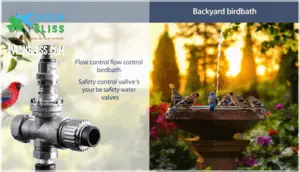
With water flowing steadily through your tubing, the next job is dialing in a drip rate that draws birds in without scaring them off or turning your bath into a splash zone. Start slow—one drip every two seconds keeps bird hydration steady without overflow. Adjust your flow control valve while watching how water hits the birdbath surface.
Fine-tune water pressure using safety valves to protect bird health and prevent splashing that drives nervous species away.
| Drip Speed | Bird Attraction | Water Conservation |
|---|---|---|
| 1 drip/2 sec | High—gentle sound | Excellent efficiency |
| 2-3 drips/sec | Moderate appeal | Good balance |
| 4+ drips/sec | Low—too aggressive | Poor—wasted water |
Maintenance, Upgrades, and Troubleshooting Tips
Your dripper won’t run itself forever—regular upkeep keeps the water flowing and the birds coming back. A little attention now prevents headaches later, and a few upgrades can turn a basic setup into something truly special.
Here’s what you need to know to keep your system in top shape year-round.
Cleaning and Preventing Algae Growth
Let’s be honest—algae loves your bird dripper just as much as the birds do, and if you don’t stay ahead of it, you’ll end up with a green, slimy mess instead of a wildlife oasis.
Scrub your birdbath weekly with a stiff brush and white vinegar for safe water purification. Empty and refill every two days to maintain bacterial balance and support bird health.
This freshwater management routine also addresses mosquito prevention while protecting outdoor water conservation efforts.
Seasonal Care and Winterizing
Winter demands serious freeze prevention tactics if you want to keep your bird-friendly drip system running. Birds desperately need unfrozen water when natural sources lock up, so here’s your cold weather survival plan:
- Add a submersible birdbath heater (50–150 watts) to maintain liquid water even during prolonged freezes—availability jumps to 98%.
- Choose frost-resistant materials like plastic or resin that withstand freeze-thaw cycles without cracking, unlike ceramic or stone.
- Position your setup in sunny, wind-protected spots to increase unfrozen water availability by 60% through natural solar heat.
Daily refills and frequent checks prevent ice buildup and heater malfunction. Never use chemical antifreeze—it’s fatal to birds.
Winterizing your drip system transforms your yard into a genuine survival station when birds need it most.
Creative Upgrades—Misters and Recirculating Systems
Your basic dripper setup works fine, but strategic upgrades can turn your birdbath into an irresistible water feature that pulls in species you’ve never seen before. Mister systems create fine fog that hummingbirds and warblers fly through—pure magic. Recirculating water setups save gallons while maintaining constant movement. Solar power eliminates outlet dependency, making wildlife-friendly landscaping easier.
These bird-friendly modifications transform ordinary drip systems into gardening-for-wildlife masterpieces.
| Upgrade Type | Best For | Installation Difficulty |
|---|---|---|
| Battery misters | Quick movement | Easy |
| Solar foggers | Hummingbirds | Moderate |
| Recirculating pumps | Water conservation | Moderate |
| Combination systems | Maximum diversity | Expert |
| Wiggler attachments | Budget option | Very easy |
Regular Inspections and Common Fixes
Even the best-designed dripper fails when clogs sneak up on you, so checking your system weekly keeps birds happy and prevents emergency repairs. Inspect tubing for kinks and test your drip rate—debris buildup slows flow fast. Clog removal takes seconds with a pin or toothpick.
Leak detection matters too. Tighten connections and replace cracked tubes before they waste water.
Tube cleaning and winterizing protect your bird-friendly setup year-round.
Frequently Asked Questions (FAQs)
How do I install a Rain Bird Drip system?
Rain Bird drip irrigation systems deliver water directly to plant roots—not birdbaths. For efficient watering, you’ll install tubing with emitters, control flow with adjustable valves, and design layouts based on water pressure and plant needs.
Installation costs vary by garden size.
How do you make a birdbath dripper?
Creating a birdbath dripper takes just a recycled plastic jug, tubing, and an adjustable valve. Punch a small hole in the jug bottom, attach flexible tubing, and position it above your birdbath for steady drips that boost bird attraction through water flow and system efficiency.
Do birdbath Drippers work?
Absolutely—bird bath drippers work like wildlife magnets. The drip system creates movement and sound that birds detect from impressive distances, triggering their instinct to investigate fresh water sources.
You’ll see increased bird attraction, better water quality, and improved freshness maintenance that keeps your feathered visitors healthy and coming back.
Do birds like a dripper?
Birds absolutely love drippers. The sound and movement of fresh water trigger their natural attraction to flowing sources. Drippers signal water quality, making your birdbath irresistible for backyard birding while supporting wildlife-friendly landscaping that draws diverse species daily.
How do you drip a bird bath?
Picture a single drop falling every few seconds, creating ripples that shimmer in the sunlight—that’s all it takes.
You drip a birdbath by suspending a container with tubing above it, adjusting the dripper nozzles to control water flow. This fresh water circulation keeps your backyard birding setup bird friendly and irresistible.
How does a Rain Bird Drip system work?
This isn’t about your birdbath—it’s garden irrigation technology.
Rain Bird drip irrigation delivers water directly to plant roots through tubing and emitters, cutting waste by 30-50% compared to sprinklers. It’s efficient watering for gardens, not bird attraction.
How often should I refill the dripper container?
Dripper capacity and container size determine refill frequency—usually every 1-3 days. Smaller containers need more frequent refills, while larger jugs last longer.
Drip rate affects how fast your birdbath dripper empties. Check water level daily.
What water depth works best for different birds?
Most songbirds need one to two inches of water depth in your birdbath, while larger species like robins prefer two to three inches.
Shallow edges under one inch help tiny warblers and hummingbirds drink safely.
Can I use tap water or rainwater only?
Tap water usually treats birds well, though letting it sit overnight removes chlorine. Rainwater collection offers pure freshwater sources for your birdbath dripper.
Both work for efficient watering—just guarantee water quality stays fresh through regular drip system maintenance and proper water filtration practices.
How do I prevent squirrels from damaging it?
Squirrel deterrents like pole mounting with baffles or weighted bases keep acrobats away from your birdbath. Cage protectors work too—they let birds through but block larger raiders, protecting your bird-friendly gardens and backyard wildlife setup.
Conclusion
The smallest change creates the biggest shift—a few drops falling into still water can turn your yard into a bird magnet you never imagined possible. Now that you know how to install a bird dripper, the hard part is over. You’ve got the setup, the adjustments, and the maintenance routine down.
What happens next is up to the birds—and they’ll arrive faster than you think, drawn by movement, sound, and the promise of fresh water they can trust.
- https://go.rainbird.com/PlanDrip
- https://www.birdwatchingdaily.com/beginners/birding-faq/the-bird-bath-trick-that-doubles-your-backyard-visitors-overnight/
- https://www.youtube.com/watch?v=32e00dzV4gM
- https://www.waterfeaturesadore.com.au/blogs/design-and-symbolism/the-art-and-science-of-bird-baths-attracting-a-diverse-array-of-birds
- https://www.outdoorartpros.com/blogs/news/how-does-water-movement-in-a-bird-bath-benefit-birds