This site is supported by our readers. We may earn a commission, at no cost to you, if you purchase through links.
 A single oak tree can support over 500 species of caterpillars, and those caterpillars become the protein-packed meals that keep songbird chicks alive. Yet most suburban yards offer birds little more than a green desert of non-native turf and ornamental plants that insects—and thus birds—largely ignore.
Creating a bird-friendly environment means rebuilding the layers of native vegetation that birds evolved alongside, transforming your property into a refuge where warblers, thrushes, and finches can forage, nest, and raise their young.
You’ll start by evaluating what you already have, then strategically add the canopy trees, berry-bearing shrubs, and ground covers that turn a quiet yard into a thriving ecosystem.
Table Of Contents
Key Takeaways
- Yards with at least 70% native plant coverage support three times more bird species than non-native alternatives because native trees like oaks host over 500 caterpillar species that provide essential protein for nesting songbirds.
- Layering your habitat vertically—canopy trees, understory shrubs, and ground covers—reduces nest predation by up to 28% and increases bird diversity by creating multiple foraging and nesting niches that mimic natural forest structure.
- Window collisions and outdoor cats kill up to 3.4 billion North American birds annually, making predator guards, indoor cat policies, and visual window markers critical interventions that measurably boost nest success and fledgling survival.
- Eliminating pesticides protects the insect food web birds depend on, since a 100-kilogram increase in neonicotinoid use drops grassland bird populations by 2.2% while organic methods preserve the invertebrates that sustain insect-eating species year-round.
Planning Your Bird-Friendly Habitat
Before you plant your first native shrub or hang a feeder, you need a clear picture of what you’re working with. Your yard’s sunlight patterns, soil conditions, and existing plants will shape every decision you make, while hidden hazards can sabotage even the best intentions.
Let’s walk through four essential steps that turn guesswork into a strategic plan for bringing birds home.
Assessing Existing Plants and Yard Conditions
Before breaking ground, a yard audit sets the stage for real change. Start by creating plant inventories that identify which native plants already provide food and shelter—these are your foundation. Then conduct soil assessments and habitat evaluations to understand what thrives where:
- Catalog existing trees, shrubs, and ground covers, noting which support local birds
- Test soil pH and drainage to match future planting choices to conditions
- Look for potential hazards like reflective windows or predator pathways
- Identify gaps in habitat layers where you can add canopy, understory, or ground vegetation
Research shows yards with more than 70% native plants consistently sustain breeding bird populations, while those with less fail to support them. Understanding the impact of native plant choices is essential for creating a bird-friendly environment.
Mapping Sun, Shade, and Soil Types
Once you’ve inventoried your yard, soil mapping and shade analysis reveal the sunlight patterns and microclimate zones that determine which native plants will thrive where. Track sun exposure hourly to identify full-sun, part-shade, and full-shade zones—seasonal sun angles can shift light by 30%.
Test soil pH, texture, and drainage; clay soils retain 40–60% more moisture, influencing plant species selection. Habitat modeling shows that matching native plants to these mapped conditions boosts restoration success by 80%, creating the layered structure birds need.
By incorporating native plants and considering the bird friendly environment, you can markedly improve biodiversity in your yard.
Identifying Potential Hazards for Birds
After mapping your yard’s light and soil conditions, scan for the threats that can undo your conservation work. Window collisions kill up to 1 billion North American birds annually—residential glass causes 99% of strikes. Cat predation claims 2.4 billion more, making outdoor pets the top human-related mortality source.
Pesticide exposure, vehicle collisions near roadside plantings, and habitat fragmentation from lawn monocultures compound the danger. Address these chemical dangers and predator protection gaps before planting.
Designing Habitat Layers for Birds
Once you’ve identified and removed hazards, shift your focus to vertical structure—the secret to high bird diversity. Habitats with three or more distinct strata—canopy, understory, shrub, and ground cover—support markedly more species than flat lawns or single-layer plantings.
Here’s how to build habitat layers in gardens:
- Install native canopy trees like oaks or hickories, which support over 40 bird species per acre and reduce nest predation by up to 28%.
- Add shrub diversity with berry-producers such as elderberry and dogwood, boosting frugivorous bird richness by 22%.
- Establish ground cover using native ferns and grasses, which provide nesting sites for ground-dwelling birds and increase foraging success by 13%.
This vertical architecture mimics natural forest structure, creating multiple foraging and nesting niches. Landscape connectivity matters too—linking your layered yard to nearby green spaces helps maintain breeding populations of migratory species.
Choosing Native Plants for Birds
Native plants form the backbone of any successful bird-friendly yard, offering the food, shelter, and nesting materials that local species have evolved to depend on. The right combination of trees, shrubs, flowers, and grasses creates a layered habitat that sustains birds throughout the year.
Here’s how to select plants that will transform your yard into a thriving haven for wildlife.
Selecting Native Trees for Food and Shelter
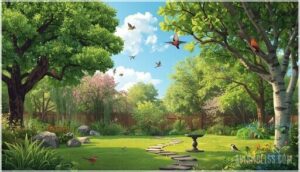
You don’t need fancy landscaping to transform your yard into a bird-friendly canopy—just smart native tree selection. Oaks support over 530 caterpillar species, providing essential protein for nesting birds, while willows, birches, and cherries round out the top performers.
Aim for 30% native tree canopy cover to boost forest bird diversity by 75%, and choose older, structurally diverse trees that offer both food provisioning and nesting sites, helping birds adapt to climate pressures while restoring urban forest habitat.
Adding Shrubs and Bushes for Cover
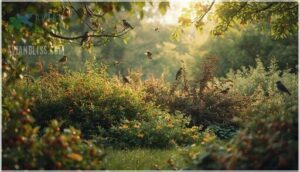
Dense shrub thickets offer the protective cover birds desperately need—aim for at least 22 native bushes per 1,000 m² to boost species richness markedly. Parks with 40% shrub density hosted 42 species versus just 23 in sparse areas, proving habitat layers matter.
Choose serviceberry, dogwood, and native cherries to create nesting sites and feeding zones, then layer shrubs of varying heights for ideal bird cover that sustains both migrants and residents year-round.
Planting Native Flowers and Ground Covers
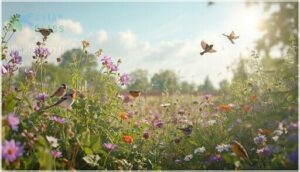
You can transform your bird-friendly habitat by planting native flowers and ground covers that support over 90% of insectivorous birds. Native plant selection matters—landscapes with 70% native coverage host three times more bird species than non-native alternatives.
Ground cover benefits include reducing weeds by 75% while providing critical bird food sources like insects and seeds.
Plant wild geranium, lowbush blueberry, and large-leaved aster to boost flower diversity and support habitat restoration naturally.
Incorporating Grasses and Sedges
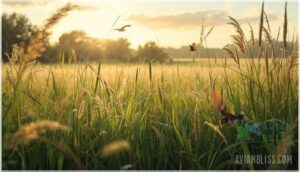
You can think of native grasses and sedges as the grassland restoration backbone that birds desperately need. Planting native plants like little bluestem, prairie dropseed, and tufted sedges creates erosion control, habitat connectivity, and seedbearing grasses that provide bird food year-round.
Native plant selection with warm-season bunchgrasses aids ground-nesting species, while sedge planting in moist areas attracts waterfowl, making your yard a conservation stronghold.
Providing Food and Water Sources
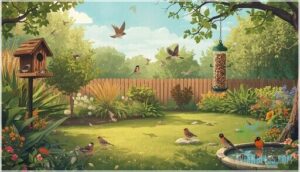
Once you’ve laid the groundwork with native plants, you’ll need to round out your habitat with reliable food and water sources that keep birds coming back.
A well-stocked yard offers multiple feeding options—from seeds and suet to fresh water—that cater to different species throughout the year.
Here’s how to build a buffet that sustains diverse bird populations while complementing the natural food your plants already provide.
Creating a Multi-Species Food Buffet
Your yard can become a feast for dozens of species when you layer native plant selection strategically. Combine woody, herbaceous, and grass types in groups of three or more to deliver food source variety—caterpillars on oaks, seeds from native grasses, and fat-rich berries from shrubs.
This habitat layering approach fosters bird diet diversity, offering year-round food sources that match seasonal foraging patterns and reduce reliance on feeders alone.
Selecting High-Quality Bird Feeders
Feeder materials matter when you’re building a reliable feeding station. Stainless steel and aluminum models last five to ten years, resisting squirrel damage far better than wood or basic plastic. Look for UV-stabilized, recycled plastic or eco-friendly composite designs that won’t warp in summer heat or crack in winter cold.
Choose hopper-style bird feeders with protective roofs to keep seed dry and reduce mold by 40 percent, and pick squirrel-proofing features—now 30 percent of sales—to preserve bird food.
Smooth surfaces and removable trays simplify feeder maintenance, cutting cleaning time by more than half while lowering disease risk at your suet feeders and hummingbird feeders alike.
Offering Year-Round Fruits, Seeds, and Nuts
Beyond feeders, you’ll want to establish natural food sources that support birds twelve months a year. Native fruit-bearing shrubs like spicebush—with berries that are roughly 50 percent fat—fuel long-distance migrants during fall journeys exceeding 2,000 miles.
Seed availability from goldenrod and native sunflowers persists through winter, while acorns and pine nuts deliver up to 150 calories per ounce when other resources disappear.
Plant persimmon and pawpaw for summer fruit, then add winterberry holly and bayberry to cover colder months, creating a buffet that mirrors the seasonal patterns birds have followed for millennia.
Installing Birdbaths and Water Features
Water often matters just as much as food—in some habitats, its availability drives up to 36 percent of bird diversity.
Install shallow birdbaths one to three inches deep with textured bottoms for secure footing, then position them two to three feet high and roughly ten feet from bushes where predators hide.
Add a dripper or small fountain; moving water pulls in more species, discourages mosquitoes, and keeps your backyard hub buzzing year-round.
Creating Shelter and Safe Nesting Sites
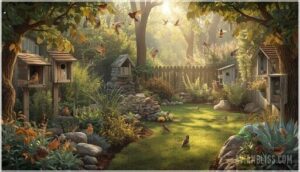
Birds need more than food and water—they need safe places to rest, raise their young, and escape danger. Creating the right mix of shelter options transforms your yard into a refuge where birds can thrive through every season.
Let’s look at four key ways you can provide that protection.
Building and Maintaining Birdhouses
Cavity-nesting birds don’t need much, just safe walls and a roof that works. Use untreated wood for insulation and breathability, and skip perches that invite predators. Drill drainage holes in the floor to prevent nestling mortality from wet conditions by up to 38%.
Mount your birdhouse on a metal pole at least 5 feet up, face the entrance southeast, and clean it annually with a mild bleach solution to lower parasite loads and boost fledgling survival by 45%.
Leaving Brush, Logs, and Leaf Litter
While birdhouses shelter cavity nesters, brush piles and leaf litter anchor your habitat’s ecosystem balance. Stack branches loosely—creating a brush pile with plenty of gaps—so ground-nesting birds, butterflies, and small mammals find winter refuge while beetles, fireflies, and decomposers colonize the rotting wood.
Leave those decaying leaves where they fall; they host overwintering insects that kinglets and woodpeckers need when snow buries other food, and log decomposition feeds the soil, reversing habitat loss one yard at a time.
Managing Lawns and Open Spaces
Instead of treating your lawn like a golf course, give ground-foraging birds a reason to visit by letting grass grow taller and skipping the chemicals. Midwest grasslands lose 1–2 million acres each year to development, and your yard can push back by mixing native grasses into open spaces and delaying mowing until late July or August when nesting wraps up.
- Delay mowing until late July or early August to protect active nests during the extended Midwest breeding season
- Let lawn height increase to support taller flowering species that attract ground-foraging birds
- Replace conventional turf with native grasses and forbs to boost bird abundance by up to 36%
- Reduce bare ground by avoiding frequent mowing, since grassland specialists like Henslow’s Sparrow decline where soil stays exposed
- Expand contiguous greenspace—even 0.16 square kilometers more per year measurably increases urban bird diversity
Protecting Birds From Predators
Beyond controlling mowing schedules, you’ll need to tackle the single biggest predator threat: cats. In Canada alone, cats kill 60 million birds each year, with urban owned cats responsible for 27 million of those deaths. Keeping cats indoors offers the most effective cat deterrent, while predator control measures like guards and fencing show measurable nest protection gains.
| Strategy | Improvement | Best For |
|---|---|---|
| Predator guards on nest boxes | 7% higher nest success across 32 species | Cavity nesters like bluebirds and chickadees |
| Predator exclusion fencing | Wedge-tailed shearwater success jumped from 0.29 to 0.50 young per attempt | Ground nesters in concentrated colonies |
| Keeping cats indoors | Eliminates 27 million annual urban bird deaths in Canada | All backyard species, especially fledglings |
Bird guards—cone baffles, stovepipe designs, or entrance extenders—cut predation across 24,114 nesting attempts, and stacking multiple types works better than relying on one. Fencing outcomes at Kaʻena Point tripled hatching success for Hawaiian stilts, proving barriers work when protecting birds from predators matters most.
Maintaining and Enhancing Your Habitat
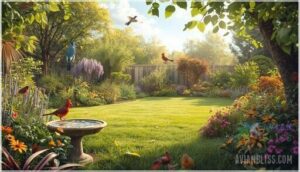
You’ve built the foundation—now it’s time to keep it thriving. Maintaining your bird-friendly habitat means protecting the food web, adjusting care with the seasons, and staying alert to what’s working for your feathered visitors.
Here’s how to sustain and strengthen the sanctuary you’ve created.
Reducing Pesticide and Fertilizer Use
Cutting pesticides and fertilizers isn’t just good for birds—it’s critical for their survival. Research shows a 100-kilogram increase in neonicotinoid use drops grassland bird populations by 2.2%, while insect-eating species suffer most.
You can switch to organic gardening methods, adopt integrated pest management to slash chemical use by 50%, and embrace eco-friendly pest control that protects the invertebrates birds depend on for food.
Seasonal Care and Habitat Adjustments
Your habitat needs to shift with the seasons—just as birds adjust migration routes and resource demands, you’ll want to adapt your yard throughout the year. Seasonal care and habitat adjustments keep bird populations stable even as climate shifts threaten breeding ranges and survival rates.
- Leave leaf litter and brush piles in autumn to provide overwinter cover for late-migrating and resident species
- Provide supplemental water during dry seasons to increase habitat value for songbirds and waterfowl when natural sources disappear
- Retain native plant diversity year-round to offset seasonal reductions in species richness and support ecosystem balance
- Adjust pruning schedules to avoid disturbing active nests during breeding season while maintaining yearround food sources
Climate resilience depends on your willingness to work with nature’s rhythms, not against them.
Monitoring Bird Activity and Participation in Citizen Science
You’re not just watching birds—you’re building the data foundation for continent-wide conservation. Monitoring bird activity and participating in citizen science projects transform your backyard observations into actionable wildlife conservation insights that researchers use to track population shifts, habitat health, and climate impacts.
| Platform | What to Track | Conservation Impact |
|---|---|---|
| eBird | Species, counts, location, date | Range maps used by policymakers for habitat management |
| Project FeederWatch | Winter feeder visitors weekly | Tracks population changes for 100+ species across North America |
| iNaturalist | Photos, GPS, behavior notes | Data analysis reveals species distribution and observation trends |
| Tucson Bird Count | Citywide surveys annually | Guides urban land managers in native bird habitat improvements |
| Local Bioacoustics | Record bird sounds, upload files | Machine learning algorithms identify species and ecosystem health |
Over 600,000 volunteers globally submitted more than 100 million bird sightings in 2020 alone, and eBird collected its second 100 million observations in just two years. Your consistent bird tracking—recording which species visit, when they arrive, and what they’re eating—feeds directly into the State of the Birds Report that shapes conservation priorities. Citizen science turns your morning coffee ritual into data that protects vulnerable populations.
Adapting to Climate Change and Supporting Conservation Efforts
Climate change isn’t waiting, so neither can your habitat. Birds across North America have lost nearly 3 billion individuals since 1970, and over 64% of species face heightened vulnerability to warming temperatures, making your yard a critical refuge in a landscape-scale conservation strategy. You’re already halfway there—now ramp up your impact with habitat restoration that builds climate resilience and aids species adaptation.
Climate change has already claimed 3 billion North American birds since 1970, making your yard a critical refuge in the fight for species survival
- Plant climate-smart natives that provide food during shifting migration windows when traditional sources fail
- Expand habitat layers vertically to create cooling microclimates that buffer heat extremes for vulnerable birds
- Join conservation efforts by certifying your yard, which collectively sequesters over 800 metric tons more CO₂ annually than conventional properties
Supporting bird populations means thinking beyond your fence line—connect your efforts to regional biodiversity corridors that help species track suitable temperatures and expand their ranges as the climate shifts.
Frequently Asked Questions (FAQs)
How do window collisions affect bird populations?
Window collisions kill between 365 million and 1 billion birds each year in the U.S., making them a leading cause of urban bird mortality. Reflective glass, light pollution effects, and large transparent windows disorient migrating species, particularly small passerines like warblers and sparrows. Collision rates spike during spring and fall migrations when disoriented nocturnal migrants strike illuminated buildings.
What are the best bird-friendly fencing options?
Think of fencing like a spider’s web stretched across bird flight paths—invisible until it’s too late. Your best bet is welded wire mesh with small openings, bright visual markers spaced two to four inches apart, or dense native hedgerows that birds can see and navigate safely while you support wildlife habitat and bird conservation through ecological design.
How does light pollution impact migrating birds?
Artificial lights lure migrating birds off course, turning cities into deadly traps.
Disoriented flocks circle buildings and collide with glass, killing up to a billion birds annually in the United States alone.
Which bird species benefit most from urban habitats?
Generalist species with darker plumage, colonial nesting habits, and flexible diets thrive in cities, adapting to habitat fragmentation.
Specialized species struggle with diminished native plants and climate resilience challenges, affecting bird migration patterns and conservation.
How can I identify harmful plants for birds?
You might assume identifying toxic plants requires a botany degree, but focusing on a few high-risk families makes it manageable.
Learn to recognize Oleander, Philodendron, and Lilies—plants containing cardiac glycosides, calcium oxalates, and alkaloids that cause bird poisoning symptoms like weakness, oral swelling, and gastrointestinal distress.
Conclusion
Your yard isn’t just your backyard—it’s a patch of habitat in a vanishing mosaic. When you commit to creating a bird-friendly environment with native plants, clean water, and layered shelter, you’re not simply feeding a few finches; you’re reconnecting fragmented ecosystems, one property at a time.
Birds will respond quickly, often within weeks, rewarding your efforts with song, color, and the quiet knowledge that you’ve given vulnerable species a fighting chance in a world where wild spaces are shrinking fast.
- https://www.nature.com/articles/s42949-025-00224-w
- https://abcbirds.org/news/2025-state-of-the-birds/
- https://birdsconnectsea.org/2025/06/17/neighborhood-bird-project-data-suggest-more-than-half-of-local-bird-species-could-be-declining/
- https://mbgna.umich.edu/post/native-plants-support-local-bird-populations
- https://wildlife.org/native-plants-boost-backyard-bird-biodiversity/